
Translated material
Thanks to the only successful uprising of slaves, Haiti conquered independence from France
But then the French robbed them again - with the help of "compensation" and banks
In the war for the independence of Haiti, the colonial rulers - this is the only successful example of the uprising of slaves in history (this happened from 1791 to 1803). But then the country was forced to pay its former French slaves of reparations for an amount equal to hundreds of millions of dollars at today's exchange rate - a ransom for freedom that they had already conquered in battle. But even after the payment of these reparations, the financial troubles of Haiti did not end - and one of the poorest countries of the world still feels their consequences. The New York Times journalists studied archival documents and tell the story of how the French bank, who also participated in the financing of the construction of the Eiffel Tower, has robbed the former colony for years. "Medusa" retells this material.
On the evening of September 25, 1880, in the capital in the capital of the independent Haiti Port-O-Prens, a reception was held with a ball and salute. It seemed to the gathered that soon the rest of the predatory reparations to the former slave owners would be completely paid and Haiti would cease to hone from one financial crisis to another, constantly glancing at the sea in fear of seeing the French warships again on the horizon. The new President Lizius Salomon committed that the country has not succeeded since its occurrence.
He announced the audience in the palace that Haiti would soon have his own bank. Salomon had reasons for optimism: European banks were invested in the development of railways and factories in their countries, softened recessions and helped in public administration. Now the turn of Haiti has come. As Salomon put it, this is "a great event that will leave its mark in history."
However, the National Bank of Haiti, which was entrusted with so many hopes, turned out to be national only nominally. The Central Bank not only did not become a salvation for Haiti, but also turned into a tool for pumping funds from the former colony by French financiers.
The structure was established by the Paris Bank called Crédit Industriel et Commercial, Cic. This is a subsidiary of one of the largest European financial conglomerates, the capitalization of which today is 355 billion dollars. This company participated in the financing of one of the famous world attractions - the Eiffel Tower - and at the same time depleted Haiti’s economy, translating most of the income of the young state to Paris.
Haiti became the first country in history to won the struggle for its independence as a result of a successful uprising of slaves - after which generations throughout almost the entire 19th century were constrained by financial obligations in the form of reparations to the French government. And it was precisely when this money was almost paid, CIC and the National Bank - which seemed to instill hope for financial independence - plunged Haiti into a new abyss of debt burden for decades ahead.
Representatives of the French elites, including descendants of the slave nobility, controlled the National Bank of Haiti directly from the French capital. In their accounting reports there are no traces of investing in the business of the country - not to mention investments in large -scale projects like those that adorned the Europe itself.
The archival documents studied by The New York Times indicate that Cic withdrew millions of dollars from Haiti - which then fell into the pockets of French investors. The bank founded by the French, the bank retained the percentage of almost every operation of the Gautyansky government. Its shareholders earned so much on this that in some years their profits exceeded the entire government budget for civil infrastructure for the country with a population of one and a half million people.
And the traces of this story almost managed to replace. Most of the CIC archives are destroyed, and Haiti is not mentioned in the public reports of the company. In the official history of the bank, issued in 2009 on the occasion of its 150th anniversary, there is almost no word about Haiti.
The press secretary of CIC Paul Giber in response to the questions of journalists said that the bank did not have data about this period, and refused several requests for comments. “Today's bank is not at all,” said Giber. After the publication of this article, the company promised that they will hire researchers who will study the history of CIC in Haiti and the possible role of the bank in the “financial colonization” of the country.
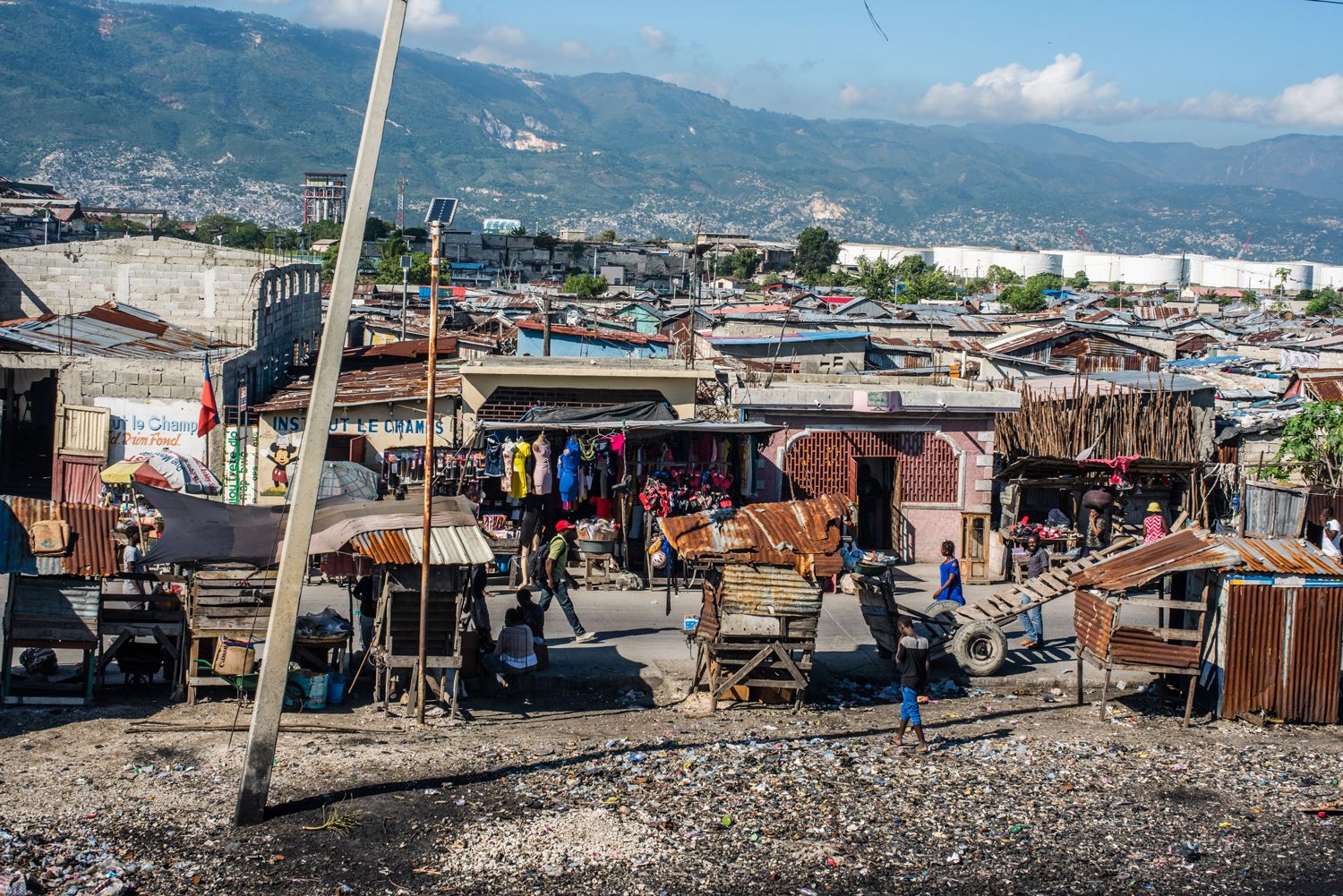
Today - against the backdrop of the impudent murder of President Haiti in his own bedroom, as well as a crime of crime in the capital - a question that has long excited the Western world, sounds like ever: why is Haiti constantly in crisis? How to explain with a stunningly low level of literacy, salaries at the level of two dollars per day, hunger and illness? Why is there no public transport, normal power supply, garbage and sewage removal systems in the country?
It is clear that one of the reasons is chronic corruption in the country's leadership. But in long -forgotten documents scattered according to the archives and libraries of Haiti and France, you can find other explanations.
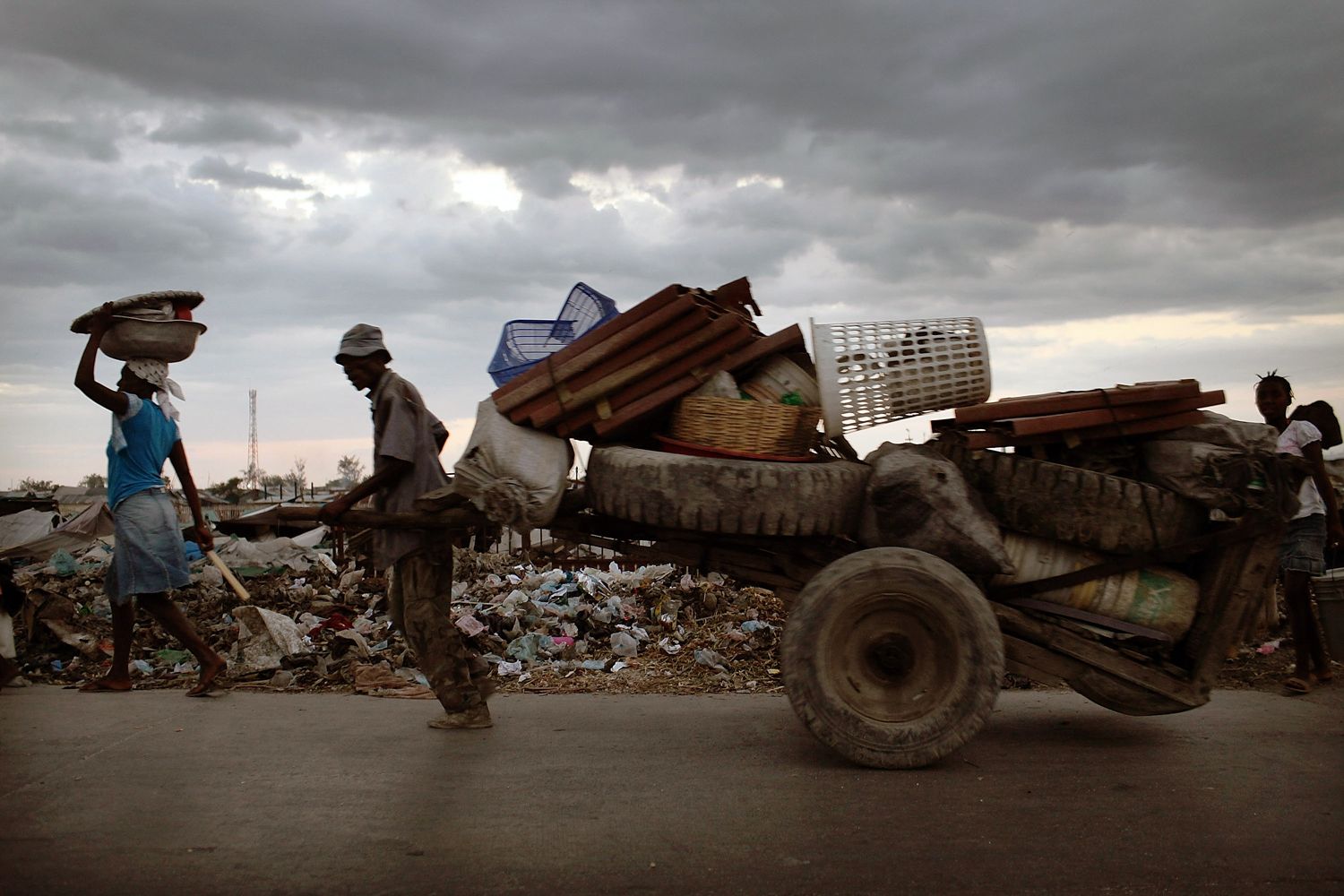
NYT studied the texts of the XIX century - for example, diplomatic notes and banking documents - which before that were almost not known to historians. All of them indicate that CIC, together with corrupt representatives of the Haitian elite, left the country almost without a livelihood.
By the beginning of the 20th century, half of the taxes on the crop of coffee - the main source of income of the Republic of Hiti - went to French investors in CIC and the National Bank. After subtracting other debts of Haiti, an insignificant part remained to manage the country - six cents with every three dollars.
From the documents it becomes clear why the times known in the USA as a gilded age, and in France - like Belle époque, a beautiful era, passed by Haiti. Incredible growth was beneficial for both the distant powers and the developing neighbors of Haiti, and this country had a disappearance of resources to invest in the most necessary - water supply, electricity or education.
For three decades, French shareholders have earned at least 136 million dollars at the National Bank of Haiti (at today's prices) - this is about the annual income from the country's tax at that time.
However, the total losses that the country suffered is much higher: if this money remained in Haiti, over the years they would bring the economy at least 1.7 billion dollars in profit - this is more than the country's budget revenues in 2021. And this is only if the money simply remained in the economy and were in circulation of peasants, workers and merchants, and were not invested in the construction of bridges, schools and factories, that is, in projects that contribute to development and prosperity.
And most importantly, funds were withdrawn from the country after Haiti paid by generations to their former slave owners. Over two centuries, losses for the country's economy amounted, according to various estimates, up to $ 115 billion.
The Haitians quickly realized that something was wrong here. The National Bank withdrew so much and gave so few that the residents of the country began to call the structure “financial basket” - equating the bank with a famous prison, which became a symbol of the despotistical French monarchy.
“Is it not funny that the bank, which allegedly came to the aid of the exhausted state treasury, did not start by making money, but from withdrawing everything worth it?” - wrote the Haitian politician and economist Edmond Paul in 1880.
Henri Dury, the head of CIC, did not immediately succeed in the financial industry of France. In the 1870s, CIC lived in the second league of French banks-but he had an advantage in the form of the main clientele from the Catholic bourgeoisie, ready to invest in promising projects. Durye was inspired by the example of state banks in the French colonies of Senegale and Martinics. He and his colleagues were inspired by the idea of "creating a bank in rich but distant countries." Such banks “usually give brilliant results”, the founding fathers of the National Bank of Haiti reasoned, as follows from their notes discovered in the national archive of France.
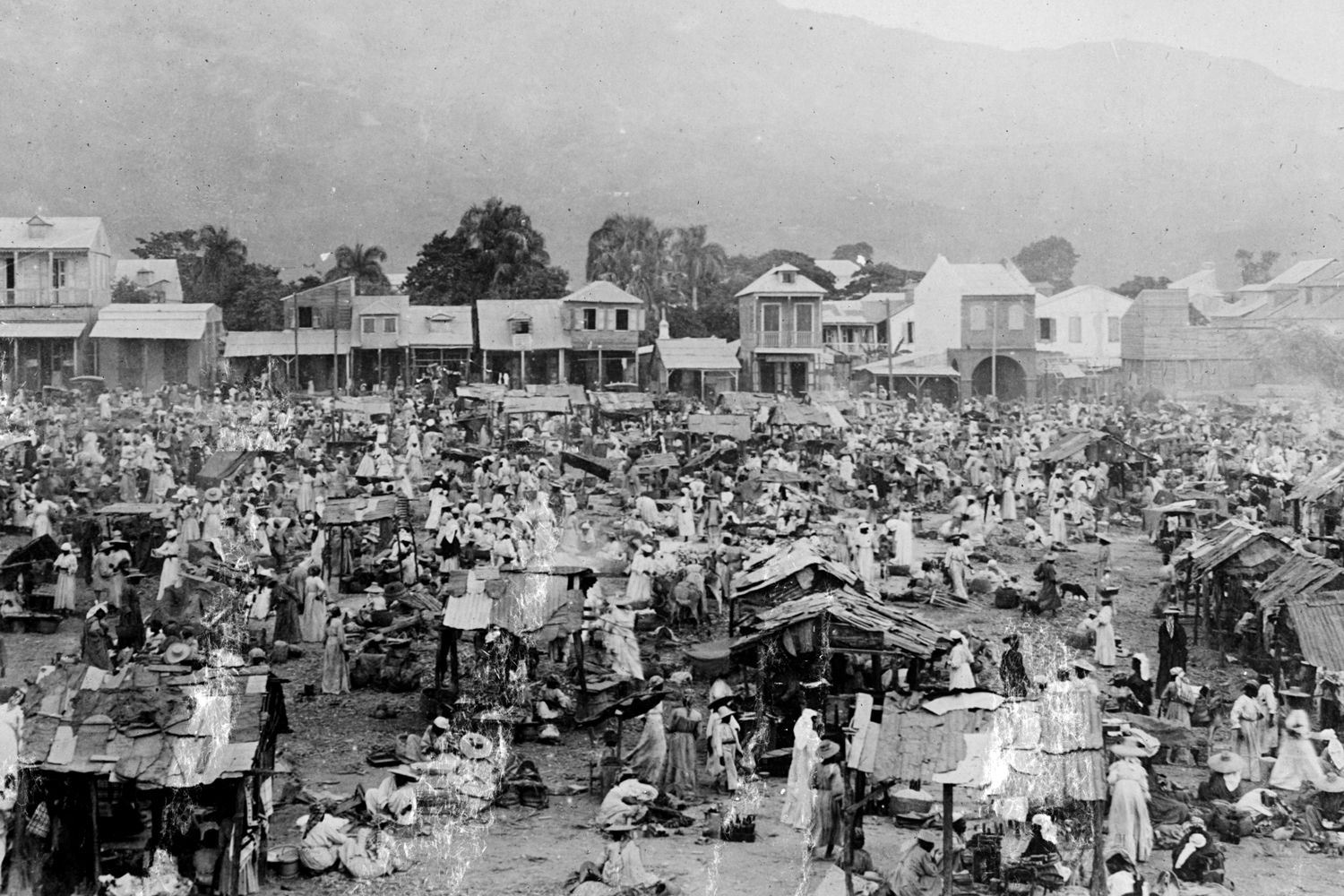
To call Haiti a “rich country” at that time would be a fair exaggeration. The capital of Port-o-Prens was filled with garbage and sewage, which merged directly into the bay. The condition of the streets and infrastructure was so disastrous that the Haitians had a saying: "Wash the bridge, but never go along it."
The Haitians themselves were vegetated in poverty, but it was easy to enrich here - due to a unique geographical position, fertile soil and climate. The slave owners did this: with the help of a lap, and then the flotillas of warships demanded compensation for the lost plantations, the land and the people of Haiti, which France considered their property.
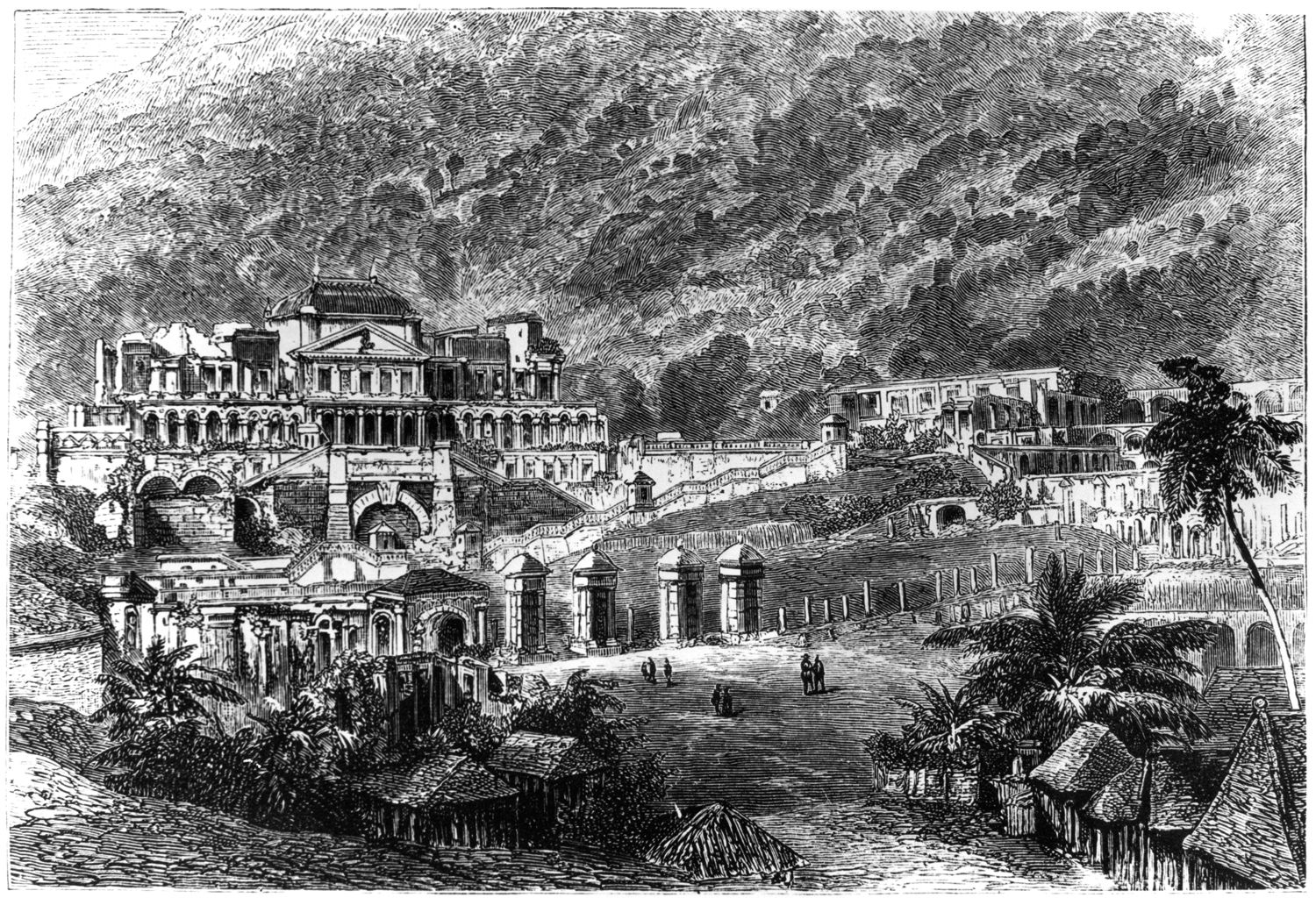
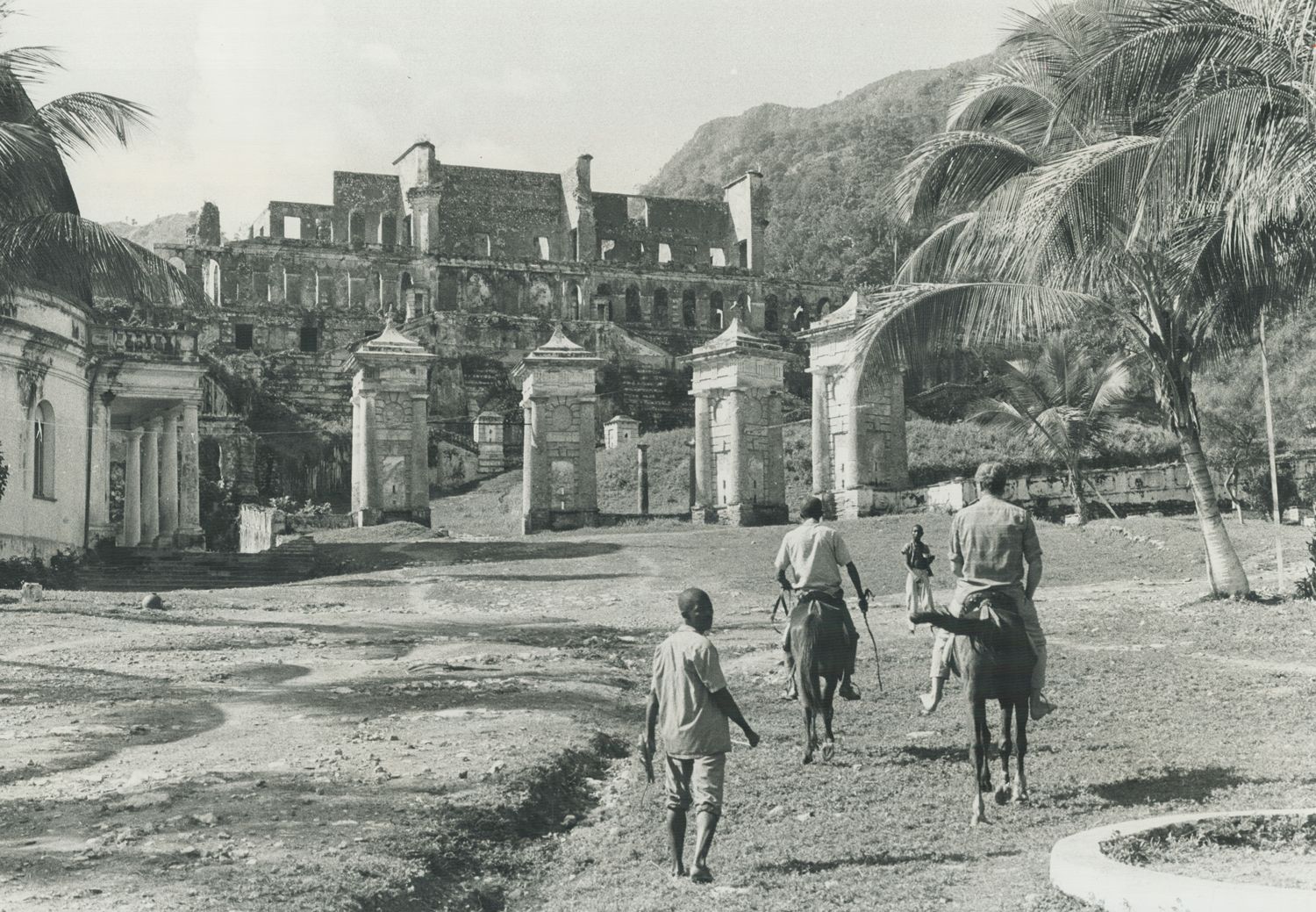
" We must even more than before"
Five years before the institution of the National Bank, CIC has already provided Haiti with a loan of 36 million francs - this is about $ 174 million at today's exchange rate. With this money, it was supposed to build bridges, markets, railways and beacons.
About 20% of the French loan was planned to be immediately launched to pay the remaining part of France's reparations. However, the French bankers immediately accrued 40% of the loan in the form of commissions and fees. The rest went to pay old debts - or was lost in the pockets of corrupt Haitian politicians. “None of the goals have been achieved,” said one of the senators of Haiti in 1877. “We must even more than before.”
The loan issued in 1875 had two main consequences. The first is that the economist Thomas Piquetti called the transition from "cruel colonialism" to "credit neocolonialism." The country was finally hoping to get rid of the burden of payments, but in reality this loan only fixed the financial bondage. Families of former slave owners have long considered the debt repaid, and Haiti was still paid - only now the Crédit Industriel bank. Part of the responsibility for this, of course, lies with the corrupt local politicians who hoped to fill their pockets to the detriment of the development of Haiti due to this loan.
The country felt the second consequence even earlier. The terms of the loan obliged the government to transfer CIC half of tax revenues from the main articles of export - in particular, coffee - in fact, blocking the country's access to the main source of income.
This was the first step of Dury and the French bank on the way to take the future from Haiti. But this was not limited.
Durye and colleagues immediately took under their full control all the Treasury operations of Haiti: the seal of banknotes, tax collection, payment of salaries to civil servants and so on. Whenever the government deposited money for a deposit or paid an account, the National Bank took a commission. So that there is no doubt in whose interests all this is being done, the Charter of the National Bank of Haiti stated that it was registered in France and Haitean taxation and legislation will not be extended to it. All power was given to the hands of the board of directors in Paris. The country did not have the right to vote in the management of its own National Bank.
The headquarters of the National Bank of the Haiti-the legal address of which coincided with the address of CIC-was in the IX district of Paris, next to the luxurious building of the Grand Opera. Durye was the first chairman of the board of directors. And the council also consisted of Eduard Deleser, the great -grandson of one of the main slave owners in the colonial history of Haiti.
This scheme brought it to the authors a record profit. In times when the usual amount of income from French investments was 5%, members of the board of directors and shareholders of the National Bank of Haiti received an average of about 15% per year. In some years, the return on the investment of shareholders of the bank was approaching 24%.
Duryard got a great job. Under an agreement with Haiti, he owned thousands of bank shares worth a millions of today's dollars. And in the year of the institution, the National Bank of Henri Durye became the commander of the Legion of Honor - in fact, this is an order for merits to France.
"Devilled by their own brothers"
The fact that the country agreed to such unprofitable conditions speaks of its level of despair. But behind all this is a fairly common type of personality in the history of Haiti - a selfish wage who flourishes while his country is suffering.
In the case of the bank, the main negotiator from Haiti was Charles Laifafortry, an official who spent most of his life in Paris. When in 1875 the Parisian bankers organized a reception in honor of the issued loan, Lafortry arrived at him exquisitely dressed and distributed expensive cigars to the right and left - and this is in the era, when the Haitian peasants growing coffee contained their families worth about 70 cents per day.
“This is not the only example of how the Haitian official betrays the interests of his country in exchange for personal benefits,” says historian Georges Michelle. “I would say that this is rather a rule.”
The Haitians cannot blame all their troubles only French or American intervention. “They were devoted to their own brothers - and then foreign powers,” says Michelle.
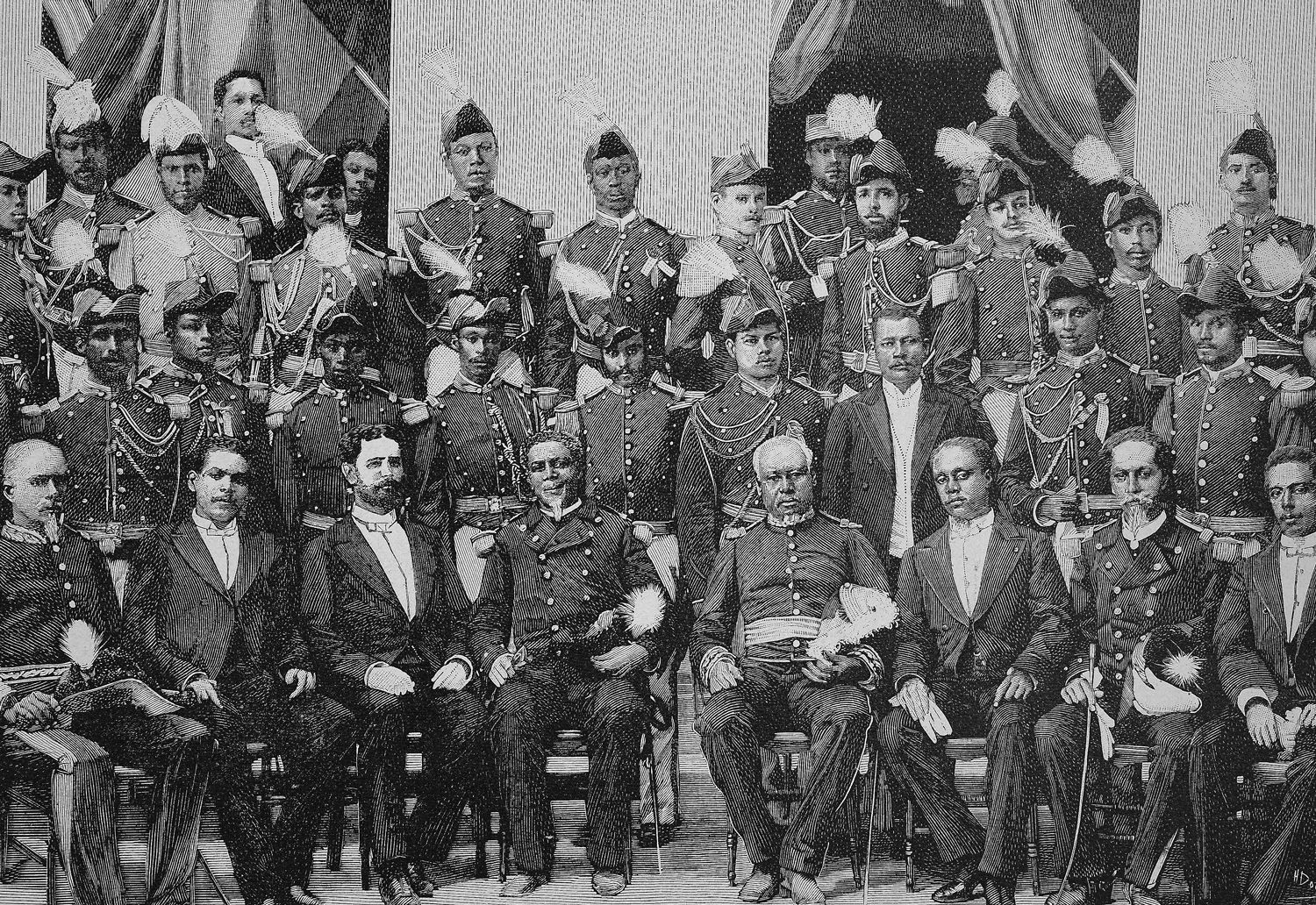
Shortly after the Saluts in the palace in Port-o-Prens, the inhabitants of Haiti began to realize how unfairly they treated.
The National Bank did not open savings accounts for citizens or companies. Although the contract suggested that the bank could provide loans to business - and the Haitians clearly hoped for it - it follows from documents in the archive of the French city city that such loans were extremely rare.
“From the bank in the form as he is now working, one should not expect the restoration of Haiti,” wrote the then Minister of Finance of the country Frederick Marselen. Marselen was the most active opponent of the National Bank. A businessman, a journalist and politician fought for years to take control of the bank from Paris. “The only position in the National Bank of Haiti, which the Haitians could count on, is a cashier,” he wrote.
Another loan
The second half of the 19th century was supposed to open incredible opportunities before Haiti. The global demand for coffee was high, and the Haiti economy was built around this industry.
Another country in the Caribbean, Costa Rica, spent income from coffee for the construction of schools, sewage and an electrified lighting system-the first in Latin America. Haiti listed most of his income from coffee for the payment of France - first to former slaveholders, and then the Crédit Industriel bank.
Despite this, due to the high prices for coffee, the country was a middle -level Caribbean economy. But when in the last decade of the XIX century the coffee market sank, the tax from Haiti on coffee exceeded profit from its sale. The economic model was on the verge of collapse.
There was a time for another loan of 50 million francs (today it is about $ 310 million) from the National Bank of Haiti in 1896. And again, the loan was provided by coffee taxes - the main source of the country's income.
The Hitians remained poor for several generations. But it was at this moment - when the country was tied to coffee, CIC and a national bank - the Haiti economy (relative to other countries of the region) began to decline sharply.
“The country has made a lot of its own mistakes,” says British economist Viktor Balmer Thomas, “among them the decision to get into a loan and the inability to diversify the economy again. But there is no doubt that starting from the end of the 19th century and further many Haiti problems were caused precisely by the actions of the imperial powers. ”
The end of the National Bank
Henri Durye died in 1890, not making the collapse of his own bank. In 1903, the Haiti authorities began to accuse CIC of overstating the bills, illegal doubling of the interest rate and work to the detriment of the country's interests. However, CIC reminded of an important detail: the bank was registered in France and such disputes could not be resolved as part of the Haiti vessels.
Marseille was not afraid and persuaded the parliament to regain control of the state treasury. Haiti began to print their own money and pay on your own accounts.
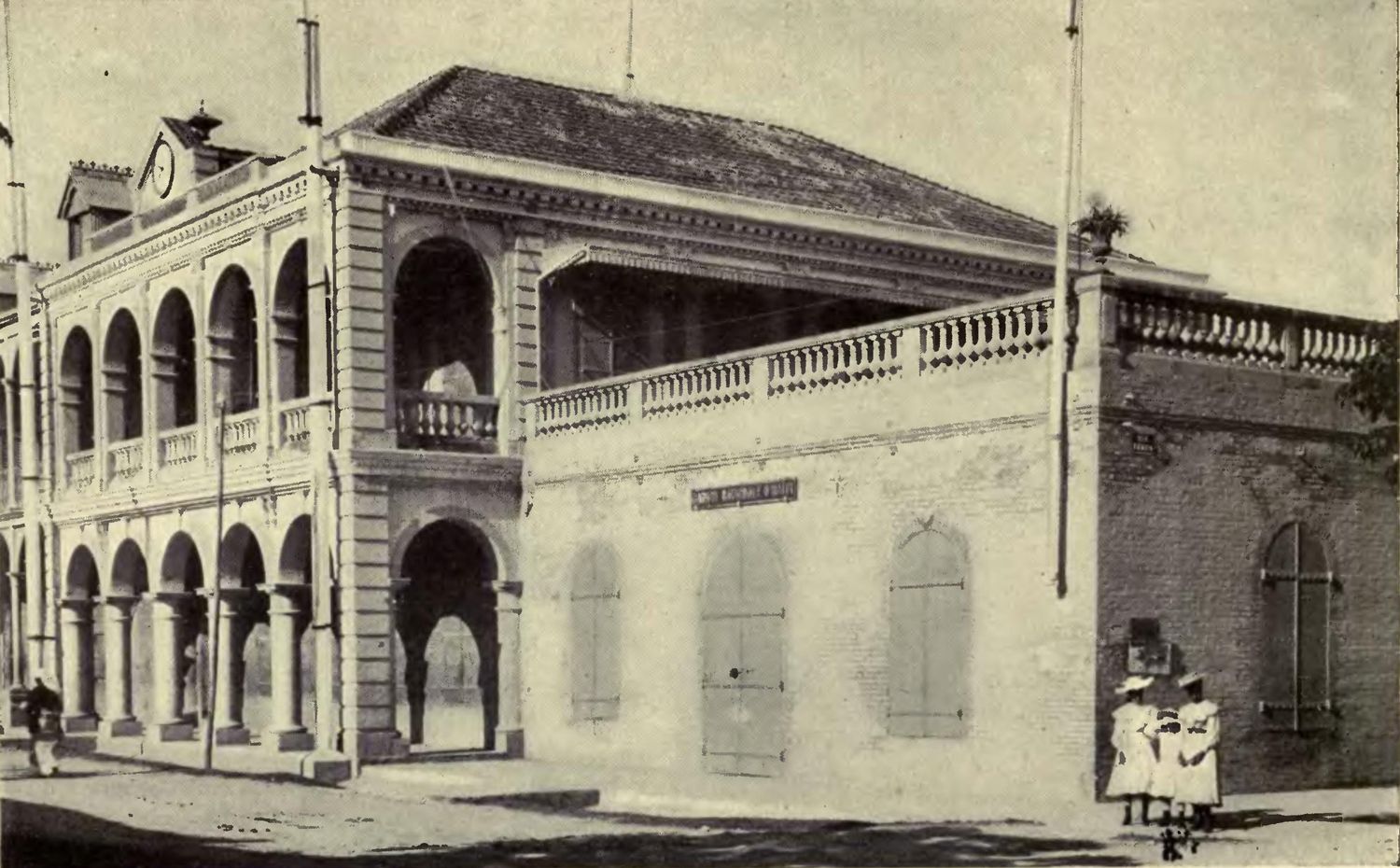
However, the National Bank still had an influential ally - the French government. In 1908, the French ambassador to Haiti Pierre Karteron met with Marseille and tried to persuade him to restore relations with the bank. Marseille refused. Он заявил, что, если Национальный банк Гаити вообще хочет выжить, ему придется работать на экономическое развитие страны.
Это возможно, ответил Картерон. После чего добавил, что, разумеется, Гаити придется сначала передать свою казну назад под контроль Франции. А кроме того, вам нужны деньги, заявил Картерон: «Где же вы их возьмете?»
Судя по письмам посла, он и сам подозревал, что Марселен никогда на это не пойдет. Тогда он призвал коллег в Париже придумать новый план. «Исключительно важно изучить вопрос о том, как можно учредить новую французскую кредитную организацию в Порт-о-Пренсе — без каких-либо прямых связей с правительством Гаити», — писал Картерон.
Новое учреждение — со слегка измененным названием, Национальный банк Республики Гаити, — открылось в 1910 году. У Франции по-прежнему была доля в нем, но через 30 лет после своего появления на Гаити Crédit Industriel et Commercial наконец покинул страну.
Однако к тому моменту в финансовом мире появился новый центр притяжения: Уолл-стрит и группа банкиров из National City Bank of New York (предок современного Citigroup). Американские финансисты продолжили играть по правилам Дюрье. А кроме того, Уолл-стрит владела оружием гораздо более весомым, чем смутные дипломатические угрозы. Банкиры обратились к своим друзьям в Вашингтоне, и — спустя 35 лет после учреждения банка Дюрье — американские войска вторглись на Гаити.
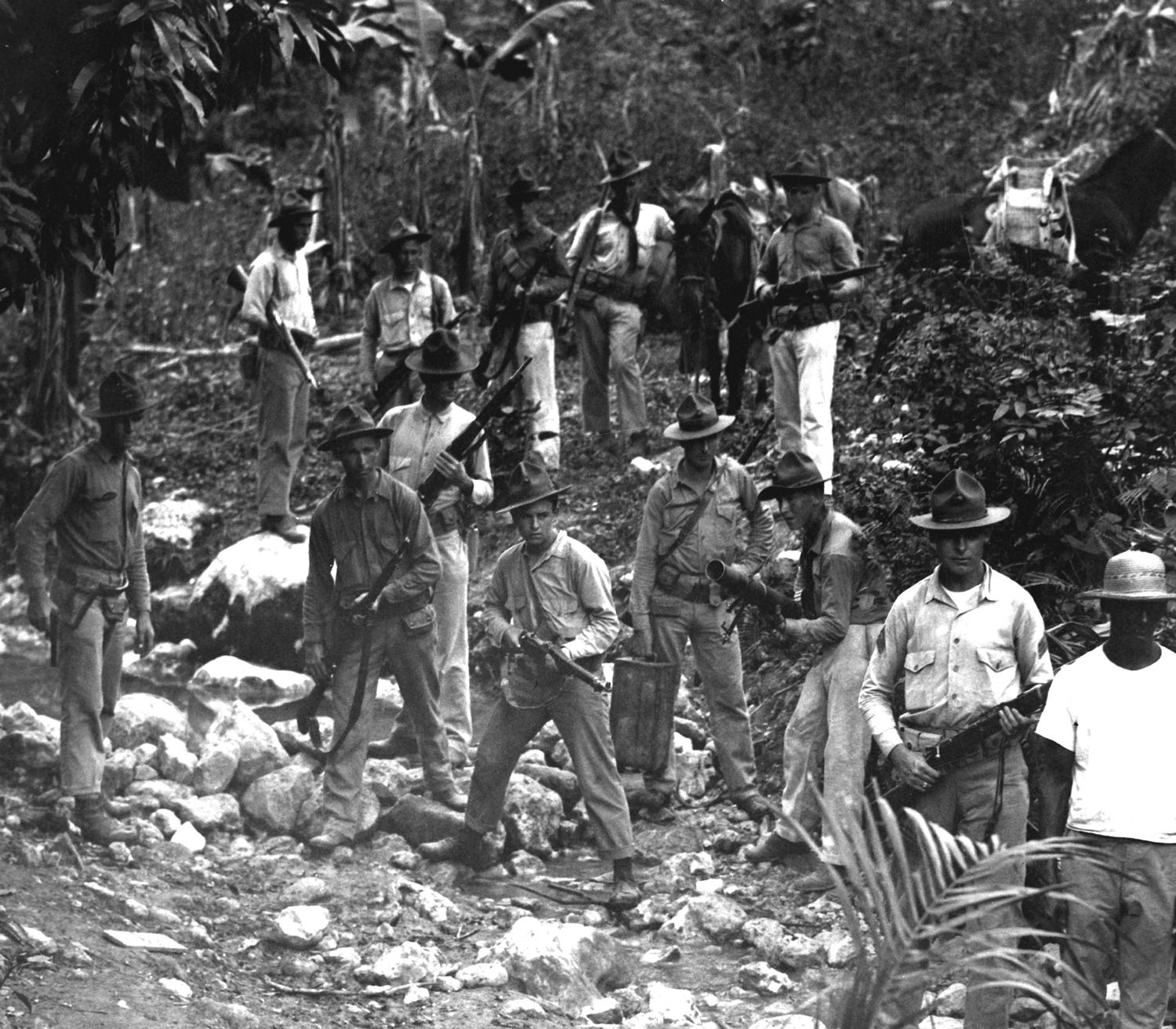
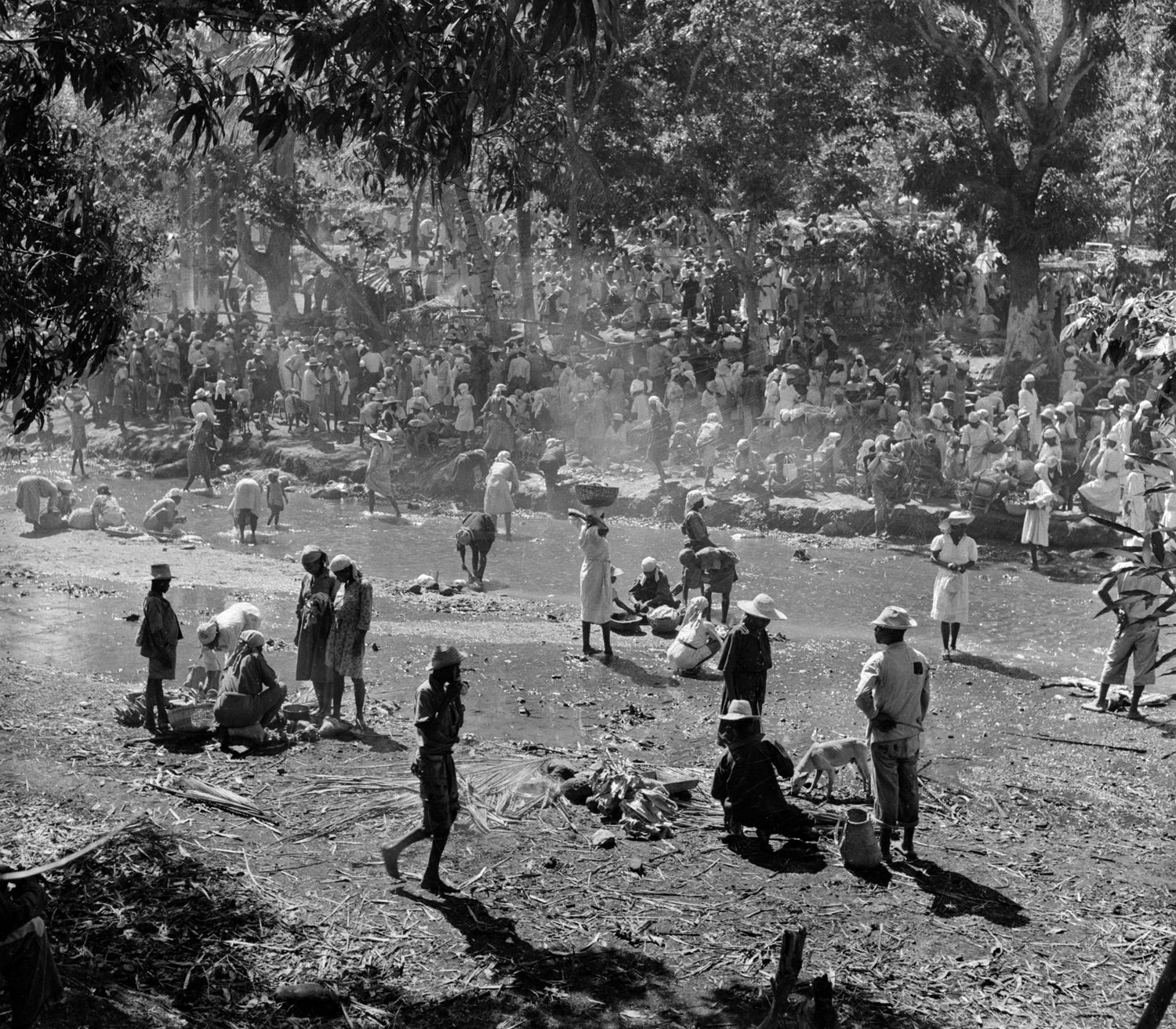
Это была одна из самых продолжительных военных оккупаций в американской истории, которая позволила Штатам установить контроль над финансами Гаити и в течение многих следующих десятилетий определять будущее страны.
Rethered by Dina Mingalieva