
Translated material
Armageddon and intelligence
Golden palm branch of the most vivid and provocative picture of the competition - “Triangle of Sorrow” Ruben Estlund
The Cannes festival is scolding for political engagement, for singing in front of Hollywood, for the lack of masterpieces (as if Cruisette pledged to supply them). One thing is indisputable, the main main film contest is similar to the chocolate factory of Willy Wonki with herbal meadows from mint sugar and the true passions of moving shadows on a giant screen. Almost all the films shown in the Lumier hall, and even more so that got into the award list, will watch, discuss, put forward to various awards.
Brothers and sisters
The key theme of the program was “Family Affairs”. The fragile institution of the family, the dashed of intimate ties cannot withstand the external pressure of the burning, decaying in front of the world. But it is precisely for these ties that the problems drowning in storms, are grabbing like a straw.
James Gray in the underestimated painting “Armageddon Time” recalls cloudless dixyalenic 80s. By mood, this is Mix Woody Allen and Tom Soer. The story of a family whose ancestors fled from pogroms in Ukraine, the story of friendship of two boys, torn by betrayal. It is based on the personal memoirs of the director. He studied at the same privileged private school, which was graduated from Trump and led by Dad Trump. But the partnership of two boys is tied in the most ordinary school. A boy from a respectable Jewish family Paul and a dark -skinned outsider Johnny, an orphan living with a paralyzed grandmother. For the floor, their friendship is a sip of unreasonable freedom, the first jamb and even more risky adventures. For Johnny - the opportunity to lean against a normal family. Everything will end in unchanging postulates of a hierarchical society: the prince will remain a prince, a beggar will go to prison.
In many ways, a similar topic in the completely wonderful “close” Lucas Don (Grand Prix).
If in the picture of Gray everything is bright, voluminous, with expression, then Don prefers watercolor, a light Bresson ligger with air.
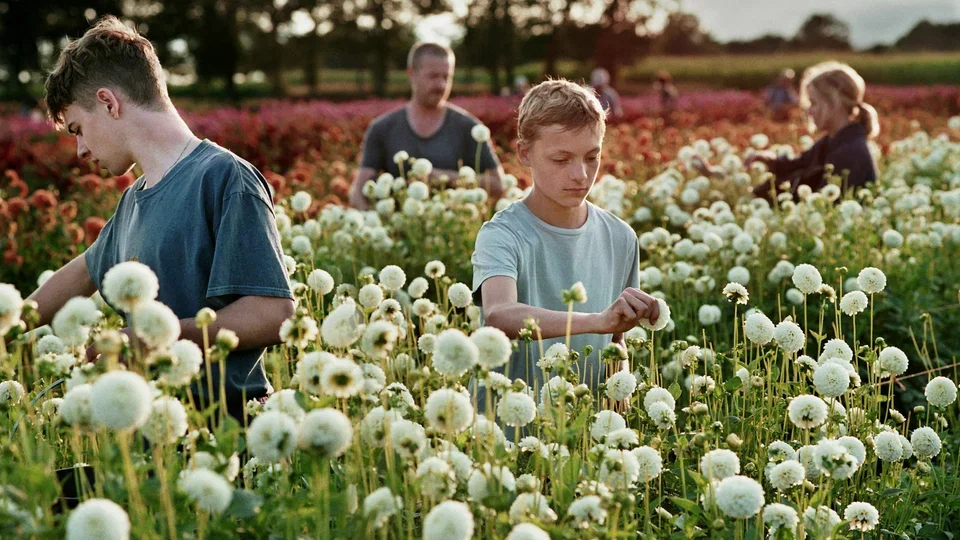
It seems that the film is shot in one touch. The 13-year-old teenagers Leo (Iden Dambrin) and his best friend Remi (Gustav de Leale) literally bathe in the village idyll, in paradise of friendship-do not spill water. The Leo family controls the flower farm, and the whole frame is colored with flowers. When the boys through this color rainbow are racing on bicycles when they are lying in herbs, when they help adults collect and pack inflorescences. Then the first school day will come. And this unconditional proximity of the guys evokes a rush, oblique glances, laughter in classmates. Leo can’t stand it, he begins to move away from Rem. His betrayal is akin to a quiet, almost imperceptible betrayal of sex from the "time of Armageddon." Then Dont develops history in such subtle registers, when almost physical stress, pain, and a burn of guilt present themselves in half -seats, views, and in silence. This inconsolable story is about the awareness of its identity, and about latent homophobia, and also about dangerous proximity to the edge of life in the most difficult adolescence.
In the competition, which was partly similar to the festival of teenage cinema, one of the most harmonious and accurate work was a new picture of the owners of two palm branches of the Dardennov brothers. But many said that their “Tori and Lokita” repeated the created paintings by them. It seems that all this has already been: African refugees, a bicycle boy, and a huge distance between two children (Lokita is a teenager, Tori - nine years old) - and a prosperous civilized world. But it seems to me that Dardenna, like no one, can connect in the space of one “simple story” human, cordial with civilized cannibalism. The minimalist quiet tragedy of Tori and Lokita affects the charitable, missionaryness and protecting them, which is unheated, like a rock, the world of bureaucracy - a scent insensibility of the European world. Which crosses out good undertakings and good intentions. Welcome to our civilized hell, where monetracia still runs, and certificates have long turned into a weapon of mass destruction. Lokita and Tori, who met on the ship, try to prove that they are a brother and sister. Because they love each other like a brother and sister. And no one else loves them. Gradually, good uncles draw them into a bonded slavery, drug business, Abuez. Without the right to early release. This is a direct action movie, but not a frontal one at the same time. Everything is recognizable here. And everything is recognizable hopelessly.

Dardenne-romantics, still believe that a movie still means something, something can. It is hard to believe. But let them hear them.
In the final, I remembered the gloomy Sigarevsky “top”, it was also lullaby as catharsis. An uncomplicated melody with repetitions, from which hesitates. Like from the film Dardenov.
Another family drama, which, on the contrary, promised the awards - the “Brothers Leila” Said Rustai. And we carefully look at the mores of Iranian society. A woman in the center of the patriarchal society. Only Leila has stable work. And she also prepares, removes, plans the future and supports four adult outsider brothers and a half -sales with the beginning Alzheimer of the father, who is with the idea of Fix - to become a patriarch of a related clan. A characteristic metaphor: Leila is the core of the family, everything holds on it, and her back hurts terribly. No means help. And she continues to pull all this WHO, overcoming the pain. Dramatic comedy in the spirit of Italian neorealism.
In the “intermediary” of Hirokazu Koraad (a prize for the best male role, Slee Kan Ho) The plot is spinning around the founding of Baby boxes, it turns out that in Korea there is simply a boom of such “children's boxes”. They are left in special drawers at churches. They try to resell the new parents more expensive. The adventurers turn into a rather strange family in the course of adventure: the young mother-prostitute who killed her lover and tried to get rid of the baby, two accomplices that cause new parents and a ten-year-old orphan from the shelter. All of them are terribly cute, as the criminal comedy tells, although the moral aspect of manipulations with kidneping and the child’s trafficking leaves a lot of questions.
Crimes and torment
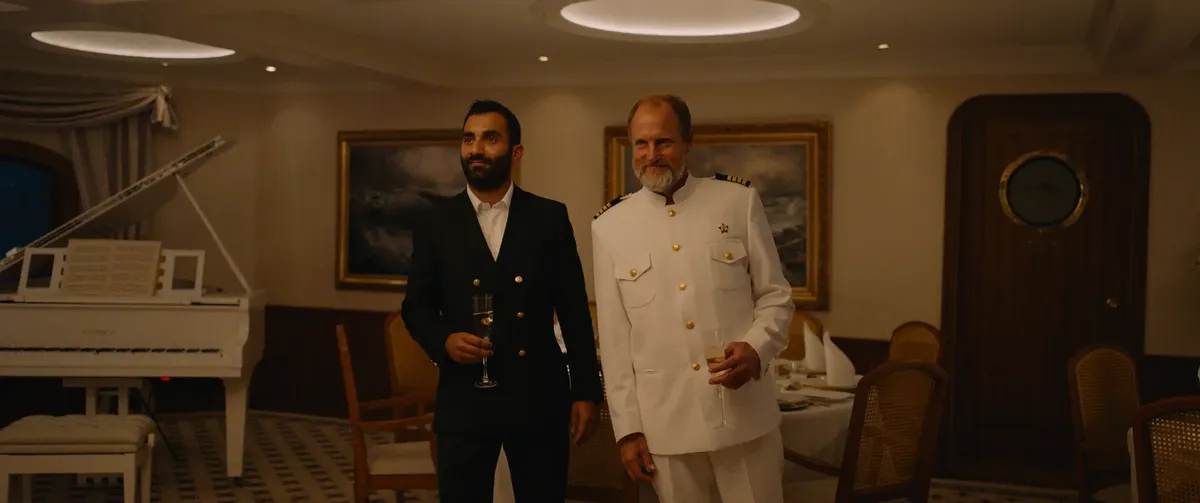
One of the main festival trends: the competition has less and less pure art house. Star directors with more or less success are trying to find fresh artistic solutions, a movie language for genre cinema with spectator potential. This is Estlund (we wrote about his pharmacenic philosophical anti-utopia “Triangle” ), Claire Denis (awarded the Grand Prix “Stars of noon”-a criminal thriller from which politics, sex, corporate espionage, and all this in a burning atmosphere of the revolution of the revolution in Necharagua).
Kronenberg in his not better picture of “Crime of the Future” -Gifts Body-Horror in the Philosophical Science Fiction Cololar. Mystical dystopia about the near future, in which the analgesics completely killed the pain. And without pain, who are we? The terrible, phlegmatic, in some places repulsive, in some places primagnetizing Sleep Nuar on changeable flesh and aggressive transmutation. The pain becomes an supermodific feeling. Like old sex. He is in the past, the new one is surgery with the orgasm of the sweet moments of pain. “I am only interested in the inner world of a person,” my husband jokes, professor-surgeon. About the same in the "crimes of the future." About the ugly beauty of the “inner world”, such as the organs of a phlegmatic performer of Sol (Viggo Mortensen). The oracle of new physicality grows them inside himself during sleep in an artificial uterus swinging on the venous hoses. His assistant Caprice (Seydu), in the past, the surgeon, sees excess and tatter the flesh in the voyeurist show. The body, as a spectacle with its percussion, reminds of medieval comprachicos. For Kronenberg, his cinema is not only a reflection on the medieval future, which fell into a muddy rusty past, but also about cinema, which stood old ideas and forms. This film is also in a sense of transmutation, eruption of forbidden flesh instead of new meanings. It would be nice to analge to the viewer before the show.
The unconditional success in the combination of copyright and commercial cinema is reached by my favorite of the contest Pak Chkhan-UK. The creator of "Oldboy", "Handoys" is quite rightly called the best director. “The decision to leave” is a dizzying thriller with a noir lining, which is compared with the “main instinct” and with the Hitchcock “dizziness”. This is a pure, unknown movie. He Zhong is a detective who was bored in the absence of serious matters. With RE - the widow of a climber that broke off the cliff, a refugee from China. And she is not lucky with her husbands: they somehow die strangely. But the captivating with RE is not to blame, because she has an alibi. True, for some reason he smiles when she is announced to the death of a loved one. Fatal fam-fatal, mysterious and magnetic. Next to such, even completely correct, deeply married detectives burn. Like Ha Zhong, for example, which has many pockets, each needs something necessary: handkerchiefs, drops for the eyes, candies from smoking. A movie about the obsession that rules the world and washes off it like sea sand. Filmed space. An unforgettable finale on the shore of the bay, beautiful in its drama and the disastrous beauty of every wave into which the camera peers.
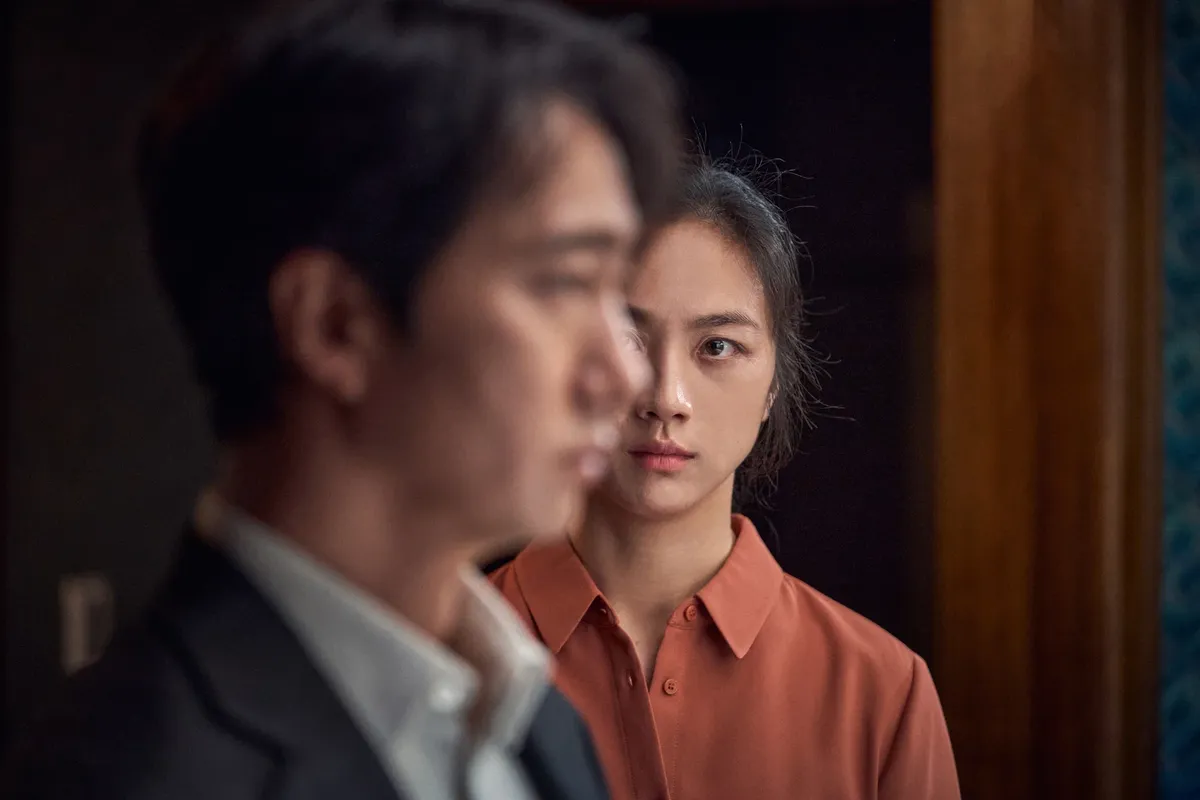
And here is a good news for the Russian viewer, the distribution company Arna Media acquired the right to the picture, it will be released in cinemas.
And an amazing and surprising Kapatalon artist and director Alber Serra (“Death of Louis XIV”, “Liberte”) was responsible for the refined layer of arthouse. The action of the film is perspicaciously called “torment on the islands” (if what is happening within two hours forty minutes can be called an action, rather this hypnotic session) occurs on Tahiti in French Polynesia. A high -ranking French official de Roller (Benois Maymiel), calls himself a local resident, and demonstrates an attentive patronizing attitude towards "ordinary people." Although it is transparent that the government is considering the possibility of resuming nuclear tests on the island for the first time since the 90s. He even saw a submarine nearby. Or it seemed? He circles the island and endures endlessly on the most abstract topics. And around this visiting philosophizing vizier is a surrealist local escort: an irresistible feminine transsexual, the mayor, a little admiral, who declares implete: “By the way we treat our own people, they will see how we will treat our enemies.”
Everything is dotted here: relations, and politics, and life itself. As a dream or mirage, like predicted darkness -
Because all the time it seems that a nuclear bomb will really fly to these paradise boards or a submarine will crawl out of blue water to the shore.
I would like to tell about the Ukrainian picture “In * and the Deny of the butterfly” * Maxim Nakonechny. She was in a “special look”, and unfortunately, she did not receive a reward. But obviously, deserves attention. This is a drama about the Ukrainian gunner Lily with the call sign “Blub”, which was engaged in air intelligence. After a two -month captivity in the "DPR" it was exchanged for the Russian military. She has a groomed back. And she is pregnant. Here is such an exposition that is embroidered with the threads of dramatic, including family relations. A wandering story about the impossibility of returning from war in this picture acquires its sound. Because a woman has returned from the war (I recall the "Dylda" Kantemir Balagova). Because under the heart is another life. The question is whether there is something left of the heart. The tip does not make propaganda cinema. In his film is a ball of conflicting problems and those on which he does not close his eyes. For example, the husband Lily is a member of a nationalist organization that smashes foreigners, like gypsies. It is clear that he cannot come to terms with the child from the enemy. And in the nightmares of Lily, she is haunted by a huge butterfly, the world - as if the image broke up on the pixels: all the time is torn, covered with a screen rash. She is trying to focus her eyes, to instill more precisely the sight of her camera ...
The Show Must Go on
For decades, Cannes have been trying to combine relevance with the interpretation. Therefore, among the festival favorites of the Base Lurman. The creator of films as a musical movie show introduced the new Bayopic Elvis. Crowds of screaming fans in anticipation of the coveted autographs. On the red carpet Tom Hanks, Sharon Stone, Austin Butler, Casey Affleck, Baz Lurman, the famous tracks of Presley sound from the speakers. It seemed that another moment, and the King of the Rock-n Roll himself would show himself his non-stinging retinue.
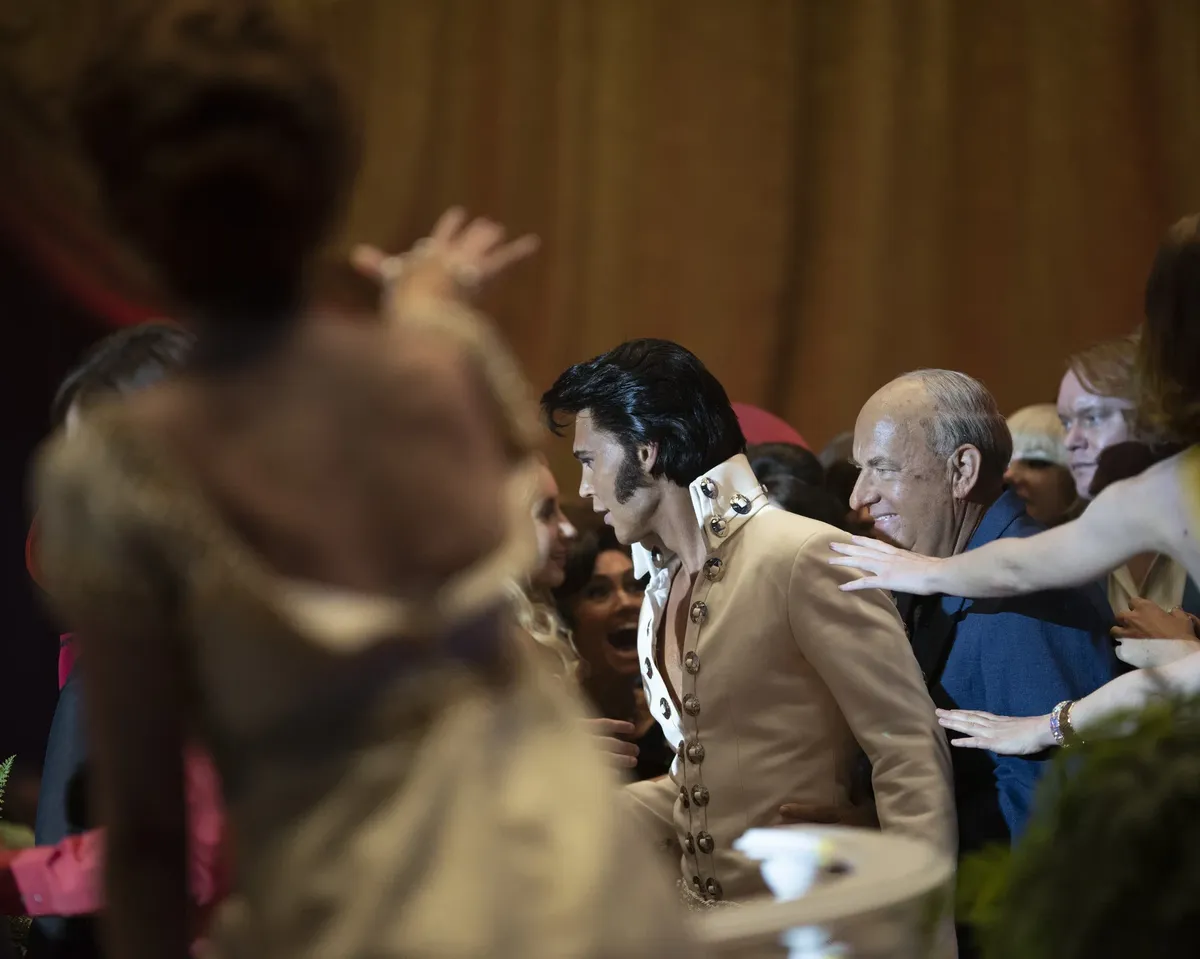
Lurman and its co-authors do not follow in detail the biographical milestones of the super-star. They bind their story from two general leitmotifs. Elvis - and his manager Tom Parker. Elvis - and his army of fans. Who manipulated by whom? For Parker, the golden voice became gold residential. The former stray manager of the circus immediately felt the space supply of adrenaline in the speeches of an unknown subtile young man with a guitar. Parker insists that he was the creator of an unattainable idol. But a mutually beneficial exclusive transaction turns into manipulation, Gazlaling. I must say that the authors clearly overdo it with Parker. Tons of make -up is reliably covered behind a hanging nose, latex cheeks of Tom Hanks. He was turned into a cartoon greedy villain, who was forever locked his ward Pinocchio in a golden cell with kilometer contracts. But Austin Batler is amazed at a gradual incredible metamorphosis. At first, this fragile guy with painted eyelashes, it seems, has nothing to do with the form that has developed in our heads. But at one of the concerts, the young singer, who is not able to hold the attention of the hall, begins to dance, in the hypocrisy era to move his hips almost indecent, hug a guitar, and dance with her. And his rock and roll, his opera voice, in which the “black music” interfered with sex-are connected to this outlet of the spectator instantly and forever. And in the final, Batler is almost not distinguished from real Presley. And Lurman includes a dramatic code under the curtain-documentary frames of one of the last performances in Las Vegas. “Unchained Melody” - Lonely rivers cry, wait for me, wait for me. It is known that when Elvis died, the fans did not believe in his death. They dug up the grave to make sure, composed legends that the idol simply decided to hide from the world, composing fictitious death. Because the gods do not die.
They are simply reincarnated and come to life on the screen.