
Translated material
No one can fight
What is the offensive in the Donbass that the Armed Forces of Ukraine are going to contrast the army of the Russian Federation and how "diplomacy" in this war can look like - analytics from Yuri Fedorov
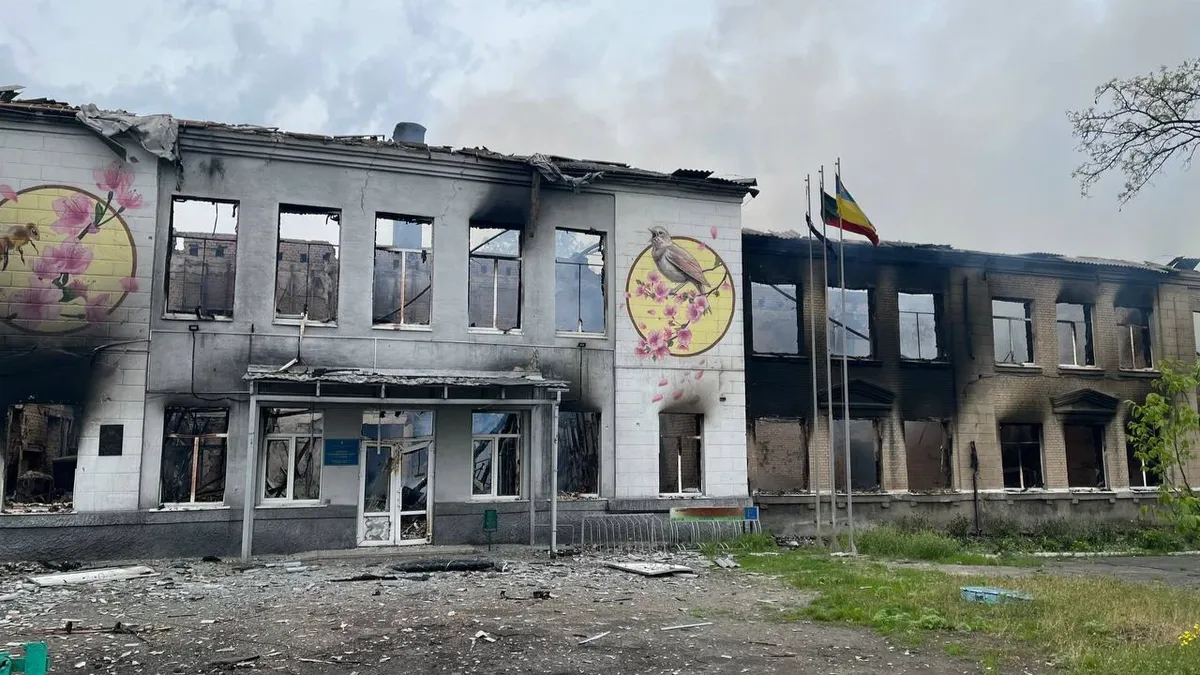
Three months after the start of the Russian aggression, the “fog of war” in Ukraine became less dense, the results of the spring campaign were indicated, the contours of the development of the situation in the coming weeks are emerged. Ukraine withstood the most severe blow of the Russian military machine and inflicted political and military defeat to the Kremlin: they were forced to refuse to capture Kyiv, the change of Ukrainian leadership and its transformation into a Russian protectorate. In Moscow, less ambitious goals were nominated: the seizure of parts controlled by Kyiv Donetsk and Lugansk regions, as well as the southern regions of Ukraine, up to the border with Transnistria. The American intelligence community evaluates the current situation on the fronts as a path: neither one nor the other side is able to achieve its goals. However, fierce military operations continue. At the request of Novaya Gazeta. Europe ”Military expert Yuri Fedorov appreciated the possible ways of development on the fronts of Ukraine.
"Decisive" battle for the Donbass
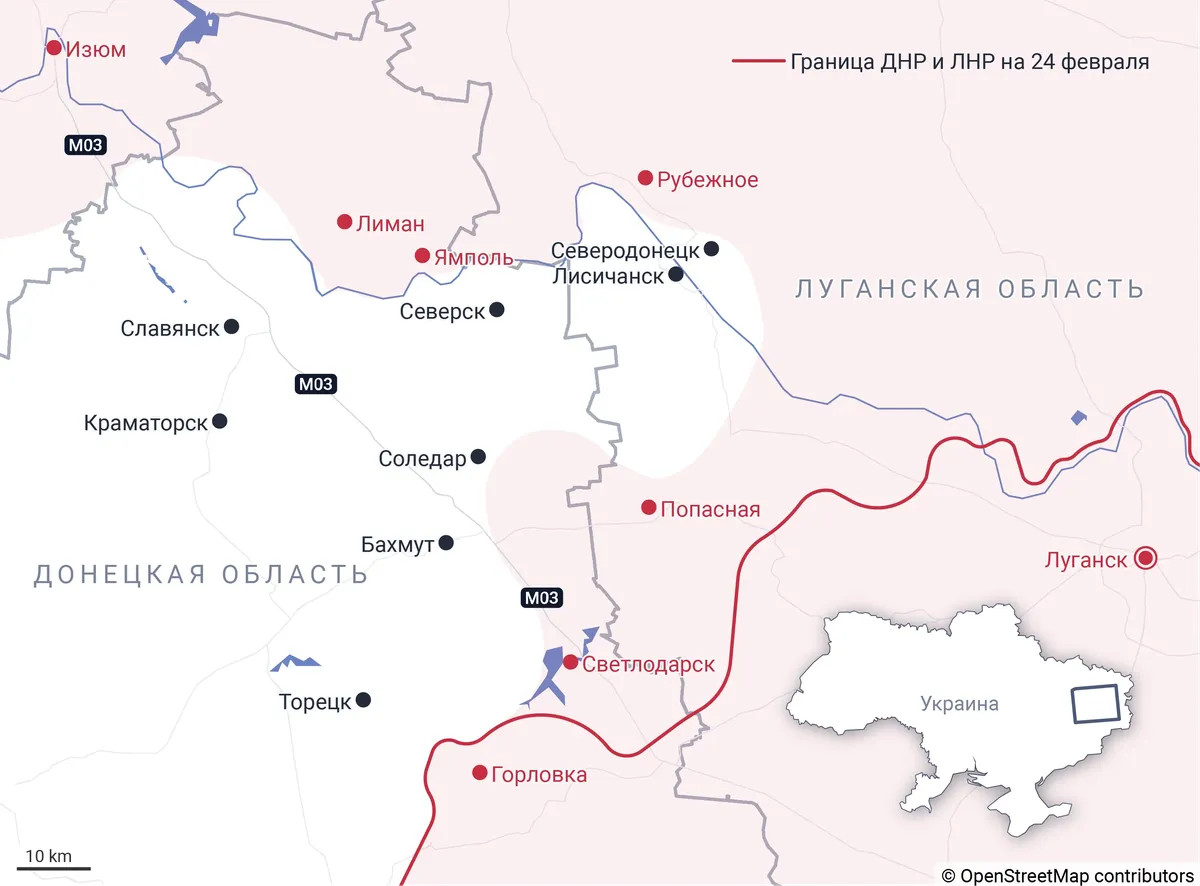
The “decisive” battle for the Donbass was spoke in early April, when the Russian troops were supplanted from the Kyiv, Chernihiv and Sumy regions. However, the massive offensive began only in mid -May. By this time, in eastern Ukraine, more than half of all the forces abandoned by Russia against Ukraine were concentrated: 51 Russian battalion tactical groups (BTG), five artillery brigades and two brigades of rocket systems of volley fire (MLRS). The task was set for them: at all costs to surround and destroy the group of the Armed Forces of Ukraine in the zone limited from the west line of the Liman-Slavyansk-Kramatorsk-Toretsk-Gorlovka line, approximately along the M03 highway, and in the east-the agglomeration of the Rubezhnoye-Sevender-Lisichansk. This would mean the occupation of the entire Luhansk region and part of the territory of the Donetsk region, which is under the control of Kyiv.
After two weeks of heavy battles, by the end of May, the Russian troops managed to take the Rubezhnoye city and some suburbs of Severodonetsk in the eastern direction, in the North - Liman and Yampil, and in the south - the Popas and the so -called Svetlodar arc. As a result, there was a real threat of closing the encirclement, but not along the M03 highway, as planned earlier, but according to the lines shifted to the east: either the Liman-Seversk-Slatear, or the Liman-Bakhmut-Svetlodarsk. However, as of May 31, the prospects for the battle for Severodonetsk remained unclear.
So, the Russian troops failed to control the strategic highway of Lisichansk-Bakhmut, along which the APU group in Severodonetsk takes place.
Offensive on the Donbass. The situation on 31.05.2022
However, it does not cause doubt that the Kremlin will do everything possible so that, without reckoning with any losses, to reach the boundaries of the Luhansk region, without which it is impossible to move on to the next phase of the operation in the east of Ukraine - the seizure of part of the Donetsk region controlled by Kyiv. But the main thing is not so much in the military as in the political side of the matter: Vladimir Putin extremely needs some more or less impressive victory. The seizure of the territory, first of the Lugansk and then Donetsk regions, is a minimum task, the necessary condition, as it is believed (or can) in the Kremlin in order to avoid humiliating defeat, since Putin publicly declared the recognition of the so-called “people's republics” within the administrative boundaries of these regions. In this sense, the “battle for the Donbass”, and specifically in the coming days and weeks, for Severodonetsk, is indeed “decisive” for the Kremlin. If it is not possible to win, it is impossible to move on to the operation of the occupation of the Donetsk region, which means that the failure of the entire spring campaign of Moscow becomes obvious. And then not only in the opposition to the Russian regime circles, but also at the top of the Russian nomenclature, they can ask Putin a very unpleasant question for Putin: was it worth it to start a “special military operation” if the prospect of victory is becoming more illusory, and the sanctions are more and more difficult?
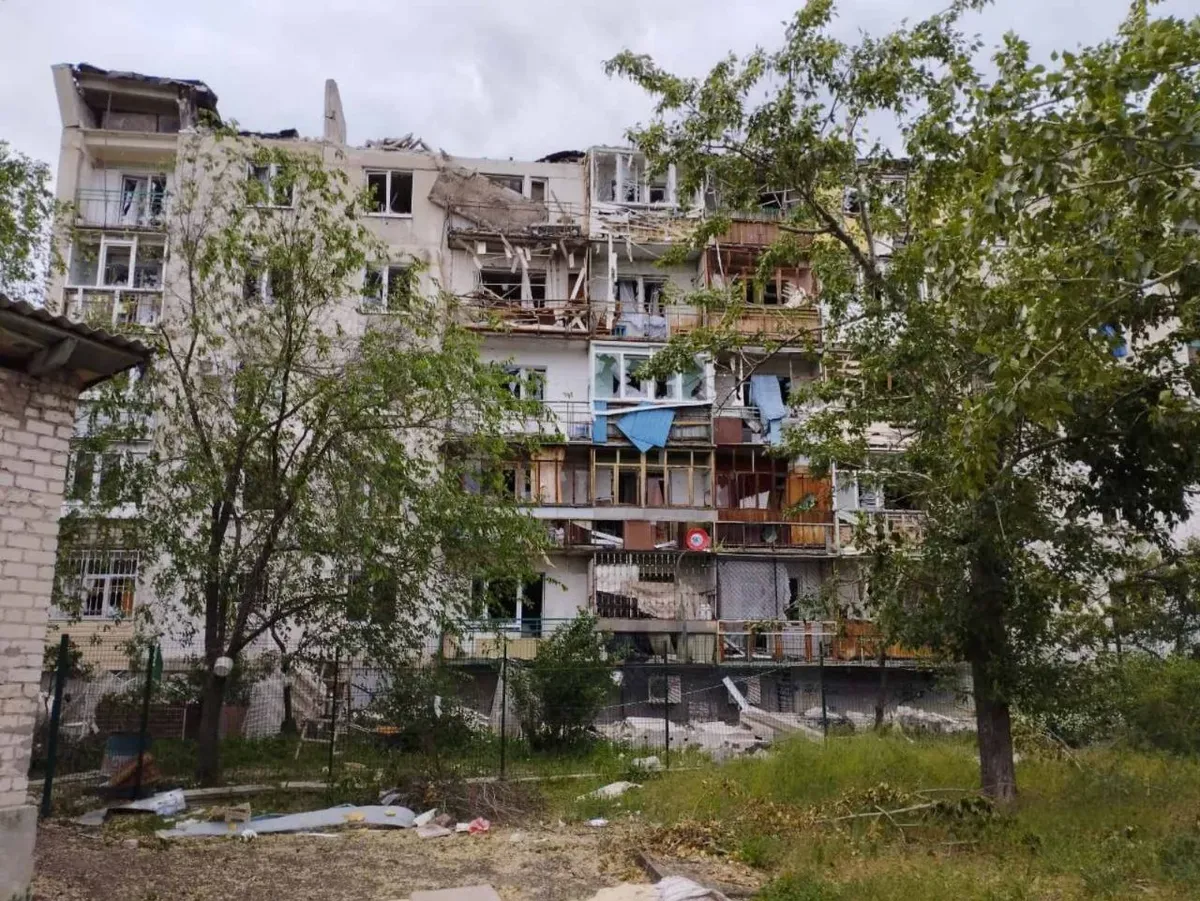
For Ukraine, the outcome of the battle for the Donbass is also extremely important. The possible loss of Severodonetsk is at least not losing the war, but, undoubtedly, severe defeat. If the Russian troops manage to reach the borders of the Luhansk region, then in the summer you need to expect attempts not only to occupy the entire Donetsk region, but also to expand the occupied territory in the south as much as possible, go out to Transnistria, take the entire Zaporizhzhya and start the Kherson region. However, the summer campaign in Ukraine will depend on the balance of power.
The balance of power
At the beginning of the war, Russia had almost one and a half superiority over the Armed Forces of Ukraine. By the morning of February 24, 120 Russian BTGs were concentrated on the Ukrainian borders, the number of personnel of which, along with parts of support and strengthening, reached 200 thousand people, up to 1,200 tanks and the corresponding number of other heavy weapons were armed. About 80 BTH, about 800 tanks, were opposed to this armada of the Armed Forces. In total, Ukrainian troops totaled 120 thousand soldiers and officers in combat composition. Nevertheless, the Armed Forces of Ukraine tore off the attempts of Moscow to seize Kyiv, Chernihiv, Sumy and Kharkov, forced the enemy to free the Kyiv, Chernihiv and Sumy regions, supplant the enemy from the Kharkov region and stopped the offensive of Russian troops in the south.
The losses of the Russian army are colossal.
According to the General Staff of the Armed Forces of Ukraine, on the morning of May 31, more than 30 thousand Russian soldiers and officers died on the battlefield in Ukraine.
Since the number of wounded in statistics is usually 2.5-3 times larger than the number of killed, the irretrievable losses of the Russian troops exceeded 100 thousand people. Data of the Western military departments, from time to time in the media, speak of the lesser losses of Russia, but not much. So, in mid-May, British intelligence reported that a third of those troops that Russia intended in the 20s of February was disabled for invasion of Ukraine. In other words, at that time Russia lost 65-70 thousand people. Accordingly, the Kremlin is faced with the need to make up for these losses and, in addition, build up the grouping group in Ukraine so much as to achieve victory or at least prevent defeat. Naturally, the question arises: is this real?
According to the Minister of Defense of Ukraine Alexei Reznikov, in the second half of May 91 Russian BTG fought against Ukraine. Their total number, together with parts of support and strengthening - 167 thousand soldiers and officers. Using all the available reserves of manpower and weapons, restoring the battered parts, he believes Reznikov, the Kremlin can throw another 55 BTG for war against Ukraine. In other words, the number of Russian groups (that is, BTG and support forces) can reach 220-230 thousand people, which is 20-30 thousand more compared to what was allocated for the war with Ukraine on February 24. In his opinion, Russia is not capable of more. The figures given by Reznikov, in general, coincide with the media reports on the order of the Russian Ministry of Defense of May 11, 2022, according to which military districts are required in the process of the so-called hidden mobilization, that is, recruiting contractors on a voluntary basis, prepare up to 80 reserve battalions for several weeks, numbering in the amount of 30-40 thousand people.
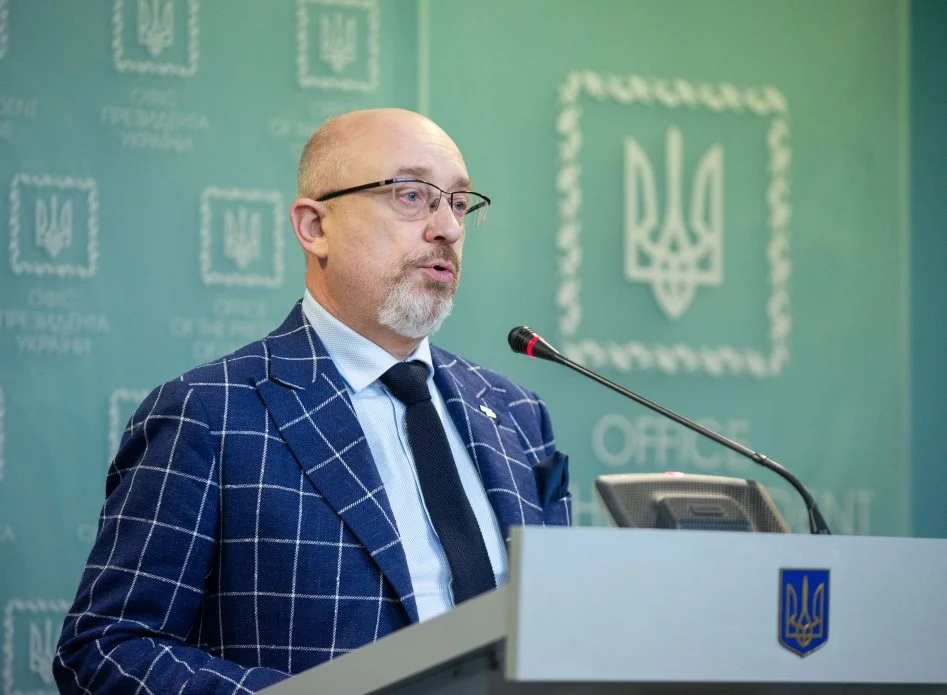
Ukraine, in turn, said Alexei Reznikov, has more than 260 thousand military personnel in the Armed Forces of Ukraine, 100 thousand people in territorial defense, 45 thousand border guards, 45 thousand people in the National Guard, plus the SBU and special forces of military intelligence. The President of Zelensky called even more impressive figures: according to him, about 700 thousand people protect the territory of the country. When and if the Armed Forces of Ukraine receive a sufficient amount of heavy weapons-long-range artillery and MLRS, armored vehicles, air defense and/or combat aircraft, Ukraine will be able to reliably confront the pressure of Russian forces and, it is possible to free partially or even completely captured after February 24. The adoption of Lend-Lis Law in the United States and the allocation until the end of the current budget year, that is, until September 30, almost $ 40 billion for military, financial and humanitarian assistance to Ukraine allow us to significantly strengthen the potential of the Armed Forces of Ukraine, but not so much as to carry out a large-scale counterattack along the entire front line. Note that about $ 6 billion or $ 1.5 billion per month is intended for weapons. This practically coincides with the amount that was allocated for these purposes from February 24 to the twenties of May - a little less than $ 4 billion.
"Diplomatic decision"
The approximate parity of the military capabilities of Russia and Ukraine, which has developed by the end of May, naturally raises the question: what next? Are the parties ready to continue the war on exhaustion or are inclined to one or another political resolution of the conflict?
In Ukrainian society, the army and leadership, the determination dominates to seek victory and at least expel the occupation forces from the territories employed after February 24. In the Russian establishment, in turn, they begin to understand that the continuation of the war will not lead to victory, that Russia is in more deep political and cultural isolation, and economic sanctions in this summer can lead to collapse of entire sectors of the economy. However, a return to the pre -war situation means for Moscow the recognition of Putin’s bankruptcy and his attempt to put Ukraine on his knees.
Accordingly, the Russian leadership, or at least, part of it begins to exaggerate the idea of a certain “diplomatic decision”. This refers to the ceasefire at first, which involves the preservation of troops at the positions they occupied, then the achievement of an agreement on a ceasefire, which should record the line of actual control, and, finally, the beginning of diplomatic negotiations. The latter should, as they think in Moscow, consolidate the territories occupied during the current war. The idea is primitive to indecent, but, nevertheless, he finds understanding and support in Paris, Berlin and some other European capitals. There can be many reasons for this: from the intrigues of the corrupt pro -Russian fifth column and the calls of “useful idiots” (which cannot be ignored) to strategic calculations.
In France, Germany and some other leading countries of the so -called "old Europe", on the one hand, they understand that the defeat of Ukraine will have very serious consequences for the European continent. As soon as Russia restores military potential battered during the war, aggression against the Baltic states, Poland and other countries of Central Eastern Europe will follow. However, the victory of Ukraine and the defeat of Russia also does not seem to be included in their plans.
Russia is considered in France and Germany as a useful counterweight to American influence.
In the United States there they see not only and not so much an ally as an opponent. And besides, Paris and Berlin are afraid of the formation of a new strategic “nucleus” in the Central and Eastern Europe on the basis of the Military-Political Union of Ukraine and Poland, to which the Baltic and Romania state can join. In the case of the Military Victory of Ukraine, such a “nucleus” with the support of the United States and Great Britain can significantly limit German-French dominance in the European Union. But what they do not want to understand either in Paris or in Berlin is that if Russia is not neutralized, it will sooner or later unleash the war in Europe again. And with an unpredictable result.