
Translated material
“A warrior is a warrior” - Layout
"A warrior is a warrior"
The story of a paratrooper from Bashkortostan who died during the capture of the airport in Gostomel
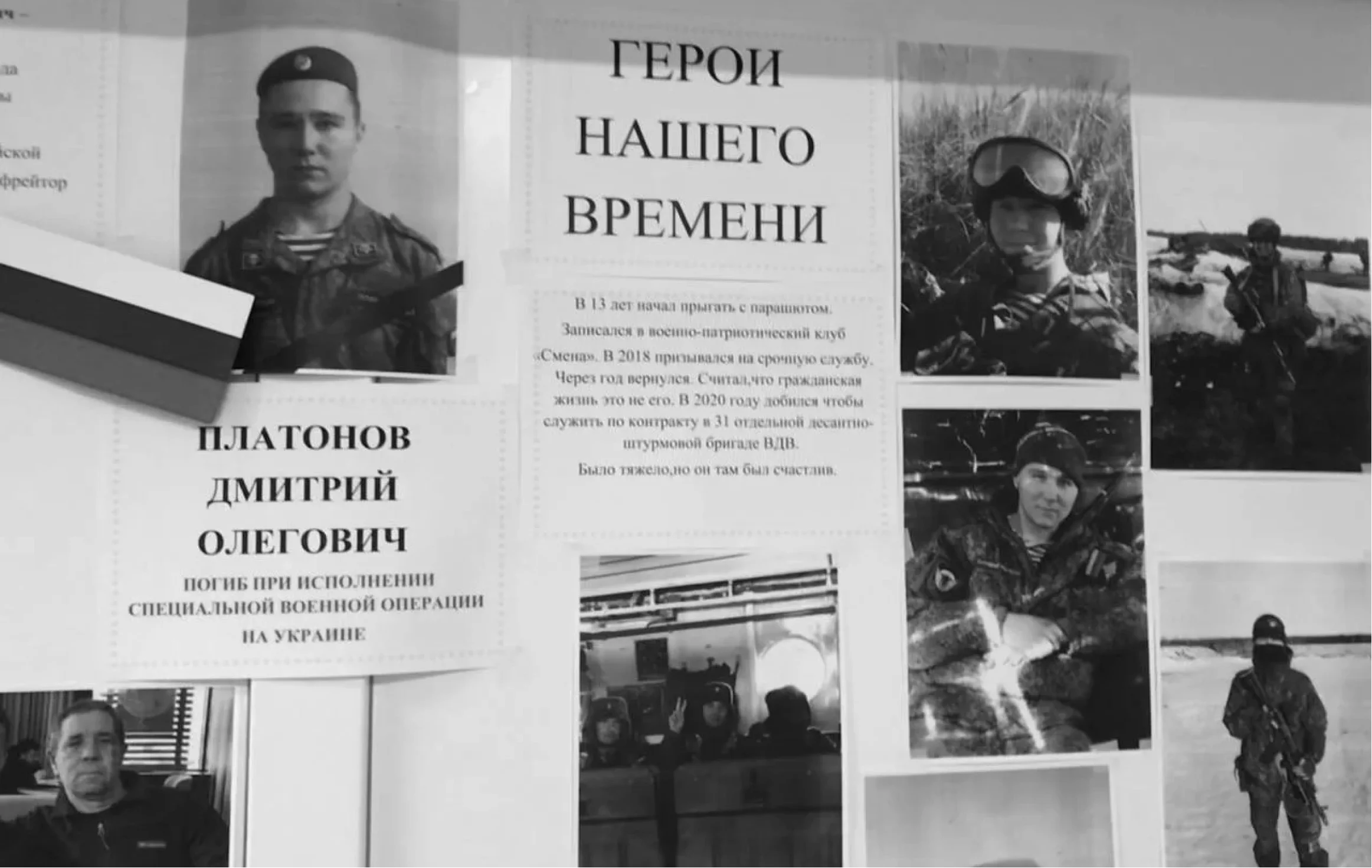
Bashkortostan is one of the ten Russian regions with the largest number of military personnel killed in the war in Ukraine. To date, the death of 87 soldiers from this republic has been confirmed . Cargo-200 began to arrive in Bashkortostan in early March, and then local media reported about each funeral. In May, soldiers began to be buried almost every day, and less was written about it. Judging by announcements of farewell ceremonies on social networks and publications by representatives of regional authorities, at least 18 military personnel, mostly young men, were buried in Bashkortostan last month.
On May 16, the republic held a farewell ceremony for two elite military personnel: 27-year-old Timur Khairullin, a gunner in a motorized rifle squad of the Northern Fleet, and Dmitry Platonov, a 22-year-old paratrooper, corporal of the 31st section of the Guards Air Assault Brigade of military unit No. 73612. “Layout” tells the story one of them.
In order not to miss new texts from “Layout”, subscribe to our telegram channel .
On a grassy hill surrounded by flower beds stands a multi-tiered building with arches and a green roof. This is the Tatar National Theater “Nur”, one of the attractions of Ufa.
Today there are no performances there. Two lines of soldiers in blue berets lined up on the steps. Everyone who enters the building walks along these lines.
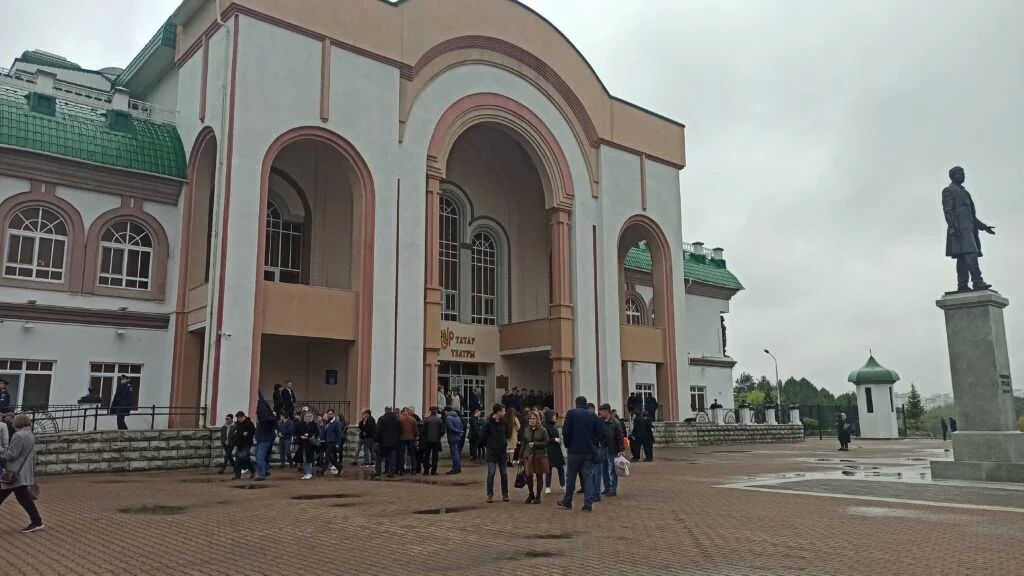
Photo: Daria Kucherenko
The theater is holding a farewell ceremony for 22-year-old Dmitry Platonov. The coffin stands in the foyer on the second floor, between the theater buffet and tables. Near the wall with portraits of artists are mourning wreaths on black forged stands. A military band hides in the darkness of a non-functioning buffet.
Standing to the side is a group of young people in mourning clothes - these are Dmitry’s classmates and friends. They seem to be confused - no one whispers, everyone silently looks at the coffin, upholstered in red cloth. It is covered with two flags: the Russian tricolor and the Bashkir, blue-white-green.
On the stand at the bottom end is a photograph of a guy in a vest and a red pillow with an order. There are red carnations nearby. Nobody sees Dmitry's body. The “official” coffin is closed with a lid, and inside it there is another one - a transport one, in which the deceased was brought home two months after death. They did not open the zinc cover.
“We didn’t cut his wings”
Judging by social networks, Dmitry Platonov has chosen hobbies related to military equipment and the army since childhood. From the age of 14 he studied at the Smena military-patriotic club . He also loved to climb abandoned objects with his friends - this hobby is called stalking. Judging by the photographs, he was always dressed in camouflage uniform on forays.
In January 2022, having already become a military man, Platonov came on vacation to Ufa and conducted classes at a shelter for teenagers in crisis - showing them “modern modular tactical equipment of the Russian army.” According to his family, he hasn’t had any serious relationships with girls lately. Dmitry was the only child in the family. According to the father, the son was “born hard” and the parents decided “not to take any more risks.”
Oleg Platonov, Dmitry’s father, has worked as an aircraft technician all his life. Now he is engaged in aircraft maintenance at the Ufa airport, and previously worked outside the city at the Zabelsky airfield. Oleg recalls that as a child, Dima spent a lot of time there with him, watching his father repair small aircraft. At the same airfield, his son later jumped with a parachute for the first time - then he was 13 years old.
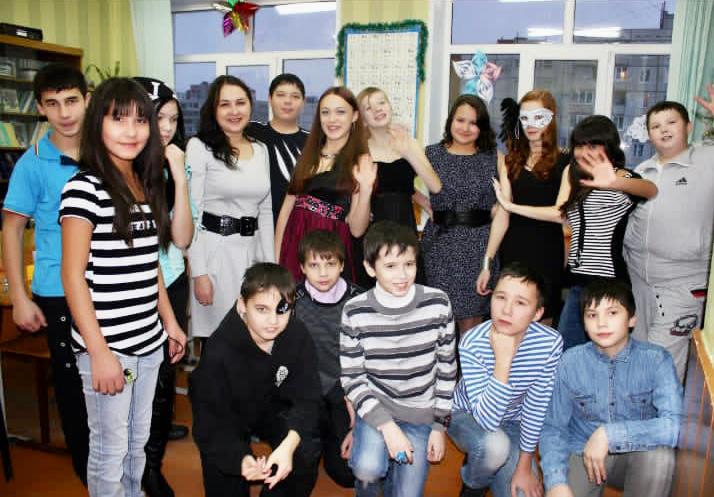
Photo: from the family’s personal archive
Now Dmitry’s father is trying to remember at what age his son wanted to become a paratrooper. “I recently thought about this,” says Oleg. — I looked at photographs of my son and saw that he was already at school, at 11–12 years old, wearing a vest. Apparently, somehow everything worked out for him: parachutes, airplanes, military toys. We didn’t cut his wings, he wanted to become a paratrooper - he did.”
Oleg says that as a teenager, Dmitry chose his own hobby; no one in the family specifically pushed him towards “military” hobbies. “He himself found this club “Smena”, he signed up there himself,” Oleg says about his son. — To be honest, I have never been there. I know what they did there from photographs and conversations: they underwent physical training, studied weapons.”
At some point, Dmitry fell in love with camouflage clothing. “He constantly asked me: “Dad, I need a uniform.” Obsessed with this. I bought him a beautiful one,” says Oleg.
The parents supported their son's hobby. They both worked a lot at that time. Dmitry's mother was a pastry chef, then a salesman. My father often went on business trips. “It was good for us that our son did not sit alone at home, but worked out in some club,” he says.
Oleg did not think that his son’s paramilitary hobbies would develop into a profession. He hoped that Dmitry would follow in his footsteps - he would stay in Ufa and also repair airplanes. At first, everything worked out this way: after 9th grade, Dmitry entered an aviation college. But in my second year I went into military service.
“At this age everything is interesting,” says Oleg. “And my son did not leave Ufa at that time.” The army gave him the opportunity to go to another city - Dmitry served in Dzerzhinsk, Nizhny Novgorod region.
True, everything did not work out as Dmitry dreamed. He wanted to serve in the Airborne Forces, but instead ended up in the logistics troops. There he received a specialty as a military equipment repairman and a year later went home to Ufa.
On the way, he called his father and told him that he had seen paratroopers serving under contract in Ulyanovsk. “He tells me: ‘Dad, I should stand here,’” Oleg recalls. “I answered: ‘Don’t be upset, everything is ahead.’”
After the army, at the family council it was decided that Dmitry should continue his studies. He entered the motor transport college, but never finished it - in the summer of 2020 he signed a three-year contract to serve in the 31st air assault brigade in Ulyanovsk.
“Let’s face it, studying was not his strong point,” explains his father. “There were subjects that interested him: history, geography, physical education.” But in general, according to Oleg, it turned out that his son liked army life more than student life. “Some people don’t like all this: discipline, teams,” he argues. “But Dima was okay with it.”
At the same time, according to Oleg, the son did not look like a typical Airborne Forces employee. “When I served in the Soviet army, there was an idea that paratroopers were healthy big men,” he says. — But I wouldn’t say that Dima was physically strong or very pumped up. But he did physical exercise, didn’t drink, didn’t smoke. He was resilient and purposeful."
In Ulyanovsk, for the first year he lived in a barracks, then rented an apartment. His father says that Dmitry missed home and always went on vacation with joy. But after spending a week in Ufa, every time he said: “That’s it, dad, I’m going back.”
In the service, Dmitry earned about 35 thousand rubles a month - 15 thousand less than he could have earned in Ufa, working as an aircraft technician. According to the father, the son was not sure whether he should sign another one after the end of the contract.
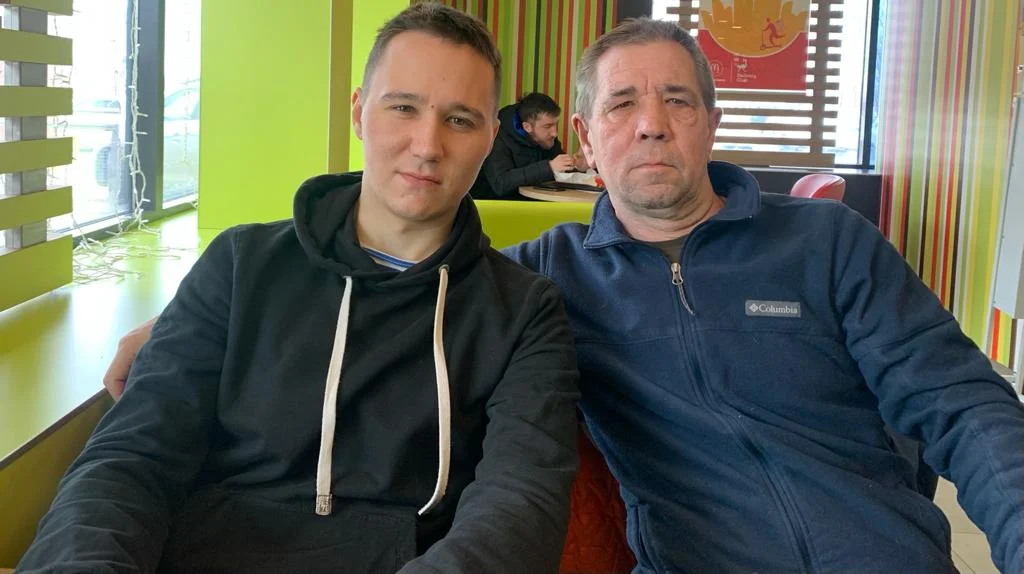
Photo: from the family’s personal archive
“Dad, everything is fine, we are going to training somewhere else”
Until the beginning of 2022, Dmitry remained in service in Ulyanovsk. And then, in February, he called his parents and told them that he was going to training.
“He didn’t say where he was going,” Oleg recalls. - But we watch TV, read newspapers. Everything was clear.” The father does not know how aware Dmitry himself was of the situation in Ukraine and whether he understood where he was going.
“If he knew where they were going and didn’t refuse, then that’s what he wanted,” says the father. - Otherwise, I could have broken the contract. And if he didn’t know, then what? An order is an order. He’s not in kindergarten.”
Dmitry spent several weeks on training exercises in Belarus. The soldiers did not have telephones, but they “found ways” to contact their relatives. On February 23, Dmitry called his parents again and said that he was now being sent “to another place.”
“He spoke confidently, in a calm voice,” Oleg recalls. “There was no fear, no excitement, no trembling in the voice.”
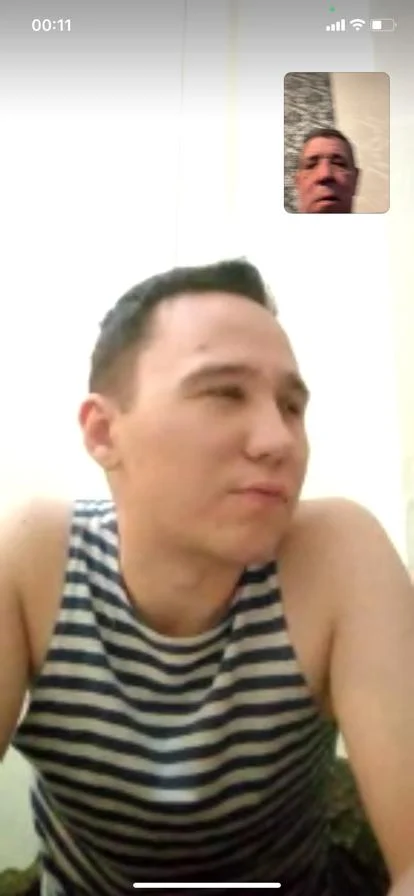
Photo: from the family’s personal archive
This was his last conversation with his family. The parents, despite the news of the hostilities, hoped that their son was indeed still in training, but were still worried. “You start to worry about your child from the moment you know that he is no longer in kindergarten and everything is serious,” says the father. “Especially when it’s an only child and he’s not around.”
At the end of April, military registration and enlistment office employees came to the family and said that they needed to take the DNA of Dmitry’s mother to identify the body. We had to wait five days for the results. “These days were the hardest,” says Oleg. “God forbid anyone should experience this.”
He says he tried to track the movements of his son's military unit based on what was said in the news. “We understood that he would have contacted us at some point if everything was normal,” Oleg recalls. “And when there’s still no call, you start to console yourself with the fact that maybe he just can’t get in touch.” Then other hopes begin - maybe he didn’t die, but went missing, maybe he’s making his way through the forest, or maybe some grandmother took him in. There are many stories, it can be different. You think: as long as you are not in captivity, and even if you are in captivity, as long as everything is fine there. If only he was alive."
In order not to miss new texts from “Layout”, subscribe to our telegram channel .
"God heard"
Five days later, military registration and enlistment office employees came to the Platonovs again and reported that Dmitry’s DNA matched the body of a deceased soldier taken from Ukraine. The parents were explained that their son “died in battle and destroyed a number of opponents.” They were given a death certificate. It states the date of death as March 3.
The parents never learned the details about Dmitry’s death. “Until everyone returns from there, no one will know what, where and how exactly it happened,” says Oleg. “I don’t know how many people died with him, whether there was anyone else from Bashkiria among them.” I looked at the information about the other victims, but I didn’t see anyone from his unit.”
To date, all that is known is that Dmitry died from shrapnel wounds that he received when a mine exploded nearby. The parents did not see their son’s body, but now they no longer doubt that they really brought him from Ukraine. “There is a DNA result,” says Oleg. “And I sent a lot of photographs to the military registration and enlistment office for identification.”
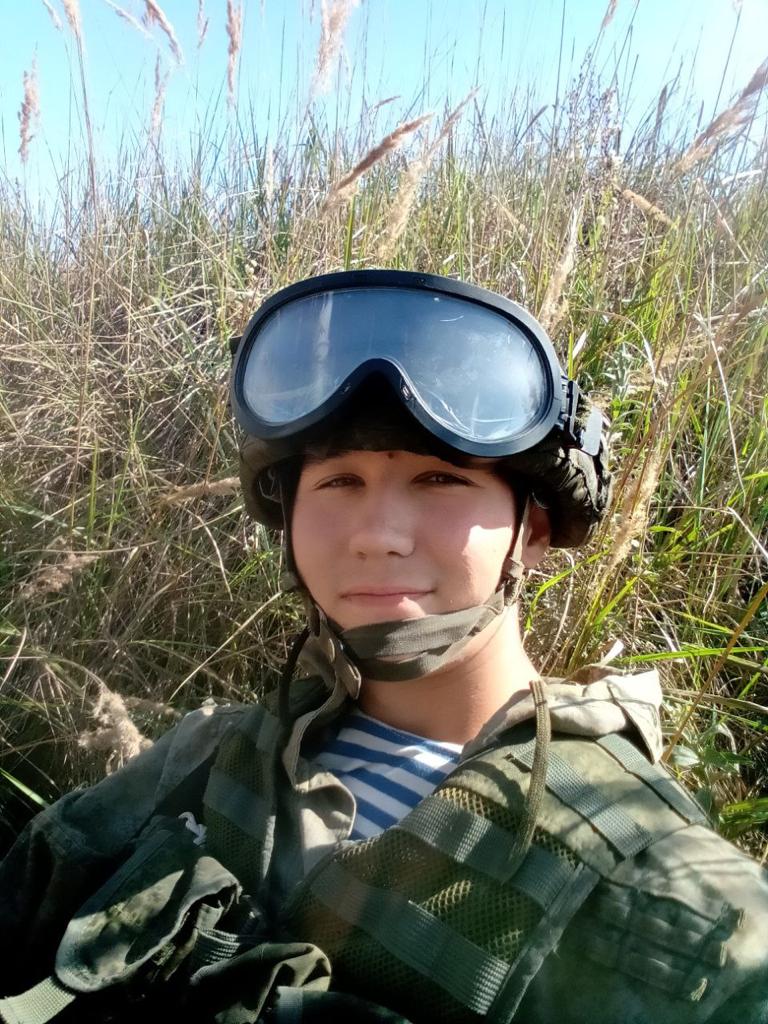
Photo: from the family’s personal archive
In some cases, transport coffins in which the bodies of soldiers are brought are allowed to be opened. But the Platonovs decided not to do this. “Mom asked him,” explains Oleg. “But I said: “We remember our son, how he smiles, alive and healthy. Why do we need to live with this later?”
The fact that transporting the body to Ufa and identification together took more than two months did not surprise Oleg - he says that he was understanding that the family was informed about the death of his son so late.
“They were on the front line,” he says. “It’s good that their bodies were recovered.” The worst thing for parents is knowing that their child has died and there is no one to bury. I thank the Lord God. Naturally, earlier I asked him for my son to return safe and sound. But if he is destined to die, then it should be instantaneous and so that he will not be forgotten there. God heard. I am very grateful to everyone who participated. I am grateful to his comrades who pulled him out of the battlefield, took him out, and returned him.”
Oleg says that if he had known exactly where his son was being sent from the very beginning, he would have tried to dissuade him. “But would he have listened to me? That’s the question,” he argues. - After all, having the opportunity to refuse, he did not refuse. There were no refuseniks in his unit. People on the Internet write all sorts of different things. But I’m not a beast, I love my son no less than everyone else. But if a person chose his own path... And still I would try to dissuade him.”
Now they want to rename the Smena club, where Dmitry went as a teenager, in his honor. According to the Platonovs, the authorities promised them that the memory of their son would be immortalized in Ufa and in the Aurgazinsky district, where Dima’s grandparents live.
“All these honors he…. “It’s probably wrong to say that he deserved it,” says the father. “I have a normal attitude towards this: that he will be immortalized or remembered. A warrior is a warrior. That's how it happened. If he is appreciated, we don’t mind, no matter how much we feel at home with each other in difficult moments.”
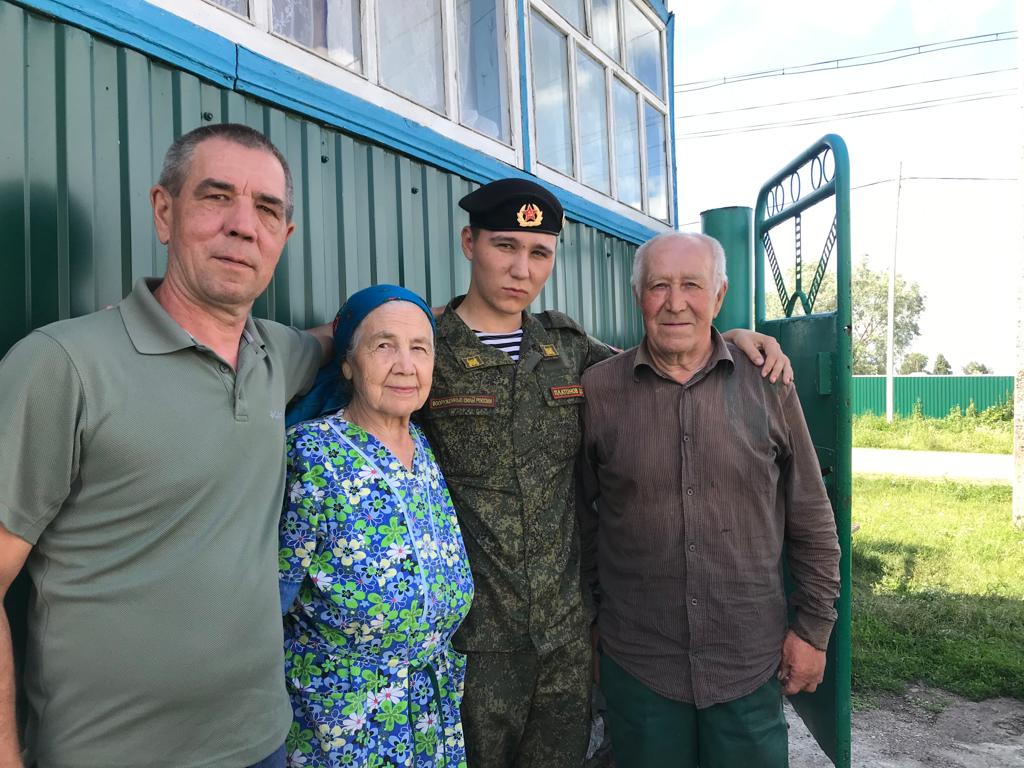
Photo: from the family’s personal archive
"Civilian life is not for him"
The official farewell ceremony for Dmitry Platonov begins at the Nur Theater. People take turns approaching the coffin, placing one clove on the lid and joining the rest of the guests. Many people have come, and a woman with a red bandage on her arm is constantly fussingly moving flowers from the coffin to the table so that the mountain of carnations does not become too large and begin to fall apart.
Three teenagers in camouflage uniforms come up to say goodbye to Dmitry. Apparently, these are his followers - students of the Smena military-patriotic club. One of the guys has a blue beret on his head. The head of the club, Alexander Bondin, also came to the ceremony.
There is a guard of honor near the coffin, the parents are sitting a little further away. The mother cries incessantly while the leader of the ceremony reads out the biography of the deceased soldier in a stern voice.
Later, Vice Speaker of the Bashkir Parliament Rustam Ishmukhametov speaks at the ceremony. Expressing “sincere sympathy” to the parents, he states: “The Russian Armed Forces are solving difficult problems - confronting Nazism and genocide. Unfortunately, this does not happen without losses. But I am sure that we will definitely defend peace and truth, as our grandfathers and great-grandfathers did 77 years ago.”
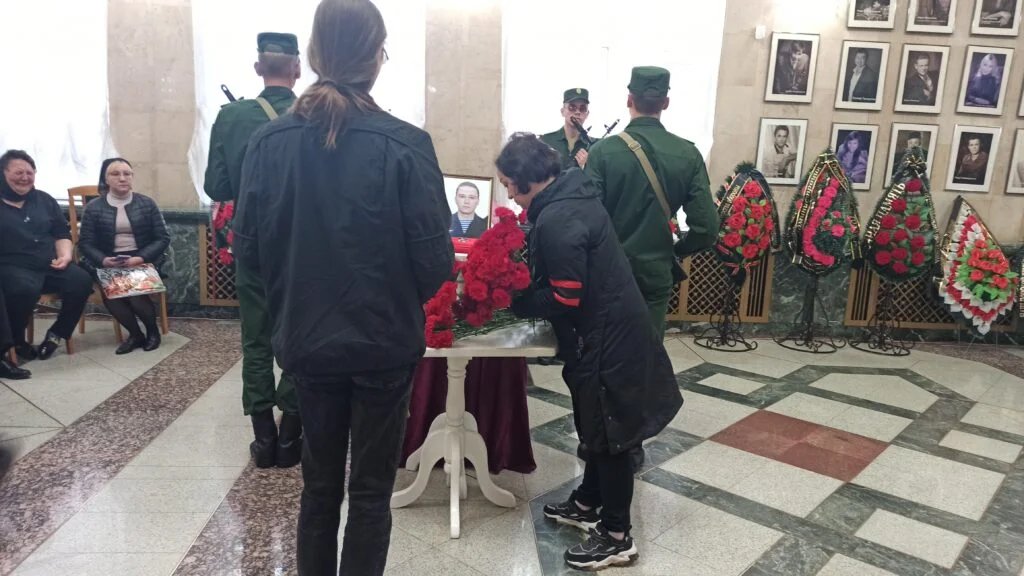
Photo: Daria Kucherenko
Military Commissioner of Bashkortostan Mikhail Blazhevich says that Dmitry participated in the seizure of the airport in Gostomel and “proved himself to be a real hero. In the midst of the battle, more than a dozen Nazis were killed.” He adds that “the feat that the paratroopers accomplished in Ukraine will be recorded in history.”
The mayor of the city also speaks at farewell. He says that “Russia does not start wars, Russia ends wars,” and then talks about the Second World War and the feat of the USSR. “We owe today’s prosperity to our ancestors,” he concludes. “And our grandchildren will owe their well-being to heroes like Dmitry Olegovich.” Dmitry's uncle adds that during World War II, his grandfather fought in the same places where his grandson now died.
The father listens to all the speeches in silence - later he will explain that during the farewell he did not have the strength to speak. The entire ceremony lasts no longer than fifteen minutes. The coffin is slowly lowered down the stairs to the sounds of a military band and taken out into the street. Now he will be taken 90 kilometers from here - to the village of Kuezbashevo, Aurgazinsky district, where Dmitry’s father was born. Dmitry's grandparents will go to the grave there.
In the city itself, the deceased soldier will be remembered for some time by a memorial stand at school No. 130 - where Platonov studied until the 9th grade. On the stand hang photographs of Dmitry and a small piece of paper with a story about a former student. It says about Dmitry: “He believed that civilian life was not for him.”
Cover photo: from the personal archive of Dmitry Platonov’s family
Editorial "Layout"