
Translated material
"Like in the Soviet Union." What cars will Russians now drive
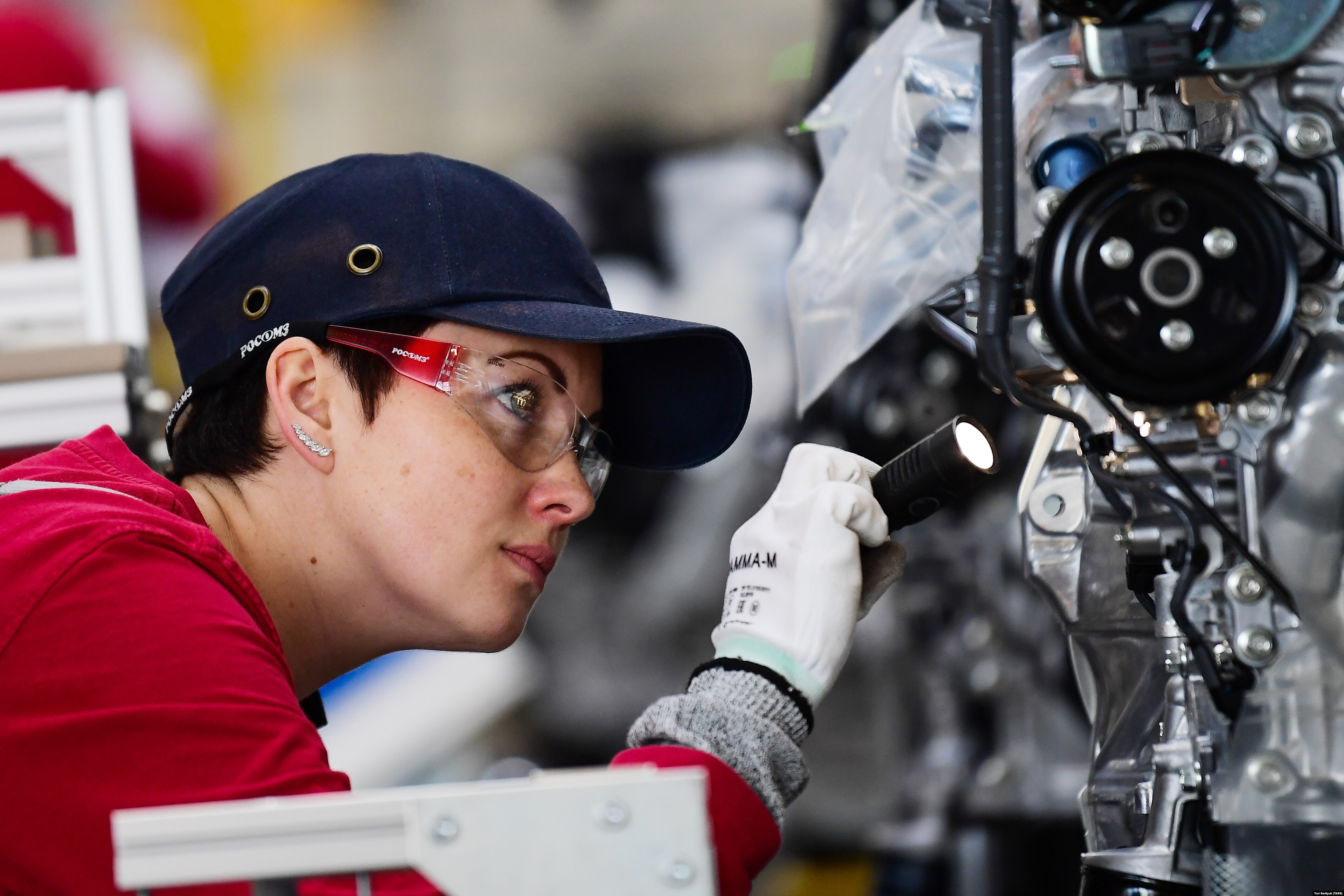
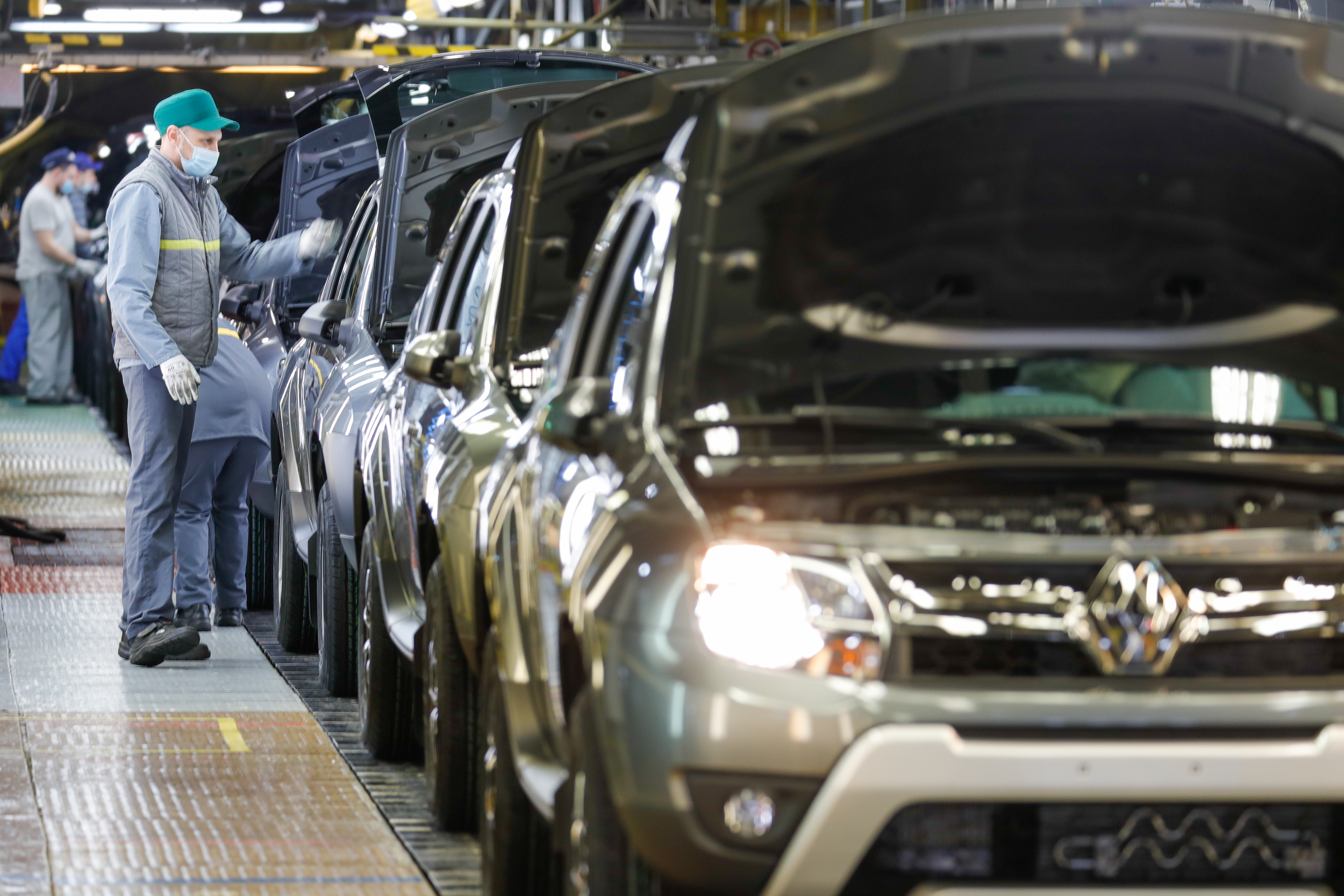
The last two Renault cars went last Friday from the AvtoVAZ assembly line. These were Sandero Stepway. More Renault will not be produced in Russia. Meanwhile, back in April, the Mazda Sollers Automobile enterprise in Vladivostok suspended production and sent employees on a corporate vacation, and recently stated that the vacation would last an indefinite period. There are other foreign cars in Russia. Siberia. Realities - about what awaits in the conditions of sanctions the Russian auto industry and the car market in the foreseeable future.
The reason for the stop "Mazda Sollers" -In the absence of spare parts due to the "rupture of logistics chains", as they explain at the factory itself, which is assembled by the assembly of several models of the world-famous Japanese brand. The vacation was supposed to last until May 18, but the other day, employees were announced that it was extended for an indefinite time. The leadership of employees forbade employees to communicate with journalists.
Meanwhile, in March, 40.9 thousand cars were produced in Russia, which is 72.1% less than a year earlier. Compared to February of this year, the fall also looks very significant - 62.2%. In total, 244 thousand cars were produced in the first three months of 2022 in the Russian Federation, which is 33.2% less than in January-March 2021.
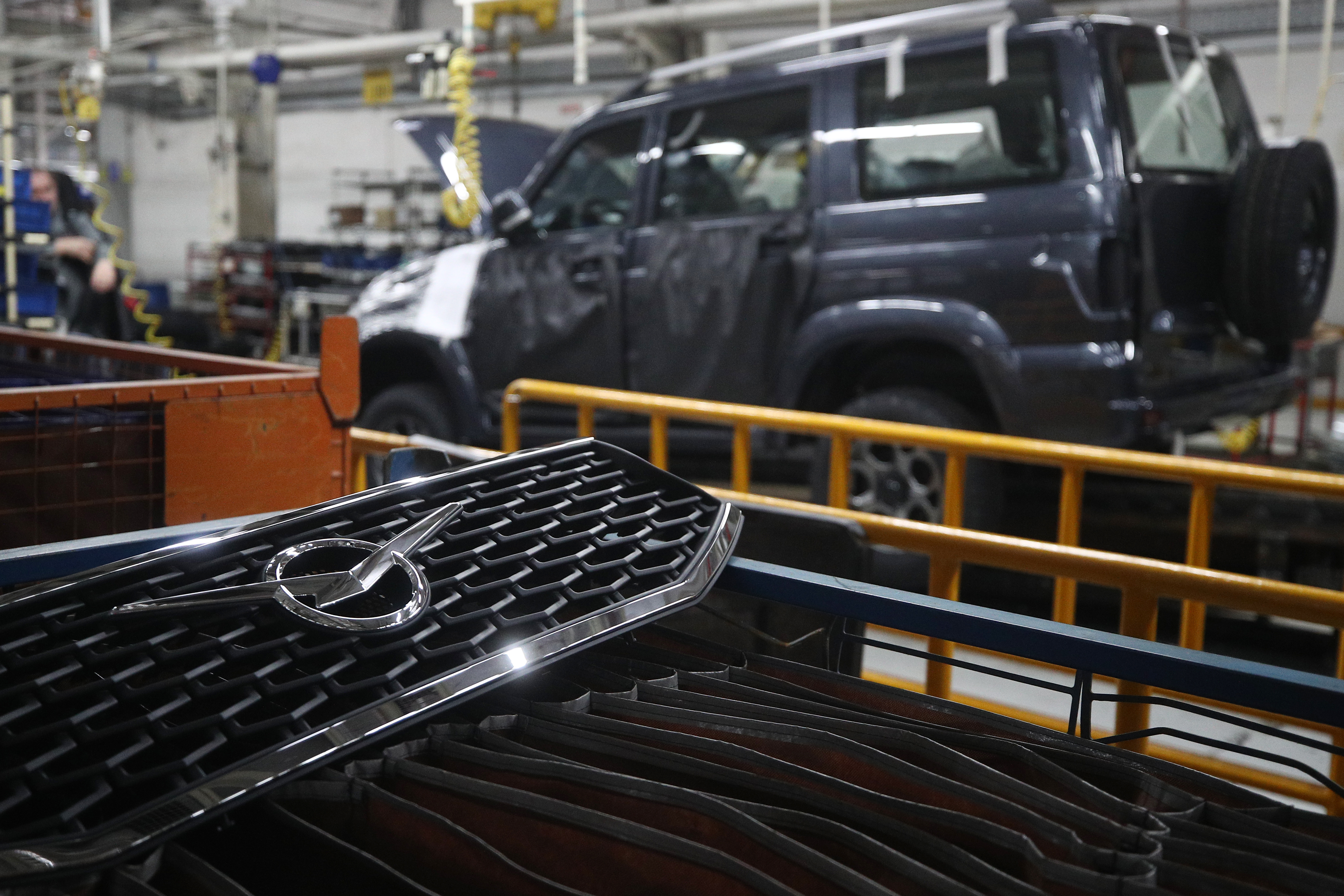
A significant part of the "foreign cars" running from Vladivostok and Omsk to Kaluga and Kaliningrad, foreign cars could be called only conditionally. Most of them gathered right there in Russia. As well as many of the domestic machines, they consisted of foreign components. Now, after the imposition of tough sanctions against the Russian economy and the departure of many foreign companies due to the invasion of Russia to Ukraine, Russians engaged in automobile production and ordinary car owners are probably awaiting difficult times.
If factories producing cars of Russian and Soviet brands, like the Togliatti vase, have a chance to somehow survive a sanctions blow, for enterprises engaged in Russia by assembling foreign cars, the current situation can turn into a disaster. Most of them are doomed to bankruptcy and closure, experts are convinced.
Russian "Europe"
One of the most dangerous situations has developed in Kaluga. In addition to the German Volkswagen, Peugeot, Citroën, Mitsubishi, trucks under the Volvo brand have recently been collected here. Italian stamping production and production of Russian components for assembly were opened in the city. In total, about 15,000 people are involved in the cluster enterprises, which for a regional city with a population of just over 300 thousand, a significant figure. If on one day they all suddenly find themselves on the street, it will be extremely difficult to find work for most of them.
- When 10 years ago there were rumors that we planned something grandiose, the launch of the automotive industry, which was never at all, was not at all, it was tight with work in Kaluga, as in the region in general. Even with education, and I had a machine -building college and a pedigree, after the army, I was forced to work for a penny in a trolleybus depot, repaired the rolling stock, and the rest is at a construction site, who traveled to Moscow with a rotational basis. Poverty, ”says Nikolai , one of the employees of the Kaluga Volkswagen, who has sent all his employees to a simple one since March.
Already now, all the cluster enterprises were forced to stop the conveyors, and their employees, officially so far only until June 10, were officially transferred to the "downtime" regime with partial compensation for wages. However, on May 25 it became known that in the near future, enterprises would definitely not launch production, and according to some reports, this is unlikely to happen even before the end of this year.
The situation is complicated by the fact that over the decade that has passed since the beginning of the automobile boom, it was the enterprise who fell under the sanctions of the enterprise that were the main "locomotives" of the regional economy.
Today, Kaluga, against the background of the region as a whole, and especially compared to neighboring depressive Tver or Smolensk, looks almost a European city. Fresh, with a needle, restored facades of the historical center, neat and clean boulevards, tiles. Closer to the central streets - quite a metropolitan type of "hipster" cafes and fashionable youth at the tables. At the entrance to one of these, someone brought the “no war” by the marker.
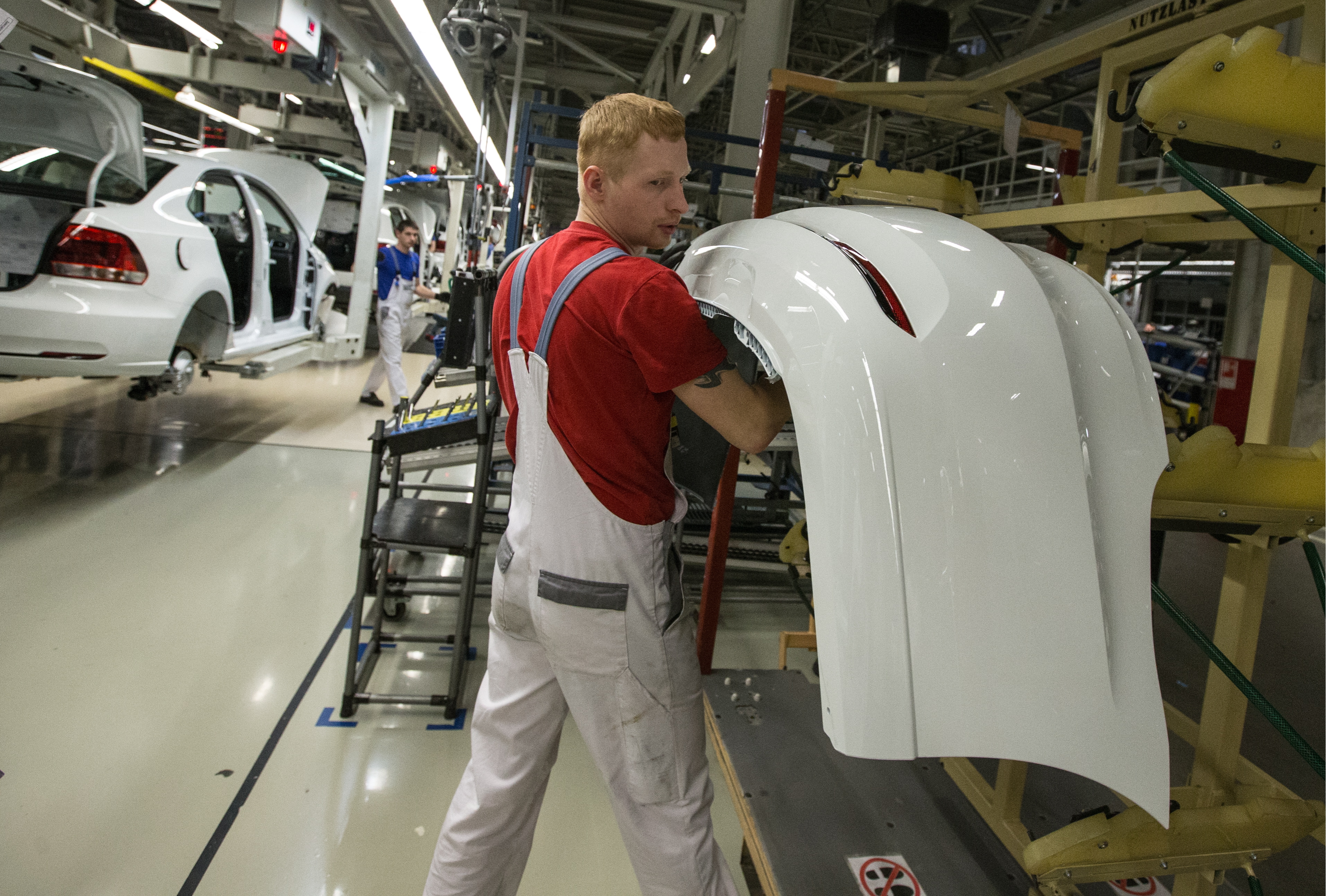
More recently, graduates of Moscow universities went here as translators and secretaries for foreigners - a rather paradoxical example of labor migration for modern Russia.
It was thanks to Western production for some time that the city became a kind of symbol of the path along which Russia could go.
“Our factories made all the statistics to the region, the average salary here is 45 thousand, higher than in neighboring areas, only thanks to us,” continues Nikolai. While we are talking with him in the office of a local independent trade union operating at the factory, comrades in labor struggle collect parcels to the Donbass.
- Hygiene, tea, diapers. Where are the soap? Toothpaste does not impose! -one of them complains.
- Well, not all in childhood played Tetris! Let me put it, ”my interlocutor immediately responds. And he offers a colleague to talk with a correspondent instead of him: "Will you give an interview forbidden the media?"
The trade union office itself is a small room on the ground floor of an ordinary panel five -story building on the outskirts of the city. A couple of cabinets with books: “European Social Charters”, “Labor Code with comments”, “History of the trade union movement”, plastic tables littered with some rubbish, and a flip currency with a marker-that’s the whole interior.
“The humanitarian aid for civilians is collected, and we help. They help it on their own to the border of the Luhansk region, and there it already gets to some warehouse and is distributed,” the employees explain vaguely. But they do not want to talk about the war in detail.
- ordinary people blame politicians who brought to such a situation.
- Russian?
- Why Russian? Western and Ukrainian, which are pro -Western!
However, the trade union itself was regularly attacked by the Russian authorities, and a couple of years ago, after the denunciation of one of the local pro -government activists, the court eliminated the organization, so the name of the fighter for labor rights had to be changed. Now this is not the "Interregional Trade Union of Automobile Industry Workers" (MPI), but the "Interregional Trade Union" Workers Association ". But the asset and abbreviation have remained the same.
- The shooter of persecution, moreover, were not the Germans, they just had a very high culture of communication with trade unions, in Germany it was so accepted, and the city administration. They even put pressure on the Germans so that they would like us, because from the point of view of the Russian authorities, everything that is not under control is a danger. And we are an independent trade union, left, and always here they had like a bone in the throat.
Salvation with flight
And now, local workers have no complaints to German management. As Dmitry of Labor , Chairman of the Trade Union, explains, are now “simple”, the Labor Code means that they do not go to work, but continue to receive ⅔ from wages.
- They went to him from March 10. But how much we will stand is still unknown, there are no components, and there is simply nothing to assemble cars, ”he says. - Constant rumors about the reduction go, but the personnel director told me that his task is to preserve everyone who is now and is not going to dismiss anyone. I think, while the Germans are waiting and considering options.
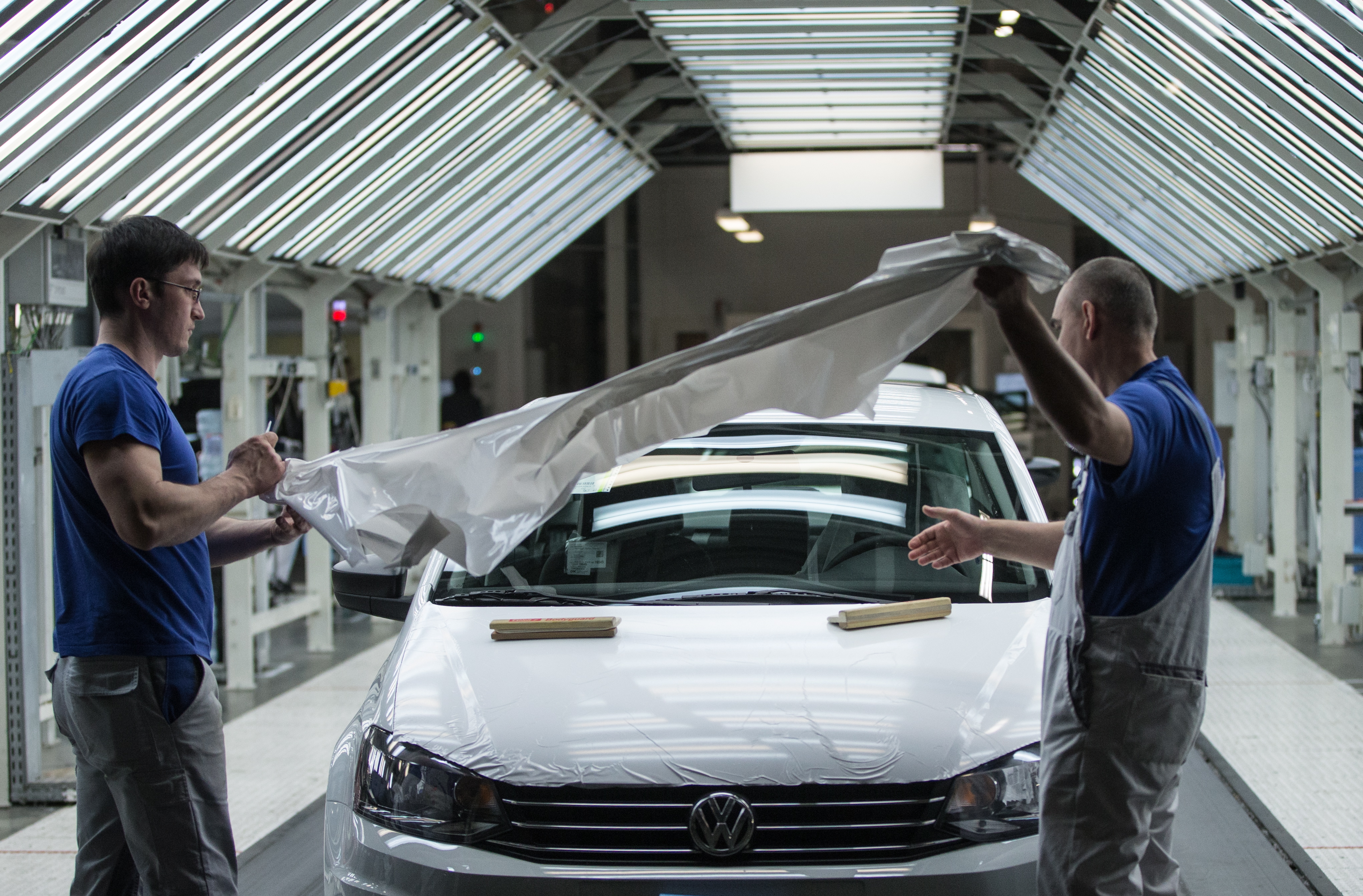
Like all factory workers, he hopes for the preservation or resumption of production. And he calls the simultaneous reduction of thousands of employees without abysses. But how reasonable these hopes are still difficult to say.
“According to the latest information, the Volkswagen group is going to announce the departure from Russia next week,” Autoexpert and partner of the Avtostat analytical agency Igor Morzharetto commented on the situation.
- Volkswagen has already decided to leave the Russian market. We will see documents about this in the legal field in the coming weeks, but now it is known that they are leaving, ”another popular auto expert Sergei Aslanyan confirms his words. - The general line of all Western manufacturers is to run. Renault simply showed how it might look. They left, slamming the door, and are not going to return. They simply threw the Moscow plant, without even trying to at least somehow compensate, sell. They said: "We no longer need it, take it!" Having recorded a loss of two billion euros. And this is not without reason. The Russian market is very heavy and wild. And we used to be unscrupulous with foreigners.
Once, Renault came here from under the stick, in the appendage to the contract for the purchase of the French helicopter carriers "Mistral". Since then, for many years, we have constantly rewritten the rules of the game. Under the threat of incredible fines, they lowered their plans for localization and production. We talked in ultimatum mode. It is not strange that at the first opportunity the French ran away from here. And the next will be Volkswagen. He came here himself, called the Spaniards with him, Gestamp, which built its stamping production nearby in Kaluga. But, it is obvious that foreigners now do not want to have any relations with Russia at all and will leave, ”explains Aslanyan.
Igor Morzharetto formulates his forecasts much more carefully, but in general adheres to the same opinion. Most automobile plants are stopped, the products are not produced. And when they are launched again, it is still unknown.
Holy place
Despite the fact that the Russian authorities have already been made by the proposals of “nationalize” the stopped factories and to establish the production of Russian or, for example, Chinese cars, it will not be so simple, experts are not so simple.
The modern equipment installed on them is intended for the production of a particular model collected on the basis of specific platforms.
- Just take and launch from Monday the release of a completely new model, the one for which this particular line is not intended. So while the prospect of such a restart of capacities is speculative, ”Morzharetto explains.
Theoretically, existing equipment can be modified and used at least part of the line for the production of something of its own, but it will take a lot of time and effort, he said.
- Modern automotive industry is not a flexible technology. The modern plant is "sharpened" for the production of one, a specific model. And if, for example, paint cameras can be used for another model, then at least the conveyor will have to be completely re -equipped, as it is adapted to work with certain sizes and nomenclature of components, ”says Sergey Aslanyan.
After the Russian Ministry of Industry and Trade announced the transition of the metropolitan squares of the French concern Renault to state property, Moscow mayor Sergei Sobyanin said that the authorities plan to revive the production of cars under the Moskvich historical brand at the factory. And on May 19, Interfax reported that under the Moskvich brand, in the foreseeable perspective, the production of the Chinese car condese Jac can be launched with KAMAZ. Experts evaluate the idea skeptical.
- It will be difficult to produce other cars there. The wish of the Moscow authorities is understandable, but what will they collect there? I do not know a single Moskvich model that can be launched there now. There are two exits: to collect completely there are some Chinese models from Chinese sets or to demolish the factory, ”says Morzharetto.
But not a single western or eastern company will go to a foreign factory, experts are convinced. And if the VAZ, initially Russian, has prospects, then the future of the production of foreign cars in Kaluga, Moscow, Tula and the Leningrad Region is seen gloomy.
As for the plans of the Moscow authorities, Aslannyan speaks even tougher than his colleague:
- Under no circumstances, they will not produce any “Muscovite” there. At least simply because no Muscovite simply exists for a long time, ”he says and notes that most components to Western cars are not produced in Europe. - In the same Volkswagen Polo there were practically no German details, even the letters "FAU" and "Dublive" on the logo - and they were made in China.
After the war, stolen Pakcards, called ZIS-110 or stolen Buiki-ZIS-101, traveled along the Moscow streets. And this is also the way, to assemble Western machines independently, in a sense, the entire Russian automotive industry began with captured plants taken after the war from Germany to the account of reparations, ”the expert says. But he is not sure that in modern conditions the Russian authorities will be able to repeat this scheme.
- The same Logan is produced, for example, in India, components purely theoretically could be bought there or in Colombia. Where to get hold of details is not a question. Moreover, Russia just legalized parallel imports, that is, the supply of goods, including parts, without the permission of the owners of the corresponding patent.
But if we set up the supply of these components ourselves, will Western companies close the eyes that we collect something very similar to their models, to their former lines? Just calling it some Russian name, at least a "Muscovite"? It is unlikely. None of the manufacturers of components will decide to go into a similar adventure.
Degradation instead of modernization
As a result of sanctions, the collapse of the logistics and departure of Western concerns from the entire automobile diversity in the near future the greatest chances of surviving, as experts are convinced, remain only in the original Russian brands.
So, for example, the VAZ, finding new suppliers for a number of components (and months will take), will definitely be able to produce three of the models available to the plant: Granta, Niva Legend and Niva Travel. And UAZ will have the biggest problems, since their Patriot SUV has a very high percentage of foreign components, Morzharetto believes.
The Ulyanovsk plant will have a little less problems with the Hunter model and there will be no problems with the “loaf” (UAZ-452) at all: “They can collect it for sure.” In the meantime, the Russian authorities allowed to produce cars without ABS and airbags so that manufacturers could abandon components inaccessible due to sanctions.
In addition, the ecological class "Euro-0" is regulated again, which regulates the requirements for the toxicity of the exhaust. Similar norms acted 15–25 years ago. So the “classic” Russian automobile industry under sanctions is waiting for technical degradation, a return to outdated technologies and general regression, Sergey Aslanyan emphasizes.
-Recently, we ourselves allowed ourselves to produce ecological class "Euro-0" and security standards that are throwing us back for 50-60 years. That is, according to the standards, we have already returned at the time when the Volga-21 was released. Cars that will be capable of producing Russian industry in the coming years will be cars created using the technology of the last century. Just because we could not create anything technically modern and at the same time over the past thirty years. That is, we can restore the production of carburetors, but, for example, to establish the production of modern fuel injection systems is no longer.
Our country could not create anything from what humanity stepped in the 21st century. We could not create our own computer, actually a smartphone, we have not learned to sew clothes decently, is it worth it to be surprised that things are just like that in the automotive industry? - says Aslannyan.
Between East and West
To what extent will the Chinese be able to replace Europeans and Japanese in the assembly of cars - it is unclear.
“The Chinese know our country too well, so they are unlikely to be chopped here with new production,” Aslanyan is convinced. - All Chinese factories existing in Russia are stopped. And it is likely that fate awaits them the same as the Western. Since China may be more profitable to import ready -made cars assembled in China to Russia, away from our Ministry of Industry and Trade with its ultimatums. Например, тот же Haval уже лицензировал ввоз в Россию готовых моделей, которые он до недавнего времени собирал в Туле. То есть завод в Тульской области, очень вероятно, скоро закроется. А автомобили будут доставлять прямиком из Китая.
Ввозить запчасти для уже купленных россиянами иномарок, в том числе и западных, дилеры продолжат, считает Асланян. Санкции этого не запрещают. Поскольку поставка запчастей связана с обеспечением безопасности на дорогах, а это уже гуманитарный вопрос.
Но сами западные автомобили окончательно превратятся для россиян не в средство передвижения, а предмет роскоши.
– Западные иномарки будут. Но задорого. И через третьи руки, – подводит итог автомобильный эксперт. – Как в Советском Союзе. В СССР не шили джинсы, физически. Все джинсы были привозные, в магазинах их не продавали. Но при этом вся Москва все равно ходила в этих самых джинсах. Так же будет и теперь. Только с автомобилями. У кого будут деньги, продолжит ездить на приличных авто, всем остальным придется довольствоваться тем, что есть. Впрочем, клиент нищает. Скоро нашему человеку будет все равно, "немца" он не смог купить, "француза" или "китайца". Он будет мечтать купить тушенку и патроны, а не автомобиль.