Date
Author
Кирилл Букетов, Анастасия Садовская, Глеб Голод
Source

Preserved copy
Translated material
"I will fly until all planes break down"
Russian aviation has been in survival for three months. Here's what the pilots, flight attendants and industry experts think about what is happening
Immediately after the start of the war, several southern airportsclosed in Russia. Just two days later, the European Union completely banned the sale and rental of spare parts and aircraft, and also closed the sky for flights from Russia. And Russian carriers abandoned some international flights themselves, fearing the arrest of technology leasing. The whole industry has passed into the survival regime: the pilots have fallen, the flights are not filled out, employees are thinking about dismissal. "Medusa" says what happens in Russian aviation after three months of the war.
About the beginning of the war, Eugene (the name changed), the second pilot of the airline "Victory", recognized at home, on this day he had a day off.
“We woke up in the morning - and my wife said:“ The war began. ” We sat all day, reading the news, and the next morning I went to work - but I felt incredibly lousy, ”recalls Eugene. - It was very scary. At the same time for the country, for people, for their profession and prospects for the future. Everything seemed broken and short -lived. ”
In the same morning, listening to the “Echo of Moscow”, the decision of the Russian authorities was scolded by an engineer of the charter airline Andrei (the name changed). “The first reaction is“ morons. Shame, ”recalls Andrei. In his opinion, the Russian state made a serious mistake: "There was a closure of borders not only from the inside, but also outside."
“It was terrible to watch all the news and understand that this is happening right now, very close, and, perhaps, even my friends [from Ukraine] in danger,” Ksenia (the name changed) recalls the first day of the war. - [I was ashamed of my country. I have never been particularly proud of this state, but what we will go to this, I could not even believe. ”
Ksenia recalls that next morning everyone was excited at the airport. In the dispatch, hung with balls with tanks, which remained from the celebration on February 23, many employees were naked. “Everyone understood that the people who are fleeing from the country will fly now, which means that the planes would be complete,” the flight attendant recalls. The instructor on duty warned her that you need to be careful and prepare for sabotage.
"How will we fly now?"
The air industry became one of the first industries on which sanctions hit. Just two days after the start of the war, European countries began to close the sky for Russian aircraft, and also completely banned the sale and rental of spare parts and aircraft.
The first to suffer international flights. Since the beginning of March, Russian airlines have encountered aircraft arrests in Yerevan, Istanbul, Dubai and Mexico: leased aircraft demanded to return the lessor. By March 5, almost all Russian airlines canceled flights abroad. Aeroflot flight attendant Ksenia says that for several months it has been flying only in Russia and in Belarus, although even during the pandemic she worked mainly on flights to the far abroad.
The abolition of international flights hit the airline’s income greatly, says Ilya Shatilin, editor -in -chief of the Frequentflyers industry portal Frequentflyers.
“International flights are the most profitable part of transportation, because they are used by the most solvent audience. It is difficult to compensate for their loss with other flights, ”explains Shatilin. - The transit between Europe and Asia [through Russian airports] decreased greatly, and many airlines were guided by the transit, the same Aeroflot successfully realized transit through Moscow. ” Before the pandemic, the company earned about $ 500 million a year in a transit .
Shatilin notes that during the pandemic companies already had experience in adapting to lack of flights abroad. True, now all the efforts to restore after 2020 were “about anywhere”. Most aircraft were redirected to internal flights.
But internal air traffic was also injured. This affected both the reports of the regions with Moscow and St. Petersburg , and the flights between other cities . Not only airlines began to abandon flights (so as not to spend the park resource on unprofitable flights), but also the passengers themselves. In March in the Moscow Domodedovo, the flow of passengers decreased by 25%, and in St. Petersburg and Yekaterinburg- by 7-8% .
“Business activity has decreased, people fly less on business trips, and because of the fall in income, the Russians begin to travel less,” explains Shatilin. “At the same time, we have an excess of the fleet: for internal transportation, you do not need as many aircraft as there are now.”
The last sharp surge of demand for tickets was at the beginning of the war. In March, against the backdrop of talk about martial law , thousands of Russians bought tickets abroad. The excitement was so strong that people bought places in economy class for several hundred thousand rubles.
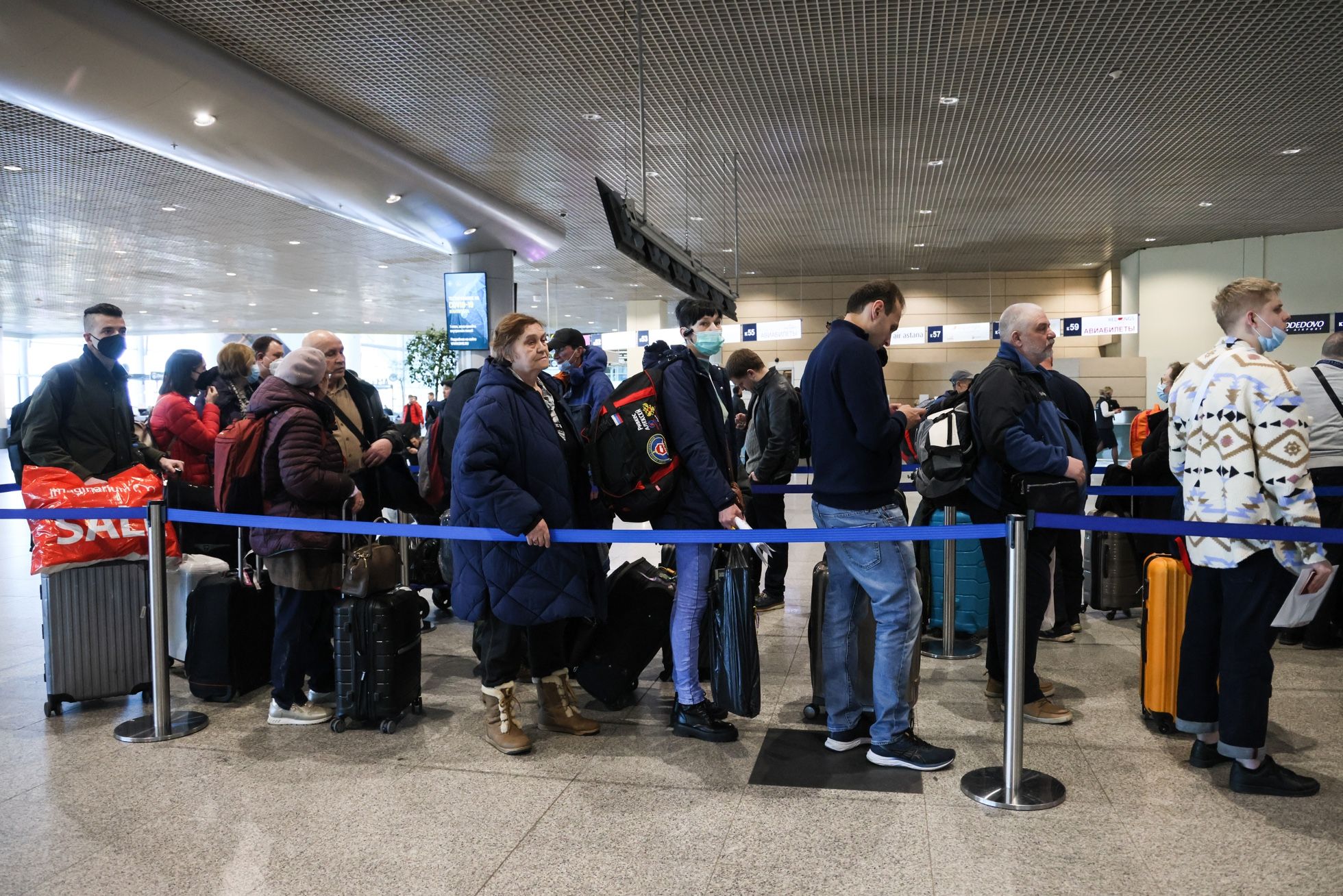
Due to the March surge of emigration from Russia, ticket prices rose by almost 9% compared to February-this is the sharpest jump in a month since 2000. “The ticket price includes many things: the aircraft maintenance [the price of which will increase], fuel - and with its price policy it is not yet clear at all,” says Andrei, an aircraft engineer of the charter company. - The price of tickets will increase in the amount of inflation, but do not forget that in conditions of the degrading economy, people do not need to fly. They have no money for rest, which means that flights will not be so in demand. Maybe we will not need as many aircraft as before. To the question: “How will we fly?” - The answer is: “Guys, will you have money to fly?”
Demand and proposal came to balance due to downtime of aircraft, the second pilot of the Victory Airline Eugene agrees. ““ Turkish Airlines ”began to fly abroad more often, they filled this niche. If you evaluate the loading in Russia - at [the failed airports in the south, almost always a complete soldier , and the flight is mainly filled with 70–80%. In some exotic directions such as St. Petersburg-Kirov gathered somehow 20% of the aircraft. There are fewer people and actively used aircraft , and this equalized each other. ”
“The passenger traffic sank by 30%,” Yegor explains (the name changed at the request of the hero), the managing partner of the company in the field of business aviation, is a very significant figure. And for the remaining passengers there is a frantic competition - for example, companies reduce prices or expand the geography of flights . Someone will lose this competition. ”
Egor also notes that in Russia there is now an excess of aircraft, but also airlines that relate to flight staff, that is, those who prepare the aircraft for a flight or work during a flight. This forces the airline to go to unpleasant measures for employees and the reputation of measures - cutting salaries and reduction.
However, some experts predict a further increase in ticket prices. Former Victory CEO Andrei Kalmykov suggests that flights will be more expensive. If earlier companies could set tickets below the cost of flight, just to repel fuel and the cost of leasing, now the price of the flight for the company itself will significantly increase and nobody can carry people below the cost.
"Many got a job for a second job, because there are not enough salaries"
“Now we can just stand for a month. It happens that the company's aircraft fly [in a month] about five hours , ”says air engineer Andrei.
Andrei is an employee of a charter airline who is a contractor of a large oil producing enterprise. For three months, the demand for the services of his company has sharply reduced. Now the engineer is afraid that he may completely lose work: “In material terms, I personally have nothing to deteriorate, there was no reduction yet, but this could not continue indefinitely. There is a feeling that at any moment you can be on the street. This prevents you from planning your future life. ”
Employees of other airlines face similar difficulties. Due to the abolition of international flights, planes are idle. As a result, the salary of flight attendants and pilots falls, as it directly depends on the plaque - the number of hours spent in the air.
Eugene, the second pilot of the company "Victory", says that it was the most difficult in early March, when nothing was clear. The pilot even took a vacation to recover and think what he would do if he loses his job. But everything turned out to be better than expected. Over time, the airlines rebuilt the flight grid. The loading of pilots has significantly decreased - there are fewer flights, but this has not yet affected Eugene’s salary.
“The total number of flights decreased by fifteen, but, paradoxically, in May I will earn almost as much as before the war,” explains Eugene. -Due to the closure of airports in the south, we began to fly bypassing in some directions, through Kazakhstan, and flights began to last four hours instead of the usual one and a half to two hours. Due to this, most pilots now have the same number of working hours as before. ”
Eugene heard that colleagues from other airlines are taken to a simple one. “Those who have accumulated vacation were asked simply [rest], and due to such an artificial reduction in the state, the remaining pilots got the clock,” the pilot explains. On May 12, Interfax reported the same measures in the Yekaterinburg carrier of the Ural Airlines.
Aeroflot flight attendant Ksenia admits that her salary fell due to the fact that she spends less hours in the sky. “If in the fat years [before the pandemic] the maximum was 90 hours a month, now, in March - April, the average raid for about 30 hours,” Ksenia explains. - In May, 50 hours came out, because it opened [season in] Sochi, more summer directions appear. The salary did not fall the same as in the pandemic, because we were counted the rules for calculating salaries last fall, but the decline is still felt. ”
According to Ksenia, before the pandemic, Aeroflot flight attendants received about 110 thousand rubles per hand. During the pandemic, when there were even fewer flights than today, the company with the help of the state budget paid employees . “Recently, more than 70 thousand have been released. Now in March we received in the region of 50 thousand rubles, and this is with surcharges, ”Ksenia continues. “Many got a job for a second job, because there are not enough salaries.”
Ksenia admits that employees do not explain the company's plans - they will learn about changes in the industry from the news.
“Our bosses are a separate look. The fact that we had a Gender changed , we learned from the news. We received an official letter from the new Gender a month and a half after his arrival. From the beginning of the war, nothing was discussed with us, ”Ksenia is indignant. - There was a moment when I had a foreign flight to a country closed [for Russia], and I had to call the dispatching room myself and confirm that it was canceled. If I hadn't called myself, no one would tell me. Then they began to call into the office and convince that everything is fine. ” Medusa sent questions to the press service of Aeroflot, but did not receive an answer.
"I do not see a threat of security"
Under the terms of sanctions , international companies are prohibited not only to supply aircraft to Russia, but also to insure them and conduct maintenance. The supply of components is also prohibited. In the future, this may affect flight safety.
The European Union has already stated that the aircraft of Russian airlines do not meet security requirements, and has brought 20 companies on the blacklist . The European Union explains this by the fact that the Russian government allowed the use of aircraft without international flight certificates, which violates international law in the field of civil aviation. The application separately states that the introduction of Russian companies in the blacklist occurred for security purposes, and not for political reasons.
The authorities of Bermuda also suspended certificates of flight fit of Russian aircraft because they are not sure that they are ready for flight. At the same time, even before the sanctions, Russia set a record for the number of plane crashes for the year: for the 2021st, 39 serious incidents occurred in the country (if you take into account incidents with military, light-engine aircraft and helicopters), of which 21 led to human victims. Aviation experts note that planes fell both due to technical faults and due to crew errors.
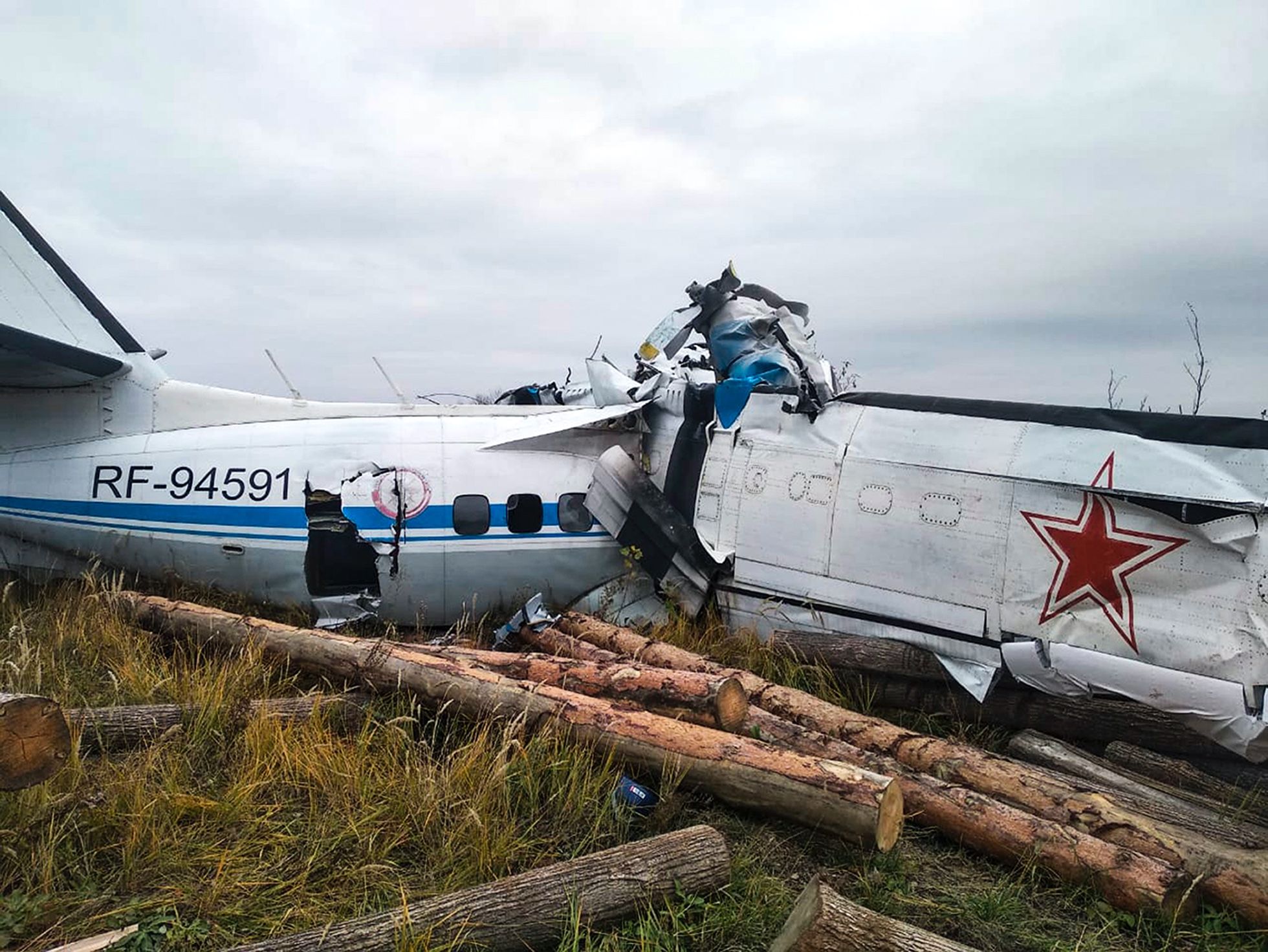
The Federal Air Transport Agency states that flights are still consistent with security standards. Russian experts so far agree that in the near future aviation will not encounter the number of disasters due to sanctions. The interlocutors of Medusa from the industry also agreed with such an assessment.
“Pilots always check the aircraft for readiness for the flight,” explains Ksenia Aeroflot flight attendant. - They are not suicides and, if the plane is faulty, they refuse to fly. Many things are being done on Russian, but this happened before the war. Someone is already afraid to fly, some of my colleagues quit because of this fear. But while I am nothing that could really threaten security, I see. ”
“If earlier we worried about fuel efficiency, now the main thing is the safety and minimum wear of the details,” the second pilot of Victory Eugene agrees. “Aviation is one of the most affected [from sanctions] areas, but not a single airline will sacrifice safety for the sake of benefit.”
Almost all aircraft systems are duplicated in case of a malfunction, so the aircraft rarely depends on one spare part-as a rule, the catastrophe occurs due to a combination of many factors, explains the managing partner of the airline Yegor. In aviation, flights with faults are regulated by MEL , which each company adapts to a specific model of the aircraft - but only towards toughening. Mel determines how long the company should replace the non -working part - until this period has come out, the plane can be used even with a malfunction.
Flying on Western aircraft taken to lease is still safe, confident and aircraft engineer Andrei. According to him, the plane can work with small malfunctions for a long time until they accumulate in such quantities that it will need repairs.
“Planned maintenance is quite rare, and, given that this interval is quite large, and [aircraft] park, we must pay tribute, young enough, the terms of planned inspection are not suitable for this and, possibly, not even next year,” said Oleg Panteleev, the chief editor of the airport sector publication.
“Until we developed this resource,” adds Andrei, but admits: “Now I myself am not flying. Irrational reinsurance. "
"The lumen is not visible, but there is still an internal stock in the warehouses"
Andrei assumes that over time, more and more aircraft will become donors for others: this means that the spare parts of the idle aircraft will be transferred to the repair of the one that is actively used. The fact that in the coming months will be resorted to Aeroflot, on May 22, reported by Bloomberg. The airline "Victory" can also put on spare parts 40% of the fleet. This process in the industry is called "cannibalization."
Ilya Shatilin, editor of the Frequentflyers industry portal, explains that using spare parts of aircraft that came out on a simple, normal practice until February 24, and now that the country simply cannot purchase details, this measure becomes more than reasonable.
“From Russia for an indefinite period there are almost no international flights, and we now have almost twice as many aircraft than it is necessary to fulfill the transportation plan,” says Ilya Shatilin. -At the same time, the aircraft are conditionally paid, because most of them are leasing, and foreign suppliers are either trying to receive insurance payments for lost aircraft, or are looking for the opportunity to write them off at a loss because they cannot receive payment from Russia. These are planes that can be disassembled on spare parts. ”
Oleg Panteleev also agrees with Consteline: “Let's be realistic - we do not consider replacing the heart, kidneys, and we consider blood transfusion as an absolutely painless and safe procedure.”
At the same time, experts note that the practice of cannibalization cannot be addressed endlessly: there will be fewer aircraft. Sooner or later, you will need to look for spare parts in the conditions of sanctions. For this, the company may try to bypass restrictions and purchase parts through intermediaries.
The fact that such work is underway was confirmed by the Medusa in the press service of the S7 Airlines.
However, along this path, airlines may face different difficulties.
“Even if we begin to transport details through India or China, they will go for several weeks,” said Air Engineer Andrei. - This is not compatible with the normal functioning of airlines. Сейчас нельзя понять, сколько будет идти поставка запчастей, из-за этого даже нельзя спланировать простой самолета по неисправности. Если раньше самолет стоял не больше трех дней, то сейчас это растягивается на недели, а если нет нужной детали, то он просто стоит и ждет [бесконечно]».
«Объемы поставок точно будут ограничены, — соглашается Илья Шатилин. — Россия не Иран , где самолетов в несколько раз меньше, так что сразу будет заметно, если аномально большое количество запчастей к определенной модели самолетов пойдет в условный Казахстан. Ничего не мешает распространить санкции на эти теневые каналы. И конечно, поставки по неофициальным каналам сложнее отслеживать на предмет безопасности».
Управляющий партнер авиакомпании Егор говорит, что устойчивая практика замены запчастей в условиях санкций пока не сложилась. «Расходники (условно, колеса, тормоза) импортировать проще, — добавляет Егор. — Более технически сложные детали, например двигатели, там пока просвета не видно, но и внутренний запас на складах еще есть».
Авиакомпаниям также предстоит отдельно решить вопрос с программным обеспечением самолетов, в том числе с системами навигации: сейчас для российских самолетов недоступны обновления. Но, по оценкам экспертов, это не главная проблема. «Конечно, лучше, когда что-то обновляется, но когда не обновляется, это не мешает самолету летать, — отмечает Илья Шатилин. — Если вы не обновите Windows, он не перестанет работать, хотя, конечно, лучше обновлять, чтобы устранить ошибки предыдущей версии. Сложности с навигационным софтом не так критичны, когда полеты фактически выполняются в пределах одной страны. В совсем крайнем случае ничего не мешает летать по бумажным картам».
«По многим направлениям российские компании запустили разработку своего софта задолго до того, как были введены санкции. Какие-то решения у нас уже есть, но придется переучиваться», — добавляет Олег Пантелеев.
Эксперты соглашаются, что в ближайшее время отрасль перейдет в режим выживания. По инерции авиация сможет нормально работать до осени или до зимы, считает Илья Шатилин. Что будет потом, эксперт предсказывать не берется.
«Теории, которые мы сейчас выдвигаем, могут оказаться ложными, потому что практики изоляции такого большого рынка еще не было в истории», — добавляет управляющий партнер авиакомпании Егор.
Олег Пантелеев соглашается, что ситуация непростая, но оценивает перспективы более позитивно: «[Нужно] протянуть два-три года. Этого, в принципе, достаточно, чтобы российские компании освоили ремонт систем, блоков, агрегатов зарубежного происхождения». А вот полный переход на отечественные самолеты, по мнению Ильи Шатилина и других экспертов , возможен не раньше начала 2030-х годов.
«Суперджет» может не выжить
Российские чиновники уже заявили о готовности развивать собственное производство самолетов и комплектующих. Например, глава Минпромторга Денис Мантуров обещал выпустить полностью импортозамещенный Sukhoi Superjet к концу 2023 года. При этом собеседники «Медузы» из индустрии скептически относятся к подобным заявлениям.
«Заменить западную авиацию условным Sukhoi Superjet не получится, — утверждает авиаинженер Андрей. — Во-первых, это продукт глобальной экономики: комплектующие к этой модели производятся в других странах. Во-вторых, даже если бы он полностью производился в России, то темпы этого производства должны быть огромны [чтобы целиком обеспечить авиапарк российскими самолетами]».
Андрей также отмечает, что дальность полета базового «Суперджета» ограничивается тремя тысячами километров. «Это очень нишевый самолет, и я не знаю, сможет ли он выжить в условиях санкций», — заключает авиаинженер.
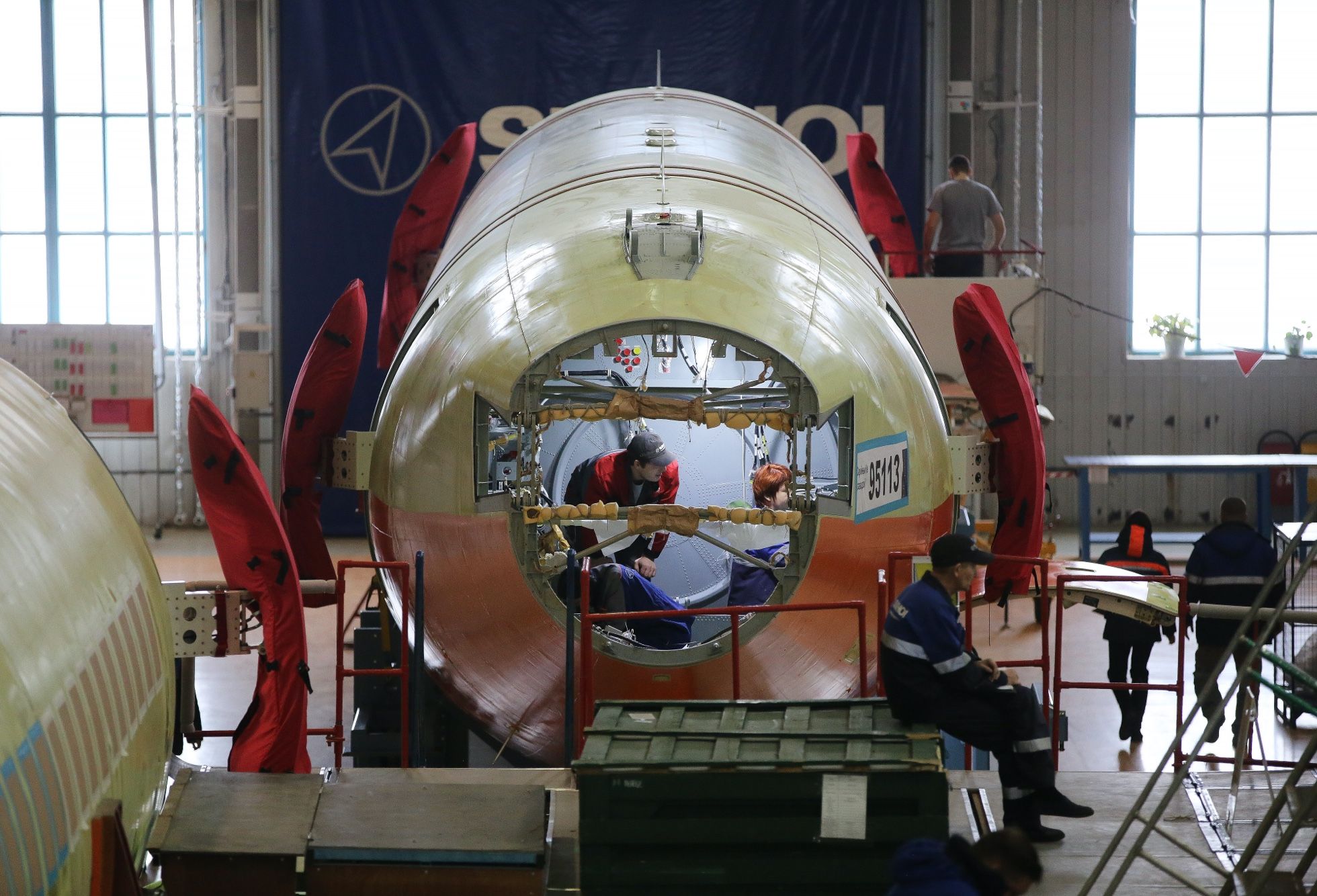
Авиаэксперт Илья Шатилин поясняет, что «Суперджеты» изначально были нацелены на глобальный рынок. Отсюда и их зависимость от импорта: это было нужно, во-первых, для облегчения международной сертификации, а во-вторых, для того, чтобы модель имела больший спрос на разных рынках. «На технически современном уровне крайне сложно сделать самолет в границах одной страны, мы же не кукурузники производим», — добавляет специалист.
По прогнозам Шатилина, «Суперджеты» первыми выйдут на простой, потому что к ним будет сложно заказывать иностранные запчасти в обход санкций. «В отличие от Airbus и Boeing, которые есть в авиапарке любой страны, запчасти для такого типа воздушных судов, как „Суперджет“, слишком специфические. При поставке комплектующих через третьи страны невозможно скрыть, для кого заказаны эти детали», — поясняет эксперт.
Некоторые сотрудники уже получают образование в IT
По словам управляющего партнера авиакомпании Егора, сотрудники, у которых зарплата привязана к количеству часов, проведенных в воздухе, не смогут долго работать в условиях простоя транспорта. «Часть переквалифицируется, часть уедет, — говорит менеджер. — Коллеги из московских аэропортов признаются, что их основная задача сейчас — сохранить коллектив, но они уже переживают, что она нерешаемая».
Сотрудники авиакомпаний, опрошенные «Медузой», признаются, что уходить пока не планируют, несмотря на то что многие огорчены состоянием, в котором оказалась отрасль.
«Мы вроде бы только начали восстанавливаться от ковида, — рассуждает второй пилот Евгений, — думали, все станет как раньше, но началась война. Сейчас ситуация выглядит лучше, чем она была в марте и апреле. Нас от многих международных сервисов отключили, но основные остались, поэтому летать можно. Как ни парадоксально, сейчас я приятно удивлен, как хорошо получается справляться с такими трудностями». Политического давления он не ощущает: по словам Евгения, один из его коллег открыто высказался против войны — и за этим не последовало никаких санкций. Тем не менее в последние месяцы «для перестраховки» пилот «Победы» получает образование в сфере IT.
Авиаинженер чартерной компании Андрей задумывался о переезде в другую страну: у него есть иностранная лицензия, он знает английский язык, но пока вынужден остаться в России по семейным обстоятельствам. «Нас [инженеров] увольнять будут последними, — рассуждает Андрей. — Пока техника стоит, ей нужен инженер, чтобы поддерживать летную годность. Если пройдет сокращение, то сокращать будут везде, и вряд ли у меня получится в России найти работу в этой же сфере. Но я найду что-то в смежной области».
Бортпроводница Ксения намерена летать, пока не сломаются все самолеты. «Понимаю, что надо искать [новую] работу, но не хочется: я люблю свое дело, — говорит Ксения. — Искренне надеюсь, что кто-нибудь снимет Путина и все это закончится, потому что так не может продолжаться вечно».
Анастасия Садовская и Кирилл Букетов, при участии Глеба Голода