
Translated material
Resignation without gratitude
In society
 Resignation without gratitude
June 8, 2022 Alexey Makarkin
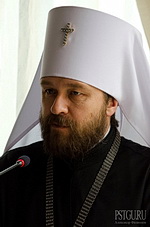 The resignation of Metropolitan Hilarion without making him adopted according to the rules of church etiquette for gratitude for the labors incurred is an obvious opal. Moreover, he ceased to be not only the Minister of Foreign Affairs of the Church and, accordingly, a permanent member of the Synod, but also the head of the general church graduate school he actually organized, preparing the intellectual elite of the Russian Orthodox Church. A small diocese in the center of Europe is not sufficient compensation even in conditions when Hungarian Prime Minister Viktor Orban is almost the only leader of the European Union, benevolent the Moscow Patriarch: he just blocked the introduction of sanctions against Cyril.
The arrival of Hilarion to the Higher Church leadership in 2009 - immediately after the election of Cyril Patriarch - was interpreted as a step towards intelligentsia within the country and a demonstration of intention to expand the ecumenical dialogue with Western churches. Recall that then there was a “Medvedev” era of rebooting in relations with the United States and building relations with “old Europe” and even, for some time, with Poland (in the Polish direction the Russian Office also played a role in the Polish direction: in 2012, the currently forgotten message of Patriarch Kirill and the chairman of the episcopal conference of Poland was signed). Intercessor processes were mating with secular ones.
Hilarion was known as the theologian with the Oxford degree and the composer - a figure, very atypical for the Russian Orthodox Church. But further it turned out that for the secular intelligentsia, the very desire of the Church to go to the “clearing” of science, expressed in the officialization of the status of theology as a scientific discipline and, in particular, in the discovery under the leadership of Hilarion, the Department of Theology in the MEPhI, is unacceptable. As a result of strong emotions - Ilarion obtained anti -aircraft in 2017. For a considerable part of the intelligentsia of the church, configured traditionalist and skeptical of Western trends, the Oxford degree of Hilarion itself and his desire to focus not on the pious tradition were suspicious, but on the achievements of modern science (as in the question of whether the St. Isaac Sirin was the Sirin - for the supporter of traditional piety unthinkable). And taking into account the comparative small number of practicing believers (several percent of the entire population of the country), the role of “its” intelligentsia for the church is much more important than even indifferent, not to mention radical-cellular.
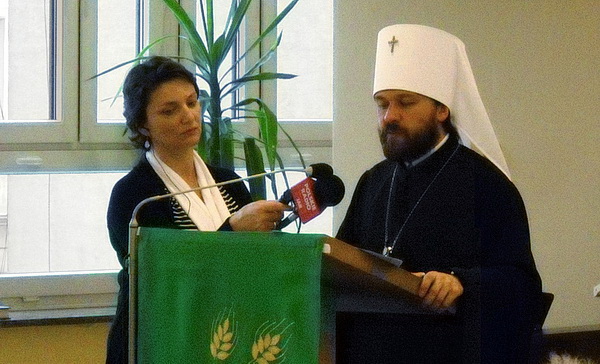
As for ecumenism, here the main problem was not even the mass of opponents, but a lack of supporters. Opponents of building relationships with Rome or Protestants (even conservative) are active and motivated - they are based on a powerful monastic tradition, rooted in Russian church history. Supporters are not only significantly less, but also their motivation are usually much less strong. The meeting of the patriarch and dad in Havana in 2016, albeit purely political, without a hint of church communication, caused loud (few) and quiet (much more large) resistance inside the Russian Orthodox Church - but almost no enthusiasm, which at least partially balance such resistance. And after February 24, the entire accumulated dialogue resource turned out to be devalued, the new meeting of the pope and the patriarch was canceled, and with the negative comments of Francis addressed to Cyril personally.
The meeting of the Holy Synod of the Russian Orthodox Church also showed that there is one leader in the church - Patriarch Kirill - and it is he who pursues a personnel policy. Not only Metropolitan Hilarion, obliged to him with his brilliant career, lost all his posts one day - as they say, the patriarch gave, the patriarch took. But the young Metropolitan Anthony (Sevryuk) also rose, in the asset of which the accession to the Moscow Patriarchate of the Western European Archbishopric, which was previously part of the Patriarchate of Constantinople. If Hilarion is accused of a loss of church Ukraine (although what could he do after the patriarchal statements of this year?), Then there was an acquisition, although not so large -scale. And in conditions when the Moscow Patriarchate is actually at the war with Constantinople since 2018, any victory has been valid high, even if it has a flip side in the form of a difficult relationship between the liberal archbishopia and the conservative Russian Orthodox Church abroad, which have historically competed, and now enter the same “megastructure” of the Russian Orthodox Church. However, the first large conflict associated with the transition of British clergy from the ROC to Archbishopicia unauthorized by the direct authorities managed to stop: Archbishopia retreated and mated its decision.
The complex system of checks and counterweights that was forced to exist in the Russian Orthodox Church under the Patriarchs of Pimen and Alexy II have long gone into history. Then it was due to the presence in the highest church leadership of the group of “Nicodimists”, who were in difficult relations with both Primate; Vladyka Cyril, then the Smolensk archpastor belonged to her. Now he himself has become a patriarch, the “Nicodimovites” are more irrelevant (the last of those who occupied the highest posts in the church - not counting, of course, Cyril - Metropolitan Juvenal has recently been sent to rest), and the patriarch will not allow new groups. Because the phenomenon of the “Nikodimovites” was connected to a large extent with the policy of “divide and reign”, which was pursued by the Soviet government to weaken the positions of the patriarch. That is, with an external factor for the church.
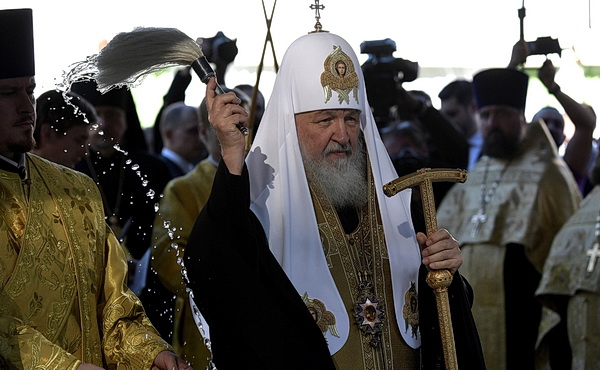
The leadership of the Patriarch also has a flip side - he himself determines the policy of the church. For example, now in the Ukrainian question, where Cyril harshly identified with the Russian government and the “Russian world”. Accordingly, the further fate of the Ukrainian Orthodox Church (UOC) in the near future will depend not on church, but on the military-political factors according to the long-standing principle of the Augsburg religious world Cujus Regio, Ejus Religio (whose power, that and faith). At a meeting of the Synod, the Crimean dioceses have already been transferred from the UOC directly to the Russian Orthodox Church.
In turn, the mutual repulsion of the Russian Orthodox Church and the UOC will stimulate the Ukrainian church to search for the canonical design of their independence. Moscow will prevent this as much as possible. She even recognized Georgian autocephaly a quarter of a century after its self -proclaiming - in 1943, and then, according to the urgent recommendation of the then authorities, at the head of which the former Georgian seminarist (and Patriarch Sergius then wrote a separate letter to Stalin, “having a pleasant duty” to inform him of the recognition of autocephaly of the Georgians). Accordingly, sooner or later, Ukrainian hierarchs will visit Istanbul, where the residence of the Patriarch of Constantinople is located.
The author is the first vice president of the Center for Political Technology.
Photo: 1. Author: Alexander Filippov-https://vk.com/album-97729_231158874/commons.wikimedia.org , cc by 4.0
2. Author: Loraine - Own work / Commons.wikimedia.org , CC by -SA 4.0
3. Kremlin.ru / cc by-sa 4.0