
Translated material
There is already Russia
Torture and walks in parks: how the occupied Kherson lives
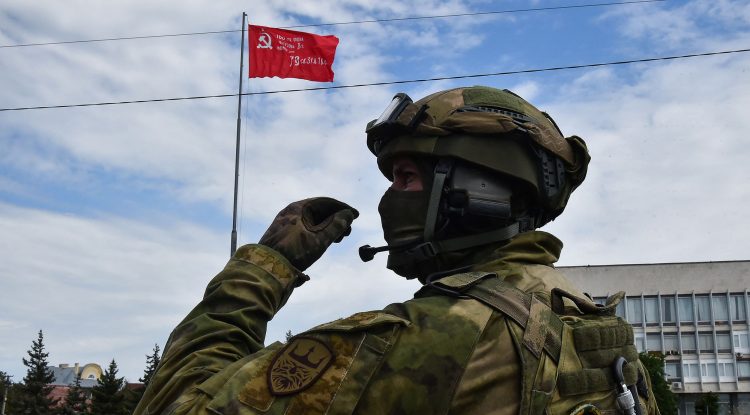
Kherson is the only regional center of Ukraine, which the Russian troops managed to completely occupy after the outbreak of war. By the end of May, half of the inhabitants left him-but more than a hundred thousand people continue to remain in the city, which is now managed by the “military-civil administration” appointed by the Russians. The media almost weekly report that the Kherson region is going to announce independence, or to join Russia; In the city itself, Russian mobile numbers are now working and Ukrainian, and any public manifestation of dissent is fraught with repression. Julia Selikhova tells how the occupied Kherson meets the fourth month of the war.
“As Aibolit repeated in a fairy tale:“ Limpopo, lympopo, lympopo, ”I repeated:“ Home, home, home, ”recalls Maria ( the name of the heroine was changed at her request. - approx.“ Cold ” ).
She left Kherson at the end of March to take out the children. They got to Austria in their car. Maria was driving: when explosions were heard on the way towards Nikolaev, she made music louder and pressed on the gas; When the wagons overtook them with a roar already in Europe, it seemed to her that shells were flying. In Salzburg, where they stopped, on a long day they suddenly turned on the air aircraft siren to check the system - and Maria began a panic attack.
Having sent the children to Germany, Maria herself went to Poland to relatives. It was closer to get to Kherson, where the woman from the very beginning firmly decided to return. “There were no children nearby, it was no longer necessary to brag, and I began to weak,” she recalls. - I was shaking, came to my relatives and turned off. I began to dream of war. ” Soon after, evidence of the massacres of civilians appeared in Buch and Irpen, and she got worse. “I cried all the time. It was scary. I know what dead bodies look like, how the corpse is wandered, and in those photographs I paid attention to bluish nails - you won’t fake it, you won’t draw, ”says Maria. - And then I saw a video where women are howl who find their dead sons. Such a war is impossible to play, he comes out from somewhere. ”
All this detained Mary in Poland for two weeks - but did not stop. “I did not have a question about staying [abroad]. I equipped my apartment for a very long time. I really needed to go there, ”she explains. - In addition, dad remained in Kherson. Dad for me since childhood was a block. He worked all his life, and last year he retired. When all relatives left Kherson, I understood that one dad could not cope. ”
In the second half of April, she finally decided to go. Gathering home, Maria bought medicines with her own money - from paracetamol and vitamins to thyroid preparations. Since the end of February, Ukrainian cars with medicines have not been missed from the end of February, and many residents refused Russian drugs fundamentally. In Odessa, through which the woman was traveling to Kherson, she filled the car to the roof of humanitarian aid from philanthropists - diapers, animal feed, and a portion of drugs. Then 800 kilometers had to drive instead of the usual two hundred - through the crooked horn so as not to get into the zone of active battles.
- Why are you returning? Do you know what is unsafe there? - the Ukrainian military asked her on the border next to the occupied territories.
“I have a house there, there is dad,” answered Maria.
The Russian military, according to her, behaved much less delicately:
- Where are you rushing, fucking?
From Krivoy Rog to Kherson, Maria counted about 50 checkpoints - and she was checked at almost everyone. “The most disgusting is machine guns,” she says. “Because you can agree with a person, but not with metal.”
When Maria finally arrived at her house in Kherson, she saw her elderly neighbor entered the street. “She hugged me, cried and said:“ I thought everyone threw us, ”the woman recalls ( according to local authorities, Kherson and the surroundings after February 24, about half of the inhabitants left).
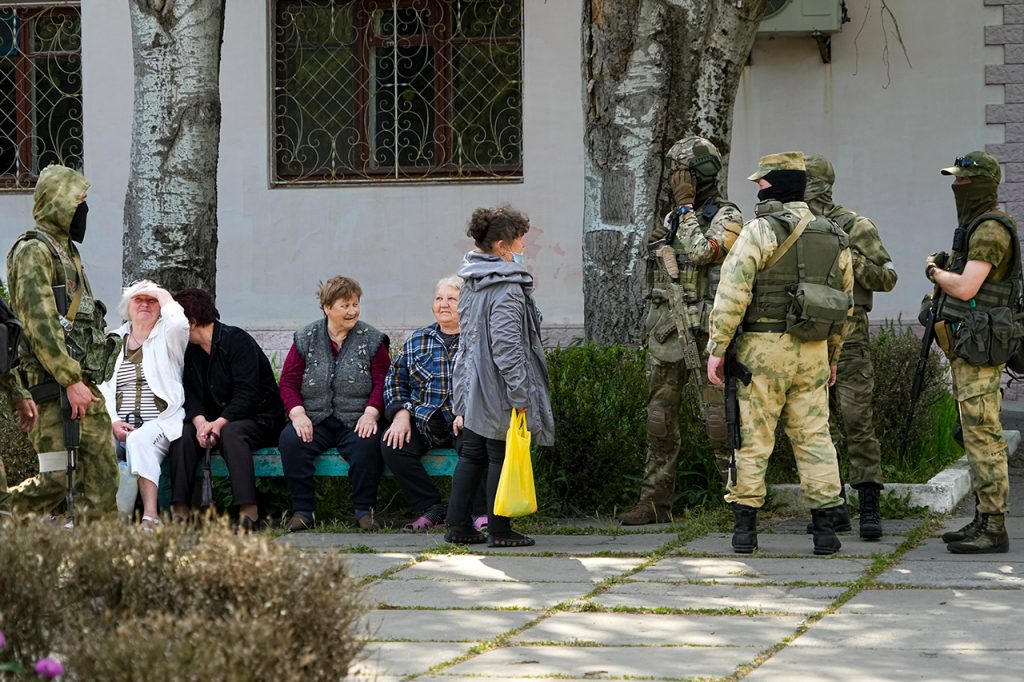
“My safety does not matter now,” Maria argues. - I did the main thing - I took out the children. Now I will be in Kherson. Here is my house, which I really love, my dad, uncle, grandmother, elderly neighbors. They need me, so I returned. "
She returned on time. After some time, the lines from cars driving in both directions began to accumulate on the checkpoints - the Russian military did not let them go. On May 17, one of the civil columns was fired (the Ukrainian authorities believe that the Russians did it). On May 28, the border with the territory of Ukraine was officially closed . Now you can leave the occupied city only to Russia through Crimea.
As if an ordinary life
The end of April and the beginning of May in Kherson was always the best time: everything is green, everything blooms. On such days, Elena ( the name of the heroine was changed. —— approx. “Cold” ) with her husband and son-now he is four years old-almost every evening we went to a cafe near the house, bought something tasty, and then walked around the area.
Now Elena and her home in the afternoon are trying not to leave the house at all. “The city is practically dying,” she explains. - There are no people on the streets, public transport does not walk after four hours, you can call a taxi, but it costs twice as much as usual. If during the curfew that acts from 10 pm to 5 in the morning, something will happen to you, then the ambulance is unlikely to come. ” The family tries to do all their affairs in the city before lunch - and so, Elena admits, their life has not changed so much: the husband, as before, works remotely from home; The child, as before, does not walk the garden and in the morning walks with his mother. “If you don’t leave the house, it seems that everything is fine,” Elena continues. - We are used to the sounds of explosions, only our child is now sleeping in the corridor at night to observe the rule of “two walls”. Otherwise, as if an ordinary life. ”
When you leave the house, it becomes more difficult. In the occupied city, they are otherwise stored by products. Large supermarkets were closed due to the lack of deliveries from Ukraine, small shops and markets work. According to Elena, you can now buy only a basic set of products: sugar, buckwheat, rice, milk, eggs, flour, butter, bread. Prices rose two to four times, low prices only for vegetables-they are local in the Kherson region. Elena does not go to shops with Russian products that are carried through Crimea.
The city also has to choose routes in the city - Elena tries to bypass the checkpoints so as not to encounter the verification of documents. As she tells, they often not only check the passports, but also demand to show the contents of the phone - and men are sometimes forced to undress to check the tattoos. Each time, leaving the apartment, Elena removes photographs and screenshots from the phone, which may seem suspicious to the Russian military: “This is already on the machine, as if it were normal practice.” Another interlocutor of the Cold, living in Kherson to avoid checkpoints, now goes to work on foot four kilometers one way.
In the evenings, Elena and her husband are watching TV instead of walking and playing with a child. “It seems to me that we always lived like that,” she says. “I will be stunned if I get to some place where you can go out into the street in the evening.” Or I will find myself in a store where there is a choice, and not just one package of milk. ”
Soon we will return the Soviet Union
Checking on checkpoints is not the worst that can happen in Kherson with people whom the Russian military consider unreliable. Since the beginning of March, rumors about the loss of people and torture in closed prisons have been going on in the city - almost all the interlocutors of the “cold” who are in the city mentioned them. One of the interlocutors of the “cold” said that he was now afraid to swim in the Dnieper-because of rumors that “corpses with traces of torture on the body periodically pop up in the river”.
There are not so many reliable evidence of disappearance and bullying. In April, the publication of Ukrinform talked about the detention and beatings of a priest from Kherson; The BBC found three Ukrainians who reported that they were tortured by the Russian military. In addition, in mid -May, a video from Kherson began to appear on the Internet, in which residents of the city apologize to the Russian military; In one of them, the woman says that there was "denacing courses." “Cold” failed to find out if there are really similar courses in the city - however, it was possible to find a person who, according to him, recorded a video with an apology to Russia.
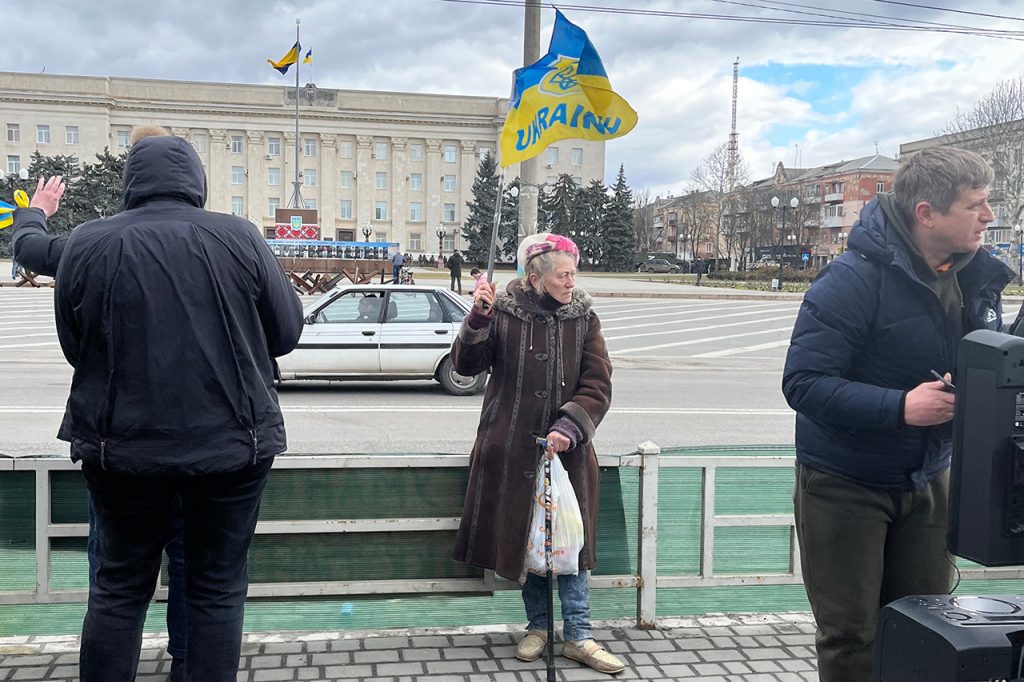
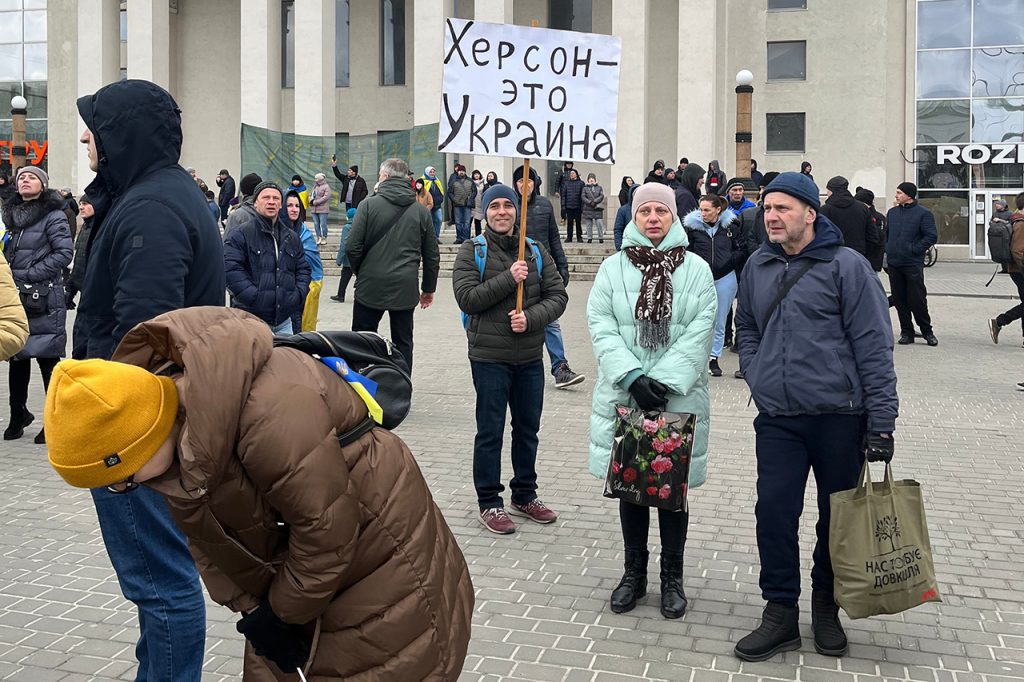
On March 26, the next rally against the occupation was held in Kherson-along with the fellow countrymen, Dmitry-41-year-old collector of light-engine aircraft, who "did not like that military equipment was traveling around the city, military with machine guns were traveling among children that they were delayed for a yellow-blue ribbon."
When Dmitry was going home after the rally, a minibus drove up to him. According to the man, the military jumped out from there, put on his bag on his head, tied their hands and stuffed it inside. Dmitry was brought to some building and brought into the room-still with a bag on his head. The next few hours were interrogated and tortured, demanding to name the password from the phone: they beat on the heels, threatened to rape the machine gun, put on a rubber tourniquet on his head and tightened it so that the man almost lost consciousness.
“Having used all the means conceivable and unthinkable, they realized that I do not know this code, Dmitry continues. - I specifically took my own to the rally, but the old phone of my son, so that it could only be answered if they call. I really did not know the password. "
After that, the interrogation continued in another room. Now Dmitry was asked how much money he receives for a rally or how much he pays to others so that they would go out. “They thought I was the organizer. They did not understand that people sincerely protest, because they sincerely disagree. They said: “Your power is sitting in Italy in a bunker, they threw you, abandoned. Here Russia, soon we will return the Soviet Union, show these Anglo -Saxons!” - Dmitry recalls, - and then they forced me to record a video with apologies for the phone camera: they say, I repent that I went in support of the nationalist Kyiv authorities, and I won’t go out anymore. "
After the record, they told him that if Dmitry once again reaches a rally, then his relatives would not find him, they put a bag on his head and put him in the car. “I had two thoughts: they were being taken either for a search home, or shoot,” Dmitry recalls. He was taken out of the car, untied his hands, removed the bag and said to count up to five. When he opened his eyes, there were no more abductors nearby - Dmitry stood in a quiet lane in the middle of Kherson.
Soon after, he left the city to the territory controlled by Ukraine. Dmitry believes that there are many people like him, but people who remain in Kherson are afraid to talk about the experience publicly. Now, if a resident of the city wants to complain about the violation of the law, he cannot contact either the SBU or the police - they are simply not in the city. Kherson is under the control of the "Military-City Administration", in which the military appointed people with pro-Russian views. It is they who are invited to complain about the crimes of the Russian military.
People will get used to it
On February 23, 2022, a native of Kherson Vlad, working as a programmer in a trading company, and his wife was born a son. The next day, Russia invaded Ukraine.
Vlad rejoiced: he and Perm and Perm and her from 2014 hoped that Russians would come to Kherson. “When it all started on February 24, I could not believe! He recalls. “We waited for what would be like in Crimea in 2014, but I wanted it to be without sacrifices.”
“Kherson was always Russian -speaking, we did not want to go to Europe. We have small salaries, why do we go there? - says Vlad. - You pay for utility bills, buy me to eat - and that’s all, we could not afford to go abroad, even in Turkey we were never. They didn’t go to Crimea either - expensive. ” At the same time, Vlad was outraged by the fact that in Kherson schools they stopped teaching in Russian - and that, according to him, it was publicly dangerous to criticize. “My friend was pierced in 2014 with a bat for the fact that his parents worked in Russia,” says Vlad. - These were not massive cases, isolated, but it was scary. There were many threats for Soviet symbols in social networks or for the fact that you do not support the Maidan. For dissent, it was possible to grab seriously. Therefore, we were silent and waited for the Russians to finally come and stop it all. ”
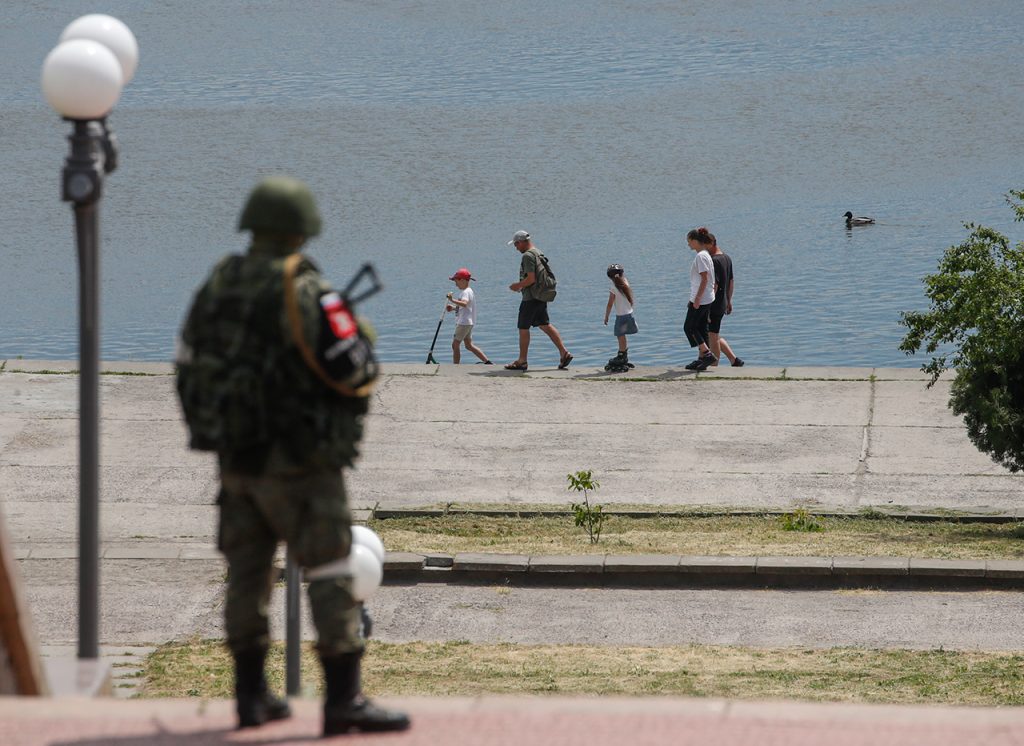
Vlad checkpoints do not embarrass: “I go to work by car almost every day. Stop, check the registration in the passport. Everything is polite, cultural when they ask, I open the trunk, ”he says. -I know, there were times when a person was taken away somewhere and did not see him anymore. Well, probably, it was connected with something, since they took it away. ”
The sounds of explosions in Kherson sound almost every day and every night - from the Kherson region, the Russian military launch shells towards Nikolaev; Ukrainian troops, in turn, fired at their positions. “When it is jerking - of course, uneasy,” Vlad admits. - But, on the other hand, it has never arrived around the city, Russian air defense is very well worked out. We walk in the park, people also walk. If they start to bang, parents call children home. After 20-30 minutes, children come out again. ”
The only thing that seriously strains Vlad in the current situation is the situation with the child. The city is now a big problem with children's goods - diapers who import through Crimea are very expensive, only humanitarian assistance saves. In addition, son Vlad still has no documents. After Russian troops entered the city, Ukrainian administrative services stopped working. “They gave a piece of paper, which, by and large, just a piece of paper. It was not possible to officially register the child, ”says Vlad. - We did not apply for maternity payments before childbirth, we wanted to immediately call and receive both payments after birth, and maternity. But they did not have time, as a result, we have not accrued anything until now, three months have passed. ”
Vlad tried to address his question to the new authorities. At first he went to the "Military Civil Administration", but could not even get inside. Then they opened the “military commandant’s office” - but its employee, according to Vlad, “smiled, showed me a large stack of appeals from the citizens that he had to process, and said to wait until September”. Vlad worries that his son does not have a birth certificate - but he hopes that when he appears, the baby will become a Russian citizen: both he and his wife are “very for” that Kherson joins the Russian Federation.
As a real prospect, it is still unclear. In recent months, the media have repeatedly reported that the Kherson region is planning to either be annexed to Russia or to turn into a Kherson People’s Republic. The fact that Russia in Kherson is “forever”, said the deputy chairman of the Federation Council and secretary of the General Council of United Russia Andrei Turchak. The deputy head of the “military administration” of the city, Kirill Stremuzov, stated that the regional occupation authorities plan to appeal to Putin with a request to join the Russian Federation. Presidential spokesman Dmitry Peskov, in response to this, said that the residents of the region "must determine their fate themselves"-"as it was in the case of Crimea."
One way or another, Vlad expects that his family will soon go to pick up Russian passports. Judging by the local chat messages , a little more than a thousand people were submitted to the beginning of June (Kherson's population before the war was about 300 thousand people).
In addition, Kherson is gradually switching to Russian communications. On May 30, Ukrainian providers were completely disconnected in the region-now you can call or go to the Internet only by buying a Russian operator’s SIM card. In one of the Kherson telegram channels, it is believed that the purpose of such actions is to control the media consumption of the residents of Kherson: the Ukrainian media and independent Russian media among Russian providers are blocked, as well as Instagram with Facebook. The Kherson, who fundamentally refuse to buy Russian SIM cards, pour on the streets near the points of distribution of Vifay - next to the buildings of the mail and cafe.
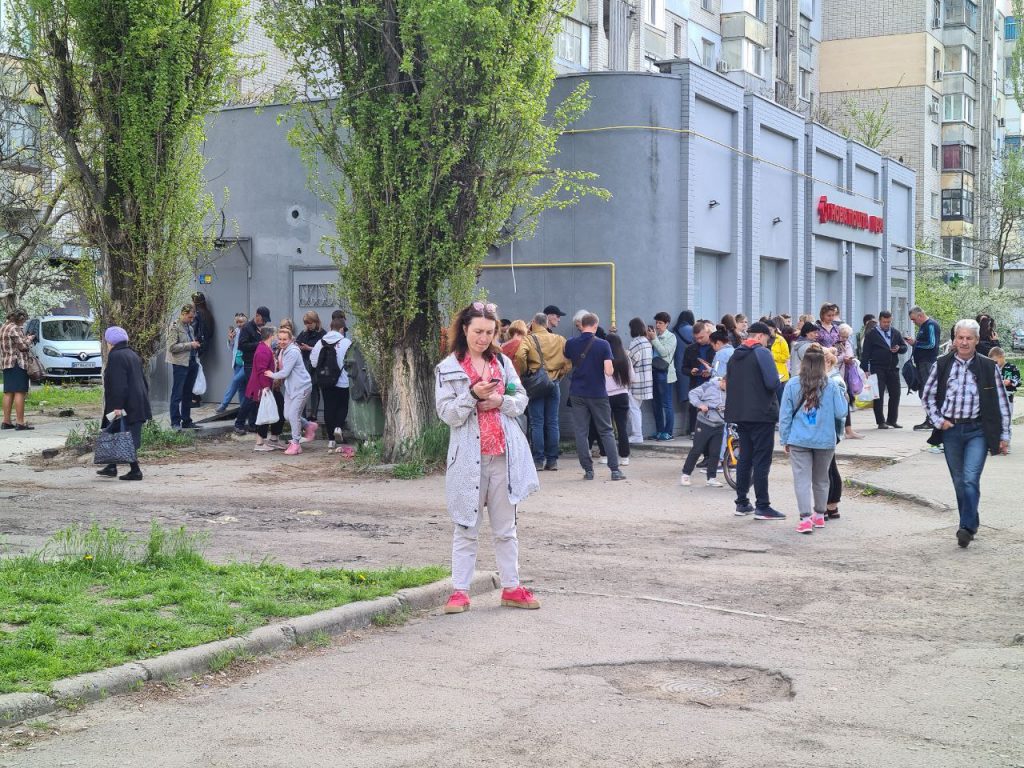
The transition to the Russian currency, according to the interlocutors of Kholoda, is not as smooth as the media states about this. The introduction of the two -Walite system was planned since the beginning of May, but many entrepreneurs of Kherson fundamentally do not make double price tags, and residents with pro -Ukrainian views refuse to pay for purchases in rubles. In the trading company where Vlad works, the shops still gradually began the transition: the second is indicated next to the price in hryvnias - in rubles. Formally, rubles are allowed from May 23, but Vlad himself has not yet seen them. Глава «военной администрации» Владимир Сальдо анонсировал появление российского банка в конце мая, но на момент выхода публикации не появилось конкретики о том, что это будет за банк и когда он начнет работу.
9 мая Влад с женой и ребенком ходили в центр города отмечать День Победы. Парад и шествие Бессмертного полка устраивали пророссийские силы. «Я хотел нести красное знамя победы, но не успел — их разобрали быстро. Мне дали русский флаг, я его на плечи повесил, — рассказывает Влад. — Жена фотографировалась с [российскими] военными. Потом мы читали в [проукраинских] чатах, что это не херсонцы на параде, а актеры, которых специально наняли. Нет, мы сами вышли!».
Война поссорила Влада с ближайшими родственниками: своего брата он называет «майданутым» — и даже точно не знает, куда тот выехал из Херсона. «Сейчас каждая первая семья так: кто-то “за”, кто-то “против”, кто-то боится, — признает он. — Тут надо время, люди привыкнут. Кто не согласен — уже уехал».
Лечить просто нечем
«По моей специальности уехало процентов 70 врачей, — признает Светлана ( имя героини изменено, по ее просьбе мы не указываем врачебную специальность. — Прим. «Холода» ). — Некоторые уже нашли работу: кто за границей, кто на западе Украины. Мы остаемся в городе, потому что здесь наше население, наши люди, которые нуждаются в помощи. Ради них мы не уезжаем».
До войны Светлана работала пять дней в неделю в частной клинике, а по выходным — дежурила в государственной. После 24 февраля работы стало значительно меньше из-за оттока людей: теперь у женщины полторы смены в неделю на основной работе — плюс то же самое суточное дежурство в городской поликлинике, половина которого по сути бессмысленно, поскольку ночами из-за комендантского часа пациентов не бывает.
Но несмотря на то, что людей в городе меньше, помогать им сложнее. «Лечить просто нечем. Расходники заканчиваются, привезти их невозможно. Какое-то оборудование в клинике уже частично сломалось, но его никто не может починить, так как неоткуда заказать нужные детали, — рассказывает Светлана. — Ты не знаешь, какие назначить лекарства, потому что в городе ничего не найти. Волонтеры по пять-шесть суток ждут в поле в машинах около блокпостов и делают нас счастливыми, когда приезжают [с лекарствами]».
Альтернатива есть — использовать лекарства, которые завозят из Крыма. Но больницы, где работает Светлана, не хотят это делать: администраторы считают, что впоследствии их за это могут признать коллаборантами. «Для срочных операций расходники мы находим, а несрочные откладываем на неопределенный срок, — говорит Светлана, поясняя, что к российским лекарствам есть претензии по качеству: — Привозят все подряд — сигареты, пиво, водку, лекарства. Ставят коробку рядом с остановками прямо на улице, сверху на коробке — доска, на доске это все выкладывают. Лекарства лежат на солнце, без холодильников. Лучше вообще не принимать эти препараты. И мясо точно так же продают просто на улице на пластиковых столах на клеенке. Жара, мухи летают, пыль от дороги, это мясо лежит целый день. Terrible".
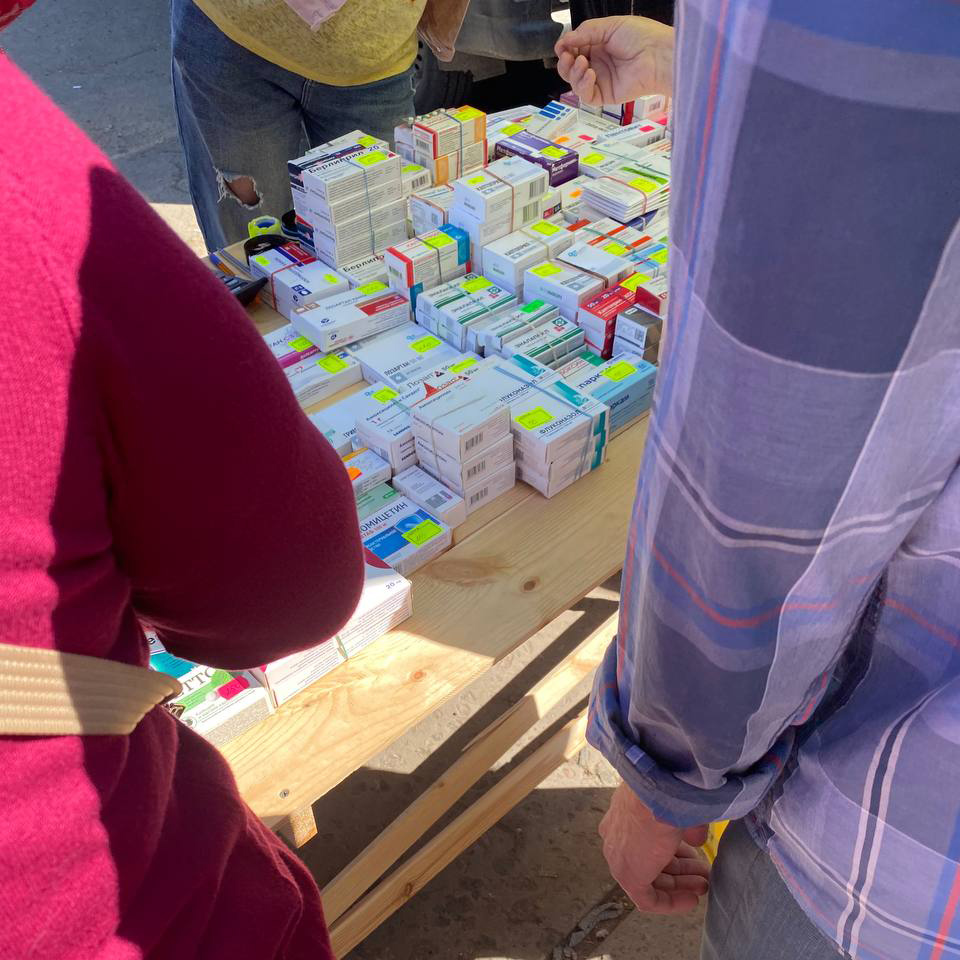
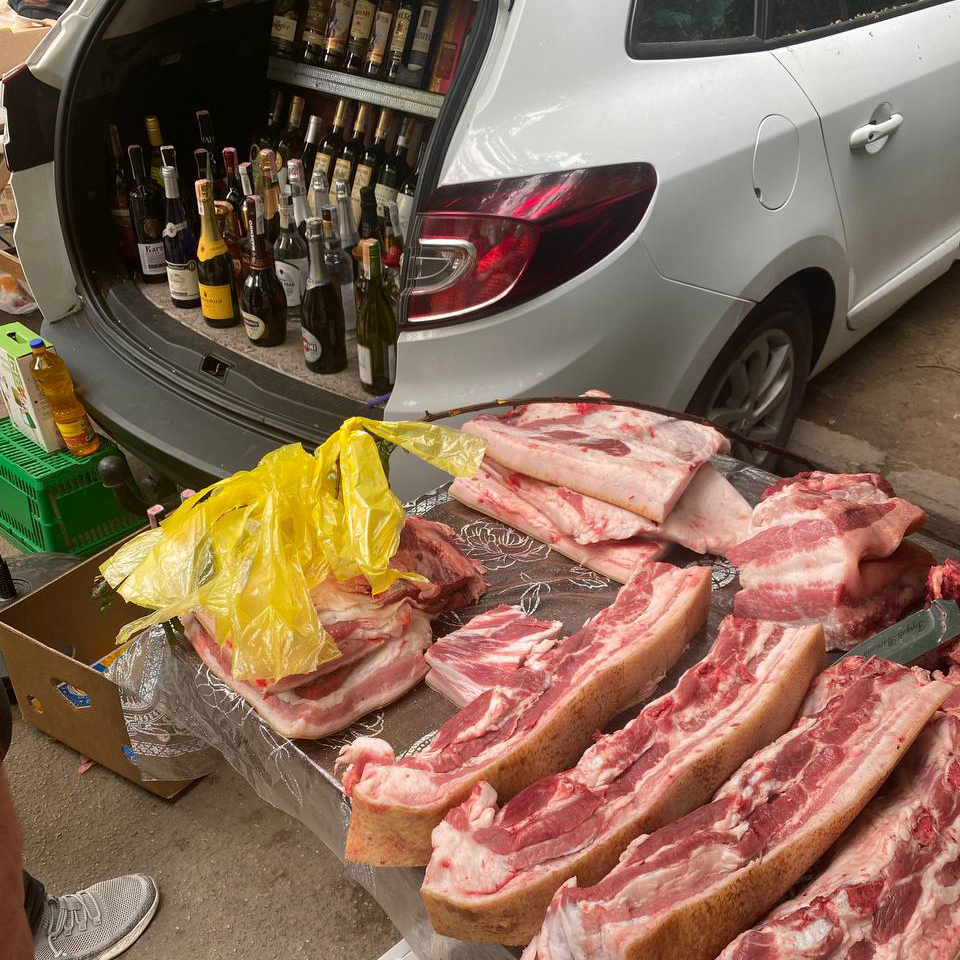
Стихийная торговля на улицах Херсона. Photo from the personal archive of Svetlana
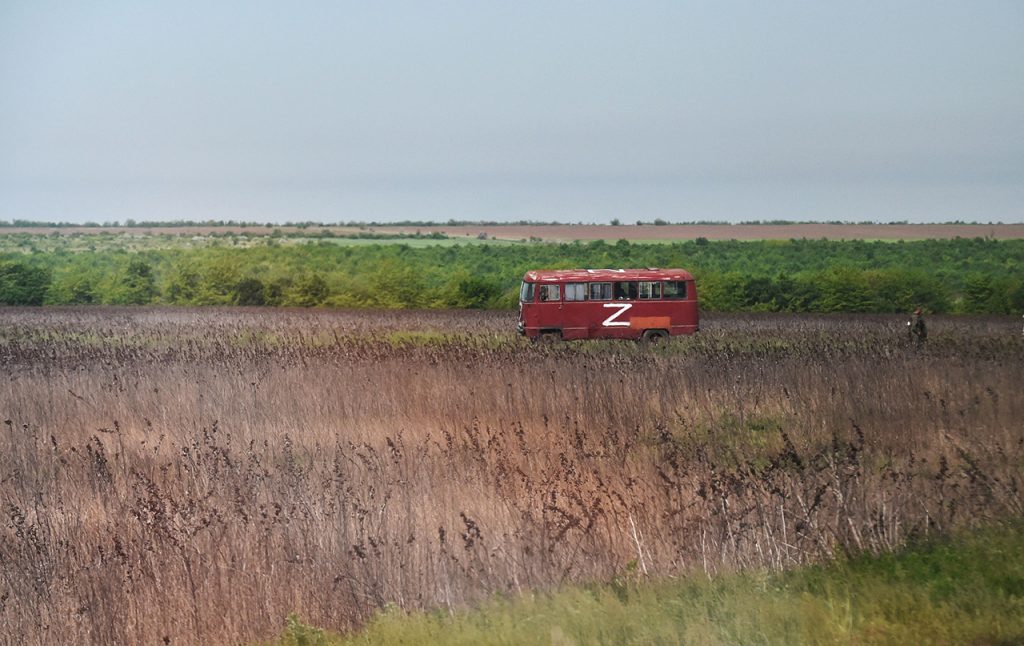
Отдыхают Светлана и ее муж (он тоже врач), гуляя по дворам недалеко от дома. «Строим маршрут так, чтобы не выходить к проезжей части, потому что там постоянно ездят машины с буквой “Z”, не хочется с ними сталкиваться. Однажды мы шли по двору, встретили [российских] солдат, — вспоминает Светлана. — У меня в руке был телефон, я там что-то печатала. Они идут к нам и говорят: “Стойте”. Я думаю: “Прощай, телефон, прощай вообще все, сейчас заберут”. Один говорит: “Не бойтесь”, а я думаю: “Как не бояться? Ты идешь ко мне с пистолетом”». Оказалось, что солдаты просили подсказать им дорогу — впрочем, дома с нужным им номером просто не существовало. Светлана говорит, что от стресса тогда чуть не упала в обморок.
Человек смотрит в упор
Вернувшись в Херсон, Мария обнаружила, что ее опасения по поводу отца оправдались. Оказавшись в городе один (все родственники уехали), он почти перестал нормально питаться и запил. «Я увидела его и ужаснулась, начала его срочно спасать, — рассказывает Мария. — Хочешь зеленый борщ — на зеленый борщ, хочешь сырники с изюмом — на сырники с изюмом. Хочешь пивка — на лимонад». Она вывезла отца на дачу — теперь он понемногу приходит в себя и занимается огородом.
Как говорит Мария, ее отец — не единственный пожилой человек, оказавшийся в сложном положении. В Херсоне осталось много родителей ее друзей, соседи — она навещает их, составляет списки лекарств, чтобы передать волонтерам, а еще организует встречи, чтобы люди знакомились и не чувствовали себя одинокими.У пенсионеров в городе сейчас много сложностей: например, они не могут оплачивать коммунальные платежи онлайн (для подтверждения требуется код из смс, а он не приходит из-за блокировки мобильной связи на украинских сим-картах), а снять наличные деньги в банкоматах невозможно. Единственный вариант обналичить пенсию –– частные лица, которые берут от двух до десяти процентов за операцию Кроме того, с проблемами столкнулись люди, достигшие пенсионного возраста уже после 24 февраля: оформить пенсию невозможно, а работы в городе сейчас практически нет.
«Это моя стихия, я себя чувствую в своей тарелке, мне нравится помогать, — рассуждает Мария, но тем не менее добавляет: — Мне страшно, конечно. Я подпрыгиваю на кровати каждый раз, когда ночью обстрелы. Страшно, потому что перед глазами стоят картинки того, что сделали с Мариуполем, Ирпенем, Бучей». Когда она не помогает другим, Мария делает заготовки, закатывает тушенку в банки, работает в огороде. Периодически ее дети просят ее уехать, но она каждый раз отвечает: «Я не могу».
В каждую поездку по городу Мария берет не только продукты, но и корм для бездомных кошек и собак. «Еду на машине недавно, вижу, идет старенький пес, — рассказывает она. — Остановилась, позвала его, он на меня смотрит. Вылетела из машины, открыла багажник, набрала корм в ладони, выложила на дорогу. Пес подошел, начал кушать, я его глажу. А потом поднимаю глаза: на меня направлена пушка и через окошечко человек смотрит в упор. До меня дошло, что я остановилась рядом с воинской частью, где базируются русские. Молча быстро села в машину и уехала. Такой вот у меня страх. Я сначала делаю, а потом думаю».