
Translated material
"These are the features of the genocide." In Poland, certificates of Ukrainians are collected
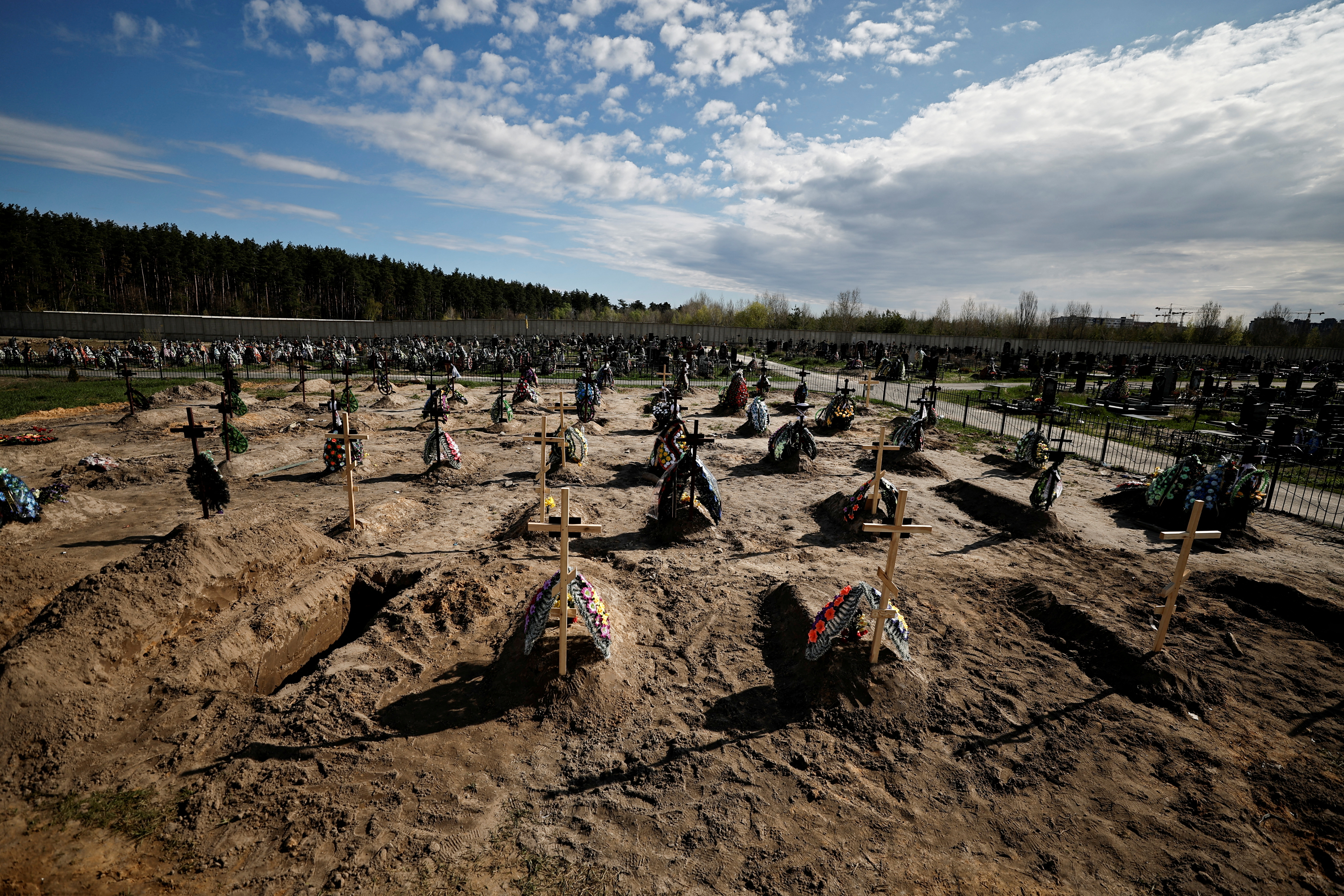
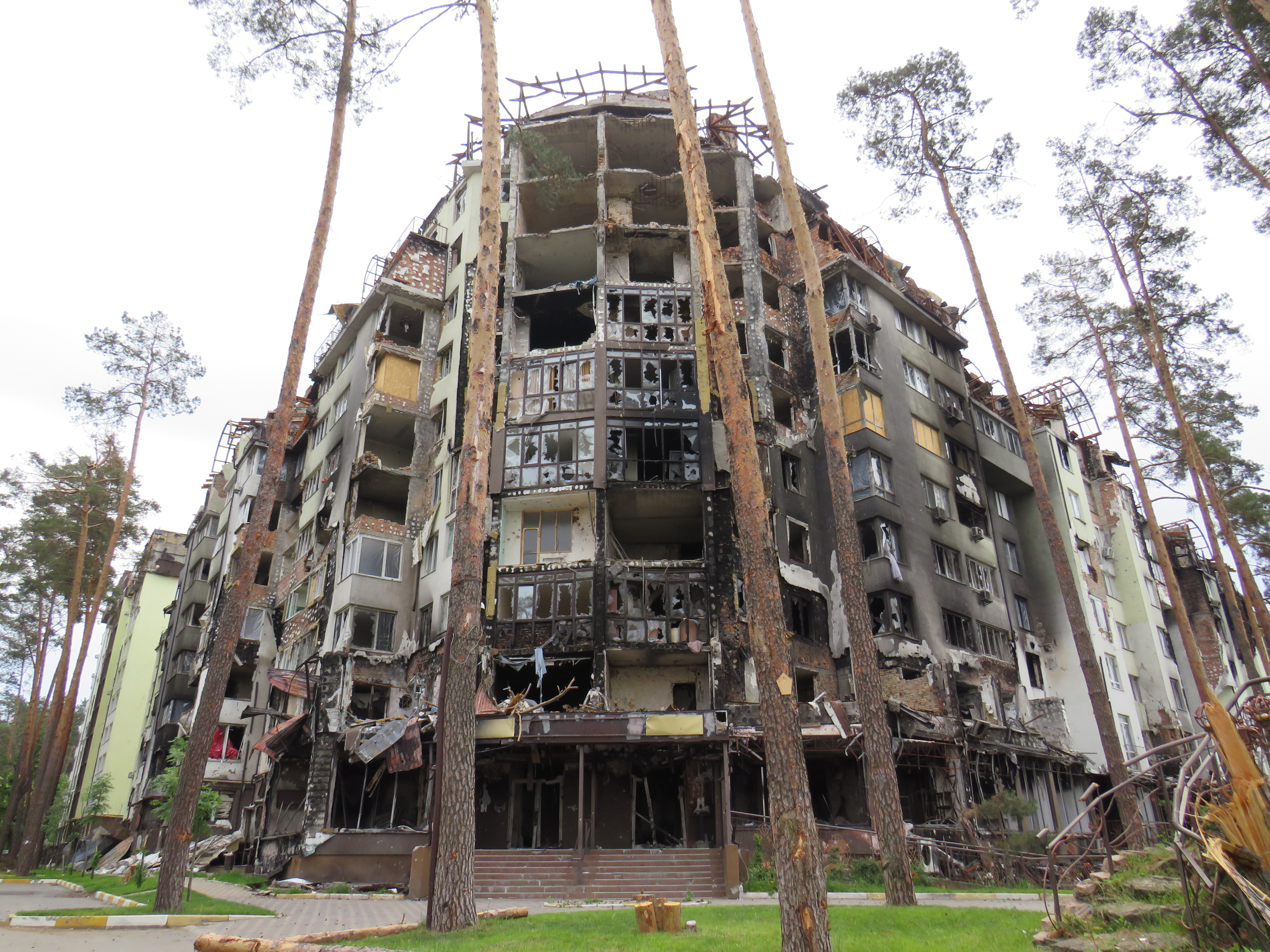
"I was under the occupation from February 24 to March 10 in the city of Bucha, the Kiev region. I was hiding in the basement of my house. With my own eyes I saw how Russian equipment entered our area, settled in our yard. Opposite my windows, they put five tanks. Every day after 16.00 they shot towards Irpeni. There were large KamAZs with ammunition and fuel. Russian military military. They crawled out of our apartments and they forbade us to go out into the street.
In the basement of the house opposite, five young men were tortured. After torture, they were killed with a shot in the back of the head. The Russians shot from machine guns at cars, pierced tires so that people could not leave the city. They also turned the cars on their side to close the tanks. They threw mattresses and blankets out of the windows of our apartments and covered their equipment with them. They shot the dogs that were abandoned by the owners. [...] 250 civilians were held in the basement of the school. As hostages, they kept children there. All apartments in high -rise buildings were robbed, including mine. I saw how they shot at the door of the stores, broke the locks, broke and stole it. A shell hit the house of my peer, who lived on Yababloneva Street. When her husband tried to extinguish the fire, the military of the Russian Federation pulled him out into the courtyard, put him on his knees and shot him in his eyes in her eyes. "
In the basement of the house opposite, five young men were tortured. After torture, they were killed with a shot in the back of the head
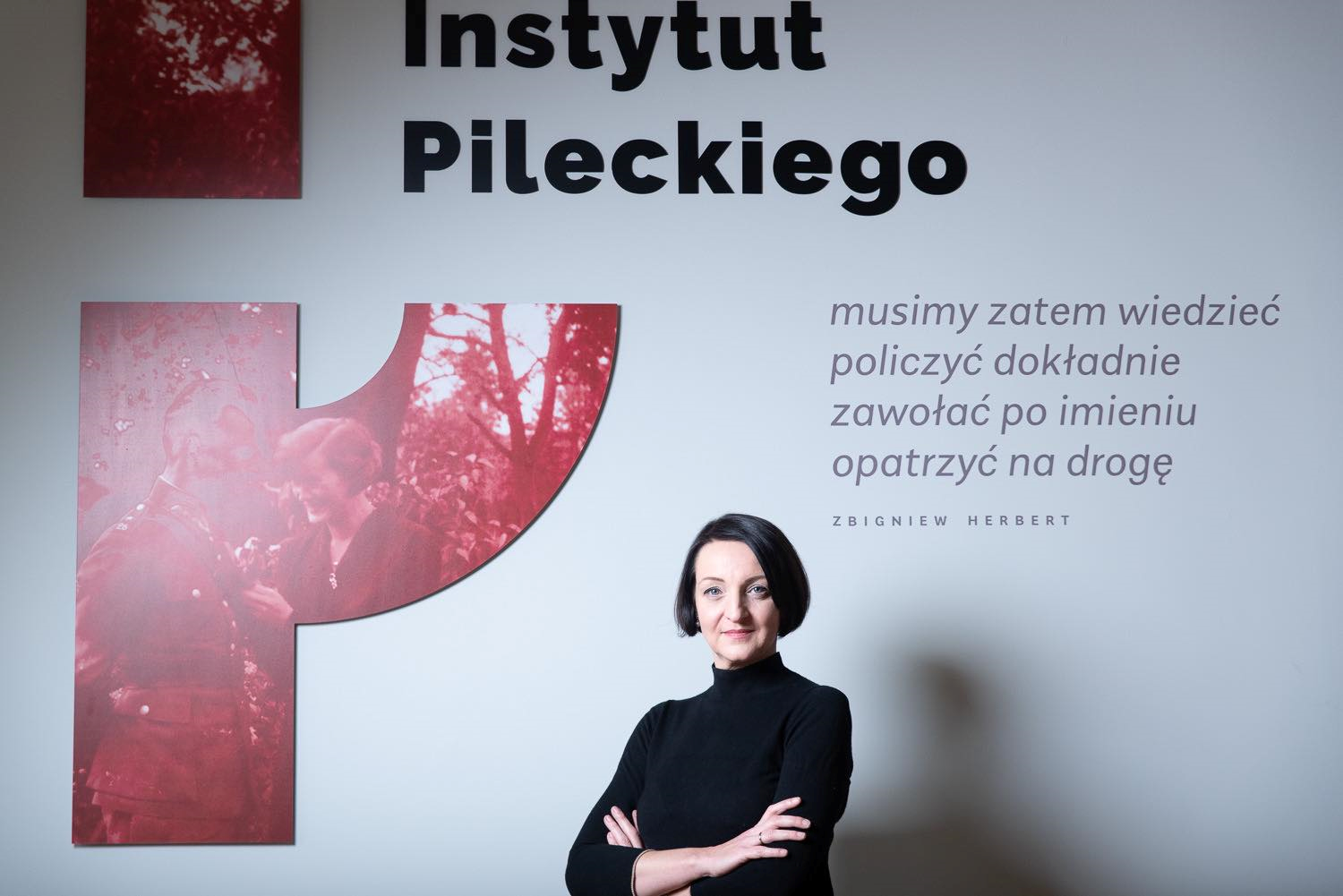
This is the story of a resident of Buchi Svetlana, which was recorded by employees of the Rafal Lemkin Center at the Piletsky Institute in Poland. From the first day of the full -scale war of Russia against Ukraine, the Piletsky Institute - the Polish Government Institution, which is engaged in collecting information and documenting crimes of the Nazi and Soviet regimes - began collecting certificates of war crimes of the Russian military in Ukraine. For this purpose, the Center for Documentation of Russian Crimes in Ukraine named after Rafala Lemkin was created. Rafal (Rafael) Lemkin - Polish and American lawyer of Jewish origin, which is known primarily as the author of the term "genocide".
About whether the crimes of the Russian soldiers against Ukraine and its people are genocide, how the evidence is collected and whether they will be used in court, in an interview with Radio Liberty, the Polish historian, director of the Institute of Solidarity and Martyrdom named after Vitold Piletsky Gavin and the coordinator of volunteers of the center named after Rafala Lemkin Yakub Kersikovsky .
- How is the collection of evidence? Eyewitness stories are the only source of the information you rely on?
Magdalena Gavin: We collect the testimonies of Ukrainians who are in Polish refugee centers. We have prepared a special questionnaire. It is divided into two parts. In the first part, refugees tell everything that they consider necessary. This is a very important part, it can be used when writing books, historical articles. In these stories, we can trace the individual fate of a person, and, for example, in the testimony that Ukrainians give in the prosecutor’s office, there is no this line. The second part of the questionnaire consists of a number of questions, there are more than 40 of them. These questions send the narrator. When a person talks about the war, he forgets many details, but, asking clarifying questions, we help to recall these details.
Our witnesses provide us with their personal data, only such profiles will make sense, since they are reliable. We do not publish these profiles on the network and do not collect evidence online. It also helps to play it safe, because we understand that we can become a victim of provocations, and the data can be distorted. Certificates are collected exclusively by our volunteers, employees. We cooperate with certain refugee reception points. We also have a network of employees in Ukraine, they record people's stories, ask them questions from our questionnaire. The benefit of refugees and our witnesses for us in the first place. We do not disseminate their personal data, addresses.
Yakub Kersikovsky: Today we have more than a hundred employees throughout Poland. People constantly offer us their help. We conduct interviews, sign contracts. Each volunteer must undergo mandatory trainings, first of all, to protect personal data, and also - it seems to me even more important - psychological training. The main rule of our work is the well -being of witnesses. Each volunteer should know how to behave in various situations. After such classes and signing the contract, the volunteer receives press materials: booklets, posters in which we urge refugees to share their stories. We explain why the work of the center of Lemkin is important. We also give volunteers a certain number of profiles. It is important that not a single questionnaire falls into those hands. Immediately after filling out the questionnaire, the volunteer must send her to the center.
Everyone who decides to tell us his story must do it voluntarily
The questionnaire is quite detailed and extensive. We cannot send a questionnaire to someone so that he or she filled it on his own. We care about the preservation of personal data, the safety of witnesses, because many families can still be in Ukraine, we insist that our volunteer is present when filling out the questionnaire. We do not take pictures of witnesses, we do everything possible so that they remain anonymous. In addition to the well -being of witnesses and the security of personal data, the third principle of our work is voluntariness. Everyone who decides to tell us his story must do it voluntarily.
- What crimes committed by Russians in Ukraine after February 24 are witnesses? Have you already developed some classification of these crimes?
MG: Ukrainians talk about mass aggression against civilians, that is, terror and intimidation of the civilian population - the main characteristic feature of this war. The Russians do this consciously, intentionally. This is not an accident. Civil terrorization is one of Putin's intentions.
We recorded a wide range of crimes. For example, we have evidence of witnesses to the murder of a whole family who was traveling by car. Our witnesses took the bodies of children from it. We have stories of people who have lost their loved ones. We know what the arrests look like, we know where they found the bodies of the dead, where they were buried. People told us how they spent three to four weeks in bomb shelters without drinking water, toilet, running water. The least documented crime in all military conflicts is rape. We know about the rape of children and women by Russians. I note, however, that we have a few such testimonies. I know that the prosecutor's office of different countries that collect evidence speak of a small number of such evidence. What is characteristic of these evidence - that, regardless of the social status, education and other factors of this kind, each person says that his life, that is, the one to which he or she is accustomed, has ended.
- Since you remembered the Polish prosecutor’s office, which conducts its investigation of the crimes of Russians in Ukraine, two questions arise at once: does the Lemkin center collaborate with law enforcement agencies and are you doing the same work in essence?
MG: No, we are not invading the scope of the prosecutor's office, since in each country the prosecutor's office collects indications that will be used exclusively in the court. Prosecutors collect very short opinions, statements, for example, whether a person saw the moment of the crime with his own eyes. Based on these data, you can not write a book, article, and most importantly, understand the war. Moreover, before the trial, the prosecutor’s office cannot share these indications. Taking into account the fact that at least 90% of the perpetrators of crimes committed in Ukraine will not be punished - this is the statistics of previous military conflicts - we want to do everything possible so that the evidence is not classified forever.
We want to do everything possible so that the evidence is not classified forever
It may happen that they will be closed to the general public for many years. The testimonies of the Poles, which were collected by the main commission for the investigation of crimes committed by the Nazis in Poland, were closed to the public for seven decades after the Second World War. We do not want the Ukrainians to be in such a situation. In fact, each country after a military conflict should have two types of testimonies: some that the prosecutor’s office collects and which can be used only during the trial, that is, these evidence will not be available to the public, and the second-which collect historical commissions. As for cooperation, every institution that collects testimony collaborates with the prosecutor’s office in his country. Our cooperation with the Polish prosecutor’s office was very good. Our witnesses agree to the testimony of Polish prosecutors.
- Your center is named after lawyer Rafal Lemkin, the author of the term " genocide" . He entered international law during the Nuremberg process and related legal discussions. Lemkin was an adviser to the main prosecutor from the United States in the Nuremberg trials - American judge Robert Jackson. Calling the center in honor of Lemkin, did you aim to prove that crimes against Ukrainians can be classified as genocide?
MG: Genocide is Complete or partial destruction of the ethnic group. Lemkin became interested in this concept not under the influence of World War II. He noted that situations are repeated in history when one of the warring parties is trying to destroy an entire ethnic group. Following this terminology, not all Ukrainians are doomed to death, this is not the Holocaust, not complete destruction, but people become victims precisely because of their ethnic, cultural affiliation, due to the fact that they are Ukrainians. Putin's intentions have the features of genocide, because he unleashed this war, since he does not recognize the Ukrainian people. The war began not because of a specific dispute about the territory or political conflict, but due to the fact that the Kremlin elites refuse to recognize the independence of the Ukrainian people, its culture. There is a mass deportation of the population from the occupied territories deep into Russia, an accelerated procedure for obtaining Russian citizenship by people living in occupied territories, obtaining citizenship by Ukrainian orphans, which were taken to Russia, is introduced. Also, Russians deliberately destroy representatives of the Ukrainian intelligentsia, representatives of local authorities, educated people who are ready to take responsibility for others. We saw this in the occupied territories. These are all the features of the genocide. This was also spoke about the historian Timothy Snyder.
- The task of the international community is not only to condemn Russian aggression against Ukraine, but also to perpetuate its history for subsequent generations. Do you agree with this statement? Are historians from the Piletsky Institute in the work of the Lemkin Center?
MG: Soon the Piletsky Institute moves to a new office in the center of Warsaw. There we will have a reading room in which we will imagine an archive assembled by the center. Everyone will be able to read the testimonies of Ukrainians who survived the war, occupation, people who have lost loved ones, neighbors, people, on whose eyes the murders took place. Also, there you can listen to an interview with Ukrainians.
Now we have concentrated on the collection of eyewitnesses, this takes all the time and strength. At the same time, we try to translate these stories. We will present their translations in four languages: Ukrainian, Polish, English and French or German - we still doubt which of the last two languages to choose. We hope that our work will help military correspondents, journalists and historians. We want to keep the memory of this war. I believe that it would be best to do this by entering these evidence in the memory of the world (UNESCO program to protect the World Documentary Heritage. - RS). This should be a separate collection of evidence of civilians of Ukraine. However, in UNESCO there is Russia, which has not yet been excluded from there. Apparently, this is impossible.
If these tools are not enough, then I believe that the ministers of the culture of Poland and Ukraine or more high -ranking politicians could discuss the creation in Central and Eastern Europe an organization that would keep the evidence of Ukrainians.
Author - correspondent of Polish radio, especially for radio freedom