
Translated material
Nine circles of Ashgabata
The story of Aisoltan Niyazova - a resident of Turkmenistan and Pussy Riot participants, who has been pursued around the world for a crime invented by the Turkmenbashi regime
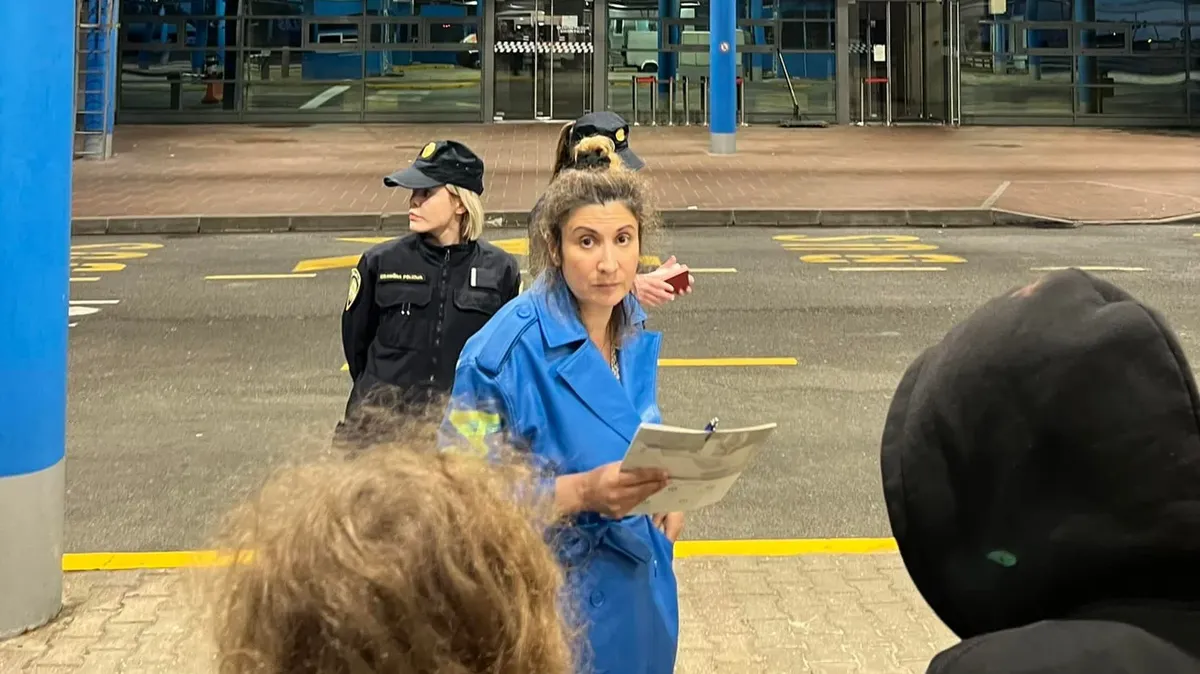
In early June, Aisoltan Niyazov, a former executive director of the Russian bank, and now the activist of the Pussy Riot group, was detained in Croatia. They detained her along the interpol: twenty years ago, the intelligence services of Turkmenistan submitted a search request. Ashgabad accuses Niyazov of involvement in the theft of $ 41 million from the Central Bank of the country. On this charges, Aisoltan has already served six years in the Russian colony - although, apparently, the theft, if in fact, was committed by other people (and in general more and more like a protracted war of the Turkmen regime with the opposition). “New newspaper. Europe ”talks about how the political intrigues of one of the most cruel regimes of our time, punk activism and slowness of European bureaucracy were intertwined in the fate of one woman
Widely plants Turkmenistan
Aisoltan Niyazova, or just aya for friends, was born and grew up in Ashgabat. The USSR collapsed before her eyes, and the head of the new independent Turkmenistan as a result of non -alternative elections was Saparmurat Niyazov (by the irony of fate, the namesake of our heroine). The 15-year era of the reign of Niyazov was remembered by the inhabitants of Turkmenistan by the formation of the personality cult of the First President, cruel reprisals with any forms of opposition and political murders. Niyazov’s desire to keep and maintain the influence was so strong that two years after he came to power by the decision of the local parliament, he received the status of Tukrmenbashi - “Heads of all Turkmen of the World”. The repressive machine of the Turkmen dictatorship reached the heroine of this text.
After the collapse of the Soviet Union, residents who received independence of countries, including Turkmen, had hopes for a new world order and establishing something similar to democracy. Against this background, the first public associations and non -profit organizations, as well as all sorts of “democratic unions”, began to form in the country. However, the authorities began to quickly stop any attempts to unite. And in 1992, the Minister of Foreign Affairs of Turkmenistan Avda Kuliev suddenly publicly opposed Niyazov and left the country, which became a trigger for the first wave of emigration.
A few years later, the new Foreign Minister of Turkmenistan, Boris Shikhmuradov, also opposed Niyazov. In December 2001, he flew to Moscow, handed over his diplomatic passport and held a press conference at which he publicly condemned Niyazov’s regime and announced his intention to maintain opposition. At that moment, Aisoltan recalls, Shikhmuradov was perceived as Alexei Navalny was perceived in our time.
On November 25, 2002, information appeared in the media about an attempt to attempt on Niyazov. According to the official version, in the center of the Ashgabat KamAZ, the president’s armored armored Mercedes is from his motorcade, and the people who ran out of the surrounding houses began to shell the car of the head of state. As a result, several people from the environment of Turkmenbashi were injured, and he allegedly did not even notice the attack. The very next day, the special services of Turkmenistan immediately arrested 16 “direct participants and accomplices” of the assassination attempt.
“My father was in Turkmenistan during the attempt, we were constantly in touch, and he told me about what was happening. I do not know whether there was an attempt or he was not really. But the opposition’s goal, on the contrary, was to put the [Niyazov] on the bench of the defendants. In addition, people who allegedly ran with machine guns and shot the president were detained in their homes in the evening on the same day. That is, these people came home, hid their weapons, military uniforms, began to drink tea, and they came to them and said: "You are villains, they wanted to kill our president." So this happened according to the general prosecutor, ”recalls Boris Shikhmuradov’s son, chief editor of the Gundogar website Boris Shikhmuradov Jr.
Niyazov called the culprits of the attempt on himself the main members of the opposition of that time, including Boris Shikhmuradov, as well as the former Minister of Agriculture, Imamberda Yklymov, the former head of the Central Bank of Khudayberdy Orazov and the former ambassador of Turkmenistan in Turkey Nurmukhamed Khanamov. In total, more than three hundred people detained the “attempt on Turkmenbashi”, the fate of most of whom is still unknown.
Most likely, they died in Turkmen prisons. Boris Shikhmuradov was detained in Ashgabat at the end of 2002, and since then for more than twenty years his son "has not seen anything else or heard about his father."
Around the same time, Father Aisoltan, Kurbanmurad Niyazov, was detained. According to her, his father worked for a long time a prosecutor, and then went to the advocacy. In the late nineties, he tried to conduct human rights activities in the country. After the detention of him, nothing was known either. There is almost no information about him on the Internet, his name is mentioned in the Gundogar material once: “Kurbanmurad Niyazov and Khayyt Kakaev [deputy chairman of the KNB of Turkmenistan] died while in the pre -trial detention center - obviously from insufficient nutrition and lack of medical care.” Despite the fact that Kurbanmurad Niyazov is a name common in Turkmenistan, Shikhmuradov Jr. is convinced that this is exactly the father of Aisoltan.
Aisoltan herself did not find the consequences of Niyazov’s regime, since in the 95th year she moved to Vladivostok. Then this decision was not related to politics. For personal reasons, she wanted to leave away from her past, and along with a two -month son she went to the Far East.
“With the passport of the Soviet Union, I moved from Ashgabat to Vladivostok. I have never accepted the citizenship of Tukrmenistan. At first I was a citizen of the then country of the USSR, and then became a citizen of the Russian Federation, ”Aisoltan said (and this is an important point).
Aisoltan learned about the events in Turkmenistan from friends and relatives. Her mother, Russian by birth, then worked as a lawyer and already in the late nineties lost the opportunity to protect people in court. The fact is that at about that time in Turkmenistan, judicial paperwork was translated exclusively into the Turkmen language. “Mom called me in tears and talked about what kind of chaos was going on around. Right before her eyes, her friends and acquaintances were arrested without trial and investigation, ”the woman recalls.
The Turkmenbashi regime reached the Aisoltan itself a little later.
"Theft of millions of Turkmenbashi"
After moving to Vladivostok, Aisoltan got a job in the first Primorsky commercial bank. After a year and a half, the bank issued Aisoltan Credit for a good job, and with this money she transported her mother and several more relatives to Vladivostok, and then moved to Moscow. Already in the 97th year, Aisoltan began working in the federal deposit of the bank as deputy chairman, and after some time she collected the necessary documents and received a license to open her own bank. It was called "Index-Bank", and Aisoltan took the post of chairman of the board of directors.
The life of Aisoltan in Moscow took shape well. She earned, raised her son and talked with other emigrants from Turkmenistan.
“Part of the opposition in the nineties left for Moscow, we all met there. I was young, did not want to be in politics much,
Then I was more interested in the development of the banking system, it was interesting to earn money. Sometimes I helped [opposition] with money if this help was needed. Once it was a thousand dollars, once-five thousand, but it was always my personal money, ”she recalls.
After several years of life in Moscow, Aisoltan received a call from friends from Turkmenistan with the words that she needed to leave Russia rather. The fact is that in 2002 a criminal case of embezzlement from the local Central Bank was opened in Turkmenistan. And Aisoltan became one of his defendants.
In the media, the matter was called "the theft of millions of Turkmenbashi." According to the official version, the Turkmen intelligence agencies found $ 41 million from the account of the Central Bank of Turkmenistan in the German Deutsche Bank. According to the investigation, half of this money was withdrawn and legalized through Russian banks, including through the Index Bank, the post of chairman of the board of directors of which was held by Aisoltan.
The first in the case of the theft “Head flew” by the Chairman of the Central Bank of Turkmenistan, Seyyzhbay Kandymov. He was detained right during the government meeting, and later he died in prison. At the same time, he was not officially accused of embezzlement, but only “punished” for the incident in the department. “In Turkmenistan, there is a standard formulation on this score-“ For weakening control of the activities of the entrusted institution, for shortcomings in the work, ”explains Boris Shikhmuradov Jr..
Ashgabat was repressed in the case of the “theft of the century” of Turkmen and Russian officials and bankers for many years. The Russian security forces also came to the rescue, who initiated their own criminal cases for those who, according to investigators, could help legalize the stolen Turkmen money.
The main characters
Aisoltan, having listened to the advice of friends, soon after a fateful call from sin to move away with her son to Switzerland. In Russia, the arrests of those who could be involved in thefts from the Central Bank of Turkmenistan began.
One of the first at the request of Ashgabat in September 2002 in Moscow detained a former accountant of the Central Bank of Turkmenistan Murad Garabaev , who at that time had dual citizenship of Russia and Turkmenistan. At the same time, representatives of the Turkmen intelligence services were also present at interrogations, in addition to the Russian security forces. Garabaev also said that even before detention, relatives from Turkmenistan called him and complained about pressure. Soon after the arrest, Garabaev reported that he was extradited to Turkmenistan. Subsequently, his lawyer Anna Stavitskaya, known, among other things, in the case of the murder of Novaya Gazeta journalist Anna Politkovskaya, defended him and several more defendants in the case.
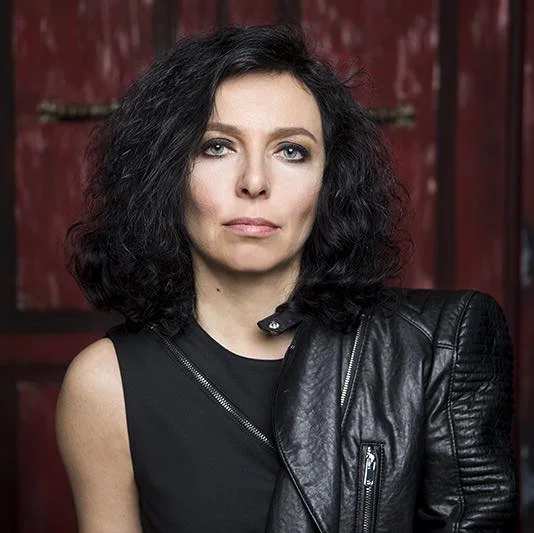
According to Stavitskaya, the expulsion of Garabaev to Turkmenistan was absolutely illegal. “He was a citizen of Russia, and Russia issued him despite the fact that from the point of view of the entire legislation of the Russian Federation this is impossible. And the Code of Criminal Procedure prohibits this, and the constitution prohibits this, and the international conventions that the Russian Federation ratified at that time, ”the lawyer explains. In an attempt to return Garabaev to Russia, Stavitskaya turned to the ECHR, and the European court really satisfied the complaint. Russia submitted to the requirement, and the ex-Buhglatter of the Central Bank returned to Moscow.
“The basis of the return was that a criminal case of theft of this money was also instituted on the territory of the Russian Federation.
The fact is, from the Central Bank of Turkmenistan, from the point of view of the prosecution, only $ 40 million was stolen. Half of this money passed through Russian banks, and also half through the Latvian.
What is there with the Latvian banks, no one was dealing with, this is still unknown. Russia took advantage of this situation and returned Garabaev, ”explains Stavitskaya.
Also, in the case of embezzlement in Moscow , Dmitry Leus was also detained, who at that time headed the Russian deposit bank (RDB). It was in the RDB, according to investigators, they transferred half of all the money stolen in Turkmenistan. Further, Leus, presumably, took a commission for the service and transferred the remaining money to the Index Bank, led by Aisoltan Niyazova.
In 2004, the court began over Leus and Garabaevay. Upon theft, Zamoskvoretsky District Court of Moscow justified both. At the same time, Leus was nevertheless found guilty of laundering money, the theft of which, by court decision, we remind, were not. From a legal point of view, this is impossible, Stavitskaya notes, but the fact remains. In the case of the legalization of funds in 2004, Leus was sentenced to four years in the colony, and two years later he was released by parole.
The tragic fate of Arslan Kakayev
According to the investigation, the direct executor of theft is considered a former employee of the Department of International Banking Payments of the Central Bank of Turkmenistan Arslan Kakaev. It was about communicating with him that the security forces asked him. According to investigators, Kakaev transferred $ 41 million to the Deutsche Bank of the Central Bank from the reserve account of the Central Bank. Moreover, his role could be extremely technical. At the time of the beginning of the case, Kakaev had already moved to Russia, but the investigation was not conducted for a long time for his involvement in the theft. In 2003, he was killed in St. Petersburg, and they still have not found the killer.
The fate of the Kakayev family in Turkmenistan also did not work out in the best way. A few years after the death of Arslan, his father and his mother were sentenced to a long prison term, and a large number of his relatives were dismissed from work.
The investigation in the “theft of millions of Turkmenbashi” was actively conducted in Turkmenistan: employees of the local Central Bank were accused of embezzlement of stolen funds. “That is, in Turkmenistan people were judged by the fact that they was wasting this money, and in Russia for deceiving the central bank, this money was abducted. However, no one specifies who exactly was deceived. It is impossible to deceive the central bank as an organization. In order to find a person guilty of fraud, it is necessary to prove who was specifically deceived, but the accusation did not. That is, from a legal point of view, this case is absolutely unthinkable, ”explains Stavitskaya.
Aisoltan extradition
Despite the paradoxical and controversy of many aspects of the case of the theft of the century, the investigation on it continued, and after a few years they came for Aisoltan. The Turkmenbashi himself Saparmurat Niyazov died in 2006, but his case continued to live. In 2011, at the request of the Turkmen branch of Interpol (yes, there is such) Aisoltan was detained in Switzerland, although, we recall, she never had the citizenship of Turkmenistan. “In Turkmenistan, they allegedly made me a passport, found my old photos on the Internet. I have never even seen him, I didn’t sign anything, ”she says. It was this “document” that made the detention of Aisoltan possible.
Switzerland refused to extradite Aisoltan to Turkmenistan on the grounds that this country did not sign the European Convention on Human Rights, and there is practiced torture and executions. At this time, Russia intervened and demanded that Switzerland send Aisoltan to Moscow - apparently deciding to help his dear colleagues.
The process on the extraction of AI to Russia lasted eight months. The Russian request was eventually satisfied. “When Switzerland was considering the issue of extradition, for me [Russian Foreign Minister Sergei] Lavrov and [Russian Prosecutor General Yuri] Chaika signed diplomatic guarantees that I would not be re -designed in any third country. And with such a condition, Switzerland gave me to Russia, ”said Aisoltan.
Russian isolator and Pussy Riot
Aisoltan was extradited to Russia in September 2011. In Moscow, she fell into pre -trial detention center No. 6, which, according to the conditions of detention, obviously was very different from the Swiss prison. “But at first I could not think about the conditions of detention. In Switzerland, I had a 15-year-old son. It was very bad for me to be very bad. The child then lost 10 kilograms, became the whole skinny. He told me that he stopped believing in God and in justice, ”she recalls.
Soon after Aisoltan got into the Moscow pre -trial detention center, representatives of the Swiss embassy came to her on a visit. One of the employees, seeing the conditions for treating prisoners there, demanded permission to visit Ayu regularly. During this time, Aya managed to tell her about the features of local life - including the situation with hygiene.
And what about hygiene?
According to pre -trial detention centers No. 6, shower for the arrested was allowed only once a week. Using the requests of the Swiss Embassy, Aisoltan managed to achieve the organization in the isolator of the so -called “state shower”, the ability to wash for an additional fee. According to Aisoltan, her relatives paid 3 thousand rubles, these are 30 trips to the shower, but the employees of the insulator still often refused to take her off.
Then she wrote an application for an appointment with the head of the pre -trial detention center Tatyana Kirillova. During this technique, they brought paper from the accounting department on which the amount of payment was written and there were notes about how many times Aisoltan was brought out to wash. “I tell them:“ For some reason, I am accused of fraud that I have not committed, but do you work, are in legalized fraud? You took money for services obviously that you cannot provide, ”Aya recalls.
Since then, against the backdrop of frequent visits of representatives of the Swiss embassy and the pressure of Aisoltan, to drive it into the shower daily.
In anticipation of the court, Aisoltan spent almost two and a half years. During this time, according to the woman, she was never even allowed to call her son. “To talk with the child, I had to agree through my friends corruption. As a result, I had a phone in my cell. You are already constantly in stress, and if you also find the phone, then this is immediately a schizo, ”Aya says.
В феврале 2012 по делу о «панк-молебне» в СИЗО №6, где тогда сидела Айсолтан, попали две участницы Pussy Riot — Мария Алехина и Надежда Толоконникова. К девушкам часто приходили правозащитники и журналисты, а Аю все еще навещали представители швейцарского посольства. Чтобы девушки не учили других заключенных отстаивать свои права, их изолировали. Так Ниязова и Алехина оказались в одной, отдельной от всех камере, и начали общаться.
Следствие по делу Айсолтан завершилось в мае 2013 года. Ее признали виновной в хищении 20 млн долларов у ЦБ Туркменистана и приговорили к шести годам колонии. На свободу с учетом проведенного в СИЗО времени Айсолтан вышла 31 декабря 2016 года.
Ая склонна считать, что дело о «хищении миллионов Туркменбаши» было политическим. «Просто Ниязову нужно было разгромить туркменскую оппозицию, и многих, включая меня, это зацепило осколками», — считает она.
Но спустя несколько лет после судебных тяжб и колонии история о «краже века» вновь настигла Айсолтан.
Арест с двадцатилетним сроком годности
За то время, пока Айсолтан была в колонии, под предлогом компенсации ущерба Туркменистану была арестована ее квартира на Ленинском проспекте. При попытке открыть дверь в квартиру оказалось, что там поменяли замки. Позже Айсолтан пробовала вернуть себе имущество, но ей намекнули, что делать этого не стоит. «Соскучилась по тюрьме? Тогда завтра тебя арестуют с наркотиками». В таком формате велись переговоры», — рассказывает Ая.
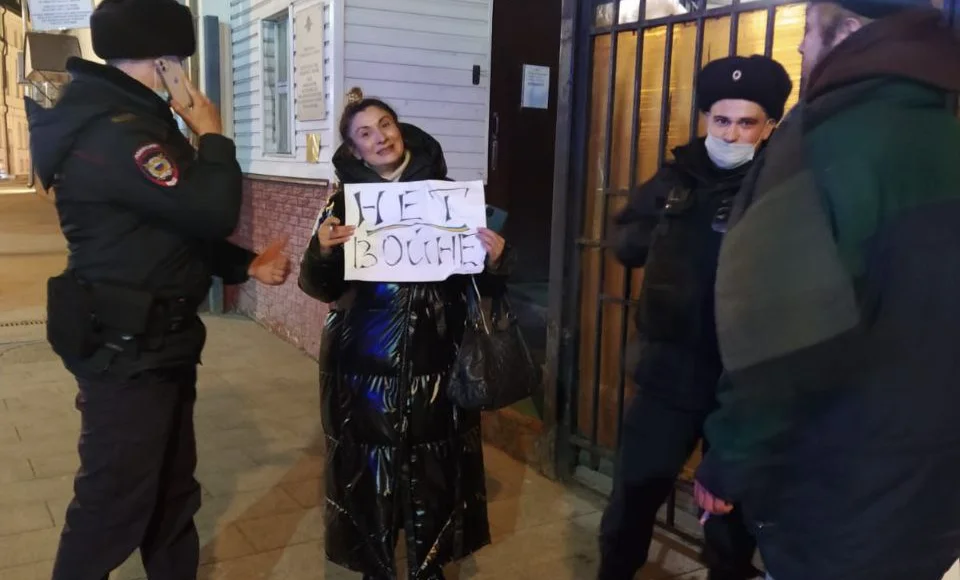
Несмотря на потерю квартиры, после колонии Ая осталась в Москве и начала работать. Параллельно она поддерживала связь с участницами Pussy Riot. Опыт тюремного заключения научил ее бороться за свои права, и на свободе она начала выходить на акции в поддержку политзаключенных, на суды и митинги. «Передо мной даже извинилось швейцарское посольство, они ходили на все суды и понимали, что я не преступница», — говорит женщина.
За годы на свободе Айсолтан успела получить загранпаспорт и несколько виз европейских стран, включая швейцарский «laissez-passer». В прошлом году она летала навестить сына в Швейцарию.
Вскоре после начала войны Айсолтан полетела в Швейцарию еще раз, но уже с намерением получить политическое убежище.
Примерно в это же время из России уехала одна из участниц Pussy Riot Мария Алехина. «Тогда Маша позвонила мне и пригласила приехать к ней в Вильнюс. И вот с тех пор мы путешествуем с Pussy Riot», — рассказывает Ая.
В рамках тура антивоенных концертов Pussy Riot Ая успела побывать в Исландии, Германии, Нидерландах, Австрии, Литве и Бельгии. Нигде у властей и местных силовых структур вопросов к женщине не возникало, пока после очередного концерта группа не отправилась на минивэне в Словению.
Добраться до отеля удалось только в три часа ночи. Спустя несколько часов, пока все еще спали, Ая услышала стук в дверь своего номера. Это была полиция. Задержание проходило на основании запроса Туркменистана в Интерпол. Аю доставили в отделение, а утром отвезли в центральный суд Любляны. О происходящем в суде она вспоминает следующее:
«Судья разрешает мне воспользоваться телефоном и показать все документы о моем деле. Параллельно я звоню швейцарскому послу и прошу отправить фото этих документов. Судья смотрит на них, видит формулировки российского суда, а там написано “в неопределенное время, в неопределенном месте вступила в преступный сговор с целью хищения денег Центрального банка Туркменистана”».
«И вы за это шесть лет мучались в тюрьме?» - the judge specified. Сразу после изучения документов Айсолтан отпустили.
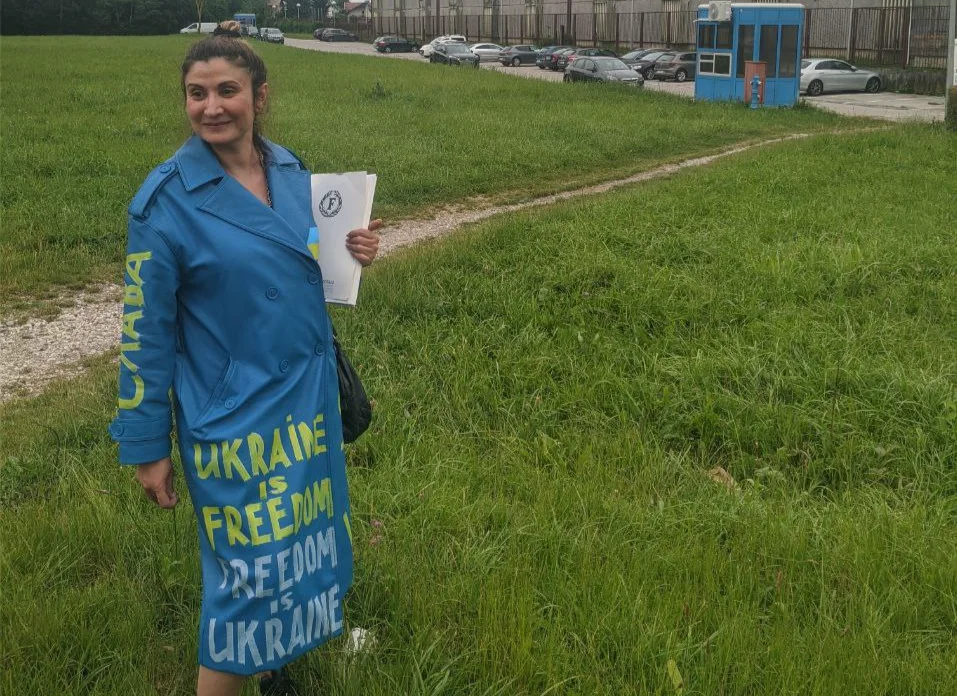
После путешествия еще по нескольким странам Ая вместе с Pussy Riot отправилась в Хорватию. Там история с задержанием повторилась: на этот раз полиция остановила Айсолтан на границе. После обыска ее доставили в отдел, где сняли отпечатки пальцев. Ае нашли адвоката, участницы Pussy Riot придали дело огласке. Спустя два дня и несколько визитов правозащитников Айсолтан вновь отпустили.
Еще в Словении местные власти объяснили Айсолтан, что местная база Интерпола не обновилась вовремя, и именно поэтому ее задержали. Нечто похожее произошло, видимо, и в Хорватии. Призрак режима Туркменбаши продолжает преследовать женщину даже спустя двадцать с лишним лет — а о том, чтобы Айсолтан когда-нибудь могла попасть на родину, в обозримой перспективе даже и думать нечего.