
Translated material
It will decorate any Russian city
Latvia decided to demolish the Soviet monument to the liberators of Riga. "Medusa" tells how this memorial has split the Latvian society
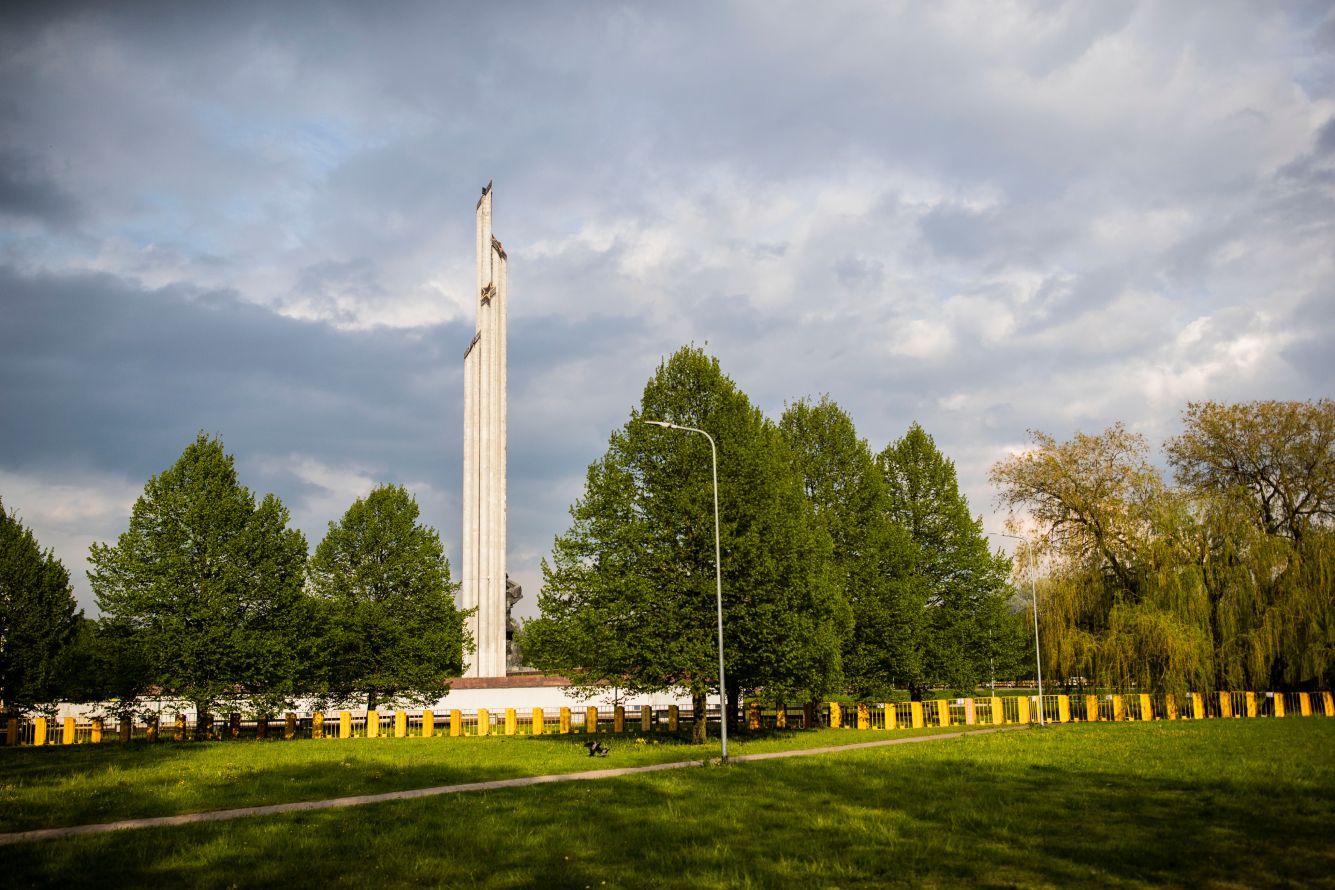
On June 16, 2022, the Latvian Sejm adopted the law "On the ban on objects glorifying Soviet and Nazi regimes." The decision was made against the backdrop of an acute conflict around the monument to the soldiers of the Soviet Army - the liberators of Riga. For many years, the Latvians (primarily Russian -speaking) gathered next to this memorial, celebrating Victory Day. At the same time, for more than one decade, its possible demolition has been discussing in the country, since many local residents believe that it is associated with the Soviet occupation of Latvia. In 2022, this dispute broke out with unprecedented force against the backdrop of a war in Ukraine. As a result, the authorities decided to get rid of the monument, which, in their opinion, "split the Latvian society." The special corner of the "Medusa" Sasha Sivtsova talks about the fate of the monument.
Early on the morning of May 10, 2022, a bulldozer drove up to the monument to the Soviet soldiers - the liberators of Riga.
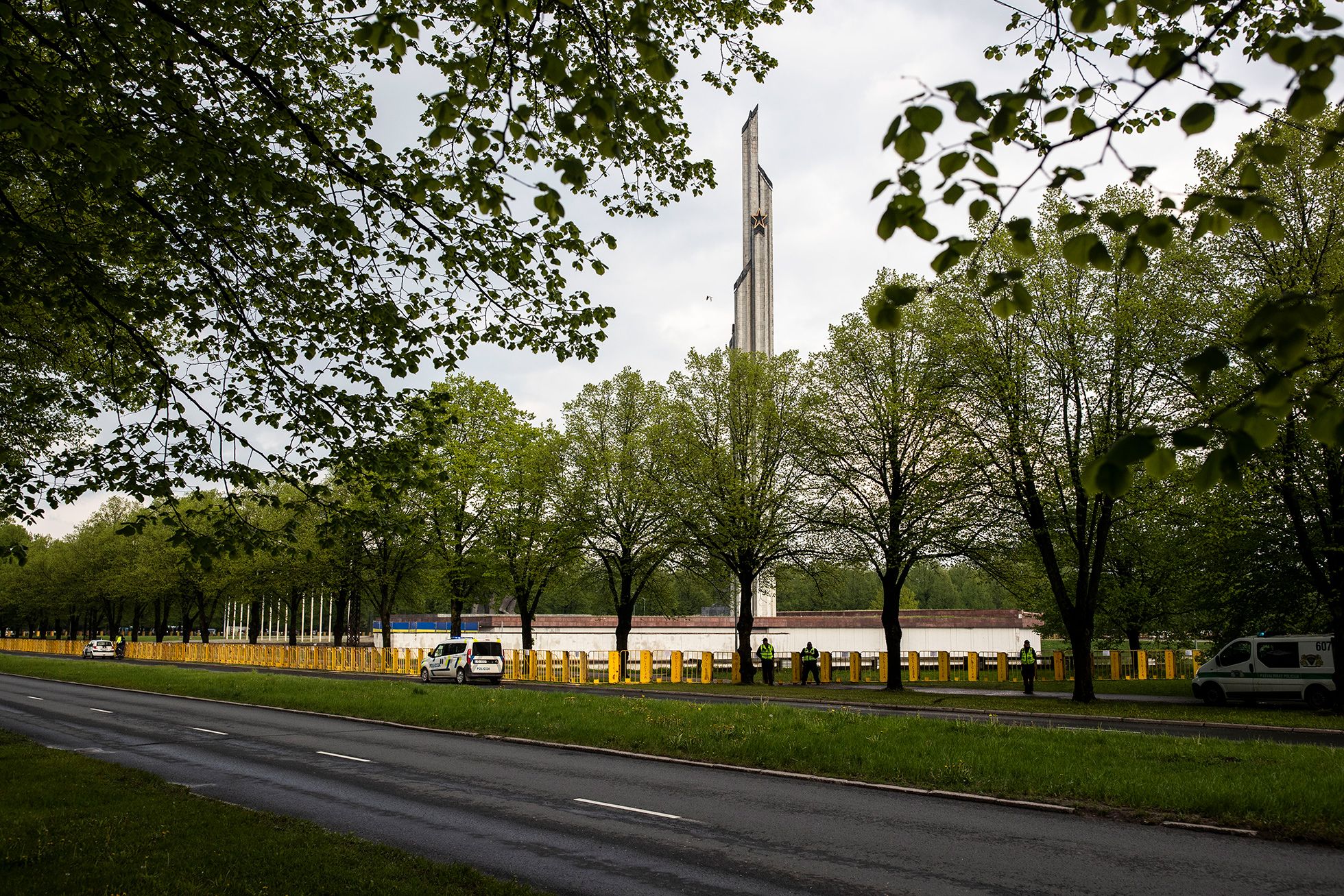
The area in front of the monument was filled with flowers: the day before, on May 9, thousands of residents of Riga laid them in memory of those who died in the Great Patriotic War (this happens every year ). In the morning, public utilities appeared on the square. The bulldozer raked the flowers with a bucket and threw them into the body of the garbage truck. Nearby, the communal workers in bright yellow reflective vests with shovels picked up the falling bouquets. Having finished with flowers, the authorities fenced the square with a fence.
Video recording of what is happening, published by eyewitnesses, caused the outrage of some Russian -speaking residents of Latvia. And provoked an internal political crisis.
30 years of disputes
The monument to the soldiers of the Soviet Army - the liberators of Riga (this is its full official name) was erected shortly before the collapse of the USSR, in 1985. The composition consists of three parts-a monument to the soldiers, the sculpture of the motherland-mother and a 79-meter stele. For one part of Latvian society - mainly Russian -speaking - it symbolizes the end of the German occupation. For another-first of all, it is impossible to perceive the monument outside the context of the Soviet occupation (the USSR forcibly annexed Latvia back in 1940 and then again did it after the end of World War II).
Disputes around the monument flared up immediately after installation. In 1997, already in independent Latvia, they even tried to blow him up . In the zero - as the celebration of Victory Day in Russia became larger - near the monument on May 9, Russian -speaking Rigans began to gather. In addition, there were also demonstrations of the defenders of Russian schools .
Several times in Latvia they collected signatures with an appeal to demolish the monument. In 2019, more than 10 thousand Latvians turned to the Sejm with such a request. However, in the same year, activists from the Russian Union of Latvia launched a petition in defense of the monument - and it was signed by more than 20 thousand people. At the same time, the Riga authorities indicated an agreement between Latvia and Russia, signed back in 1994 (by agreement between the governments, the Latvian side pledged to defend the Soviet memorials).
In 2009-2019, the mayor of Riga was Neil Ushakov , whom many consider to be a pro -Russian politician in Latvia. He himself laid flowers to the memorial - and called supporters of the demolition of "extremists." At the same time, in 2016, the monument was brought to the monument by the delegation of the European Parliament and embassies, as well as the state bodies of Latvia-and in 2017 and 2018, large concerts were held on the square on the square.
In 2019, Neil Ushakov resigned after accusations of corruption . Oleg Burov took his place, but very soon he was replaced by the Latvian politician Martins Stakis critical of Russia and the Soviet past.
Due to the war in Ukraine, the question of demolition of the monument returned to the political agenda. “The dismantling of the monument to soldiers-liberators in the Victory Park Latvia should evaluate in the context of current military conditions,” said the Judge of the European Union, Judgment of the European Union Zieimele (presents Latvia on April 5). She called on the Latvian authorities to revise the corresponding agreement with Russia. Then Ainars Latkovskis, chairman of the New Unity faction in the Sejm, said that "now is the time to find a solution to [the issue of the monument]."
A few days later, on April 10, the deputies of the Sejm Commission instructed the Latvian Ministry of Justice to find legal justifications in order to bypass the contract signed with Russia in the first half of the 1990s, and still demolish the monument.
On April 11, 2022, the memorial was fenced with a fence (after May 9, the whole area was already surrounded by the fence). The mayor of Riga Stakis said that the monument "is in disrepair." He also added that the Riga Duma has no money for his reconstruction. Against the backdrop of these events, the Riga authorities decided not to celebrate Victory Day. He was declared the day of memory of the victims and the dead in Ukraine and in connection with the mourning banned festive events.
Flowers for Victory Day
The official celebration of Victory Day in Latvia is not canceled for the first time. In 2020, because of the coronavirus, it was postponed online : the date was proposed to be noted by viewing the broadcast from concerts of past years and a minute of silence at home.
In 2021, the police again called on residents not to visit the square in front of the monument because of the Covid, but people did not interfere with the monument, and the traditional laying of flowers still took place.
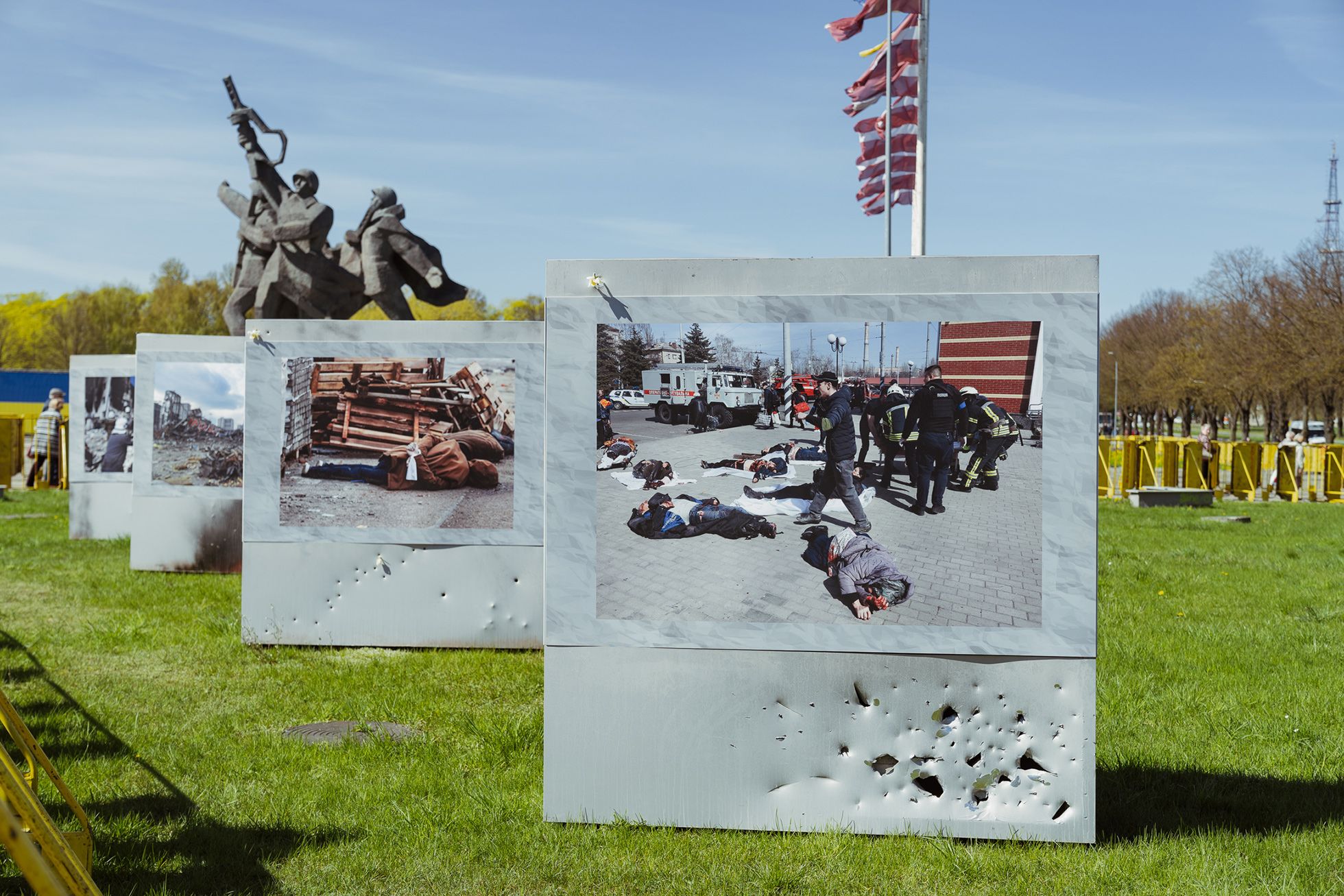
In early May 2022, an exhibition “Glory to Ukraine! Glory to the heroes! " With photographs of destroyed Ukrainian cities, wounded civilians, burnt military equipment.
On the eve of Victory Day, the mayor of Riga directly urged the townspeople to refrain from celebration on May 9. “If people just want to put flowers, recall those who died in the war, whom we have lost, will be such an opportunity. But nothing more, ”he said. - No songs, fireworks and barbecue. Now is not the time. This is a feast of war - at the same time in Ukraine they will bomb civilians. ”
The head of the State Police of Latvia, Armand Rux, added that on May 9 in 2022, “Supporting Russian Aggression” in 2022.
Nevertheless, about 20 thousand Riga on Victory Day went to the memorial. Despite the threats of the police, there were no formal reasons for the detention of citizens: no one spent an official event, and it is possible to gather in parks and at the monuments to the Latvians - the epidemiological situation in the country allows this.
True, to put flowers to the monument itself, as before, did not work. People approached the fence and transferred bouquets to employees of city services, who themselves already carried them to the monument.
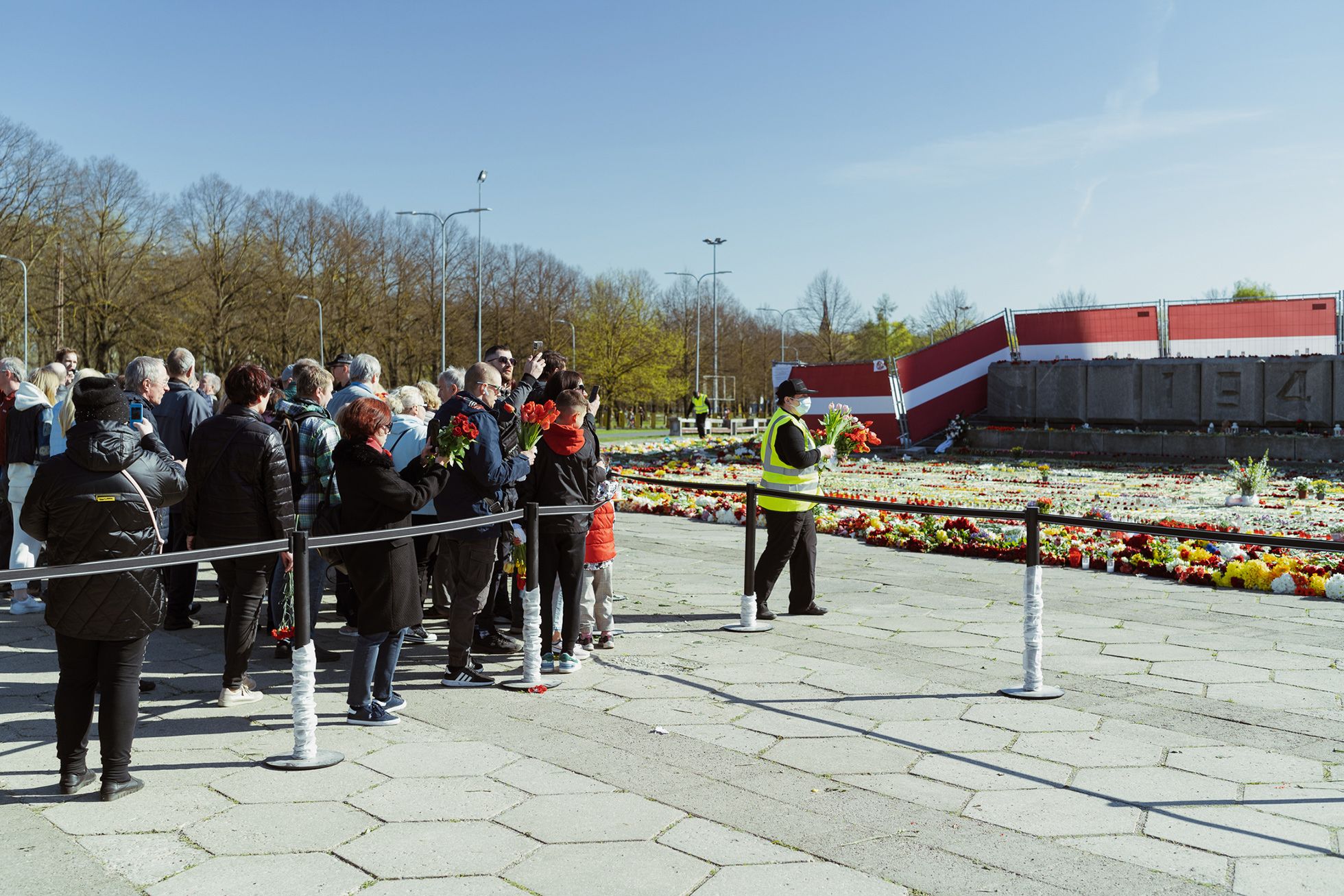
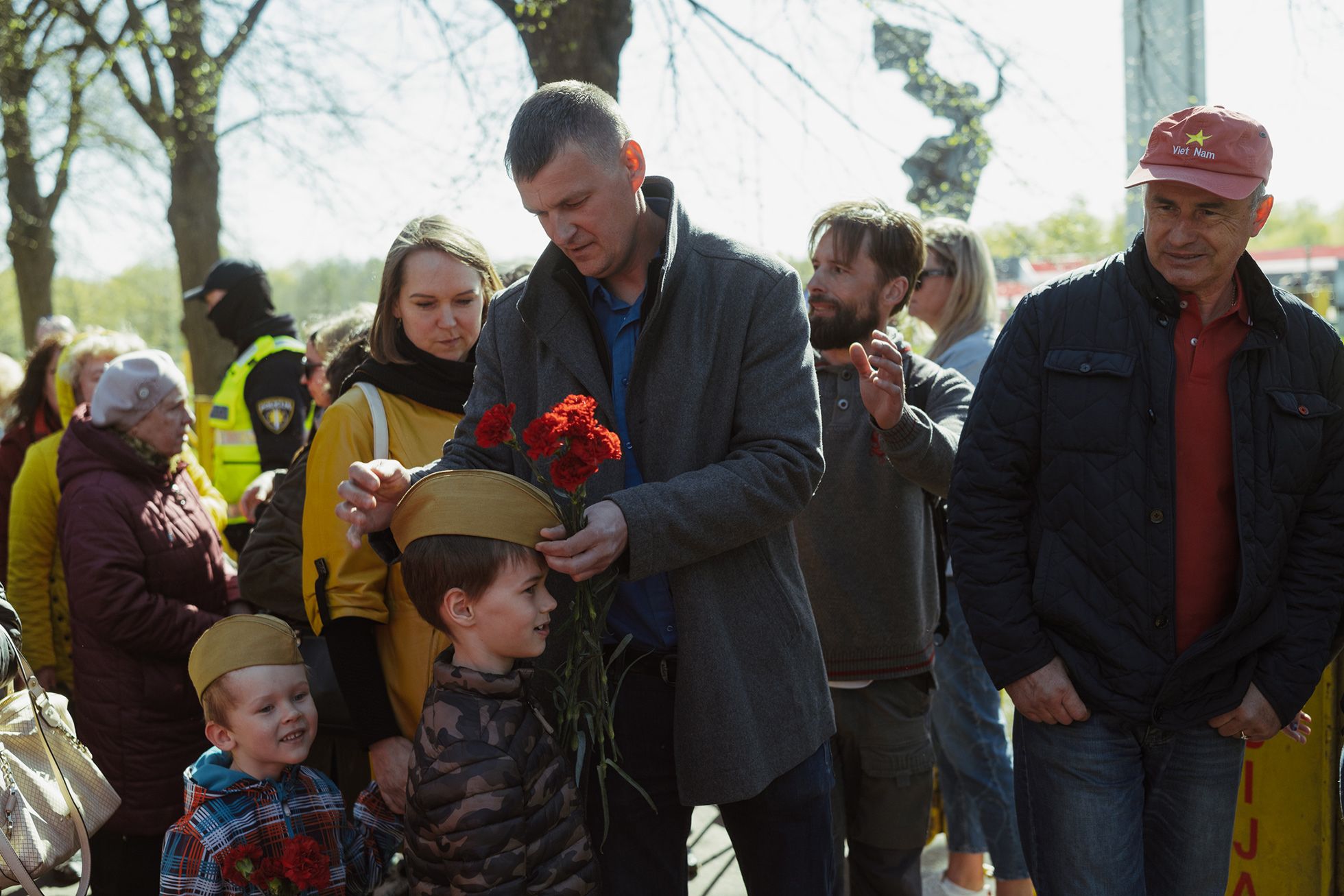
The need to lay flowers through an intermediary caused irritation in the arrivals. Some of them were angry and themselves threw flowers for the fence. Bouquets with chrysanthemums and daffodils scattered on the ground, police officers immediately approached scattered flowers, gathered them and carefully laid them to the rest. "How so, even a veteran cannot put flowers himself?" - asked the communal workers an elderly man. “No one can,” they answered him.
All day near the monument the police were on duty. The holiday was peacefully. According to the authorities, about 20 thousand people - 3% of the population of Riga visited the Victory Park on May 9, and "serious violations were not recorded."
The protests began the next morning.
"Bad and unethical behavior is not a crime yet"
As a rule, flowers after May 9 lay at the monument for several days. Therefore, the swiftness of utilities that appeared there on the morning of May 10 surprised many Russian -speaking Riga.
The cleaning was carried out by the municipal enterprise Rīgas meži ("Riga forests"). The company’s press service explained : since there was no official event near the memorial, city services simply “put the territory in order”. On the same day, May 10, the mayor of Riga Martins Stakis said that the mayor evaluates the actions of the enterprise "as professional and corresponding to circumstances."
In response to this, a spontaneous action of protest began near the monument. People carried new flowers, some walked with St. George ribbons banned in Latvia in the fall of 2021. Someone sang Soviet military songs.
People were in the square until the evening. The Russian Foreign Ministry commented that the caring "carried, carry and carry flowers" to the monument, no matter what "local authorities come up with." Late in the evening, the authorities with the help of special forces “scattered” the audience. The police said that most of the people left, “work is underway with individual characters”, but there were no detentions (according to the Latvian edition of Mixnews, the police detained 35 people in total). Among them were those who “resisted”, people with St. George ribbons, as well as a young man who walked , wrapped in a Russian tricolor officially not banned in Latvia.
Despite the dozens of detainees, three criminal cases (in particular, a resident of Latvia, who wrapped in a tricolor, hired a case under the article on the justification of the genocide and crimes against humanity) and 20 administrative protocols, the authorities were outraged by the “restraint” of the police. The Prime Minister of Latvia (it is he who leads the country) Krishyanis Karinsh demanded an explanation from his subordinate, Minister of the Interior Maria Golubeva. He stated that the “no excuse” that was happening in the park. According to the prime minister, the police should be more likely to deal with the protesters.
Maria Golubeva replied that Latvian legislation does not provide for the detention of people for laying flowers. “Bad and unethical behavior is not a crime,” the minister commented.
Then the Coalition Party “National Association” demanded to dismiss Golubev, saying: “The fact that every loyal person in Latvia was forced to experience in his country on May 9 and 10 is unacceptable.” The party threatened that if her opinion was not taken into account, she would withdraw her ministers from the government.
On May 16, Golubeva herself left her post. “The Prime Minister Karins, succumbing to the pressure of the“ national association ”, decided not to support me. This will be my last day as the Minister of the Interior, ”the minister on Twitter wrote .
After the spontaneous action on May 10, the police completely blocked access to the monument to "prevent the threat of public security." And the next day, the Sejm suspended the effect of a bilateral treaty with Russia, which has been operating since 1994.
Seventy deputies of the Latvian Sejm voted for the document, 18 - against. The billwas adopted in the second, final reading. The parliamentarians emphasized that the previous agreement with Moscow will again gain force only after the “termination of violation by Russia of international law in relation to Ukraine, including the withdrawal of troops, the full restoration of territorial integrity and sovereignty, and the payment of compensation.”
Soviet monuments were demolished in other countries of Eastern Europe
Where?
This is not the first decision of the former Soviet republic to get rid of the monuments established in the USSR. After the collapse of the Soviet Union, many controversy arises around such memorials.
In 1947, in the center of Tallinn, a bronze monument to the fallen in World War II was established. It was a two -meter figure of a Soviet soldier who bowed his head in sorrow. For some residents of Estonia, the monument became a symbol of the Soviet occupation, they insisted on it. In 2007, the Estonian government transferred a memorial from the city center to a military cemetery on the outskirts.
In 2018, in Lithuania, near the village of Miroslavas, by decision of the district authorities, a monument was dismantled to Soviet soldiers. In April 2022, the Minister of Culture of Lithuania signed an order by which the rules for the demolition of Soviet monuments changed: sculptures in cemeteries that were previously guarded by the law on heritage, lost protection. Already in May 2022, the mayor of Vilnius said that the authorities plan to demolish six sculptures on the largest burial of Soviet soldiers in Lithuania. In Lithuanian cities, Kedainai and Shet also dismantle two monuments to Soviet soldiers.
In 2020, a monument to the Soviet Marshal Ivan Konev was dismantled in Prague. He was sent to the repository and intend to make part of the exposition of the Museum of Memory of the 20th century.
In Sofia in 2021, opposition deputies proposed to dismantle a monument on the mass grave of Soviet soldiers. But the President of Bulgaria opposed .
And in Latvia itself in April 2022, a small monument to the Soviet soldiers who fell during the liberation of Latvia from the Nazis was demolished in the village of Madlien. In general, the Duma of the Latvian Ogre Territory decided to dismantle five Soviet monuments throughout the region.
"They want to erase the memory"
The pro -Russian Party of the Russian Union of Latvia (RSL, in the Sejm is not presented in the conflict around the events of May 9. The Union condemned the actions of the communal workers who removed the flowers, and suggested protesting "against the arbitrariness that occurred in Riga on May 9 and 10."
“The decision to demolish a monument for Latvia and the inhabitants of Latvia is a tragedy. It will lead to a national split within the state, ”Medusa told Medusa a member of the Board of the RSL Alexei Sharipov.
On May 13, the party decided to hold an “official rally” in the center of Riga. But the national security service banned it - and fenced the square. Half an hour before the inconsistent action, the police detained three organizers. Despite this, people still gathered in the declared place.
About 200 people came to the action. And although it was a rally against the actions of the Latvian authorities, those who wanted to support Ukraine and speaking for the demolition of the monument were on the square.
“When I saw that the flowers were pulling the flowers with a bulldozer, I [the very] moved,” said Larisa, one of the rally participants. - [bulldozer] moved the memory of my uncles, about my father. For 70 years, I have never experienced such a feeling as I experienced literally in two or three seconds. ” Larisa is from Ukraine, but for more than 20 years with children and grandchildren has been living in Latvia.
“They want to erase the memory is wrong ...” Larisa reasoned. - My soul hurts for Ukraine. I want to turn into a bird and cover the whole of Ukraine with a protective veil. But I am a patriot [Latvia], and I do not like what is happening. "
Iveta (about 70) was born and lives all her life in Latvia. She and her friend came to the rally, “so that [the authorities] do not mock the monument”: “Why did they do this? Why do they want to demolish it? Did we shout something against Latvians or Ukrainians there? They quietly laid flowers, and that’s it. ”
Svetlana is 60 years old, on her rally, she also brought indignation at the actions of the authorities: “Why can't I say anything? Why was Latvia silent for eight years when Donbass was bombed when the children were killed there? Why didn't the world stop and silent? And now it’s a pity for these Ukrainians ”(the thesis about eight years is repeating one of the main Russian propaganda stamps).
“There is no freedom of speech here. Both Russians and Latvians fought, and now freedom is only to the Latvians! ” The other woman screamed nearby.
A young girl passed between the protesters, turning into the Ukrainian flag. Loreta was 19 years old, for her a monument to soldiers-liberators is a daily reminder of those days when the Red Army "occupied the country." Her parents told about life in Soviet Latvia Loret: “We are against this monument. Now there is a war in Ukraine. And the same soldiers, the same Red Army invaded Ukraine. And the holiday of May 9 ... This is not a holiday for us, this is a holiday for Russia. ”
Every five to ten minutes, the police officers reported that the rally was inconsistent, and pushed the crowd several meters closer to the road. After about an hour, most people parted.
On the same day, the Riga Duma voted for the demolition of the monument to the Soviet soldiers. Alexey Sharipov, in a conversation with Medusa, called this decision erroneous. “We have agreed among ourselves all these years, Latvia can be proud of this, and now we are doing everything as much as possible so that there is a conflict. This is very dangerous, ”the politician believes.
The Russian invasion of Ukraine does not support Sharipov, but his personal attitude to the monument did not change even after February 24:
This is a monument to those who freed Riga and Latvia from Nazi invaders. Everything is like in the name. We have said many times: neither to Putin, nor to the Russian Federation, nor to the current war in Ukraine, he has nothing to do. People come there to honor the memory of their fathers, grandfathers, great -grandfathers. Everyone has the right to their opinion, and even those who believe that this is a monument to the invaders. But why demolish it for this? We have symbols of the burial of those people who fought on the side of Nazi Germany, but they are not demolished. And do not dousize with paint. Respectfully should be treated with symbols. There should be different opinions in society.
"We have glorified the Soviet Army and Russia for too long"
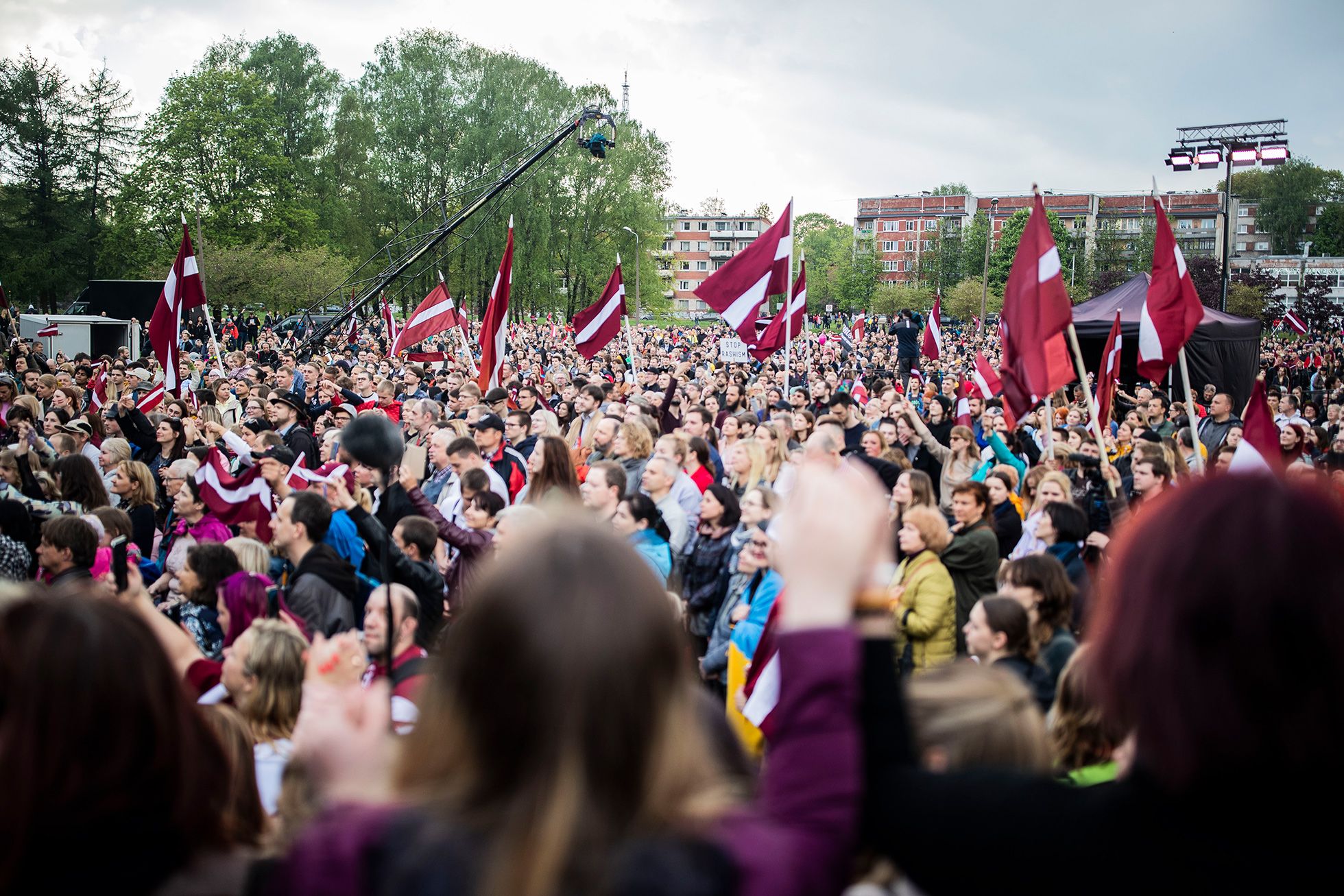
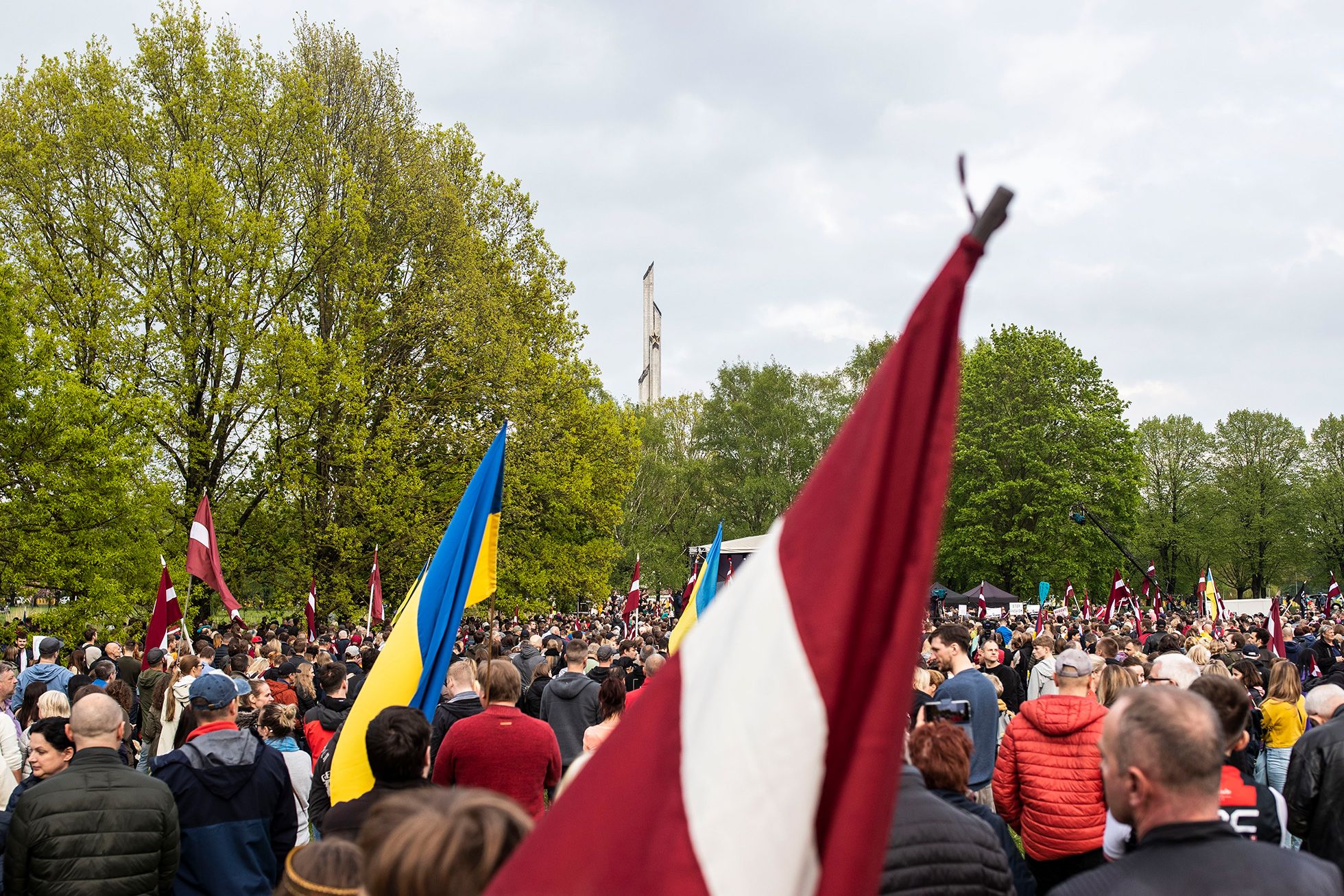
A week later, on May 20, another action took place in Riga - "for liberation from the Soviet heritage." Several thousand people (the organizers declared a procession for five thousand) walked along the central streets in support of the decision of the authorities on demolition.
Among the protesters were well -known politicians, representatives of the National Association party - MP, Diet, Janis Iessalnieks, former Minister of Economy Janis Vitenbergs, as well as Minister of Justice, Janis Bordans. A group of people came to the action in yellow-blue sweatshirts with hashtag #putin ***** (a reference to the most popular Ukrainian insult against Putin). Others have launched Stop Rashism, Stand with Ukraine posters.
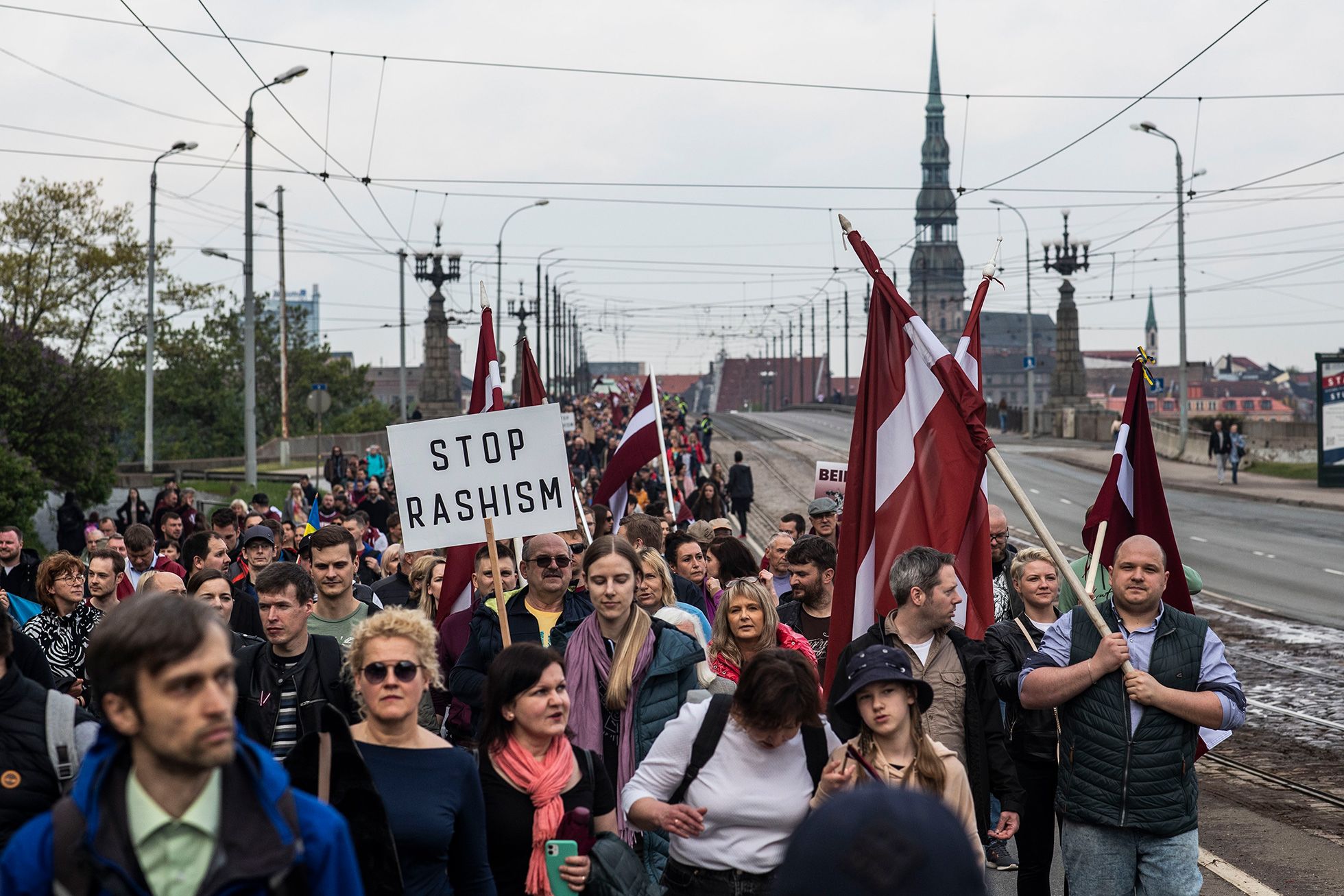
«Конечно, надо убрать все символы, которые сейчас актуальны на фоне войны России с Украиной, — после акции 20 мая рассказывал „Медузе“ один из организаторов шествия, режиссер Интарс Решетин. — Очень важен момент, чтобы наши дети могли жить без проблем, которые надо было решить 30 лет назад. И тогда у нас не было бы этого разговора».
Акция больше напоминала праздник, чем протесты — и закончилась музыкальным концертом. Выступали латышские музыканты Dzelzs vilks, Pērkons и Родриго Фоминс, а также певец и телеведущий, главный организатор акции Ральф Эйландс.
На акцию за снос советского памятника в Риге пришло гораздо больше людей, чем неделей раньше — на акцию в его защиту. Впрочем, второе событие, в отличие от первого, было согласовано с властями. Кроме того, шествие «За освобождение от советского наследия» анонсировал президент Латвии Эгилс Левитс.
По мнению депутата сейма от партии «Национальное объединение» Рихарда Колса, большое количество сторонников сноса связано с «пробуждением латвийской нации». «Мы слишком долго прославляли Советскую армию и Россию. Но с 24 февраля для большинства латвийцев к этому больше нет толерантности, — сказал Колс „Медузе“. — Нам 32 года говорят [из России], что Европа проиграет. Мы терпели, но теперь говорим: хватит».
Политик отметил, что для того, чтобы отдать дань уважения освободителям, можно возложить цветы в местах их захоронений. По мнению депутата, именно там расположены «настоящие символы Второй мировой». Тогда как памятник в парке Победы для Колса сегодня — «символ фашистских русских».
«То, что русские делают сейчас [в Украине], — то же самое они делали во время оккупации [Латвии], — считает Колс. — И нет места для такого символа в Латвии, свободной демократической стране».
«Это национальный вопрос»
13 мая Рижская дума решила начать подготовительные работы по поводу сноса, но ничего конкретного муниципалитет не предпринял — сославшись на отсутствие законной процедуры. Неотвеченным оставался и вопрос о том, кто будет платить за снос.
«[Это] не вопрос Рижской думы, это национальный вопрос», — рассуждал мэр Мартиньш Стакис. По его оценкам, демонтаж памятника обойдется в миллионы евро — а значит, финансировать его следует из государственного бюджета.
25 мая комиссия сейма по образованию, культуре и науке внесла на рассмотрение парламента новый законопроект, который описывает процедуру демонтажа памятника и источники финансирования. А 16 июня сейм принял закон «О запрете экспонирования объектов, прославляющих советский и нацистский режимы» во втором, окончательном чтении (за проголосовал 61 депутат, против — 19). Демонтировать мемориал будет муниципалитет, но финансировать его планируют за счет пожертвований граждан, а также из госбюджета. В середине мая на краудфандинговой платформе Ziedot на снос памятника собрали около 200 тысяч евро.
«Фрагменты памятников, которые представляют художественную ценность, культурно-историческое или образовательное значение», согласно тексту закона, будут включены в коллекцию Музея оккупации Латвии .
Такая же судьба, вероятно, ждет и другие советские монументы Латвии: на сайте сейма сообщается почти о 300 мемориальных объектах, посвященных советскому режиму и армии. Их судьбу кабинет министров определит до 31 июля. В разговоре с «Медузой» депутат сейма Латвии от партии «Национальное объединение» Рихард Колс выразил надежду, что до 15 ноября все советские памятники, кроме тех, что установлены на местах захоронений, будут снесены.
Вопреки желанию спикера сейма Латвии Инары Мурниеце, демонтировать памятник до выборов в парламент, которые пройдут 1 октября 2022 года, не удастся. Принятый закон обязывает Ригу снести монумент до 15 ноября. Это значит, что для правых партий в Латвии (и латышских, и русских) конфликт будет оставаться ключевой темой предвыборной повестки.
Например, в Рижской думе фракция «Согласие» (партия позиционирует себя как социал-демократическая, но фактически выражает интересы русскоязычных) осудила действия руководства городского собрания и призвала оппозиционных депутатов требовать отставки мэра. Бывший вице-мэр Риги Анна Владова сказала : «Мэр, неспособный сохранить в городе мир и спокойствие рижан, не достоин руководить Ригой».
«Соседнюю страну надо вразумить»
В ответ на решение снести памятник официальный представитель МИД России Мария Захарова назвала депутатов сейма «вурдалаками». А глава комиссии Совета Федерации по защите государственного суверенитета Андрей Климов — «нелюдями»: «Я не хочу анонсировать все возможные меры, но у нас есть очень много возможностей, в том числе административно-экономического характера, которые должны быть сейчас направлены в отношении Латвии. Эти нелюди понимают только силу, соседнюю с нами страну надо вразумить».
Председатель Рижской думы Эдвардс Смилтенс заявил , что после демонтажа Россия сможет забрать памятник себе.
Глава Крыма Сергей Аксенов предложил установить его в Симферополе: «Подлое и трусливое решение потерявших берега дикарей. Для местных нацистов этот памятник, напоминающий о позоре и поражении их предков, которые служили Гитлеру, — как крест для чертей. Вот и беснуются. Поддерживаю предложение забрать памятник в Россию. Он украсит любой российский город. Мы с радостью разместим его в Симферополе, потому что помним и чтим нашу историю».
Губернатор Ленинградской области Александр Дрозденко обратился к мэру Риги Мартиньшу Стакису: «Сообщаю, что в случае фактического демонтажа мемориала Ленинградская область готова принять данный памятник и с этой целью направить в Ригу специализированный российский транспорт».
Дрозденко также попросил помочь с погрузкой памятника и оформлением документов, чтобы он мог пересечь латвийско-российскую границу.
Саша Сивцова , Рига (Латвия)