
Translated material
Investments in war

Investments in war
How are the economies of Russia and the EU connected?
Author: Ekaterina Moroko
Illustrator: Ira Grebenshchikova
On May 30, the leaders of EU countries and governments adopted the sixth package of sanctions against Russia, which also prohibits the import of Russian oil by sea. According to the head of the European Council, Charles Michel, the ban will affect 75% of imported oil.
Since the beginning of Russia's full-scale invasion of Ukrainian territory, President Zelensky has constantly emphasized the need for an economic blockade of Russia. Any purchase from an aggressor country is an investment in war. However, during the war, the amount of oil pumped from Russia to EU countries increased: from January to April by 14%, from 750,000 to 857,000 barrels per day, according to the publishing house Argus Media. The high dependence of European energy on Russian energy resources makes a complete embargo impossible.
DOXA has collected some indicators characterizing trade relations between the EU and Russia before the adoption of the sixth package of sanctions.
 At the end of 2021, Russia, according to the IMF, was the sixth largest economy in the world, which is a significant trading partner, including for Europe. Most of all, Russia sells mineral fuels, lubricants and related materials to Europe. The same energy carriers that provide heating and electricity to Europe.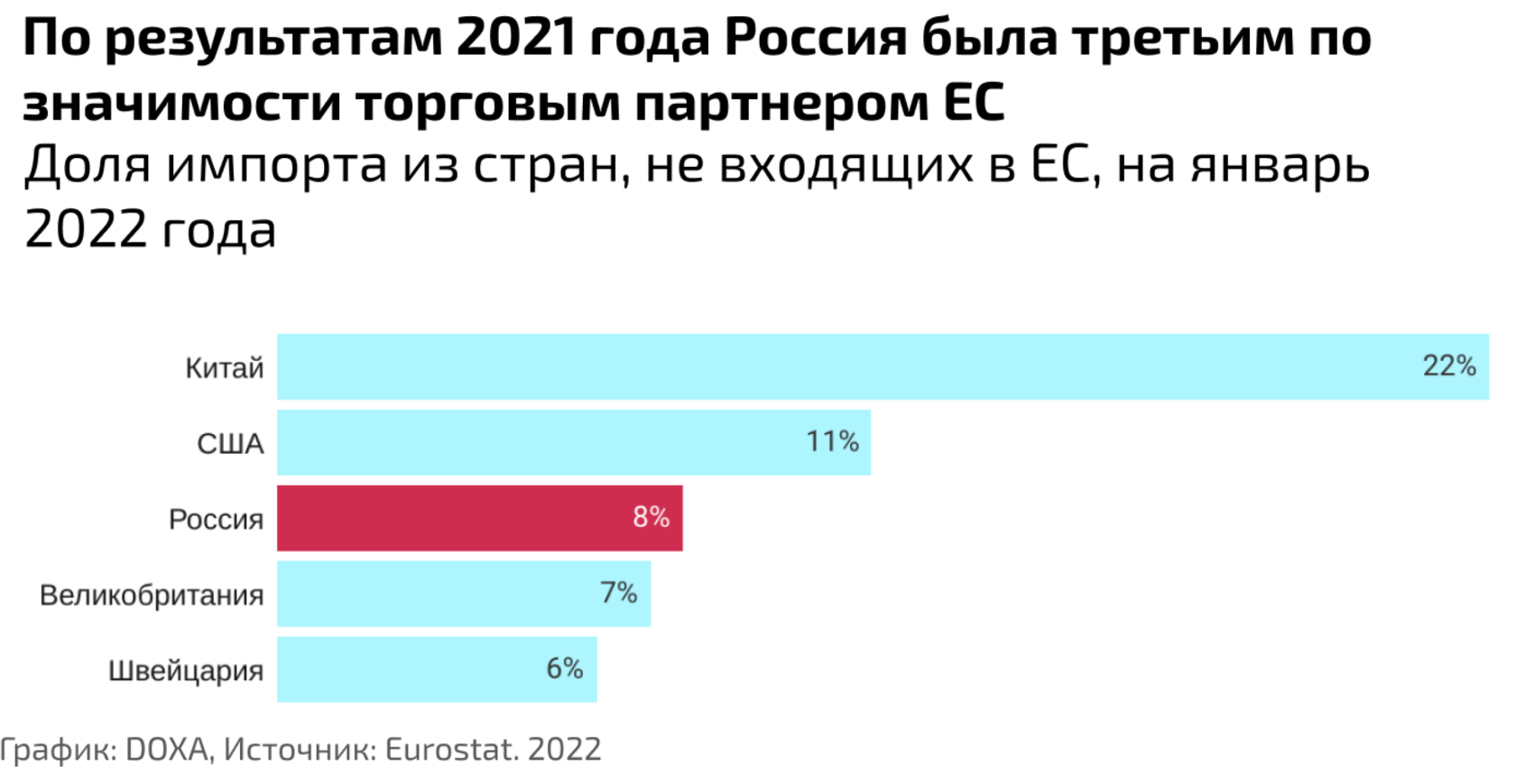


For a long time, Germany opposed a complete embargo; The Wall Street Journal wrote about this, citing its sources. It was this country that was the main buyer of Russian goods in Europe.
However, after lengthy discussions, the German side nevertheless announced its readiness to abandon Russian energy resources. Now the main opponent of the embargo in Europe is Hungarian Prime Minister Viktor Orban: he compared the refusal of Russian oil to an atomic bomb hitting the Hungarian economy.
The ban on the purchase of oil by sea is the very compromise option for Hungary, which buys Russian oil mainly through the Druzhba oil pipeline.
