
Translated material
Blockade Kaliningrad. How European sanctions and war in Ukraine are reflected in the lives of the Russian region
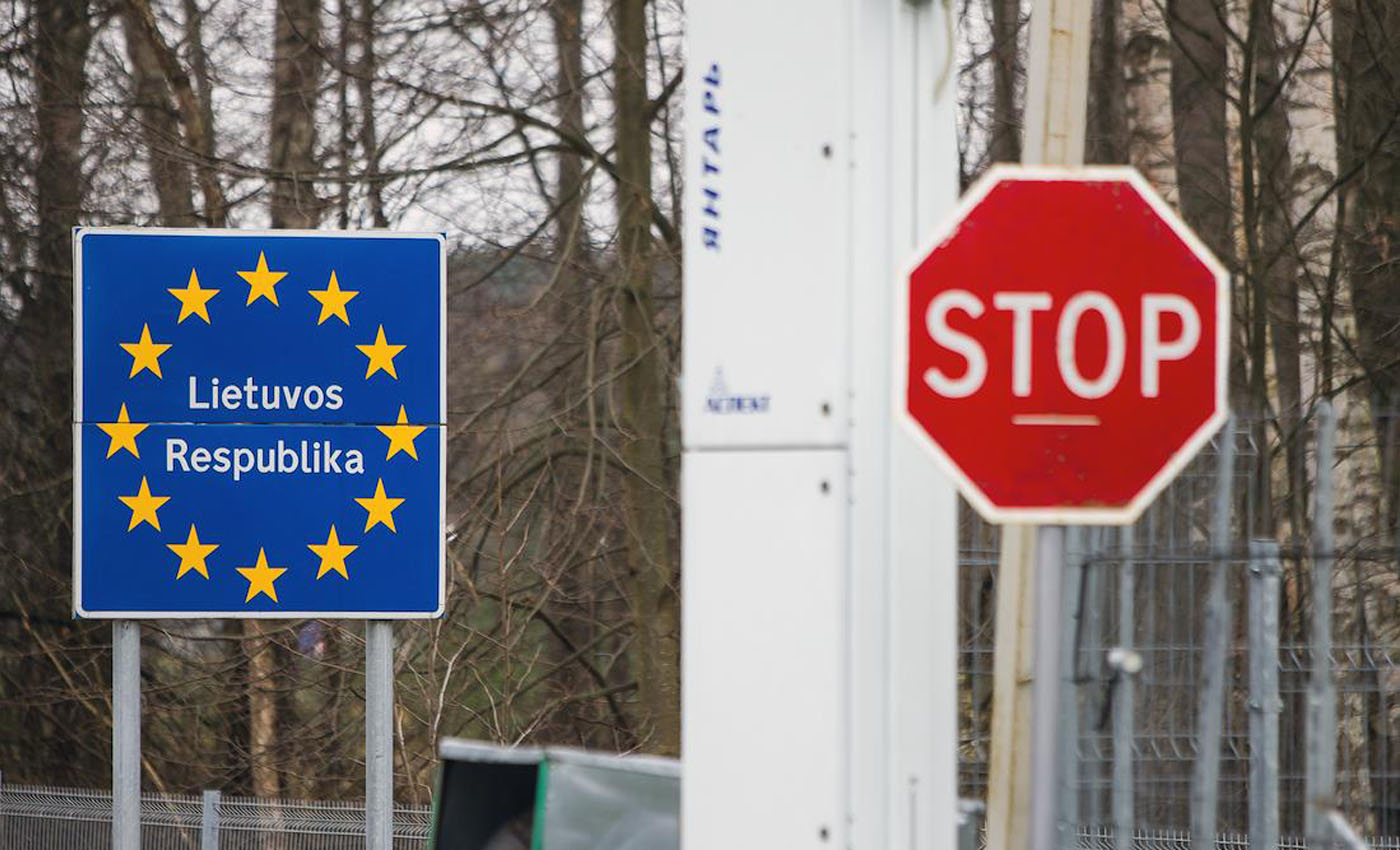
The automobile checkpoint "Border" on the border of Russia and Lithuania in the Kaliningrad region. Photo: Alexander Podgarchuk / Kommersant
On Tuesday, the authorities of Lithuania announced that they expand the ban on the transit of sanctions goods to the Kaliningrad region not only on railway, but also on truck transport. Russian officials promise to take “response measures” that can “destroy” entire sectors of the economy of European countries, and take control of the situation. However, some business areas in the Kaliningrad region have already suffered from European sanctions imposed against Russia after the start of the war in Ukraine: large factories are idle, workers are sent on corporate leave, and they offer them to collect berries in the field as earnings.
Transit ban
On June 18, Lithuania banned railway transit through its territory to the Kaliningrad region of goods that fell under European sanctions. Already, through the EU country, it is impossible to carry products from cast iron and steel, as well as dozens of items of industrial equipment. After July 10, cement, wood, a wide list of building materials, varnishes, paints, fertilizers, as well as alcoholic beverages and caviar will take under the ban. From August 10, coal and oil products, including gasoline, will not be imported into the region through Lithuania.
Among the goods prohibited for transportation and luxury goods are antiques and works of art, as well as goods whose cost exceeds 300 euros. Wines and alcohol, perfumes, clothes and accessories, dishes and crystal products will fall under the ban. The list also got household appliances more than 750 euros.
By Tuesday evening, it became known that the restrictions on transit through Lithuania touched not only railway, but also road transport: the night before, the Lithuanians did not allow Russian trucks to put the reinforcement through their territory.
According to the Governor of the Kaliningrad Region Anton Alikhanov, 40-50% of the nomenclature of all goods were banned. He called the actions of Lithuania "an attempt to acting the region."
Lithuania’s authorities say that the country did not introduce any unilateral or additional restrictions, but only "consistently applies the EU sanctions." The Russian Foreign Ministry believe that Lithuania violated the transit agreements that were concluded in 2002. The Foreign Ministry called the actions of Lithuania "provocative" and "openly hostile."
Alikhanov promised to achieve clarifications from the European commission, after consultations with which Lithuania limited transit. They are also waiting for them in Vilnius, said Deputy Minister of Foreign Affairs Mantas Ademenas: “At present, we expect clarifications from the European Commission regarding the application of the European sanctions regime to Kaliningrad commercial transit.” However, subsequently, the Lithuanian Foreign Ministry invited Russia to appeal to the European Union court to resolve the dispute.
Presidential spokesman Dmitry Peskov called the decision on the ban on transit "unprecedented and illegal." “This is a violation of everything and everything. We understand that this is due to the corresponding decision of the European Union - to extend the effects of sanctions on transit. We also consider this illegal, ”Peskov emphasized, adding that Lithuania’s actions are“ this is an element of the blockade ”.
On June 21, Nikolai Patrushev, secretary of the Security Council, flew to Kaliningrad and threatened Lithuania with response measures. “Russia will certainly react to such hostile actions. Corresponding measures are worked out in the interdepartmental format and will be taken in the near future. Their consequences will have a serious negative impact on the population of Lithuania, ”said Patrushev, not specifying what kind of measures we were talking about.
The head of the Commission of the Council for the Protection of State Sovereignty Andrei Klimov promised that if the European Union does not correct this situation, then he "disavoizes documents on Lithuania in the EU." In addition, the senator noted, the decision to ban transit through Lithuania will “untie the hands” of Moscow to eliminate the problem “by any means”.
"Corporate vacation" for workers
In the Kaliningrad region, sanctions were affected long before the ban on transit. The restrictions introduced by the European Union were especially struck by Autotor, the largest enterprise of the region where Hyundai , BMW , Kia and Ford Cargo cars are assembled. Due to the war in Ukraine, BMW stopped making cars at the plant, then the supply of supplies of components from Korea followed. In April, the founder of the holding Vladimir Shcherbakov said that the production was reduced four times: they used to assemble 900 cars a day, now - 200, and the plant is working at a loss.
The new conditions in which Autotor began to work after the outbreak of war in Ukraine quickly reflected on its employees. From May 1 to 22, workers were sent to “Corporate leave with payment by the employer in accordance with the norms of the current legislation”. To feed themselves, some employees have to look for a part -time job.
“From April 1 to April 26, I was in [paid] vacation, then I went out, worked for three days, and our workshop was sent on corporate vacation,” the mediazone told the workshop employee of the welding workshop. - Then he went out again for three days at the end of May. And in early June, my shift was disbanded, people were distributed to the other two shifts (there were three of them in total), I took a vacation without detention and work in another place. At the moment, two shifts are working in the workshop, each for twelve days. Many people are on vacation, we are waiting for them to call for work, we hope for the best. ”
According to other workers surveyed by the “mediazone”, by mid -June, part of the plant’s employees is in a simple one, receiving two -thirds from the salary. “And the salary is 30-40 rubles per hour, depending on the position. Some people on "special work". I am in the position of "working green site" until the end of this month, then also in a simple one for 4000–5000 per month. What and how will it be next to God know, ”says another employee of Autotor Edgar Avetyan. By special work, the man explains, is meant painting fences, mowing grass, arranging landscape design or participation in the construction of a new plant.
In early June, components were nevertheless entered the plant. Autotor assured that this would partially ensure the employment of people and the work of the conveyor in July and August. “But this is a limited volume of production, so it’s too early to talk about the resumption of the enterprise in normal mode,” the company said.
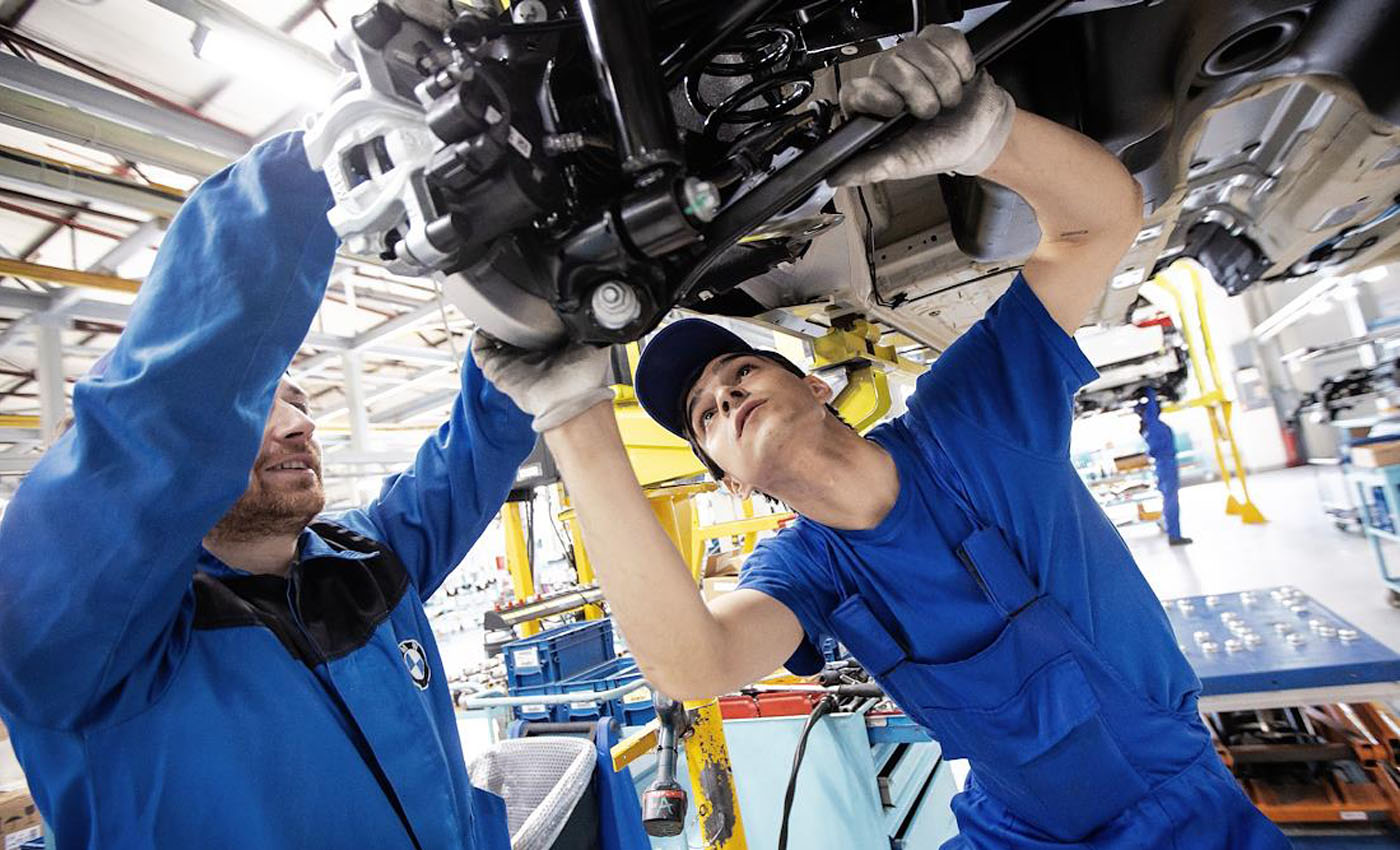
Autotor plant, Kaliningrad. Photo: Alexander Podgarchuk / Kommersant
To support its employees, Avtotor promised to allocate plots under the gardens. And the company decided to take workers during the downtime by collecting apples, strawberries and blueberries at an agricultural enterprise 100 kilometers from Kaliningrad. It was necessary to collect berries from four in the morning to noon. 25 rubles were offered per kilogram of strawberries, blueberries - 45-50 rubles. According to one of the employees who resigned, 30–40 people took advantage of this offer.
A long chain of fall
The authorities are going to solve problems with the delivery of goods to the Kaliningrad region with the help of ferries that walk along the Ust-Luga-Baltiysk line. The current number of courts is not enough, so additional ones will be required. “We calculated the most maximum volume of ships is seven additional ships before the end of the year,” said the governor of the region. According to him, within five to seven days, some of the additional ferries are ready to go on the line, and on the current ships there are still a “supply of free capacity”.
Fervor transportation can really replace railway transit over time through Lithuania, but because of this, the prices for goods will increase. According to the President of “Transportation and Infrastructure”, Pavel Ivankin, the growth of transport costs will be from 3 to 18% depending on the distance and type of cargo.
“First of all, a sharp increase in prices for all goods related to the antisancation list is expected, and there are really many of them - these are all construction, metals and more,” says Nikita Kuzmin, editor -in -chief of the Kaliningrad business publication Rugrad . - The ferries are a priori more than trains, respectively, an increase in the cost of logistics. And it turns out that similar goods in Kaliningrad will cost much more than in other regions. The authorities talk about certain subsidizing mechanisms, but so far no specifics. ”
He notes that residents of the region are wary of the promises of the authorities to take control of the situation. “Rather, the“ blockade ”in this case is a stamp, but it’s too early to talk about the real consequences,” Kuzmin adds.
What will happen to the scope of construction, industry and industries are still unknown. Igor Pleshkov, the head of the large Kaliningrad concrete company, is sure that many production will be stopped, and the number of unemployed in the region will grow. His own plants are in simple because of the impossibility of getting cement in a reasonable time.
“It's like a snowball. Enlarms, increases, increases, grows, grows, grows - a single avalanche is going on, which is no longer possible to stop. The problem with the reinforcement - the builders are idle again. Where to go to people? Since we are idle, then we do not pay salaries, we have nothing to pay. We cannot simply saw the standing equipment and distribute it on scrap metal, ”says Pleshkov. - Kaliningraders will simply be the first in this long chain. Continental Russia is more inert, there are more reserves, there are more opportunities for transferring people, transferring equipment, transferring raw materials. But for Kaliningrad, isolation will simply accelerate this process of economic fall. ”
The consequences were already felt by people associated with construction work. According to the entrepreneur who is engaged in the repair of facades, this sector is “dying now”: “Almost orders for the private sector are not at all. The ads are, as it were, in plain sight, I even raise them [on "Avito"] for money, but still no one really is interested. And customers themselves prefer to buy cheap building materials. ”
The scope of construction and industrial production is surrounded by a large number of related businesses. And if one supplier does not receive something or receives with a large delay, then the entire economic chain will collapse, said Igor Pleshkov, head of the concrete production company. “It is clear that here the economy is no longer able to [solve something],” Pleshkov argues. - Here it is necessary to solve the problem politically. The economy cannot. Entrepreneurs cannot clean the mistakes of politicians. ”
Editor: Agatha Shcheglova