
Translated material
Ukraine suffers the first sensitive defeat in the battle for the Donbass. But it will be difficult to develop the success of Russia
We explain what led to the retreat of the Armed Forces from under Severodonetsk and Lisichansk
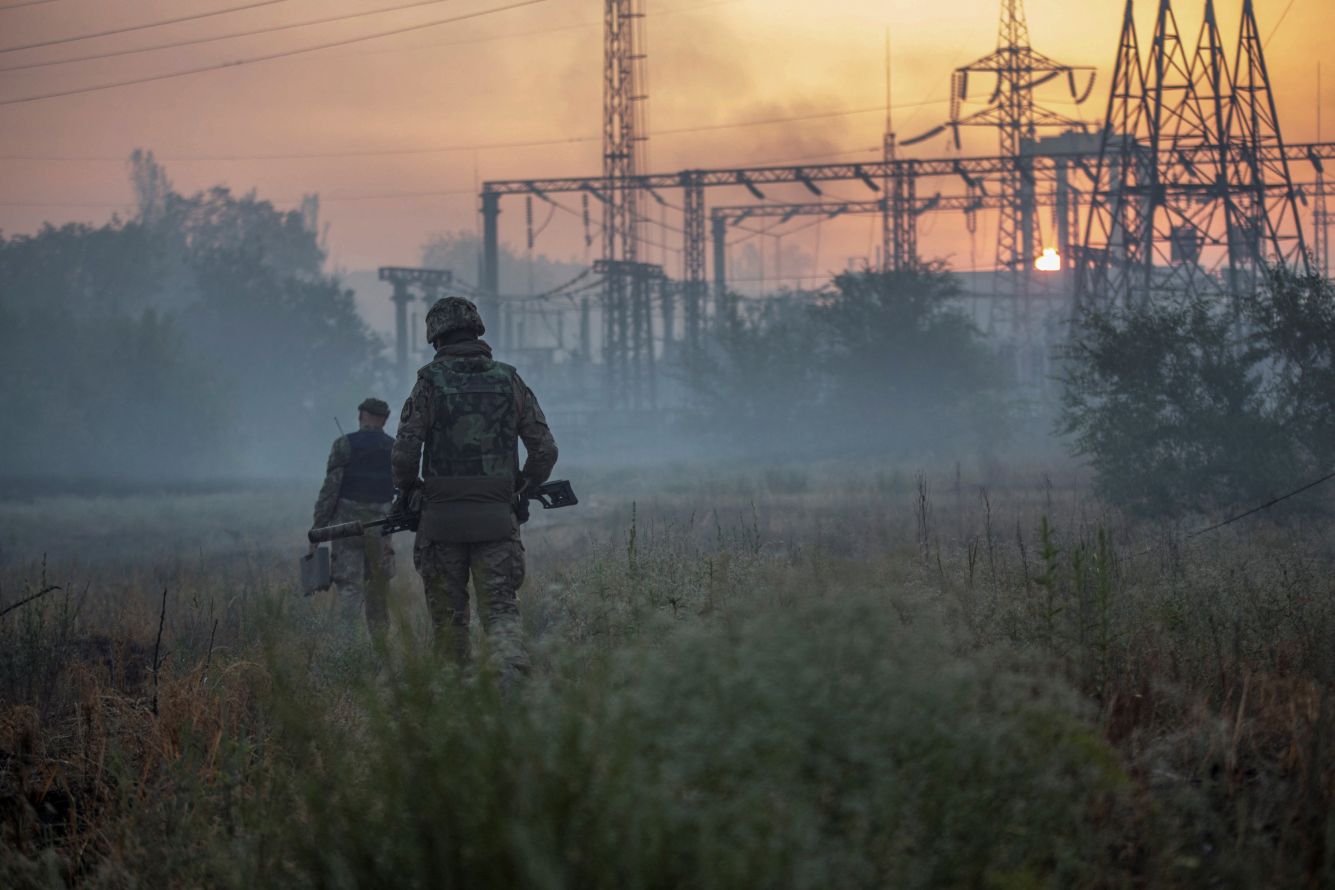
The battles for the regions of the Ukrainian army, the areas of the Luhansk region, have been going on since April. For more than 10 weeks, the Armed Forces managed to restrain the enemy, despite the constant threat of the environment. Many ( including in Ukraine itself) advised to withdraw troops in order to avoid losses, but the command decided to strengthen the defense, transferring reinforcements to the Lisichansk region and Severodonetsk. The next breakthrough of the Russian army south of Lisichansk could not be restrained on June 21. Now, Ukrainian troops in difficult conditions break through from the almost surrounded Severodonetsk and the southern outskirts of Lisichansk. They probably will have to leave the whole of Lisichansk. From what the losses will be during the retreat, and on whether the Armed Forces of Ukraine can restore the stable front in new positions, depends on whether the Russian army will manage to develop success.
In this text, the editorial office is trying to evaluate the combat situation in Ukraine on the basis of available data. Medusa consistently opposes the war and requires the speedy withdrawal of Russian troops.
What tactics did the Russian army choose in the battle?
In early April, the leadership of Russia announced the beginning of the battle for the Donbass, which was supposed to be a turning point in the war that difficult to develop for the Kremlin. The Russian commanders faced a difficult strategic task: it was necessary to conduct a victorious operation with a lack of effort and time (while the Ukrainian army intensified due to the mobilization of the population and the supply of Western weapons).
- The lack of forces forced the General Staff of Russia to be more careful and not set the troops of too ambitious targets.
- The lack of time required a decisive operation in order to surround the most part of the Ukrainian group in the Donbass as possible.
- At the same time, it was obvious that the Russian army had an advantage over the Ukrainian in artillery (although it is inferior in the number of troops). Consequently, it was necessary to concentrate artillery in decisive areas, remembering that it is quite difficult to carry out its transfer during a battle to another place.
We wrote more about these tactical searches in April here .
The Russian command ultimately chose the conservative strategy of “fragmentation of the front”, that is, an attempt to defeat the Ukrainian army in a series of consistent operations of a small (but feasible for the Russian army) scale in order to exhaust and disorganize the enemy’s defense.
What did this "fragmentation of the front" look like?
The battle for the Donbass broke into many episodes with a similar script: one of the sides (often the Russian army) is trying to force the Seversky Donets River, which crosses the entire region, the other tries to counteract and maintain its own bridgeheads.
- In April, the Russian army tried to start a major offensive from the Izyumsky bridgehead, but failed.
- After a month of battles in early May, the cities of Rubezhnoye were occupied (north of Severodonetsk on the left-neighbor to Russia-the shore of the Seversky Donets) and the Popasnaya (southwest of Lisichansk). The first successful breakthroughs of the Russian army occurred there: troops and mercenaries from the Wagner PMC broke north from Popasnaya, putting the entire Ukrainian group in Lisichansk and Severodonetsk. The breakthrough was stopped by Ukrainian reinforcements, but one of the two main roads along which the Ukrainian troops were supplied was practically cut: the Russian troops could not gain a foothold on it, but fired at all the transport, which tried to drive through it.
- After the capture of the Rubezhnoye, Russian troops tried to cut the second road to Lisichansk, passing through the city of Seversk. In case of good luck, they could surround all the troops in Lisichansk and Severodonetsk (in total, after the reinforcements approach, about 15 thousand military personnel). However, for this, the Russian army had to force the Seversky Donets. The forcing operation in early May ended with a disaster: Ukrainian artillery destroyed the crossings and most of the technology river (about 100 units of tanks, BMP and engineering vehicles).
- At the end of May, Russian troops concentrated on the attacks of the Lisichansky ledge and Severodonetsk from different directions. Almost the entire Severodonetsk was captured, but Ukrainian reinforcements were able to gain a foothold in the industrial zone of the city. Only Seversky Donets separates the industrial zone from Lisichansk (in fact the cities - satellite of Severodonetsk). This fact immediately created difficulties for the Ukrainian group in Severodonetsk: its supply went through three bridges over the river, which were consistently blown up (Russian artillery or Ukrainians themselves). For the past 10 days, the military was supplied with the help of boats, and the soldiers moved between cities, including swimming.
How do we know this?
From the video and photos that eyewitnesses of battles publish on social networks. This makes it possible to objectively record at least part of the events of any modern conflict. We applied a significant part of the main “documentary evidence” of the war on the map.
- After several not quite successful operations in different directions from June 18 to 21, Russian troops occupied the villages of Toshkovka (south of Lisichansk) and Vulving (southwest of the city).
- After that, the Ukrainian defense around Lisichansk weakened so much that the command decided to urgently withdraw the troops. The retreat was unlikely to be prepared, which created great difficulties in the Ukrainian army.
- First, I had to withdraw troops from the cities of Gorskoye and Golden, where since 2015 a large Ukrainian fortified area was equipped since 2015. The LPR forces and Russian troops unsuccessfully stormed it from at least March 2022. The allotment seems to have turned out to be chaotic and was accompanied by big losses: the propagandists of the LPR showed dozens of prisoners of the Ukrainian military and a significant number of trophies. However, the Ukrainian troops managed to avoid complete surroundings.
- The withdrawal of troops from the Golden and Gorsky led to the fact that Russian troops reached directly to the southern outskirts of Lisichansk and closely (a distance of several kilometers) approached the only road to Seversk, according to which the supply of Ukrainian troops was possible. This created a real, not the theoretical threat of the environment of Lisichansk and Severodonetsk.
- On June 23, Ukrainian officials reported that the evacuation of Ukrainian units from the industrial zone of Severodonetsk began (recall that they needed to cross Seversky Donets for this). The allocation of technology (several tanks remained in the industrial zone) is unlikely to be possible.
- The retreat (at least part of the forces) from Lisichansk began. Russian troops are trying to organize the persecution: it is reported that they have already begun to cross the Seversky Donets, probably north of Lisichansk.
- Western correspondents who are in Lisichansk describe the retreat as “chaotic”: “Around the [Ukrainian] systems of salvo fire and lie down [Russian reactive shells], aircraft launch missiles; In some places, the [set USA] howitzers M777 are standing. [On the road] - a stream of cars that take the [Ukrainian] soldiers towards Bakhmut. ”
What will happen next?
It all depends on how difficult the defeat of the Ukrainian army will be. This, in turn, depends on the ability of the Ukrainian command and troops to conduct an organized retreat in difficult conditions or, conversely, on the ability of Russian troops to organize the persecution and fire defeat of the retreating. Both are in doubt.
- The Ukrainian command has long been created the second line of defense, from Seversk to Bakhmut. In the Bakhmut area, large Ukrainian reserves were seen (some of them, perhaps, have already been abandoned in battle). However, the troops from Lisichansk still need to be reached: at least in places the route is shot by Russian artillery; Russian aviation also operates. Probably, during the retreat, Ukrainian troops will suffer heavy losses and lose part of heavy equipment. In this scenario, such a long defense will be considered a mistake at any cost of the remaining regions of the Lugansk region. In recent weeks of the Ukrainian army, it was difficult for the Russian troops to lose the loss higher than it he carried; At the same time, the crisis at the front was brewing and there were fewer opportunities for organized retreat. The opponents of the Ukrainian leadership advised to retreat a few weeks ago.
- Meanwhile, Russian troops did not show that they could advance into the depths of the enemy’s defense. Moreover, they do not want to get out of the "umbrella" of their artillery, which provides them with an advantage. The main tactical technique of the Russian army at this stage is multi -day shelling by the heavy artillery of Ukrainian positions with a subsequent cautious attack. Probably, in such conditions, they will not be able to close the “fox boiler” and cut off the opponent’s path to retreat before he allocates most of the troops. Additional complexity creates the area: between the Russian positions in the southwest of Lisichansk and the road on which the Ukrainian troops recede, there is another industrial zone-this time the Lisichensky oil refinery.
Department "Parsing"