
Translated material
The weakening of the ruble, another cryptocrach and the refusal of the "Sovcomflot" and "Aeroflot" from dividends
Randomness or change of trend: why the ruble has decreased in relation to the dollar
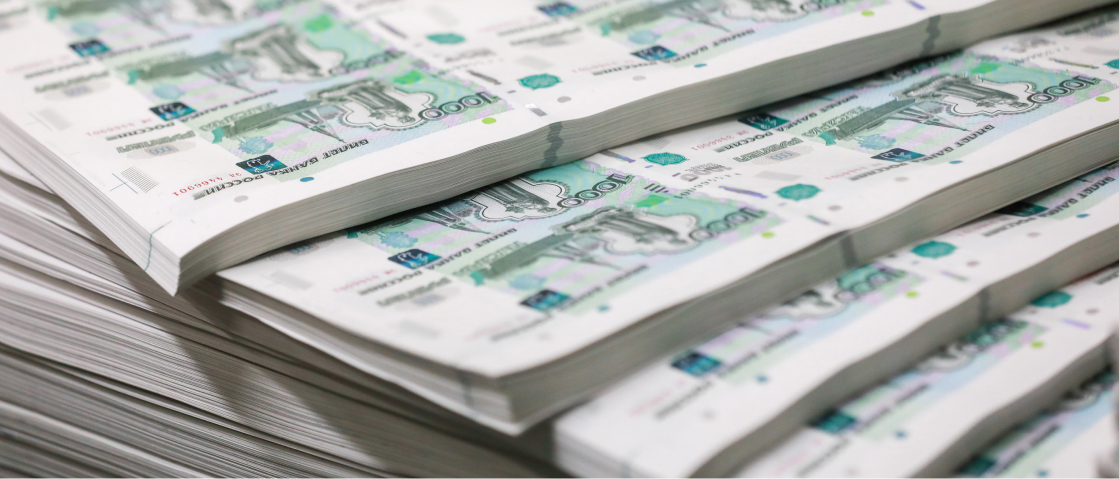
The ruble during the trading on Monday sank to a two -week minimum - almost 56.5 per dollar, and compared to Friday morning he lost more than 4 rubles to the dollar. And although the reduction was more modest to close, some analysts admit that the peak has been passed and it is worth expecting a turn to weaken the ruble. Experts explain the correction of the course by the upcoming discussions of foreign exchange interventions in the government, the beginning of the month and a decrease in gas supplies to Europe.
What happened?
On Monday, the dollar approached 56.5 rubles for the first time in two weeks after 52–54 rubles on Friday. The ruble played part of the day losses to close: the dollar cost 55.24 rubles (+0.74 rubles), the euro - 57.75 rubles (+1.21 rubles). Given the weekend on July 4 in the United States, weakening of the Russian currency can only be explained by internal factors.
Why did the ruble decrease?
This week, the government is going to discuss the management of the course, this may be a factor that led to an increase in demand for currency, said the chief economist of Alfa Bank Natalia Orlova. Experts of Interfax-SEA call the same reason. The fact that the government will consider proposals at the rate this week was said by the Minister of Finance Anton Siluanov last Wednesday, speaking at the Congress of the RSPP. He also allowed foreign exchange interventions to stabilize the ruble course. About why the Ministry of Finance thought about interventions and whether this will help to weaken the ruble, we wrote here .
The second reason, according to Orlova, is a decrease in gas supplies to Europe over the past few weeks. “This will mean a decrease in export income and, as a result, a decrease in sales of currency in the market,” the economist explains. And next week, supplies will be reduced even more: both threads of the Northern Stream from July 11 to 21 will be stopped for planned repairs. Because of this, gas prices in Europe today jumped by 13%, for the first time since March rising above $ 1800 per cubic meter. Oil prices are also rising.
The end of the tax period is also affected by the end of the tax period and the fact that the Central Bank increased to $ 1 million the maximum monthly limit of the transfer of currency with individuals abroad, BCS Express analysts note .
The strengthening of the ruble at the end of the month and weakening at the beginning is quite natural, because at the end of the month exporters change foreign exchange earnings to rubles for taxes, salaries and fulfilling other obligations - against this background, the ruble is growing, and at the beginning of the month it rolls back, the economist of the Renaissance Capital and the CIS Sofya Donets explained to The Bell. This is also said by SBERCIB Investment Research Long Strategist Igor Rapokhin. Donets recalled that, despite the cancellation of the requirements for exporters, to change at least 50% of foreign exchange earnings to rubles, most of them are still forced to do this, because they need rubles to pay taxes and salaries.
What next?
The main question is whether it is worth waiting for the return of the dollar to 50 rubles or whether the current reduction in the ruble is a turn to weaken, which most analysts predicted by the second half of 2022. Orlova believes that "the situation is more like a U -turn." “An important factor in favor of further weakening is the possibilities of non -residents to get out of Russian assets. If their exit capabilities are expanded, then this can definitely deploy a course, ”says the economist.
The BCS Express also believes that the prospects for further reduction in the ruble exchange rate are now maintained and the dollar in the near future may return to 60.
Donets and Rapokhin are held by another point of view: they believe that the current weakening is the intestatic volatility and the dollar by the end of the month will at least return to 50 rubles or even break this mark. According to Donets, the volatility of the course within a few rubles during the day in recent months has already become the norm, and it is too early to talk about a U -turn. The interventions that Siluanov mentioned at the level of ideas cannot have a significant impact on the ruble, she adds: first, the Central Bank must say its clear “yes”, then the intervention scheme should be presented, then they will begin to be carried out - only then it is worth waiting for the effect, and even that is limited, because we are talking about the purchase of “friendly” currencies, not the dollar.
Rapokhin also predicts a dollar of 50 or lower by the end of the month, because in July “sales of currencies will again be significant and amount to 1.5-2 trillion rubles”, as well as “several exporters will have to pay dividends”. In addition, the imbalance between export and import is still preserved, the expert adds.
What am I to me?
Despite the fact that experts diverge in the near future, they all continue to believe that by the end of the year the ruble will nevertheless weaken. Rapokhin believes that the weakening will begin in the fall, when the import will be more actively recovering. By the end of the year, he expects a dollar at 65 rubles. Renaissance Capital predicts the dollar of 75 at the end of the year and 70 on average for the entire 2022 years. In 2023 and 2024, the average dollar exchange rate will rise to 83 and 95 rubles, respectively, analysts expect.
MONEY
The collapse of another crypto project
The Vauld cryptobank, which is supported by Coinbase crypto -rhiza and investor Peter Til, stopped the withdrawal of funds and trading operations on his platform, writes Financial Times. Today, Vauld said that against the backdrop of other crypto projects, investors in the last three weeks withdrew $ 200 million from a cryptobank. For temporary use of tokens, he promised customers up to 40% per annum.
The collapse of the sector began in May with Stablecoin Terrausd and its “steamous” Luna cryptocurrency (more about this here ) and continued with the collapse of the cryptocreditors of Blockfi and Celsius, as well as the bankruptcy of the Three Arrows Capital crypto fund. Vauld admitted that he was associated with the latter. Now there is reason to believe that Tether/USDT can also collapse. Why you need to follow him, read here . The Bell said that many investors expect from the advancing "cryptosyms" the sector clearing from the weak players.
Housing rental in Moscow fell down due to growth in the offer
In Moscow, for six months, the offer of housing for rent doubled, RBC reports with reference to the data of real estate companies. Realtors explain this with the withdrawal of apartments that were previously planned to be sold. “Potential sellers of apartments decided to postpone the purchase before stabilizing the economic and political situation in the country and entered the rental market,” one of the analysts explains. According to some estimates, the offer of housing for rent in Moscow is now five times higher than demand. As a result, rental prices began to decline: in the center of the capital, they are already lower by 13%, in the west - by 11%, in other administrative districts - by 9-10%.
What else happened in a day?
- Finland and Sweden on Monday for one round completed negotiations on joining NATO, according to the alliance website. On Tuesday, July 5, the entry protocol will be signed.
- The UK announced that on July 5 will impose new sanctions against Belarus (“because Lukashenko’s regime continues to actively facilitate the illegal invasion of Putin,” the British Foreign website says). The sanctions will include the ban on the import and export of some goods totaling about £ 60 million, including oil products, advanced technologies, luxury items (works of art, designer bags), Belarusian cast iron and steel. In addition, Great Britain will prohibit the "large number" of Belarusian companies sell securities on the London Exchange.
- At a conference in Lugano, Ukraine called the amount necessary for recovery - $ 750 billion. The main source of financing should be confiscated Russian assets, said Prime Minister Denis Shmygal.
- The state “Sovcomflot” - the largest shipping company in Russia - will not pay dividends for 2021, as recommended by the government. “Subcomflot” is under sanctions and is forced to sell part of the fleet. The Aeroflot group also refused the dividends.
-The VK holding is looking closely at the purchase of at least two regional online booking services, I learned Forbes,-the Krasnodar service of Tvil and Ulyanovsk "Puly.ru". After leaving Russia, Booking.com and Airbnb VK expects to occupy a large market segment.