
Translated material
The person who did what could
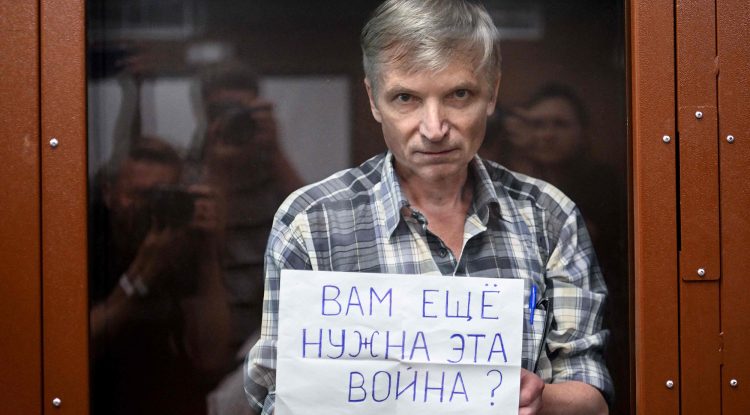
Alexey Gorinov fought for democracy in Russia for 30 years. The court sentenced him to seven years in prison for calling a war war
On July 8, the court in Moscow sentenced the 60-year-old municipal deputy Alexei Gorinov to the seven years of the colony. Gorinov’s crime lies in the fact that at a meeting of the Council of Deputies of the Krasnoselsky district, he called what was happening in Ukraine and said that Ukrainian children were dying in this war. Before Gorinov was arrested, few people knew him-but in fact he had been engaged in democratic policy since the late 1980s, defended the White House during the Putcha of the State Emergency Committee, and after coming to power Vladimir Putin he defended for years as a lawyer of opposition activists and was on duty at the murder of Boris Nemtsov, combining all this with successful corporate career. "Cold" tells the story of Gorinov.
In order not to miss the main materials of the "cold", subscribe to our Instagram and telegram .
“In the days of the August Putch of 1991, I was also a deputy. Together with other defenders, I was at the building of the Supreme Council of the Republic, at the White House. We defended our future. Our right to live freely - and therefore, speak freely, express our thoughts, collect information and share it. ”
So said the municipal deputy of the Krasnoselsky district Alexei Gorinov in his last word at the court on July 8. In August 1991, he was just 30 years old. Gorinov, a junior researcher at the Moscow Institute of Geodesy, aerial photography and cartography, by that time for more than a year was a deputy of the Dzerzhinsky district district council (he occupied the territory from Lubyanka to VDNH).
“We are a pre-reconnaissance generation,” says the same age as Gorinova, who collaborated a lot with him in the 2000s-20s. - We grew up in intellectual families, we were very much driven into the head that we should be very good. There were parents, books, an environment that promoted you to do something good in life. And for many, this has settled forever. You feel uneasy if you do not do something that in your view falls into this sphere [good]. ”
Club of voters
As Gorinov himself recalled in an interview with the project “The true History of Democratic Russia”, he became interested in activism when he was just starting to work at the institute, which he graduated in 1984. “I have a great -grandfather - Kommunar, shot by Kolchaktsy (he is a monument in Abakan at the place of execution), grandfather - a participant in the civil war, father - a veteran of the Great Patriotic War, a member of the party,” he said. “I was brought up in such a family and was not a dissident.” He was prompted by a common household case for Soviet times - the institute purchased potatoes and forced young employees, including Gorinov himself, to deliver it to the houses of older employees. Gorinov decided to publicly oppose - after that, according to him, the rector requested his personal file and began to interfere with the career of the rebel.
The young scientist saved the beginning of perestroika, which also coincided with the death of the rector. Gorinov could again work with students and “developed a complex computing complex for calculating orbits” - although sometimes, as he himself later admitted, instead listened to the broadcast of meetings of the first congress of people's deputies to the USSR.
Once, returning home, he saw a poster at the exit from the metro that the “Club of Voters” was going to in his area. In the Gorinov club I liked: “There were interesting people there, we discussed interesting issues of world politics, internal . ” Among the members of the club were Vladimir Oleinik, the future judge of the Constitutional Court of the Russian Federation, and Mikhail Astafyev - in 1990, both of them moved to the People’s Deputies of the RSFSR and won the elections. Gorinov was Astafyev’s confidant - and then decided to go into politics himself and become a district deputy. “I had a children's library opposite my house,” he recalled. - I thought: why, I’ll go to move away from them. Came-women are sitting, they have a lunch break, and I say: here I am so-and-such, I want to be a deputy, now I will meet with you, I will tell you everything, you will nominate me and sign the protocol. They, losing their mouths, listened to me, they liked everything. ” As a result, it was not possible to nominate from the library, but Gorinov became a candidate, went around every apartment in his area and won the election.
“He followed the list of“ democratic Russia ”( the electoral block created in 1990-approx.“ Cold ” ),” recalls the co-chair of the Moscow branch of the Parnassus party and one of the organizers of rallies in the late 1980s and early 1990s Mikhail Schneider. - These were activists of the democratic movement that existed then. People who glued leaflets participated in promotions in rallies. Civil activists, as it is called now. ”
“Lesha Gorinov is one of the most honest and decent people whom I met in my life, very modest and absolutely fundamental,” recalls Viktor Gorodetsky, who in those years was the presidium of the same district council. - He was then the youngest deputy in our council, but was impressed with a professional approach in solving the most difficult issues. Many democratic transformations managed to do in the area, and in Moscow. ”
When the coup began, Gorodetsky and Gorinov together went to the White House. On the first night, Gorinov went home, where a wife with a two -month -old child was waiting for him. “I spent the night at home, but prepared: I gathered everything, said goodbye,” he recalled. “I had an army gas mask with me, and I took a finca - I don’t know why, just in case.” As Gorinov said to help the protesters, he suggested that they use a playground for the construction of barricades, which was located in one of the Presnensky courtyards. “And literally a few dozen people ran there and before my eyes right a few seconds from the playground left a flat place,” he said. - That's inconvenient, it turned out not good. I feel my guilt before the inhabitants. "
Then supporters of democracy won. In the very beginning of the 1990s, Gorinov, as a deputy, helped his area change in accordance with the trends of the time: for example, he facilitated the privatization of shops and other companies that were still resisted by Soviet ministries. In parallel, I had to engage in banal survival: “Thanks to Soros, my child survived,” said Gorinov. - As I understand it, largely thanks to him there was baby food in points [dairy cuisine]. I walked in the morning, stood in lines to get it. ”
Soon Gorinov in parallel with the deputy work received the post of head of the Moscow branch of the registration chamber, which was engaged in taking into account real estate transactions. But the surrounding political life gradually began to embarrass him. In 1992, he wrote a statement on the exit from “Democratic Russia” - he was shocked that the business executive Yuri Luzhkov replaced Democrat Gabriel Popov at the head of Moscow. “When they said: let's return to the power of former officials, the nomenclature, which is experienced and knows how to lead, and no one came to power then from the Democrats. It outraged me, ”he explained.
In October 1993, Mikhail Astafyev, the former colleague of Gorinov, was on the side of the Supreme Council in the confrontation with President Yeltsin - and called the old friend to defend the White House again. Gorinov was not able to break through the cordon, but he, as a resident of Ostankino, observed the assault on the television center opponents of the president. He did not like what he saw. “It was a tragedy, and I still think that everything that we have come to now began then, in October 1993,” said Gorinov later. “It was a reference point of what is now built.” Soon after, he ceased to be a deputy and moved away from political activity - for almost a decade and a half.
Authoritative person
Alexei Gorinov returned to public work in the 2000s, when Vladimir Putin came to power in Russia, but protest rallies were not yet massive, and the detention and arrests were routine. Gorinov took on the role of a defender: by that time he worked as a lawyer - and after the protest, he pulled out detainees from the police departments and represented them in the courts. “It was a normal story: we were detained on some“ strategies ”, a car carrier rides, and Lesha by car,” recalls the ally of Gorinov by “solidarity”, an opposition movement, whose participant became a lawyer. - And only we are being brought to the department, Lesha hollows at the door and says that the defender came. In those days, he himself never even lingered, did not go to any unauthorized shares, because his voluntary duty was to ride and defend us. ”
In those years, when Gorinov took on this duty, there was no institution of public defenders in Russia, his ally of “solidarity” Sergei Davidis says. The OVD-Info organization, which sends lawyers to the detainees on the shares now, has not yet appeared, there was no practice to compensate for the work of lawyers at the expense of charity funds. According to Davidis, Gorinov - being a successful corporate lawyer in a development company - always defended the detainees for free.
At the police department, where the detainees were taken away, Gorinov could stand for hours - and often threw his own affairs to help them. The activist of "Solidarity", physicist Mikhail Lashkevich recalls how he once again called Alexei Gorinov from the police department: “I say, they say, we were detained. And he replies: “And I clean mushrooms in the country, okay, I’ll come now.” And he arrived. With Alexei, the police department was much more fun than without. Sometimes he caused police officers with accurate knowledge of the law and jokes. ”
Almost all his acquaintances tell about the sense of humor Gorinov. Lashkevich recalls how a lawyer once stood in front of an OMON employee and explained to him the law “On the Police”: “OMONOVETA says: have you even read this law? Alexey replies: Yes, I wrote it. He lifted up [policemen] a little, but so that you can’t hold it. ”
Soft, quiet, compliant and laconic in private life, Alexei Gorinov was transformed when he represented the clients: he became persistent and firm, recalls Sergey Davidis. The activists whom he defended say that as soon as Gorinov came to the department, immediately became comfortable-just because of his unshakable calm.
In 2014, after the action in support of the defendants in the “swamp business”, Gorinov pulled out of the police department of Davidis himself. “He then defended the letter of the law so carefully that it seemed that it was even excessive in terms of practical benefit. It is necessary that the police let us go, and not that they put all the commas correctly, ”his ally recalls Gorinov. - But in fact it was a thoughtful strategy. He thoroughly created such a pressing atmosphere for the police to observe these requirements that it was easier for them to let everyone go. ”
Not being a bright and noticeable politician, Alexei Gorinov, nevertheless, was in the leadership of the opposition structures that appeared in Russia in the late 2000s and early 2010s. He was part of the Solidarity Movement and the Party Coordination Council on December 5 - they tried to create her Davidis and colleagues in 2013, but the Ministry of Justice did not register the organization. “He is not a herald, not a folk stand,” says Sergey Davidis. “He is an authoritative person whom everyone respects.”
Gorinov, like many other activists, was deeply struck by the murder of Boris Nemtsov. Since 2015, he regularly on duty on the Big Moskvoretsky Bridge, making sure that officials or vandals did not remove flowers and do not destroy the unofficial memorial. According to one of his colleagues in these duty, most often Gorinov was engaged in this on the weekend: “Usually already on the night of Saturday, he is by car, so he did not have to rush to the metro.” He tried to apply his skills in negotiations with the authorities - in January 2018, it was Gorinov who met with the head of the Hormost and achieved from him the statement that he "did not have fundamental objections against the existence of the memorial."
This is my love
In parallel with trips to activists and duty, Gorinov built a successful legal career. An inconspicuous, “always modestly dressed, in an inexpensive car,” as the associates of “solidarity” say about him, he served as the general director of Wainett Trading - a company that is engaged in the preparation of construction sites. “He is a successful highly qualified corporate lawyer in the field of civil law,” says Davidis.
After work, Gorinov returned to the family: the wife of Alla was waiting at home, with whom they lived together for 32 years and raised their son. Dating friends with his wife, Gorinov said: “This is my love,” says Dasha Volya, a member of the Moscow political council of the “solidarity” of the Moscow political council. According to her, Gorinov’s wife is “very far from our Russian harsh reality.” “Do not convey in words how much she was worried when he was in a special reception,” says Volya. - She encountered this cruel world so sharply that she did not even understand what could be transmitted to him there and what was not. I'm afraid to imagine what is happening to her now. ”
Most Gorinov’s acquaintances talk about him as a calm, but loving man to joke. “He is very kind, friendly, reliable, honest, sensitive and attentive to the needs of others. Low -communal with strangers, so many have the impression that he is quiet - a person who comes and leaves completely imperceptibly. But close people know that Lesha has a huge number of interests and talents, ”says Volya. According to her, Gorinov plays amazingly in billiards, fond of space. “He even recorded our names with him on a digital medium, which was placed inside the NASA Parker Solar probe. Then, for the first time in the history of the study of the solar system, the cosmic probe passed through the upper part of the atmosphere of the Sun - the sunny crown and managed to collect samples of star substance, ”she continues.
As a friend, according to Dasha’s will, he always showed care: he brought her syrups from the United States, knowing that she was often sick, brought products home when she was lying with a temperature of 40. “He somehow came to me, saw that my window was broken and immediately fixed it,” she says.
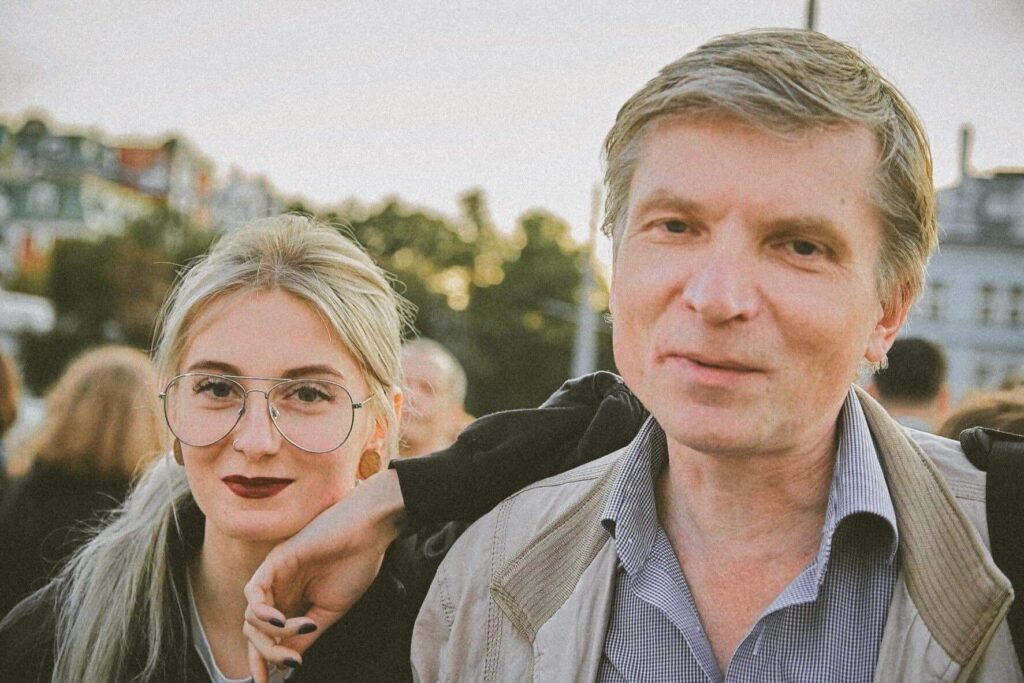
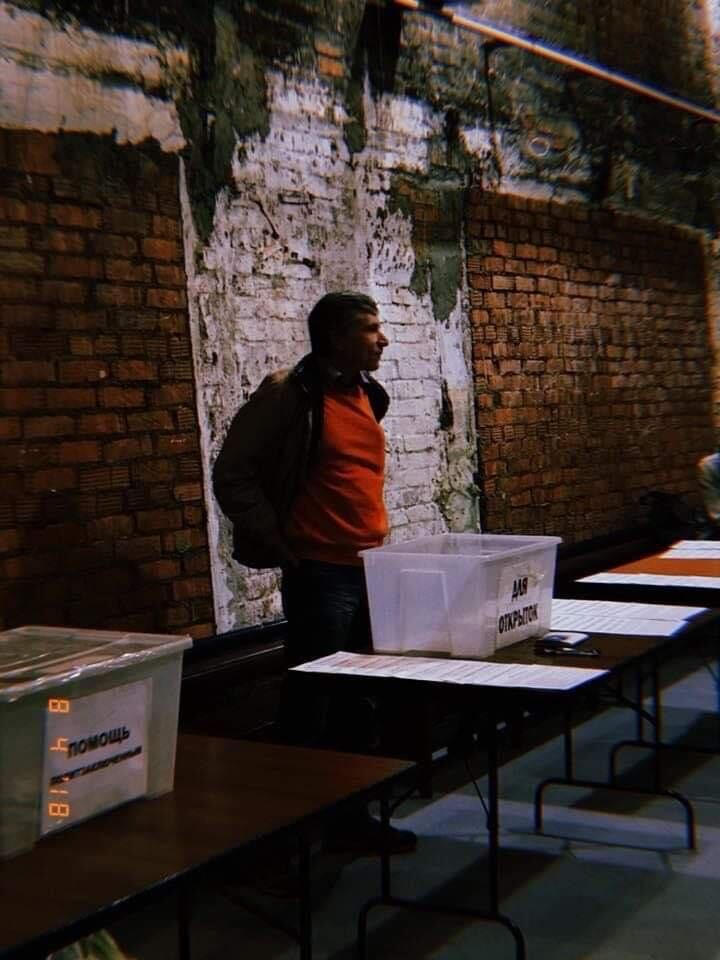
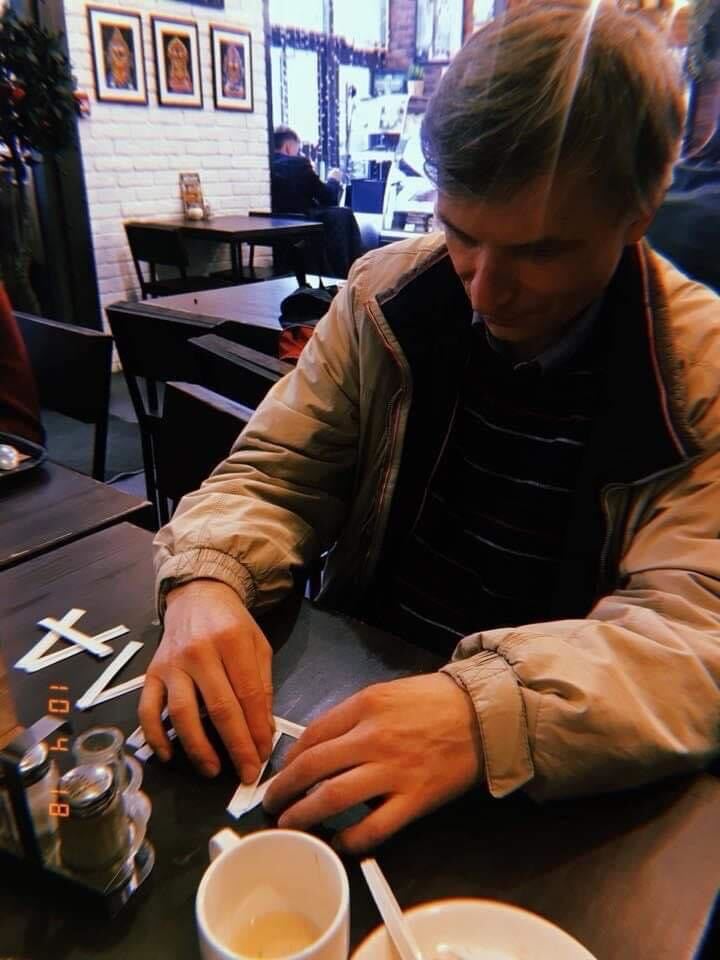
With great responsibility and seriousness, Gorinov has a small funny hobby - he likes to stick stickers from different fruits on a case for a phone. “His whole phone is always glued. It looks very cute, ”says Volya. “And, in my opinion, he characterizes him as a person who is attentive to details.”
Gorinov does not like to tell about himself, his associates converge in the opinion. “He is in this sense - such a closed drawer,” says one of his associates in “solidarity”. According to Dasha will, he himself never asked for help and did not talk about his health so as not to worry anyone.
Altruistic service to the future
“I remember in 2017 Lesha jokingly said that it was worth electing him to the Dzerzhinsky district council in 1990, as a couple of months later, the Soviet government collapsed. So, now this dictatorship will collapse soon, ”recalls Sergey Davidis.
In the fall of 2017, the opposition held its most successful election campaign in Moscow for the entire Putin era - thanks to the powerful work of the United Staff created by Dmitry Gudkov, the coalition of candidates from Yabloko and independent politicians was able to create a majority in municipal councils in many areas of the city. One of these areas was Krasnoselsky: Ilya Yashin was the new chairman of the council, and Alexey Gorinov was one of the deputies.
According to Elena Kotenochkina (she became the head of the council after Yashin resigned in 2021), Gorinov was in good faith-despite the fact that he, like other ordinary members of the council, did not receive salaries. “He advised disabled people and pensioners that they have the right to demand from the executive branch,” she lists. - He helped install memorial signs in honor of the participants of the Great Patriotic War and the “Last Address” signs ( a project perpetuating the memory of the victims of the Stalinist repressions - approx. “Cold” ). Readingly went to meetings with residents, observed a schedule for working with the population - he did not miss the reception of citizens. He thoroughly approached the issues of overhaul, did not sign the acts of acceptance without agreeing with the residents. And if residents did not have enough strength or competencies to engage in overhaul, he helped. "
However, all this activity did not seem sufficient Gorinov. “Many believe that [municipal deputies] should not be politicized,” Kotenochkina continues. “But he initiated political statements many times - for example, in support of Alexei Navalny, he went to rallies.”
“There is no reason to believe that he had intentions to build a professional political career,” says Sergey Davidis. - His work is a purely altruistic service to the future of the country, human rights. No matter how high it sounds, it is absolutely applicable to it. This is a person who does, what can, from what he must. He did not go to the barricades - he rather defended those who go to the barricades. "
Свою позицию в отношении войны с Украиной Горинов публично обозначил сразу — практически каждый день он писал антивоенные посты в фейсбуке. «Он для себя решил, что он будет себя вести так и вел себя так, он последовательный человек, — говорит Лашкевич. — Он не делал чего-то такого совсем [героического], просто у него было какое-то внутреннее решение, и он ему следовал. Он так же себя вел, как и раньше, как будто бы нет этих диктаторских законов. У него есть это спокойствие и какое-то такое чувство юмора, которые позволяет ему в разных ситуациях последовательно себя вести».
15 марта Горинов и Котеночкина пришли на обычное заседание совета муниципальных депутатов. В какой-то момент в повестке возник вопрос о проведении конкурса детских рисунков. “Tell me, please, what kind of children's drawing contest can be discussed, dedicated to the day of protection of children? — возмутился Горинов. - And about the organization of dance programs dedicated to Victory Day? Когда у нас каждый день гибнут дети — я вам для информации скажу, что около ста детей погибло в Украине. Children become orphans, and grandchildren-assessments of participants in the Second World War are now thrown into the bead of these hostilities in Ukraine. Я считаю, что все усилия гражданского общества должны быть направлены только на то, чтобы остановить войну и вывести войска России с территории Украины».
Котеночкина поддержала коллегу. Из-за этой дискуссии, которая длилась несколько минут, Следственный комитет завел в отношении обоих депутатов уголовное дело по статье о «фейках». Обвинение политикам предъявили в конце апреля. Котеночкина к тому моменту уехала из России. Горинов остался.
«Вообще, когда Борю убили, стало думаться о том, что мы все время отстаем, они что-то ужесточают, а мы не можем перестроиться, не умеем, — говорит коллега Горинова по “Солидарности”. — И Леша, мне кажется, тоже не верил, что его возьмут и просто так посадят».
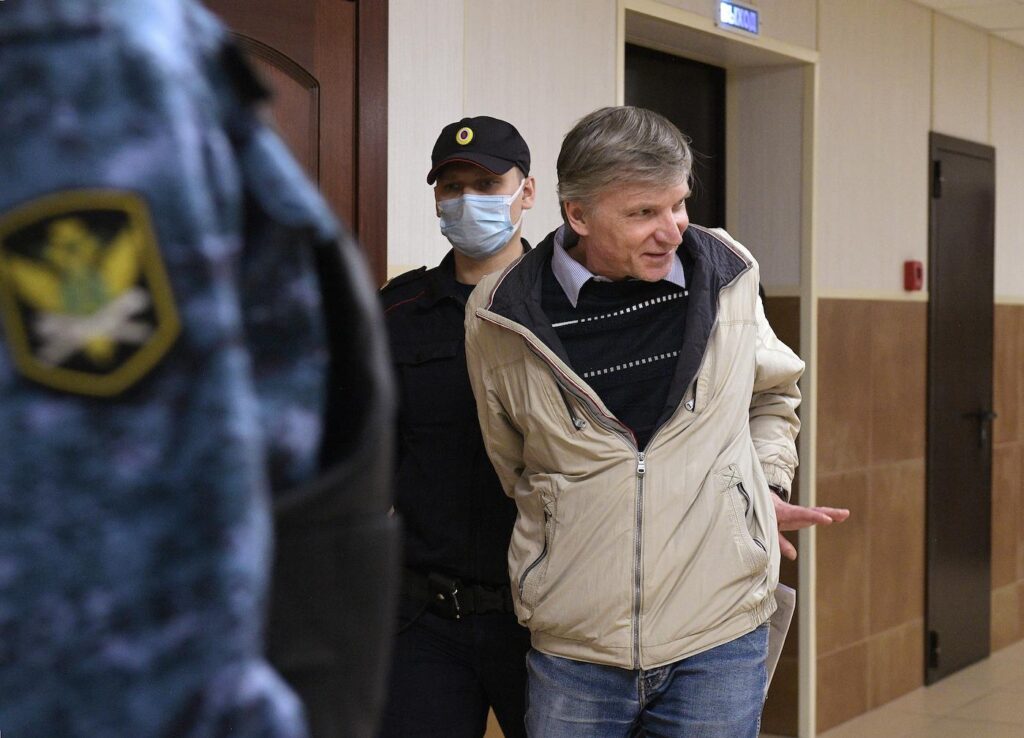
26 апреля в офисе совета депутатов и дома у Горинова прошли обыски. The next day, the court sent him to a pre -trial detention center. На расследование ушло пять дней — а 8 июля суд приговорил его, как и просил прокурор, к семи годам колонии. Перед заседанием Горинов поднял над головой антивоенный плакат; судебный пристав попытался закрыть его своим телом. Через две недели Алексею Горинову исполнится 61 год; как сказали «Холоду» его знакомые, у него есть проблемы с легкими.
После начала войны Горинов продолжал регулярно ходить на мемориал Немцова на Большом Москворецком мосту. «С ним кто-то из наших пересекался и спрашивал: Леш, а ты не планируешь уехать? И он сказал: нет, я никуда не поеду, — рассказывает соратница депутата по мемориалу и “Солидарности”. — Тут я могу только предполагать, что его держало. I think so. Ты 60 лет пытался быть хорошим, что-то делать, старался, работал, заводил детей. А в один день это просто все взяли и обнулили. Если при этом еще и уезжать, то это вообще перечеркнет все, что было».
«Холод» благодарит проект «Подлинная история Демократической России» за помощь в подготовке материала