
Translated material
Liar, talker and laughter
Why Boris Johnson had to leave
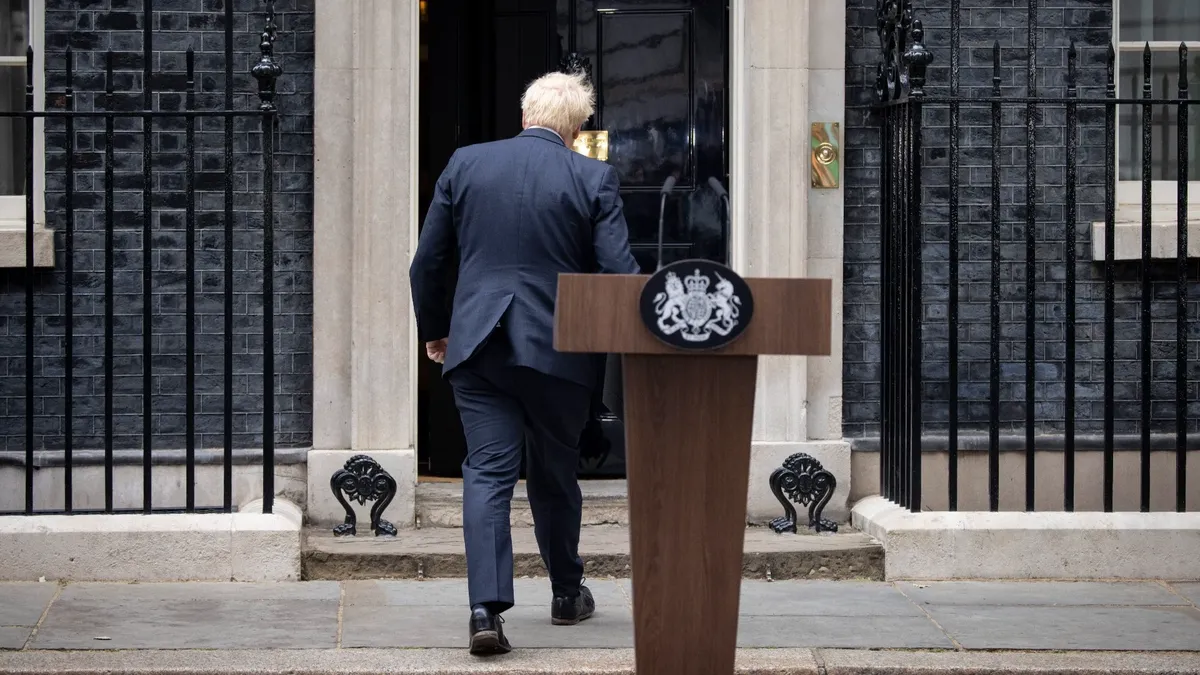
In English there is an expression that the cat has nine lives. Boris Johnson was just the same “political cat”, which has an extraordinary ability to leave the water dry over and over again in situations that would have long been destroyed by any other. But the moment came when even all his lives ended, and the one-party members forced him to resign on July 7, after the next scandal, which could easily be avoided if Johnson was not Johnson.
Brectziter from the elite
The scandals accompanied his whole career, but most often Johnson skillfully turned everything as a joke, since he always had everything with a sense of humor. A journalist by profession, who was fired from Times for the use of non -existent quotes, he, like Donald Trump, first became a television celebrity before taking a policy seriously.
Having been educated in the cradle of the English aristocracy of the Iton College, and continuing it in Oxford, where he was a member of the elite Bullingon Club, Johnson was a somewhat strange candidate for the role of a people's tribune, calling for the overthrow of the "burnt liberal elites." However, not more strange than billionaire Trump, who called for a revolution against the establishment in the United States. Trump and Johnson are unconditionally political allies, the champions of the right populism, which grew like yeast, including in the Anglo -Saxon world after the financial crisis of 2008.
Like Trump in the USA, Johnson knocked out a British policy from the usual track, but the consequences of Johnson’s revolution will be felt much longer than from Trump. The main reason is Brexita - the exit of Britain from the EU, which has forever changed the foreign policy, trade and domestic policy of the United Kingdom.
Despite Johnson’s image as one of the most important supporters of Brexit, there was nothing in practice in fact, there was nothing but the desire to become a prime minister. That is why, he wrote two programmatic letters on the eve of the referendum - one for the exit, and the other for continuing membership in the EU. Only a cold personal calculation, and not the principles determined his choice in favor of the EU opponents.
The role of Johnson in Brexita was key twice. According to John Curtis, one of the most authoritative sociologists of Britain, it was Johnson during the 2016 referendum who managed to attract several percent of the oscillating voters necessary to win with a minimum advantage. The second time, Johnson proved himself to be as a prime minister in 2019 when he insisted on the most radical version of Brexit with the full exit from the common market and the EU Customs Union, while winning the elections in December 2019 with a deafening success. Then it seemed that Boris Johnson would rule according to the extreme to the next elections in December 2024, but it turned out, as we now know, otherwise.
Distracting maneuvers
Despite the high -profile promises of huge economic benefits from Brexit, Johnson pushed the economically the most painful option for leaving the EU for the UK. According to experts, Britain lost about 4% of its GDP due to a break in economic ties with the EU. The British economy is restored more slowly by all other economies in the G7 with the highest inflation of 11%, and the following year its growth will be the slowest in the G20, with the exception of Russia, which is under Western sanctions.
Nevertheless, Johnson was saved by two world crises: the pandemic and the Russian “special operation” in Ukraine. The first helped Johnson hide the negative consequences of Britain’s exit from the EU. The second is to distract from a political scandal due to the fact that Johnson and his close associates arranged parties during a hard locaun. The invasion of Russia to Ukraine actually saved the Prime Minister from the resignation at the beginning of this year, since Johnson gave Johnson the opportunity to switch to another topic, an active support for Kyiv, with which most British society is in solid.
However, this was precisely the main essence of Johnson's policy. Because
He, as a populist, actually had no basic ideology, there were no specific programs, except for empty slogans such as Levelling Up (alignment)-he constantly needed some bright topic,
Switching attention of the electorate.
The list of available options for these distracting maneuvers was very limited. At first, such a topic was the confrontation with the EU, within the framework of which Johnson’s environment supported endless conversations about the breakdown of the protocol in Northern Ireland, the issues of immigration, including an attempt to send almost empty liners to deport immigrants to Rwanda, and the so -called culture war (Culture Wars), i.e. The fight against multiculturalism and political correctness, including attacks on BBC and universities as nursers of left-wing-liberal ideas. However, the excessive emphasis on these topics annoyed the Western allies quite strongly, and did not find unanimous at the British electorate. In contrast, the Ukrainian agenda after February 24 became almost the only topic in Johnson’s political repertoire, which does not cause annoyance and allows him to be at moral height.
Johnson and Ukraine
The role of the most ardent hawk in the Ukrainian question is a win -win option for Johnson and from a practical point of view, since it costs very little for the UK.
For example, the United Kingdom adopted a small share of refugees compared to other European countries. From personal experience, I know through what bureaucratic hell I had to go to my friends in Belfast in order to bring their parents from Ukraine here - up to the point that they first had to go to Italy, which, like all EU countries, accepted refugees without visas, and wait until the British make a visa. Weapons and financial assistance for Ukraine remain approximately at the same level as in Germany or France. In addition, Great Britain will not have to bear the costs of restoration or pay for Ukraine’s membership in the EU (no matter how unlikely it may seem). Johnson in his recent article about Ukraine mentioned the EU precisely in the context of financial assistance in post -war restoration and preparation for possible membership.
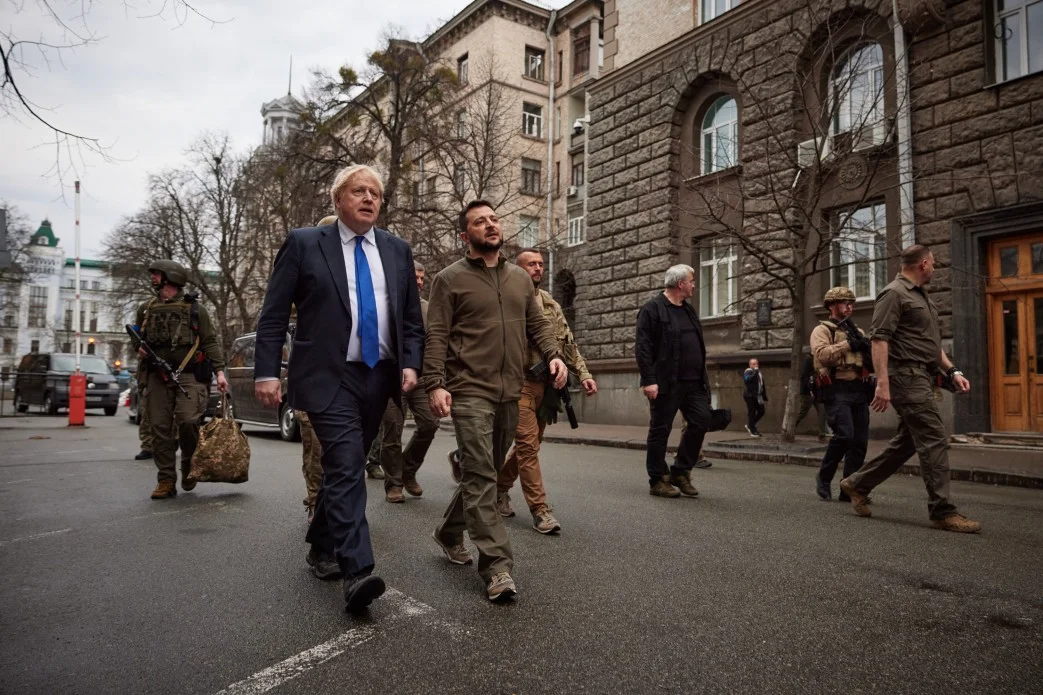
Vladimir Zelensky thanked Johnson for taking the initiative on oil sanctions against Russia, but the UK still continues to buy oil from Moscow by the end of the year - exactly what the EU, which is so often criticized for insufficient rigidity towards Russia.
Johnson's resignation can lead to a change in style, but not the quality of material support for Ukraine,
Which in any case was much less than its verbal component. A public consensus around Ukraine has formed in Britain, so financial and military support will remain, it will simply subside a stir that Johnson created to satisfy his internal needs.
An example of the latter is his unexpected trip to Kiev on June 18, a day later, the visit of the leaders of Germany, France and Italy, in order to level any chances of negotiations with Moscow, while making a number of high -profile statements (for example, that Britain will teach 10,000 Ukrainian soldiers every 120 days), which so far remain only in words.
Power in truth
Johnson will go down in history as one of the most influential politicians in the latest history of Britain. Brexit will remain his main achievement, but a constant lie and disrespect for the rules will remain a business card. They could bring success in a referendum when people believed in what they wanted to believe.
But in a state where there is no written constitution, where the power of habit, convention and precedents is important, to have a prime minister who systematically ignores all the rules and foundations is extremely dangerous.
The scandals and streams of lies constantly accompanied the Prime Minister. Starting from his attempt to block the work of the parliament that was unwanted to him in the fall of 2019, before changing the rule of lobbying in parliament, so that his friend Patterson can evade liability for illegal receipt of money, not to mention lies in the parliament of covid parties (which is a violation of the regulations and should lead to immediate resignation). But all these stories were the result, while the reason was Johnson himself, who became the threat of the basics of British statehood.
The direct reason for the resignation on July 7 was not even another scandals, how much cumulative growth in fatigue in the conservative party itself and the key to the key party members of Johnson’s reluctance to show at least some repentance and, most importantly, just stop lying.
In search of replacement
Johnson leaves, leaving behind a completely transformed electoral field. His deafening victory in the elections in 2019 lifted the line under the traditional policy of conservatives, inherited from Thatcher. Johnson and his environment expanded the electoral coalition for conservatives, replenishing it primarily by immigrants from the working class and people without higher education in post -industrial small cities in northern England, where the Labor has traditionally won.
Johnson tried to find a new formula for electoral success in a combination of right -wing populism (immigration, the fight against political correctness, anti -European views, which became the main marker of English nationalism) and a more generous economic policy, in particular in mass subsidizing the economy in pandemia. At the same time, he managed to maintain the support of most of the traditional electorate of conservatives in the middle class, in particular because of their acute rejection of Jeremy Corbin, the extreme left leader of the labyrinists in the last elections.
Among the possible applicants for the post of prime minister, the Elizabeth of the tracks can be distinguished, which has a “Johnson in a skirt” reputation and demonstrates similar rhetoric, but she lacks Boris's charisma. Other candidates are also not so bright and often go in line with the traditional fiscal conservatism of Thatcher as Sunak or Zakhavi, which repels the working class from them. The left wing of the party, represented by candidates such as Jeremy Hunt, even if they played for Brexit as Penny Mordont, they did not have support among the asset of conservatives. Ben Wallace is poorly known both in the party and in the country, with the exception of his work to support Ukraine as Minister of Defense.
Thus, it remains a big question whether the next leader can save the coalition built by Johnson without his charisma and Brexit as the main unifying topic for new supporters of the conservative party. But even if you can’t save the electorate, for Johnson himself it will be a weak consolation.