
Translated material
"These people danced in the volcano"
Interview with historian Dan Hilia. He investigated the Quirry of Soviet and post-Soviet Russia. His book is published in Russian
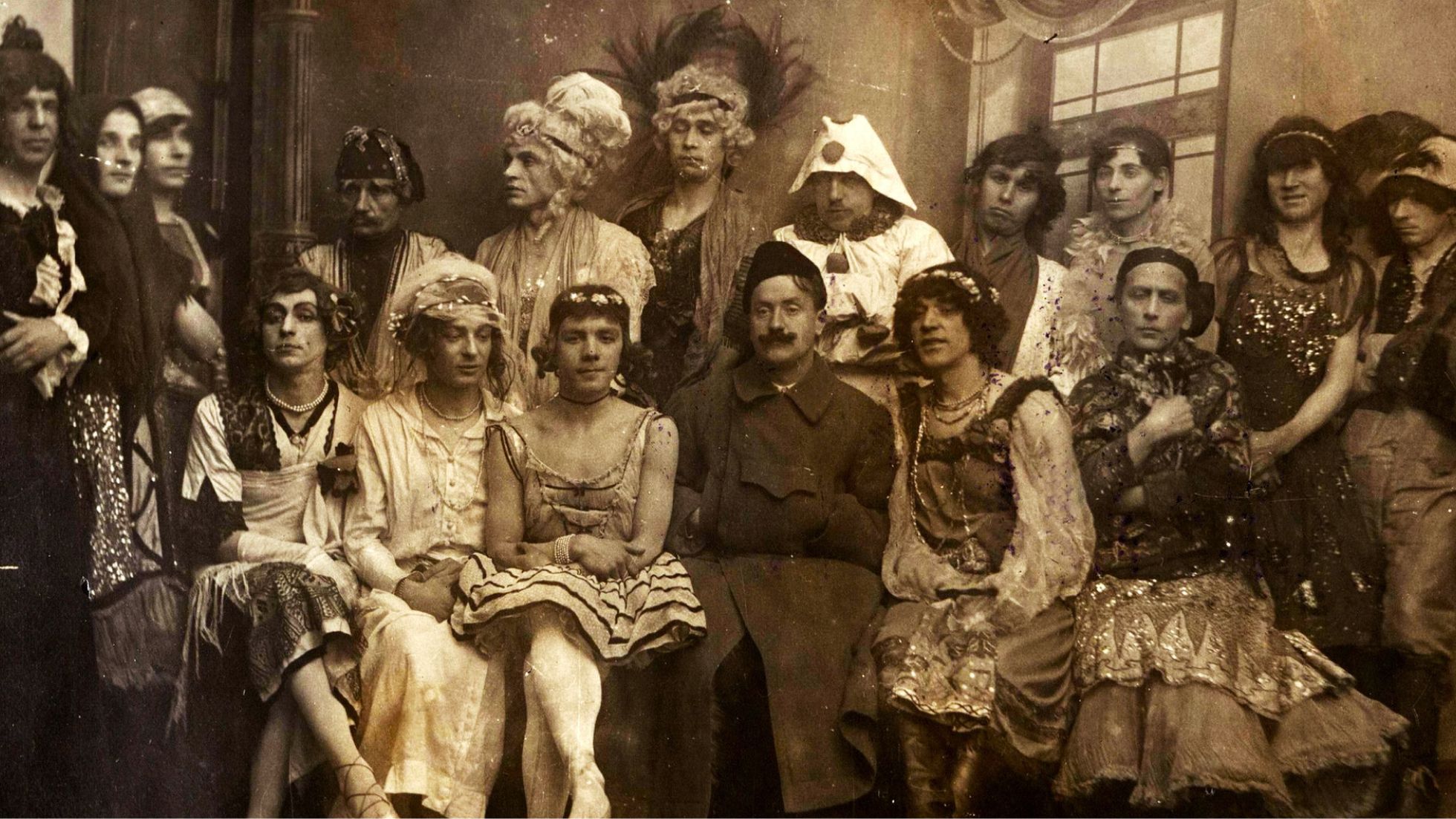
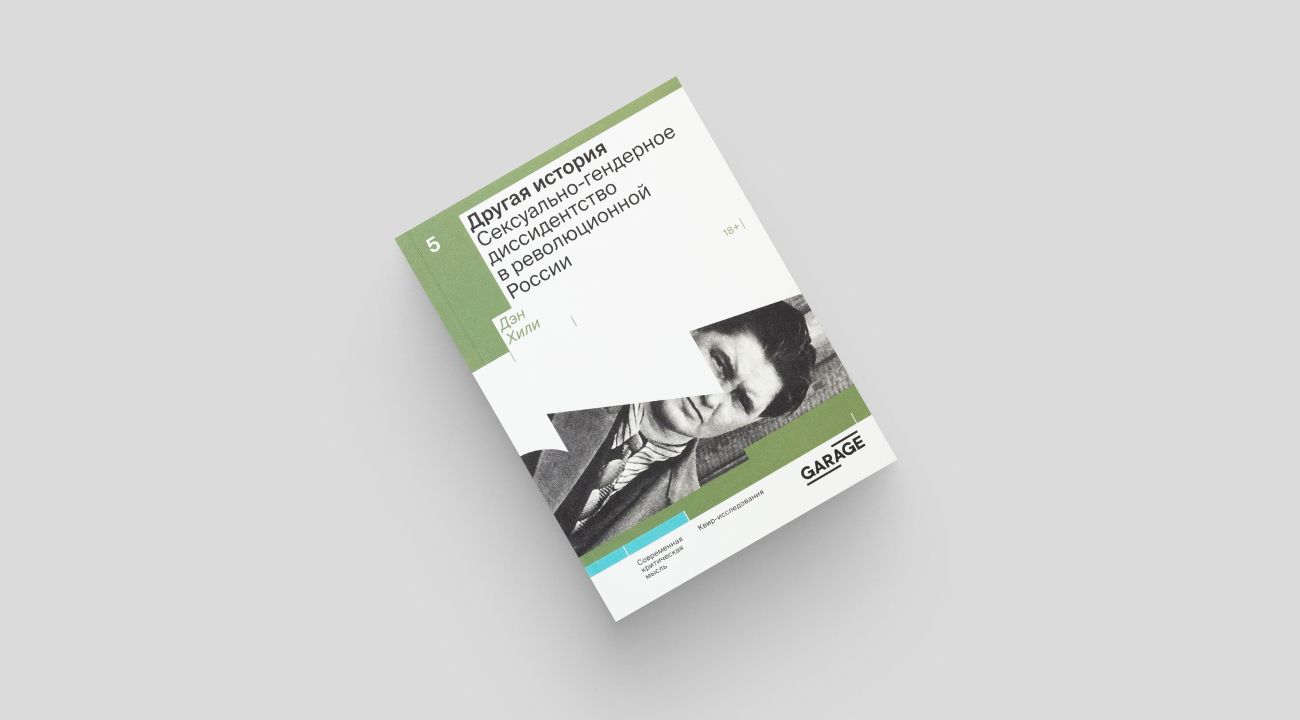
The Garage publishing house has published a new translation of the book of British historian Dan Hili “Another story. Social and gender dissent in revolutionary Russia. ” The previous (and only until 2022) transfer to Russian was released in 2008, and, as the author himself admits, it had a large number of inaccuracies (which did not prevent the book from becoming a bibliographic rarity ). Medusa talked with Hilia about how he studied the history of Quire-human people in a country where it is better not to talk about them today-and in some parts of Russia they officially “do not exist”.

- It turned out an interesting coincidence in time: a new translation of your book about Russian Quirs is published in the midst of war in Ukraine, and the State Duma at that moment discusses the tightening of homophobic legislation.
- And really, it would be difficult to choose a more inappropriate moment [for the release of the book]. But the fact is that work on it lasted almost two years. Even during the pandemic, the Garage invited me to reprint the first book, “Social-General Dissidy in Revolutionary Russia” , and then, perhaps, the second is “Russian homophobia from Stalin to Sochi” .
It was always important for me that my [first] book reached the Russian reader: in English it was first published in 2001, and in Russian was published in 2008 in the publishing house Ladomir. We worked on this publication in a very short time, we had literally six months. He was transferred to grant money, and after six months it was necessary to finish everything and report on the work done. Therefore, they [Ladomir Publishing House] simply divided the book into two parts and gave two different translators, who not only did not understand the Quire Theoria and terminology, but, apparently, did not really communicate with each other. Elena Gusyatinskaya later tried to console me: "Do not worry, Dan, we [in Russia] all the translations are bad."
With the Garage, we tried to find a new intonation that would be closer to my original.
- By the way, in the new Russian translation there are feminities, around which a separate dispute has long been in Russia.
- Yes, I was offered to introduce feminity to the “garage” and translator Tatyana Klepikov. Of course, I knew that this is a separate big discussion in the Russian -speaking world - which, by the way, is much larger and more real than the Putin chimera called“Russian World” . And I thought: “Well, you need to add my academic weight to the promotion of feminity.”
-Historian Irina Roldugin , to some extent, your academic follower , told me that the new edition loses to the first by the fact that they removed the original and very extensive bibliographic list from there. What do you feel about it? And tell us what sources you worked with.
- I began to write a doctoral at [university] Toronto in 1992. In those years, the Soviet archives just began to slowly open - and it was relatively simple to get there. Relatively - because many things were still classified. Plus, some guardians [archives] tried to support the Soviet “order”, despite freedom of speech.
Even before I came to Russia in 1995 to start the field part of my study, I knew that I would not see any direct references to the LGBT people in the post-Soviet archives. It was impossible to go to Lenin and look for books on "The History of Gays and Lesbians." Such a topic did not exist in nature. So I was looking for literature about “sexual perversions”, “sexual crimes”, studied judicial and medical literature, the works of psychiatrists.
In the early 1990s, researchers like Simon Karlinsky already wrote about Russian gays at the beginning of the 20th century. But he focused on artistic literary bohemia, and I wanted to focus on the stories of ordinary people. In the library of the Serbian Institute, I found a lot of interesting materials published in the 1920s. In the library named after Lenin and the Public, I asked me to give me materials on forensic medicine and “sexual crimes”. Thus, I came across very valuable pre -revolutionary works - both Russian and foreign. The chronology of litigation, which mentioned homosexuality, ends in the 1960s: after that it is already difficult to find anything.
I also studied the transcript of the discussions [on the topic of sexuality] in the People's Commissariat of Health: there they talked about women living in the male gender, about the trans-likes who asked them to help them with a surgical transition , about gay men. Following the results of one of these discussions of 1929, a resolution was published that two people of the same sex should be given the right to marry if the corresponding decision of the psychiatrist should be issued. This is one of the most striking [my] discoveries. It is clear that as a result of this [consolidation of the rights of LGBT people to marriage] did not happen, but in principle it could happen. In the first Soviet criminal codes, homosexuality was removed from the list of crimes. This “problem”, which used to be in the police department, was temporarily transferred to doctors, psychiatrists. This continued until 1934 [when homosexuality was criminalized again].
I was also interested in literary sources. I spent a lot of time in the roasting with the diaries of Mikhail Kuzmin . And of course, the archive of Elena Gusyatinskaya . Private archives [similar to the Gusyatinskaya archive] are incredibly valuable, and I am now very worried about the fate of her archive and others like him.
- Can the security forces come and remove it like propaganda?
- Rather, I generally talk about the threat that the current political situation in Russia poses for private archives. The fact that three years ago no one was interested in can suddenly attract the attention of the authorities. [After all, now she does not even need to change the legislation - it is enough just to declare a “special military operation”.
To some extent, private archives are a product of the era of democratic transformations of the 1980-1990s. So they will definitely become part of a political confrontation now: someone can see [at these archives] and say: "I do not like this collection or this institution." Look, for example, what they did with the Memorial .
As for the abbreviated bibliography [of the new edition]: it can still be found in the first edition. There was such a situation there: the employees of the Ladomir publishing house were appointed as a scientific editor of the person [his name was L.V. Immortals], who, firstly, expanded the number of sources several times, as if hinting that I had not completed my work. And secondly, he insisted that we expand quotes . He himself was a collector, since the 1950s he collected publications on sexuality. His personal library totaled more than 15 thousand volumes. I was somehow at his house-we spent eight hours with him and during this time only edited the introduction. He lived in a small apartment with an area of 30–35 meters - I don’t know how all these 15 thousand volumes fit there. In general, one way or another, in the preparation of this publication, he largely imposed on me his gaze and there was almost nothing left of me there.
-You were the first to use the term “dissidents” in the context of a conversation about Quir-loves. You were criticized a lot for this.
- Yes, it seems that the reviewers of the English -speaking publication [Book] then much did not like the term “sexual dissidents”. By the way, I refer to this in the preface to the new edition.
They [critics of such use of the term] said that the term “dissident” should be used exclusively in a conversation about political dissidents. The word "dissident" is obviously symbolic for everyone who studied the USSR and Russia. We all remember the heroic resistance of dissidents to the Soviet regime, about Andrei Sakharov .
I proceeded from the fact that the very fact of belonging to the “abnormal” sexuality or Gender automatically demanded from a person resistance to the regime, “dissident” status. Such people had to love differently, represent themselves differently, feel different.
Unfortunately, due to the lack of material, I could not illustrate this thesis [about dissidentity] as bright as I would like. As they say in Russia, the first pancake lump. My book is imperfect. But it is interesting that many young scientists [who are studying the USSR and Russia] are now using this term - “gender dissidents”. And many of them just managed to delve into the life of the [Russian and Soviet] gay community. They found a lot of evidence that Quir-Luda was very clearly aware of their otherness. So I think this removes from me the accusations of using this term.
Another advantage of this term, in my opinion, is that it helps to build a conceptual bridge, demonstrating to allies or potential allies, that they have a goal common with LGBT loves. That Quir-loves are not some deviants who sympathize with, pity them, but do not fully understand, but that heterosexual people are actually the only goals with them. Dissa is one who opposes the regime. This is the one who does not agree.
- In an interview , you said that the “perestroika architects” were the same homophobes as the apparatchiks. How were the 1990s possible then, by which many are now nostalgic? For the Russian Quir-culture, they were a kind of golden age-alternative sexuality and expression at that time were everywhere, including in mass culture.
-I think, partly because the Soviet society of the 1960-1980s actively transformed. Just no one talked about it, so the changes were not noticeable until the beginning of perestroika. By 1965, the majority of the population of the USSR began to live in cities, and this is an important sociological fact: thanks to the notorious Khrushchevs, people had the right to private life, to personal space. But the main problem was that in the Soviet political culture there was no space for discussions about how everyday culture is changing, except in the narrow community of expert-sociologists, and all these conversations passed behind closed doors.
Everything was changed by a publicity policy declared by Gorbachev. People finally began to freely discuss in which society they live and in which they would like to live. But in the 1990s, this spirit of freedom has already accompanied the economic collapse. I’m afraid that because of this, many Russians have democracy for a long time to be associated with financial and economic crises. By the end of the 1990s, Yeltsin ran out of strength, and ideas too, and people were ready for another experiment, this time authoritarian. All the 1990s of the state was busy with pressing problems, so it simply did not have the strength to control the public sphere.
But we must admit that in the midst of all this pain there was something good. I remember how I went to the Chance club . It was grandiose! There were transparent aquariums in which naked men swam. Fashionable club music. What is it like? Maybe on the 1920s Berlin? But the party ended at six in the morning - and you walked to the nearest metro station along the poor, cold Moscow. It was a striking contrast. But there were quite a lot of happiness and pleasure, and gays and lesbians looked into the future with optimism.
-Was there a clear gay movement in Russia in the 1990s?
- I often think about it, because I am now working on my own archive and memoirs. I have a couple of observations.
First of all, the Russian LGBT movement had huge potential-it could be a movement at a very high level [political awareness], despite the internal conflicts, which were many. There were radicals, such as Evgenia Debryanskaya . There were people who are focused on integration in the market-the Russian sector Fetish-Tovarov for gays could at some point compete with German. I'm not joking.
But there were always clouds on the horizon. The gay revolution in this sense is no different from all other democratic initiatives in Russia. Two Chechen wars made it clear that the era, when everything is allowed, would be short -lived. So people [in the 1990s] danced on the volcano. No one felt safe.
I remember very well the hungry 1990s-and this is despite the fact that I was then a rather privileged student magistracy. It was rare to intercept food: most students rented rooms from grandmothers to prepare them food. I lived alone because I wanted to have my own personal space-and the opportunity to explore the life of the gay Moscow in the mid-1990s. And I, of course, took advantage of it.
Yes, the gay revolution was to take place-like several other revolutions. None of this happened. But unlike many, I do not blame the democrats. Most of all, I really blame the West-because we did not realize the scale of the crisis in Russia and did not help in time, did not develop something like the Marshall plan immediately after the end of the Cold War.
One of the main lessons of the 1990s is how diverse, bright and creative Russia can be if it gives a little freedom. I would like to live in such Russia.
Anna Filippova talked