
Translated material
Nine years of Gogol
That the Gogol-Center left Muscovites and why it does not leave with the closure
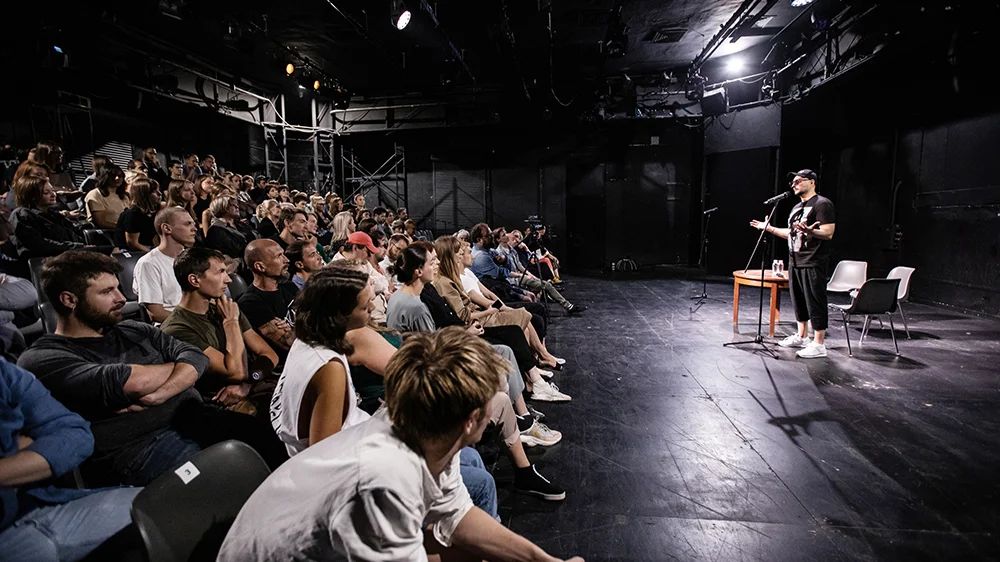
In his telegram channel, director Kirill Serebrennikov, the first artistic director and, perhaps, the main ideologist of Gogol Center published a list of 10 reasons why not despair and sob, but arrange a good party.
The reasons are significant: the first is that the idea of the theater as a territory of freedom is more impossible in modern Russia, and the fourth, for example, that 10 years is a sufficient time to speak about what I wanted to say and establish itself in my feelings. In no way arguing with the director Serebrennikov, we complement this list that is important that the theater gave the city and viewers every season.
2013-2014. Theater as a public space
In the first year of his life, Gogol Center released 15 prime ministers. The results of the first season of the life of the Gogol Center were summed up by Kirill Serebrennikov along with the then head of the capital’s department of culture Sergei Kapkov.
“It’s easy and difficult to say, the life of the Gogol Center was in the palm of your hand throughout the year,” said Sergey Kapkov then. -This attention was both creative, and envious and scandalous ... and a noticeable point on the map of Moscow “Gogol Center” was not because of the lobby and cafe, but because of the prime minister. But it is important not only that new performances appeared, but also that 25 people from the old troupe are involved in the life of the theater. The theater is developing, and we can conclude that the decision adopted by the theater named after N.V. Gogol was true.
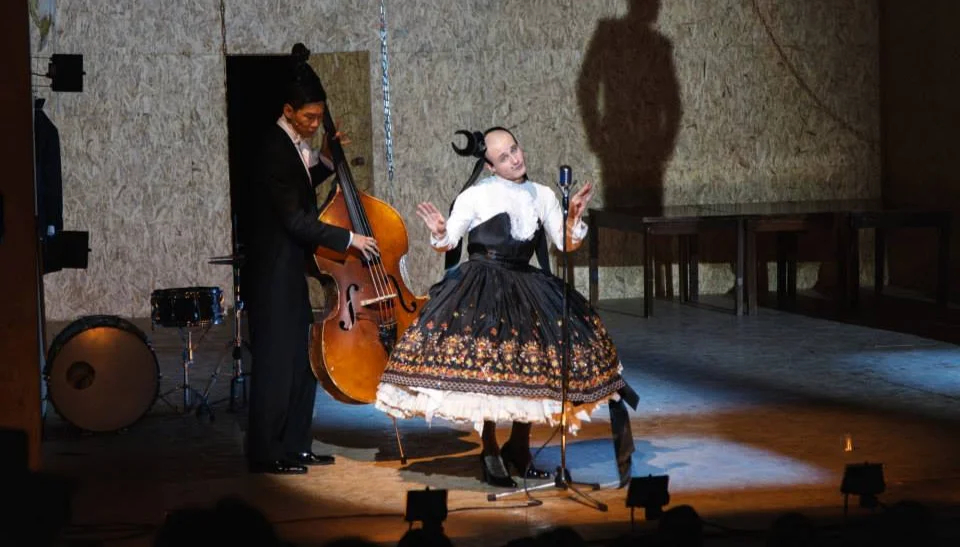
After years, I would like to say that, after all, the space of the theater, opened for everyone, starting from noon and a cafe, where both the artists and the audience themselves and the spectators themselves, and appeared later in the "Box of Goods" theater, set by actor Nikita Kukushkin (could be brought there for those who need them more)-all this was a quiet revolution, a proposal of equal dialogue and unreasonable education and unot Interlocutors match themselves. And yes, the twenty-year-old spectator of the Gogol Center may not know what the road to the theater was and how the urine groin, which led from the metro to the theater. Serebrennikov did not hesitate to write about it on his Facebook, and over time the tunnel and the space around the theater changed.
And in that season, Serebrennikov released “dead souls” with American Odin Byron. The one in order to play Chichikov, in the process of rehearsals, he practically wrote the second volume of “dead souls” - notes and comments were so voluminous to play the beloved author of Serebrennikov and the text, in which, according to the director, a key code of Russian life was contained. The music for the performance was written by Alexander Manotskov, and few in recent years did not remember “Rus', what do you want from me”, which the audience sang after that performance for a long time.
2014-2015. "(M) student" and the connection of generations
At the same press conference, according to the results of the first season of the Gogol Center, they decided that the theater gave the development strategy “for not very successful projects”: more adult spectators still tell how tickets to the Moscow theater named after Gogol were either issued or sold with a load on Taganka tickets.
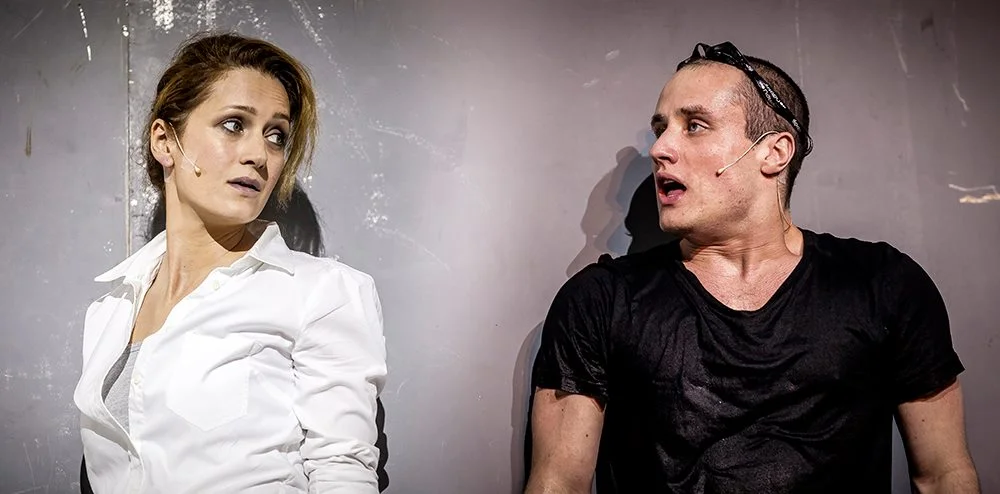
That is, Serebrennikov and the team really managed to change the course of the long history of the theater, and, for example, actress Svetlana Bragarnik, who in his youth was the star of the theater named after Gogol, played the best roles with Serebrennikov - remember her school principal in the “(m) student” Marius von Mayenburg or Donna Anna in “Little Tragedies”.
By the way, in the first season, the artists of the Seventh Studio (Serebrennikova course at the Moscow Art Theater School) interviewed the old-timers of the theater and released a newspaper.
2015-2016. Filling spaces: "Machine Müller"
Cyril Serebrennikov, before the premiere, began to write about the “Müller Machine” as something scandalous: they say that there will be naked people on the stage.
19 naked performers became a lively decoration for the performance collected from the Quartet, Hamletmashins, letters and diaries of Müller. Serebrennikov filled the gap with this production: in Russia, Müller, born in 1929, was actually prohibited in the GDR of the most famous playwright of Europe.
The heir familiar to the Russian audience Brecht, Müller designated the scene of the Quartet as “the salon of the time of the French Revolution / Bunker after the Third World War”. From 2022, the production, which at the premiere was attributed to the important, but as if belated, seems to be a terrible warning.
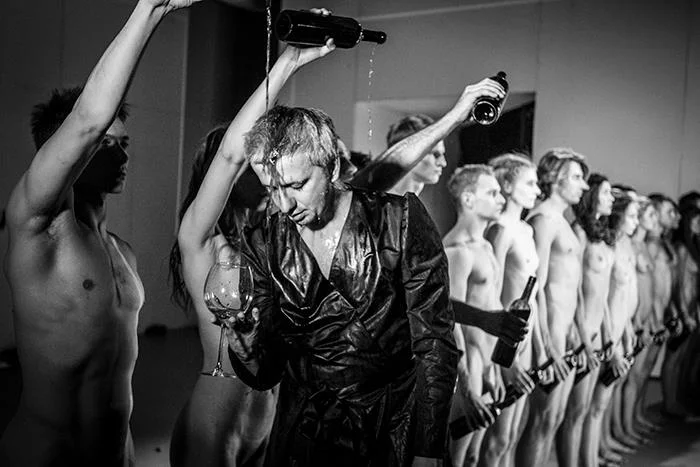
On the bodies of naked, in no way protected from the world after Auschwitz, performed, including video chronicles of World War II: they crumbled at home, bombs flew from the aircraft, all the apocalyptic fire swept away.
“The only thing that can be united by the audience can be unified is the fear of death, everyone has it <> ... So, the theater is always based on a symbolic death,” this quote from Muller burned on the backdrop while the audience was looking for their places before the start of the performance, which all the years of their existence collected unchanged full house.
2016-2017. Poets. "Akhmatova. Poem without a hero "
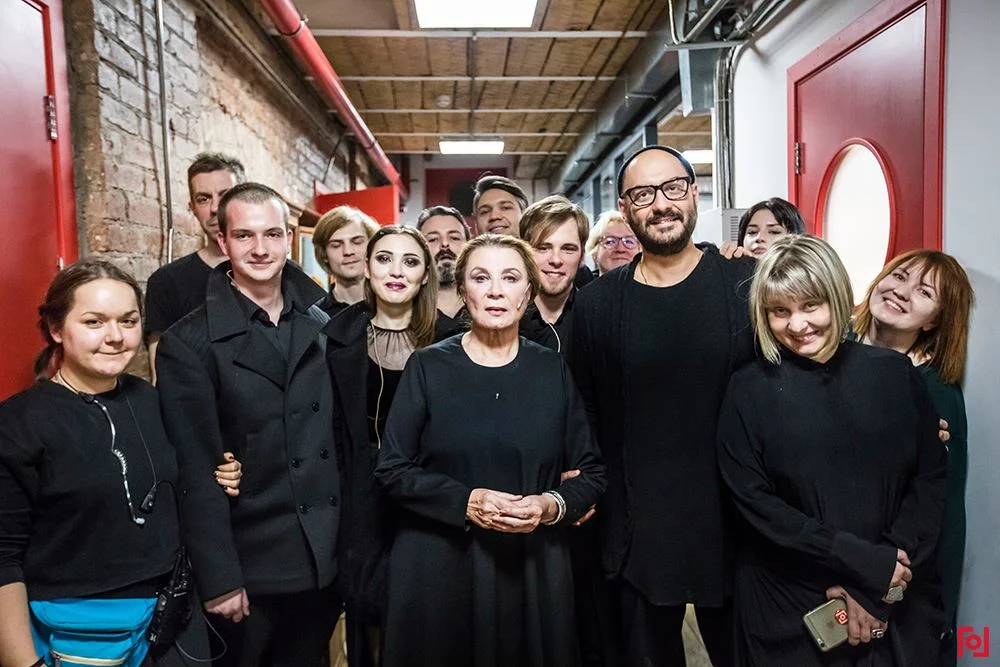
Performances in the Gogol Center were often made by blocks: a rethinking of films, the premiere of modern playwrights, a rethinking of poetry. This is how the performance came out, the composition of Kirill Serebrennikov and Alla Demidova, “Akhmatova. A poem without a hero. " It included not only the individual verses of Anna Akhmatova, excerpts from “Requiem” and “Poem without a hero”, but also a book with comments on the “Poem”, written by Demidova herself.
It is in this performance that Demidova repeats the phrase Deus Conservat Omnia (“God retains everything”), which Serebrennikov wrote in the final of the post with a message about the closure of the Gogol Center.
2017-2018. Theatrical business. "Little tragedies"
The so -called “theatrical business” began on May 23, 2017, and ended on June 26, 2020: from 11 am to 17 pm, Judge Mendeleev announced the decision in the case. Kirill Serebrennikov and the general director of the Seventh Studio, Yuri Itin received three years conditionally and fines of 800 and 200 thousand rubles, Alexei Malobrodsky, who was also the director of the Gogol Center-a fine of 300 thousand rubles for two years. At the same time, a civil lawsuit was satisfied with the reimbursement of 129 million rubles, which means that all three of the defendants in the case had to pay it. Sophia Apfelbaum, who at the time of the court was the director of Ramt, and before that he worked in the Ministry of Culture, was accused of negligence, and from the fine was completely released by the expiration of the statute of limitations. Hundreds of people were waiting for this court decision.
Many were outraged by the very fact of the emergence of this case: the “platform”, which preceded the Gogol Center, and where Serebrennikov played the performances “Seventh Studio”, was an important place that formed the viewer, including the Gogol Center,: there were lectures, round tables were held, modern composers played. The theater magazine made an audit of the Platforma activities and released a special number, which was even brought to the court to confirm a simple fact: on the “platform” the means were spent exclusively on art.
It was here that the performance “Sleep on a Summer Night”-the one that, according to the investigation, was not an important and for the Gogol Center. His Gogol Center played mainly several times a year, usually during the New Year holidays, because the performance captured different spaces of the theater.
In November 2021, the media reported that Kirill Serebrennikov personally paid an amount of almost 129 million rubles . And on March 28, 2022, the Khamovnican Court of Moscow at the request of the defense canceled Serebrennikov's conditional condemnation.
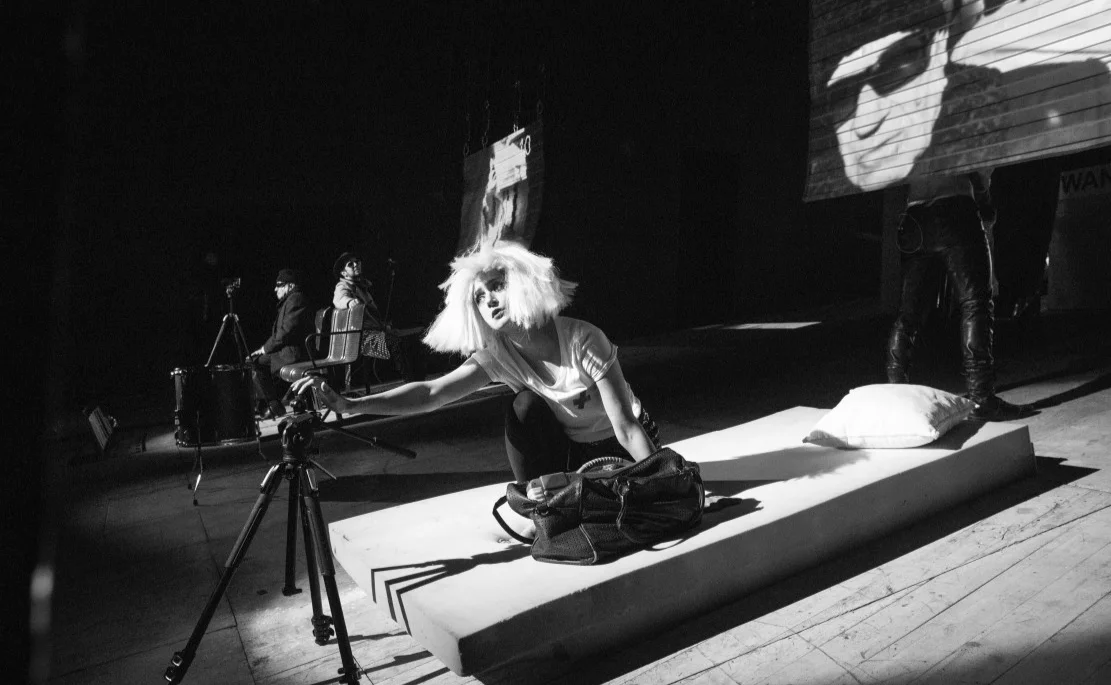
Surprisingly, all the time spent under house arrest, Serebrennikov continued to work, and the first premiere, released in such a strange way, were “little tragedies” in Pushkin.
2018-2019. "Our Alla." Spectators
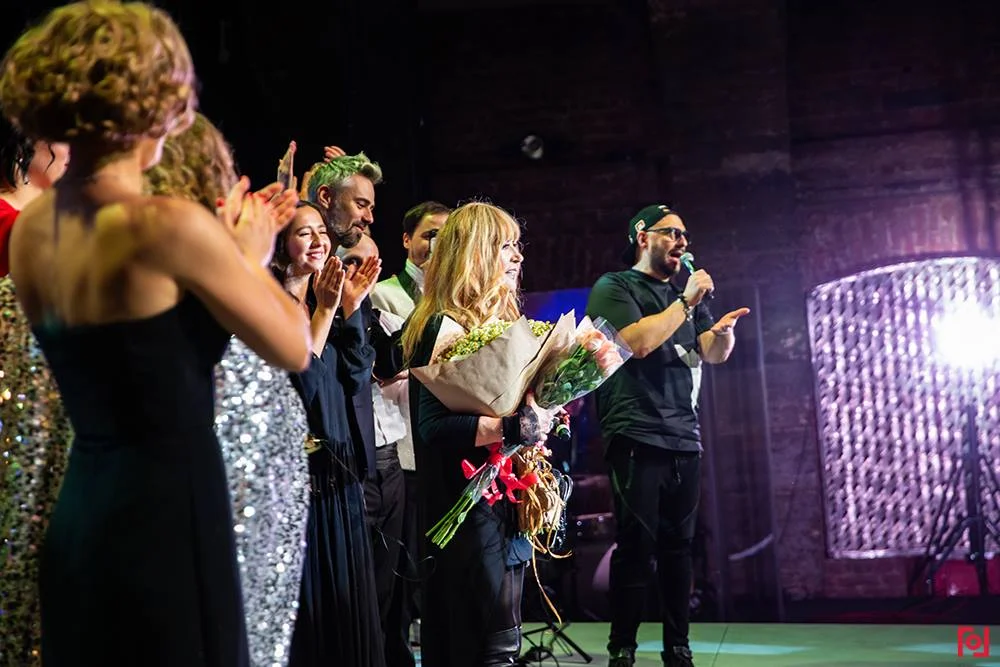
When they began to write that Serebrennikov put a concert for the anniversary of Alla Pugacheva, questions began to arise immediately. But Serebrennikov and the Gogol Center team reported in the announcements: “Whether we want it or not-it is always with us, about us, about us. Alla Pugacheva is a country. With its changes and excesses, extremes and revelations, ups and falls. And we have one country. And our Alla is one for all and each has their own. ”
The reputed unknown and well-known songs from the repertoire of Pugacheva of the 70-80s sounded so unexpectedly that even those who were born in the nineties and remembered Pugachev as a strange woman in a hoodie with an even younger husband who replaced the young (like the author of these lines), was able to understand why this woman was a legend.
Yes, Pugacheva herself was a spectator and guest of the Gogol Center-her, Ksenia Sobchak, Alexander Filippenko, Diana Arbenin and many and many others could be found on a neighboring chair in the Gogol Center
2019-2020. "Petrov in the flu": Work with non -vertical texts
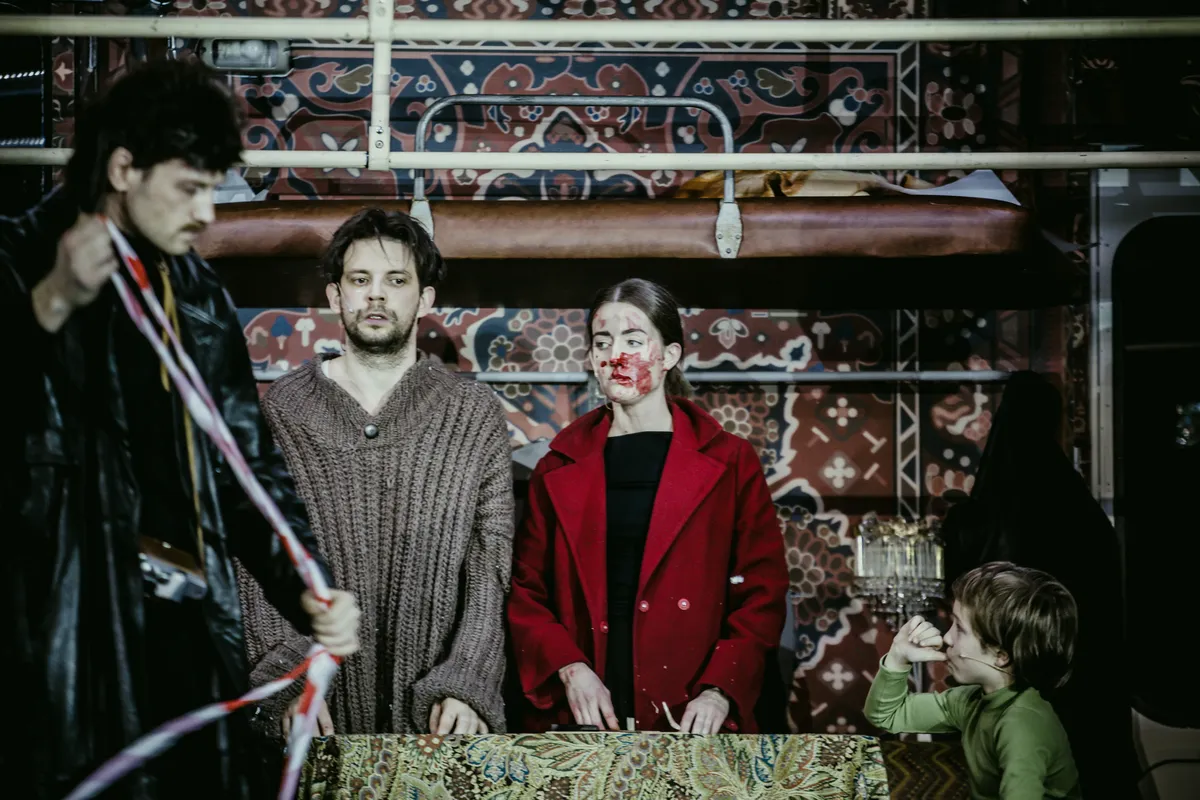
One of the most popular performances of recent seasons at Gogol Center was set by Anton Fedorov. The adaptation of the most strange bestseller in recent years is such a journey of Petrov in Yekaterinburg, which at the same time a walk of Ulysses along Dublin. Only instead of ancient Greek myths here-Bashlachev (although neither the Ural nor rock in principle does not sound in the performance), the last poet of the nineties Boris Red and the usually non-general life of Russians, which is raced by the artist Savva Savelyev, turning into an apartment of Petrov, then into a library, then into a carriageway, or into a carpet of a DC.
2020-2021. Russian classics
The Gogol Center repertoire is a synthesis of rethought classics (for example, the first and only silverniks who put “to whom to live well in Rus'”) and modern drama: Mikhail Durnenkov, Evgeny Kazachkov, Lyuba Strizhak, Valery Pecheykin was written specifically for the Gogol Center, often pushing away from already classical plots or creating them at the base Forgotten historical texts. So, the Kazachkov rethought the “person” of Bergman (performances for landmarks-another innovation of the Gogol Center, and Valery Pechekin created a “man without a name” according to the works of Prince Vladimir Odoevsky. Odoevsky-“Russian Faust”, prose writer, public figure and mystics. Contemporary Pushkin, Odoevsky turned out to be forgotten subsequent generations.
The performance (the collective essay of Peter Aid, Alexander Barmenov, Nikita Kukushkin and Kirill Serebrennikov) talks about the journey of the soul on the verge of death.
By the way, specifically for the play “Man without a name”, composer Peter Aidu created a unique tool - pancarmonon, consisting of ten retired mechanical piano.
2021-2022. "Take care of your faces"
The last premiere of the Gogol Center in its current form was the performance of Savva Savelyev “Take care of your faces”, staged according to the play of the same name by Andrei Voznesensky. This material was put by Yuri Lyubimov in 1970 at the Taganka Theater. After three premiere shows, the performance of Lyubimov was shot. In the Gogol Center, “take care of your faces” played six times. Like a direct message to the viewer. And the last performance of the theater was the prime minister of Alexei Agranovich "I do not participate in the war." By the way, the acting career of Agranovich, who replaced Serebrennikov in 2021 as Khudruk, restarted the Serebrennikov with the role of uncle, Peter Aduev, who was disappointed in the life and art of the cynical businessman. For the Gogol Center, the producer and director agravich turned out to be an antipode of his hero and a man who carefully continued everything that was started by Serebrennikov. More strange from the point of view of the logic of effective management, such a final of the history of the Gogol Center seems to be excluding from it that it is quite ordinary for Russia the history of the interaction of artists and power. And she, unfortunately, is not rich in happy examples.