
Translated material
The holy martyr Alexander Tetyuev
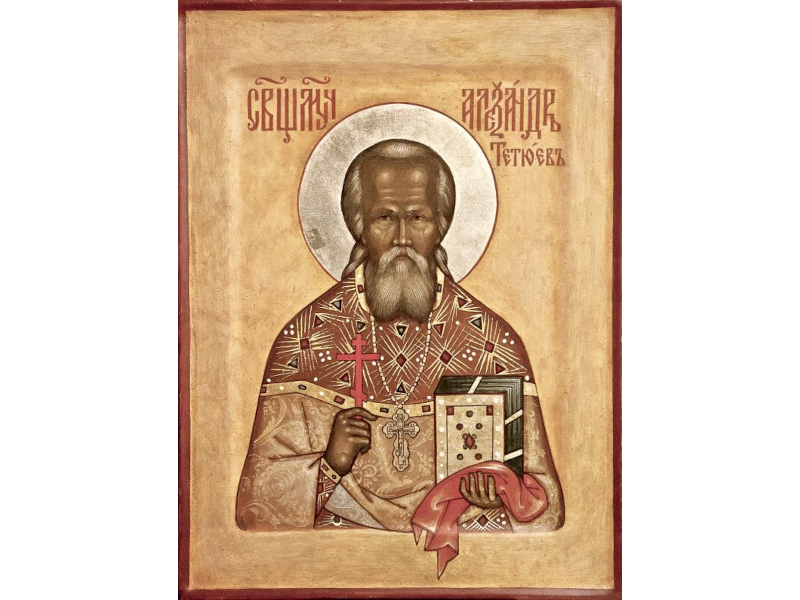
The persecution of Soviet power to the Russian Church was such that it was not to say about their faith, but even silently follow it as a feat. The new martyrs and confessors, glorified in the face of the saints did not come: believed, prayed and meekly went to their Calvarys.
“Polit.ru” recalls those who gave their lives for faith and by whose prayers the Russian Church is alive - even if almost nothing came to us besides the name.
Publications were prepared by Kirill Kharatyan (included by the Russian authorities in the register of foreign agents).
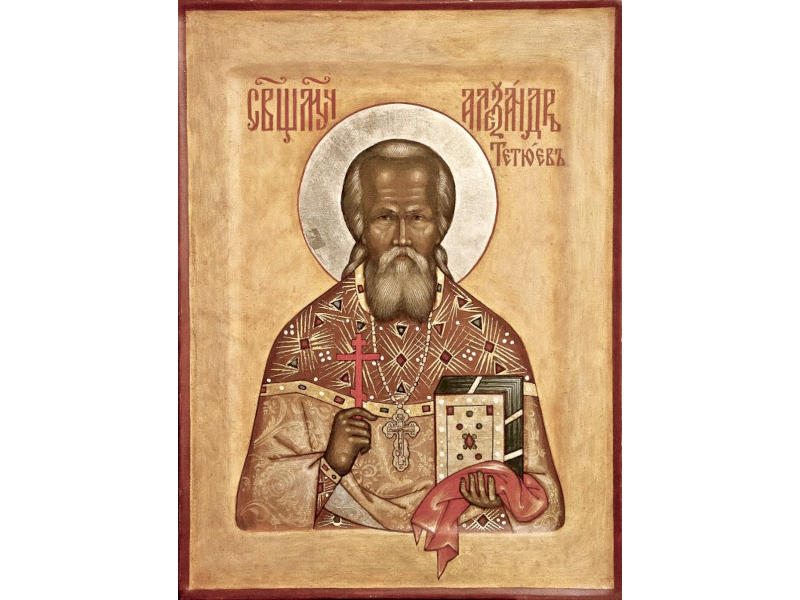 The holy martyr Alexander Tetyuev
Alexander Tetyuev - the son of a priest of the village of Saltanov, Cherdynsky district of the Perm province. He studied at the city school in Solikamsk, which he did not have to graduate. Once he decided to joke with his comrades. In one night, they outweighed almost all city signs. The sign of the merchant of the second guild was hanged by the shoemaker, and the sign of the shoemaker - the merchant, etc. Father Alexendra Tetyuev, looked in earnest strictly and decided to punish his son approximately. He took him from the school and gave it to the Solikamsk Trinity Monastery.
For two years, Alexander spent a novice, recently - with Archimandrite Khrisanf (Klementyev). The monastery life has a beneficial effect on the young man. In the monastery, he began to engage in intensely and passed the exterior exams for the course of the school, having received the right to teach at parish-by-acting rural schools.
In 1901, he entered the church-Parting school of the village of Mosheva; A year later, he became an assistant to the teacher in the village of Ust-Nobro. Here he got married. However, he did not study long, Archimandrite Khrisanf advised Alexander Pavlovich to leave his teaching and blessed to become a priest.
In 1903, Alexander Pavlovich was ordained a priest to the church of the village of Lesmartovo. Soon was transferred to the Voskresensky Cathedral of the city of Cherdyn. In 1920, he was arrested for refusing to cooperate with the Cheka, on April 9, 1921 he was sentenced to one year in prison. He sat in the prison of Cherdyn for about a year.
In 1922 he was arrested on charges of “anti -Soviet activity” and was sentenced to one year of forced labor on July 27.
In 1928, the Resurrection Cathedral in the Cherdyn was captured by renovationists. O. Alexander and parishioners categorically refused to join them and moved to the Assumption Church. In revenge, the renovationists turned to the GPU, saying that O. Aleksandr "brought a discord to the Wednesday of believers." The informants wrote about him that he "spat in the eyes of all renovationists, as heretics who sold Orthodoxy." Thanks to the active activity of O. Aleksandra, the renovationists were supplanted from the Voskresensky Cathedral, some of which they occupied. Following the cathedral, and all the Churches of the Cherdyns turned into subordination of Patriarch Tikhon.
On June 29, 1928, he was arrested on charges of “counter -revolutionary propaganda aimed at initiating religious enmity and discrediting the existing system,” at the time of arrest had his wife and daughter. He did not plead guilty. On September 7, 1928, he was sentenced to one year of imprisonment, considering the term from the date of arrest.
The deadline was serving in prison in Usolye, upon liberation he returned to Cherdyn and continued the ministry in the Assumption Church. In order not to pursue his wife and children, the priest blessed them to move to another city, from where they came to visit him.
In 1936, relatives began to persuade Fr. Alexander to leave the priesthood and switch to the civil service, they even bought a suit for him, but he categorically refused these proposals. “I believe,” he said, “that, despite all the persecution, the Orthodoxy that the Russian people professes will not be destroyed.”
He served in the Alexander Nevsky chapel of the village of Chermoz of the Sverdlovsk region.
On August 5, 1937, he was arrested, at the time of the arrest, the composition of the family was a wife, a daughter and two sons. The priest was accused of "counter -revolutionary agitation against the policy of the party and Soviet power." He went through one case with the psalmist of the Chermozsky church Vladimir Pavlovsky. He did not plead guilty. During the investigation, he was kept in the Chermozsky KPZ. On September 27, with a triple at the UNKVD in the Sverdlovsk Region. He was sentenced to the highest degree of punishment - to shoot with confiscation of property.
Shot on October 3, 1937 in the basements of the Sverdlovsk NKVD. The bodies of the executed were buried in a common grave on the 12th kilometer of the Moscow tract.