
Translated material
In Russia, mortality from drugs is growing. But nothing can be done about it. And that's why

According to Rosstat, in 2021, more than 10 thousand people died from drug use in Russia. Compared to the previous year, this indicator has grown by 37%, and if you count from 2019, it is double . Does this mean that the number of drug users is growing in Russia? And what can the state do to stop overdose? Medusa talked about this with Alexei Lakhov, the former development director of the Humanitarian Action Foundation, the author of the Drugmap project, a member of the leading committee of the Eurasian Association of Damage to.
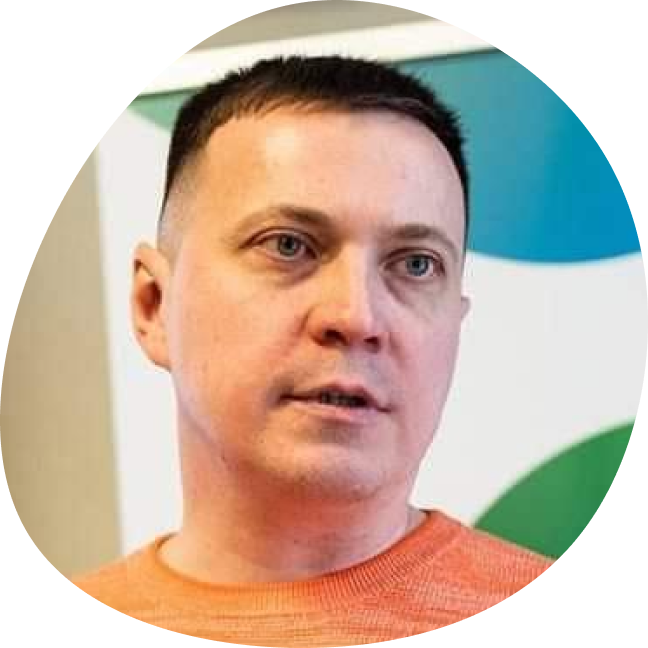
- What do Rosstat's figures on increased mortality for 2021 tell you?
- That a number of problems have accumulated in this area. [These figures] are associated both with the influence of pandemia and the general drug and drugs in Russia. The combination of these factors, in my opinion, led to the fact that we have an increase in fatal overdose from drugs.
At one time, official statistics said that death fluctuates at the level below five thousand cases a year: it was in the mid-2010s. In 2010, a state anti -drug strategy was created, reports of the State Anti -Drug Committee (HAC) and anti -drug commissions that are in every region (they provide statistics to the State Anti -Drug Committee - approx. Medusa) began to be regularly published. GAK all the time wrote that in Russia about five thousand acute fatal poisonings [narcotic and psychotropic drugs] per year. But it was clear that these statistics were underestimated: it was precisely those cases when the cause of death established “acute poisoning with narcotic drugs”. The statistics did not fall into death, which indicates “acute renal failure” (which may be a manifestation of an overdose) or, for example, acute heart failure, heart attack [myocardial].
This was probably done to show that Russia copes with the problem of drugs, while 60–70 thousand people died in the United States in the year from overdose. And now this figure has generally exceeded 100 thousand . In the statistics of GAK, the growth of the number of people who are under dispensary observation: by 1.8% is visible to the growth of the last year [relative to 2020]. The growth of people with the first time in their lives with the diagnosis of "dependence syndrome" is 11% . There are no statistics which drugs that people use, but if you look at the seizures of [drugs from illegal trafficking in Russia], then [for all types of drugs] there is an increase, including the growth of the seizures of psychostimulants, which are now understood as amphetamines, synthetic catinones and cocaine. [According to statistics, it can also be seen that] opium drugs do not go completely - and will never leave.
- Have you seen the humanitarian action in which you used to work among the wards of the Foundation, the same increase in mortality?
- The fund, unfortunately, cannot conduct such statistics. Noxson's demand was visible, it [in the fund] is taken constantly. Then employees ask people how often they use it, how much time has passed since the last time. Most, about 90%, used or comrade for themselves. Someone could accidentally see a person in the front door [in a state of overdose] and injects Nlockson to him. In this regard, high demand was obvious.
-Could mortality grow so strongly due to a change in the methodology of Rosstat?
- It's hard to say. Maybe they really began to better consider these factors [direct deaths from drugs], and anti -drug regional commissions began to collect statistics better. Moreover, the new strategy [until 2030] among the main areas of work indicates a reduction in mortality from overdose. It is possible to collect and provide more clear statistics [in gaku] because of this. At the same time, the calculations are Rosstat, but his numbers are slightly different .
It seems to me that the increase in mortality is associated with the growth of drug market in Russia and increasing the availability of drugs. The more people use, the more likely overdose.
The purity of the substances themselves raises a lot of questions, it is enough to see reports on underground laboratories that are regularly eliminated. A powder scattered on the floor is visible, it is clear how mass of its production was. Apparently, no one cares about quality there. It is important for drugs themselves that the substance acts, but what it is made of is not. Especially those that are sold through telegrams. While there was Hydra , she at least conducted drug purchases and tested their purity. The closure of the "hydra" led to the war between marketplaces, forums, and now many people went to buy in telegrams. This, by the way, is another factor that is not clear how it will affect the statistics of 2022.
- In the statistics of Gak there is an increase in the number of people with mental disorders associated with drug use. On the example of humanitarian action customers - how many consumers fall into such statistics?
- I can cite data from January to August 2021, then 1193 clients were proceeded. They were asked the question: “Over the past three months, have you appealed to any medical or social organizations besides“ humanitarian action ”?” 83% said not. There was also a question: "Are you registering with a narcologist?" 53% said no.
- In Russia in 2022, they use more drugs than before?
- According to GAK, the number of drug users registered by the State Narcological Service has decreased over the past few years. However, the devil lies in detail. It is necessary to see what exactly such a reduction was connected with. Maybe with death from various causes, including acute poisoning, HIV infection, tuberculosis and other diseases? And which part of these people was removed from dispensary observation in connection with a persistent remission? How to explain the fact that a decrease in the official number of drug users was on the heyday of the largest darknet market for the sale of drugs-“hydra”, where back in 2019 there were 2.5 million registered accounts, of which at least one purchase at that time made more than 393 thousand? ("Hydra" worked mainly in Russia - approx. "Medusa".)
Narcologists themselves, by the way, are talking about the so -called latent drug addiction and a special index of its calculation - the real number of people who fall under the criteria of addiction may significantly exceed the number of cases identified by the healthcare system.
And then it should be noted that not all people who use drugs become addicted. Many people manage to control the use, and they do not fall into official narcology. So I am very difficult to give the real scale of drug use in Russia, especially in the absence of long -term research - qualitative and quantitative.
I do not undertake to say that the Russians began to use more drugs, but I can’t help but note that their accessibility against the background of the development of the Darknet market and instant messengers, mainly telegram, has increased significantly. I think with horror what would happen if, on the wave of a heroin epidemic of the late 1990s-early 2000s, people who use drugs were available to modern means of communication.
- How has the portrait of the dependent Russian change now?
- The observations of public organizations working with drug users and a number of qualitative studies show that now opioids, such as methadone and heroin, are mainly used by people over the age of 35. Young people prefer amphetamines and other psychostimulants, such as synthetic cathinons. In general, the “hydra” studies conducted first by the Drugstat telegram channel , and then other researchers, showed the high popularity of marijuana and hashish, amphetamine, synthetic cathinones, opioids, “ecstasy” and other drugs. According to GAK, about a third of deaths from overdose [in 2020] fell on unspecified psychodisleplets , which include synthetic cathinones, synthetic cannabinoids and butyrate .
- How can I reduce the number of overdoses at the level of state policy?
-Firstly, to provide over-the-counter access to Nadoxon. If not overcontinal, then at least expand its use and train it to use. This is a global practice, even in conservative countries, Noxson’s spread on the basis of the community [drug users] is quite used. In Canada and a number of countries of Western Europe, Naloxson can generally get free at the pharmacy, this antidote, in principle, costs a penny .
This [translate Noxson into the category of over -the -counter drugs] still needs to be done. Despite the fact that we are reduced by the number of people dependent on opioids, a large proportion of mortality falls on them.
In the Kuzbass to the Pandemia there was a project : Naloxson was purchased at the regional budget and was provided with a red cross [drug users who need it]. There, even the chief narcologist in the region [Andrei Lopatin] promoted the use of Naloxson. In Moscow narcology, there was a practice to give Noxson the relatives of the patients and to teach its use - just in case.
Everything else in our country today is unlikely to be possible: preventive information, training in the safe use of drugs, or at least how to reduce the risks of overdose during use. [In Russia, none of this is impossible] starting from information campaigns on the Internet, ending with the distribution of leaflets, where it will be written: “Never use it alone” or “If you use a new substance or take it in a new place, be sure to make a trial dose” and so on. These practices are described in the leaderships of the United Nations Office for Control and Crime Control, in the programs for reducing harm in many countries. It is not necessary to reinvent the bicycle here, everything is there - there would be only a political will to introduce these programs. But it, unfortunately, is not today. Moreover, against the background of the new law on criminal liability for drug propaganda on the Internet, which was again “uncovered”.
-On the website of the Drugmap project, you wrote that in April I applied to the apparatus of the vice-governor of St. Petersburg with proposals for the prevention of overdose. In the June response of officials, it was said that these measures are inappropriate. What were these measures?
- There were three proposals - the most obvious, in my opinion: ensuring over -the -counter access to Noxon, training in the use of Noxson people who use drugs, and their relatives, and the abolition of administrative punishment for non -medical drug use in the event of an overdose.
The more widely available Noxson, the more possibilities the drug users or their relatives will buy it and apply it in case of an overdose. Those drug users who are responsible for their health responsibly, I am sure that they would buy it in pharmacies with their own money - to have in the medicine cabinet just in case.
As for the abolition of administrative punishment for non -medical consumption in the event of an overdose, there is an example of the “good Samaritan law”, which operates in Canada and some US states . When you call the salvation service for a person who suffered from an overdose, or for yourself, you can be sure that you will not be brought to criminal or administrative responsibility for this. In fact, we had the rudiments of this law, [in the State Duma] his discussions were carried out, the “law of a good Samaritan” was taken as a basis, but it mainly said about the provision of first aid: so that people were not held accountable if a person was died while he was assisted. Under this bench, in my opinion, it would be possible to cancel the administrative punishment for non -medical use in case of an overdose.
Non -medical drug use in our country is considered an administrative offense . But if a person decides to voluntarily seek treatment, then this administrative responsibility will not be entrusted to him. But a person is not always ready to seek treatment. It can not always be and needs it-if he has no criteria for addiction, problematic use, or something else. At the same time, an overdose can still happen to him. For example, swallowed more than planning, Butyrate in the club, and that’s all. You wake up in the department of toxicology - and you will immediately find either an administrative fine or administrative arrest. In any case, you fall into the field of view of law enforcement agencies. And if you, God forbid, have a certain amount of substance remained, then criminal prosecution may occur, which is unlikely to increase the motivation of drug users for help.
All these proposals were recognized as impractical. For example, because only specially trained personnel can use Noxson, that is, a person is not a younger in position than a nurse.
-The ban on talking about drugs in a public field in Russia due to “drug promotion” increases the number of overdoses and negative consequences from use?
- On the one hand, yes. On the other hand, drugbogting is actively developing in Russia. On the Hydra there was even a forum where there was really a lot of useful information on how to use narcotic substances more safely and what to do in case of an overdose.
I am scared to think about what would happen if there was not all this information. Most likely, we would have much higher the level of overdose. Here, in a sense, drug markets regulated themselves in such a way as to provide people with information about safer use. If now information about maintaining their health will not appear on new marketplaces, then, I'm afraid, people will quickly forget what to do in the event of an overdose.
- What awaits Russia in terms of mortality and other negative consequences from the use of surfactants while maintaining the current drug policy? Growth or falling drug consumption? What is your subjective forecast?
- It seems to me that, speaking from the point of view of restoration, recovery from addiction, then here everything is not so bad. We have high -quality rehabilitation centers, an extensive network of mutual assistance groups. You can achieve progress if, for example, the work to expand state support for high -quality rehabilitation centers and stimulate the opening of new branches. And to promote the opening of mutual assistance groups - such as, for example, “anonymous drug addicts” or “anonymous cocaine” - in regions where they do not have such a strong presence. To expand the practice of replacing imprisonment for a conditional period (or release from punishment) with the condition of undergoing a course of treatment and rehabilitation. The policy of tightening and prohibitions [negatively] will affect the drug and drug use level. In December, they reduced the minimum criminal weight of substances, and now they were again talking about criminal punishment for drug propaganda on the Internet. This is very alarming.
Andrey Kagansky talked