
Translated material
You will not believe it, but Russian football has become even worse
After the start of the war, many legionnaires left Russia, and fans will boycott matches due to the FAN ID law
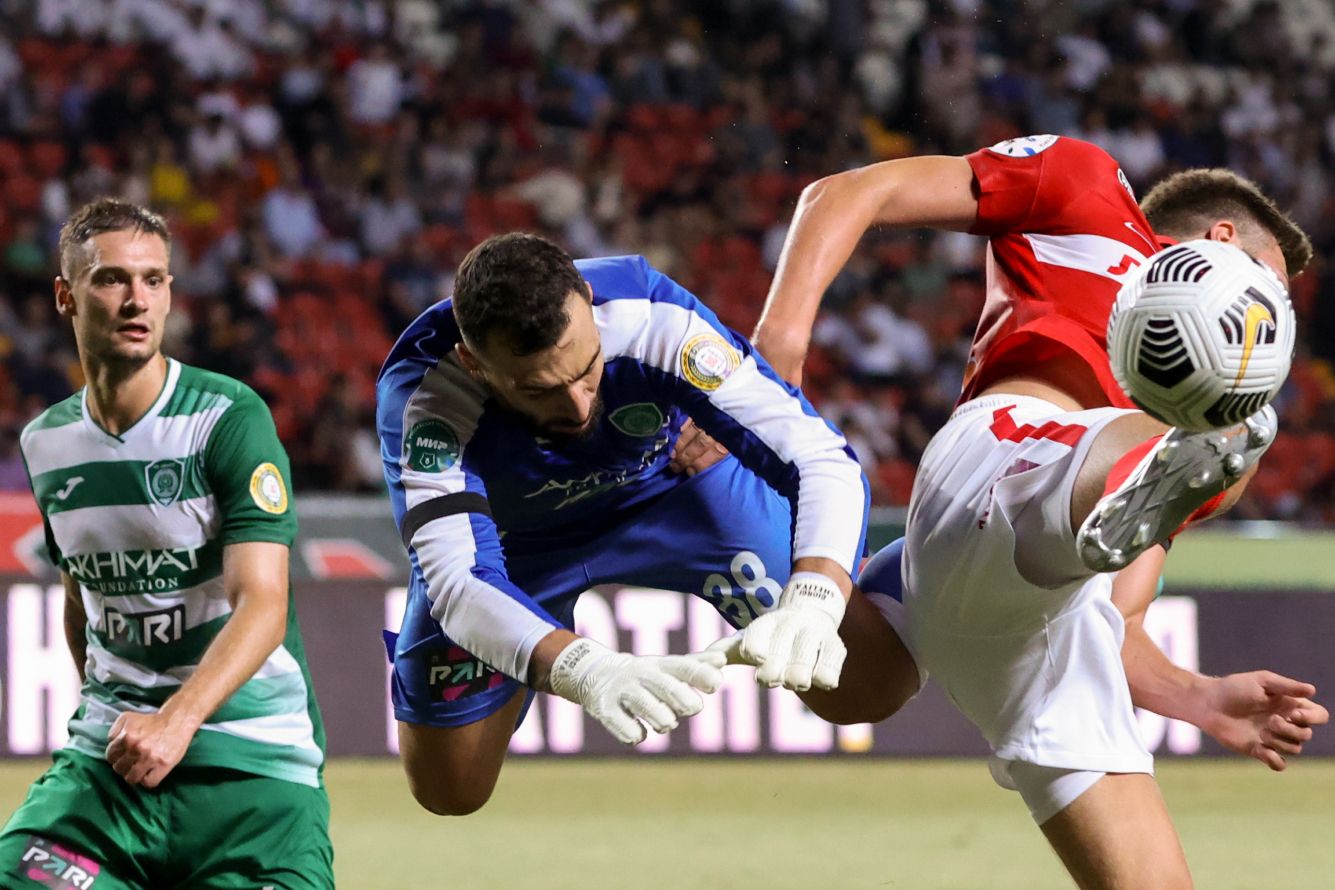
On July 9, Spartak and Zenit opened a new football season and played the Russian Super Cup (Petersburgers won the trophy in their field), and a week later the championship of the country began. The war completely changed Russian football: clubs now cannot play in European tournaments, legionnaires hurriedly leave their clubs, no one to play with the Russian national team. In addition, the FAN ID system begins to operate, which is strictly regulating any trip to football-because of this, the championship matches decided to boycott the active fans of almost all Russian clubs. Medusa tells the main thing about how Russian football changed after February 24.
Because of the war, legionnaires are massively leaving Russia (but there are loyal countries)
FIFA (International Football Federation) and UEFA (European Football Union) instantly responded to the beginning of the war. Already on March 7, the football authorities changed transfer rules for players from the Russian Premier League (RPL).
- Previously, transitions from the club to club were allowed only in certain periods - usually from mid -June to September 1 and from January 1 to January 31. In March 2022, players from RPL were given an additional month to independently resolve the issue of the future.
- Football players and trainers were allowed to suspend contracts-to leave Russia until June 30 without any legal proceedings with Russian clubs.
- Clubs could not influence the players, even if they wanted to save them. Yes, the leadership could have agreed on the sale (or rent) to another club - but if it did not succeed, the football player could simply leave the club himself (at least for the time while sanctions are operating).
As a result, the outflow of legionnaires began almost immediately. Everyone was injured, but more than others went to Rostov, Rubin and Krasnodar. Seven legionnaires left Rostov, but the team sailed thanks to the return of Valery Karpin, who agreed to combine posts in the club and the Russian national team.
“Krasnodar” left generally all the legionnaires of the main composition - nine players and head coach, Daniel Farke. The German headed the club in January, and in March quit, without having a single official match. The season 2021/22 "Krasnodar" finished the almost youth composition, but took a worthy fourth place.
The Kazan Rubin was not ready for this, the team suddenly flew out of the RPL. Although only a year ago she took the same fourth place and represented Russia in European competitions (though very unsuccessful). Together with the team, the former coach of the Russian national team Leonid Slutsky went to the lower division.
Already in the summer, officials extended sanctions until 2023. And the outcome continued. Dynamo left the head coach of Sandro Schwartz - before that the German helped Muscovites take third place in the Russian championship for the first time since 2008. Spartak lost Paolo Vanoli. The Italian came to the club only in winter, but did not abandon the team in the middle of the season and even won the Russian Cup - the first for Spartak since 2003.
And the German coach Marcus Gizdol completely left Lokomotiv without saying goodbye to the team.
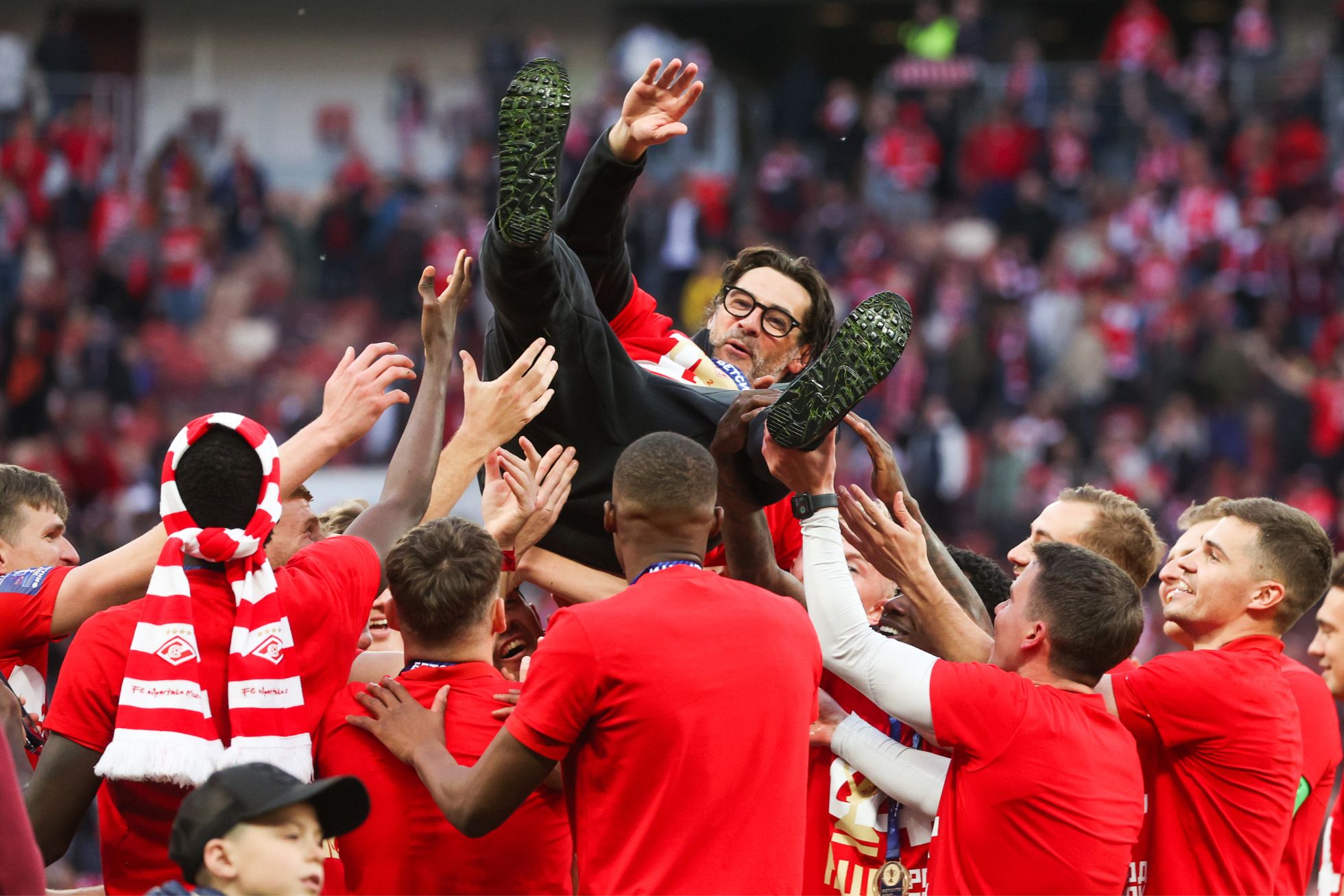
However, there were those who stayed - or even returned to Russia. In Krasnodar, Colombian John Cordoba, Brazilian Kayo and Ekvadorer Christian Ramirez play again in Krasnodar. In Dynamo, the Georgian midfielder Luke Gagnidze returned. “Spartak” convinced Viktor Moses - at first the Nigerian did not plan to return from vacation, but the persuasion of the leadership worked, and the midfielder even scored the most important goal in the first round.
It is very difficult to trace the trend in countries - there are exceptions in every region. Legionnaires from Africa and Latin America show special loyalty to Russian clubs - but Brazilian Yuri Alberto left Zenit. And in Spartak - despite all the conflicts of Russia and Poland - continues to play Matsu Rybus. The defender remained in Moscow because of the family: he is married to Ossetian, a couple has two children. The decision of the fish was not even affected by the exclusion from the national team-the Poland Football Federation officially announced that Matsu would not play at the 2022 World Cup due to a speech in Russia.
There are several examples when foreigners agreed to move to Russia after the outbreak of war. For example, Spartak and Dynamo found new coaches abroad: the red-white took 33-year-old Spaniard Guillermo Abaskal, and the white and white-53-year-old Serb Slavish Yokanovich. The coaching staff of Lokomotiv was replenished by the German Joseph Qinnbauer - he will work with his compatriot Marvin Comer, who came to Moscow with Gizoln.
Ukrainians also left. But the Zenit coach remained
Until February 24, five Ukrainian football players performed in Russia: Yaroslav Rakitsky (Zenit), Ivan Ordets (Dynamo), Dmitry Ivani (Wings of the Soviets), Artem Polyarus (Akhmat) and Denis Kulakov (Ural).
Many of them were criticized in Ukraine before the start of the Russian invasion. For example, Yaroslav Rakitsky (he stated that Russia and Ukraine are brothers) excluded from the national team of Ukraine after the transition from Shakhtar to Zenit in 2019. The Ordets, who in the same year moved to the Moscow Dynamo, also lost a place in the national team.
“You tell me - I'll take it and call a football player from Russia, you will break me, right? At the moment, I will tell you frankly that I am not considering the issue of calling from the championship of Russia, ” said Alexander Petrakov, head coach of the Ukrainian national team in 2021.
After the start of the war, the Ukrainians began to leave the RPL (but not all).
- In March, Rakitsky tore with Zenit - the club said that it was the desire of a football player. Until July, Yaroslav was without a club, and is now close to the transition to the Turkish Adana Demirspor.
- The Order also left Dynamo. In July, the Ukrainian took advantage of the extension of FIFA sanctions and signed a contract with the German Bochum.
- Polyarus “for family circumstances” terminated the contract with Akhmat and is now acting in Poland for “thermalca”.
- Kulakov in March agreed to leave the Urals, for which he spoke for seven years. His contract is suspended, and now he is without a club.
- Ivaneniy did not officially leave the Wings of the Soviets, but disappeared from the application after a winter pause. It was reported that Dmitry would break the contract with the Samara club, but he suddenly returned and played the entire match against Orenburg in the first round of the new season.
- The Ukrainian coach Andrei Voronin instantly left Russia - he was an assistant to Schwartz in Dynamo.
The greatest resonance was caused by the position of Anatoly Tymoshchuk, one of the most titled football players in the history of Ukraine and the country's record holder in matches for the national team. Since 2017, Anatoly has been part of the Zenit coaching staff-in Ukraine he was criticized for continuing to work at the club from St. Petersburg, which is sponsored by Gazprom.
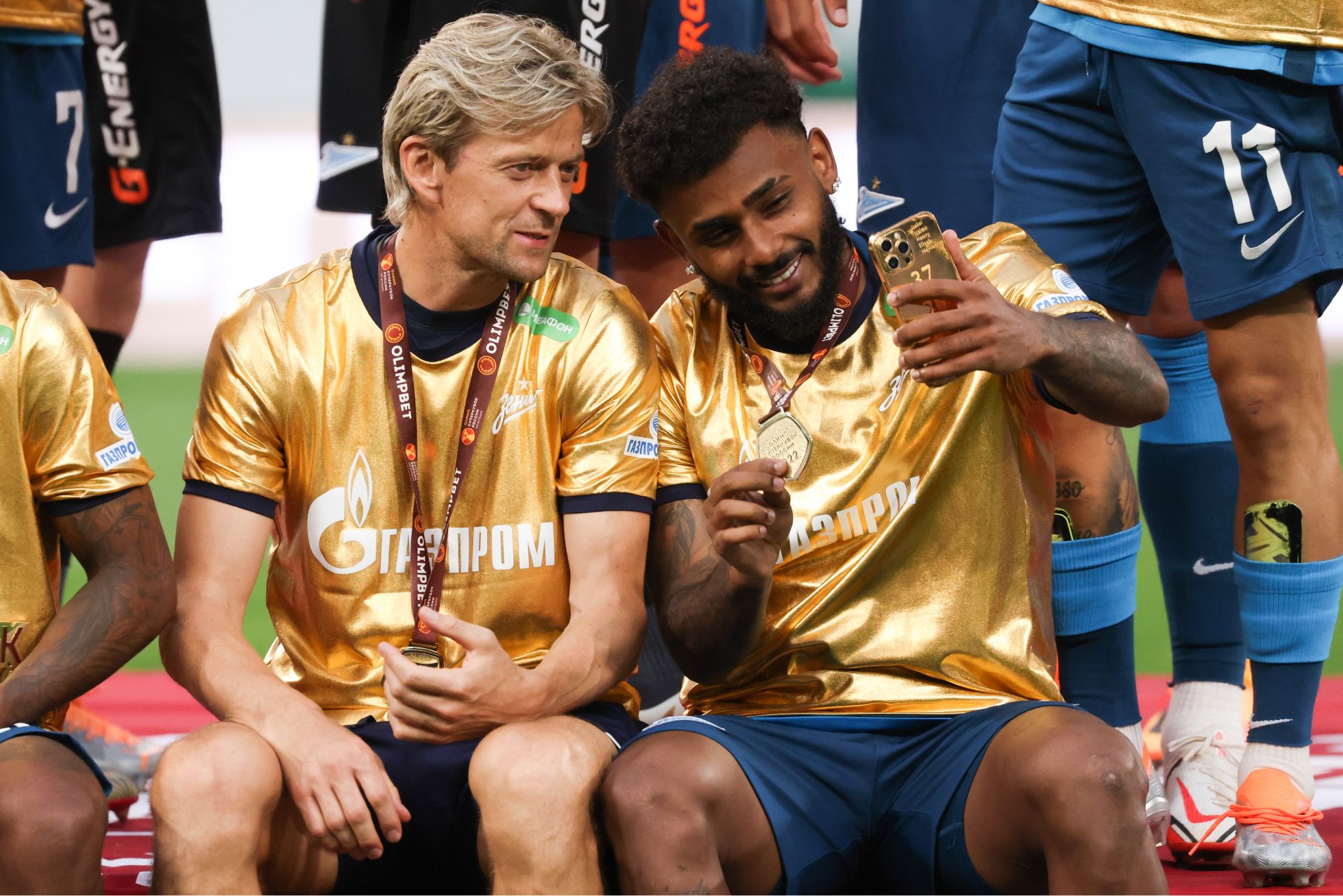
For the continuation of work in Russia after the outbreak of war, Tymoshchuk was deprived of the title of “Honorary Citizen of Lutsk” (Anatoly was born there), all Ukrainian titles were taken and football activities in the country were forbidden for life. The football player of the Ukrainian national team Andrei Yarmolenko said :
For me, Tolya was an example of professionalism. I followed all the statements. For me [the silence of Tymoshchuk about the war] was a surprise. He asked how he was sleeping at night. He replied: "He cannot sleep the same as you." I did not answer him anymore, and he gained me.
Specifically asked him: “Why are you silent? You were an example for me, I was equal to you, but now you do not exist in my life. ” He sent me to *** [FIG], I sent him, and this is where our conversation ended.
Tymoshchuk himself performed on February 24 in social networks: “We need peace. For the sake of our children and parents, for the sake of life on Earth. "
And what about the national team and European competitions?
FIFA and UEFA suspended the Russian team from all competitions: qualifications of the World Cup and League of Nations.
The RFU even canceled the fees of the national team - for the first time in 2022, the team will collect only in September. In the best situation, the Karpin team will be able to hold friendly matches with countries that are still ready to cooperate with Russia. There were a little of them - options with Belarus, Saudi Arabia and Iran were previously called.
Russian clubs also were left without European cups-Spartak was injured more than others, which in February 2022 was supposed to play in the 1/8 finals of the Europa League (the rest of the clubs had already flew by that time).
There were no active fans left on the stands (almost). This is a protest against fan id
From June 1, the FAN ID law - the “fan passport”, which is needed to attend sports events, entered into force. Its introduction became known in the 2021/22 season, and the fans of almost all RPL clubs were condemned. Active fans promised to ignore the matches: some waited for the new season, some (like Spartak fans) fulfilled a promise last season.
And what is the essence of FAN ID?
“Fans' passport”, or FAN ID, is a small laminated card with the data of a person that serves to identify it.
For the first time, FAN ID was used at the Sochi Olympics. A few years later, the authorities improved her in front of the presetitives of the Confederations Cup, held in 2017 and the 2018 World Cup. Even FIFA officials did not believe in success, but Russia convinced that the fans liked the system. After that, football officials agreed to the introduction of such a passport by Russia - on the condition that the document would replace the visa to foreign fans.
To obtain FAN ID, it was required to provide personal data: citizenship, name, date of birth, gender, series and number of the passport and by whom it was issued. It was also necessary to attach a photo, email and home mailing address. The data was received and processed by the Ministry of Digital Development, as well as the Ministry of Sports and Transport and the Ministry of Internal Affairs.
After the World Cup, Russian officials decided to extend the FAN ID to domestic competitions. According to them, this was necessary to "ensure the safety of citizens during mass sports events."
True, it is not very clear why measures should be strengthened. The Russian Football Championship has not given serious concern for a long time.
But by 2021, security measures at stadiums were seriously strengthened without FAN ID: most RPLs were equipped with video cameras with the face recognition function, which allow you to quickly calculate the offender from the stands. In addition, the Ministry of Internal Affairs keeps records of football hooligans who are already forbidden to attend matches, and clubs may not sell them a ticket and block the subscription.
At the end of 2021, the police detained 408 CSKA fans after the match with Zenit. For 51 people, administrative protocols for the use of pyrotechnics, the use of alcohol and violation of the rules of behavior were issued . Fans claim that security officials were issued for the use of pyrotechnics even for those who did not burn Faray.
After the detention of CSKA fans, several State Duma deputies again advocated the introduction of FAN ID to pass to the stadiums.
Football fans are sure : the authorities need the system to put them under full control - and protest against it.
The loud action took place at the July match for the Super Cup in St. Petersburg. The fans of Zenit stretched a banner, which depicted harsh guards with batons and dogs, and the stadium was covered with barbed wire. Later, the Stop FAN ID banner appeared in the stands, and the fans of Spartak and Zenit arranged a roll call, chanting: “We do not need FAN ID” and “FAN ID - Football killer”. Six days later, at the match with Khimki, Zenit fans defiantly left the guest stadium in the 73rd minute.
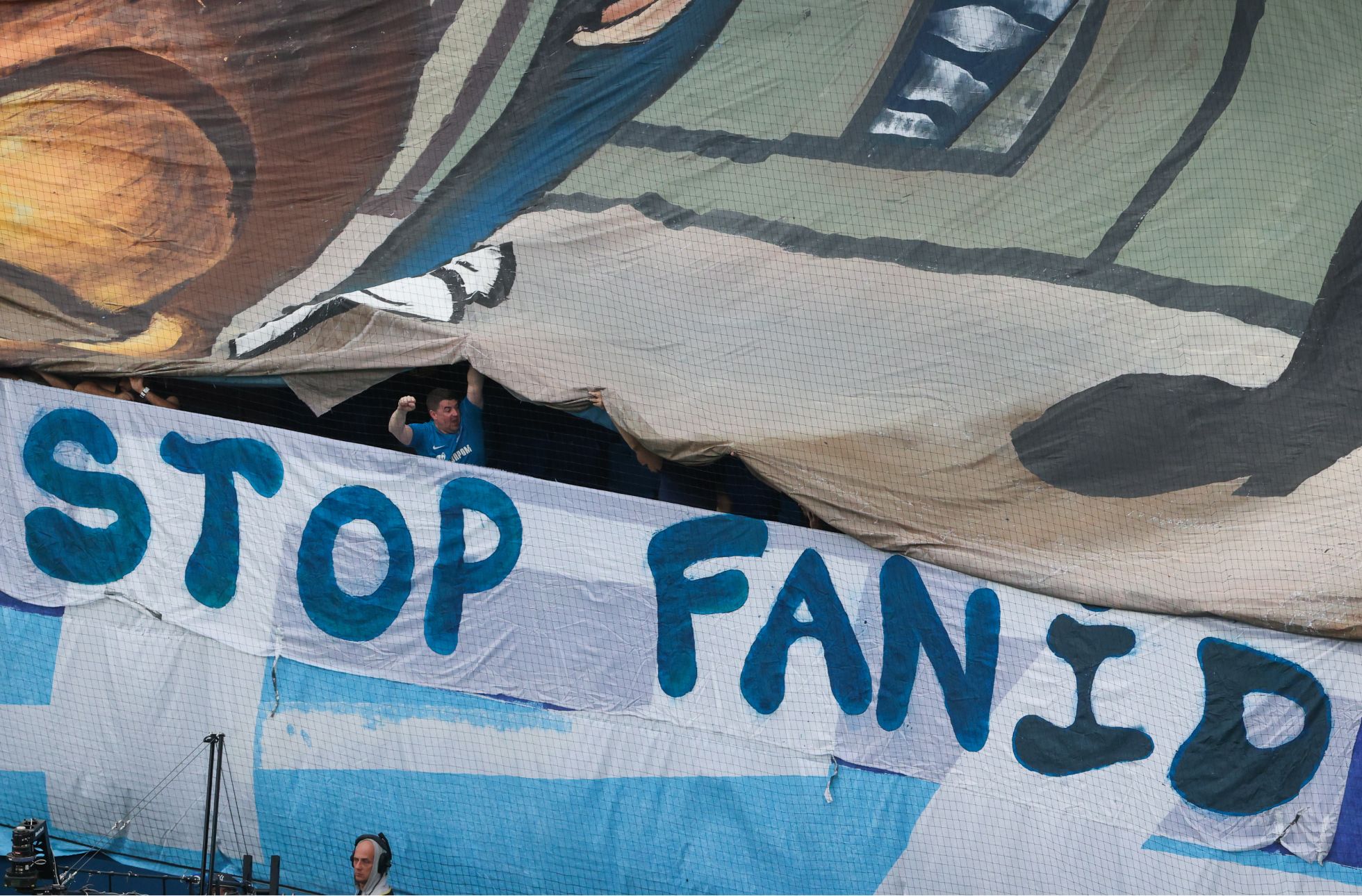
On the first round, it is impossible to make a complete picture of protest: half of the clubs have not yet played at home stadiums. But much is already clear: on the weekend, the fan of Lokomotiv, CSKA, Torpedo and Dynamo were empty on the weekend. Later, other active fans will join them. Although the position was divided in Zenit: some of the fans spoke for an immediate boycott, the other was only at matches, where you can’t get without FAN ID.
The fact is that the FAN ID system is not yet valid everywhere - at the start of the RPL, only five stadiums are ready to check the "passport of fans". We are talking about the arenas of the “Wings of the Soviets”, “Urals”, “Paris of Nizhny Novgorod”, “Rostov” and “Sochi”. The rest will only join the second part of the season (that is, by February 2023).
RPL clubs are disappointed with the loss of support provided by fans, and the state (in public statements) relies on “trouble -free” fans and family.
“I think the law will attract even more people to stadiums. Fans will come with families who were alien to the behavior of those who burned Faure, cursed and violated public order. I can not even call them fans or fans. They came to the stadiums to violate the law, and not to root for their favorite team, ” said the State Duma deputy Roman Tereshkov.
Those who agree to a fan passport, the authorities promise different bonuses. President of the Russian Football Union (RFU) Alexander Dyukov said :
This is a big loss [refusal of active fans] - it is important for clubs to preserve fans. But we see that clubs are betting on attracting a family audience.
With the introduction of FAN ID, the atmosphere will not be like that? Time will show. Now it’s hard to say. I heard that the fan stands were chanted a lot [that fan id is killing football]. To bring down this mood with other things? The government is working on this. Both the Ministry of Sports and the Mincifers promise bonuses. Let's see. Which? Conversations are conducted. There is a discussion. The decision will be made or not, it is not yet clear.
While the Russians are in no hurry to go to the website of the “State Services” for drawing up a document (to draw up a FAN ID, you need to additionally go to the MFC to confirm the personality). According to official figures on July 14, only 15 thousand people received a fan map.
All matches of the first round were held at stadiums in which there is no FAN ID system yet. And they were visited by 63 thousand people. And at the match “Zenit” - “Spartak” for the Russian Super Cup, 55.6 thousand spectators were gained (FAN ID was also not required there). For comparison: 183 thousand fans visited the first tour of the Russian Championship 2019/2020 (last season can not be taken into account due to pandemia and prohibitions on visiting stadiums).
Alexandra Serova