
Translated material
Rev. Alexy Soloviev
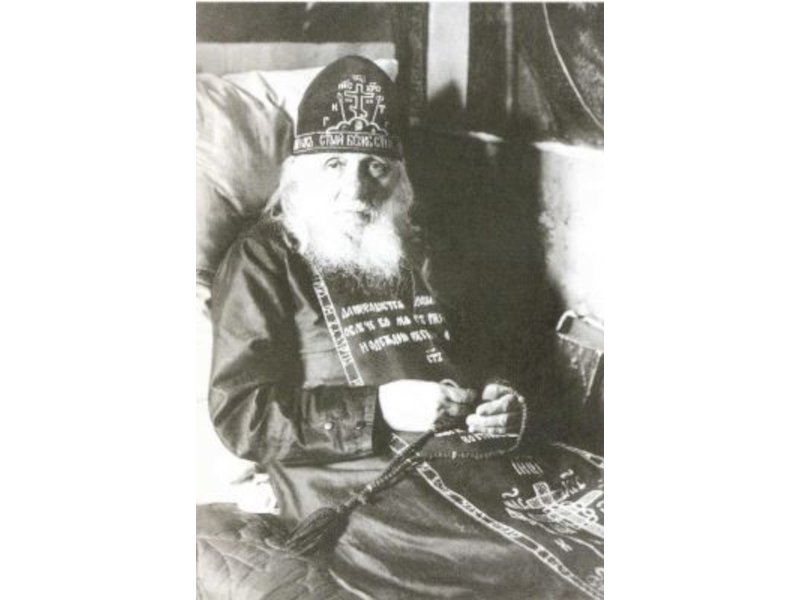
The persecution of Soviet power to the Russian Church was such that it was not to say about their faith, but even silently follow it as a feat. The new martyrs and confessors, glorified in the face of the saints did not come: believed, prayed and meekly went to their Calvarys.
“Polit.ru” recalls those who gave their lives for faith and by whose prayers the Russian Church is alive - even if almost nothing came to us besides the name.
Publications were prepared by Kirill Kharatyan (included by the Russian authorities in the register of foreign agents).
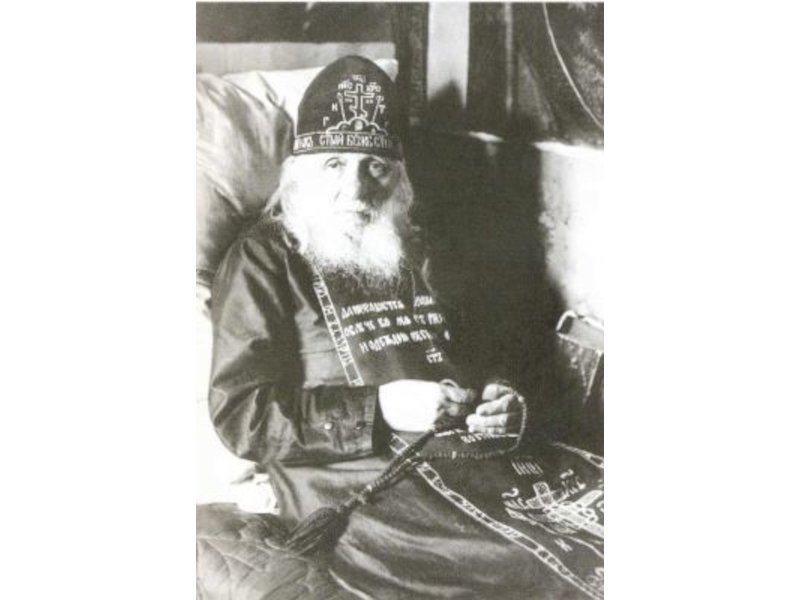 Rev. Alexy Soloviev
Fedor Soloviev is the son of a Moscow priest. He studied with the initial letter from his future father -in -law, the deacon of the neighboring temple of Father Pavel Smirnov. When the baby was brought on a sled to the teacher, he was given a bottle of tea and candy with him. He drank tea himself, and gave the candy to Anna, the daughter of Father Paul, which he later married.
From an early age he was seriously, strictly observed posts, did not naughty, evaded fun and noisy entertainment, was very attached to his father, took care of him. Children in disputes often turned to him so that he judged them. Fedor loved music and, having learned to play the piano, performed church chants and sang in the choir. The most beloved chants he had the Irmos of the canon “as if by Sukhuh, having pedestrian Israel” and he always cried with emotion, listening to them. He also served in the altar to his father, leaving with a candle and giving a censer. He fasted from a very early age, as he remembered.
His mother died in 1854, when he was 8 years old.
He graduated from the Andronievsky Spiritual School. During this period, a misfortune happened to him - on the bell tower the tongue of the bell hit him on the head and the boy blinded one eye.
In 1866 he graduated from the Moscow Theological Seminary according to the first category, the second in the list of graduates, although his studies were not easy for him. He gave her all the time, excluding reading for entertainment and all sorts of parties. He did not go to the Spiritual Academy, because he did not feel a special calling for theological science.
On February 12, 1867, childhood friends Fedor and Anna got married. And on February 19, he was ordained a deacon in the Miracle Monastery. The Metropolitan of Moscow Filaret (Drozdov) appointed Father Theodore to the temple of the Nicholas Critus in Tolmachi, to whom he patronized.
July 23, 1868, the son of Mikhail was born. But in the fifth year of marriage, Anna, having caught a cold, fell ill with a fleeting consumption and died in January 1872. When she was buried, Father Theodore did not have the strength to serve. He stood next to the coffin, stared at his favorite face, and tears rolled down his cheeks. At first, “hopeless longing overcame” the young deacon. The abbot of the church, Archpriest Vasily, decided to attract Dyakon Fedor to work in the editorial office of “heartbreaking reading”, so that he “finds a way of labor in work”. The editorial concerns aroused interest in literary activity from Dyakon Fedor, he had to read a lot of spiritual literature, write articles for the magazine, some of them were later published by separate brochures.
In addition to worship in the temple, Father Theodore participated with his father Alexy Merev, then still deacon, in folk readings. At the same time, he taught the Law of God in an orphanage, as well as in the private shelter of Smirnova and in several houses of parishioners, including the famous Slavophile Samarin, who lived in the house of Countess Sollogub, almost opposite the church. Father Feodor had to visit this house with his father Vasily to commit home all -nights, after which interesting conversations were started. Their participant, except for the Samarins and Countess Sollogub, were their friends-Slavophiles: Prince Cherkassky with his wife, Ivan Aksakov with his wife, S. M. Sukhotin, brothers Vasilchikov, Buturlin, Prince Obolensky. In the late 1870s, the philosopher Vladimir Solovyov began to appear in this society. Later, Elder Alexy in the Zosimov Desert with pleasure recalled these conversations with the advanced, famous figures of that era. They expanded his horizons and taught them to communicate with representatives of high society, which came in handy when, as the Elder, high -ranking pilgrims from Moscow and St. Petersburg turned to him as an old man.
Father Theodore tried to never refuse to help those in need, not only daily distributed money to the poor, but also helped the poor than he could: invited him to the house, fed, dressed those in need. Once on the street, the deacon took off his upper cassock and gave the beggar trembling from the cold.
In May 1895, after 28-year ministry, Nikolo-Tolmachev’s parish left. On June 4, 1895, he was ordained a presbyter and defined in the staff of the Kremlin Assumption Cathedral. He always served reverently, eagerly and slowly, often extraily, for others. After the liturgy, he eagerly served the ordered prayers and requiem. If another cleric served, he prayed in the altar, in a niche. He enjoyed universal love and respect in the cathedral. Two years later, upon the adoption of a priestly dignity he, he was unanimously elected the confessor of the Council House, and a year later, shortly before leaving for the monastery, he became a protop rescue. After his son graduated from the Moscow Technical School and married the daughter of the wealthy forest producer Motov, the path to the monastery for the priest was open.
In October 1898 he entered the Smolensk Zosimov deserts. On November 30, 1898, he was tonsured in Hieromonk, hegumen Zosimova Desert by Father Herman (Gomzin), with the name of the name in honor of the Councilor Alexy, Metropolitan of Moscow. The day of his angel is celebrated on February 12. It was the day of their wedding with his wife.
Father Herman, accepting the Protopresensky Cathedral to his monastery, by all the respected father of Theodore, was very afraid that the sprouts of pride and conceit could have appeared. And he began to humble Father Alexy. His first obedience was the clergyness and worship. They treated him severely, put it below the brethren during the service, the vestments were given the worst. True, he was determined by the confessor and freed from hard physical work. The regent of the choir was then Hieromonk Nafanail, a former opera artist, who graduated from the conservatory and the Synodal School, a good musician, but a nervous and restless person. Father Alexy began to sing on a clowning clock. Father Nafanail interrupted him and in a sharp tone began to pronounce: "This is not the Assumption Cathedral, you do not forget, you can’t roar here." “I had a good voice,” said Father Alexy about this case, “and I wanted to show him, but I had to obey my spiritual son, who was my mentor in this matter.” Father Alexy began to humbly, sincerely asking forgiveness from Father Nafanail. He recalled this humility with tenderness for many years. The disagreements with Father Nafanail repeated and delivered true torment to Father Alexy. After one such disagreement, Father Alexy was so troubled by spirit that at night he came to wake his father Nafanail to ask him for forgiveness.
Even becoming the confessor of Father Alexy, Father German confessed him until the end of his life. He soon recognized the high spiritual qualities of the monk, his sincere humility and the rich experience of the clergyman, understood his bright soul. The alertness was replaced by respect, and then with great love. Father Alexy reciprocated him. The number of confessors among Father Alexy also increased, many young monks became his spiritual children. A few years later, Father Herman himself became his spiritual son. He was canceled clergy and instructed him to teach young monks the law of God.
After the death of the Monk Barnabas from the Gethsemane monastery on February 17, 1906, many of his spiritual children turned for help and support to the Monk Alexy, the elder and confessor of the Zosima desert. Eldity became the most important matter of the monastic life of the Monk Alexy. States, metropolitans and archbishops, bishops and archimandrites, priests and ordinary monks, military, doctors, officials, teachers, professors and students, workers and peasants strove for him. Spiritual experience, the power of prayer and extraordinary perspicacity attracted many to it.
In 1906, a great post, constantly besieged by confessors, he began to exhaust, his health was shaken, and he fell ill with pneumonia. The situation was so serious that Dr. Mamonov, who treated him, openly said that his father Alexy could die. The room where he lived was raw and cold, and he was transferred to the abbess chambers. On the great Thursday of Father Alexy, they were cooked. After the co -sordation, when the monks approached in turn to say goodbye to the priest, he quietly said to one: “Pray, I hope for God, for the sake of your holy prayers, the Lord will grant my health.” After that, Father Alexy began to recover.
In the summer of 1906, Father Alexy moved to live in a small hut. Little by little the main thing of the priest in the monastery was oldness and configuration.
People strove for him from everywhere: bishops, statesmen, clergy, monks, military, doctors, officials, teachers, professors and students, workers and peasants. A special group of its visitors was composed by teachers and students of the Moscow Theological Academy. Among the spiritual children of the old man by this time were such famous figures of the Russian Orthodox Church as the Martyr Grand Duchess Elisaveta Feodorovna, Mother Famar (Marjanova). Zosimov deserts were often visited by members of the religious and philosophical circle in Moscow Sergius Bulgakov and Pavel Florensky.
Sometimes Father Alexy had to accept people almost hopelessly for many hours. Over time, I had to enter special tickets for confessors: 110 tickets for two days. Father Innocent handed them out. When the confession was selected selectively, the father was dissatisfied. “I,” he will say, “not at the face, but should look at a person.”
In the summer of 1909, a monastic congress was held in the Trinity-Sergius Lavra, and the elder Alexy was among its participants. His voice was of great importance there, they were considered with his spiritual experience, and everyone listened to his words with respect. The congress paid a lot of attention to the olderness. Here is what Hieromonk Serafim (Zvezdinsky) wrote: “I received a lot of comfort at the monastic congress, talking with many hungs of good elders. At the congress, the father Alexy Zosimovsky spoke especially imperiously, ardently, confidently, most of the decisions were made directly under his immediate influence. Blessed are my eyes, who saw this, and the ears who heard the wise, deep speeches of the elders. ”
In June 1915, the elder seriously fell ill: he had a strong heart attack. He was sick for a long time and hard. Only at the end of August, the elder felt better and began to accept visitors again.
The desire for silence, the need to retire to focus on inner prayer, the bodily weakness forced the elder Alexy to ask permission to go into the shutter. His request was partially satisfied in February 1916, he went into the midday: he received confessors in the church only on Saturdays and Resurrection, but he was already unavailable for laity. On June 6, 1916, the seventy -year -old elder received permission to go to the full bolt.
On July 15, 1917, a pre-panting monastic congress was opened in the Trinity-Sergius Lavra. At the personal request of Metropolitan Tikhon (Bellavin), the elder Alexy took part in him and was elected a member of the All -Russian Local Council. In August, the elder arrived in Moscow and was placed in the Metropolitan chambers of the Miracle Monastery. The next day, August 15, the grand opening of the All -Russian Local Council in the Cathedral of Christ the Savior took place.
After the serious events that occurred in Russia at the end of October 1917, it was decided to immediately restore the patriarchal in Rus'. The election of the patriarch was scheduled on Sunday on November 5 in the Cathedral of Christ the Savior. On October 30, three candidates for the patriarchs were elected: Archbishop of Kharkov and Akhtyrsky Anthony (Khrapovitsky) (he received the most vote as a candidate), Archbishop of Novgorod and Old Russian Arseny (Stadnitsky) and Metropolitan Tikhon (Bellavin). The election of the patriarch was to be decided by lot. To take out the lots instructed the elder-producer of the Zosima desert Hieromonk Alexy.
Before the worship began, Metropolitan Vladimir (Epiphany) in the altar wrote on parchments the names of candidates for patriarchate and put in a special ark. During the liturgy from the Assumption Cathedral, a miraculous Vladimir Icon of the Mother of God was brought. At the end of the Divine Liturgy from the altar, the elder Alexei prayed there came out. Standing in front of a miraculous icon, he began to pray diligently, and occasionally laid earthly bow. A solemn prayer began. At the end of the prayer, Metropolitan Vladimir went to the anal, took the casket, blessed them, tore the cord with which the casket was bandaged ... Elder Alexy crossed himself three times and, without looking, took out a note from the casket. Metropolitan Vladimir read: "Tikhon, Metropolitan of Moscow."
On February 28, 1919, Hieromonk Alexy was tonsured in Schima. His name remained the same, but the day of the angel began to be celebrated not on February 12, but on March 17 - on the day of the Holy Righteous Alexy, the man of God. In October 1919, the son of the elder Mikhail died. The priest really asked him to be released to the funeral, but he was not allowed to do this as a recluse, which the elder was very mourned.
At the end of 1920, the Zosimov deserts were turned into an agricultural artel, the monks did not obey, but went to work.
On January 17, 1923, the father of hegumen German (Gomzin) peacefully rested. Immediately the day after the burial of the abbot of the Smolensk Zosimova desert from Aleksandrov, a commission arrived to fulfill the Bolshevitsky decree on the liquidation of all monasteries and counties. The brutal destruction of a peaceful monastery began. Officially, county authorities closed the deserts on May 6, 1923. First of all, they kicked out all its inhabitants, having previously seized silver ries from their personal icons and other valuable things. All of them went out where. Father Alexy with his cell, Father Makariy, went to Sergiev Posad. Having lived in the hotel for two days, they found a shelter in the small house of the spiritual daughter of the elder Veresa Verkhovtseva, who left Sergiev Posad to settle in Sarov, where the monastic life was still ongoing. The spiritual children of the old man provided them with all possible material assistance. The elder Alexy, when something was brought to him, always humbly bowed and thanked, saying: "I am now a beggar, I live in" The old man was great humility and a sense of gratitude. He constantly thanked the cell for the most insignificant services, daily apologized to him.
Until 1925, the elder Alexy walked a little more in the rooms, reached the temple several times. After he sat more in a chair, and then he was half -laying on the bed. The elder, with the last forces, tried to read all day services, excluding the liturgy that he never performed in the cell, since he had no antimins. When he could no longer stand, he read the services sitting. Once, when Father Alexy was lying from malaise in bed, Patriarch Tikhon (Bellavin) came to visit him. The priest was deeply touched by the attention of the Holy and felt extremely awkward, because he met him and talked to lie. He tried to get up several times, but His Holiness put it on the bed again. After 1927, Father Alexy was just lying, with difficulty raising his head, and moved his fingers with his right hand. He accepted only his close spiritual children and monks, and not all. There is evidence of the existence of the testament of the elder Alexei - to remember the bordering power and not to depart from Metropolitan Sergius.
He died on October 2, 1928 in Sergiev Posad. . Buried on September 22, 1928 in the Sergiev Posad at the Kokuevsky cemetery near the altar (later, upon the closure of the cemetery, the ashes were transferred to the new city cemetery).
On July 25, 1994, the imperishable relics of Jeroskhimonakh Alexy were moved and staged in the Cathedral of the Smolensk-Zoshima Desert.