
Translated material
Son in the grave, Lada in his father's garage
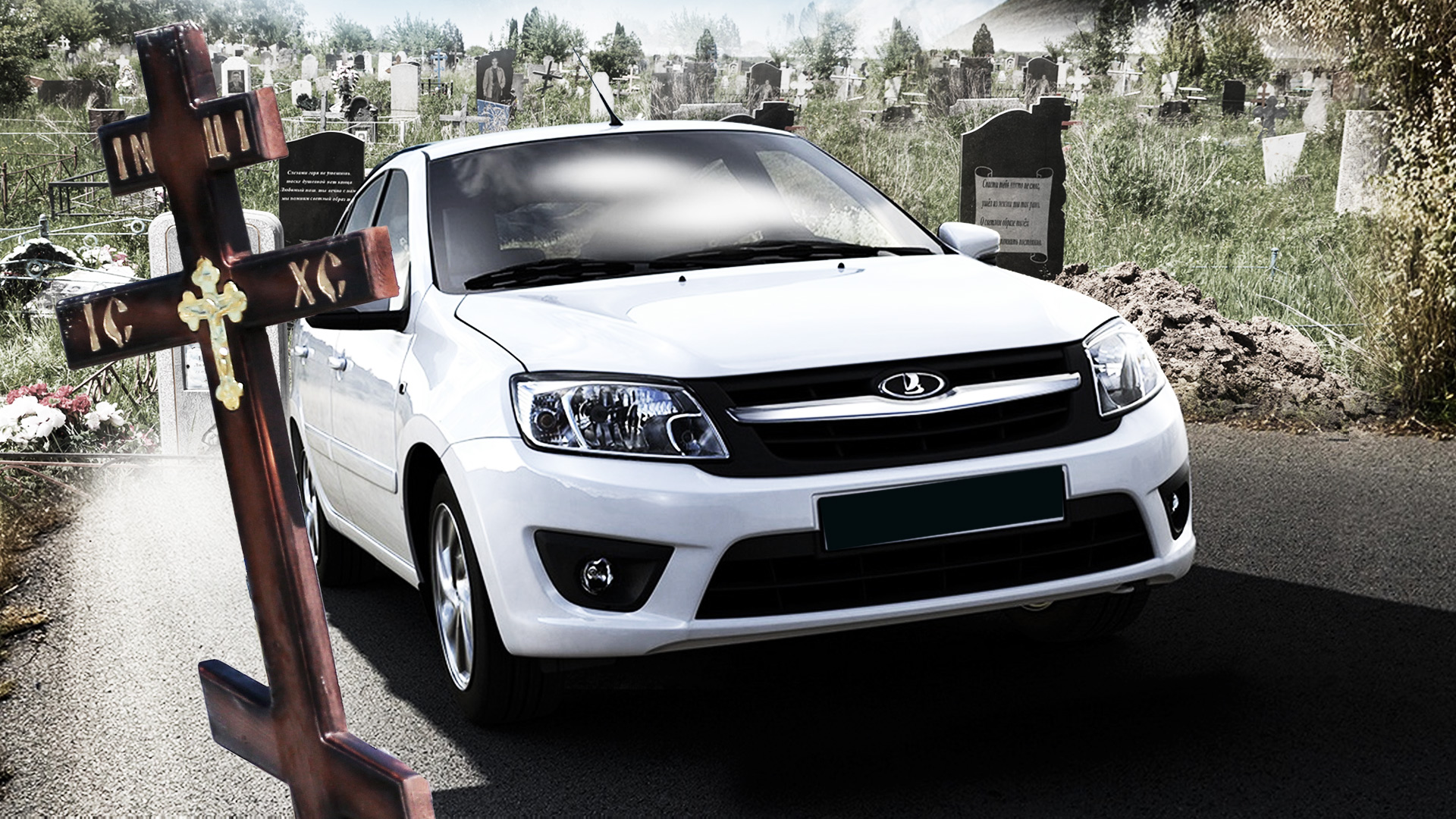
In the Sunday program of the Rossiya 1 TV channel, “News of the Week,” a report was released about a Russian tank driver from the village of Vyazovka, Saratov region, who died in Ukraine. Using the payments for the death of their son, the family bought a new Lada car “in memory of him.” The editor-in-chief of the Novaya Gazeta – Europe publication, Kirill Martynov , and television critic Alexander Melman talk about how Kremlin TV dehumanizes TV viewers and advertises the war , how official propaganda “brainswashes” the population.
Hosted by Mumin Shakirov.
Video version of the program
Mumin Shakirov: Fragments of a report about senior sergeant Alexei Malov from the village of Vyazovka, Saratov region, who died in the war in Ukraine, were published in various publications on social networks. Let's see the plot.

width px height px
The URL has been copied to your clipboard
No media source currently available
0:00 0:02:31Mumin Shakirov: Some believe that this story is an anti-war advertisement, others that it is an advertisement for war. Cynics are sure that this is product placement, an advertisement for the new Lada model. Kirill, how did you perceive it?
This is extreme cynicism, treating people as consumables
Kirill Martynov: This is one of the most terrible things we saw during this war. Apparently, this family received less money for the life of their child than the person standing in the frame receives. I think this is less than Kiselev’s monthly income. This is a deep class society, where people like Kiselev, Simonyan, Putin and his friends send absolutely poor, powerless people who do not see any possibility for themselves for a better future, to die for unknown reasons, for very ridiculous money (but even if they sent them for a lot of money, it still would not improve the situation). This is extreme cynicism, treating people as consumables.
When I watched this story, I remembered that in Russia, my friends were looking for soldiers who died during the Great Patriotic War, and they simply reburied them, because for 80 years the state never bothered about its soldiers. The same people tell us that this is in order to defeat fascism, to make the state great.
Mumin Shakirov: And if there is a reassessment of this war, the government changes, what will be your attitude towards these parents: sympathy or cold silence as some kind of retribution for the fact that they were blind?
Kirill Martynov: I still have exceptional sympathy for these people. It was first the Soviet and then the Putin system that made human life worthless. This is reminiscent of classic stories from Russian literature, Bunin’s story, where a peasant woman’s son dies, and she finishes her soup because the soup is salted. To a nobleman, a representative of a different social class, this is completely incomprehensible. If you have no opportunities, no future, then at least get your coffins and buy a car with them. The special cynicism of this video is that it was really filmed as an advertisement for Lada. These are people so saturated with cynicism, war, propaganda that they, it seems to me, already understand what they are doing, how it looks from the outside.
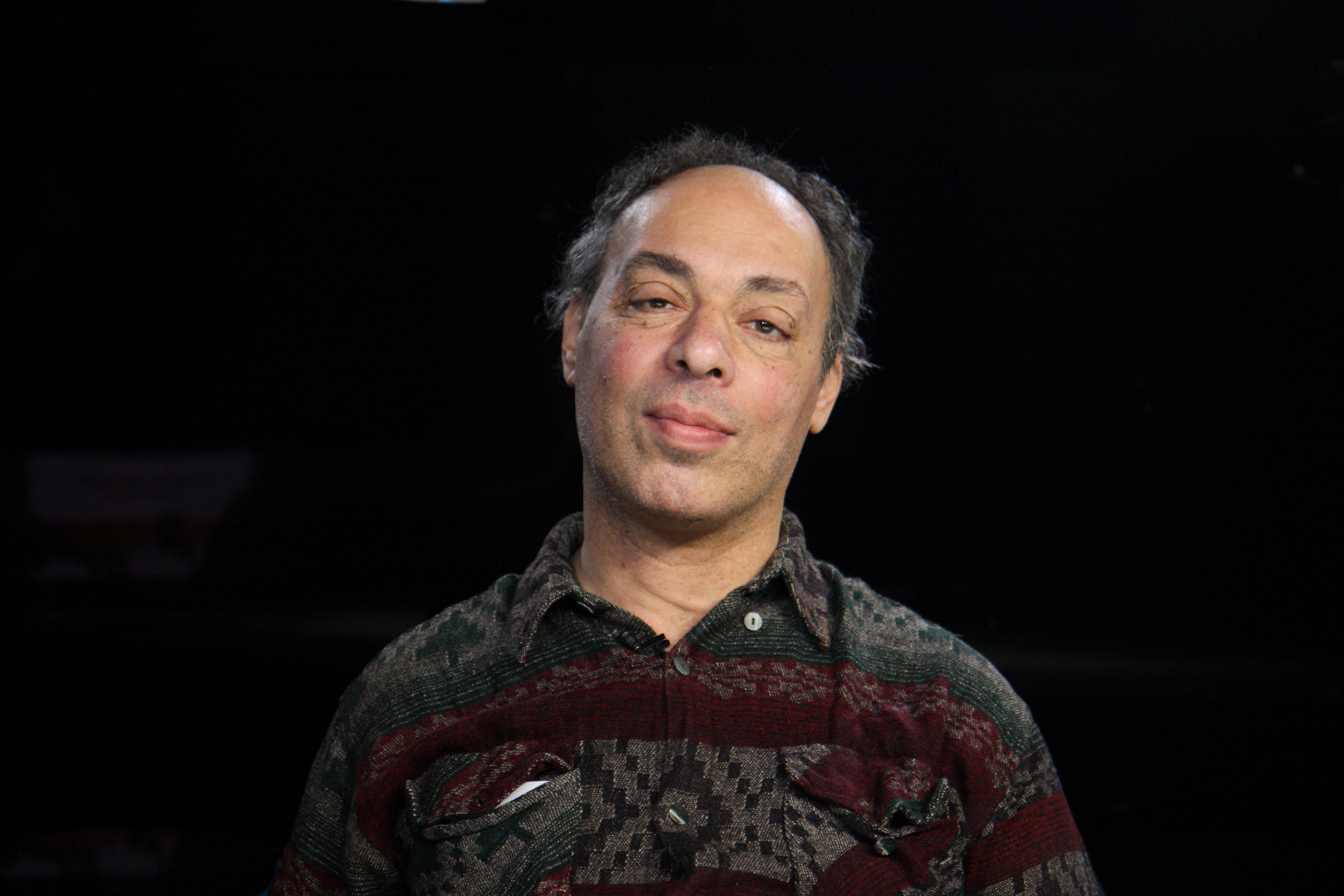
Alexander Melman: I experienced nothing but sympathy and compassion. I didn’t even think that this was an advertisement for Lada: maybe I don’t yet have that degree of cynicism. I looked with pain in my heart. When I think about this war, tears often just flow.
Mumin Shakirov: We see how propaganda dehumanizes and dismembers people’s brains. Is this a one-way ticket - those people who are subjected to this total processing, or, after all, if we turn off the button, they will return to their previous lives and we will be able to talk with normal people?
First the Soviet and then the Putin system made it so that human life is worthless
Kirill Martynov: Oddly enough, it’s not a matter of propaganda at all, it’s not the source of brainwashing - it’s just a tool, and the source itself is on a different social level. Let’s say that by some miracle in an alternative reality in Russia, for example, there is a functioning parliament, not this gathering of people in the barracks led by Mr. Volodin, but a real parliament, where there are people who voted against nullifying the Constitution: 15 million people, just two years ago. If we imagine that their voices are represented in parliament, 20% in parliament are our like-minded people. This means that every fifth deputy during any discussion, and especially at the start of a war, has the right to say whatever he thinks. If people see this, they understand that this is possible, that there is another point of view, that it is possible to argue, and it would be nice to call supporters of the war to debate, or even better, to bring them to trial.
It’s not just about parliament: it’s about the courts, and local self-government, and how elections are structured, and the separation of powers. But when all these institutions degrade during Putin’s entire reign, then propaganda comes to some empty place. There is a classic Scorsese film, Taxi Driver, where a man, a Vietnam War veteran, takes his girlfriend to the cinema, to a porn film, because he does not know that there is another kind of cinema. In my opinion, Russian society now consists of people who do not know that, in principle, it is possible to live differently.
Mumin Shakirov: We know great films about the Second World War, made by great directors: Chukhrai - “The Ballad of a Soldier”, Kalatozov - “The Cranes Are Flying”. We see the story of the death of this soldier Malov. Did you have any cinematic parallels?
Kirill Martynov: On the morning of February 24, I used the only analogy that came to my mind. There have already been missile attacks on Kyiv and other Ukrainian cities, people have already been hiding in the subway. This is, of course, Elem Klimov, “Come and See.” I would make a sequel: “Come and See 2,” when you go in this tank to die for no one knows why, and then your parents pose in front of these ghouls from Russian propaganda with their brand new car. Under the same heading, on February 25, my publication was published in Novaya Gazeta in Russian and Ukrainian about the fact that war is a crime.
Mumin Shakirov: In connection with all this, is the cultural code changing in Russia? As children we played toy soldiers; our enemies were the Nazis and the Germans. Will it turn out that for modern children these enemies will turn out to be Ukrainians?
Russian society now consists of people who do not know that, in principle, it is possible to live differently
Alexander Melman: Yes, definitely. We see how kindergarteners, dressed in paramilitary paraphernalia, are already marching, lining up in the letter Z. On May 9, they show the films that you listed: I watched, and indeed, unfortunately, our country was in the role of the Nazis for me. For the last 30 years, 22 years of Putin’s years, Russia has been undergoing degradation, the fruits of which we are now seeing. I myself have written a lot about television, which fools. When the oppositionists and liberals talked about how life was in the Russian provinces, I thought: well, yes, they are involved in politics, but in reality not everything is so terrible. No, it turns out that it’s just that terrible, and we all see it.
Mumin Shakirov: Let's watch a story about how Russian television maintains the degree of war with the participation of celebrities.
Mumin Shakirov: Kirill, the eternal question: do all these television figures - Soloviev, Kiselev, Mikhalkov who joined them, in your opinion, believe in what they say, or is it just for money?
Kirill Martynov: At first, try a little just for money, but it’s impossible to do this for a long time and not become part of what you do: you begin to mutate into a manufactured product. Kiselev has come a long way, once in ancient times, in the 90s he was our colleague, but now he is a completely different creature.
Mumin Shakirov: I interviewed Alexander Nevzorov and asked him: would Joseph Goebbels bring coffee to Vladimir Solovyov? He replied: “No, because Goebbels was sincere.”
Russia's behavior is typical of a rather archaic empire
Kirill Martynov: Vladimir Solovyov, perhaps, is a slightly separate creature in this series, he is still more mobile, more stable. I am ready to believe that the only object of his faith is that he is a brilliant, unique talent, to whom everything is allowed, a superman, a Nietzschean-24, who constantly broadcasts on the air. In this context, he may be the main cynic in this company, in his genre; I think he's more professional.
Mumin Shakirov: Alexander, what is your attitude towards Ukrainian propaganda in the person of Mikhail Podolyak and Alexey Arestovich?
Alexander Melman: I see smart people. Let's say Mr. Zhdanov tries to be objective, although sometimes you catch him at certain points. Yes, maybe this can also be called propaganda. But these Russian presenters are already the bottom below which nothing can go. I have pure contempt for these people. And here I am trying to delve into it. They are all different: Arestovich, Podolyak, and Zhdanov; I listen to them with great interest. Of course, I am subjective and in some ways I am on their side, because I understand who is right here: in this case, Ukraine. They are very interesting to me, I rate them very highly and double-check what they say, sometimes I can catch someone, but these people make me like them.
Mumin Shakirov: Kirill, you have witnessed several wars with the participation of the USSR and Russia - this is Afghanistan, the first and second Chechen wars, a war on the territory of Georgia and two wars in Ukraine. There was also a war in 2014, because a huge number of people died, according to various estimates - more than ten thousand. Are all these wars of conquest?
Kirill Martynov: Yes, they are all aggressive, imperial. This is typical behavior of a rather archaic empire, which assumes that there are territories in its zone of influence, and if something happens there that the empire does not like, it decides to send troops there. Before that there was Czechoslovakia. It's always the same scenario: we have to pin someone down, control them, and so on.
What is happening today in Ukraine evokes the most analogies with the events in Chechnya. Russian society was deceived in those 90s, with the Chechen wars, just as people are being deceived now with Ladas. After all, there is the same rhetoric: militants who are all terrorists (here we have “Nazis”, but there were “terrorists”), their cities need to be destroyed, they themselves need to imprison Gauleiter Kadyrov so that we have a beautiful peaceful country and we build Putin Avenue. Actually, Putin is preparing the Chechen, Kadyrov’s fate for those territories of Ukraine that they can occupy and hold. There has always been a simple story: this is our country, and we can do whatever we want with these people, and those who resist are all terrorists, and we must kill them. Now the problem is that, unlike Chechnya, where less than two million people lived during the war, Ukraine is still a huge country. In this case, our decrepit empire is like a crocodile trying to swallow an object that is no longer suitable for it.
Mumin Shakirov: Protests against the Vietnam War stopped it. Why don't people in Russia protest against wars?
Putin is preparing a Chechen, Kadyrov’s fate for those territories of Ukraine that they can occupy and hold
Kirill Martynov: Now there are protests: 200 criminal cases against anti-war activists. There is no big protest now, not only because people are afraid, but also because society is extremely cemented: nothing is allowed, we must be silent, endure, let’s live... People want to maintain a normal life. The worst thing about this is what happened to the cruiser "Moscow" . This is a clear analogy with the Kursk submarine. Then there was a gigantic scandal, a huge number of complaints against Mr. Putin, but now everyone seems to have remained silent, except for a few families who were trying to find their relatives.
The Chechen war is a different story: it very cleverly played on xenophobia at all levels. It was necessary to present the Chechens as strangers, enemies, savages, murderers, to scare everyone with them. This could be done, it even corresponded to the traditions of Russian classical literature, it was possible to refer to Tolstoy, Lermontov. After that, it was clear to everyone why the Russian Federation was fighting there.
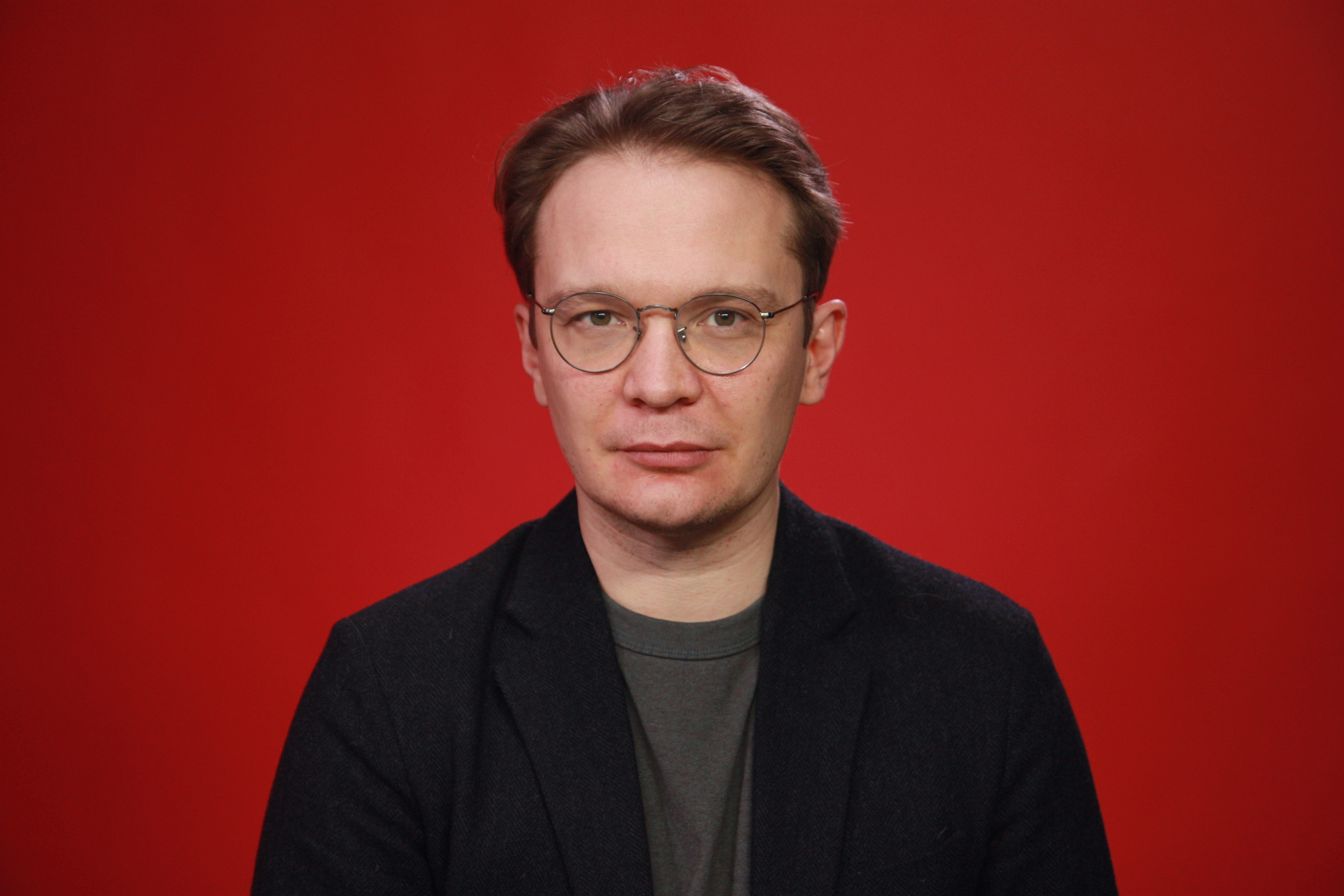
How it works in Ukraine, I don’t understand at all, when in the east of Ukraine people who speak the same as you, who watched the same cartoons as children, largely share some part of the culture with you. Today there was news about two colleagues at the Minsk military school: one fought for Ukraine, the other for Russia, both died under rocket fire almost on the same day. This is one of the terrible tragedies of this war.
Mumin Shakirov: Alexander, if you meet a veteran of the Afghan war today, what will be your attitude towards him?
Alexander Melman: I am undergoing treatment in a hospital where veterans of the Afghan war are present in all their glory. Wonderful guy, businessman; The first thing I heard from him at one time was: “I trust only my friend and Putin, no one else.” Then, when Putin spoke at the meeting, this “Afghan” said: “How come he didn’t mention those who died, didn’t bow his head, didn’t declare a minute of silence?” You see how contradictory a specific person can reason. I have a normal attitude towards Afghans. This war in Ukraine is very similar to the Afghan war from a geopolitical point of view. Then Brezhnev and company had the same argument: the West will intercept, the Americans will deploy missiles, they will threaten the USSR, so we must get ahead of them.
A veteran of two Chechen wars is not a hero, but a tragic person and character
Mumin Shakirov: Is a veteran or participant in two Chechen wars a hero for you or something else?
Alexander Melman: Not a hero, but a tragic person and character.
Mumin Shakirov: Let's look at the survey: do Russian citizens believe in TV?
Mumin Shakirov: Kirill, we are in Riga, where there is a huge Russian-speaking population, some of which support Putin’s policies. They watch federal TV channels by hook or by crook. Russian television is rich, with high-quality entertainment content. Then the person who watches all this and admires it switches to the news, and there they watch a completely different movie, as some harsh critics say, it’s “Goebbels TV”. How do people combine good entertaining cinema with Kremlin propaganda in their heads? Do they combine it into a single image?
Kirill Martynov: I think you correctly grasped the very idea of the power and attractiveness of propaganda. If they just lied around the clock, then few people would watch it. And here there is some kind of entertaining show, after which it’s nice to switch to condemning the so-called “Ukrainian Nazis”, and then back to some good film or TV series. If you imagine a normal person whose head is filled mainly with work and family, then for him TV is the background. He hears something on TV, and then passes these thoughts off as his own.
Mumin Shakirov: What is the secret of the success of Russian television? Some experts say: this is the only high-quality product for the population that Russia produces.
Alexander Melman: The propaganda was really done at a high level. There is almost no entertainment content anymore. Current wartime television consists of information channels on federal channels that run non-stop from morning until night. It is no longer possible for a person to be somehow distracted by turning on the first button; he only gets the same thing. Television treats the population quite harshly.
Mumin Shakirov: In 2014, the authorities did their best to hide those people who fought in Ukraine on the Russian side, hiding the fact that they were participating in this war.
The war unleashed by Putin is precisely to ensure that imperialism does not go away, so that the next generation returns to this circle again
Kirill Martynov: Now they have laid their cards on the table. It turned out that they had been there all eight years. But the authorities are still trying to hide some things and clearly downplay the number of deaths. In my opinion, they want to show some heroic picture of the people's heroes, but at the same time downplay the losses.
Mumin Shakirov: Will the imperial disease go away with the older generation, who were born and raised under the USSR, or will it be passed on from generation to generation?
Kirill Martynov: This war, unleashed by Putin, is precisely to ensure that imperialism does not go away, so that the next generation returns to this circle again. Now many young people in Russia will have fallen comrades, people who somehow suffered from this war, and the idea will begin again that we couldn’t cope with Ukraine then, which means we need to return to imperial practices. Putin is trying to transform the country into his own image, that is, to extend the life of the empire not only in the sense of territorial conquests, but also in the sense of the world order, people’s worldview. This is a monstrous national tragedy precisely at the level of some moral things, how people understand this, how the state pushes them to this lie about the fact that this is a “special operation against neo-Nazis.”
Alexander Melman: When Germany lost in 1945, all the internal imperialism collapsed among the Germans, who finally realized what had happened to the nation, to the state, what kind of war it was. Only if Russia suffers a cruel, humiliating defeat, perhaps this imperialism will come down. Imperialism is in the genes of the Russian people, and Putin knows this and exalts it with the help of television, understanding the humiliation that the people experience after the collapse of the USSR. Another thing is that he himself once said: whoever does not regret the collapse of the USSR has no heart, but whoever wants to restore the Soviet Union has no mind. So where is Putin now? I don't see this mind.