
Translated material
"Acceleration" and "Perestroika". 1986-1988. Chernobyl
"Acceleration" and "Perestroika". 1986-1988. Chernobyl July 20, 2022, Natalia Eliseeva 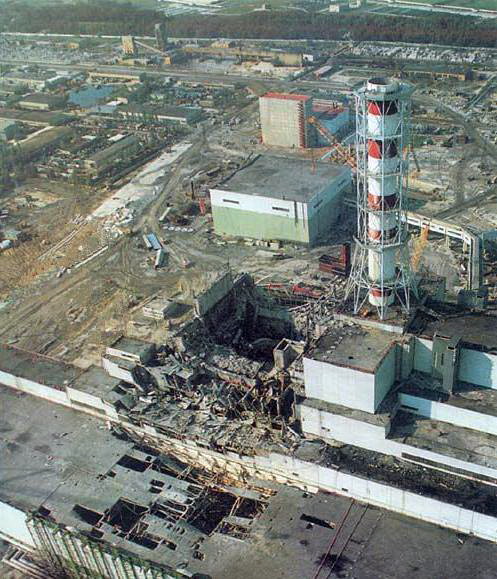
Chernobyl on the night of April 26, 1986 an accident occurred at the Chernobyl nuclear power plant, which cut off or mutilated the lives of hundreds of thousands of people. But the main thing is that she demonstrated the depravity of the regime of secrecy when it comes to people's lives. The population learned about the threat to health a few days after the accident. In the tight knot of hardware intrigues, the silence of the Politburo, attempts to diminish the scale of the accident and the departmental fright of those who have been responsible for the design and operation of the reactor were intertwined. The proclaimed publicity could not withstand the verification of Chernobyl. The liquidation of the consequences of the accident cost the budget of 14 billion rubles [14] in the first year and later a few more billion. In 1989, N. I. Ryzhkov at the meeting of the Politburo called the figure of expenses - 8 billion rubles [15]. The hardware struggle with opponents of Perestroika party officials, having a lot of privileges, were not interested in cardinal changes. But the fate of reform depended on them. Understanding this, M. S. Gorbachev and his supporters in the apparatus of the CPSU Central Committee regularly carried out personnel permutations at all levels of the party vertical. Despite this, a significant part of the nomenclature ignored the decisions of the highest power. According to Gorbachev, a “braking mechanism” arose, laid either in the Soviet political system itself, or in the minds of the nomenclature.
In 1986, articles appeared in the press with criticism of party officials responsible for failures and violations in the economy. The first in the "window dressing", "addiction to obsolete management methods", "substitution of cases" accused party leaders of Moldova, Ukraine, Kazakhstan. The fight against corruption, which flourished especially in the republics of Central Asia, has intensified. A wave of revelations swept through the country. Some officials from the Foreign Ministry, the Ministry of Foreign Trade, the State Committee on Foreign Relations were arrested and convicted. The arrests, noisy public campaigns in the cases of corrupt officials affected the entire party and state elite. The term "mafia" appears in vocabulary.
However, the fight against corruption was not so much the eradication of this social evil as the elimination of the conservative, anti -reformation opposition to the Gorbachev course, including in the national republics. The release of the first secretary of the Central Committee of the Communist Party of Kazakhstan D.A. Kunaev in December 1986 was especially significant. In his place was appointed a party apparatus G.V. Kolbin. This appointment demonstrated the refusal of the USSR leadership of the tradition to appoint representatives of the titular nation to the role of first persons in the Republic. The population of Kazakhstan perceived such behavior of the Union Center as the humiliation of an entire people. In Alma-Ata, mass riots passed.
The need for economic reforms The question of the urgent economic reform was raised on the agenda only at the end of 1986. The government, headed by Prime Minister N. I. Ryzhkov, made disappointing conclusions about the critical situation in the economy. The position of the USSR in the global energy market has sharply complicated.
When in the 1970s the tendency to reduce the growth rate of the economy was clearly manifested, the Soviet government saw the exit in the receipt of additional funds through oil export-first to Western Europe, primarily to Germany and Italy. The intensification of Soviet oil exports began when about 500 oil fields were discovered in Western Siberia, 9 of which, according to experts, were giant, with reserves from 100 million to 500 million tons each. Many of the deposits commissioned by the category of unique, giving an abnormally high debt of wells. The scale of oil production in the USSR in those years was unprecedented. By the beginning of the 1980s, the USSR occupied the second place in the world after Saudi Arabia in oil production. The peak of Soviet oil exports occurred in 1984 - 172 million tons. In 1981-1985, the oil complex provided approximately 20% of all budget revenues and 70–75% of all foreign exchange earnings of the country [16]. It was during this period that due to the stagnation of its own agriculture, the USSR turned into the largest import of food. In 1970, pure grain export from the USSR amounted to 3.5 million tons, in 1974 the balance became zero, since 1975 massive purchases have already been calculated in tens of millions of tons. The import of imports came in 1984, when only 26.8 million tons of grain were purchased in the USA and Canada. The excess of imports over export in the trade in agricultural products of the USSR with foreign countries amounted to $ 13.3 billion in 1987, in 1988 - 14.5 billion, in 1989 and 1990 - 17 billion each [17]. The most significant imports of imports were also lifting equipment, ships, agricultural vehicles. And the import of oil and gas equipment in the growth rate of growth broke all records, for 1970-1983 in value terms it grew 80 times. On September 13, 1985, the Minister of Oil Industry of Saudi Arabia Sheikh Imani said that his country radically changes its oil policy, and ceases to restrain oil production. In the first six months, its production increased 4 times. As a result, oil prices fell by 65%. The USSR lost $ 20 billion on this, the balance of foreign trade became negative. There was nothing to replace oil revenues - the quality of Soviet industry products, with rare exceptions, did not satisfy Western buyers. The drop in oil prices led to the fact that the Soviet Union was on the threshold of a severe economic and currency financial crisis. The commercial loans taken in the West did not solve problems, sooner or later they had to be given. The situation could save the stabilization fund, but the USSR did not have it. However, the party leadership did not recognize the scale of the threat and consequences of the currency crisis. In 1986, industrial production grew by 4.4%, agriculture - by 3%[18]. This gave Gorbachev and his environment confidence in the correctness of economic policy. For two years, 40 billion rubles were invested in the social sphere than planned. They raised salaries to teachers, doctors, cultural figures. Changes and additions to the law “On State Pensions”, introduced on May 22, 1986, cost the budget of 45 billion rubles. By the end of 1986, the gap between the commodity and money supply was aggravated. It was natural, because oil prices by that time fell to $ 15 per barrel, the country lost 2/3 of the revenue from oil exports and 35 billion rubles from reducing the sale of vodka. There was no currency necessary for the import of food and widespread goods [19]. The global oil market in the 1980s ceased to be a “seller” market, and turned into a “buyer” market. In accordance with this, monopoly high oil prices fell from $ 40 per barrel in 1984 to $ 17–20 by the fall of 1986 and remained at this level until 1990 [20]. It became clear: it is necessary to reduce financing of the military -industrial complex and social subsidies, purchase goods and food, and thereby eliminate the gap between demand and offer. Such a position was defended by the Secretary of the Central Committee N. N. Slyunkov in the Politburo. N. I. Ryzhkov opposed, believing that there is no need to change either the plan or the budget-we will somehow get out. For 1985-1986, the USSR foreign trade turning decreased by 10%, or 14 billion rubles. In December 1987, industrial production decreased by 6% compared to December 1986 [21]. This affected mechanical engineering, light industry and metallurgy. In power structures, they finally realized the need not only to improve socialism, but to seriously reform the entire economic mechanism. In 1987, the question of large -scale reform of the economy was raised at the January plenum of the CPSU Central Committee. The day before, M. S. Gorbachev put forward the slogan of “new economic thinking”, and at the Plenum formulated a political order to economic science - “to raise to the proper level theoretical explanation of the current economic situation”. However, the ideological arsenal of reforms was limited by the deplorable state of Soviet economic science. She mired in the dogmas of Marxism-Leninism, completely torn from reality. The Soviet economists of the older generation were able to respond to this order only by the fact that they again launched the discussion "about the ways of improving socialism as a socio-economic formation." The arguers did not have knowledge in market economics and political science, were not familiar with the experience of transforming authoritarian regimes in other countries and could not realize whether the recipes they proposed. The question arose of bringing low state retail prices in accordance with the cost of goods, which would abandon the huge budget subsidies arose especially acutely. At the same time, it was not about the liberalization of prices, not about the use of the market as a supply and supply regulator, but a one -time increase in prices in state stores. The fact that prices need to be raised in order to restore the proportions between solvent demand and demand and reduce budget deficit was no longer in doubt. But the fear of a social explosion was stopped not only by Ryzhkov, but also by Gorbachev himself, on which the final choice of the decision depended. At the same time, a massive campaign against the revision of retail prices was deployed in print from populist positions. From the reform of prices, even those scientists who proposed it turned away. The goals are not clear, the objectives were not defined by M. Gorbachev sincerely believed in socialism. His ideas about the market and private property were drawn from propaganda layouts of Marxist-Leninist theory. He and his environment did not have a specific reform plan, they moved to the touch. Gorbachev tried to extend the life of the administrative-command system with the help of “acceleration” and did not accept the program of transition to the market. He poorly imagined the real situation of the country, did not understand the danger of a currency crisis in conditions when the USSR completely depended on the procurement of food abroad. Later, even in an economic disaster in 1991, the Secretary General could not decide on the necessary, but politically risky reforms. However, we will be fair. M. S. Gorbachev was the highest person in the party hierarchy of the CPSU, which, unlike the Chinese Communist Party, was unable to recognize the need to change the public system and transition to the market and private property. In his policy, the Secretary General was obliged to take into account, especially in the first years of “perestroika”, the conservative position of members of the Central Committee of the CPSU, secretaries of the Central Committee of the republics, regions and regions, directors of defense enterprises and military leaders. And this meant that even in the conditions of the budget crisis, it was dangerous to terminate financing the intended construction projects in the regions, reduce the costs of the military -industrial complex, especially at city -forming enterprises, to stop the supply of oil to the allies to socialistrane - albeit at low prices, and at a loss. That is, real measures to overcome the economic crisis posed a threat to the power of the CPSU, and personally for the Secretary General were fraught with a repetition of the Khrushchev resignation. Raising prices, especially their liberalization, threatened with a social explosion. This explains the half -heartedness and inconsistency of the economic reforms of the “Perestroika” period. But the rejection of radical market reforms made the collapse of the communist regime inevitable. In January 1987, the government granted 20 ministries and 70 large enterprises the right to independently perform export-import operations. The unprecedented decision in its courage was the impetus for the destruction of the state monopoly on foreign trade. At the June 1987, the Plenum of the CPSU Central Committee decided to develop laws on the enterprise and cooperation, and the formula was proposed to “accelerate socio-economic development” on the basis of the self-leveling of state enterprises, decentralization of planning, democratization through the involvement of workers in enterprise management. The possibility of coexistence within the framework of socialism of various forms of ownership was recognized. The essence of the new approach for the Soviet system was to provide economic independence to business entities. A step was taken in the redistribution of the powers of ownership and disposal of state property - on November 23, 1989, the "Fundamentals of the Legislation of the Union of the SSR and the Union Republics on Lease" were adopted. The lease agreement concluded by the labor collective with a higher body gave the enterprise the right to leave the Ministry (department), and the tenants' team - the ownership of the profit and property acquired at its expense. Since tenants were not shareholders, a strange system of legal relations arose. The employee was listed as a co -owner of the means of production purchased from the state at the expense of profit, as long as he worked at the enterprise. But as soon as he quit, he lost his “property rights” to property. With this approach, the director became the actual owner of the enterprise. But he could not sell the assets of the enterprise to third parties - the transfer of the enterprise to other owners interfered with the “property rights” of other tenants. However, there was no market of means of production and the market of securities then. Nevertheless, for the party holding, it was a legal way to find rights close to the right of ownership, to get out of the control of the ministry, to independently dispose of the finances of enterprises-and thereby, it seems, to put on their own capital on legally. It is not surprising that the rental transition has intensified. By mid -1990, about 2 thousand enterprises entered into lease agreements, on which over 1.2 million people worked. The author is a professor at the Russian State University, the head of the educational and scientific center "New Russia. History of post -Soviet Russia". The original text is published on the website "History of the New Russia".
____________________________________
[14] Gorbachev M. Understand perestroika ... Why is it important now. S. 83. [15] in the Politburo of the Central Committee of the CPSU. According to Anatoly Chernyaev, Vadim Medvedev, George Shakhnazarov. 1985–1991. M., 2006. S. 445. [16] Kazarezov V.V. The most famous reformers of Russia. M., 2002. S. 306, 412. [17] with reference to Faostat Data 2005. (See: Gaidar E. T. The death of the Empire. Lessons for modern Russia. M., 2006. P. 173). [18] Gorbachev M. Understand perestroika ... Why is it important now. S. 103 [19] Opec Bulletin 1979–1988. Vienna, Opec Annual Report 1981–1987. Vienna. [20] Kapustkin V.I., Margina O. L. The main stages of development of the international oil industry and the global oil market. -http: //www.seinstitute.ru/files/oil-3P53-100.pdf [21] Abalkin L. I. Trudny Perevil // No reverse passage. M., 1989. S. 41.
Photo: 1. Authority: Unknown. English Wikipedia EN: Image: Chernobyl Disaster.jpg, conscientious use
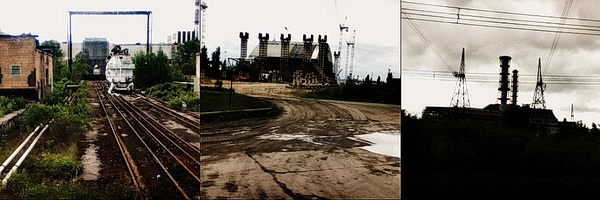
2-3. Wikipedia.org / Elena Dolman . Own work Chernobyl. In the alienation zone. under the license CC by-SA 3.0
Chernobyl on the night of April 26, 1986 an accident occurred at the Chernobyl nuclear power plant, which cut off or mutilated the lives of hundreds of thousands of people. But the main thing is that she demonstrated the depravity of the regime of secrecy when it comes to people's lives. The population learned about the threat to health a few days after the accident. In the tight knot of hardware intrigues, the silence of the Politburo, attempts to diminish the scale of the accident and the departmental fright of those who have been responsible for the design and operation of the reactor were intertwined. The proclaimed publicity could not withstand the verification of Chernobyl. The liquidation of the consequences of the accident cost the budget of 14 billion rubles [14] in the first year and later a few more billion. In 1989, N. I. Ryzhkov at the meeting of the Politburo called the figure of expenses - 8 billion rubles [15]. The hardware struggle with opponents of Perestroika party officials, having a lot of privileges, were not interested in cardinal changes. But the fate of reform depended on them. Understanding this, M. S. Gorbachev and his supporters in the apparatus of the CPSU Central Committee regularly carried out personnel permutations at all levels of the party vertical. Despite this, a significant part of the nomenclature ignored the decisions of the highest power. According to Gorbachev, a “braking mechanism” arose, laid either in the Soviet political system itself, or in the minds of the nomenclature.
In 1986, articles appeared in the press with criticism of party officials responsible for failures and violations in the economy. The first in the "window dressing", "addiction to obsolete management methods", "substitution of cases" accused party leaders of Moldova, Ukraine, Kazakhstan. The fight against corruption, which flourished especially in the republics of Central Asia, has intensified. A wave of revelations swept through the country. Some officials from the Foreign Ministry, the Ministry of Foreign Trade, the State Committee on Foreign Relations were arrested and convicted. The arrests, noisy public campaigns in the cases of corrupt officials affected the entire party and state elite. The term "mafia" appears in vocabulary.
However, the fight against corruption was not so much the eradication of this social evil as the elimination of the conservative, anti -reformation opposition to the Gorbachev course, including in the national republics. The release of the first secretary of the Central Committee of the Communist Party of Kazakhstan D.A. Kunaev in December 1986 was especially significant. In his place was appointed a party apparatus G.V. Kolbin. This appointment demonstrated the refusal of the USSR leadership of the tradition to appoint representatives of the titular nation to the role of first persons in the Republic. The population of Kazakhstan perceived such behavior of the Union Center as the humiliation of an entire people. In Alma-Ata, mass riots passed.
The need for economic reforms The question of the urgent economic reform was raised on the agenda only at the end of 1986. The government, headed by Prime Minister N. I. Ryzhkov, made disappointing conclusions about the critical situation in the economy. The position of the USSR in the global energy market has sharply complicated.
When in the 1970s the tendency to reduce the growth rate of the economy was clearly manifested, the Soviet government saw the exit in the receipt of additional funds through oil export-first to Western Europe, primarily to Germany and Italy. The intensification of Soviet oil exports began when about 500 oil fields were discovered in Western Siberia, 9 of which, according to experts, were giant, with reserves from 100 million to 500 million tons each. Many of the deposits commissioned by the category of unique, giving an abnormally high debt of wells. The scale of oil production in the USSR in those years was unprecedented. By the beginning of the 1980s, the USSR occupied the second place in the world after Saudi Arabia in oil production. The peak of Soviet oil exports occurred in 1984 - 172 million tons. In 1981-1985, the oil complex provided approximately 20% of all budget revenues and 70–75% of all foreign exchange earnings of the country [16]. It was during this period that due to the stagnation of its own agriculture, the USSR turned into the largest import of food. In 1970, pure grain export from the USSR amounted to 3.5 million tons, in 1974 the balance became zero, since 1975 massive purchases have already been calculated in tens of millions of tons. The import of imports came in 1984, when only 26.8 million tons of grain were purchased in the USA and Canada. The excess of imports over export in the trade in agricultural products of the USSR with foreign countries amounted to $ 13.3 billion in 1987, in 1988 - 14.5 billion, in 1989 and 1990 - 17 billion each [17]. The most significant imports of imports were also lifting equipment, ships, agricultural vehicles. And the import of oil and gas equipment in the growth rate of growth broke all records, for 1970-1983 in value terms it grew 80 times. On September 13, 1985, the Minister of Oil Industry of Saudi Arabia Sheikh Imani said that his country radically changes its oil policy, and ceases to restrain oil production. In the first six months, its production increased 4 times. As a result, oil prices fell by 65%. The USSR lost $ 20 billion on this, the balance of foreign trade became negative. There was nothing to replace oil revenues - the quality of Soviet industry products, with rare exceptions, did not satisfy Western buyers. The drop in oil prices led to the fact that the Soviet Union was on the threshold of a severe economic and currency financial crisis. The commercial loans taken in the West did not solve problems, sooner or later they had to be given. The situation could save the stabilization fund, but the USSR did not have it. However, the party leadership did not recognize the scale of the threat and consequences of the currency crisis. In 1986, industrial production grew by 4.4%, agriculture - by 3%[18]. This gave Gorbachev and his environment confidence in the correctness of economic policy. For two years, 40 billion rubles were invested in the social sphere than planned. They raised salaries to teachers, doctors, cultural figures. Changes and additions to the law “On State Pensions”, introduced on May 22, 1986, cost the budget of 45 billion rubles. By the end of 1986, the gap between the commodity and money supply was aggravated. It was natural, because oil prices by that time fell to $ 15 per barrel, the country lost 2/3 of the revenue from oil exports and 35 billion rubles from reducing the sale of vodka. There was no currency necessary for the import of food and widespread goods [19]. The global oil market in the 1980s ceased to be a “seller” market, and turned into a “buyer” market. In accordance with this, monopoly high oil prices fell from $ 40 per barrel in 1984 to $ 17–20 by the fall of 1986 and remained at this level until 1990 [20]. It became clear: it is necessary to reduce financing of the military -industrial complex and social subsidies, purchase goods and food, and thereby eliminate the gap between demand and offer. Such a position was defended by the Secretary of the Central Committee N. N. Slyunkov in the Politburo. N. I. Ryzhkov opposed, believing that there is no need to change either the plan or the budget-we will somehow get out. For 1985-1986, the USSR foreign trade turning decreased by 10%, or 14 billion rubles. In December 1987, industrial production decreased by 6% compared to December 1986 [21]. This affected mechanical engineering, light industry and metallurgy. In power structures, they finally realized the need not only to improve socialism, but to seriously reform the entire economic mechanism. In 1987, the question of large -scale reform of the economy was raised at the January plenum of the CPSU Central Committee. The day before, M. S. Gorbachev put forward the slogan of “new economic thinking”, and at the Plenum formulated a political order to economic science - “to raise to the proper level theoretical explanation of the current economic situation”. However, the ideological arsenal of reforms was limited by the deplorable state of Soviet economic science. She mired in the dogmas of Marxism-Leninism, completely torn from reality. The Soviet economists of the older generation were able to respond to this order only by the fact that they again launched the discussion "about the ways of improving socialism as a socio-economic formation." The arguers did not have knowledge in market economics and political science, were not familiar with the experience of transforming authoritarian regimes in other countries and could not realize whether the recipes they proposed. The question arose of bringing low state retail prices in accordance with the cost of goods, which would abandon the huge budget subsidies arose especially acutely. At the same time, it was not about the liberalization of prices, not about the use of the market as a supply and supply regulator, but a one -time increase in prices in state stores. The fact that prices need to be raised in order to restore the proportions between solvent demand and demand and reduce budget deficit was no longer in doubt. But the fear of a social explosion was stopped not only by Ryzhkov, but also by Gorbachev himself, on which the final choice of the decision depended. At the same time, a massive campaign against the revision of retail prices was deployed in print from populist positions. From the reform of prices, even those scientists who proposed it turned away. The goals are not clear, the objectives were not defined by M. Gorbachev sincerely believed in socialism. His ideas about the market and private property were drawn from propaganda layouts of Marxist-Leninist theory. He and his environment did not have a specific reform plan, they moved to the touch. Gorbachev tried to extend the life of the administrative-command system with the help of “acceleration” and did not accept the program of transition to the market. He poorly imagined the real situation of the country, did not understand the danger of a currency crisis in conditions when the USSR completely depended on the procurement of food abroad. Later, even in an economic disaster in 1991, the Secretary General could not decide on the necessary, but politically risky reforms. However, we will be fair. M. S. Gorbachev was the highest person in the party hierarchy of the CPSU, which, unlike the Chinese Communist Party, was unable to recognize the need to change the public system and transition to the market and private property. In his policy, the Secretary General was obliged to take into account, especially in the first years of “perestroika”, the conservative position of members of the Central Committee of the CPSU, secretaries of the Central Committee of the republics, regions and regions, directors of defense enterprises and military leaders. And this meant that even in the conditions of the budget crisis, it was dangerous to terminate financing the intended construction projects in the regions, reduce the costs of the military -industrial complex, especially at city -forming enterprises, to stop the supply of oil to the allies to socialistrane - albeit at low prices, and at a loss. That is, real measures to overcome the economic crisis posed a threat to the power of the CPSU, and personally for the Secretary General were fraught with a repetition of the Khrushchev resignation. Raising prices, especially their liberalization, threatened with a social explosion. This explains the half -heartedness and inconsistency of the economic reforms of the “Perestroika” period. But the rejection of radical market reforms made the collapse of the communist regime inevitable. In January 1987, the government granted 20 ministries and 70 large enterprises the right to independently perform export-import operations. The unprecedented decision in its courage was the impetus for the destruction of the state monopoly on foreign trade. At the June 1987, the Plenum of the CPSU Central Committee decided to develop laws on the enterprise and cooperation, and the formula was proposed to “accelerate socio-economic development” on the basis of the self-leveling of state enterprises, decentralization of planning, democratization through the involvement of workers in enterprise management. The possibility of coexistence within the framework of socialism of various forms of ownership was recognized. The essence of the new approach for the Soviet system was to provide economic independence to business entities. A step was taken in the redistribution of the powers of ownership and disposal of state property - on November 23, 1989, the "Fundamentals of the Legislation of the Union of the SSR and the Union Republics on Lease" were adopted. The lease agreement concluded by the labor collective with a higher body gave the enterprise the right to leave the Ministry (department), and the tenants' team - the ownership of the profit and property acquired at its expense. Since tenants were not shareholders, a strange system of legal relations arose. The employee was listed as a co -owner of the means of production purchased from the state at the expense of profit, as long as he worked at the enterprise. But as soon as he quit, he lost his “property rights” to property. With this approach, the director became the actual owner of the enterprise. But he could not sell the assets of the enterprise to third parties - the transfer of the enterprise to other owners interfered with the “property rights” of other tenants. However, there was no market of means of production and the market of securities then. Nevertheless, for the party holding, it was a legal way to find rights close to the right of ownership, to get out of the control of the ministry, to independently dispose of the finances of enterprises-and thereby, it seems, to put on their own capital on legally. It is not surprising that the rental transition has intensified. By mid -1990, about 2 thousand enterprises entered into lease agreements, on which over 1.2 million people worked. The author is a professor at the Russian State University, the head of the educational and scientific center "New Russia. History of post -Soviet Russia". The original text is published on the website "History of the New Russia".
____________________________________
[14] Gorbachev M. Understand perestroika ... Why is it important now. S. 83. [15] in the Politburo of the Central Committee of the CPSU. According to Anatoly Chernyaev, Vadim Medvedev, George Shakhnazarov. 1985–1991. M., 2006. S. 445. [16] Kazarezov V.V. The most famous reformers of Russia. M., 2002. S. 306, 412. [17] with reference to Faostat Data 2005. (See: Gaidar E. T. The death of the Empire. Lessons for modern Russia. M., 2006. P. 173). [18] Gorbachev M. Understand perestroika ... Why is it important now. S. 103 [19] Opec Bulletin 1979–1988. Vienna, Opec Annual Report 1981–1987. Vienna. [20] Kapustkin V.I., Margina O. L. The main stages of development of the international oil industry and the global oil market. -http: //www.seinstitute.ru/files/oil-3P53-100.pdf [21] Abalkin L. I. Trudny Perevil // No reverse passage. M., 1989. S. 41.
Photo: 1. Authority: Unknown. English Wikipedia EN: Image: Chernobyl Disaster.jpg, conscientious use
2-3. Wikipedia.org / Elena Dolman . Own work Chernobyl. In the alienation zone. under the license CC by-SA 3.0

| Print version |
-
Leonid Gozman: No matter how circumstances develop, no one will want to go to real risks for the principles of justice and deposition. Although someone may well believe in the opposite.
