
Translated material
"Acceleration" and "Perestroika". 1986-1988. Different interests
"Acceleration" and "Perestroika". 1986-1988. Different interests July 21, 2022, Natalia Eliseeva 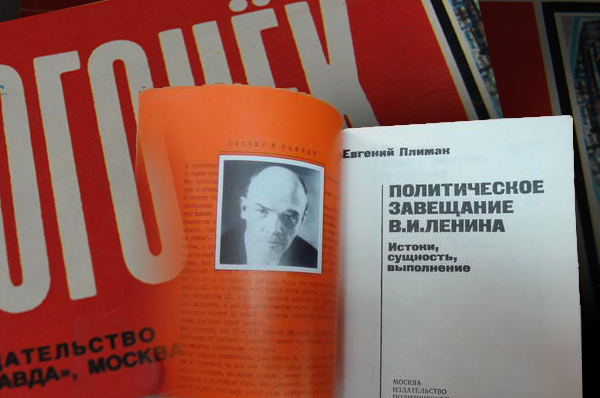
Various interests by mid -1987 economic and political transformations affected the interests of different social groups. The real demarcation began. They argued at work and at home - they chose the future of the country. Various informal associations and organizations were actively created, their number was measured by hundreds. In the republics, movements began to put forward the slogans of national self -determination. In the overwhelming mass, it was a natural, healthy democratic process, which reflected a wide range of moods - from supporting the course of Gorbachev to a complete denial of it. The ordinary members of the CPSU, and the party-bureaucratic apparatus did not stand aside. In words, everyone performed “for perestroika”, but understood it differently. In practice, the stratification of the party-economic nomenclature took place in accordance with the value attitudes of its specific representatives. The conservative part of the nomenclature did not see the prospects in the market conditions, so privatization did not attract it. These people preferred to receive a stable high salary of a party or government official, to have benefits and privileges. They resisted the reforms and subsequently made up the backbone of the Communist Party. “Red Directors” longed for the enterprise to transfer the enterprise into their property and, albeit unnecessary, supported Gorbachev, who created the conditions for nomenclature privatization. They saw themselves by the owners of concerns and firms, forced the primary accumulation of capital, at the plenums of the CPSU Central Committee vaught for reforms and later became the post -Soviet bourgeoisie. The allied laws on lease, on cooperatives, the union law on privatization prove that Gorbachev understood their interests and collaborated quite successfully with them. There were convinced fans of the communist myth who believed that all people can be forced to work for a common good, equalized in property position, and etch the instinct of private property. They were sure that it was possible to stop the collapse of the socialist planned economy, that it is able to compete with the market. These people subsequently rally in “Labor Russia”. It is interesting to note that at that time among supporters of reforms, it became fashionable to classify themselves to “Social Democrats” in the European sense of this term. The Social Democratic Association of Russia was formed, many communists called themselves the ideological social democrats-supporters of reforms. The fashion for social democracy was connected, on the one hand, with an unwillingness to abandon the attractive socialist slogan of the equality of property status, on the other hand, with the desire to move towards the market, to competition. Of course, such political moods had nothing to do with Western Social Democracy. The Russians knew little about the real policy of European Social Democrats. Those who ranked themselves to the Social Democrats were not aware that in Sweden the share of private property in industry is the highest in Europe, and in terms of property stratification, this country is not inferior to other Western states. That the Swedish Social Democrats did not nationalize private enterprises, not counting it, according to the expression, the Swedish Minister of Finance, "turn the neck of the chicken that carries golden eggs." Their merit is in the creation of effective institutions of state support in the conditions of the market of social support and retraining of personnel, healthcare. From the standpoint of current knowledge about the values and attitudes of Russian society, the intention to transform the CPSU into a social democratic bonus was a utopia. The mentality of the Swedish Social Democrats and members of the CPSU differed too much. The Swedes did not deify the state, did not profess state paternalism, they were alien to our medieval merging of power and property. The state of them was associated not with the usual omnipotence of the bureaucracy, but with the protection of civil rights and freedoms, ensuring the legality and law and order. The separation of powers, an independent court, a huge role of parliament and local self -government were given to them. In order for similar values to be formed by Russians, it will take more than one decade of democratic development of our society. To comprehend the history of the country rightly assuming that the majority of the party nomenclature will resist the planned reforms, M. S. Gorbachev relied on that part of the Soviet intelligentsia, which showed commitment to liberal ideas, on those layers of society that criticism of bureaucracy, corruption, bribery. On the pages of the press, on television and radio, they began to reveal the “white spots” of history, mass terror and the arbitrariness of Stalin's time. Life was critically analyzed at the turn of the 1970-1980s, called in journalism a period of "stagnation". There were more information about current events in the country, which provided Gorbachev support for the population, excluded a “traffic”, a quiet revolution, which opponents of the reforms could be decided. However, the key was not so much revaluation of the past as the choice of a positive period in this past in order to justify the course on reforms. Thus, according to Gorbachev and his entourage, there was NEP, when the market acted under the state’s control, cooperatives, private entrepreneurship developed, and concessions to foreign firms were provided. Having outlined the circle of possible criticism of the Stalin and Brezhnev periods of Soviet history, Gorbachev called for paying attention to the works of N. I. Bukharin and the economists of the 1920s A.V. Chayanov and N. D. Kondratyev. In mid-July 1987, M. S. Gorbachev invited the secretaries of the Central Committee and introduced them to the materials of the commission of the commission of the 1930s created under the investigation of the political trials of the 1930s created under the investigation of political trials. The investigation was completed in 1962, the conclusions were submitted to the Central Committee. Khrushchev informed about them members of the then Presidium of the Central Committee, but did not give them further move. At the suggestion of Gorbachev, a commission was created for the rehabilitation of victims of political repressions of the 1930-1950s under the leadership of M. S. Solomentsev, and after his retirement of A. N. Yakovlev. The activities of the commission were of great political importance, since public de-Stalinization meant a gap with the political system that has existed in the USSR since the 1930s. In a report on the 70th anniversary of the October Revolution (1987), M. S. Gorbachev set the task "to give more socialism to all power institutions." This report and mainly the indictment in the press influenced the alignment of forces in the Politburo and the Central Committee of the CPSU, on the mood of ordinary communists and wide masses. There was a split in society in assessing socialism. If Stalinist socialism is a distortion of Leninist and Marxist ideas, then what was built after Stalin? After all, its overthrow remained only the voluntarist trick of the extravagant N. S. Khrushchev. A. N. Yakovlev believed that criticism of Stalinism should be brought to the end and thus “cleanse” socialism from the features unusual for him. But what about the Great Patriotic War, because Stalin won her in the minds of Soviet people? Continuing this thought, a member of the Politburo E.K. Ligachev insisted that victory would not be possible without the construction of the first five years, without industrialization. But then how to get around the questions about the “price” of industrialization, about the collectivization of the 1930s, destructive for the peasantry, about hunger and mass repressions? The rethinking of their own history for the leaders of the CPSU was an important act of the ideological design of reforms. At the first stage of the reforms, the supporters of Gorbachev turned to the slogans of the October Revolution, to the late works of V. I. Lenin, to the NEP. From a political point of view, the appeal to the ideas of Lenin was then useful, as she put Gorbachev’s policy in the context of national and party history. In the aforementioned report, Gorbachev looked at the ongoing reforms with October as an ideological landmark of possible changes. But in journalism, in popular mass publications, these topics were presented in a new way-there was a desecalization of the Bolshevik-Lenins. So, the “light”, a magazine with a millionth circulation, designed for the Soviet layman, in 1986, covered the next anniversary of October, using rare and little -known facts that were uncomplicated representing the heroes of the revolution. It was not textbook, but in the spirit of revisionist interpretations, Lenin and his associates in the plays of M. N. Shatrov were presented, which were published in the journal New World and put in Lenkom. After the XIX party conference, a deep ideological coup in the public consciousness occurred. In the fall of 1988, in the magazine “Science and Life”, popular among the technical intelligentsia and youth, an article by the Doctor of Philosophy A. S. Tsipko “The Origins of Stalinism” was published, which justified the idea of Stalin as the successor of the “case of Lenin”. Of particular importance was the fact that the author was a consultant to the International Department of the Central Committee of the CPSU, so many regarded the article as the “task” of Gorbachev. Similar publications laid the beginning of the complete denial of Soviet historical experience. In 1998, the further debunking of October and Lenin acquired a total character. At the end of 1990, the magazine "Spark" published the last Lenin texts under the general heading "Political Testament of Lenin", including 8 letters and articles of the late 1922 - early 1923, in which October appeared before readers in the form of human tragedy. Leninism in the eyes of the mass reader was finally discredited. The author is a professor at the Russian State University, the head of the educational and scientific center "New Russia. History of post -Soviet Russia". The original text is published on the website "History of the New Russia".
Various interests by mid -1987 economic and political transformations affected the interests of different social groups. The real demarcation began. They argued at work and at home - they chose the future of the country. Various informal associations and organizations were actively created, their number was measured by hundreds. In the republics, movements began to put forward the slogans of national self -determination. In the overwhelming mass, it was a natural, healthy democratic process, which reflected a wide range of moods - from supporting the course of Gorbachev to a complete denial of it. The ordinary members of the CPSU, and the party-bureaucratic apparatus did not stand aside. In words, everyone performed “for perestroika”, but understood it differently. In practice, the stratification of the party-economic nomenclature took place in accordance with the value attitudes of its specific representatives. The conservative part of the nomenclature did not see the prospects in the market conditions, so privatization did not attract it. These people preferred to receive a stable high salary of a party or government official, to have benefits and privileges. They resisted the reforms and subsequently made up the backbone of the Communist Party. “Red Directors” longed for the enterprise to transfer the enterprise into their property and, albeit unnecessary, supported Gorbachev, who created the conditions for nomenclature privatization. They saw themselves by the owners of concerns and firms, forced the primary accumulation of capital, at the plenums of the CPSU Central Committee vaught for reforms and later became the post -Soviet bourgeoisie. The allied laws on lease, on cooperatives, the union law on privatization prove that Gorbachev understood their interests and collaborated quite successfully with them. There were convinced fans of the communist myth who believed that all people can be forced to work for a common good, equalized in property position, and etch the instinct of private property. They were sure that it was possible to stop the collapse of the socialist planned economy, that it is able to compete with the market. These people subsequently rally in “Labor Russia”. It is interesting to note that at that time among supporters of reforms, it became fashionable to classify themselves to “Social Democrats” in the European sense of this term. The Social Democratic Association of Russia was formed, many communists called themselves the ideological social democrats-supporters of reforms. The fashion for social democracy was connected, on the one hand, with an unwillingness to abandon the attractive socialist slogan of the equality of property status, on the other hand, with the desire to move towards the market, to competition. Of course, such political moods had nothing to do with Western Social Democracy. The Russians knew little about the real policy of European Social Democrats. Those who ranked themselves to the Social Democrats were not aware that in Sweden the share of private property in industry is the highest in Europe, and in terms of property stratification, this country is not inferior to other Western states. That the Swedish Social Democrats did not nationalize private enterprises, not counting it, according to the expression, the Swedish Minister of Finance, "turn the neck of the chicken that carries golden eggs." Their merit is in the creation of effective institutions of state support in the conditions of the market of social support and retraining of personnel, healthcare. From the standpoint of current knowledge about the values and attitudes of Russian society, the intention to transform the CPSU into a social democratic bonus was a utopia. The mentality of the Swedish Social Democrats and members of the CPSU differed too much. The Swedes did not deify the state, did not profess state paternalism, they were alien to our medieval merging of power and property. The state of them was associated not with the usual omnipotence of the bureaucracy, but with the protection of civil rights and freedoms, ensuring the legality and law and order. The separation of powers, an independent court, a huge role of parliament and local self -government were given to them. In order for similar values to be formed by Russians, it will take more than one decade of democratic development of our society. To comprehend the history of the country rightly assuming that the majority of the party nomenclature will resist the planned reforms, M. S. Gorbachev relied on that part of the Soviet intelligentsia, which showed commitment to liberal ideas, on those layers of society that criticism of bureaucracy, corruption, bribery. On the pages of the press, on television and radio, they began to reveal the “white spots” of history, mass terror and the arbitrariness of Stalin's time. Life was critically analyzed at the turn of the 1970-1980s, called in journalism a period of "stagnation". There were more information about current events in the country, which provided Gorbachev support for the population, excluded a “traffic”, a quiet revolution, which opponents of the reforms could be decided. However, the key was not so much revaluation of the past as the choice of a positive period in this past in order to justify the course on reforms. Thus, according to Gorbachev and his entourage, there was NEP, when the market acted under the state’s control, cooperatives, private entrepreneurship developed, and concessions to foreign firms were provided. Having outlined the circle of possible criticism of the Stalin and Brezhnev periods of Soviet history, Gorbachev called for paying attention to the works of N. I. Bukharin and the economists of the 1920s A.V. Chayanov and N. D. Kondratyev. In mid-July 1987, M. S. Gorbachev invited the secretaries of the Central Committee and introduced them to the materials of the commission of the commission of the 1930s created under the investigation of the political trials of the 1930s created under the investigation of political trials. The investigation was completed in 1962, the conclusions were submitted to the Central Committee. Khrushchev informed about them members of the then Presidium of the Central Committee, but did not give them further move. At the suggestion of Gorbachev, a commission was created for the rehabilitation of victims of political repressions of the 1930-1950s under the leadership of M. S. Solomentsev, and after his retirement of A. N. Yakovlev. The activities of the commission were of great political importance, since public de-Stalinization meant a gap with the political system that has existed in the USSR since the 1930s. In a report on the 70th anniversary of the October Revolution (1987), M. S. Gorbachev set the task "to give more socialism to all power institutions." This report and mainly the indictment in the press influenced the alignment of forces in the Politburo and the Central Committee of the CPSU, on the mood of ordinary communists and wide masses. There was a split in society in assessing socialism. If Stalinist socialism is a distortion of Leninist and Marxist ideas, then what was built after Stalin? After all, its overthrow remained only the voluntarist trick of the extravagant N. S. Khrushchev. A. N. Yakovlev believed that criticism of Stalinism should be brought to the end and thus “cleanse” socialism from the features unusual for him. But what about the Great Patriotic War, because Stalin won her in the minds of Soviet people? Continuing this thought, a member of the Politburo E.K. Ligachev insisted that victory would not be possible without the construction of the first five years, without industrialization. But then how to get around the questions about the “price” of industrialization, about the collectivization of the 1930s, destructive for the peasantry, about hunger and mass repressions? The rethinking of their own history for the leaders of the CPSU was an important act of the ideological design of reforms. At the first stage of the reforms, the supporters of Gorbachev turned to the slogans of the October Revolution, to the late works of V. I. Lenin, to the NEP. From a political point of view, the appeal to the ideas of Lenin was then useful, as she put Gorbachev’s policy in the context of national and party history. In the aforementioned report, Gorbachev looked at the ongoing reforms with October as an ideological landmark of possible changes. But in journalism, in popular mass publications, these topics were presented in a new way-there was a desecalization of the Bolshevik-Lenins. So, the “light”, a magazine with a millionth circulation, designed for the Soviet layman, in 1986, covered the next anniversary of October, using rare and little -known facts that were uncomplicated representing the heroes of the revolution. It was not textbook, but in the spirit of revisionist interpretations, Lenin and his associates in the plays of M. N. Shatrov were presented, which were published in the journal New World and put in Lenkom. After the XIX party conference, a deep ideological coup in the public consciousness occurred. In the fall of 1988, in the magazine “Science and Life”, popular among the technical intelligentsia and youth, an article by the Doctor of Philosophy A. S. Tsipko “The Origins of Stalinism” was published, which justified the idea of Stalin as the successor of the “case of Lenin”. Of particular importance was the fact that the author was a consultant to the International Department of the Central Committee of the CPSU, so many regarded the article as the “task” of Gorbachev. Similar publications laid the beginning of the complete denial of Soviet historical experience. In 1998, the further debunking of October and Lenin acquired a total character. At the end of 1990, the magazine "Spark" published the last Lenin texts under the general heading "Political Testament of Lenin", including 8 letters and articles of the late 1922 - early 1923, in which October appeared before readers in the form of human tragedy. Leninism in the eyes of the mass reader was finally discredited. The author is a professor at the Russian State University, the head of the educational and scientific center "New Russia. History of post -Soviet Russia". The original text is published on the website "History of the New Russia".
| Print version |
-
Leonid Gozman: No matter how circumstances develop, no one will want to go to real risks for the principles of justice and deposition. Although someone may well believe in the opposite.
