
Translated material
Computer programs are able to predict the outcome of hostilities. One of them predicted that the Russian army would not take Kyiv at the beginning of the war
The Economist spoke about such technologies
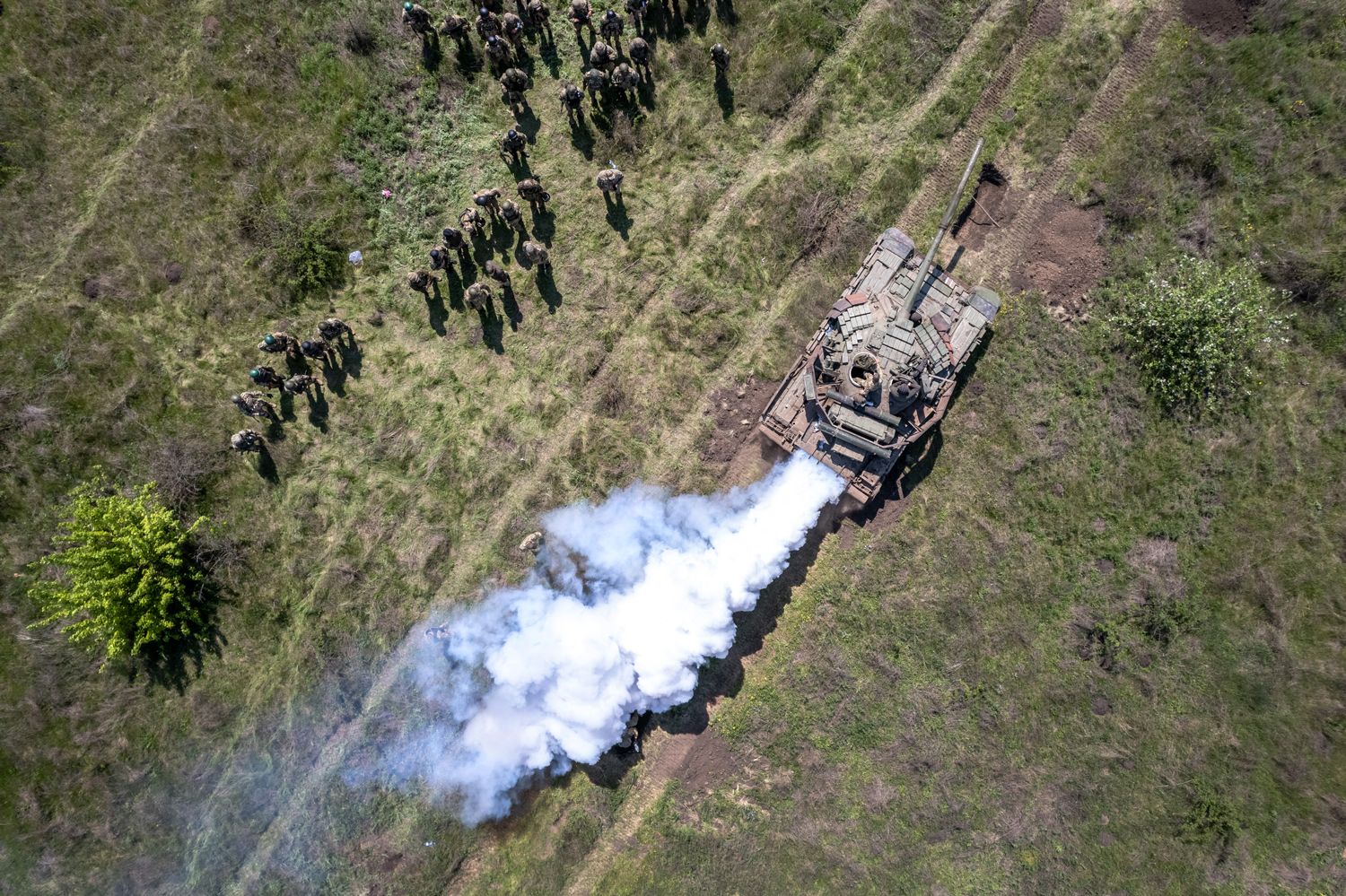
On February 24, Russian troops invaded Ukraine and soon reached Kyiv, but a month later retreated under the pretext of changing priorities in hostilities. It is believed that the Russian command did not expect serious resistance and planned to capture the capital of Ukraine in a few days, but what were the chances of the success of such an ambitious operation? The American program Major Combat Operations Statistical Model (MCOSM), which expects a possible outcome of the battles, estimated the likelihood of the success of the Russian army for two points out of possible seven. The Economist magazine tells how such technologies work.
McOSM is one of the most significant developments in the field of military forecasting. It was created by US Navy engineers. The program algorithm is based on data from 96 battles and military campaigns over the past 100 years. The creator of the simulator, professor of the Naval College, John Charneki, said that in the hands of an experienced user the program makes seven faithful predictions out of 10.
To simulate a particular battle, the user must make 30 values to the MCOSM 30. They include the level of preparation of each side of the conflict, firepower, mobility, logistics, intelligence, as well as the ability to make decisions, streamlining and synchronization of the operation.
McOSM is a deterministic type program - the same values give the same result. Another type is probabilistic. The Economist is given to the example of Brawler, an air fighting simulator developed by the American defense company Mantech.
In this program, you can run the same scenario many times, while receiving different results. This allows you to establish, for example, what kind of maneuvers, weather, height or other variables will increase the chances of evading the F-16 fighter from the Russian anti-aircraft missile system S-400.
In addition, Brawler developers are engaged in modeling the “pilot’s brain”, which allows their simulations to take into account the mental and cultural features of the virtual pilot, as well as distracting factors and cognitive load during combat departure.
The transnational company Bohemia Interactive Simulations (BISIM) is working on another project - a whole “defense meta -shift”. The creators of the project say that the program will be able to simulate actions and their consequences for a huge number of people and objects: from soldiers, tanks, ships and aircraft to buildings, machines, mobile towers, vegetation and even the number of ammunition with a separate fighter. Also, the simulator in its calculations will take into account not only the real arrangement of objects obtained from satellites and reconnaissance aircraft, but also weather conditions, which will allow even the stuck of the tank in the mud.
The former head of Bisim Pete Morrison, who is now engaged in the commercial side of the project, said that the detail will reach the blasting path of each individual bullet, including ricochesis. “Carry out several hundred simulations of the intersection by the troops of the site of the enemy territory, and the calculation of losses will teach you how it is not necessary to do this,” Morrison said.
For all the complexity of such programs and a huge number of variables that they take into account, the war in Ukraine showed that they are imperfect. The will of the Ukrainians to resist Russian aggression has a greater impact on the course of the war, which was expected by a team of specialists of the military research and analytical center in Kansas, his head Pamela Blechinger said.
Although McOSM does not take into account such a parameter as “will to the struggle”, The Economist nevertheless asked the creator of the John Charneki program to predict how the second stage of the war in Ukraine, which is characterized by the massive use of artillery, would end. Charneki introduced relevant information into the program, including the lack of weapons from Ukraine and the increased abilities of Russia in the field of troops and information processing. The result of the simulation was Pat - five out of seven points for success for each side of the conflict.
However, the results of the simulations should be treated carefully, said the employee of the Naval Analytical Center Andrew Ilachinski. “The appropriation of the numerical meanings of human psychology and the military know-how was subjective at best, and in the worst is unrealistic,” said Ilachinsky. “As in the old saying - all models are wrong, but some are useful.”