
Translated material
Life without deception
The great Uve Zeler left
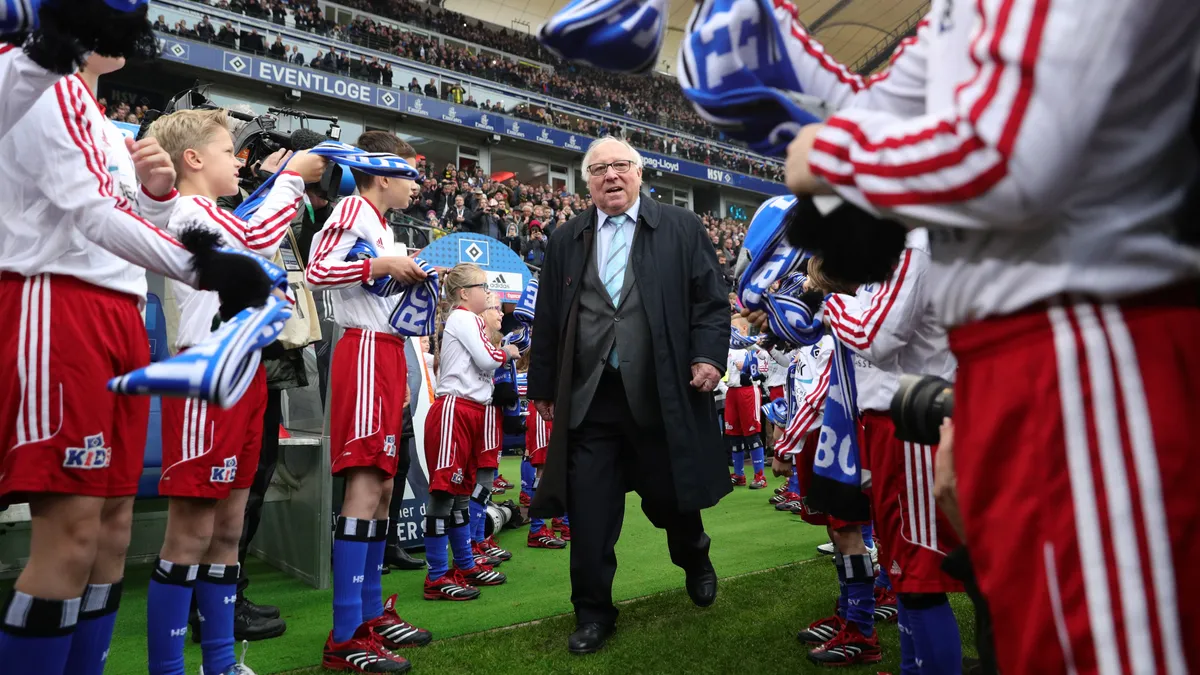
Who saw Zeler in a breakthrough will not forget. Small, dense and dozen, with bald spots formed by the end of his career, he did not run, but flew with threatening swiftness through protection. The speed of his overweight was so high that it seemed that he did not control himself and could only blindly rush forward, without thinking anything. Stupidity, fatal mistake! He saw everything, he noticed everything with the exact gaze of the central forward - the defenders flying back, the position of the goalkeeper - and suddenly shimmering all the energy of an overgrown body into a blow.
Boom! BAC! FURY! After the blow of Zeler, the ball flew in a straight line, without any tricks, without any twist there, in a straight line with a whistle and exactly in the upper corner or under the upper bar or to that place of the gate that turned out to be unattainable for the goalkeeper. He scored - this is not about Zeler, he did not score, but drove and drove the ball into the goal, drove a mighty blow, deliciously, like a nail with a hammer blow.
The blow was his natural gift, what he was equipped with birth. Maybe he received this blow from Erwin's father in the inheritance. Erwin Zeler, the Hamburg proletarian, played for FC Hamburg - a half -amateur club. His son Uve followed in his footsteps, played in Hamburg on wastelands in the middle of the houses destroyed by bombing and, he used to defeat the windows and bastards, which were preserved under the bombs of the windows. Father demanded honesty: well, Uwe, say, how much did he break today? Honesty as a norm of life, honesty from childhood, the simple honesty of a simple person who knows that yes, yes, no it.
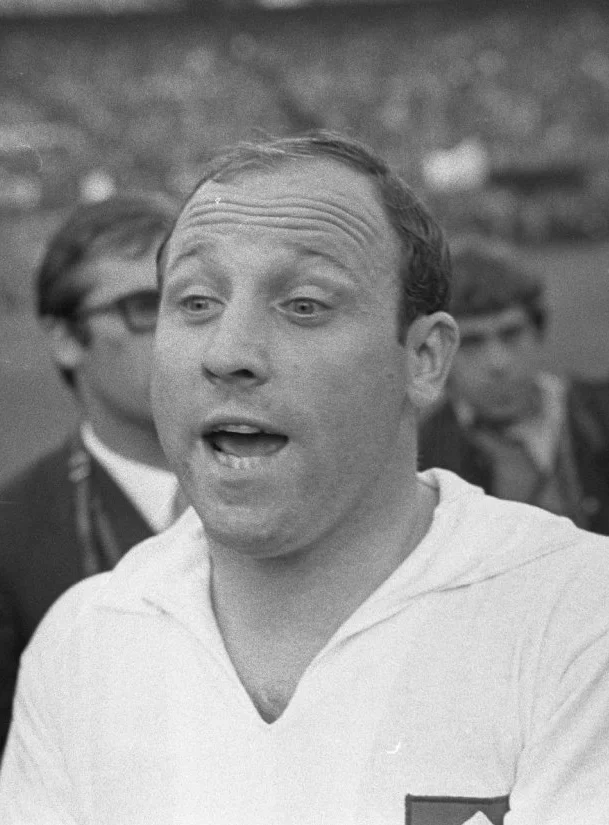
At sixteen, Zeeler was already playing with adults at the heart of Hamburg. People went to look at him. Not only goals and blows, no. It is worth looking at his jerk. He did not have to accelerate. From the place he suddenly gained such a speed and carried so swiftly that the defender at a long step - as a rule, they were all above him - flew back and seemed standing. Zeler was not characteristic of changing the trajectory, he was not one of those who wise and finit, complicates, no, no, he flew in a straight line as a core, which was not imperious to choose a line of movement, he was released and it flies so much until the moment, when suddenly, on a hunch, he struck a blow.
And then the defenders are at a loss, and the goalkeeper in a great disorder rises from the ground.
He did not know how to beat weakly. Show that it hits strength, but to break through the equipment, to show in one corner and break through in another - this is not about him. I suspect that inside this good -natured, unprofitable uncle sat the conviction that could not be deceived in him since childhood, and the goalkeeper, including that in everything, must always be honest - and therefore he showed where he showed it and beat there. Where it will go, he will slam it. The goalkeeper could be sure that Zeeler would not deceive, but what's the point? His blow is the concentration of the entire kinetic energy of movement in the rise, from the rise he planted the balls so that the mesh rose, and the fan's heart was full of enthusiasm.
He also planted his head, which was even more surprising, because with a height of 170 cm, he jumped above the high defenders and from the upper point, from a height of almost three meters, managed to let the ball with such force, as if he had not beaten his forehead, but his foot. But he did not always beat his forehead, his famous goal against the England national team at the 1970 World Cup, he scored his head. How? Standing with your back to the gate! In a swift jump! And he could still, standing with his back to the gate, soak into the air, turn around in flight, adjusting to the ball so that he lay down on the rise of his now old -fashioned, black Adidas Bots, and punch through himself - and again the ball flew into a net with a whistle.
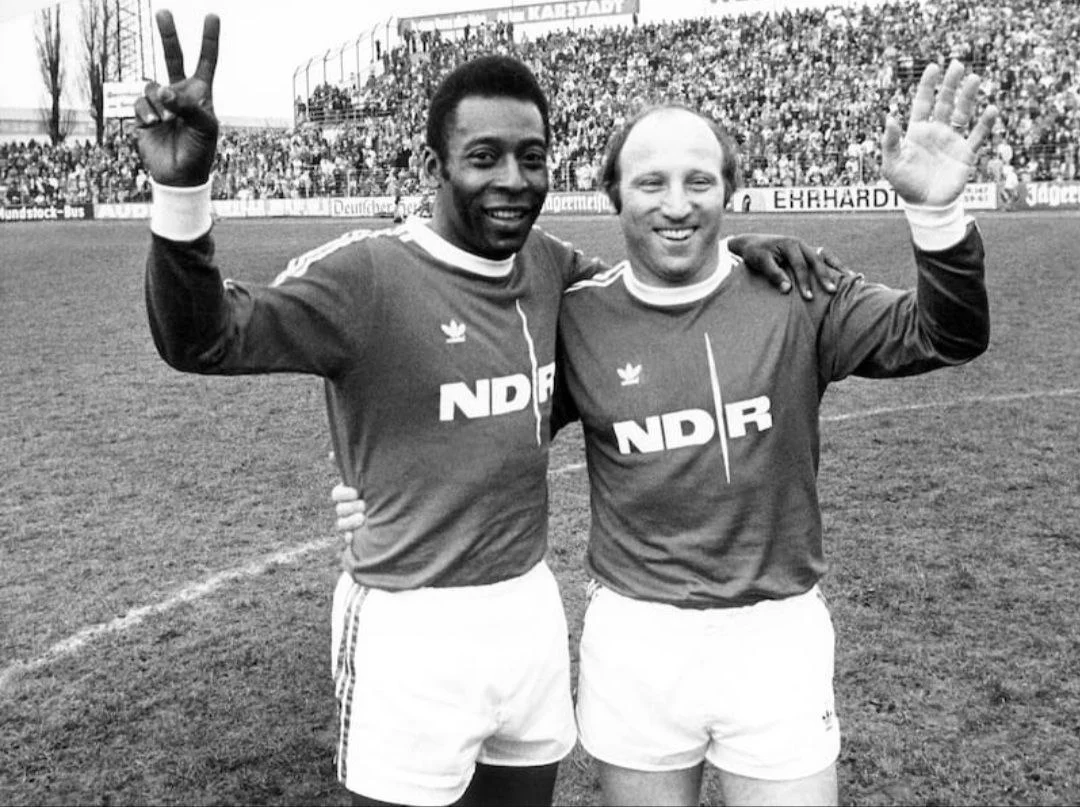
Such boom! BAC! And FURY! Zeeler pricked more than four hundred pieces, but is he only glorious? Not only that. He was a man whose significance was much wider than football, although he never sought this in terms of simplicity of his soul and never thought about anything like that. But there was something in it that there is not in the current “stars”, something that is completely absent in modern football, consisting of celestials, “stars” and millionaires. People considered him close to themselves and their own. "UNS UWE", "Our Uwe." He seemed to accompany Germany on her way from the disaster to the welfare, on this difficult path through the fifties and sixties, when there were former Nazis in leading posts, and political crises, and the murder of Rudy Duchka, and student unrest, and the stories of Henry Bell, in one of which the hero says that “I would be better than a dead Jew, than a living German.” Many in Germany could not accept such humiliation and aversion to "be a German." Are we really so disgusting, is it really the fault for crimes that falls on all of us?
But in all this plexus and interweaving of questions, pain, protest and confusion there was still Uwe Zeeler, twenty years tirelessly, honestly worn in football fields -
A person who, at least during the match, united people and gave them a feeling of childhood joy in the world -filled problems and horrors.
In 1961, the Italian coach Elenio Errera came to Hamburg to pick up the young Zeler in his International. In the proletarian FC, Hamburg Zeler earned well - in the Inter, millions were waiting for him. He thought for three days and refused. "I am a hamburger, not a migratory bird." For modern football players, this is generally incomprehensible, why he refused, why he refused, because they offered an excellent contract. They live so and play, today, tomorrow, today they kiss the coat of arms of one club on a T -shirt, tomorrow another. Therefore, Zeeler - much later, when he had already finished playing - called them "football mercenaries." He himself was never a mercenary. In the era of the growing perversion of sports, he remained with his beliefs. Zeeler played for one club for twenty years in a row, for his native Hamburg, where he knew every lane, knew the people who went to work in the morning, knew the brewers, where people discussed his game after work, knew how the city was rebuilt after the war, knew the port and beeps of ships, knew the Hamburg dialect and spoke on it. It was his city, for which he played in a team, which was originally called the "red -haired", because they traditionally had red cowards, and the T -shirts are white, and a white square on which a black square was inscribed on their chests. This form, this emblem and this city of Zeeler was faithful all his life. Fidelity was his human quality, loyalty to the place, people and the choice made forever. With his wife Ilke, he was along with his youth to death - 63 years old.
Zeeler played four times at the world championships, was the second and third, but he never became the first - this was the German team once before him, three times after him.
He himself said that there is pain from it, but not strong and not painful, because there are some other things. In 1966, the captain of the German national team Zeler played in the final of the World Championship at Wembley against England, in that unforgettable match where England led 2: 1 and German Weber equalized in the last minute of the main time. And then there was a blow by Jeffrey Hurst into the crossbar of the German gate and a rebound of the ball, which was then argued about for decades: a ball fell in front of the line or behind the line, which all the same Weber, nicknamed Bulle, immediately carried out on the corner. There was no goal, everyone can see this by looking at the slow -off shooting of the episode, but then there was neither VAR, nor repetitions of TV. Judge Dynst showed a corner, and then won the side Bahramov and asked him if there was a goal. "Was!" The Germans lost the final, and in the locker room after the game, the coach Gelmut Schön told the exhausted, in despair, a deceived team - all eleven who knew that there was no goal: “People, think about this: good second place is better than the bad first.”
The first places in the life of Zeler were enough, there were enough medals, prizes, awards, cups, ovations, but for a lifetime he remembered the words of the antiquity of Schön, spoken in the locker room after that terrible defeat.
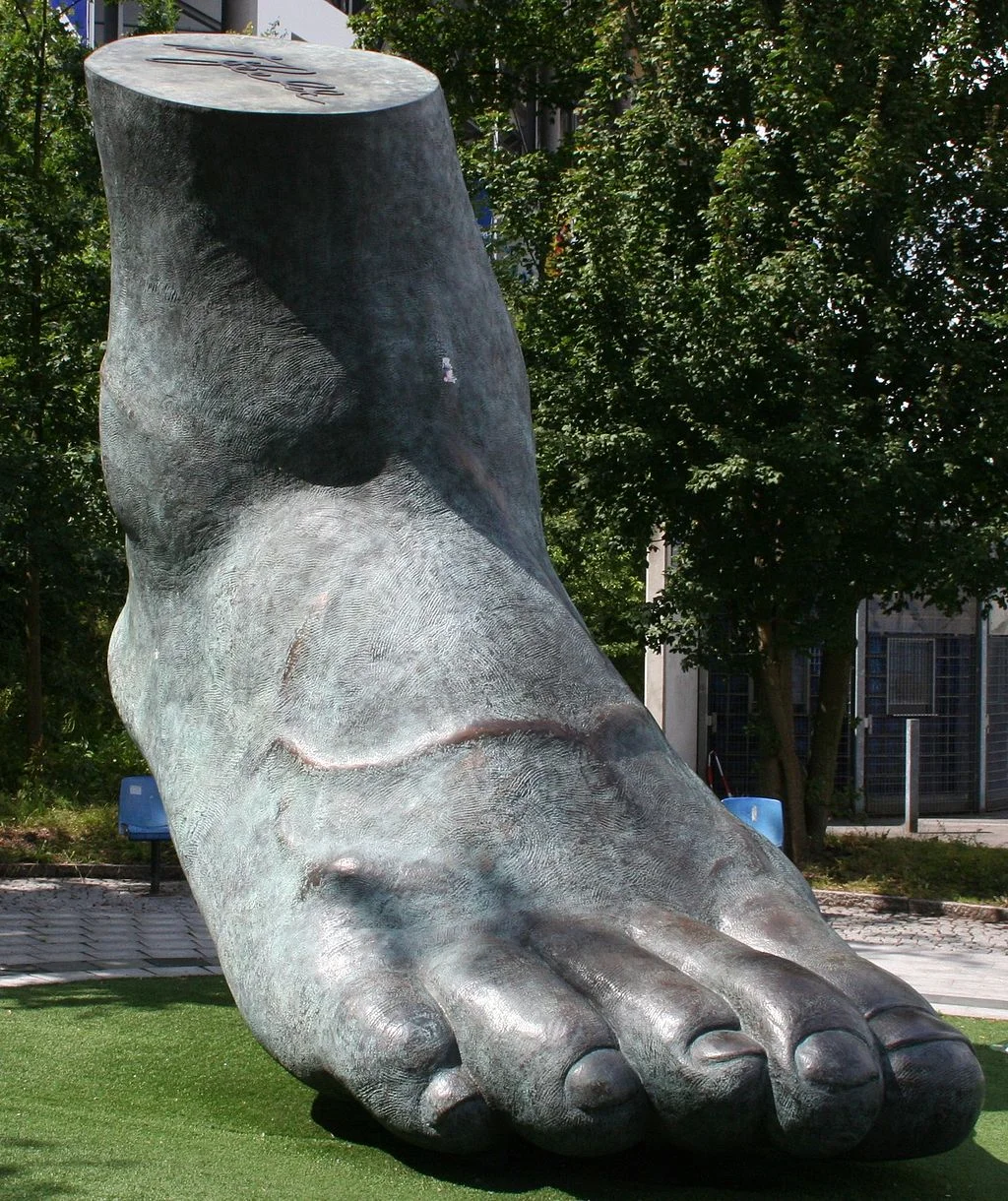
When Zeeler finished playing, Hamburg gave praise to his attacker sincerely and naively - he put a huge, three and a half meters high in front of the Volskstadadion Arena, his right leg cast from ferrous metal. She stands there and now, in the days when the city says goodbye to him, and around the flowers. Not just a player left, a man left who played for his city, a club and country, did not know either a mania of boundless enrichment, nor thirst for continuously changing teams, countries and women and who once said, having long gone from a big game, looking back and looking forward, as much as enough eyes: “The most beautiful in the world is to be normal.”