
Translated material
"Over the past decade, disappointing truth has become obvious: it is very easy to make a mistake in genetics"
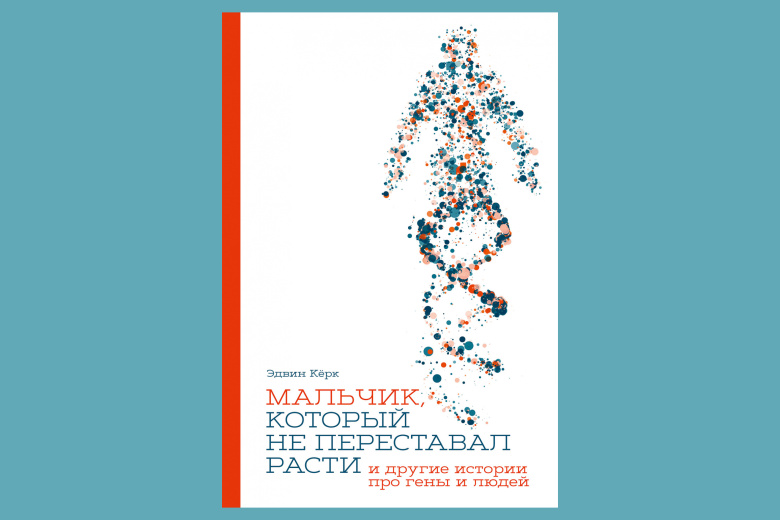
The publishing house "Alpina Non Fikshn" is published by Edwin Kerok's book "A boy who did not stop growing ... and other stories about genes and people." Her author, a scientist and practicing doctor, is trying to honestly answer her to many questions: how to give birth to a healthy child? Why does my child have heart problems? Will I have Khorey Huntington, like my father and grandfather?
With the kind permission of the publishing house, the Future magazine publishes a fragment dedicated to errors in genetics, their reasons and consequences.
In 2011, when I have been working in medical genetics for more than a dozen years, an informal conversation with my friend and teacher Michael Buckley unexpectedly led to one of those crooks on the life path that we all sometimes encounter.
Michael, one of the leading Australian specialists in pathogenetics, is engaged in the control of laboratory aspects of genetic analysis. His laboratory where I am working now is a major center for diagnosing rare hereditary diseases. I spoke with Michael that sometimes I also wanted to be a pathogenetic, and he, not hoping at all that I would take it seriously, replied that, in fact, why not. However, I really caught up with this idea, so as a result I spent several years on retraining in the field of laboratory medicine, in my free time from the main work, and withstood a number of exams in the specialty of Pathogenetics. Now I work simultaneously in the clinic and laboratories - and write down directions for genetic testing to my own patients, as well as write reports on analyzes prescribed by other doctors and conducted in our laboratory.
Let this happen by chance, but the moment was extremely successful. When I started retraining, it was already known about the development of a new method of genetic testing. After some few years, our aspirations came true and a coup has come in this area. By pure luck, I found myself in the thick of the events.
Recall the fantastic fall in the cost of complete sequencing of the human genome - from billions of dollars to a thousand with a little. On this path from the fantastic project that seemed to the routine procedure, there were several significant milestones. The first famous people whose genome was completely read was Craig Venter and James Watson. The third was the businessman Dan Stest. Dr. Stest, who made capital on biotechnology, spent part of him on full sequencing of his own genome, which was carried out by Knome. For this pleasure they took $ 350,000 from him, which at that time must have seemed a divine price, given that only a year earlier the sequenication of the genome of Watson was three times more expensive. The next year, KNOME requested only $ 100,000 for sequencing - by that time it was necessary to either be completely reckless, or spitting up to your money in order to throw so much for the technology that was cheap before our eyes.
Not so spectacular, but a much more important service offered by Knome, was sequencing of the exom. Exz are those 1-2% of the genome that encode proteins: each eu -exe of each genes plus small segments adjacent to their ends. The advantage of eczu sequencing is that it is much cheaper to read a sequence of 2% of the genome than the entire genome, and since almost all the significant information is contained in the exoma, the diagnostic capabilities are not particularly narrowed, if only by e reals.
Subscribe to read the whole
Make a subscription Redefine.media to read Republic
Subscribe [you can pay for a Russian or foreign card. The subscription is extended automatically. You can unsubscribe at any time.]
Where are the money subscribers going