
Translated material
“Mr. Wilder and I” is the Sinefilsky novel by Jonathan Cow about the director of the Golden Age Hollywood Billy Wilder
You definitely saw him "only girls in jazz"
Literary critic Galina Yuzefovich talks about the book of British writer Jonathan COU “Mr. Wilder and I”. The novel is dedicated to director Billy Wilder, a representative of the Golden Age Hollywood. In Russia, he is known primarily from the picture “Only Girls in Jazz” with Marilyn Monroe. The writer for many years was inspired by Wilder's work - and in his new novel he admits to him love.
Jonathan Cow. Mr. Wilder and me. M.: Phantom Press, 2022. Translation by E. Poletskaya
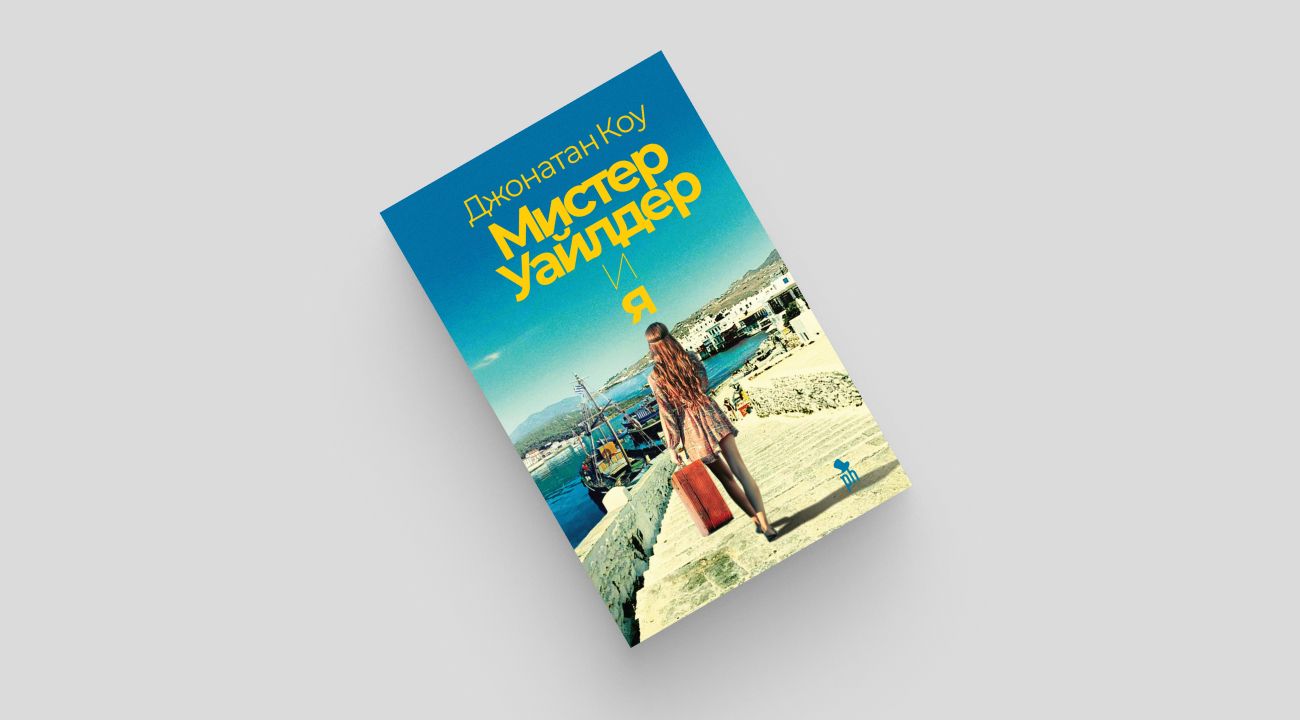
The new novel by British Jonathan Cowo opens this sad and ironic eccentric from a completely new side. The sensed poetic and straightforward recognition of love is about the last thing that could be expected from the author, for many years, from the early “House of sleep” until the relatively recent “Middle England”, deftly balancing somewhere at the junction of the lyrics, grotesque and political satire. Nevertheless, to characterize Mr. Wilder and I in any other way means to error against the truth: his book is a real hymn of love for the American film director Billy Wilder and, wider, for all the cinema of the time when the directors did not consider it cleave to console, entertain and support their viewer, instead of shameing him, scaring or injured.
In the preface to the book, Jonathan Cow writes that he was fascinated by Billy Wilder in the late 1970s, watching his film "Private Life of Sherlock Holmes." Even before the era of video recorders, COU wrote Wilder’s films (the Russian viewer best knows him according to the legendary comedy “Only Girls”) on audio cassettes and listened to the dialogs from there at night-it was they more than anything else, influenced his formation as a writer. Initially, COU was thinking about the full-fledged biography of his idol, but still made a choice in favor of a novel form, allowing him to get closer to the hero and even, perhaps, can ultimately say something more truthful about him.
COU decides to “get” through a specially invented heroine - Kalista, a young Greek woman, half an English woman, whom fate accidentally reduces with a great director. Having went on a trip to America in 1977, Calista meets a girl, whose father was friends with Billy Wilder during the war, and with her falls on dinner with the director, his best friend, scriptwriter of Isia Diamond, and their wives. From the habit, having sorted through the wine, the calista is forced to spend the night on the couch in Wilder's living room and believes that after that the great director will never want to hear about her. However, a few months later, having already returned home to Athens, she suddenly receives a letter from Wilder: he goes to shoot films to Greece and offers Kalista the role of a translator in the film crew.
The narrative in the novel breaks down into two temporary layers: in one already middle -aged calista, a composer whose flourishing remained in the past, yearns for the child's years of his grown daughters and composes a suite dedicated to Billy Wilder. In another chronological stream, in the happy and dazzling 1977, the young calista lives the main summer of her life on the set of the film “Fedor”-first at Corfu, and after in Munich, Normandy and Paris.
The film "Fedor", telling the history of the extinguished cinema star, moving away from the world to the picturesque Greek island, became the penultimate joint work of Diamond and Wilder. The most serious, according to the director’s idea, the picture in their career (comedian Diamond in the novel is constantly worried that he was not allowed to plunge a single joke into the script) in England was accepted with restraint, and in America failed with a bang. Even in the process of filming, almost all the heroes (including naive potassium) understand that something is wrong with the film that Billy fell in love with the history of the actress, who survived her glory, as in the history of his own life and, taking off her, in reality, does not think about the viewer, but about himself, about his aging and a change of eras, which can no longer be ignored.
There are seventies in the yard, the French “new wave” has already swept around the world, the energetic “bearded youths” (this collective definition of Wilder applies to Stephen Spielberg, Francis Ford Coppole and Martin Scorsese), the Hollywood of the old school is in full swing, and the Kalista is the honor of this great project.
Roman Jonathan Cow is enthusiastically Sinefilsky in the same sense as the book of Quentin Tarantino “Once in Hollywood” . There is a lot of common between them and the rest of them: both Kuu and Tarantino are equally fascinated by the cinema of the Golden Age, both are quite skeptical about what came to him, both in vain pour in the names, facts, references and names of the paintings (in this sense, COU, perhaps, is slightly more humane to the reader, but still I would like to gloom Publisher for extensive substantive comments).
But the main thing is that both Kuu and Tarantino are trying to enter themselves retroactively in an era, which they practically could not find: Tarantino does it directly, introducing a nine -year -old boy named Quentin into the final scene of his novel (his stepfather, the owner of the Hollywood bar, introduces the pasynka with the famous actors who came in to skip a glass). It comes up with Kalista - his plenipotentiary representative and alter ego inside the book. And although, as an independent character, Kalista, perhaps, lacks depth and complexity, as a “window” through which COU looks into the world of Billy Wilder, and a tool that allows the writer to get closer to the object of worship, she works without fail.
“Mr. Wilder and I” Jonathan Cow could be called just a charming book full of sparkling love and delicate nostalgia for the past, if not for the specific curse that now lying on almost every Russian -speaking reader in the world. Sudden, sharp, like a blow, and obviously in no way the author, in view of the parallels with the day today, from time to time literally knock the soil from under the feet.
Calista describes his cloudless childhood in Athens from the time of the dictatorship of “black colonels”, and suddenly the eye involuntarily clings to the phrase ruthless in its accuracy: “In the outside world there was a stagnant economy, military junta, political censorship, torture in prisons and concentration camps; In my inner world - music and laughter, home comfort and delicious food and the warming unconditional love of my parents for each other and to me. ”
And the lengthy interludes, in which Billy Wilder, a German Jew, who managed to escape from Germany in 1933, but who lost his mother in the Holocaust, talks about total amnesia, which befell the Germans after the war, makes us chilly at a very close look. However, all this can hardly be attributed to Jonathan Cow and his novel - rather, it is the specificity of our time, forcing painful allusions even in texts, which initially did not suggest anything like this.
Galina Yuzefovich