
Translated material
"Acceleration" and "Perestroika". 1986-1988. Law "On the State Enterprise"
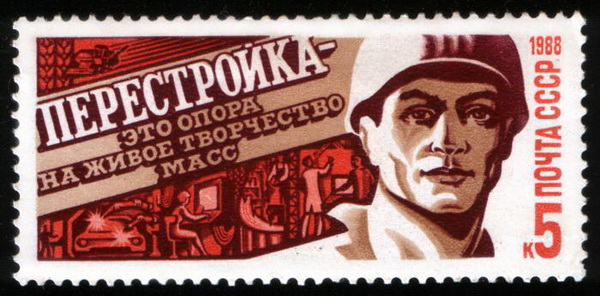
"Acceleration" and "Perestroika". 1986-1988. Law "On the State Enterprise" July 26, 2022, Natalia Eliseeva  The Law "On a State Enterprise (Association)" by the peak of reformal activity of the authorities was 1988. In January, the Law “On a State Enterprise (Association)”, designed to ensure the gradual transition of enterprises to the production of products in accordance with demand, rather than a directive plan. The law limited the role of the State Planning Commission by the preparation of control figures and the formation of a state order - no more than 85% of the plan of the enterprise. The share of state orders was supposed to reduce. Products made in excess of state orders could be sold at a free price at the conditions favorable for the enterprise. Three types of prices were provided - centralized, contractual and free, which, according to the developers of the law, made it possible to move on to market regulation in the future. Following the example of Yugoslavia, employees received the right to elect the director of the enterprise, the heads of workshops and departments. This norm lasted until 1990. The working control system was created, but in practice this production democracy has changed little. Upon maintenance of state ownership of the enterprises of the hopes of reformers to accelerate economic growth, they did not materialize. Ministries, departments and territorial authorities continued to intervene in the activities of enterprises. There were no market relations, since state regulation of prices was preserved, there was no market infrastructure - exchanges, advertising publications, wholesale enterprises, and intermediary firms. But the main thing is that a significant unsatisfied demand has accumulated in the economy. The director of enterprises still sought to get as many scarce resources as possible to facilitate the implementation of the state order. As a result, the new policy resulted in an increase in the deficit in state trade, an expensive segment in the assortment of goods and prices in the “black” market. Direct relations provided for by law between enterprises took the form of natural exchange, barter. This was natural, since in the conditions of a total deficiency, the ruble cost little, nothing could be bought for it. Incorrect, indecisive reforms that did not create competition, but removed administrative restrictions from enterprises, led to the fact that control over the monetary income of the population was lost. Enterprises took advantage of this law to increase salaries. Over the three years of Perestroika, cash income increased by 9.4%, while in the preceding years - by 3.9%[24].
Over the three years of Perestroika, the budget expenditures exceeded 133 billion rubles, budget losses due to falling oil prices amounted to 40 billion, 34 billion from reducing the sale of vodka-the profit of industry increased by 10 billion rubles, and in agriculture, losses were estimated at 15 billion rubles. The country accumulated 40 billion rubles of excess money, not covered by the offer of goods. In all sectors, salaries grew faster than labor productivity. The USSR State Bank recorded 314 billion rubles of internal public debt, that is, debt to the population. Inventories that did not have demand reached 70–80 billion rubles [25]. The shortage of goods available to the population has worsened. In 1988, a third of enterprises remained unprofitable, their losses were covered by subsidies from the budget. A quarter of enterprises barely made ends meet. It turned out that the transfer of enterprises to new principles of management and assumption of cooperatives did not improve the provisions in the economy. The average annual growth rate of industrial products fell from 5.6% in 1964-1985 to 0.8% in 1986-1991 [26]. There were in vain attempts to advance to the market, only revising the powers of different management links in the framework of state property. It became more and more clearly that a single liberalization of prices, refusal of state property and strict financial restrictions for enterprises were needed to overcome the accumulated deficit. Only comprehensive market reform could change the motivation of enterprise managers, reorient them from pursuit of subsidiaries to increase production, reduce costs and profit growth.
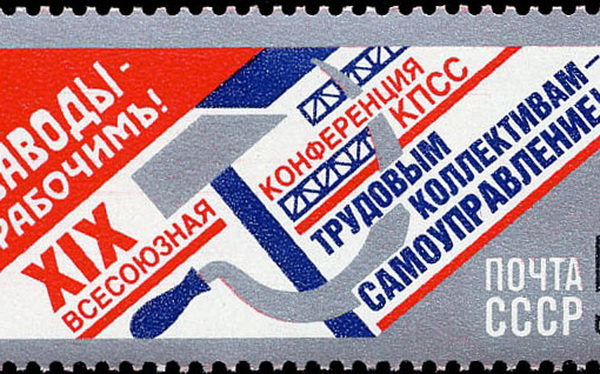
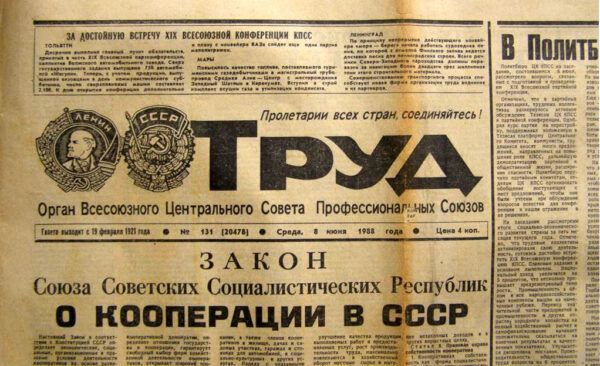
The Law “On Cooperation in the USSR” The Law “On Cooperation in the USSR” dated May 26, 1988 allowed the creation of cooperatives and joint ventures with foreign partners, after a 60-year break, legalized private property at the means of production. The revival of entrepreneurship as a legal type of activity began. From the first, one can say, indicative cooperative enterprises, such as the cooperative cafe “Kropotkinskaya”, opened in Moscow by A. A. Fedorov, in a short time (from 1987 to 1989), the cooperative sector literally took off: in 1987, 13.9 thousand cooperatives completed work and services in the amount of 350 million rubles, in 1988, 77.5 thousand cooperatives had already They gave products for 6.1 billion rubles, and in 1989 - about 41 billion rubles. And this is without any subsidies from the state against the backdrop of the decreased pace of development of the national economy as a whole [27]. Many cooperatives, for example, road construction in the Republic of Komi (Timan in Syktyvkar, North in Vorkuta), in Novgorod and other areas, “grew” from the famous Pechora artel, led by V. I. Tumanov. In 1989-1990, they showed the effectiveness of economic activity 5-6 times higher than that of similar (sometimes neighboring) state enterprises [28]. In 1989, in Moscow, 400 thousand cooperators performed work and services for 5 billion rubles, almost 2 million workers and members of their families were employed in the cooperative sector. In the Baumansky district of the capital, in 1989, cooperative payments to the budget were 37 times higher than the initially intended amount and amounted to 16% of all revenues of the district council. In the city of Cherkessk, the Stavropol Territory, where there were 13 thousand unemployed, cooperatives created an additional 8 thousand jobs, allocated 800 thousand rubles for the construction of a trolleybus line and 500 thousand rubles for the construction of a child and hospital [29]. The volumes of cooperative production in the country could be many times more if it were not for the meaningless and destructive restrictions of the cooperative sector by the ministries, departments and a significant number of executive bodies of local councils. Already in December 1988, a special resolution of the Council of Ministers of the USSR was sharply limited. The prospects were only those cooperatives that were formed at state enterprises. As a rule, they were headed by relatives of directors of enterprises.
The Presidium of the Supreme Council of the Uzbek SSR adopted a decree "On the prohibition on the territory of the Uzbek SSR of some types of cooperative and individual labor activity." In the Krasnodar Territory, by the decision of the regional executive committee in July 1989, 677 cooperatives were illegally discontinued, and the export of cooperative agricultural products outside the region was prohibited, which only increased its losses. There were a lot of other unreasonable restrictions. The prosecutor’s office of the RSFSR invited the prosecutor of the region to “take comprehensive measures” to eliminate violations of the Law “On Cooperation in the USSR”, and the city and district prosecutors of the region introduced three dozen ideas about the inadmissibility of such violations, however, illegal restrictions on cooperative activities continued. On December 12, 1989, the Moscow Council of People's Deputies adopted the “temporary provision on the procedure for organizing cooperative activities in Moscow”, in which, referring to “local features”, he almost completely audited the main provisions of the Law “On Cooperation in the USSR”. But it should be noted that some of the population met in hostility the appearance of cooperatives that traded goods at market prices. People did not understand the differences between these prices and fixed state. Under socialism, the goods in any store were the same, of course, if there was on sale. An exception to the rules were collective farm markets, where meat, fruits and vegetable prices were several times higher. But the population is accustomed to this. Cooperatives that worked in the field of nutrition and processing were bought by agricultural products from collective farms and sold it to the population. The fact that cooperators were rapidly enriched was perceived as robbery and egregious social injustice. Without realizing the connection between the release of money that was not secured by goods, and the growth of deficit and prices, people blamed the cooperators, envied, angry, wrote angry letters to newspapers, which they eagerly published. Meanwhile, the issue of money acquired catastrophic sizes: if in 1986 its growth rate amounted to 8.3%, then in 1987 - 51.3, in 1988 - 100.0, in 1989 - 55.1%[30]. The increase in the deficit Soviet collective farms and state farms, which did not have incentives for the growth of labor productivity, economic efficiency, from where young people escaped, could not compare with the agriculture of developed countries. The yield of grain in the USSR in 1989 was 18.9 c/ha, in the USA - 44.8 c/ha, milk yield per cow - respectively 2.6 and 6.5 thousand l/year [31]. Having such low productivity, it was impossible to provide growing cities with domestic food. Since the 1970s, the purchase of grain and meat abroad became vital. But due to the fall in revenue from the sale of oil, food imports were sharply reduced. And the money supply on the hands of the population grew, the deficit increased. The government was forced to introduce coupons on the main types of food, to limit the leave of products in one hand when buying them in stores. Sociological surveys showed that families of Perestroika every year appreciated their provision of food: 1986 - 3 points on a five -point scale, 1987 - 2.8, 1988 - 2.5, 1989 - 2.3, 1991 - a little more than 2 [32]. The author is a professor at the Russian State University, the head of the educational and scientific center "New Russia. History of post -Soviet Russia". The original text is published on the website "History of the New Russia".
_______________________________________
[24] Russia. XX century. Documents and materials. M., 2004. S. 352. [25] in the Politburo of the Central Committee of the CPSU. S. 445. [26] Simecher V. M. Development of the Russian economy over 100 years. Historical ranks. M.: Science, 2006. S. 138. [27] Power. 1990. No. 8 (February 26). - http://www.kommersant.ru/doc.aspx ? Docsid = 265887 & Print = True [28] http://www.jur-portal.ru/work.pl?act=LAW_READ&SUBACT=1125483&ID=294905 [29] power. 1990. No. 8 (February 26). - http://www.kommersant.ru/doc.aspx ? Docsid = 265887 & Print = True [30] Gaidar E. T. The death of the empire. Lessons for modern Russia. M.: Rospen, 2006. S. 243. [31] Ibid. P. 211. [32] Reforming Russia: Myths and reality. M., 1994. S. 24.
Photo from open sources.
.
The Law "On a State Enterprise (Association)" by the peak of reformal activity of the authorities was 1988. In January, the Law “On a State Enterprise (Association)”, designed to ensure the gradual transition of enterprises to the production of products in accordance with demand, rather than a directive plan. The law limited the role of the State Planning Commission by the preparation of control figures and the formation of a state order - no more than 85% of the plan of the enterprise. The share of state orders was supposed to reduce. Products made in excess of state orders could be sold at a free price at the conditions favorable for the enterprise. Three types of prices were provided - centralized, contractual and free, which, according to the developers of the law, made it possible to move on to market regulation in the future. Following the example of Yugoslavia, employees received the right to elect the director of the enterprise, the heads of workshops and departments. This norm lasted until 1990. The working control system was created, but in practice this production democracy has changed little. Upon maintenance of state ownership of the enterprises of the hopes of reformers to accelerate economic growth, they did not materialize. Ministries, departments and territorial authorities continued to intervene in the activities of enterprises. There were no market relations, since state regulation of prices was preserved, there was no market infrastructure - exchanges, advertising publications, wholesale enterprises, and intermediary firms. But the main thing is that a significant unsatisfied demand has accumulated in the economy. The director of enterprises still sought to get as many scarce resources as possible to facilitate the implementation of the state order. As a result, the new policy resulted in an increase in the deficit in state trade, an expensive segment in the assortment of goods and prices in the “black” market. Direct relations provided for by law between enterprises took the form of natural exchange, barter. This was natural, since in the conditions of a total deficiency, the ruble cost little, nothing could be bought for it. Incorrect, indecisive reforms that did not create competition, but removed administrative restrictions from enterprises, led to the fact that control over the monetary income of the population was lost. Enterprises took advantage of this law to increase salaries. Over the three years of Perestroika, cash income increased by 9.4%, while in the preceding years - by 3.9%[24]. Over the three years of Perestroika, the budget expenditures exceeded 133 billion rubles, budget losses due to falling oil prices amounted to 40 billion, 34 billion from reducing the sale of vodka-the profit of industry increased by 10 billion rubles, and in agriculture, losses were estimated at 15 billion rubles. The country accumulated 40 billion rubles of excess money, not covered by the offer of goods. In all sectors, salaries grew faster than labor productivity. The USSR State Bank recorded 314 billion rubles of internal public debt, that is, debt to the population. Inventories that did not have demand reached 70–80 billion rubles [25]. The shortage of goods available to the population has worsened. In 1988, a third of enterprises remained unprofitable, their losses were covered by subsidies from the budget. A quarter of enterprises barely made ends meet. It turned out that the transfer of enterprises to new principles of management and assumption of cooperatives did not improve the provisions in the economy. The average annual growth rate of industrial products fell from 5.6% in 1964-1985 to 0.8% in 1986-1991 [26]. There were in vain attempts to advance to the market, only revising the powers of different management links in the framework of state property. It became more and more clearly that a single liberalization of prices, refusal of state property and strict financial restrictions for enterprises were needed to overcome the accumulated deficit. Only comprehensive market reform could change the motivation of enterprise managers, reorient them from pursuit of subsidiaries to increase production, reduce costs and profit growth.
The Law “On Cooperation in the USSR” The Law “On Cooperation in the USSR” dated May 26, 1988 allowed the creation of cooperatives and joint ventures with foreign partners, after a 60-year break, legalized private property at the means of production. The revival of entrepreneurship as a legal type of activity began. From the first, one can say, indicative cooperative enterprises, such as the cooperative cafe “Kropotkinskaya”, opened in Moscow by A. A. Fedorov, in a short time (from 1987 to 1989), the cooperative sector literally took off: in 1987, 13.9 thousand cooperatives completed work and services in the amount of 350 million rubles, in 1988, 77.5 thousand cooperatives had already They gave products for 6.1 billion rubles, and in 1989 - about 41 billion rubles. And this is without any subsidies from the state against the backdrop of the decreased pace of development of the national economy as a whole [27]. Many cooperatives, for example, road construction in the Republic of Komi (Timan in Syktyvkar, North in Vorkuta), in Novgorod and other areas, “grew” from the famous Pechora artel, led by V. I. Tumanov. In 1989-1990, they showed the effectiveness of economic activity 5-6 times higher than that of similar (sometimes neighboring) state enterprises [28]. In 1989, in Moscow, 400 thousand cooperators performed work and services for 5 billion rubles, almost 2 million workers and members of their families were employed in the cooperative sector. In the Baumansky district of the capital, in 1989, cooperative payments to the budget were 37 times higher than the initially intended amount and amounted to 16% of all revenues of the district council. In the city of Cherkessk, the Stavropol Territory, where there were 13 thousand unemployed, cooperatives created an additional 8 thousand jobs, allocated 800 thousand rubles for the construction of a trolleybus line and 500 thousand rubles for the construction of a child and hospital [29]. The volumes of cooperative production in the country could be many times more if it were not for the meaningless and destructive restrictions of the cooperative sector by the ministries, departments and a significant number of executive bodies of local councils. Already in December 1988, a special resolution of the Council of Ministers of the USSR was sharply limited. The prospects were only those cooperatives that were formed at state enterprises. As a rule, they were headed by relatives of directors of enterprises.
The Presidium of the Supreme Council of the Uzbek SSR adopted a decree "On the prohibition on the territory of the Uzbek SSR of some types of cooperative and individual labor activity." In the Krasnodar Territory, by the decision of the regional executive committee in July 1989, 677 cooperatives were illegally discontinued, and the export of cooperative agricultural products outside the region was prohibited, which only increased its losses. There were a lot of other unreasonable restrictions. The prosecutor’s office of the RSFSR invited the prosecutor of the region to “take comprehensive measures” to eliminate violations of the Law “On Cooperation in the USSR”, and the city and district prosecutors of the region introduced three dozen ideas about the inadmissibility of such violations, however, illegal restrictions on cooperative activities continued. On December 12, 1989, the Moscow Council of People's Deputies adopted the “temporary provision on the procedure for organizing cooperative activities in Moscow”, in which, referring to “local features”, he almost completely audited the main provisions of the Law “On Cooperation in the USSR”. But it should be noted that some of the population met in hostility the appearance of cooperatives that traded goods at market prices. People did not understand the differences between these prices and fixed state. Under socialism, the goods in any store were the same, of course, if there was on sale. An exception to the rules were collective farm markets, where meat, fruits and vegetable prices were several times higher. But the population is accustomed to this. Cooperatives that worked in the field of nutrition and processing were bought by agricultural products from collective farms and sold it to the population. The fact that cooperators were rapidly enriched was perceived as robbery and egregious social injustice. Without realizing the connection between the release of money that was not secured by goods, and the growth of deficit and prices, people blamed the cooperators, envied, angry, wrote angry letters to newspapers, which they eagerly published. Meanwhile, the issue of money acquired catastrophic sizes: if in 1986 its growth rate amounted to 8.3%, then in 1987 - 51.3, in 1988 - 100.0, in 1989 - 55.1%[30]. The increase in the deficit Soviet collective farms and state farms, which did not have incentives for the growth of labor productivity, economic efficiency, from where young people escaped, could not compare with the agriculture of developed countries. The yield of grain in the USSR in 1989 was 18.9 c/ha, in the USA - 44.8 c/ha, milk yield per cow - respectively 2.6 and 6.5 thousand l/year [31]. Having such low productivity, it was impossible to provide growing cities with domestic food. Since the 1970s, the purchase of grain and meat abroad became vital. But due to the fall in revenue from the sale of oil, food imports were sharply reduced. And the money supply on the hands of the population grew, the deficit increased. The government was forced to introduce coupons on the main types of food, to limit the leave of products in one hand when buying them in stores. Sociological surveys showed that families of Perestroika every year appreciated their provision of food: 1986 - 3 points on a five -point scale, 1987 - 2.8, 1988 - 2.5, 1989 - 2.3, 1991 - a little more than 2 [32]. The author is a professor at the Russian State University, the head of the educational and scientific center "New Russia. History of post -Soviet Russia". The original text is published on the website "History of the New Russia".
_______________________________________
[24] Russia. XX century. Documents and materials. M., 2004. S. 352. [25] in the Politburo of the Central Committee of the CPSU. S. 445. [26] Simecher V. M. Development of the Russian economy over 100 years. Historical ranks. M.: Science, 2006. S. 138. [27] Power. 1990. No. 8 (February 26). - http://www.kommersant.ru/doc.aspx ? Docsid = 265887 & Print = True [28] http://www.jur-portal.ru/work.pl?act=LAW_READ&SUBACT=1125483&ID=294905 [29] power. 1990. No. 8 (February 26). - http://www.kommersant.ru/doc.aspx ? Docsid = 265887 & Print = True [30] Gaidar E. T. The death of the empire. Lessons for modern Russia. M.: Rospen, 2006. S. 243. [31] Ibid. P. 211. [32] Reforming Russia: Myths and reality. M., 1994. S. 24.
Photo from open sources.
.
| Print version |
-
Leonid Gozman: No matter how circumstances develop, no one will want to go to real risks for the principles of justice and deposition. Although someone may well believe in the opposite.
