
Translated material
How does the weather forecast work?
How do meteorologists make a weather forecast? Why can heat change in a day in a day? And what is an anticyclone?
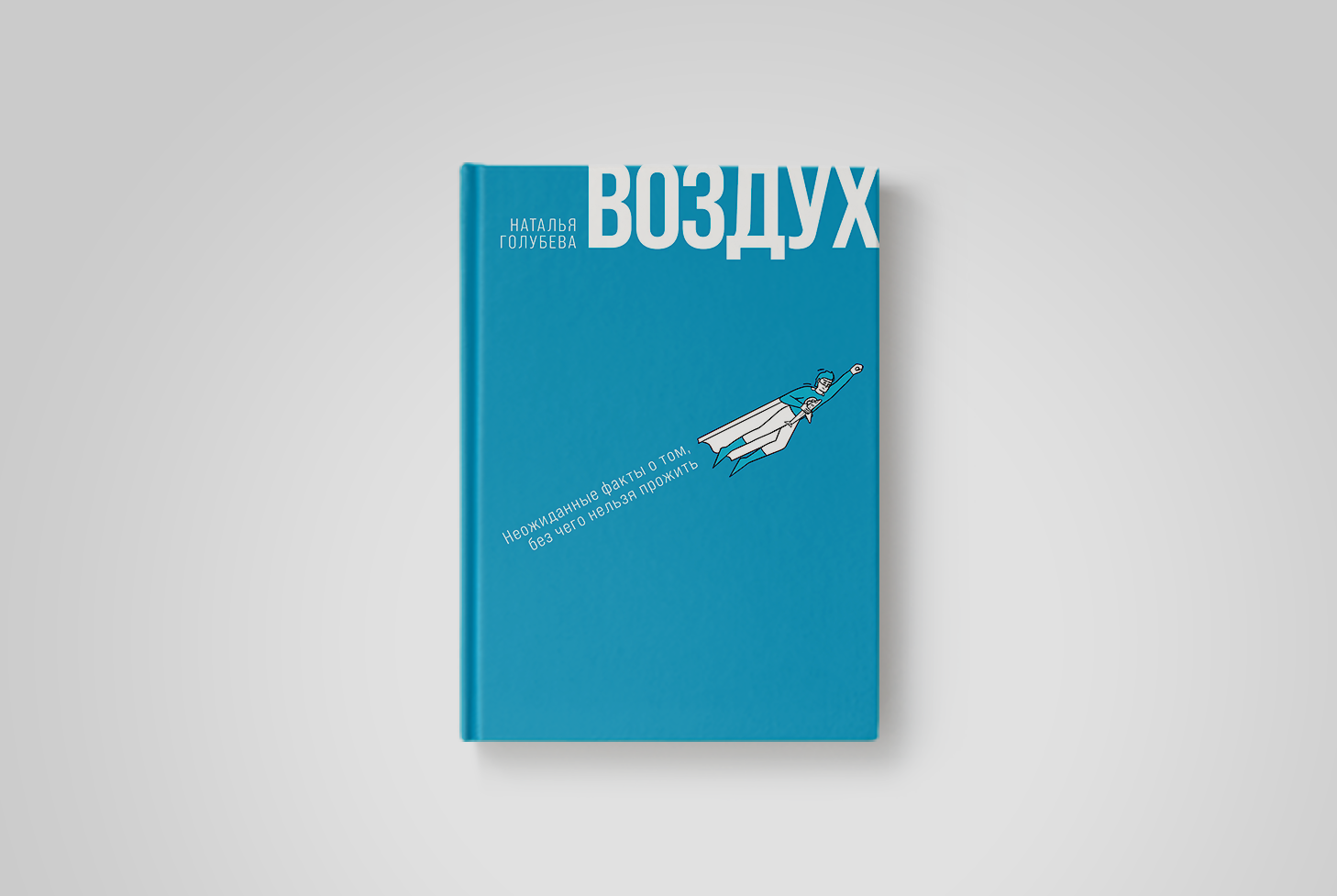
"Paper" publishes an excerpt from the book " Air
Unexpected facts about what you can’t live without ”Natalia Golubeva-a popularizer of science and engineer of air ventilation and air conditioning systems that designed air systems during the construction of Zenit Arena and Admiralty.
Man is a curious creature, striving to look into the future. Fortune telling on maps, numerology, horoscopes, runes and coffee grounds: everything that unites these methods is a complete lack of connection with reality. Do not be offended, please, if you believe in one of the above. I am an engineer, so all my life I rely on the facts, and they indicate that it is impossible to find out the future. And yet, if you have certain knowledge, you can predict something. It's about the weather.
The weather is changeable, this is its main property. To give a forecast for tomorrow, it is necessary to carefully monitor all the processes occurring in the atmosphere today. The study of the weather is engaged in a separate science - meteorology, combining knowledge about the atmosphere, observation of flowing processes and modeling.
What is the weather? Its main parameters are as follows:
- air temperature;
- atmospheric pressure;
- Air humidity;
- speed and direction of wind;
- the presence of precipitation;
- the presence of clouds.
These indicators are closely connected. A change in one of them leads changes to the rest. For example, it started to rain. If you describe the process extremely schematically - this happened because the wind brought the clouds. And the wind appeared due to a change in pressure, and it changed due to a temperature change.
The weather is carefully monitored from everywhere. On the surface of the Earth with the help of weather stations, in the air - aircraft and meteozonds. Even from the cosmos, they look after her: meteorological sites constantly transmit weather data to Earth. In Russia, the received information is collected in the hydrometeorological center, then it is transmitted to the World Meteorological Organization, uniting 185 countries. After the data exchange, the hydrometeorological center calculates the weather forecast.
The accuracy of the weather forecast for the next day is usually more than 95%. It is not always possible to predict the weather with the same accuracy for a longer period. Meteorology is constantly developing, and methods are being improved and predicting the weather. But still, this science refers to the very inaccurate sciences in the world.
What is a weather station?
This is an observation post with meteorological measuring devices, which continuously monitor changes in the weather parameters and fix them. Large states have thousands of weather stations, from where the data is constantly coming. Some weather stations are installed far from large settlements, in such inaccessible places (deserts, at mountain peaks, the far north and south) that employees of such stations literally live as hermits.
All weather stations, regardless of where they are, work according to the general universal time: according to Greenwich. This is the time, which is now in London, without taking into account the summer. The main task of the employees of the weather stations is to measure and transfer the weather parameters every three hours.
The main devices that are at every weather station:
- Thermometers - they measure the air temperature on the surface and in the depths of the soil. To exclude the error, the station employee takes readings from several devices and calculates the average arithmetic value.
- Barometer - a device for measuring atmospheric pressure. The most accurate are mercury barometers, so they are used on weather stations.
- Hygromometer is an air moisture meter.
- Anemorumboometer determines the speed and direction of the wind.
- The sedimentomer is a device in which precipitation is collected to measure their number. Snow and rain are considered the size of the layer, in millimeters.
When the weather does not change for several days, it is called stable. If, on the contrary, there are many changes - changeable.
Short but bright meteorosond life
To get data for the weather forecast, it is not enough to observe it only from the ground. The weather is also observed from the air, and the Aerologists are engaged in this. To look into the sky, experts launch various devices: probes and even real meteorological missiles. They do this from special points, near weather stations or airfields.
The most popular observation device is meteosond. All the Airologists of the Earth launch them twice a day at the same time: at noon and at midnight according to Greenwich. Meteosond is similar to a large balloon, which is inflated with hydrogen or helium. It has equipment in order to measure the temperature, pressure, humidity, as well as the speed and direction of the wind in the high layers of the atmosphere. Data to Earth is transmitted by radio communication until there is a signal. Each Meteosond is disposable, and after it is released, it does not return back, so experts collect a new device each time.
The probe is in the sky for several hours. Then he loses height and falls to the ground. I think everyone should be prepared for a sudden meeting with him, because the fall of the fall cannot be predicted. Of course, most of the weatherproofs falls away from human eyes, somewhere in the field or in the forest. However, there were situations when he fell right in the city or flew into someone's garden. Often it is taken for UFOs.
How the weather forecast works
To know how the weather behaves, it is necessary not only for you and me to capture the umbrella in the morning, but also to various industries: aviation, railway transport, the Ministry of Emergencies, and agriculture. It is for the sake of economics and safety for the weather that they are so closely and closely monitoring the entire globe.
Why is the book about the air, and we are talking about the weather? What is the connection between them? The fact is that the air is a weather source and the main reason for its changes.
Air masses are huge accumulations of air over a certain climatic zone. The surface of the earth is warmed up unevenly. The more this or that piece of land receives sunlight, the higher the temperature and the more evaporation of moisture. Over each area of the Earth its microclimate, “its” air, and therefore its own weather. For example, at the equator, the maximum number of sunlight that fall to the ground is almost steeply. The air at the equator is warm and humid, the weather is hot and rainy. The opposite situation in the polar latitudes: in the Arctic and Antarctic. There are few sunlight here, they slide over the surface, so the air is cold and dry. The weather is cool in the summer, in winter - frosty.
Air masses are divided into four types, according to their geographical origin: Arctic, moderate, tropical, equatorial. They constantly move, bringing with them one or another weather to different territories. The zone, where two air masses different in their properties collide is called the atmospheric front. There is a sharp change in the weather.
For example: in the city N all week was warm weather. On Friday, all day was warm, even a little hot. By evening, the weather has abruptly deteriorated: a strong wind, thunderstorm and rain began. Following the storm, a cooling came to the city, which lasted the whole weekend. What's happened? Nothing unusual, just on Friday over the city there was a cold front, which supplanted a warm air mass and brought cold instead.
Another important point affects the weather and the movement of air masses: the planet constantly rotates around its axis. This means that these masses move not only towards each other, but also twisted in spirals, which are called cyclones. By the way, they never form at the equator, because there, in simple terms, there is no strength that twist them.
Cyclone is a low pressure area, it is always associated with the weather and sediments. You remember that the air always moves from the area of high pressure to the low area, so the cyclone literally attracts the clouds and “sucks” bad weather.
In contrast to the cyclone, anticyclone is always formed - an area of high pressure. The air in the anticyclone moves from the center to the sides, so it seems to push the clouds and bad weather out of itself. Anticyclone brings clear, calm and cloudless weather. It would seem much better than a cyclone. But the anticyclone is fraught with shortcomings: in the summer, due to clear and hot weather, forest fires can develop; In winter-due to the fact that the air is motionless-severe frosts.
To summarize: in order to find out and predict the weather for the near future, it is necessary to measure its parameters now, and at the same time in many points on Earth. This is necessary in order to track and display the position of air masses, atmospheric fronts, cyclones and anticyclones on the map. Then it is necessary to calculate in which direction they move, in what period they will be over a particular area and what the weather will come there with them. Based on this model, a weather forecast is being built.
We are so accustomed to the fact that the weather is known for tomorrow, it can be recognized at any time that we don’t even think about what colossal work it is. Just imagine a huge number of people working together in order to achieve the result. I hope now you will not snort and make fun of weather forecasters if their forecast is inaccurate?
What else to read:
- In St. Petersburg, a climatic subparaine is changing. They say the weather will be like in Georgia. This is true ?
- Have you also noticed that this year there is a lot of poplar fluff in St. Petersburg? We asked the biologist what it is connected with