
Translated material
"The crown was held over the groom.
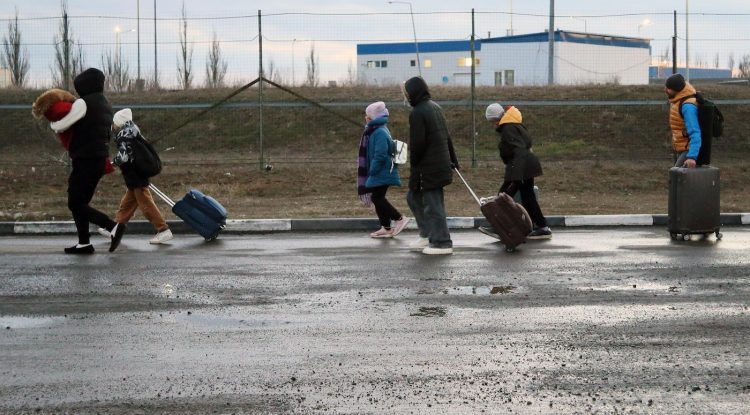
In Russia, there is a huge unofficial network of people who help refugees from Ukraine. Here are their stories
According to the UN, most refugees from Ukraine were forced to leave the war to Russia. These people need the most different help - from consulting a doctor or haircuts to tickets to Europe and organizing a wedding. In recent months, a huge network of people of different professions has arisen in Russia, which help Ukrainians who have appeared in the country: more than 8 thousand people are in the Moscow chat. The project tries not to attract attention: it does not even have a name, and volunteers in a public field try to remain anonymous. "Cold" talks about how this network works and what situations volunteers face.
At the request of coordinators and volunteers, all names in this material are changed. The fact of the "cold" checked every story.
How is a volunteer network
“We are not an official organization. We are a community, very large, ”explains in a conversation with the“ cold ”one of the volunteers of the project Elena.
At the very beginning of the war, the project was self -organized from several independent groups of volunteers: when in the spring they began to massively export Ukrainian refugees to Russia, there were many who want to help throughout the country. People began to unite: someone collected clothes, medicines, products and other things for families who came from Mariupol, others helped Ukrainians leave Russia to Europe. “Several chats formed that grew quickly. New groups of helping from different regions joined them, ”Elena recalls.
With the growth of the number of participants in the project, the division of labor began. “For example, a group appeared that was engaged in the search for suitcases for refugees. After all, people left the basements what was there, then the volunteers collected clothes for them, but where to fold it? - Elena gives an example. “And then a“ suitcase fund ”appeared, which collects and distributes suitcases and bags for transportation refugees.”
The network has its own auto -volunteers who bring refugees from temporary maintenance points to stations and other places. A group of hairdressers who cut people for free. A team of doctors - they conduct consultations online for Ukrainians who have not yet had time (or did not want to) issue Russian state insurance.
“It turns out such a large community where everyone helps, what they can and where he can,” says Elena. According to her, for almost five months of work, the network managed to help more than 10 thousand Ukrainian refugees.
How volunteers married a Russian woman and Ukrainian
Svetlana, 43 years old, St. Petersburg. She led the medical center in the past, and since April devotes all her time to volunteering
In early July, we were addressed by a 19-year-old guy who left Mariupol. He had a wound, his leg was amputated. He was lying in intensive care in the south of Russia and asked to help him leave the country to make a prosthesis. He had problems with stumps, doctors diagnosed osteomyelitis ( purulent lesions of the bones. - approx. "Cold" ). We realized that before sending abroad, it must urgently need to be transported [for examination] to a large city - and chose Petersburg.
And at that moment he asked if it was possible to take a girl with him? My jaw dropped - where does the girl come from? It turned out that he was friends in Ukraine by correspondence with a Russian girl - and in the Russian hospital he was just next to the city where she lived. Before that, they have never seen each other - and met for the first time.
I replied that we only take out families - and if they want to leave together, they should be married. He replied that they want and are ready.
The problem was that the guy had almost no documents left - they burned out - therefore, they could not marry the registry office. Then we decided to crown them: I don’t know if they believed, but the certificate of wedding helps to legalize marriage abroad.
The guy and the girl went to St. Petersburg together, and for them a wedding for them organized, we organized volunteers. Someone was looking for a suit for the groom, someone chose flowers, ordered a small buffet, looking for rose petals to shower the newlyweds with them. I had a dress for the bride - I wrote to my colleagues: “Guys, we have a bride, who has a dress?” People from several cities responded - the guys from the hospital to St. Petersburg were long, they stayed along the way in different cities, tried on dresses and found the option that the bride liked.
The wedding was carried out by the archbishop of the Apostolic Orthodox Church, the St. Petersburg human rights activist Grigory Mikhnov-Vitenko. Everything took place in the building of the Holy Trinity community-it is an empty, free space in the loft, where there is an altar and icons. There were candles everywhere: both in the panicadils in the temple and in the hands of the guests.
The ceremony was amazing - clean, kind and spiritual, real wedding. There were thirty guests: a friend of the groom who escaped from Mariupol with him, a couple of their familiar refugees, and the rest were volunteers. The guy has no prosthesis yet, so during the ceremony he was on crutches. Usually in the church over the bride and bride the crown is kept by their friends. And this time, a volunteer held a crown over the groom, and a friend of the groom over the bride.
How Hamster Mr. Buba traveled from Russia to Europe
Barbara, 30 years old, St. Petersburg. Engineer, joined the community of helping refugees in May
I helped the family from Mariupol - Vika and her son Roma - to leave Rostov, where they were for about two months, to Europe. The train tickets were already purchased when one nuance became clear - Roma on his fifth birthday, which was handed shortly before leaving for Europe, gave a hamster.
The hamster is pure white, his name is Mr. Buba, but Roma every time forgot what he called him, and the hamster was called either Mr. Boba or Mr. Biba.
Vika was about to put the animal in a cage and carry out illegally, because we did not think about buying tickets for the car for the transportation of animals. I immediately presented a picture of how they hide it in bags and how a hamster in the end is leaning back. After Vika told me that Roma was whispering Buba in the ear before going to bed: “You are our family, we won’t leave you,” I had no other way out how to change their tickets.
It was scary to go by train by train and Roma, they were very worried: they were afraid that no one would help them, they would not have enough money and they would go out at the station in an even more unfamiliar city. But everything worked out: they safely reached the place and were located in one of the European centers for reception of refugees.
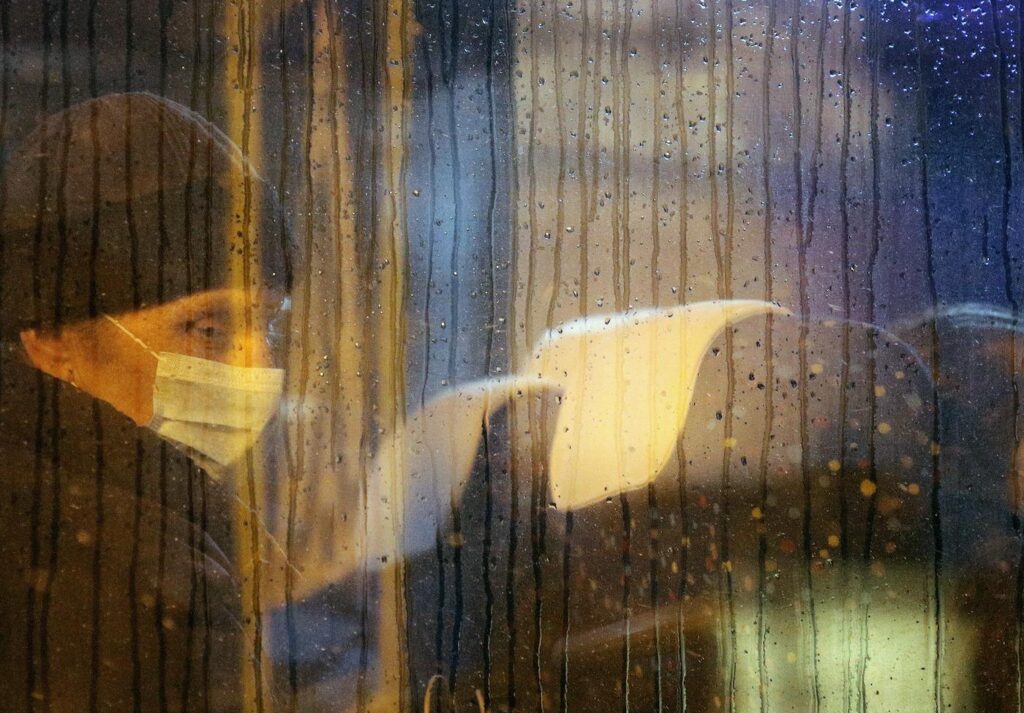
The hamster also arrived. Vika sent me photos from the train on which the stunned Mr. Buba looks out the window. Now he has become a star, lines from the children are lining up to him “to punch”.
How my husband tried to pursue his wife even in Germany
Veronica, 39 years old. Psychologist, began to help Ukrainian refugees in June
When I was just starting to volunteer, I came across an application from a man who fled from Ukraine and settled in a small village near Kemerovo. According to him, he wanted to leave for his brother in Germany. But one of my colleagues, the coordinator of the volunteers, said that she has a suspicion that this man, her husband of her ward Anastasia (the name changed), which she took to Germany from the same village some time ago.
Anastasia said that she and her husband had a difficult relationship, it seemed, it came to physical violence on his part, so she and a small child left without his knowledge.
We still had doubts: the surname of the man was different, and he did not mention his wife in our first conversation. But during the second conversation, he nevertheless admitted: he is going to Germany to find his wife, who secretly left him.
We sent a photograph of this man Anastasia-she confirmed that it was her husband, and was very tensed due to the fact that he was going to find her. According to her, on the eve of her departure to Germany, they quarreled hard: he did not want to let her go, offered to stay in this small village. I admired that she was so young - and gathered the courage to take a child and leave.
When all this turned out, I decided that I was not ready to help this man pursue his wife and child. We talked again, I carefully tried to find out if he was sure that he should go to Germany, which was already crowded with refugees. After all, there may be problems with work. After the conversation, he agreed that he should not go, and we closed the appeal.
After some time, this man has submitted an application with a request to help him go to Germany again. But none of our volunteers began to take her to work.
How ITSHNIKED renovated the house in Mariupol for parents
Anna, 46 years old. Professional linguist, joined the volunteer community in April
I helped to take out four guys to Slovenia - they all worked as an IT -school at the factory in Mariupol. These are two brothers and their colleagues. They got out of Mariupol only in June. All the previous months, the brothers persuaded their parents to evacuate. But they refused to leave Mariupol.
Their house was destroyed, and so that the parents were where to live, the brothers decided to restore it before leaving. They had to repair both walls and windows. Materials for this were searched on landfills.
The most amazing thing is that the guys also managed to collect themselves from the solar panels found in the city. Therefore, their parents - it seems, the only ones in all Mariupol - had electricity.
Many refugees, when they decide where to leave Russia, choose countries where social protection is well developed - Germany, for example. But these four guys chose Slovenia-due to the fact that the climate there is like Mariupol. There they will not be able to receive the same help from the state as in other countries of Europe, but I’m sure that they will cope without it.
How the cat Timofey flew to Los Angeles
Inna, 30 years old, Moscow. Project manager in a state -owned company became a volunteer at the end of April
When I once again looked at applications for help with a departure from Russia, I saw an unusual request from a young man. Most people write simply: “Help leave”, and this guy had a structured list on the points: “I need: a couple of socks, panties, a T-shirt and a ticket to Los Angeles.” I thought that since a person knows exactly what he wants, it would be easy with him - and took this application to the work.
Refugees who are contacting us are rarely asked to help them leave precisely in the USA, and therefore, if such a case turned out to be, I asked in volunteer chats if it was necessary to transfer something to the States with my ward-maybe documents. And one of the colleagues asked: "Take a cat into America."
The 11-year-old cat Timofey was sitting for several months on an overexposure in the suburbs: his mistress, a citizen of Ukraine, who lived in Moscow, with the outbreak of war urgently, having quit and did not have time to draw up documents for a cat, went to California with her child. And all this time I was looking for ways to take Timofei.
Then the difficult process of transportation began, in which 13 people participated. It was necessary to figure out how to drag Timofey to Warsaw, from where my ward flew to Los Angeles. One volunteer delivered him from overexposure to Odintsovo. The second took the documents that lay in another part of Moscow. The third carried the cat to the veterinarian and issued certificates.
Another of my wards, which I sent by train from Moscow to Brest, agreed to transport the cat with me. On the X day at 11 pm, everyone who took part in this story together gathered at the Belarusian station - to accompany Timofey and my ward.
From Warsaw, the cat flew right into California. Timofey is elderly, he had never traveled so far as not to injure him, we were forced to buy the fastest flight. The ticket cost about 70 thousand rubles, part of the amount was collected with the help of good people from Twitter.
How Ukrainian grandfather was funeral in St. Petersburg
Svetlana, 43 years old, St. Petersburg
At the end of May, a family of Ukrainians turned to us - a woman with her husband, two of their children, elderly parents and a dachshund. Having left Ukraine, from Kharkov, they decided to stay in Russia until it would not be possible to return back. But in the spring of a 60-year-old grandfather, cancer was found in the fourth, [terminal] stage (the tumor sprouted into large blood vessels or neighboring organs.-approx. “Cold”) .
Before the war, the man worked in the cemetery: he made monuments. His daughter told how always they were inseparable with her mother since they got married - they never spent the night separately, even in the train slept on the same shelf.
They turned for help when the father [already] almost did not go. We helped to raise and lower it on a wheelchair from the fifth floor without an elevator to carry it to the procedures. They recorded it for consultations, made an MRI, but could no longer help. For many years I myself worked as an administrator in an oncological clinic, and when I looked at the pictures, it became clear to me: there was no place for a miracle.
He died in July. The family immediately called my colleague-vulture, and he suggested helping to organize cremation. But relatives refused - in their family the dead are buried in the ground.
From Ukraine, the whole family came in an old Soviet car. Despite the war, the daughter wanted to take his father’s body back to Kharkov or at least bury him closer to the border with Ukraine, but I managed to convince her - it was impossible to go by car from St. Petersburg with the body in such heat.
We arranged a funeral service in the crematorium. But on the day of farewell to our ward in the crematorium, we were not alone. There was an honorary guard at the entrance, and there was a memorial service for the deceased Russian soldier. When the honorary guard suddenly gave a volley, the daughter of the deceased shuddered and cried.
If you need help: write to the telegram-boot of the project
If you want to help: fill the google form . You can also transfer money to tickets to Europe for refugees