
Translated material
A cross is placed on Europe
European countries gradually close the borders for the head of the Russian Orthodox Church Cyril (Gundyaev). Why is this an existential disaster for him?
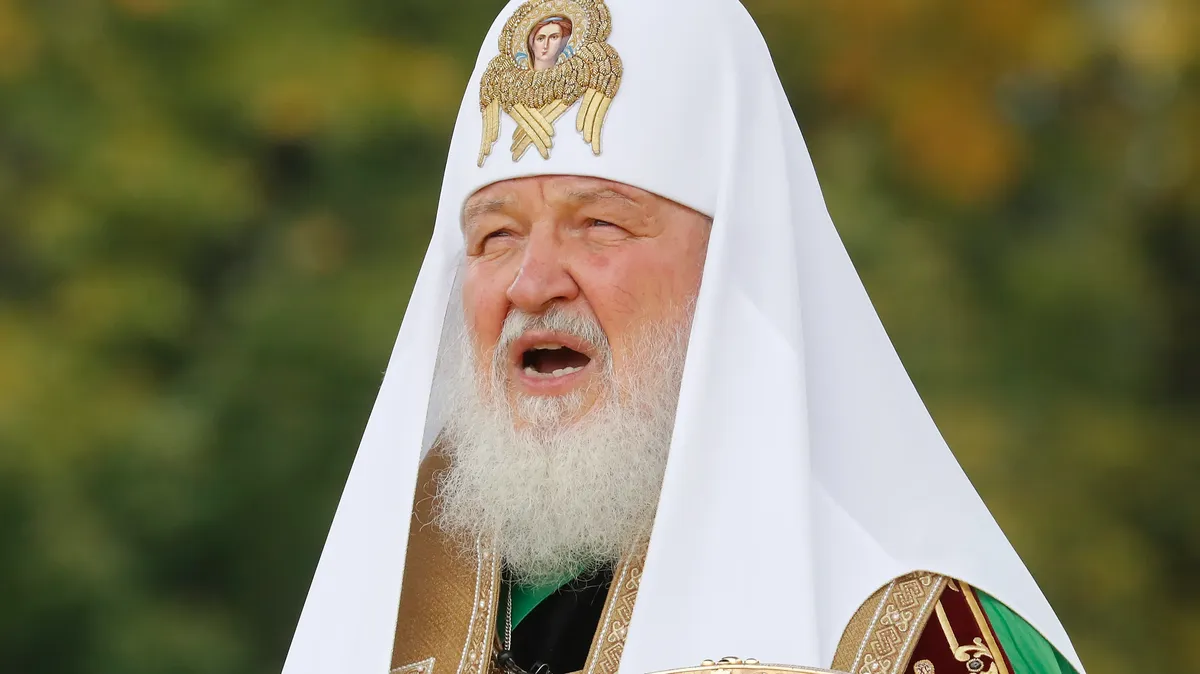
Farewell to Lithuania
On July 27, the Lithuanian Foreign Ministry imposed personal sanctions against the head of the Moscow Patriarchate of Kirill (Gundyaev), forbidding him to enter the country at least until 2027. In an official statement on this occasion, the Ministry stated that Cyril (according to the passport - Vladimir Mikhailovich Gundyaev) “consciously denies the territorial integrity and sovereignty of Ukraine, justifies and supports” what the Russian authorities call a special military operation (SV). Thus, Cyril is recognized as involved in "gross violation of the norms and principles of international law." At the same time, the department delicately circumvents the question of cooperation between the future Patriarch of the Russian Orthodox Church with a Soviet KGB, identified by the Parliamentary Commission of the Supreme Council of Russia in 1991 when studying the archives of state security . And Lithuania is known for its tough policy regarding high -ranking employees of Soviet state security.
In the first weeks, his Patriarch Kirill was actively looking for excuses for what was happening, sometimes reaching absolute absurdity . For example, on Sunday, on March 6, he stated that "large-scale hostilities with many victims and destruction are the only way to avoid gay parade in Donetsk." And on March 9, he put forward a strange international legal theory that states "have the legal right to use force, forcing ... other countries, if they see a threat in them, to ensure that this threat is not." In the context of the sermon, it was clear that such a right was recognized for the Russian Federation, but not for Ukraine, which should not even protect its territory. Because, according to the teachings of Cyril about the “Russian world”, “Russia, Ukraine, Belarus, there is holy Rus' together” - with a center in Moscow. Kirill promoted the doctrine of the ghost of Ukrainian statehood and in general a separate ethnic group in his “programmatic” brochure “Seven Words on the Russian World”, published in 2015 - against the background of the annexation of Crimea and the war in the Donbass.
However, somewhere in the beginning of May-when it became clear that his outcome was strongly dragged on and fraught with an unexpected outcome for the Russian Federation-Cyril changed his rhetoric. Now in each of his sermons there are pathos and paradoxical exclamations such as “Russia has never attacked anyone” or “our fatherland ... has nothing wrong with anyone ... Russia's otherness excites a sense of jealousy, envy and indignation, but we cannot change ourselves ... it was, as it was and is in essence, Holy Russia.”
Contrary to the classical “theory of five stages”, in Cyril, the stage of negation came after the stages of “bargaining” and “acceptance”.
On the territory of Lithuania, the Russian Orthodox Church has a rather large and historically significant diocese for itself, which now achieves from Moscow the status of a self -governing church as part of the Moscow Patriarchate - like Latvian and Estonian, which have their own synods. The diocese is headed by the Honored Metropolitan of the Russian Orthodox Church Innocent (Vasiliev), which can be sent to rest this year upon reaching the 75th anniversary. His successor is a young and energetic vicar bishop of Ambrose, who recently went “to the brows” to Moscow. It is Ambrose in Lithuania who is considered an ideologist for represence against the five prominent clergy of the diocese - led by the diocesan secretary Archpriest Vitaly Motskus. As the new newspaper wrote . Europe ”, back in March, they opposed his, reminding that the church is by nature obligated to testify to the truth and expose crimes, especially - such a scale. Innocent banned the clergy in the ministry, saying that they "allowed insulting and slanderous attacks against the Russian Orthodox Church, [...] mislead representatives of state power and public organizations, hiding behind anti -war rhetoric." It is noteworthy that on March 17, the Metropolitan himself came up with a “decisive condemnation” of Russia's actions against Ukraine, after which he became “all -in” to Moscow, where the vicar is now not tarnished “anti -war”.
The symbolic meaning of Lithuania for the Russian Orthodox Church is due to the fact that historically - up to the end of the 17th century - it was part of the Kyiv metropolis of the Patriarchate of Constantinople (Ecumenical). In 1686, the Moscow Patriarchate annexed this Metropolitan, with which Constantinople could never fully reconcile. Finally, in 2018, the Patriarchate of Constantinople officially condemned this annexation, recognized the Kyiv Metropolitan of the illegally torn from his jurisdiction and returned it to his omophorion. It was on this basis that on the next, 2019, the year was granted by Constantinople Autocephalus of the Orthodox Church of Ukraine. However, other territories hung in the air, which historically entered the Kyiv Metropolitan of the 17th century: Belarus, Lithuania, parts of the Pskov, Smolensk, Bryansk regions of the Russian Federation. If the annexation of 1686 is recognized as illegal, then they should return to the "native harbor" of the Patriarchate of Constantinople. It is clear that this interferes with this in Belarus or in Russian territories. But in Lithuania, after all, nothing interferes. And when the clergy illegally repressed by the Metropolitan promised to appeal to the Patriarchate of Constantinople, this was seriously alarmed by Moscow. The provision of the Lithuanian diocese of the status of a self -governing church is the last desperate gesture in an attempt to hold this territory in the Russian Orthodox Church. Most likely, this gesture will not give anything, and Constantinople will restore its jurisdiction over Lithuania (and then over Latvia) in the foreseeable perspective, where the structures of the Moscow and Constantinople Patriarchates will coexist on the Estonian scenario. Recall that since 2018, the Russian Orthodox Church has no canonical communication with Constantinople, while the last communication with the Russian Orthodox Church did not break.
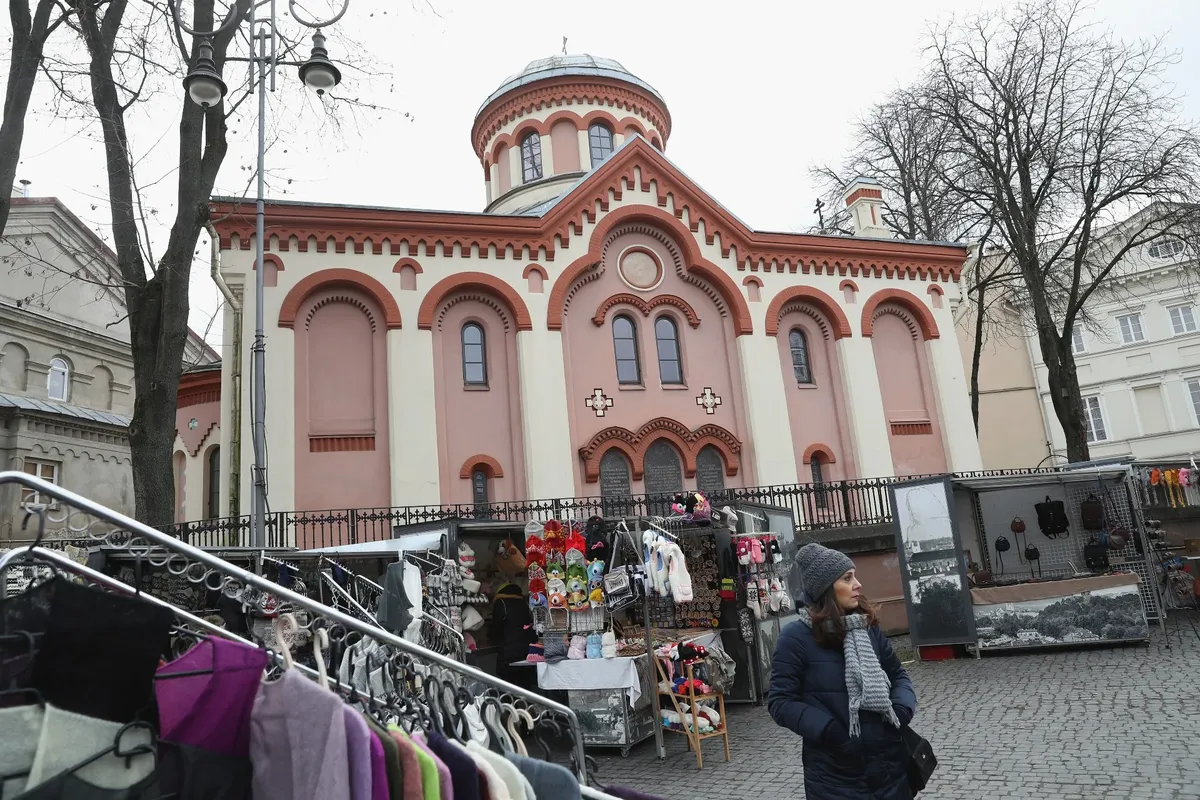
Will there be a chain reaction?
In the current military-political situation, Lithuania will not be the last state of the civilized world, which will close its borders for the head of the Russian Orthodox Church. The first, July 8, this was done by Canada, which included Gundyaev in a list of 29 Russians that he does not want to see on their territory. According to the qualifications of the Canadian Foreign Ministry, Cyril is a “sponsored state agent of misinformation and propaganda”. The honorary company Patriarch was compiled by Maria Zakharova, Ekaterina Andreeva, Olga Skabeeva, Artem Sheinin, Tigran Keosayan and Anton Krasovsky. “Canada is committed to the fight against misinformation, where and whether it was discovered,” the country's Patriarch exposes the country. “Today we make it clear to those who spread the fraud: you will be held accountable.”
The assets of Vladimir Gundyaev are frozen in the UK, although it is not known for certain whether he has assets there. Traditionally, Switzerland and Italy were the centers of foreign business activity in Cyril (possibly under the guise of the Vatican).
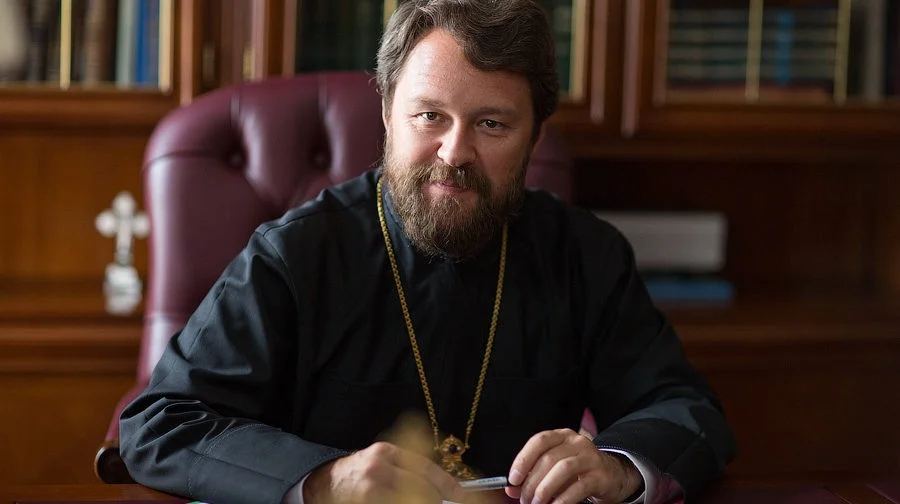
On June 3, the European Union tried to block Gundyaev in the entire territory of the Schengen zone, but Veto Hungary imposed this decision, whose prime minister has a reputation as a friend of Putin. A few days later, a proven official from the highest hierarchy of the Russian Orthodox Church, Metropolitan Ilarion (Alfeyev), was appointed in Budapest. According to one version, he must provide the Patriarch with a “reliable corridor” to the west through the last ally in the EU.
Most likely, according to the principle of Baltic solidarity, Lithuania will be the first to follow Latvia and Estonia. True, confessional political situations in these countries are very unequal. In Latvia, the semi -autonomous structure of the Moscow Patriarchate (LPC MP) is recognized by the law by the only religious organization that has the right to be called the “Orthodox”. On this basis, despite the decisions of the ECHR, the Latvian authorities refuse to register an “alternative” Latvian Orthodox Autonomous Church, which claims to restore the law of the jurisdiction of the Patriarchate of Constantinople, which existed there between the two world wars. In March, the head of the LPC MP Metropolitan Alexander (Kudryashov) in vivid expressions (which is prohibited from using in the Russian Federation) condemned his, saying that "the solution of issues of international relations by military is unacceptable." Alexander assured the authorities that "the Orthodox Russian -speaking Latvians are patriotic and loyal Latvia and are not responsible for the actions of other states." Patriarch Kirill outlined a visit to Latvia a couple of times in recent years, but both times the countries of the countries did not coordinate him. It is noteworthy that several ROC figures have already been declared in the country by persons of Non Grat, including Andrei Kuraev, who was in the opposition to the Patriarch.
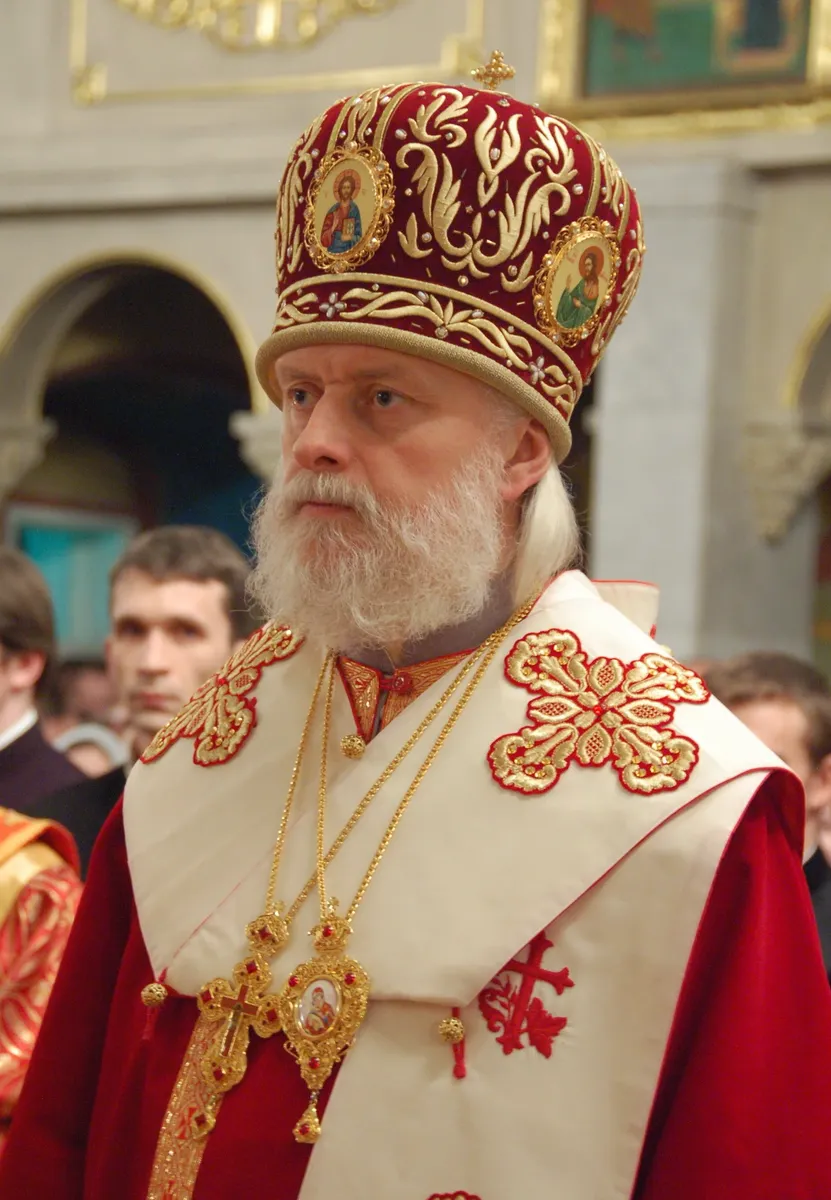
The Tallinn Metropolitan of the Russian Orthodox Church Evgeny (Reshetnikov), which was more so long ago, was loyal to Moscow, which was not so long ago sent to Estonia after many years of work by the rector of the Moscow Theological Academy. He limited himself to the signature under the statement of the Council of Estonia Churches with condemning “terrible events” in Ukraine, but at the same time constantly visits Moscow, participating in solemn patriarchal services. Unlike Latvia and Lithuania, Orthodoxy in Estonia for 25 years is divided between the jurisdictions of the Moscow and Constantinople Patriarchates, which are quite peacefully coexist. The first includes mainly Russian -speaking parishes, and the second - estono -speaking.
So far, Lithuania’s decision does not mean a complete ban on visiting the Schengen zone for Cyril. As the owner of a diplomatic passport, he did not need to receive visas to visit them. Until 2014, Cyril regularly, several times a year, visited Switzerland, where he has a shawl since the time of work in the World Council of Churches in the 1970s. However, in the current political conditions, it is difficult to imagine that the Patriarch hastes to take the opportunity to visit Europe until it closed completely for him.
Its administrative style consists in the exact reproduction of all trends in the highest political leadership of the Russian Federation, primarily the president.
Cyril even moved to Aurus after Putin began to ride such a reduced copy of the palace in Praskoveevka built for himself in the neighborhood. It is completely stylistically, tactically and strategically merged with the current Kremlin power, and Western sanctions for him are even necessary as a “quality mark”.
But deep down to Cyril, probably, bitterly. The young “sixties”, brought up by the “secret Catholic cardinal” by Nicodemus (ROTOV), who always revered the pope and the Catholic Church, the current patriarch was formed as a Western - if not by values, then by style and lifestyle. Switzerland always remained for him a cherished place of rest, and he placed his first capital in the 90s in the West. He spent his first reforms as the patriarch on the Catholic model, trying to modernize the church and attract young people. But Russian history has made such a cool turn that, in the words of Metropolitan Hilarion, "it is impossible to fit into it - he is doomed to be on the sidelines." Patriarch - fit, at the cost of a complete break with all his past Westernism. In general, he is no longer a ride to Europe - regardless of whether she will prohibit him from entering or not.