
Translated material
"Let's have no illusions"
How Roscosmos has been shifting the launch of Russian space projects for years
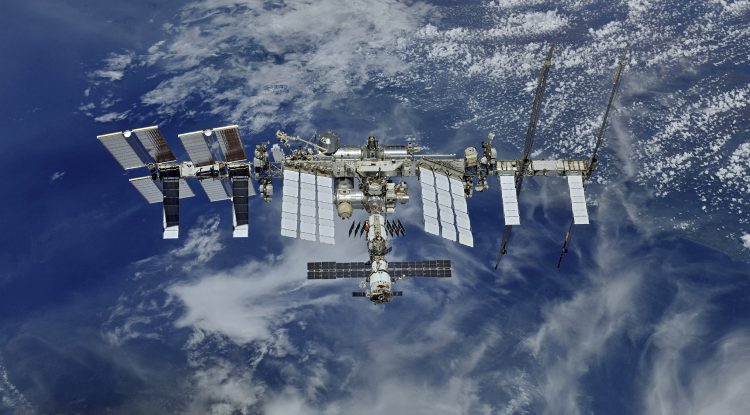
On July 26, the new head of Roscosmos, Yuri Borisov, announced his departure from the ISS project in 2024 - by this date, Russia, according to him, will “begin to form” its own orbital station. However, within a few hours, information appeared that the first stage of construction of the Russian station could begin only in 2028. Kholod recalls how other important projects for Roscosmos have been delayed over the past decade - from the first lunar lander since Soviet times to the Vostochny cosmodrome.
Launch of the Angara rocket
Overdue: three years
“Angara” is an import substitution project; it was supposed to be the first heavy launch vehicle, all of whose components were made in Russia. The Khrunichev Center initially announced the launch of the Angara into space in 2011. This deadline was missed.
The next launch was supposed to take place in 2012, but this date was also pushed back. As a result, the Angara launch vehicle was sent into space only in 2014.
Launch of the first lunar lander
Overdue: 10 years
In 2007, the Lavochkin Research and Production Association promised that the launch of the Russian Luna-25 (Luna-Glob) was scheduled for 2012 - this is the first domestic lunar apparatus after Luna-24, which was launched back in 1976 .
The first flight of Luna-25 was postponed several times: first to 2015 , and then the vague wording “no earlier than 2016” appeared. In August 2017, it became known only about the approval of the design model of Luna-25. At the same time, Roscosmos announced that the launch would take place in 2019.
In May 2018, the RAS Space Council announced the need to postpone the launch of the Luna-25 spacecraft from 2019 to the period from June to October 2021.
In August 2021, Roscosmos decided to postpone the Luna-25 scientific mission from October 2021 to May 2022. The reason for this decision was stated by Vice-President of the Russian Academy of Sciences Yuri Balega: “There is too little time to complete the preparation of the apparatus.”
In April 2022, information appeared about another postponement of the launch of Luna-25 - from May to August 22 of the same year. The management, without waiting for the deadline, again postponed the launch. In May, the head of Roscosmos, Dmitry Rogozin, moved the start from August to the end of September. “I hope all the tests will be successful. And at the end of September we will launch,” he said.
This same spring, the head of Roscosmos did not rule out that the dispatch of subsequent modifications of the series - the Luna-26 orbiter and the Luna-27 heavy landing vehicle - would have to be “adjusted” taking into account the “current situation.” Rogozin added that “before the end of May” a “detailed dialogue” with “Chinese colleagues” is planned on cooperation in the direction of lunar missions.
Launch of the Science module
Overdue: 14 years
Back in 2004, it became known that a plan had been approved, according to which the multi-purpose laboratory module “Nauka” was to become part of the Russian segment of the ISS no later than 2007. However, by this date it was only possible to conclude a contract for the construction of the module - the new launch date was already 2009.
Two years later, Nauka still hasn't launched. Instead, the project was allocated an additional 4 billion rubles for completion in 2011. Roscosmos announced a new date - 2013.
However, in 2013, the president of the Energia rocket and space corporation, Vitaly Lopota, announced that the multifunctional laboratory module “Science” would be launched in April 2014. The deadlines were postponed several more times - the module was launched into orbit only on July 21, 2021.
Construction of the Vostochny cosmodrome and launches from it
Overdue: from one year to several years
On November 30, 2015, construction work was to be completed on the first stage of the Vostochny cosmodrome - 33 buildings and structures associated with the first launch complex. The implementation of the project was accompanied by corruption scandals: in 2015 alone, damage from theft reached 7.5 billion rubles, and more than a dozen criminal cases were initiated during the year. The completion date of all construction work at the first launch complex of the Vostochny cosmodrome was postponed to the end of 2016. The final lag is a year.
The first launch from the Vostochny cosmodrome was announced for December 25, 2015. As a result, it was postponed - it took place in April 2016.
The first manned flight from Vostochny also did not go without delays. Initially, according to a presidential decree of 2007, it was planned to be held in 2018. However, it was postponed to the period “after 2020”. In 2019, Roscosmos announced the transfer date - 2025. The lag from the original date is seven years.
The construction period for the second stage of the Vostochny cosmodrome has also been delayed. It was planned to start in 2016 and finish in 2020. In fact, work began only in 2019. Yuri Borisov, who served as Deputy Prime Minister in 2019, commented on the postponement of the construction of the second stage of the Vostochny cosmodrome: “Let’s not have any illusions, no one today is able to build by 2021 <...> Today the deadline has been adjusted and stands for 2021 year, but no later than 2023.”
In 2020, they announced the next deadline for completing the construction of the second stage of the Vostochny cosmodrome - no earlier than 2025. The construction time frame for the third stage is also presented - from 2021 to 2030. But already in September 2021, Dmitry Rogozin announced that work on the third stage will begin only after the completion of the second.
Launch of the Russian ship "Federation"
Overdue: eight years
In 2015, the first unmanned launch of the Russian Federation spacecraft was supposed to take place (it was being prepared to replace the Soyuz). In 2017, there was talk of moving the estimated date of this event to 2019. Then the deputy head of Roscosmos, Sergei Savelyev, announced another postponement - from 2019 to 2021.
In 2021, Dmitry Rogozin promised that the first flight of the Orel spacecraft (this is the new name of the Federation) will take place only in 2023. The development of the ship has been going on for more than ten years by the time of the last postponement.
President's promise
In the film “Putin” by Andrei Kondrashov, which became available online a few days before the presidential elections on March 18, 2018, Vladimir Putin spoke about the immediate plans of Roscosmos. According to him, Russia was supposed to launch a mission to the Moon as early as 2019. Mars exploration was also planned.
“We will now carry out unmanned and then manned launches there for deep space exploration. And the lunar program, then the exploration of Mars. The first is very soon, in 2019. Then we are going to launch a mission towards Mars. A new continuation of the study of the Moon - not like the Soviet Union - our specialists will try to make landings at the poles: because there is reason to believe that there may be water there. There is something to do there, from there the exploration of other planets and deep space can begin.”
Vladimir Putin, President of Russia
The mission never took place.
Current promises, in addition to withdrawal from the ISS project
The new Soyuz-5 launch vehicle, according to the forecast of the Progress Rocket and Space Center (part of Roscosmos), was supposed to be launched in 2022. This date was later postponed; the current forecast is December 2023.
In 2020, Roscosmos promised to create new launch vehicles “Amur” and “Yenisei” and launch them in 2026 and 2028, respectively. The Yenisei deadline has already been postponed - in the spring of 2022, Dmitry Rogozin announced that the launch of a super-heavy launch vehicle was possible only after 2030.
At the beginning of March 2022, Rogozin, at a meeting with State Duma deputies from the LDPR, promised to create an “unkillable” satellite Internet in Russia by deploying “new orbital constellations.” The estimated date is 2025.
The first launch of the Angara-A5 launch vehicle from the Vostochny cosmodrome has been postponed for six months. The new deadline is June 2024.