
Translated material
Propagandist from God

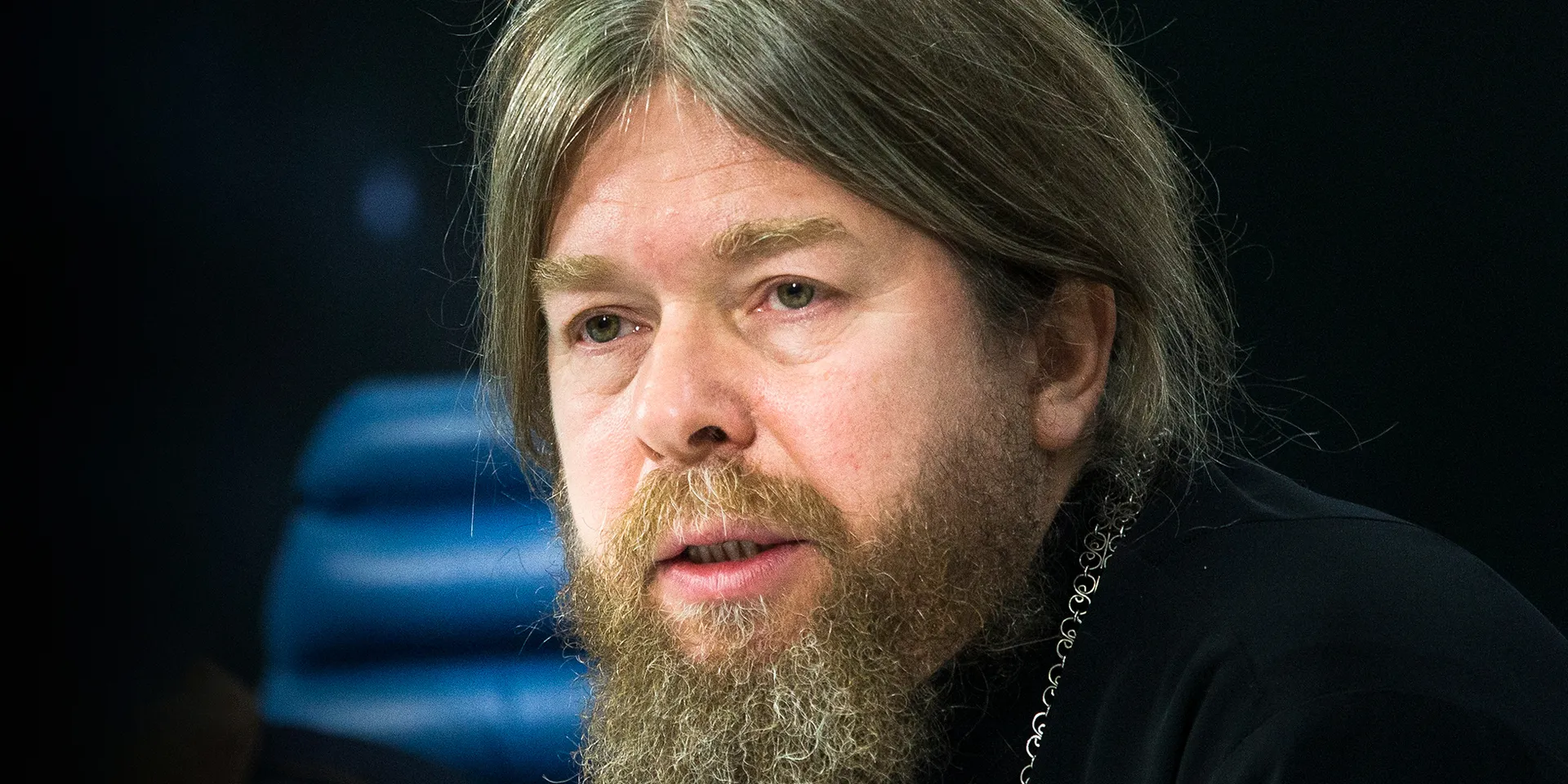 Photo: AP / Scanpix / LETA
Propagandist from God
Putin’s longtime acquaintance, Metropolitan Tikhon (Shevkunov), has moved away from the church authorities, moved closer to secular power and is engaged in projects that justify the war. In recent years they have cost no less than 20 billion rubles
A photograph appears on a small touch screen: a Ukrainian girl is giving milk to a German soldier. “It gets to your heartstrings,” sighs the guide. Larger screens are hung on the walls, showing successive images of the Volyn massacre , the Lviv pogrom and other crimes of Ukrainian nationalists in the mid-20th century. So in May, the exhibition “Archives Testify. Ukrainian nationalism during the Second World War." The local FSB office helped with exhibits and documents.
“We were offered to prepare the exhibition by the Ministry of Culture. In general, it is important for me as a historian to get into the FSB archive and work there. That’s why I grabbed this opportunity,” one of the scientists who prepared the exhibition tells Important Stories. “But this exhibition was clearly invented because of a ‘special operation’?” “We don’t work in a vacuum. I think the motives were exactly this: to show the historical roots of Ukrainian nationalism.”
This and similar projects were invented by the bishop of the Russian Orthodox Church (ROC), Metropolitan Tikhon (Shevkunov), who is called “Putin’s confessor.” Most likely, this is not true about the confessor, but Tikhon has known the president since 1999, when he was director of the FSB. From the state security building on Lubyanka to the Sretensky Monastery, where Tikhon was the governor, it is about half a kilometer , and among Tikhon’s flock there were many KGB officers who in the 1990s were looking for spiritual bonds, so behind his back they called him the Lubyanka priest. Tikhon and Putin found a common language and began to communicate. And already in 2001, Tikhon publicly spoke of Putin’s presidency as God’s mercy: “Those who truly love Russia and wish it well can only pray for Vladimir Vladimirovich, who was placed at the head of Russia by God’s providence.”
“Important Stories” tell what an Orthodox priest has in common with militant state ideology and how the authorities support his projects. According to our calculations, at least 20 billion rubles have been spent on them over the past few years. The money came primarily from the state and state-owned companies.

Lubyansky Father
Metropolitan Tikhon (secular name - Georgy Shevkunov) received a secular education - in the early 1980s he graduated from the screenwriting department of VGIK. After this he was baptized. “We were surprised to discover that all the great figures of world and Russian history... turned out to be believers. Dostoevsky, Kant, Pushkin, Tolstoy, Goethe, Pascal, Hegel, Losev... But the characters who did not evoke any sympathy in us, with whom we associated everything that was most sinister and repulsive in the fate of Russia and in world history - Marx, Lenin, Trotsky, Hitler, the leaders of our atheistic state, the destroyers-revolutionaries - all of them were atheists,” he wrote about himself and his fellow VGIK students in the autobiographical book “Unholy Saints.”
In 1991, at the Donskoy Monastery, Shevkunov was tonsured a monk under the name Tikhon and quickly made a church career, becoming the rector of the Sretensky stauropegic monastery. Thanks to Shevkunov’s efforts, the revived monastery established its own publishing house and opened a seminary.
Fugitive banker Sergei Pugachev claims that it was at the Sretensky Monastery in 1996 that he introduced Shevkunov to President Vladimir Putin. But Shevkunov himself told a Financial Times journalist that Putin unexpectedly came to his monastery at the end of 1999. As Tikhon’s old friend Zurab Chavchavadze told Important Stories, the future metropolitan and the future president actually met in 1999. Putin’s father died a week before his appointment as acting prime minister, and he asked his “churched friend” to find a priest for the funeral service. He advised Shevkunov: since then he and Putin have been friends.
Be that as it may, in 2000, Tikhon already accompanied Putin on his trip to the Pskov-Pechersky Monastery, where Tikhon was once a novice, and in 2003, he and the president went to the United States - there Putin conveyed an invitation from the Patriarch of the Russian Orthodox Church Alexy II to the First Hierarch of the Russian Orthodox Church Abroad to visit Russia (this was the first step towards restoring the canonical communion of the two churches).
“I’m afraid this is no longer Orthodoxy, but a kind of post-Soviet civil religion, the center of which is the sacralization of state power.”
Current and former FSB generals visited Shevkunov and spoke of him as a “correct father,” says an acquaintance of theirs. Banker Pugachev published photographs of Shevkunov with Putin’s long-time assistant Igor Sechin and Putin’s successor as FSB director Nikolai Patrushev.
Shevkunov refuses to “equate the atrocities of the security officers who destroyed their own people with the current military serving in law enforcement.” He was openly friends with KGB Lieutenant General Nikolai Leonov - he baptized him, then married him to his wife. Through Leonov, suggests Sergei Chapnin, senior researcher at the Center for Orthodox Studies at Fordham University, former executive editor of the Journal of the Moscow Patriarchate, he met “all the key security officials.”
“I do not rule out that he considers them deeply Orthodox people. And here the main question arises: how then does Metropolitan Tikhon understand Orthodoxy if he can easily justify the violence that the special services are perpetrating in Russia today? I’m afraid this is no longer Orthodoxy, but a kind of post-Soviet civil religion, the center of which is the sacralization of state power,” he says.
In the 1990s, Shevkunov, Leonov and television journalist, State Duma deputy Alexander Krutov created the publishing house “Russian House” - a patriotic media outlet with the slogan “For those who still love Russia” (both Krutov, who calls himself a monarchist, and Leonov were signatories of the loud “letter of 500” demanding that the activities of all Jewish organizations be banned in Russia). The Russia House published , for example, calls on the Russian authorities to “return” Crimea and Sevastopol and finally adopt the law “On the Protection of Russians” - including in Ukraine.
“They were driving a KGB blizzard about insidious foreign countries,” recalls Nikolai Mitrokhin, a church historian and researcher at the Center for Eastern European Studies at the University of Bremen. “This is the kind of KGB Russian nationalism that, as it turned out, Putin represents.” “Over the past two decades, Tikhon has literally been one of the ideologists who have shaped the image of the West as an enemy of Russia and Orthodoxy,” agrees Sergei Chapnin. “And the Russian political elite has learned its lessons.”
Tikhon is on the board of trustees of the St. Basil the Great Foundation , established by the “Orthodox oligarch” Konstantin Malofeev. This foundation is famous for its fundamentalist initiatives. For example, it was he who became the founder of the Safe Internet League, an organization that stands at the origins of censorship in the RuNet. Back in 2014, the foundation collected humanitarian aid for the self-proclaimed LDPR; the main ringleaders of the unrest that Russia then staged in eastern Ukraine are associated with it. For example, the first Prime Minister of the DPR, Alexander Borodai, was an adviser to Malofeev. And Igor Strelkov (Girkin), who began hostilities with the capture of the Ukrainian Slavyansk, and then was the Minister of Defense of the DPR, worked at Malofeev’s foundation.
Subscribe to the "Important Stories" newsletter to better distinguish history from propagandaTrue, Zurab Chavchavadze (he is also a member of the foundation’s board of trustees) says that Tikhon’s membership in the board is “purely decorative”; he does not participate in the foundation’s activities in any way, and the degree of Tikhon’s influence on Putin is overestimated: “They are friends, and communicate only on friendly or spiritual topics.”
In 2018, Shevkunov was relieved of his duties as abbot of the Sretensky Monastery and rector of the Sretensky Theological Seminary. In the rank of metropolitan he headed the Pskov diocese.
“I think that Patriarch Kirill’s decision to send Tikhon to Pskov was largely emotional and ill-considered. Kirill wanted to remove Tikhon from the capital and thereby make it difficult for him to communicate with the security forces, with federal ministers and Putin himself. However, this did not happen - all of them, including Putin, began to go to Tikhon’s monastery,” says Chapnin. “And I think that in the end Tikhon himself only benefited from this decision of Kirill. He sits in Pskov and easily distances himself from the unsuccessful church policy pursued by Patriarch Kirill.”
“With this [movement], the patriarch solved many problems at once: on the one hand, he pretends to promote Tikhon, on the other, he removes him from the center of decision-making, to use a modern term,” says Tikhon’s friend, disgraced deacon Andrei Kuraev. “But Putin himself came to him in Pskov.”
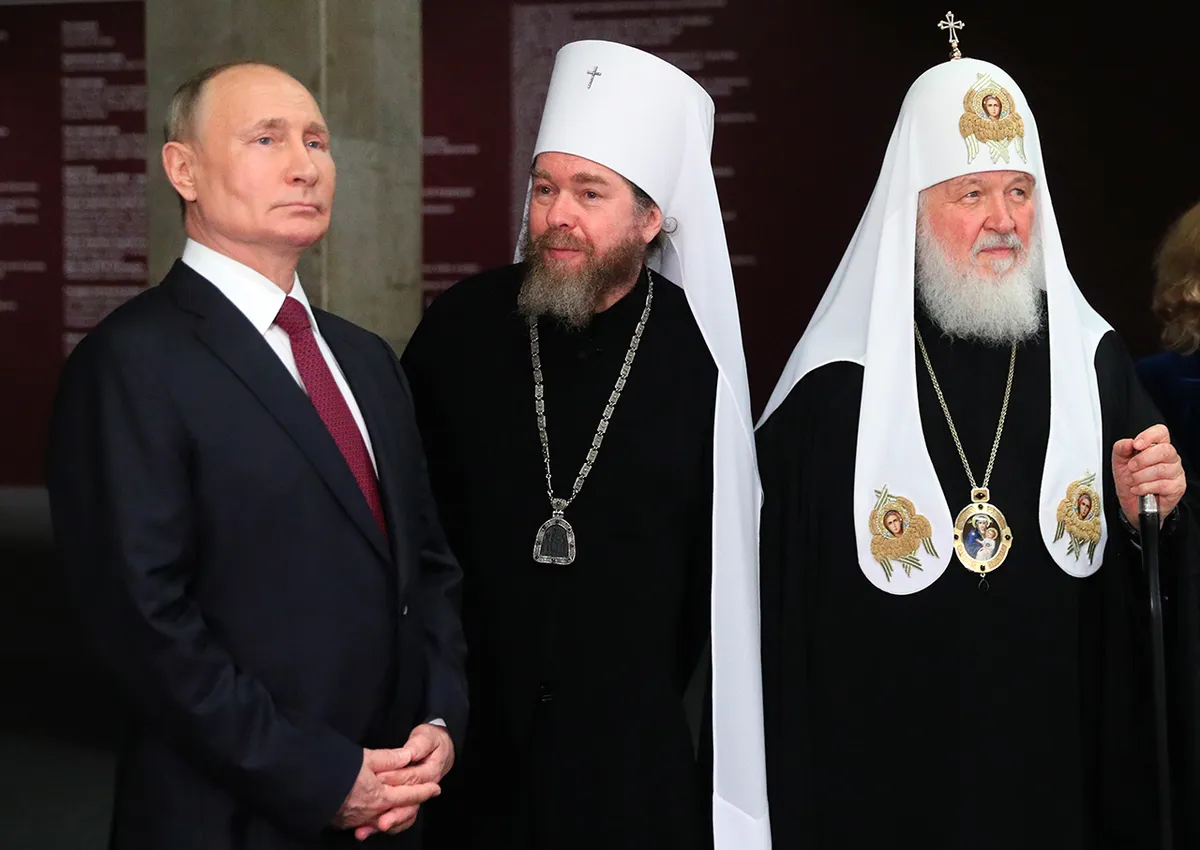
Proximity to power allows Tikhon to attract considerable government money for his projects. Moreover, the ideology of these projects coincides with current Russian politics.
Projects and money
“Yes, he is given serious amounts of money. On the one hand, because of the notorious rumor about “Putin’s confessor.” On the other hand, Tikhon is a very charming person. What Tikhon has and what Patriarch Kirill does not have is personal charisma and sincerity. And this is very much appreciated,” says Andrey Kuraev.
“Metropolitan Tikhon is part of Putin’s elite in the truest sense of the word. That is why he has direct access to both government funding and funding from large Russian businesses - this is much more important than the nickname “Putin’s confessor,” says Sergei Chapnin. “In addition, Tikhon has shown himself to be a successful and effective manager. There are no more managers of this level among the episcopate.”
According to “Important Stories” estimates, at least 20 billion rubles have been spent on Tikhon’s projects in recent years. This figure has two components. Half is funding for the “Russia is My History” parks since 2015. The other half is the three-year budget of funds associated with Tikhon (reporting is available for 2019–2021). The funds received money from the state and from state-owned companies, and also made money themselves, for example, by selling tickets and renting out premises.
Tikhon's funds received almost 10 billion rubles in 2019–2021Fund name - amount in rubles; main source of money; what did the money go to?
“My Story” - 4.6 billion; Gazpromneft charity foundation “Native Towns”; for the museum-reserve "Tavrichesky Chersonese", for the creation of a historical and archaeological park in Chersonese, for the support of the portal "Pravoslavie.ru"
Humanitarian Projects Fund - 1.5 billion; state budget, donations, rental of the “My History” pavilion at VDNKh, sale of tickets to exhibitions; for the parks “Russia is my history”, the career guidance project for schoolchildren “Ticket to the Future”
“Revival of cultural heritage in the city of Pskov” - 1.45 billion; state budget, contribution from Transneft; for the restoration of Pskov churches
“Tradition” - 0.7 billion; donations, own income from publishing; to the Pskov diocese, to the St. Clement Monastery in Crimea, to the “Russia - My History” parks, to the “Chersonese Tauride” museum-reserve
"Perspective" - 0.5 billion; donations from the Ministry of Culture, commercial activities; for the production of the play “Griffin”, for the parks “Russia - My History”, for the festival “Historical Park - Tauride Chersonesos”
“Becoming” - 0.4 billion; donations, “Ticket to the Future” project; for the St. Clement Monastery in Crimea, for the development of territories near the monasteries of the Russian Orthodox Church
Source: funds reports.
Historical parks “Russia is my history” now operate in 24 cities. These are multimedia exhibitions, the entire exhibition consists of illustrations mixed with texts on animated screens, touch tables, 3D installations and lightboxes: the baptism of Rus', the fight against the Tatar-Mongol yoke, the formation of Russian statehood, reunification with Ukraine in the 17th century, the conquest of Siberia. These parks were mainly funded by money from regional budgets, but Gazprom also helped .
In “a year or two,” the park “Russia is my history” will open in the capital of the LPR, Lugansk, on the basis of the local history museum. “We don’t have any particular influence. Everything will be brought from Moscow,” says an interlocutor of “Important Stories”, close to the museum’s management.
The construction of another park is planned in the center of Pskov, Tikhon’s new patrimony, for the sake of it the current urban planning regulations prohibiting the construction of high-rise buildings in the protected zone of the Church of the Myrrh-Bearing Women of the 16th century have been abolished . 250 million rubles for construction were taken from the reserve fund of the Russian government, intended to finance unforeseen expenses and events of federal importance. For example, funds are allocated from it for free medicines for coronavirus patients.
The Nizhny Novgorod government is allocating half a billion rubles from the budget for the construction of a new site for the “Russia - My History” park (to replace the old one, on which 280 million has already been spent).
Since there are almost no real exhibits in interactive museums, the issue of content is solved simply: the main thing is to purchase and install multimedia equipment. “This means that you can control the interpretation of history from one remote control. You can add or rewrite something while sitting at a computer in Moscow, and these changes will instantly appear on museum displays in dozens of Russian cities. It is a brilliant solution to control the interpretation of Russian history in real time from Moscow. I think both the Kremlin and the Ministry of Education are delighted with the idea of Metropolitan Tikhon,” says Sergei Chapnin.
Another major project of Tikhon is the historical and architectural park “Chersonese Tauride”. In 2017, the Crimean diocese asked to transfer to its use the museum-reserve “Tavrichesky Chersonesos” - these are the ruins of an ancient city located on the territory of Sevastopol, founded by the Greeks in the 5th century BC, included shortly before the annexation on the UNESCO World Heritage List. Here, according to one version, the Kiev prince Vladimir was baptized, after which Orthodoxy became the official religion of Rus'. As Archpriest Sergei Khalyuta stated , all the buildings and structures that are located on the territory of Chersonesus are the buildings of the former Vladimir Monastery. “God needs to get his god back,” Haluta said, and the museum, he said, could be moved to a more suitable location.


According to the law adopted during the presidency of Dmitry Medvedev, the church has the right to claim the return of religious property to it if it is state-owned. But the museum’s management insisted that transferring the reserve to the Russian Orthodox Church would jeopardize its development. The Ministry of Culture was also against it. As a result, the Crimean diocese did not receive the museum-reserve at its disposal.
And Metropolitan Tikhon received it. In 2017, when Putin came to Sevastopol and visited the museum in Chersonesos, Tikhon presented him with a new concept for the development of the reserve. And the president was inspired. “Here we need to create a Russian, Russian Mecca. The point is not that Prince Vladimir was baptized here, but that after that the strengthening of the centralized Russian state began here,” he said at a meeting with scientists from the museum-reserve.
The “Russian Mecca” that Shevkunov is creating will not be on the territory of the museum-reserve itself. The “historical and archaeological park”, which Putin ordered to build in Chersonesos, will appear in the southern suburbs. This will be a grandiose construction project: there will be a branch of Artek, a children’s art school, an archaeological center, a museum of antiquity and Byzantium, a museum of the history of Crimea, a quarter with the reconstruction of the ancient city, as well as souvenir shops, “craft workshops,” cafes, parking lots and hotels.
The My History Foundation spent 3.4 billion rubles on the construction of this park in 2021. One of its main sponsors is the Gazpromneft “Native Towns” social initiatives support fund, which donated more than a billion in 2019 and three billion in 2021. This foundation has only recently existed and gives most of its funds to Tikhon’s foundations. При этом учредителем двух крупнейших по оборотам фондов Тихона — «Моей истории» и Фонда гуманитарных проектов — значится бывший юрисконсульт «Газпромнефти» Иван Есин. Он же в 2013 году создал компанию «Смарт-груп», которая сейчас получает от «Моей истории» подряды — например, на реконструкцию музея-заповедника «Херсонес». Сейчас «Смарт-груп» принадлежит Фонду гуманитарных проектов и Светлане Саблиной, его бывшей сотруднице.
Как разрушают ХерсонесСтроительство «русской Мекки», которую пожелал возвести Путин, началось не очень аккуратно.
«Эта территория — буферная зона объекта ЮНЕСКО, там запрещено изменять историко-культурный ландшафт, — рассказывает „Важным историям“ бывший сотрудник музея-заповедника. — А раскопки начались экскаваторами — самосвалами вывозили землю на свалку. Потом уже пришли нормальные археологи, но верхние слои были уничтожены».
Бывший реставратор музея-заповедника Анатолий Туманов несколько лет назад опубликовал в интернете видео: на свалке, куда свозили землю, он нашел части средневековых колонн и карниза. Туманов пытался судиться с музеем и фондом «Моя история» из-за установки в заповеднике новодела — солидной бетонной конструкции «Панорама Херсонеса». Как объяснял Туманов, она появилась на месте, где проходила древняя дорога, которая служила альтернативным въездом в город. К тому же постройка закрыла вид на крепостную башню Зенона. Суд Туманов проиграл — постройку признали временным сооружением, он должен теперь оплатить «Моей истории» судебные издержки в 60 тысяч рублей.
Территория, где, говоря словами губернатора Севастополя, «началась великая Россия», долгое время принадлежала Минобороны, там располагались воинская часть. Ее пытались выселить еще до аннексии Крыма, но неудачно — это удалось только Тихону.
«Пока Херсонес не начали лощено благоустраивать, он очень хорошо сохранил атмосферу древности; такое покинутое место — оно что-то будит в человеке. Возможно, именно эта романтическая заброшенность и не понравилась сотрудникам „Моей истории“: место, о котором столько говорил Путин, показалось слишком невзрачным, — рассказывает бывшая сотрудница музея-заповедника. – Вмешательство должно было быть, на мой взгляд, гораздо более деликатным».
Херсонес сейчас изуродован современными конструкциями — деревянными дорожками, фонарями, проводами, жалуется еще один бывший сотрудник музея-заповедника: «Тумбы какие то огромные стоят — туристу сложно найти место, чтобы что-то современное не попало в кадр». «Заповедник стал жертвой типового благоустройства. Там парковая инфраструктура, парковые указатели, парковые дорожки. Баннеры на каждом шагу», — согласна с ним собеседница «Важных историй».
Баннеров в «Херсонесе Таврическом» действительно поставили много. При входе посетителей встречало полотнище с цитатой Владимира Путина о том, что «в Крыму буквально все пронизано нашей историей». На главной аллее — стенды с цитатами тогдашнего министра культуры Владимира Мединского и самого Тихона. Пространство между руинами заполнили стенды с сенсорными экранами — прямо как в парках «Россия — моя история».
Сейчас музеем заведует Светлана Морозова — бывшая директор музея петербургского «Водоканала», замдиректора по экскурсионно-выставочной работе парка «Россия — моя история» в Санкт-Петербурге. «Морозову поставили специально, чтобы хотелки фонда осуществлять», — считает бывший сотрудник музея. Еще один собеседник «Важных историй», близкий к музею, называет ее «идеальным исполнителем».
Больше пропаганды, чем истории
«Проекты митрополита Тихона пользуются такой поддержкой потому, что Путин постоянно пытается найти какие-то идеологические институты, общественные движения в дополнение к государственным, на которые он может опереться в пропаганде своих взглядов, — полагает исследователь церкви Митрохин. — Патриарх Кирилл попробовал ему продать РПЦ в качестве идеологического института, который поддерживает нынешнюю власть, но оказалось, что РПЦ к этому не готова — там внутри у всех свои идеи. Ну и вот [теперь] Тихон».
Администрация президента поддерживаетВ мае 2020 года телеграм-канал Black Mirror сообщил о взломе почтового ящика митрополита Тихона и стал публиковать его переписку (ее подлинность Тихон подтвердил сам, сообщив, что взломщики вымогают у него 10 миллионов рублей). Из переписки следует, что начальником строительства «российской Мекки» в Херсонесе является Тихон, а концепция музея согласуется с администрацией президента.
В одном из писем глава фонда «Моя история» Иван Есин просит первого замглавы администрации президента Алексея Громова «информационно осветить» спектакль «Грифон», поставленный в «Херсонесе Таврическом» по одноименной пьесе Тихона — она рассказывает историю Херсонеса со времен античности вплоть до обороны Севастополя во время Второй мировой.
Судя по всему, Громов на просьбу отреагировал. «Владимир Путин посмотрел в Крыму уникальную постановку „Грифон“. Она идет на новой сцене музея „Херсонес Таврический“ в Севастополе. Древние стены начинают играть совершенно по-новому благодаря зрелищным спецэффектам и удивительной музыке», — радовалась ведущая «Первого канала».
Именно Тихон занимался информационным наполнением выставок «Россия — моя история», он вычитывал основные материалы (это подтверждают два источника «Важных историй»). Концепция парков сформировалась не сразу. Сперва, почти десять лет назад, появилась выставка «Православная Русь. Романовы». Ее разместили в Манеже, попутно выставив Феодоровскую икону Божией Матери, считающуюся в РПЦ чудотворной, а открыл выставку Владимир Путин в сопровождении патриарха Кирилла, после чего очередь к «Моей истории» растянулась вплоть до памятника Жукову.

За «Романовыми» появились «Рюриковичи» как пример эпохи, во время которой страна испытывала «те же проблемы, которые существуют сегодня — экономические и политические санкции, вводимые другими государствами против России». На эту выставку тоже принесли икону , на этот раз преподобного Сергия Радонежского из Троице-Сергиевой лавры, и частицу его мощей. «Рюриковичи» также прошли с огромным успехом — обе посетили больше чем полмиллиона человек только в Москве. Потом выставкам организовали гастроли.
«Пропускная способность Манежа — пять тысяч человек в день, к нам приходили 25 тысяч. Потом приезжаем в Петербург, в „Ленэкспо“, там стоит в очереди такое же количество людей огромное… Месяц она там работает, после этого все ломается, мы уезжаем, — вспоминает организатор той выставки в разговоре с «Важными историями». — Это продолжалось все года два, после чего совсем верхнее руководство, кажется, Владимир Владимирович, сказало: „Давайте заканчивайте всю эту ерунду, надо делать выставку стационарной“». После этого проект получил павильон на ВДНХ, а выставки постепенно охватили все важнейшие периоды российской истории.
Историки активно критиковали «Романовых» и «Рюриковичей» за явную политическую пропаганду, ненаучность и клерикализм. Несмотря на это, Министерство образования рекомендовало ректорам вузов использовать ресурсы экспозиции парка на уроках истории. Путин призвал включить парки в национальную программу «Образование», в них потянулись школьники .
«Видение Тихона было основано на достаточно распространенном заблуждении о том, что революции носят рукотворный характер. Считать, что февральский социальный взрыв 1917 года был рукотворным — это демонстрировать свое историческое невежество», — рассуждает специалист по отечественной истории, участвовавший в работе над выставкой.
«Неслучайно эти парки стали расти как грибы после дождя по всей России. Там больше агитации и пропаганды, чем истории», — согласен историк Алексей Мосин. Например, на выставках ничего не говорилось о роли СССР в развязывании Второй мировой войны, вспоминает Мосин: «Просто выпал целый кусок истории — с 1939 по 1941 год, и впечатление такое, что Вторая мировая война началась 22 июня 1941 года».
«Конечно, у них есть определенная предвзятость, но где ее нет, — парирует Андрей Кураев. — Я и сам протестовал против одного экспоната. Ленину была приписана цитата, которая ему не принадлежала, и она с выставки была убрана. Там вполне возможна обратная связь. За годы, что Тихон этим занимается, он не раз подвергался критике профессиональных историков и более серьезно стал относиться к этой работе».
После вторжения России в Украину «исторические парки» начали меняться. Здания украсили огромные буквы Z. Появились новые экспозиции, например «НАТО. Хроника жестокости» — о бомбежках Югославии, войнах в Ираке и Афганистане, конфликте в Сирии. Экспозицию анонсировали на «Первом канале» — показали «натовское оружие, захваченное у боевиков „Азова“ и „Айдара“», украинскую военную форму, созданную по «стандартам НАТО», американский флаг, «снятый с машины азовцев».

Сейчас готовится выставка «Осvобождение» из «русофобских» школьных учебников, которые «привезли с освобожденных территорий» Украины как доказательства «пропаганды ненависти» в украинских школах. Проект, по задумке организаторов, будет «отражать неразрывность исторической территориальной целостности России и Новороссии через неопровержимые исторические факты». На экспозиции можно будет увидеть «образы общего культурного прошлого» и «проследить за логикой восстановления исторической справедливости» — так в фонде называют войну.
В парках «Моя история» оказалось очень удобно проводить разные околовоенные мероприятия по всей России: сбор посылок для солдат, воюющих сейчас в Украине, посмертное награждение военнослужащих, погибших на войне, митинги в «поддержку спецоперации» , выставку «Герои Z» , где школьникам объясняют, «почему президент России был вынужден начать специальную военную операцию». Даже 45 кубов древесины «для восстановления пострадавших территорий Донецкой и Луганской Народных Республик» в Югре демонстративно грузили именно на территории парка «Россия — моя история». В июне этого года в парк в Санкт-Петербурге привезли школьников из оккупированного Мариуполя, в ростовский — взрослых беженцев из ДНР и ЛНР.
В своих сегодняшних проповедях Тихон рассуждает о том, как рушится баланс безопасности из-за расширения НАТО, цитирует Путина и сетует на «духовное помрачение» в Украине: «Эти страшные песни: „Бий москаля, бий москаля, бий москаля, складайте трупи“. Это поют в задоре маленькие детишки, дети среднего возраста, старшие, скандирует молодежь».
«Почему (он делает) политические заявления? Потому что это соответствует его взгляду на мир. Его прогосударственным, антизападным взглядам», — считает Андрей Кураев.
Митрополит Тихон не ответил на вопросы «Важных историй».