
Translated material
The opinion of the Ministry of Justice is vague
The ministry explained how to distinguish the "discredit" of the army from "fakes" about it. But there is no answer to the main question: how the “war” differs from the “special operation”
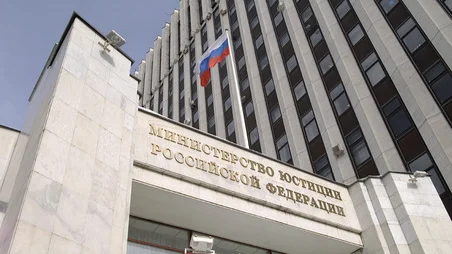
On August 2, Kommersant with reference to the lawyer Stanislav Seleznev from the Network Freedom project published information about the methodological instructions of the Ministry of Justice of the Russian Federation regarding the qualifications under Articles 207.3.3 of the Code of Administrative Offenses or 207.3 of the Criminal Code of the Russian Federation. They were prepared by the Ministry back in June and allegedly addressed to investigators, judges and forensic experts. Without seeing documents, we can comment only in the volume in which Kommersant's copies that turned them up told about them.
These manuals allegedly explain how the “reports of facts” differs from “opinions”. But in the usual case, this will be realized by the schoolboy, and the investigator and the judge are even more so. The clutter of cases with such “examinations” on issues that do not require special knowledge - a chronic disease of our judicial system, leading, including to an endless extension of the terms of detention (of course, under Article 207.3 of the Criminal Code too).
Meanwhile, the Ministry of Justice is not authorized to give clarifications to investigators and judges: the instructions for the former are the RF IC, and judges should be guided by the decisions of the Plenum of the Supreme Court of the Russian Federation.
Although both articles (about the discrediting of the armed forces and the spread of knowingly false information about their use) appeared in the Code of Administrative Offenses and the Criminal Code only on March 5, a considerable practice has already accumulated on them, and it would have been enough for the Supreme Court to generalize at least in the Code of Administrative Offenses, especially since the issues of judges, of course, arise.
The explanations of the Plenum of the Armed Forces of the Russian Federation, in theory, are mandatory for judges, and therefore for investigators who appeal to the courts and prosecutors who support the charge there. But in practice, for example, almost annually published by the Plenum of the Armed Forces, an explanation that detention is not allowed on the basis of the gravity of an incriminated crime alone, the judges are actually ignored - including in matters under Art. 207.3 Criminal Code.
Nevertheless, the explanation of the Plenum of the Armed Forces of the Russian Federation could lead to a revision of sentences and decisions already issued in the appeal and cassation instances - for example, in the case of deputy Alexei Gorinov, whose statement about the unethical competition of children's drawings for Victory Day, of course, is more correct to interpret as his opinion, and not as a message about the fact. But the instructions of the Ministry of Justice are required only for experts.
In the manuals, the Ministry of Justice distinguishes three types of statements: “On the discrediting of the use of the Armed Forces”, “On the discrediting of the execution by the state authorities of their powers in order to protect the interests of the Russian Federation and its citizens” and “the incentive to the prevention of the use of the Armed Forces”.
Here the horseradish is not sweeter, but to qualify actions under Art. 20.3.3 Code of Administrative Offenses of this does not matter.
The documents of the Ministry of Justice does not say anything about the fact that when prosecuting under Art. 207.3 of the Criminal Code should be considered “knowingly false information under the guise of a reliable message”, and this is the second most important question. The lack of an answer means approval of already established practice, when any message is “obviously false” if it does not coincide with the information of the command of the Armed Forces.
The main issue in importance, also by silence, concerns the word “war” at the official level: is its pronunciation - a message about a fact or an assessment? How does the "war" differ from the "special military operation"? We, based on ordinary logic, would say that the difference here is only an assessment of the degree of destruction, the number of participants and victims involved. However, the investigative and judicial practice firmly embarked on the path of interpretation of the word “war” as a “report of the fact” - this is where most of the 77 criminal cases under Art. 207.3 of the Criminal Code, which is known today.