
Translated material
New soldiers of the Russian army: Wagner PMC recruited more than a thousand prisoners in 17 colonies of the country
New soldiers of the Russian army: Wagner PMC recruited more than a thousand prisoners in 17 colonies of the country
Some prisoners were already in the hospital with battle wounds. There are also dead. Those who refused to fight end up in a punishment cell
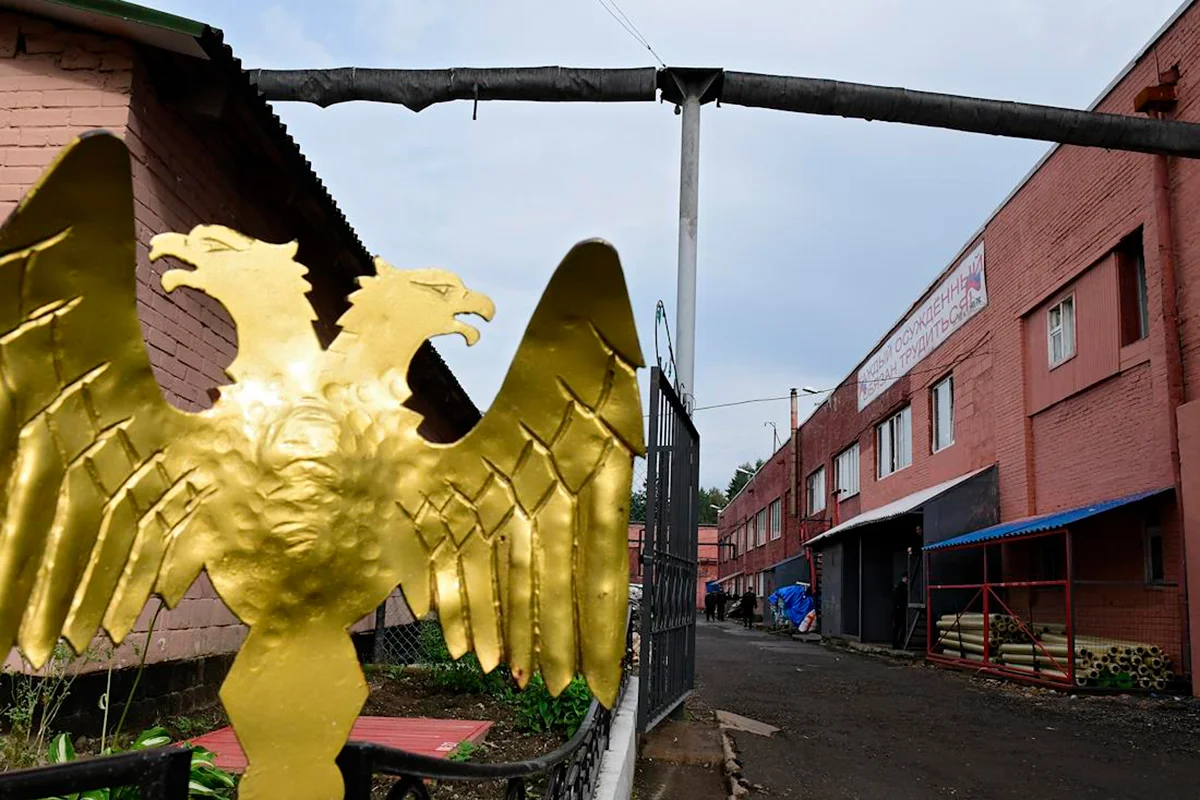
At the end of July, human rights activists from the Sitting Rus' Foundation* began receiving dozens of letters from convicts and their relatives describing the same situation: recruiters from the Wagner PMC flew to the colony and invited the prisoners to go to war. In return, they were promised a salary of 200 thousand rubles a month, sick leave and death benefits, as well as a presidential pardon after six months of service.
“Verstka” together with the “Rus Sidyashchaya” foundation* found out that recruiters from PMCs have already visited at least 17 colonies in 10 regions of the country. More than a thousand prisoners accepted their proposals. In addition, on the basis of one of the institutions, judging by the messages of the convicts and their relatives, a special training center has been organized, where those who agreed to go to war undergo a kind of training for 20 hours a day. Moreover, there are no legal grounds for this today.
THIS MESSAGE (MATERIAL) WAS CREATED AND (OR) DISTRIBUTED BY A FOREIGN MEDIA PERFORMING THE FUNCTIONS OF A FOREIGN AGENT AND (OR) BY A RUSSIAN LEGAL ENTITY PERFORMING THE FUNCTIONS OF A FOREIGN AGENT
According to the Ministry of Justice, the author of the article, Regina Gimalova, serves as a foreign agent. The editors included this paragraph in the text for security purposes.
In order not to miss new texts from “Layout”, subscribe to our telegram channel
How many prisoners were recruited?
The first recruitment of prisoners to be sent to war began in the spring, according to human rights activists from the Sitting Rus' Foundation*. Then recruiters from the Wagner PMC, according to the convicts themselves and their relatives, visited colonies for former security forces. A new wave of recruitment began in the summer. Since July 26, dozens of convicts and their relatives began to report to human rights activists about visits of recruiters to general, strict and special regime colonies .
Groups of recruiters visited at least 17 colonies in 10 regions of the country. Among them are Tula (IK-1, IK-4, IK-5), Yaroslavl (IK-2, IK-3, IK-12), Leningrad (IK-3), Ryazan (IK-3, IK-5), Novgorod (IK-7), Arkhangelsk (the colony number is not published for reasons of security of the source), Pskov region (IK-6), as well as Komi Republic (IK-19, IK-25), the Republic of Karelia (IK-7) and St. Petersburg (IK-6, IK-7). Information about this was confirmed, among other things, by convicts in these colonies.
In total, according to calculations by “Verstka” and “Sitting Russia”*, hundreds of prisoners in Russian colonies agreed to take part in hostilities. This information is based on data from the convicts themselves and their relatives.
According to their reports, the following people agreed to go to Ukraine in the ranks of PMCs: approximately 300 people in IK-2 of the Yaroslavl region and the same number in IK-5 of the Ryazan region; about 280 people in IK-3 of the Yaroslavl region, about 270 people in IK-5 of the Tula region; about 250 people in a colony in the Arkhangelsk region; about 100 people in IK-12 of the Yaroslavl region; about 130 people in IK-19 in the Komi Republic; about 100 people in IK-3 of the Ryazan region; as well as at least 72 people in IK-6 in the Pskov region and at least 40 people in IK-7 in St. Petersburg.
According to human rights activists, PMC recruiters visited similar institutions presumably in nine more regions of the country . But “Verstka” has not yet been able to find confirmation of this among the prisoners. We are talking about the Nizhny Novgorod, Vladimir, Smolensk, Vologda, Murmansk regions, the Republics of Tyva, Adygea and Mordovia, as well as the Perm Territory.
In cases confirmed by sources inside the colonies, PMC recruiters most often visited high-security colonies: 14 out of 17. Moreover, one of them was intended for former employees of courts and law enforcement agencies. In two cases, recruiters visited a general regime colony and only in one case, a special regime colony.
In at least two colonies, namely IK-19 in the Komi Republic and IK-7 in the Republic of Karelia, judging by reports received by human rights activists, convicts who agreed to fight, but then changed their minds, are now being pressured and sent to punishment cells .
In one of the colonies - IK-4 in the Tula region - during the communication between recruiters and prisoners, the head of the Federal Penitentiary Service of the region, Ivan Prokopenko, was present, as the convicts themselves say. Earlier, “Important Stories” (the publication is recognized as a “foreign agent” in Russia) reported that recruiting groups also included employees of regional FSB departments.
Prisoners in another colony said that when the recruiters left, the head of the institution advised them to “think carefully and refuse” the offer to join the ranks of PMC fighters. For security reasons, the editors do not disclose the region and number of the colony.
Three prisoners told human rights activists that businessman Yevgeny Prigozhin was allegedly coming to the colony. The media classifies him as one of the leaders of the Wagner PMC, although he himself denies this connection. “Verstka” turned to the press service of Prigozhin’s company “Concord” for comment. The businessman replied that he “visited the colonies in the 80s,” but did not say whether he visited them with recruiters.
“Yes, nothing can be hidden from you,” says Yevgeny Prigozhin’s answer. — I can say with confidence that I visited the colonies in the 80s. I can’t remember everything, more than 40 years have passed. But he was definitely in the Leningrad colonies, in Komi, in Vyatlag. In Rus', many have been in prison, some have disappeared, while others have become wiser and are working for the good of their country. “We have a tradition in Rus': if a boy misbehaves, through punishment we make a man out of him, and among you Pindos, we make a woman out of him.” The commentary author's spelling and punctuation have been preserved.
Later, the press service of Prigozhin’s company clarified that he “was in the colonies from 1979 to 1990.”
“Verstka” also contacted the press service of the Federal Penitentiary Service of Russia for comments. There has been no response to the request yet.
To the war or to the punishment cell
Convicts note that recruiters arrive in small groups and enter the colony with weapons at the ready. They usually speak to prisoners in the courtyard, calling for them to “defend the Motherland.” In return, they are promised a salary of about 200 thousand rubles a month, sick pay in case of injury in the amount of 300 thousand rubles and so-called coffin pay in case of death - 5 million rubles.
According to the Sitting Russia Foundation*, in each colony, about 20% of prisoners enroll in the ranks of future mercenaries immediately after such meetings. They have their first interview on the same day. As one of the convicts told Vorstka, during the interview they are asked to briefly tell about themselves and their intentions to participate in the war.
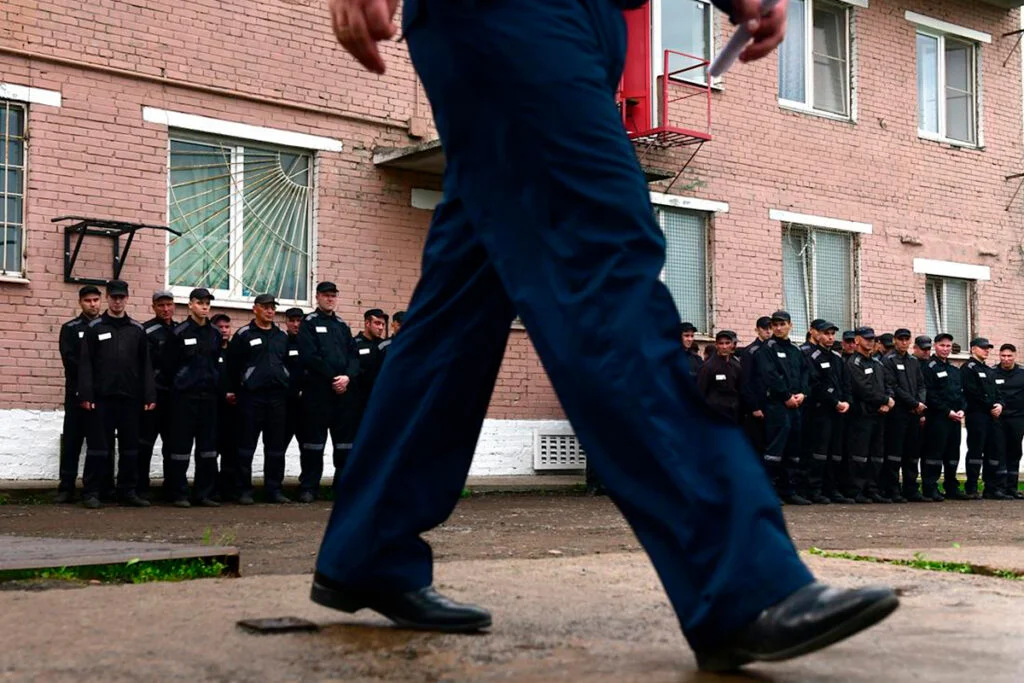
Then, as human rights activists report, campaigning continues within the units. Usually it is conducted by other prisoners collaborating with the colony administration. As a result, about 10% more of the convicts are recruited and agree to join the PMC.
First of all, recruiters show interest in those convicted under articles of murder (Article 105 of the Criminal Code of the Russian Federation) and robbery (Article 162 of the Criminal Code of the Russian Federation). Those who are imprisoned for crimes related to drugs and sexual inviolability are most often not allowed to be selected.
One of the main selection criteria for those wishing to go to war is physical fitness. For this reason, as a source inside one of the colonies told Vorstka, Wagner PMC recruiters refuse to accept elderly people and those with serious illnesses. To check, they ask you to do push-ups, sit down and perform other physical exercises.
Those who are added to the lists based on visits, interviews and subsequent campaigning are also tested with a polygraph. To do this, a PMC employee comes to the colony once again. Those wishing to go to war are asked about their attitude towards the Russian authorities and whether they are planning to flee to Ukraine.
After this, according to human rights activists, prisoners are taken out of the colony in groups of 30 to 36 people. Some of them undergo special training.
According to the Sitting Rus' Foundation*, an entire colony in Rostov-on-Don (IK-2) was allocated for these purposes. There, as human rights activists and relatives of the convicted say, a training camp has been organized where exercises take place. According to one prisoner and a relative of another prisoner, they train there twenty hours a day, including short breaks for breakfast, lunch and dinner. The remaining four hours are allocated for sleep . According to Sitting Rus'*, the first group of prisoners who visited this colony went to the combat zone on July 20.
“As for the first group, one of the wounded was definitely talking on a video call with his wife,” says Olga Romanova, head of the Sitting Rus' Foundation*. — Then there was a teleconference between him and the prisoners. He told them how great he was being treated here (in the hospital - editor's note), saying, "Guys, don't be afraid." My wife and one source inside the colony told us about this.”
After six months of such a “business trip,” the prisoners are promised release from the colony under an amnesty. But, as human rights activists note, all promises look rather dubious.
Outside the legal field and without a name
As Olga Romanova, head of the Sitting Rus' Foundation*, emphasizes, from a legal point of view, the recruitment of prisoners is completely illegal. There is simply no separate procedure for releasing a convicted person from a colony to participate in hostilities today. Previously, “Verstka” wrote about a bill that would simplify the transfer of convicts to colony settlements. According to human rights activists, this will make it possible to recruit prisoners, since in such a colony they can get a job outside of it.
“This story is completely outside the legal framework ,” says Olga Romanova. “Our lawyers are not allowed to see those whom we know for sure have been recruited.” Of all the relatives who contact us about this, only two women are ready to fight. The rest are only interested in money."
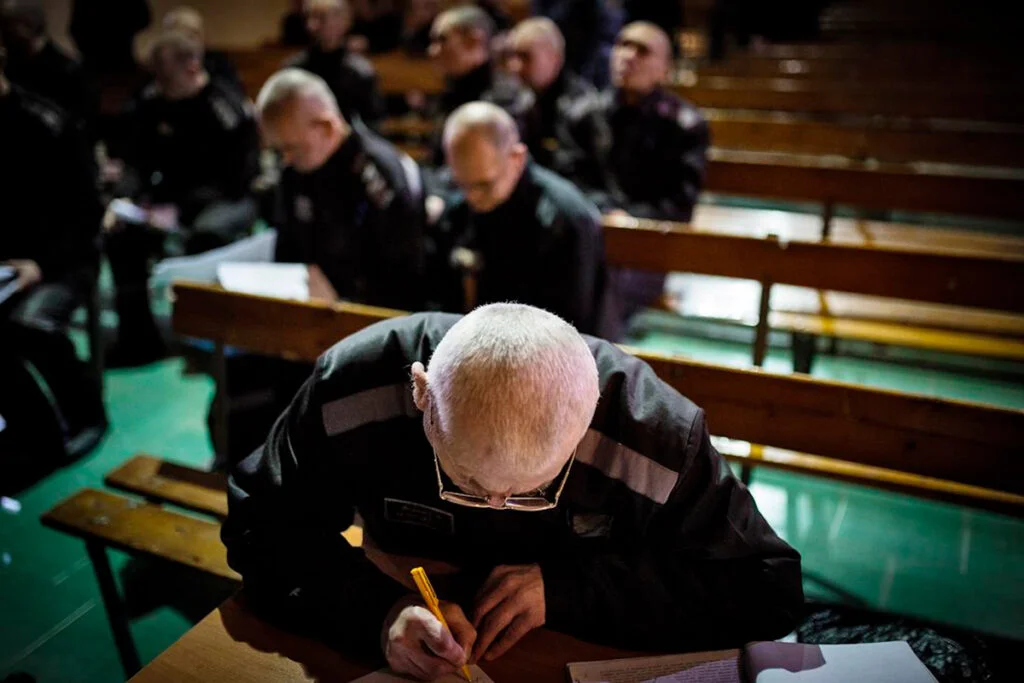
Human rights activists believe that today it is possible to formally organize the transfer of prisoners who agreed to go to war to colony settlements. But this procedure will affect only a limited circle of people.
According to human rights activists, they are sent on a convoy to the Rostov region, and a contract to work at Wagner PMC is concluded only after completing training. The question remains unknown whether the convicts sign the contract in their own name - subsequent payments depend on this.
Previously, the media wrote that all agreements were oral. However, according to the latest information from Sitting Rus'*, prisoners still sign the papers when they are already putting on their uniforms.
According to human rights activists, 12 convicts have already been hospitalized in Lugansk with combat wounds. All of them are undergoing treatment under call signs. At least five more, according to Sitting Rus'*, died.
* The Ministry of Justice considers the Sitting Rus' Foundation a “foreign agent.”
Cover photo: Alexander Koryakov / Kommersant .
Regina Gimalova, Yulia Akhmedova