
Translated material
"They want to unravel the entire planet"
Interview with Simon Reynolds - one of the most famous musical critics in the world. About the raves of the 1990s and the "bad time" that has come in the United States

In Russian, the book “Fleet of Energy: Journey through Riv-Musa and Dance Culture” (translation from English by Mikhail Irzak and participants in the workshop of literary translation by Dmitry Simanovsky) was published in the publishing house of V-a-C. This is a study of electronic dance music, written in 1998 by one of the leading world music journalists - British Simon Reynolds. Reynolds is a direct witness of the events described by him: from the early British raves to the EDM VEDERIA in America. Raynolds’s important books have already been published in Russia: “Retromania” - about why there is so little new music in music, and the story of the post -punk “Tear everything, start first”. Medusa talked with a critic about whether there are many politics in the rave - and about the “cultural civil war” in the West.
- When we agreed on the interview, you wrote that now the wrong time for a cheerful conversation about techno. I agree with you. At the same time, your book has published in Russian - and in it for modern Russia is an incredibly much freedom. By the way, in any of the countries where it was released, there were no problems with the publication-at least because of the number of substances mentioned?
- My wife and I [Joy Press - the journalist Vanity Fair, a writer, in the last music journalist] wrote the book Sex Revolts , which was forbidden for some time in Turkey. We had a very courageous publisher of Ayrinti Publishing - he published the Marquis de Sad and other shocking texts. A police raid happened - and our book was also grabbed. I think, for references to de Garden, although we criticized him. Ha!
I do not think that the “outbreak of energy” promotes drug use. But, I suppose, it may seem attractive - just thanks to the description of the interesting culture that came out of this. At the same time, I write about the dangers and the dark side of the substances. I think this book is quite balanced.
If I wrote it now, I would have made it more journalistic. In the 1990s, I nevertheless documented my impressions of the era, then I was very immersed in rave culture. It is amazing that the “outbreak of energy” is now in Russian. And in Russia, what do people like to dance? What music is popular? Someone told me about neurofank !
- It's hard to say. Now in clubs everyone spends time differently-maybe this is due to the number of musical genres. Even if you know the DJ - you will not guess that she or he will play. You often write about synergy of substances and music in the book and in other materials ...
-Yes, in the 1990s, Waib was more monolithic-most people in clubs were under ecstasy. This determined the feeling of music, and in general everything spun around this - clothing, behavior. There were other musical scenes where the grass was smoked-a trip-hop, for example. It seems that now there is nothing to direct the evolution of music and determine its sound characteristics.
But now I am watching this from the side. I no longer go to clubs in Los Angeles, where I live. Sometimes, if my name is for festivals, during the day I give lectures, participate in discussions - and in the evening I listen to DJs and groups. My son goes to clubs and raves in New York. But this is no longer part of my life.
- When did you stop going to clubs?
- When I had children. I kept as much as I could when the first was born - Kiran, who is now writing about music. When he was two or three years old, I went to the Dubstand Vozda. I return at four in the morning, I go to bed, maybe I fall asleep, and at seven in the morning my son comes running: “Dad, dad, let's play!” And I think: "Oh."
It became incredibly difficult. Unless when I traveled to the UK alone, I went to Grime - or went to listen to music at work. I expanded the book twice-in 2008 I wrote about Dubstep and in 2013 about Edm. For the second reprint, I went to my last big rave in Los Angeles.
Did someone write about the Russian rave culture?
- Yes, there is a book by Andrei Haas about the first raves in St. Petersburg - “The Corporation of Happiness”. And also the book of Oleg Tsodikov Made in Dance, which contains flyers, photographs, memories of the club culture of the 1990s. Actually, when you wrote a “outbreak of energy”, the museumification of rave culture has not yet begun. And now, it seems, everything has already happened.
-Yes , and in a sense, I also participated in this. I once was at an excellent exhibition in Switzerland-the Italian discos of the 1970s was reconstructed there, and put things from Berlin Tresor . But all this was in glass windows, like in a museum. It was strange to see the diorama recreating the 1970s dance floor in some club in Milan. Previously, it was something alive-and at the same time shameful. Due to drugs, this culture was not approved. The last thing you could imagine was that all this once will become part of the official culture.
But yes, subcultures usually move from underground to mainstream, become history. This cannot be stopped. And probably, my book, in a sense, also pushed this process.
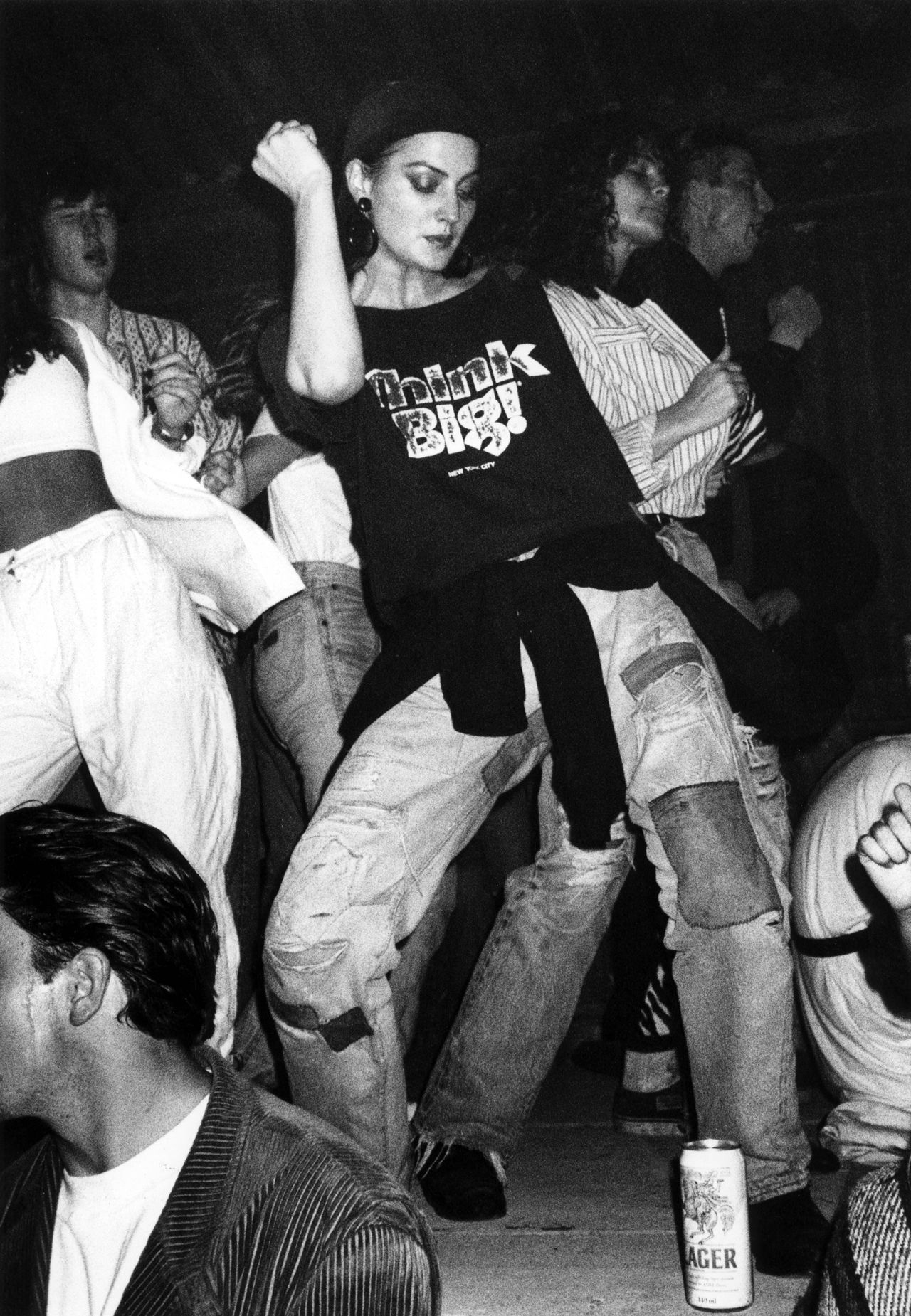
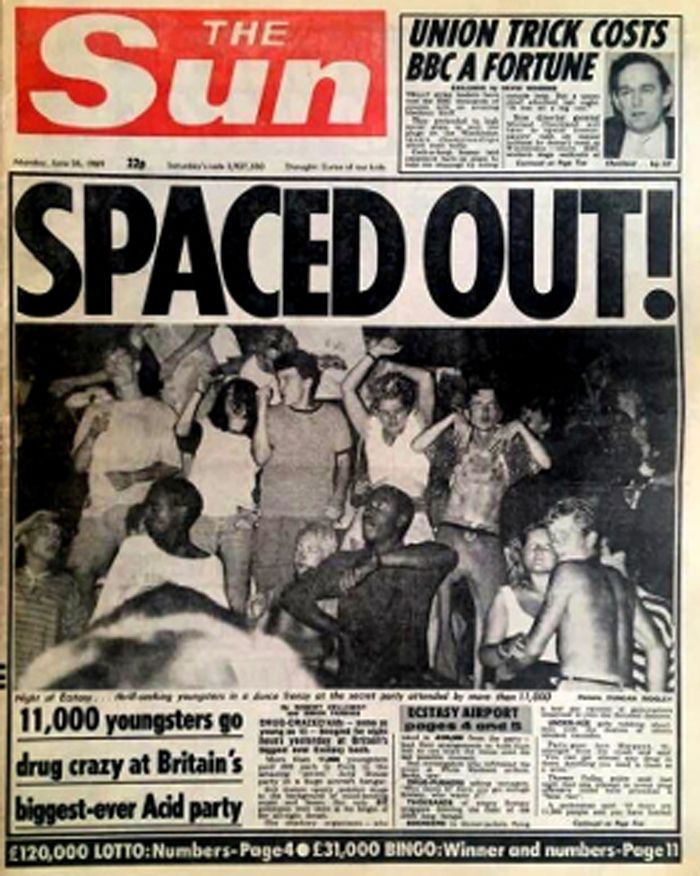
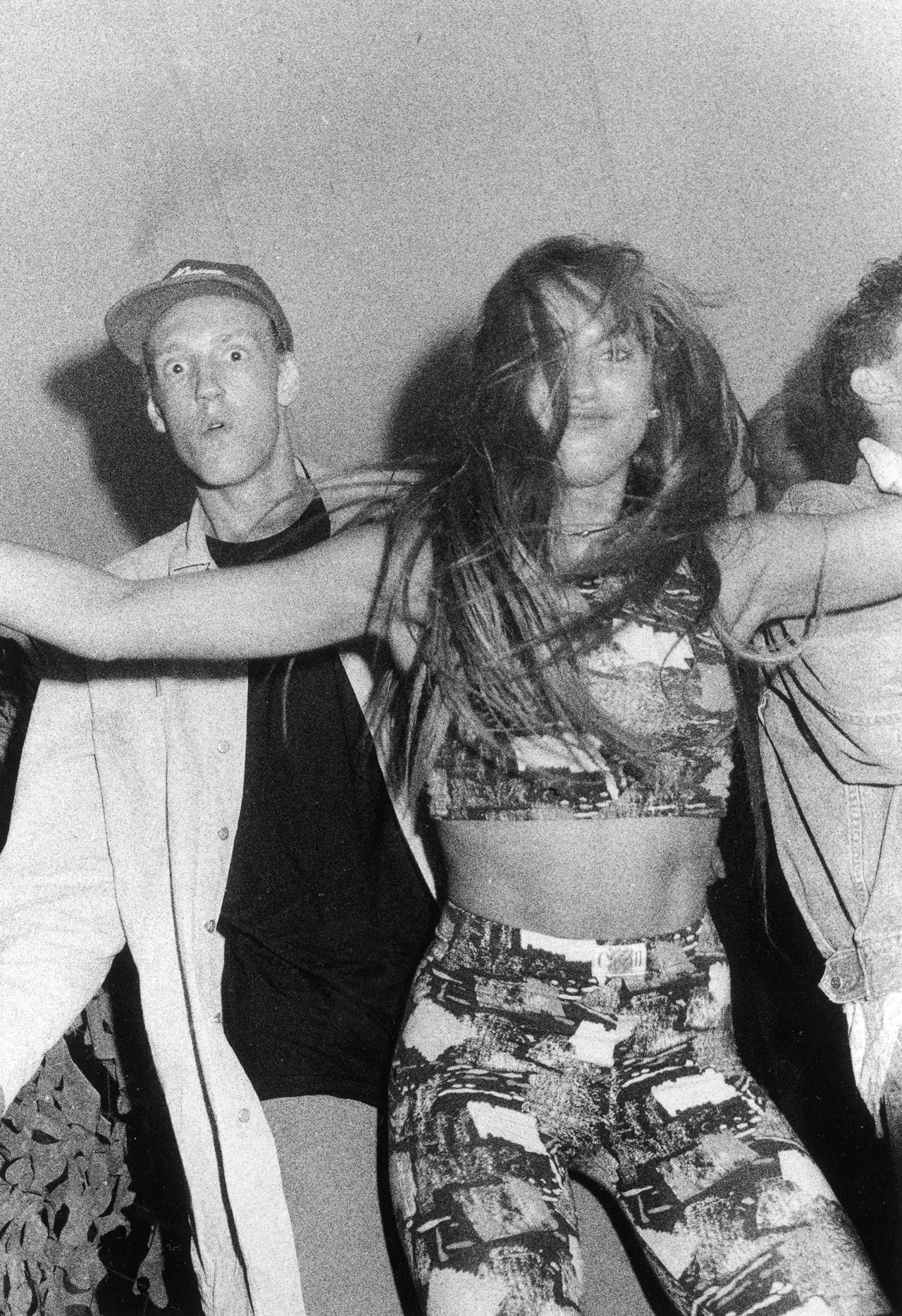
- You write in the book: “Despite the clearly expressed escape nature, the rave aroused an interest in politics in me, I began to think more about class, racial, gender issues and modern technologies.” It seems that the ravers protested against the system when it touched their interests directly-as in 1994 . Do you think the electronic culture has ever been really politicized?
- Initial she was quite selfish, fixated on herself. I would say that she was antipolitical. In the UK, then it seemed that conservatives would never leave the government. There was an endless period of Margaret Thatcher - three deadlines. Then John Mayjor became the Prime Minister-another conservative. It seemed that there would never be the left government again. Young people protested, but many felt that this system could not be overcome, it is easier to break out of it. One way is to dive into a magical country of pleasures.
The rave culture promoted certain values, for example, unity. But all this was vague. The opposite happened-a lot of crime, someone just made money: from the dragders to those who, at the age of 19, founded label and opened music stores. On the pirate radio, you could also earn something. People tried to survive. And if you can earn money, doing something culturally interesting, why not? But in reality, this is exactly what, and not political activism moved them forward.
Shut Up and Dance were very politicized-they wanted to be like the British Public Enemy, such a warlike rap group. There were also ravers who supported the local Labor Party, engaged in some kind of political activism. It is much worse that I personally did not participate in this. Looking back, I think: why didn’t I go to the local Labor Party at least once a week? Or did not do something more political? But I was completely absorbed in music. It seemed much more exciting than politics, it was here that it was felt that the revolution was happening.
In general, the rave was escape. I don’t think escapism is so bad. People have the reasons why they want to run away, aren't they? It can be useful for mental health - to come to where friendly strangers dance all night. Yes, you run away from misfortune or difficulties, but why not let yourself relax for some time? I think the problem of the rave move was that many began to live from a party to a party every week. Especially young people who used drugs weekly - as a result, this did not affect them physically, mentally, and emotionally.
There were probably other examples of political rave music. But for the most part it was an imaginary emotional refuge, where one could hide from political reality. It seems to me that this is quite acceptable. But everything has its limits.
- It seems that today world electronic culture has become very activated.
- Yes, perhaps this is due to the concept of concepts - that is, with the direction of music, in which the album listening to a trip to the museum. This is a different way of museumification of rave-historia. As a rule, in this genre there is a very thick text, with a large number of theory and academic jargon. So the author explains what this work of art means - and why it is a political gesture. But for me, all this is not very convincing.
Here is the jungle tracker -they also have semi -political messages. For example, “Babylon” Splash with the Semlor: “All of the Youth Shall Witness the Day that Babylon Shall Fall!” [“All the youth will witness the day when Babylon is falling!”] This is a much more powerful and emotional prediction of the fall of the system.
- One of the manifestations of activism in music is gender quotas, when, for example, large music festivals undertake to invite the same number of women and men to performances ...
-In the rave culture there have always been problems with representation. There were usually as many girls on the dance floor as guys, but behind the remote control - almost only men. The situation was different racially, but with respect to Gender, things were much worse than, for example, in the rock of the 1990s. The girls worked as boukers or in other positions, but there were almost no DJs among them. In the past 10 years, the situation has changed, although the most popular and highly paid DJs are still completely men.
- And what about the culture of cancellation? Recently, for example, the Ukrainian electronic community demanded to ban world scenes to cooperate with Russian electronic musicians.
“If a person did something terrible-sexual Abuez, Harassment,” he receives deservedly. I do not see a problem in this. If a person has injured someone, he deserves a boycott or other consequences. The same is in the cinema, on television - everywhere.
When this happens in electronic culture, this is especially unpleasant, because its ideology is based on equality and respect for each other. But here the hierarchy quickly lined up, stars appeared, status became important, and at the same time there were people who abuse their position and imaginary superiority. It seems that the abolition of such musicians is inevitable. I don’t know how people will defend themselves from this inappropriate behavior, maybe some codes of conduct or something like that. Or these rules will determine the promoters.
- Do you listen to the music of “canceled” musicians? You used to say that you loved Ariel Pink, who participated in the rally before the assault of the Capitol. Or there is Derrick May-a techno-producer who several women were accused of sexual violence.
- If you relate to these rules too strictly, you will have to cross out so much music! You can try to separate the work of art from its creator, but this is very difficult. I hear on the radio of Michael Jackson - his songs are made so skillfully that the body begins to react by itself. But then you remember the terrible things that he did [and stop moving].
I am a big fan of Ariel Pink, and I will need some time to forget that he went to the Stop The Steal rally. But maybe the music reports something else? Morrissi, for example, in recent years has said a lot of things that I do not like. But The Smiths is part of me. The song "Accept Yourself" is a very beautiful, emotional and wise statement. I have to think that this thing can exist in its own little Universe separately from any words of Morrissi.
If someone killed a person or did something unforgivable, like Ar Kelly , it is very difficult to listen to the music of these people. But if a person expressed an opinion ... So Johnny Rotten spoke about Trump and Brexita positively. But Johnny Rotten is a colossal figure in the history of music and in my life. In addition, he is a wonderful person, if you do not pay attention to his political views. He takes care of his wife with dementia. He lamented that he did not sufficiently protect Sid Vishes as a friend. But Trump's support is difficult to put up. And at the same time, it is physically difficult for me to love Sex Pistols or Public Image Ltd.
- How do music communities usually react to wars? Do you know any examples-maybe not in the British or American dance history?
- Don't know. I especially have nothing to say on this issue.
- There are DJs, musicians and promoters in Russia, for whom an electronic scene is a whole life. And now they do not know how to behave, while your country is bombing the neighboring one.
- This question is now very far from me. I know that during the war in the Balkans there were people who went to clubs. Matthew Collin wrote a book about this . People arranged underground-raves in the midst of bombing. And in such an unusual way they fought, believing in fun and hedonism.

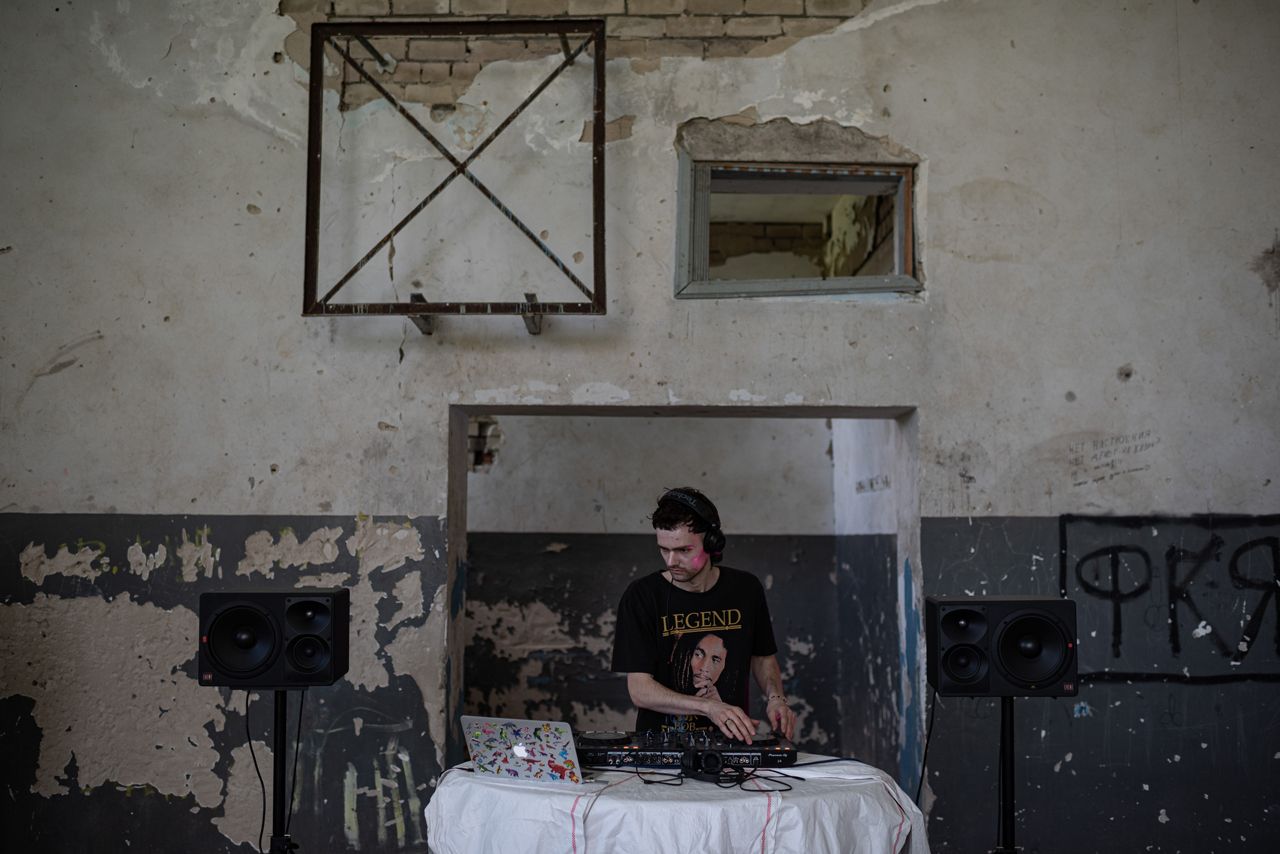
- In the “outbreak of energy” you describe several police raids. During the raves, they added fun? Or was it scary?
- I do not think it was scary. Rather, when the police appeared, there was disappointment [that the party ended]. Perhaps at the very first Esid House Rivy, police could behave rudely. But it is much easier to communicate with people under ecstasy than with drunk, so it was more pleasant for the police themselves to go to the rave than to deal with fans after a football match-or with visitors to the club where some kind of violence occurred. The police are paid overtime, and here they deal with well -educated positive people.
- I sometimes watch a video in Yetube from the first British raves, and people write in the comments: “It was the best time in my life.” What do you even think about the concept of “better time in life” and can you evaluate the rave period in your context?
- I think nostalgia is natural. But personal life and cultural do not necessarily coincide. I was very inspired by the post -pack, but at that time I was an unhappy teenager. I will nostalgia in the 1980s when I started writing: the first Shugais, My Bloody Valentine, an early hip-hop. In the 1990s, I was a raver, and this is absolutely golden time-both in culture, and for me personally, I first married. I remember that I was discouraged due to politics: continuous conservatives were sitting in the government. But compared to what is happening now, it was a fairly calm period.
People remember the 1970s according to the magnificent Glace rock, but it was economically and politically this was a terrible time for the UK. But they love to remember: “Oh, David Bowie was so fantastic. He was like an alien. " This is funny - we remember only the cultural achievements of the past and, as it were, forget about what happened around.
- And now the time “do everything - don't feel anything” ? As you wrote in the text about the Dry Cleaning group.
- I, probably, when I wrote it, I was in strong depression - this album Dry Cleaning, “New Long Leg”, described me and my whole life. A 30-year-old woman from Britain composed something close to me 59-year-old. Probably because this vocalist is so good.
Sometimes I feel quite happy, but then I am horrified by everything that is happening, especially in America. In my life, everything is not bad - I teach half a time at the California Institute of Arts, I still write. And it is joyful to see young people who love music very much.
- And what scares you most now?
-The Christian-fascist authoritarian movement in the United States, which prohibits abortion and limits the rights of a trans-people. If the president were Trump or, for example, Ron landing , they would start the States war. States like California, New York, Oregon is quite autonomous, they are influential. But the federal government can greatly complicate their life.
These people do not believe in climatic changes - one representative of the Republican Party in Texas wanted to change the classification of carbon dioxide and stop considering it a pollutant! They destroy the world-not only the rights of my friends or family members, gays, trans-people and girls who want to terminate pregnancy. They want to unravel the entire planet, an ecosystem of the future. This is monstrous.
They are completely unprincipled - they are trying to undermine democracy and limit people's right to vote. If Trump was re -elected, he would have begun to take revenge on everyone who tried to stop him. The country would be ruled by a crazy man. Other Republicans are not so crazy, but also unprincipled and pursue the same goals. This is a cultural war, which - and I can imagine it - risks becoming a real civil war.
One of the problems of musical journalism is that politics is infinitely fascinating than music. In music over the past six years - since Trump began to participate in the elections - there was nothing comparable.
I do not want to say that people like Boris Johnson are more rock and roll than in rock musicians. Но им вообще плевать на последствия. Они все агенты хаоса — Трамп, Джонсон, некоторые люди, которые управляют европейскими странами. Сейчас золотое время для тех, кто пишет о политике. Но писательское мастерство ограничено — прекрасные тексты о Трампе никак не влияют на тех, чьи убеждения нужно изменить. Такие люди слушают только Fox News и другую пропаганду.
Есть стихотворение Йейтса: «Лучшим не хватает убежденности, а худшие полны неистовой энергии». Хорошие люди неэффективны, растеряны, у них нет энергии — а злые невероятно мотивированы, в них много драйва. Им плевать, что их идеи не так популярны, — они их навяжут. Плохое сейчас время. Я пойду на предстоящие выборы. Жалко только, что я не делал этого, когда был молодым.
Андрей Деревьев