
Translated material
"Only with an atomic bomb behind the bosom can you feel safe." Military observer Alexander Golts - about the prospects for the spread of nuclear weapons
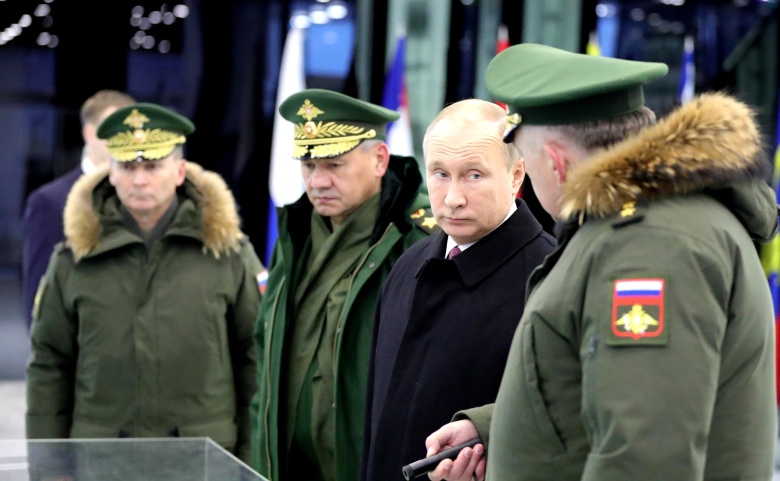
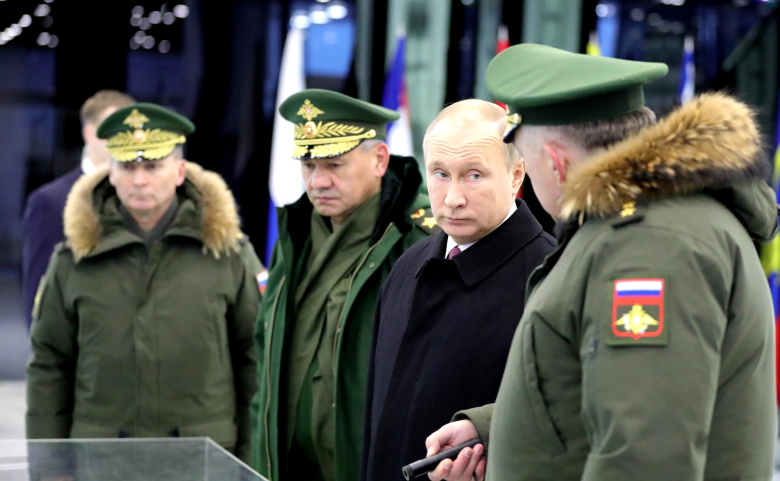
Vladimir Putin at the Military Academy of Missile Forces of Strategic Forces
Mikhail Klimentyev/Zumapress.com/Global Look Press
The longer the fighting in Ukraine lasts, the more obvious it becomes: the world really experiences a certain milestone moment. "Business As Usual" is now completely impossible. And this applies to almost any sphere of international relations, as far as they were, at first glance, they were not from the relationship of Kyiv and Moscow. An obvious example of this is the 10th review conference of the agreement on non-proliferation of nuclear weapons (day) that opened at the UN headquarters.
A very controversial agreement
This agreement, which entered into force more than half a century ago, in 1970, and which was currently signed by 188 states, is one of the most outstanding achievements of world diplomacy, and, at the same time, the most, perhaps, a contradictory agreement in the field of control over weapons. For the reason that it is obviously unequal in nature. The contract divides states into those who are allowed to have nuclear weapons (USSR, USA, China, France and Great Britain, which by the end of the 1960s officially possessed it) and all the others who voluntarily refused to create it. In order to control this refusal, the International Atomic Energy Agency (IAEA) was created. In return, nuclear countries took over several obligations. The main thing is to eliminate your nuclear arsenals. Someday, if circumstances allow. In addition, the countries that abandoned nuclear weapons were promised all sorts of help and assistance in introducing to the “peaceful atom”.
It is clear that such an agreement was simply doomed to be at the center of all kinds of conflicts. Currently, there are at least four countries that got nuclear weapons bypassing the day. India, Pakistan and Israel have never participated in days. And North Korea, being a participant in the contract, using this status, gained access to critical technologies, and then safely left the contract. At the same time, all “violators of the Convention” survived the damage from international sanctions and retained their nuclear status.
Demonstration against nuclear weapons, Germany
Juergen Blume / Imago Stock & People
In recent years, the center of universal attention has been the activity of Iran, whose leadership was suspected of intention to follow the road laid by the DPRK: under the cover of legal activities, prepare the conditions for creating a bomb. As for non -nuclear countries, the farther they were, the more the absence of the promised progress in the field of nuclear disarmament annoyed. Huge success in this area was achieved in the 1990-2010s, when Moscow and Washington, having ceased to be afraid of each other, made gigantic abbreviations of their nuclear potentials. Speaking now in New York, Russian diplomats inertia report on the achievements of twelve years ago: “The total potential of strategic weapons of the Russian Federation was sequentially reduced by 85% compared to peak values reached in the 1980s. The Russian Federation reduced the number of non -strategic nuclear weapons (NSIAO) by three quarters from the level that the USSR had in 1991. ”
Subscribe to read the whole
Make a subscription Redefine.media to read Republic
Subscribe [you can pay for a Russian or foreign card. The subscription is extended automatically. You can unsubscribe at any time.]
Where are the money subscribers going