
Translated material
Apartment number 156
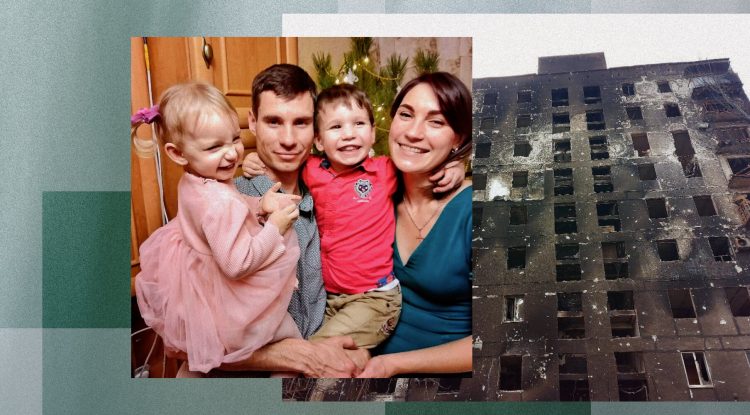
The story of one nine -story building in Mariupol and its inhabitants
According to the UN, during the battles for Mariupol 90% of residential multi -storey buildings were injured . Tens of thousands of citizens died or were forced to leave. The media project and the service of the victims of the “ Support Service ” released a special project about the fate of the residents of the nine -story buildings at 18 Novorossiyskaya address. After the shelling from the house, only charred ruins and a neighboring chat remained, where people were looking for missing relatives. With the permission of the authors of the Kholod project, he publishes one of the stories - the story of Polina, who lived with her husband and children in apartment No. 156.
"Preparing for a new life"
This is the apartment of my grandparents, I grew up in it - all the holidays and the weekend I spent my sister here in the area, with relatives. After their death in November 2021, the apartment was inherited, and my husband, a five -year -old son and three -year -old daughter began to prepare for a new life in our own housing.
Six months before the war, we began to slowly equip: changed the windows, put a new front door, built a pantry and began to change the wiring. We bought new equipment: refrigerator, TV, washing machine, projector for children. In early February, we [finally] finished the nursery - we put beds with orthopedic mattresses there (they later came in handy during bombing).
Everything was tired: my husband and I worked, the children went to a wonderful kindergarten. On the weekend, we walked a lot, or friends came to us, relatives, or we rode bicycles at sea. And then the war began.
" What will we drink children?"
The first days, while in our area it was relatively calm, my husband and I went shopping in the district and bought everything that was: cereals, pasta, sugar, meat, flour, canned food, semi -finished products, water. All that God forbid - our children do not starve.
I had to sleep in the corridor: I and the children on the same mattress near the front door. Nearby is my aunt. She also lived in our entrance and from the beginning of the war settled with us and experienced all the horrors with us. And closer to the hall - the husband, right behind the bearing wall.
On March 4 at four in the morning we woke up from strong shelling. The shells were already falling in our area. But we did not understand how close until one of them ended in the store opposite, 15 meters from our entrance. Glasses got out in the whole house, it became cold.
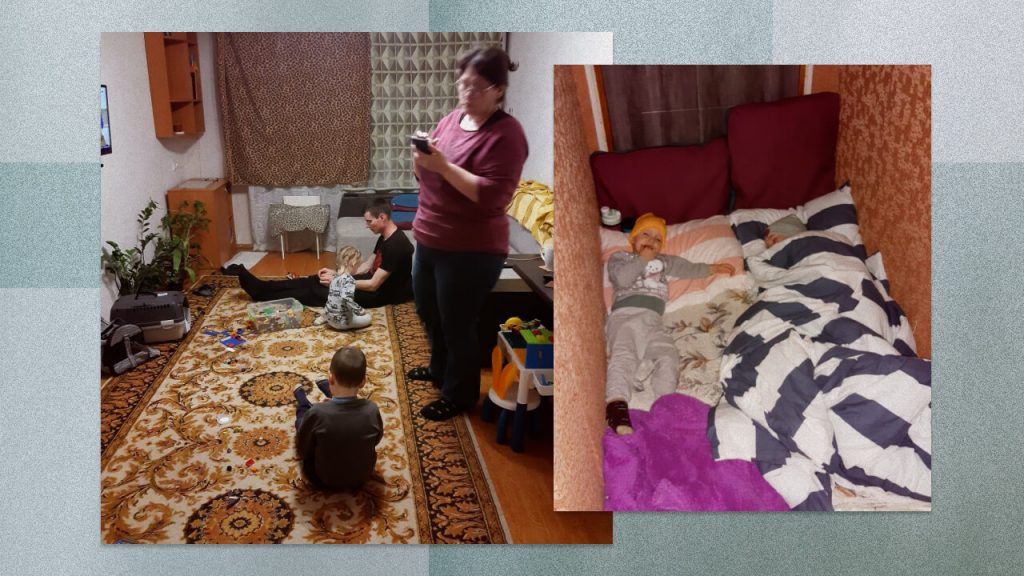
The next day it became more or less calm, and my dad could reach us. He lives closer to the sea, near the port. He was very surprised that we had such destruction. He said that they still have everything quietly: explosions are heard, but shells do not fall.
Then my husband and I began to think about the fact that children needed to be taken out, since it became harder. And if water supplies end? She had not been in the tap for a long time. How will we drink children? The nearest spring was three to four kilometers from us. The electricity was turned off on March 2, and the sixth - gas was blocked in the house.
When we began to collect things, a very strong shelling began again. It seemed to me that it lasted forever. We all sat in our shelter, waited for it to fall asleep, and prayed that the car would not suffer.
When it became calm, the husband looked out the window and saw the [Ukrainian] military there. He went down to him and asked if we could leave now. To which he replied that he did not know ... The battles were already in the whole city. The husband’s working machine, who stood under the windows all this time, miraculously survived after shelling. In seven minutes we loaded it with the whole provisions that we had. Only a few warm blankets and warm clothes were taken from things - nothing more fit.
Subbed with the children, we set off - very slowly and carefully, at our own peril and risk. I will not forget the picture that we saw in the area until the end of my days: flaming houses, destroyed buildings are everywhere the military with weapons.
"The noise of the war becomes louder"
So we got to my parents. It was relatively calm in their district: people were sitting on benches, children continued to walk on the sites in the yards. There were a lot of people around. I have never seen so many people here. They gathered to the port district from all over the city, as in the most calm place.
We stayed with parents until March 15. At first everything was calm: the noise of the war was heard, but we understood that it was far away. We prepared food on the street, at the stake, collected firewood, helped the elderly, cleaned in the yard, took out garbage. But every day, and especially at night, it became worse. The explosions were louder, military planes flew over their heads more often and constantly dropped their bombs into the city.
In mid -March, we saw that a lot of cars stretched from the city. There was a rumor in the courtyard that a “green corridor” had been organized from Mariupol. Many people - especially those with children - began to gather and leave. We could not leave. Although the car we arrived at was completely serviceable, there were state numbers on it (the heroine’s husband worked in the civil service. - Approx. “Cold”). It would be taken from us at the first checkpoint. [From the passing] we learned that not far from us was catching mobile communications, and decided to go to call the parents of the husband, who lived outside the city, 35 kilometers from Mariupol. So they learned that we are alive and are with my parents.
On March 15, the father -in -law came for us and took me out of the city, husband, children and my aunt. My parents refused to leave and remained in Mariupol.
For almost a month, my family and I lived near the city, in the village of Yalta with my husband's sister. Everyone was waiting for the moment when it would become calm and it would be possible to return home: take at least things, because spring came, and we left empty -handed. But on April 4, we learned that our house was completely burned out and nothing was left of it. Nothing else kept us, and we moved on from this horror.
Now we are in relative security, in the Poltava region. We are looking for a place to stop for a long time.
The story of Polina and her family is one of the many stories of the inhabitants of the occupied Mariupol, which was destroyed by the Russian military. The stories of other residents of nine -story buildings on Novorossiyskaya, 18 can be found on the Instagram “Support Services”.