
Translated material
Your mind has peel off
Investments in education are developing the economy. And in Russia loyal ones are still more necessary than smart
"Human capital" is the key to the future
In the late 1950s, the American economist Gary Becker, a great researcher of human motivation and the future Nobel laureate, studied the problems of discrimination of racial minorities in American labor markets. At that time, it was believed that the economic problems of African Americans are due to the fact that white employers do not take people with a different color of the skin to “good” (that is, highly paid and promising) jobs. This problem was supposed to be solved, for example, by the introduction of special quotas for African Americans - so to speak, to “book” jobs for them.
No, the point here is not in the color of the skin as such, Beker claimed, based on the study of salaries statistics. The problem is as a resulting education, it is it that does not allow representatives of minorities to apply for high wages.
If you want to defeat the segregation by skin color in the labor market, you need to reserve places for African American not in offices, but in universities.
According to Beker’s conclusions, people's incomes grow in proportion to the amount invested in education and training. Therefore, “good” jobs are jobs occupied by people who have invested a lot in their human capital, Beker explained.
The theory of “human capital” at that time produced a real splash, because it looked like a magic key that opened the way to solve many social problems. If you want to come to success - just go to school, then to a good college, and you will be happy and an American dream. Yes, it costs time and money. But the more you put in your skills and knowledge, the more career and financial success awaits you in the future, says the theory of “human capital”.

"The success of the people" consists of the "successes" of individuals
Well, let's say, a person’s personal success is the result of his investment in your education, you say. But why should society help someone “come to success”?
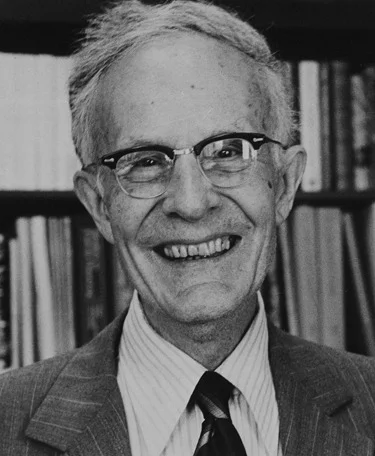
You simply do not understand the depths of influence that the growth of human capital has on society as a whole, could object to the Nobel laureate in economics Theodore Schulz . Investments in skills and knowledge, Schulz claimed, are critical for economic development. In the modern world, it is impossible to have successful agriculture and prosperous industry, without investing large funds in workers, Schulz explained.
It works like this:
Education not only makes people competent experts, education can also improve the abilities of people used in the management of personal affairs and communications with other people.
It is easier to interact with competent and smart, exchanging knowledge and enriching each other with new ideas.
Schulz's theories were extremely in demand at that time, since they indirectly explained the failure of the capital understanding exclusively as “money that makes money”. The proletarians, who, as Karl Marx taught, “has nothing to lose except his chains,” in fact, also in a famous kind of capitalists, Schulz and Beker said. Only the capital of employees is not in the possession of a part of the company, but in the possession of skills and knowledge that have economic value. And knowledge and skills are a product of investment. It was here that the secret of the production superiority of technically developed countries was hidden, Shulz pointed out - in the labor markets of these countries, the share of competent and educated people who can produce expensive products is a high.
More knowledge - faster economic growth
The theory of "human capital" made it possible to explain the difference in productivity between different economies.
Economic productivity and economy productivity are not synonymous. The productivity (or effectiveness) of the use of primary resources shows the ratio of value added by processing of this resource. The more you were able to increase the cost of the primary resource used by the economy, the higher your productivity.
For example, in Russia in 2014, the productivity of the economy in primary resources was 4.3. This means that the cost of the products produced in 2014 was 4.3 times as much as the cost of the primary resources used (the share of primary resources in the gross issue was 23.5%), such data are given by the institution of the national economic forecasting of the Russian Academy of Sciences in its latest report “Potential opportunities for the growth of the Russian economy: analysis and forecast” . This is better than in China, where a similar indicator is 3. But worse than in Japan, where productivity is 5.6. And the US economy is even more effective than Japanese - its productivity was 7.4.
Economists explain the difference in productivity by both the level of technological development and the improvement of the production structure - and these two factors are very much dependent on human capital.
If human capital had not accumulated and had not grown - only hard manual labor and poverty would have remained in the economy, but against the background of this poverty, the owners would receive extreme income, theodore Schulz explained.
It seemed that the path to success is obvious - put into yourself, as the instructors in social mountaineering advise, and you will be happy. And power and business should also be interested in this - because the success of the people as a whole consists of the successes of individuals.
Russian paradoxes
It would seem that the path to economic prosperity through investment in education is obvious to Russia. But not everything is so simple, could the authors of the report “Labor productivity and Russian human capital could say: the paradoxes of the relationship?” represented by the Higher School of Economics in April 2021.
Studying how “investments in human capital” affect economic growth in Russia, the researchers came to the conclusion that
“The quality of labor in itself does not provide a breakthrough growth of the economy ... no reduction in the gap in the levels of labor productivity of the Russian economy in relation to leaders' countries.”
That's how. But they told us that we only need to invest in labor, and then we will show ourselves, catch up and distort ourselves; And the matter, it turns out, is something else ...
"Why does the quality of the labor force, which we pay so much attention, gives a relatively small contribution?" - Ask scientists.
The answer to this question sounds like this: because investments in human capital do not make sense if there is no demand for this capital from the business. “The expansion of the demand for such work is associated with the stimulation of the birth of new enterprises and the expansion of employment in old, but mainly in technologically complex and innovative activities. However, innovative companies, which are generators of demand for complex skills and could be potential locomotives of economic growth, remain very small, and they account for a small share of general employment ... ” - scientists explain.
But Russian workers themselves, by the way, are also in no hurry to invest in their skills and knowledge. Available statistics indicate that
In Russia, there is an extremely low degree of participation of employees in continuous education. Every year, only about 12% of the population aged 25–64 years pass this or that retraining, or less than 1 time in 8 years. In a large part of European countries, about 40-60% of residents are involved in it.
According to the Institute of Statistical Studies and the Economics of Knowledge (ISIEZ), the Higher School of Economics, only 22% of the population of Russia aged 25–64 years engage in self -education, which is also much lower than in European countries (in most of them the corresponding share of the population is 60–80%).
In general, in Russia, the share of employees involved in the retraining process is about 13%, and in the private sector it is even lower. The costs of enterprises for these purposes are about 0.3% of the total labor costs. Training is very selective: it is more focused on qualified workers employed in large enterprises, higher education owners and youth. Those who are most in need of retraining are out of access to it. Low technological level of production, weak competition and high mobility of workers reduce incentives for investing in retraining.
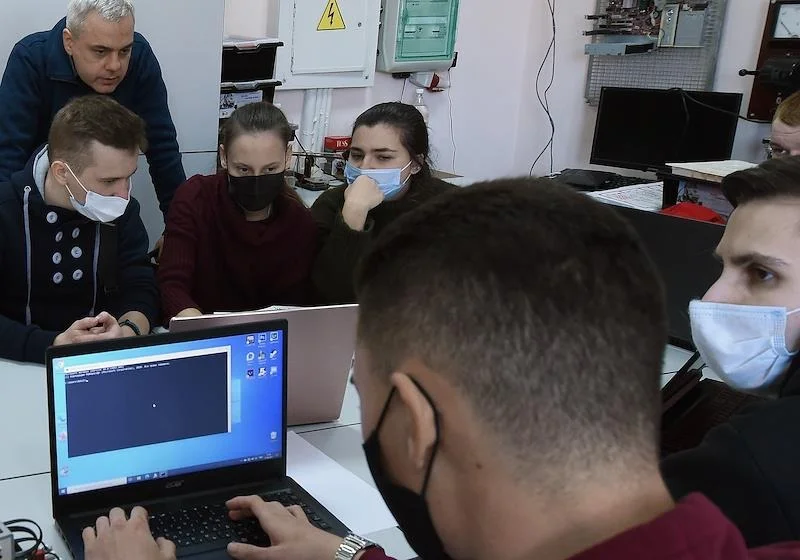
And where people and companies in Russia are still invested in “human capital”, these investments take a very specific form-they simply “do not reach” to those who are really needed for new skills and knowledge.
The higher the position of you in the company and the higher your income, the more your chances to increase “human capital”.
Polina Kozyrev (RAS and NISHE) and Alexander Smirnov (RAS), the authors of the study “Social Guarantees and benefits at the place of work: instability and disappointing dynamics” published in the social policy research journal, 2021, 19 (2): 389–404 (analysis of Russian monitoring of the economic situation and health of the population of the NIU, are coming to this conclusion. HSE (RLMS-HSE) ").
Scientists divided the participants in the examination into groups depending on the level of income in relation to the median salary, then compared by providing additional social benefits at the place of work and found out that about 16%could study at the expense of the enterprise in the first group, and the second - over 33%.
It turns out that in Russian realities investments in “human capital” are turned into social segregation? Instead of reducing the gap between different social groups, do they deepen them?
“Smarts are not appropriate. The right ones are needed "
It looks like that. And this happens because the owners of the Russian economy are actually not interested in the growth of this very “human capital”.
Confirmation of this thesis can be found in the results of “Research on the profile of superfessional competencies in demand by leading employers when hiring students and graduates of universities and young specialists” published by the Institute of Education of the NISE in the spring of 2022.
“Superfessional competencies” are universal business and managerial qualities of a person that allow him to effectively and/or best fulfill the tasks and achieve success. To create the rating of these qualities, researchers from the Higher School of National Assembly interviewed representatives of 19 top Russian state universities-130 vice-rectors and teachers and 1746 students, as well as 780 representatives of leading employers of HR specialists and managers.
The results there turned out to be like that. The advertised “emotional intelligence” was not included in the top 7 of the rating of “superfessional competencies”. The outsiders of the rating were also literacy: “financial”, “digital”, “legal” and “strategic thinking”. Employers do not need “leadership qualities of workers” at all - “leadership” was in the rating exclusively based on the results of a survey of teachers and students.
During the study, “significant discrepancies in opinions among employers, representatives of universities and students” were identified, experts carefully write. “Employers want to see students, graduates and young specialists with a certain set of superfessional competencies, at the same time universities focus on the development of other competencies, less important, according to employers, students have their own position and consider other competencies important.” "Swan, cancer and pike."
In general, the negative top of the joint rating of the necessary competencies turned out to be like that.
AntiTop joint rating of the necessary competencies
19 - financial literacy
18 - mentoring
17 - digital literacy
16 - legal literacy
15 - strategic thinking
14 - influence
13 - innovation
12 - adaptability/flexibility
11 - Leadership
10 - emotional intelligence
That is, leading Russian employers do not need employees who are able to realize the “prospects of their actions in a changing world”, give such actions a legal assessment, evaluate possible costs, understand the motives of the people around him, explain to them the essence of what is happening and, if necessary, the lead of these people behind them.
TOP of demanded competencies
1 - partnership/cooperation
2 - customer orientation
3 - orientation on the result
4 - Planning and organization
5 - information analysis and decisive development
There is nothing bad in such a set of competencies.
But if you imagine an employee who has such competencies, who believes in a “team”, a “focused on the result”, who is able to plan work and even develop solutions, while deprived of empathy, strategic thinking, legal literacy and not able to explain the content of his actions, you will see not even a “wooden soldier’s member”, but a “wooden soldier”, but a “wooden soldier”, but a “wooden soldier”. "Biorobot." (Somewhere we already heard it. "I did not know anything! I just complied with the order!")
And by the way, students and teachers also understand this. Although with a creak.
Firstly, the most significant discrepancy was revealed on the competence of “Client-orientation”. Employers give her second place in the ranking, students and universities put this competence in 12th and 11th places, respectively.
Secondly, the competence of “Orientation on the result” put students in 11th place, although in the group of employers it is one of the most important (3rd place).
Thirdly, it is worth noting a large gap in the ranking according to the competence “Following the rules and procedures”. For employers, this competence is quite important (8th place), while students and university representatives sent competence to the “basement” of the rating, the authors of the study noted.
But the “team work” is in the first place in the ranking of both employers and students. Only the meaning of the word "team" seems to be different.
It turns out that investments in their own education in Russia do not work? No, the situation here is much more complicated, explains the Deputy Director of the Center for Labor Studies (TsTI) to the Higher School of Economics, Rostislav Kaplyushnikov . In the article “Subject to Education in Russia: is nowhere below?”, Published in the journal “Questions of Economics”, No. 8, 2021, Kaplyushnikov cites data that indicates that training at the university increases the earnings of Russians approximately twice (so the award for higher education approaches 100%), and even training in secondary specialized educational institutions ensures an increase in earnings about 20-30%. Statistics also indicate that over the past fifteen years of return from education in Russia have remained stably high and no trend to reduce the economic value of education was observed.
The self -employed prize for higher education is slightly lower than for employees, but it is very significant - it ranges around 80%.
It turns out that it makes sense to study anyway? Yes. The Russian labor market is faced with a certain contradiction - on the one hand, employers really want to have at their disposal of competent and educated specialists, but at the same time loyal, submissive and undemanding performers. But on the other hand, buyers require services and goods for which not only competence, but also the breadth of thinking, horizons and the desire for innovation are needed. That is, what allows the employee to produce high -quality, and therefore competitive goods.
It is difficult for the authorities to make a choice in this situation: on the one hand, as the character of the fairy tales Saltykov-Shchedrin said, “science is useful when they are births,” on the other hand, “without sciences” is also impossible to develop.
Over the past three decades, competition with world manufacturers has forced Russian business to offer consumers many goods and services that are not inferior to foreign analogues at least.
Returning to the study of the productivity of the Russian economy (and it, as we recall, depends on human capital), we will say that the most effective industry over the past 20 years in Russia has been “communication and telecommunications” - its productivity on average grew 8.2% per year. In second place is agriculture with an increase in productivity by 4.8% per year, in third - construction with an increase in productivity by 3.6%. What unites these industries? Orientation to the growing consumer market. Where the business “looks at a private client”, in the long term, there is a demand for human capital, which means that a quality education.
But now Russian education was at a crossroads. The archaization of production, which the authorities are openly indicated, discussing the restart of production based on outdated technologies, will lead to a decrease in demand for modern competencies. And this will very quickly feel the market of education - if the demand for modern skills and knowledge decreases, people will lose the motivation for obtaining such knowledge.
Кроме того, исследования показывают очень специфическую зависимость карьерного и финансового успеха людей от условий, в которых они начали свою карьеру. Например, во время экономического бума начинающие работники претендуют на более высокие зарплаты по сравнению с «обычными». Но те работники, которые выходят на рынок в условиях кризиса (или, как его называют сейчас, структурной трансформации экономики), изначально обречены на более низкие зарплаты. И это неравенство сохраняется всю жизнь, несмотря на изменение условий! Поэтому возможная потеря человеческого капитала может затормозить экономику РФ гораздо сильнее, чем это кажется сейчас.