
Translated material
Poor, give the money to the rich!
What does the ban on the purchase of foreign securities mean
The Central Bank proposes to limit the purchase of foreign securities to small investors and advises "buy Russian." But in fact - divides the economy into two parts and instead of money offers "an increase in the cultural standard of living"
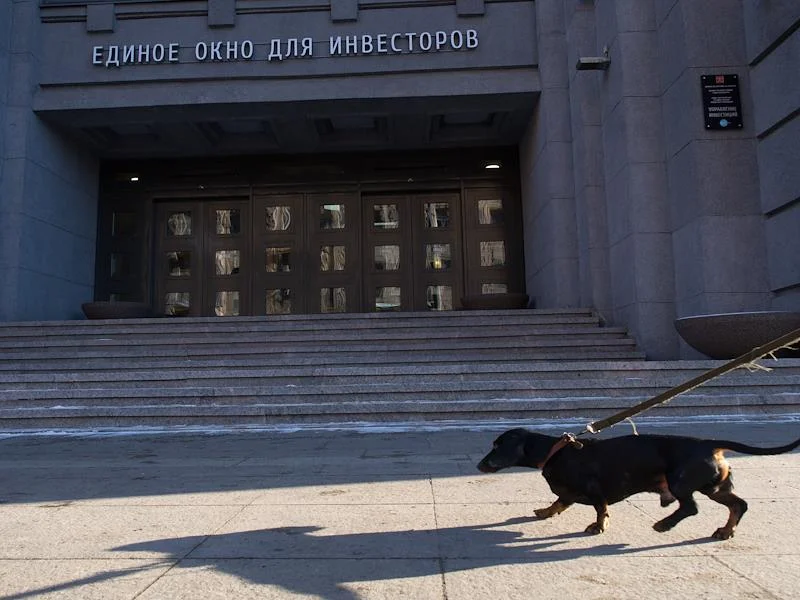
Not a penny abroad
On July 20, “Professional participants in the securities market engaged in brokerage activities” received the In -018 59/94 information message from the Bank of Russia. The letter contained the recommendation “to refrain from proposal to persons who are not qualified investors, securities of foreign issuers. And in a short time, to be added to the software and hardware, with which the remote interaction of the broker with customers is carried out, changes that impede the possibilities of serving by persons who are not qualified investors, instructions for the acquisition of securities of foreign issuers. ”
Simply speaking,
Unsperticle investors were forbidden to buy foreign securities. Moreover, in this case, this is not about the assets of “unfriendly countries” - all the shares, including Chinese, have been prohibitively recommended.
The regulator motivated its decision exclusively by concern about the interests of “small investors” - they say, “in connection with the introduction of restrictive measures, the possession of securities of foreign issuers is associated with multiple risks, including caste (infrastructure) risks associated with the actual lack of such securities, to dispose of such securities (in the owners of such securities (in including through foreign payment agents), participate in corporate actions and transfer them in cases where such a transfer is subject to reflection on accounts in higher foreign accounting institutions. ”
New sanctions will be introduced - and your shares disappeared - as it were, the Central Bank hints.
... But some are more equal!
Why such a risk applies exclusively to “beginners and unskilled” investors, the regulator did not specify. But he also announced the tightening of the requirements for qualified investors.
If before, in order to receive “qualifications”, it was necessary to have more than 6 million rubles in brokerage accounts or regularly make transactions with an annual volume for the same amount and submit tests, answering 9 questions; Or have a specialized education and work for at least three years in a company engaged in securities (two, if the company itself is a qualified investor).
Now the Central Bank proposes to increase the amount of assets to 30 million rubles. Economic education will now not matter. Tests will also become more complicated, and the number of questions will increase.
For those who can meet these requirements, foreign shares will be available.
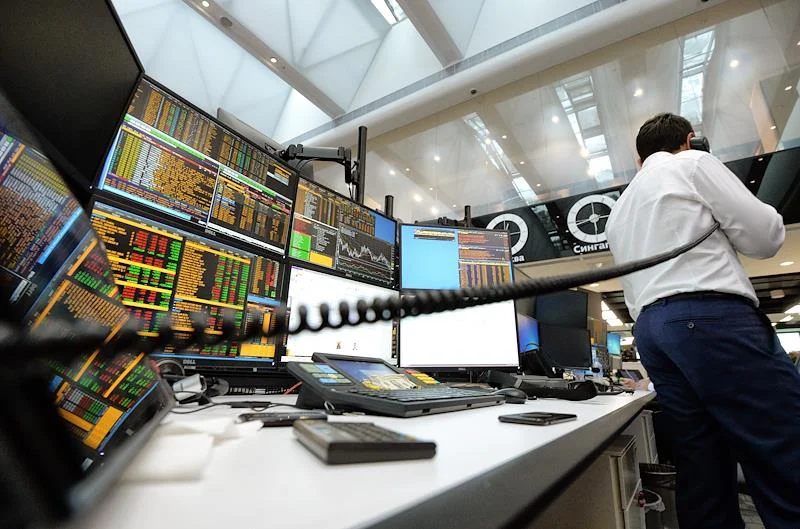
And those who do not have 30 million are invited to "buy domestic."
According to the Central Bank of the Russian Federation, as of June 1, almost 500,000 people had the status of a qualified investor - 2% of the total number of Russian retail investors (approximately 25 million). If the proposals of the regulator are implemented as planned, “qualified investors” will become much less.
On the dilapidated covenants
All this is like the fact that the regulator decided to simply prevent the outflow of capital from Russia in any form. In this, finance chiefs are not original. The logic of the heads of the Central Bank is very reminiscent of the actions of members of the Supreme Privy Council, who 300 years ago, in 1725 on the socio-economic problems of the empire, wrote as follows:
“We must notice that
Although the peasants ran before, they ran in their state from one landowner to another, and now they flee to Poland, to the Bashkirs, to Zaporozhye, into a split: and so we supply our peasants not only Poland, but also our own villains. ”
“Supers” can be understood - at that time the main “economic resource” of the empire was the work of serfs.
And now the Central Bank could put it in approximately the same way: “It is necessary to notice that although the investors ran before, they ran in their state, from one oligarch to another, from one pyramid to another, and now they run, in Tesla, in JPMorgan, in a crypt, and so we supply not only America with money of our investors”!
But, in fact, the story with the ban on small investors to invest in foreign actions is a story about the division of the Russian economy into two parts. In one part, the “rich” will be able to buy anything, and live as you like, without looking back at any “restrictive measures”. And in order for them to do this, in another economy, “poor”, those who do not have enough money, is invited to give this money to “rich”. Invest, that is.
Investors of Comrade Stalin
And what is it? - the historian will object. - Coaling the consumer to investment in the domestic economy is a tested practice. At the macro level, the purchase of promotions and bonds means the redistribution of purchasing power from buyers of assets to sellers of assets, and in this sense is no different from the “state internal loan of industrialization”, which in 1927 was ordered by Comrade Stalin himself.
True, “on a voluntary manner”, by the end of 1927, only 121 million was brought from the total loan of 762 million rubles. The rest of 641 million was compulsory - bonds instead of money were imposed on the issuance of a salary, and calculations for the delivery of bread to the peasants. According to the results of the placement of the “industrialization loan” of 1927, the average subscription amount of workers was 33.86 rubles, and employees had 43.78 rubles. It was a lot of money-the average salary in Moscow did not exceed 70-80 rubles then.
The three “industrialization loans” were followed by the Five -Year Plant in the age of four, and after it several issues of loans of the third five -year plan. As a result, over the years of the first five years, about 50 billion rubles were raised. But the service of this pyramid cost more and more, and in 1935, as we would say now, "default." True, such words did not say then, but simply all the previous bonds were re -registered into new ones with an increased circulation time of up to 20 years.
After 20 years, the USSR government also did not pay with bond holders - especially since in 1956 the debt of the Soviet state exceeded the workers for 259.6 billion rubles.
It took up to 17 billion rubles a year to serve the internal public debt, and, according to the calculations of the USSR Ministry of Finance, the growth of these expenses in the foreseeable future should have been equal to the amount of funds collected from people.
After discussing the Presidium of the CPSU Central Committee in March 1957, a decision was made on a new actual default. As the Minister of Finance Arseniy Zverev honestly wrote in a memorandum in the Central Committee of the CPSU: “From the cessation of payments on loans and their cancellation, the population will suffer losses. However, these losses will be compensated by measures to systematically increase the material and cultural standard of living of the population. ”
Actually, and now, instead of money, the authorities are trying to offer people "measures to systematically increase the material and cultural standard of living."
And, I must say, it does it quite successfully.