
Translated material
Three -line on the brain
The new school year in Russian schools will be the most ideologized since the time of the USSR
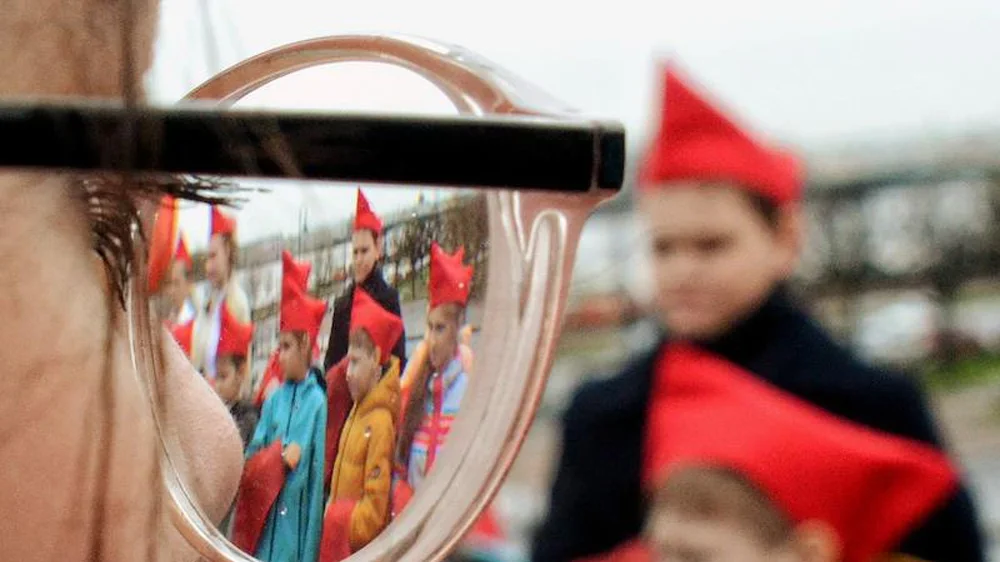
As soon as the first month of Teacher’s vacation passed, and in education the new school year has already been planned so much that everyone was reluctant to even return to school. The “educational component” is so strengthened in it that everything else seems to be no time left.
Until withdrawn children
It began to strengthen the “educational work” among young people a few years ago, when it became clear that young people were actively participating in protest rallies. Military-patriotic education, "Unarmia", education advisers, cadet classes in huge quantities appeared in schools long before February this year. But it was in this spring that the children were finally taken into an ideological turn: the flow of manuals with an explanation of the Kremlin ideology and the goals of the “special military operation” flowed to the school.
At the same time, statistics show that the special operation in Ukraine is least supported by young people. A survey of the Levada Center (recognized as an foreigner) at the end of June shows that 36% of the inhabitants of Russia aged 18-24 are against it; At the same time, in general, among all adults of the country, only 20%opponents of hostilities). What conclusions should draw from this power?
That the youth we missed. They did not engage in her upbringing enough. They did not inspire her with pride in the country and willingness to die on the first order. They raised the townsfolk, preoccupied only with their comfort.
Here, for example, my colleague, Inna Kabysh, a good poet, by the way (“who cooks jam in July, he knows that there is no way out”) recently erupted in the “Litgazet” an angry article about her students: they say, asked them to write an essay about their brightest childhood day - good or bad. And they wrote about foreign trips! A good day - when they had dinner tightly with many desserts and went to swim, "and the bad -" when they flew to the Maldives, laid their ears and did not pass until the evening. " It is necessary to write a satirical story in the spirit of Zoshchenko - they are mocking the camp, in which there were groaned walls and tasteless food. Inhabitants, Inna Kabysh is lamented. “Have we, who took veterans in honorary pioneers who played the Timurovites, collecting waste paper and scrap metal?”
For me, so let the child know nothing more terrible than the laid ears and tasteless porridge. And even if his best day will be a happy day with mom and dad on the beach, with the sea and the sun, than the collection of waste paper (well, I collected it in childhood, what is happiness?).
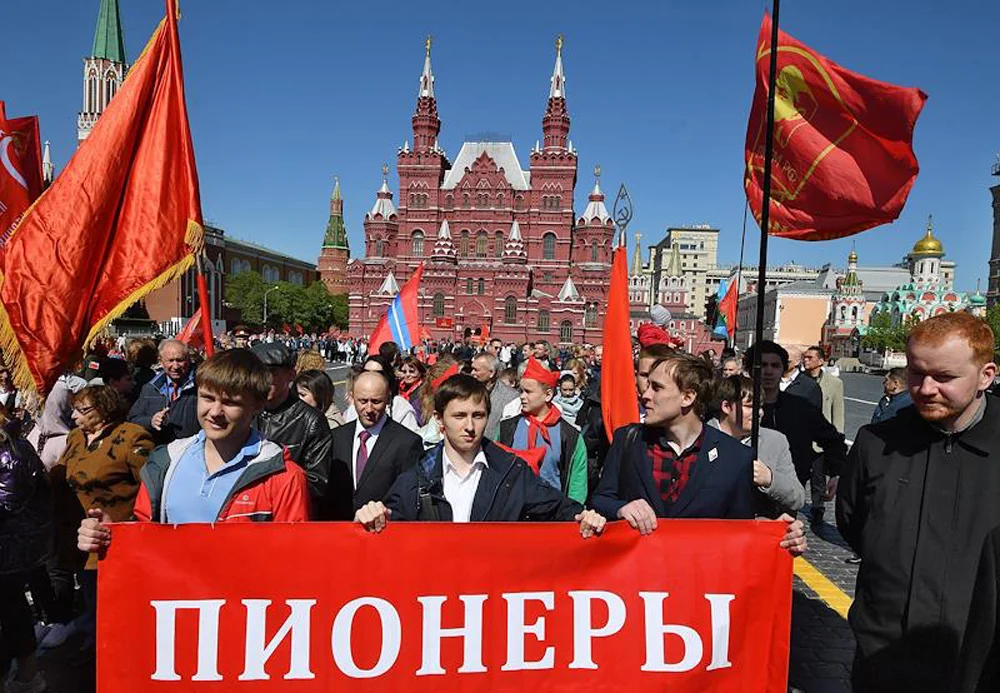
For some reason, the current adults are sure that the childhood of modern children, devoid of detachment, Komsomol meetings, buildings and songs, lines and other scrap metal, is a disabled, unworthy, philistine childhood. And the treatment is prescribed the usual treatment: to read Timura and his team and, of course, join the pioneers.
Under the supervision of the president
The main news of this summer in the field of education is the emergence of an analogue of Pioneer, the new All-Russian movement of children and youth, the law of which President Putin signed on July 14, and the 20th agreed to head his supervisory board. The organization will be voluntary and self -governing, and as its goals, "promoting the education of children, their career guidance, and the organization of leisure".
Especially, of course, education, "including the formation of their worldview based on traditional Russian spiritual and moral values." (a list of values, if anyone has forgotten, is contained in the national security strategy approved last year, paragraph 91).
At first, they decided to call the “big change” (this, in general, is clear: as soon as they conceived something on the school theme, whether it be a magazine, a section in a newspaper, a federal competition or a telegram channel of the Ministry of Council , a “great change” is the most creative option: to go crazy, after all, there is a second meaning!). But it turned out that there is already such a federal competition, so the movement was left without a name.
But what about the Russian movement of schoolchildren and "Unarmia"? And the new movement will become umbrella and unite them: according to the law, they can join it. What did the RDSh and Yunarmia lack?
All -leature and administrative resource. They now have all this: in paragraph 19 of part 3 of Article 28 of the Law on Education, an innovation is introduced that obliges educational institutions to “promote the activities of the Russian movement of children and youth”; The Law on Movement allows you to create its primary cells in schools and colleges.
The movement, while nameless, receives state subsidies and real estate, previously former federal property - in particular, it can apply for former palaces and houses of pioneers, pioneer camps, and begins to manage children's vacations in camps. The deputy head of the Rosmolodezh, Damir Fattakhov, told RBC that the movement can become a “key operator of children's recreation” and its participants may have priority in the distribution of vouchers to children's camps.
Does this mean that beer ... that is, tickets to the camps - only members of the movement, history will still show. But the leadership of the movement will definitely not be in poverty: the financial prospects are colossal. Saw, shura, saw!
In the altered consciousness
Adults (not to say the old ones), which govern the country, it seems, decided to unscrew the wheel of history 50 years ago and return children to their own childhood - not even the childhood of their parents (the current forty -year -olds practically did not find pioneers), but in childhood of grandparents. The head of the Committee of the Duma of Enlightenment Olga Kazakov so bluntly said to Gazeta.ru: “This is unfair when parents have more opportunities than the next generation. We had such a movement. Let's give children this opportunity. And then we will reason - it is bad or good (...) After the Soviet education system collapsed, the subsequent generations were damaged. This did not affect all the processes that accompany the growth of the child. So, we must return it to children. ”
Current officials openly consider generations that have grown without state ideology lost. For example, the head of the Presidential Department of Public Projects, Sergei Novikov, presenting the teacher’s audience to the new project “Talk about the important” (we are talking about it ahead), said that as a result of the abolition of the state ideology “we received a whole generation - deideologized, which scooped these ideological attitudes from other parts of the world. As a result, we have people lost in ideological terms. ” In order to fix this, he believes, teachers should not only be able to answer difficult questions of young people, but also "to be able to infect them with their ideology."
He is completely confused that a single ideology in the country is prohibited by the Constitution of the Russian Federation (Article 13), and the Law on Education guarantees students “freedom of conscience, information, the free expression of their own views and beliefs” (Article 34, paragraph 10).
Speaking of ideology, Novikov honestly said: “I would not want to be ashamed of this word - because if we look at the priorities of education, we will see many areas that we used to be shy: the rise of the flag, class clock, patriotic education, ideology, and values in general.” He even emphasized: "Our work - ideological - is aimed at changing consciousness."
Can a student adhere to other beliefs? Olga Kazakova to the question “that if the views of the child on life contradict the state”, he answers : “If they contradict, then they did not work somewhere. They did not explain to the child. "
However, Kozma Prutkov had long guessed how beneficial the introduction of unanimity in Russia will be: “You can even vouch that everyone, wanting peace and relatives, will also inspire respect for the“ dominant ”opinion; And thus, the beneficial consequences of the proposed measure will be reflected not only in contemporaries, but even on the most remote offspring. ”
Does this mean that officials whose statements so clearly contradict the Constitution and the Law on Education will have to once answer this? Very unlikely. I am more about the future of the Constitution and the Law on Education. By the way, not groundless. The Minister of Education Sergei Kravtsov has already proposed to amend the law: add a whole chapter on educational work: “It is important that education becomes part of the school educational process. Teachers and parents from an early age should engage in the upbringing of their children, which includes the study of the history of the country, its symbols. ”
Amendments to the Law on Education were also concerned about the meeting of parents, teachers and officials, which took place on June 27 at the MIA Russia Today site.
It was mainly about eliminating any freeman in education and introducing the “gold standard” for the whole country.
The amendments have already been prepared and approved by the Ministry of Association, they were introduced by the same Olga Kazakova, who said: “We, deputies, propose to accept the main educational programs, the“ gold standard ”of knowledge for all schools in the country, secure it legally, reinforce the organizational moments and consolidate this zone of responsibility for the Ministry of Education of Russia. It will also remove the load from our teachers, because variability creates excessive document management. ” Textbooks will also become one. All this is called "a single educational space."
Deucosinization of schools
From this school year, Russia is also going to include the “LPR” and “DPR” and “DPR”, as well as the Zaporizhzhya and Kherson regions that are also called “liberated territories” from this school year. The Minister of Education Sergei Kravtsov signed a cooperation agreement with the heads of LPR and the DPR, he himself brought the first batch of Russian textbooks to the Kherson region and presented the certificates of the Russian model to the graduates of the Kherson school, which was the first to receive Russian accreditation.
At least 250 teachers from Russia have already expressed a desire to go to these territories in order to establish teaching in the new academic year. They promised to pay 7-8 thousand rubles a day (taking into account per diem and money for housing; however, this is still much higher than the secondary teacher salaries in the country, which in some regions amount to 24-26 thousand rubles a month, that is, almost ten times less than the payment offered to “liberated territories”).
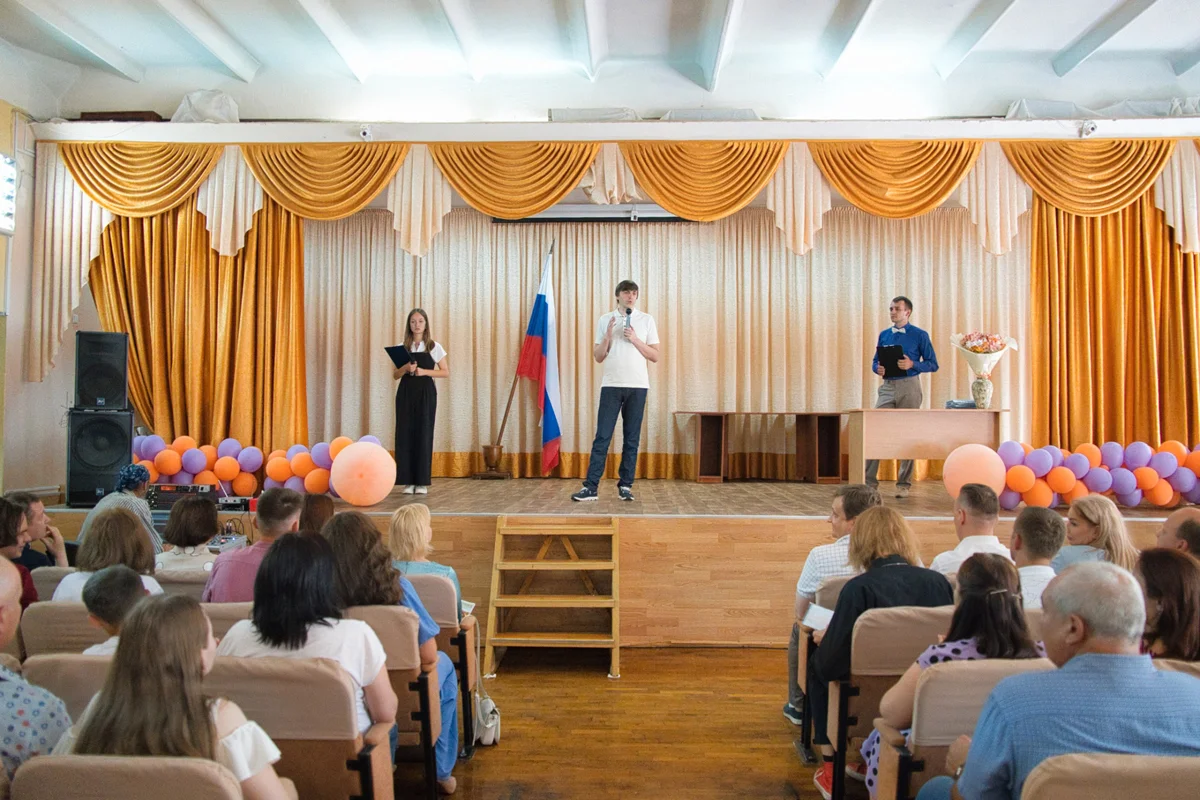
To launch the educational process, build children on a ruler, raise the Russian flag, play a hymn, sitting at the desks and showing a report on the first channel is an obligatory part of the Russian educational program in eastern Ukraine. Sergei Kravtsov says : “Schoolchildren who engaged in Ukrainian textbooks who carried the ideology of Nazism spoke about aggression against Russia. We analyzed more than 300 Ukrainian textbooks, found that it was a focused system.
When schoolchildren have been thinking in this direction for a long time, it is difficult to change their opinion. But we will work on it. ”
Ukrainian teachers, for whom they are now organizing “methodological seminars” on the ground, say that the main emphasis is on the “history of Russia” and “civil-patriotic education”.
The union is indestructible
The rise of the flag and anthem on Mondays is expected throughout the "single educational space." In our climate, beautiful lines on the parade ground at the school and take -off the banner of the flagpole, blown up by officials, are possible only in September and May, so I had to come up with a special ceremonial for “internal use”: how to raise a banner in the lobby, assembly hall or gym.
They will not drive the entire school on the rise of the flag, the school can choose groups of students. But the rest will still have to listen to the “brief version of the anthem” - one verse and chorus. Not all teachers rejoice at the weekly Soviet anthem: for many it causes not the best associations, and everyone remembers it differently: some sing about Stalin on the machine, others about Lenin. And “our sacred power”, no matter how much the text is taught, will not overwhelm the word “union of the indestructible republics of free ...” - is learned forever.
And even the most loyal teachers sometimes think that a weekly flag and anthem is an overkill. Even in our Soviet childhood, the line of lifting with a flag raised regularly only in summer camps.
In schools, the hymn and the Bennes of the banner relied only on big holidays; Then, please, they collected a banner group - she herself went in such a red cap, white gloves, with a ribbon over her shoulder, under a drum battle.
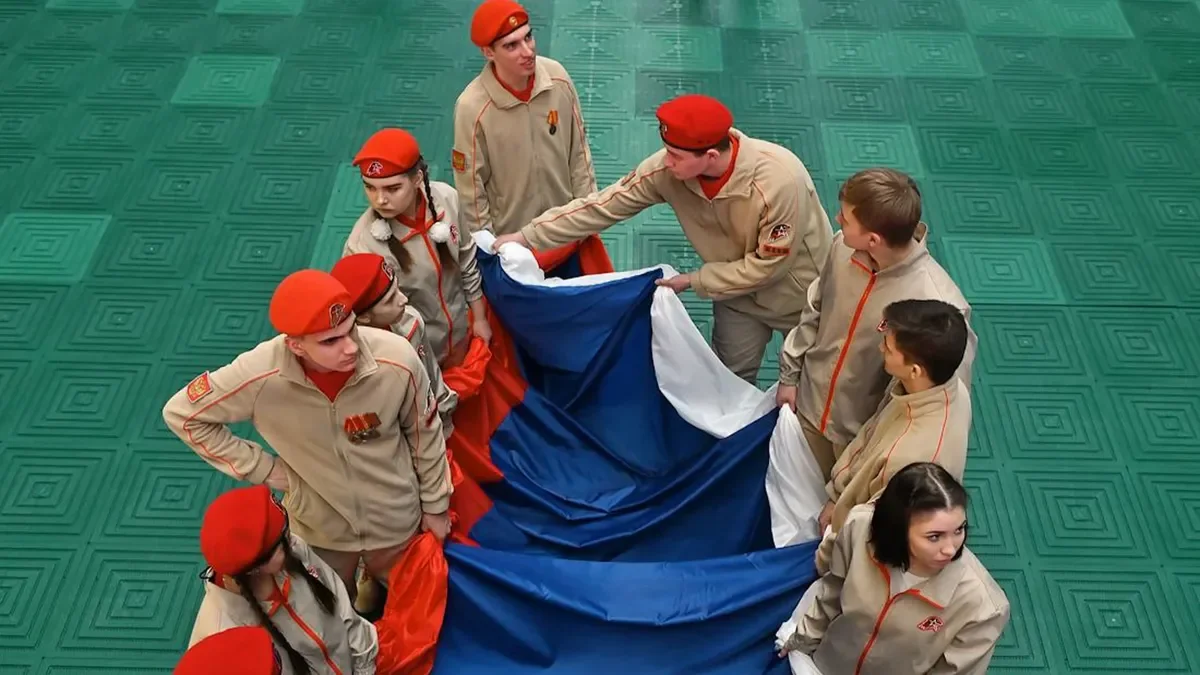
According to the new ceremonial, banner groups, where the best schoolchildren are chosen, should wear a banner every week and train more specially: “It is important to maintain a“ step in the leg ”of a banner group, which provides for certain training for a banner group before the ceremony.” In those schools where the ceremonial was introduced at the end of the last school year, he is not particularly impressive: probably, they trained little.
Those who are not at the ceremony will not be left without educational events: in the first lesson on Monday, the teacher must inform about the composition of the banner group and announce the “calendar of commemorative dates of national and local significance for a week”. Well, to sing a hymn with students, yes.
Conversations of state importance
The next innovation is the very “talk about the important” that the official AP Sergey Novikov represented teachers. This is developed by the employees of the Institute for the Development of Education Development of RAO of 34 classes - in fact, class hours devoted to historical and memorable dates. By the academic year, they are going to place it on the portal “Unified Content of General Education” in the section “Extracurricular Activities” . Some time ago, the course program was posted on the site, but at the time of preparation of the material was removed from it; However, there are already detailed developments of the courses. The basis of the proposed materials, apparently, lay down the calendar of educational events, which was prepared by the Ministry of Education every year to help the class teacher and the head teacher for educational work.
Nothing particularly ideological in comparison with the calendar of educational events in “Talking about the important” appeared: they are also celebrated on March 8 and February 23, the day of removal of the blockade, Cosmonautics Day and Victory Day; It seems that only the anniversary of Sergey Mikhalkov is noted from the writer's anniversaries.
But earlier the calendar was advisory in nature, and now the “conversations about the important” become mandatory;
Previously, schools themselves developed materials from classroom watches (some generally ignored the calendar and composed their educational work programs), and now they are preparing uniform materials for the whole country centrally.
Of course, teachers are told that this is for their benefit - so that they simply receive ready -made lessons, video materials and manuals. But the responsibility is not removed from them. The General Director of the Knowledge Society Maxim Dryal at the presentation of “Talking about the Important” told them: “You help him [the student] to form the foundation in which he will build his future and the future of our country. It is very important to lay key values in this foundation, including love for the homeland, pride in their country, patriotism. It is especially important to talk about this right now, when an information war is deployed against Russia and attempts are being made to rewrite the history and culture of our country. ”
And special people - upbringing advisers will control this activity at the school. Not that counselors, or political instructions. Last year, they worked in ten regions of the country, from the new school year they will appear, according to Sergei Novikov, in 35 entities of the Federation. And, of course, in schools in eastern Ukraine.
There are no many stories
The main ideological subject is, of course, history. The state will take care of its teaching closely: it will reduce the number of textbooks, leaving only the most correct ones, and will introduce widespread death.
In the spring, Minister Kravtsov promised to start comprehensive work on historical education, which includes teaching history from grade 1, but then clarified : “History is being studied, it will be studied from the fifth grade, but from the elementary school it can be discussed within the framework of the subject of the world around his family, its region, its region, and small homeland. To visit museums, exhibitions - this can be done within the framework of extracurricular, extracurricular activities. ”
In the 9th grade, it is planned to introduce an additional module “Introduction to the latest history of Russia” from 14 lessons (though it is not yet clear where they will come from in the schedule) and teach it in parallel with the history of the 19th century, which is studied in this class. This module has been developed in the same Institute for the Development Strategies of the Education of RAO, which came up with “talk about the important” and at least part of the spring lessons devoted to the justification of the special operation.
Probably, the meaning of the introduction of this module is that children leaving after grade 9 also receive their portion of historical and ideological education and the correct interpretation of the events of the XX and XXI centuries.
Only the main topics are highlighted in the module : the revolution, the Great Patriotic War, the collapse of the USSR and the “revival of the country” with the advent of V.V. Putin. В последнюю тему модуля включены достижения современной России; кроме того, планируется осветить включение Крыма в состав России и признание «ЛНР» и «ДНР».
В 10-11 классах планируется ввести курс «Россия — моя история». Сергей Кравцов обещает, что это нужно, чтобы старшеклассники еще раз могли «пройти всю историю нашей страны»; кроме того, как сказал министр, «сегодняшние события, связанные с прекращением восьмилетней войны, которую вел киевский режим в отношении Луганской и Донецкой народных республик, также займет достойное место в этом курсе» (так в тексте).
В общем, в новом учебном году у нас будет еще больше истории в ее правильной трактовке, еще больше военного патриотизма, еще больше идеологии.
Как сказал Сергей Новиков, не надейтесь пересидеть время перемен: «как прежде уже не будет».
Вы уже соскучились по школе?