
Translated material
Without coming into awareness
Does the nation heal a sense of collective guilt?
Among the critically thinking Russian people now there is an understanding of a very important thing. When, one way or another, the current system will be curtailed, this will not be enough for democracy, freedom and education to the country. Give the people honest elections, replacement of power, eliminate corruption, and you will see the “beautiful Russia of the future” - with these attitudes, the Russian opposition has lived for the past ten years. However, against the backdrop of folk sentiments accompanying the “special military operation”, it became quite obvious that even without everything the listed, the population feels, if not “perfectly”, then quite for his pleasure.
Most of the country does not at all experience noticeable inconveniences from all those attributes that accompany the regime of the “besieged fortress”. People without anxiety, even with some excitement, perceived the fact of international isolation;
They calmly look at the statistics of news coming from the special operation zone; They did not see any problems in the ban on independent media and in blocking social networks.
And not just accept, but support, sometimes even playing ahead of the repressive system. When most of the independent Russian politics and the media went into the forced emigration, the search for “internal enemies” has noticeably expanded. For example, a stream of denunciations at the remaining independent artists and their exhibitions went from the “lower -level initiative”.
Life in the “besieged fortress”, the censorship regime, underground - all this for Russian people turned out to be natural. There was not even a question: why? As if the dictatorship of the current government is accepted by them in some absolute, hypnotic way. In general - without any "as if." Aristotle was right when he wrote that anywhere tyranny did not find such support as in folk harmony. Visual confirmation - the Russian world, welcome!
* * *
The questions that critically thinking people pose for themselves have changed today. Anthropology and psychology are added to a purely political context.
Everyone understands that not one of the most correct democratic institution will work where consciousness is in a deep underground.
And they understand that this underground is not cured from the simple availability of the world. How many years, since the beginning of the 90s, a Russian person could travel and watch any countries, could read any book, watch an arbitrarily avant-garde performance or film. In the end, he could go to the polls and vote for anyone. All this did not help his education. But only it was worth the Russian dictatorship to move, deal, give a voice - and he immediately responded with a fatalistic consent to endure everything that she would not subscribe to him. He followed her, like those distraught children from the legend went for a rat.
* * *

How to get consciousness from the underground? Given that the openness of the world can now be forgotten for a long time. Often they talk about the healing sense of collective guilt. It really see a certain therapeutic agent. Living collective guilt, the country's population should be imbued with regret that for so many centuries a mercifully indulged in the tyranny of their state. And after regret - start transforming and catch up with the lost one.
There is no reason to doubt that the collective experience of the consequences left by passions and crimes has a deep and transforming effect on all people and at all times. The cultural code of society is changing and rebuilt, this basis of all identity. An example is well known how, in the second half of the twentieth century, the worldview of an entire European country has very radically changed through the “work of guilt”.
But an even more indicative example, which goes to the origins of our entire civilization, is the ancient Greeks with their constant practice of joint catharsis through the art of tragedy.
The ancient viewer entered into identification with a hero who always, without exception, was accompanied by a crime, wine and subsequent reckoning. Empathetically experiencing the fate of King Edip or Medea, until their very final and unhappy point, this viewer eventually reached a dionicic calm.
The crime and wine, which have been the subject of art and contemplation, - a great culture was built around this. The ancient Greeks, and behind them, the Romans managed not to turn away with disgust from their “dark side”, and did not engage in its justification-they transformed themselves against its background and developed that well-known style of stoic support, which is now unlikely to find something equal.
* * *
The Russian World, of course, is well acquainted with the idea of collective guilt. In the end, this world was a lot of time by Christian, and for Christianity the idea of original sin, the burden of which inevitably carry everything, is the basis of the foundations. The idea of guilt is sometimes made as the most important, central in the matter of mental salvation. In Dostoevsky, his elder Zosima from the “Karamazov brothers”, the prototype of the Optina elders, preaches: make yourself guilty of all people on Earth and then understand that it really is. This is the salvation, this is the crown of the path for everyone on Earth of man.
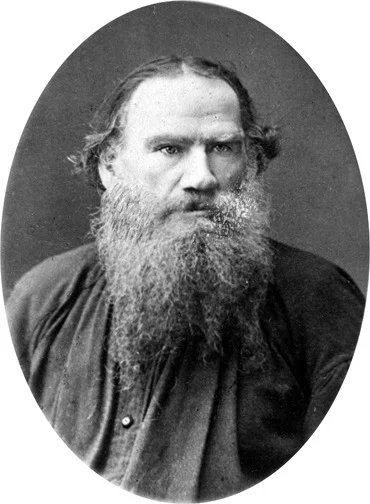
In general, in Russian literature, it is not almost anywhere without guilt. Its concentrated analysis of it, literally anatomical preparation, is in the "Resurrection" by Leo Tolstoy. With a show of really therapeutic, transforming its effect.
Yes, in the "Russian World" the idea of guilt is well known. But is it included as an immanent part in the folk cultural code that by default form the semantic reactions of many individuals? In other words,
Are the guidelines for Christianity and the axiology of Russian literature included in the cultural code of the Russian person?
The question is not at all rhetorical, because when looking at the modern version of the “Russian world”, thoughts about Christianity and literature come last.
* * *
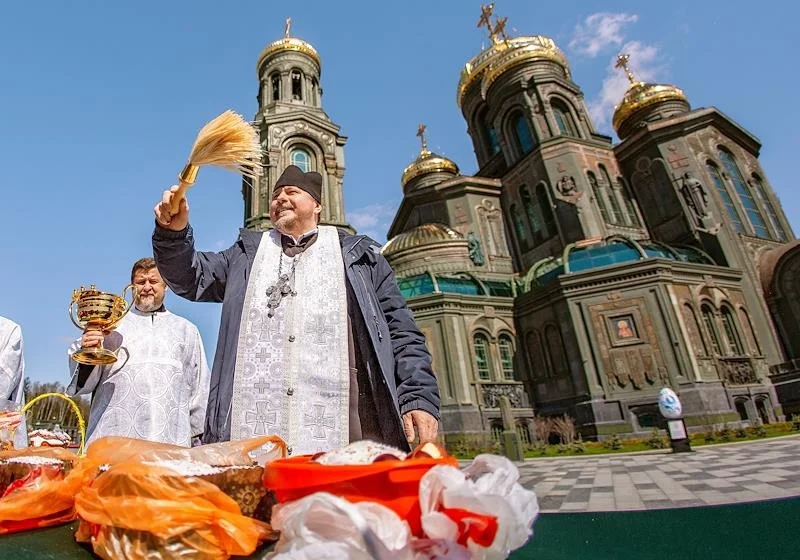
Perhaps in the Russian Orthodox version of Christianity, guilt was too alienated from man. In the sense that the church, having privatized and made its sacrament the release of guilt, removed the burden of personal tragedy and responsibility from the parishioner. Giving the opportunity to periodically “zero” his dark side through the power of the holy authorities, a person receives incredible relief and, at the same time, the incredible simplification of the process called the “work of guilt”. Indeed, for this work, a centuries -old blessed department is taken, which is quite possible to turn the personal existential drama into an integral element of the “factory” to save souls. Perhaps all this bears its fruits in the “other world”, as the department itself assures. However, here, in the "Russian world", we look at the fact that it is very weak to do with the saved soul. As on the principles of numerology, the cyclopean temple of the armed forces is being built: the size of the diameter of the dome gives a hidden indication of how many hours and minutes the act of unconditional surrender of Germany was signed in 1945. While a girl who went to the church with a poster: “Do not kill,” the soldiers of the Russian Guard immediately throw it at a car zak.
In other words, in the common Christian cultural code of the “Russian world” we are unlikely to find: “Make yourself guilty of all people on earth ...”
As a philosopher Nikolai Berdyaev said about this: people of this formation can be very “Orthodox”, but they are very few Christians.
And if we even expect a saving “work of guilt”, will it come from there?
* * *
As for Russian literature, "great and immortal." If we intend to find successful examples in it for our topic, we will certainly find them. The meaning of all literature is not so much in showing enthusiastic samples, but also mainly - to record in the word the very deep patterns of existence, to which a simple mortal, not endowed with the intuitiveness of a great artist, is extremely difficult to get. These patterns are far from always perplex. The literature, as in the unconscious, contains all the highest and most sinister.
When looking at the current state of the “Russian world”, we ask:
Is it possible here, among these indifferent people, the emergence of collective guilt? After all, we are not talking about particular cases - it is a question of a phenomenon on the scale of cultural code, on the most general scale.
An appeal to our classical novels allows us to say: yes, perhaps. But what about the fault of. If we wish to find something that the intelligent non -lexhludes from the "Resurrection" experienced, then this is unlikely. To condemn yourself and the whole system that you are, is a rare case for the “Russian world”. Yourself is still okay; But the whole system, all this “third Rome” - indeed, out of the ordinary. And without condemning, without blaming the system, a person and himself, in the end, will be able to easily come to terms with his conscience: after all, I’m not the only one, because everything is so arranged, and I am only a small part of this, what can I?
How long did the condemnation of the Soviet repressive machine last after the freedom of speech was discovered in the late 80s? There is practically no one at the collective level. The Russian man read several articles in the magazine "Spark", perhaps in places and "The Gulag Archipelago" - sighed and forgot. On the one hand, because if all this is irrevocably condemned, then you will inevitably come to the question: why have we suffered such evil for so long? On the other hand, the great “third Rome” cannot be such “hellish cuisine”; Apparently, not everything is so unambiguous and do not see the whole picture, and therefore - what to judge? In general, everything is now.
Nobody called for repentance and did not go. And the Orthodox Church was silent - everything is as always.
But there is another kind of guilt, in the literature of the Russian brilliantly represented. Not for the fact that he committed evil or passed by evil indifferently. This is the fault for not going out. As stated in a famous novel, he did not pull on Napoleon. Yes, taking into account our realities, it seems that “crime and punishment” is the central, axial text of the “Russian world”. At least now. All the same resolution of “blood according to conscience” and in the name of the same question: “I have a trembling creature or have the right?”
The entire pathos of the suffering and regret of Rodion Raskolnikov does not go with the fact that he killed and robbed, but that he cannot continue to keep his path to the “higher man”. That he turned out to be out of the level of “higher man”. If such a feeling is to look for an analogy on the collective scale of the “Russian world”, then we recall that it was often possible to hear about 30 years ago from thoughtful Russians, looking at perestroika attempts to lead the country out of the dictatorship of a single Soviet norm. They did not remember how millions of people disappeared in the camps. They did not remember closed borders and that just recently there was only one permitted idea of things. They said, with obvious regret, something like this: "What a country about ... Ali!"
If in the "Russian World" and collective wine was once experienced, then this way. The fault for not holding the greatness of superpower and supervision. Like a student Raskolnikov: I chose to the best.
However, now this fault is no longer. Greatness is restored. Figuratively speaking, the old woman is killed, and the conscience does not torment. The Russian collective man successfully crossed the line on which the complex and dramatic personality of Rodion Romanovich broke. Obviously, it was not for nothing that in recent decades from the “Russian world” both complexity and drama have been expelled intensively.
* * *
What in the end. We should hardly expect that compassion and guilt will appear in the “Russian world” in a kind of natural way, from internal spiritual reserves. These reserves are either empty, or today filled with unquestioned messianic excitement. True, this excitement is so vulnerable and mannerly capricious that the caring authorities have to threaten auto-zats and a criminal court for its discredit.
Neither the centuries of Christianity, nor the brilliant phenomena of high literature will take the “Russian world” to catharsis today. Obviously, they were only for him that a skillful superstructure that does not affect the forces that lie in the foundation. Nevertheless, catharsis is possible. If the drama does not work as a reflective, contemplated performance, as in its time in ancient tragedy, it will work as reality.