
Translated material
Everyone walks under his side
The Russian Orthodox Church and Patriarch Kirill became the absolute allies of the Kremlin. You can understand: the fate of the hierarchs who did not believe that "all power from God" was always unenviable
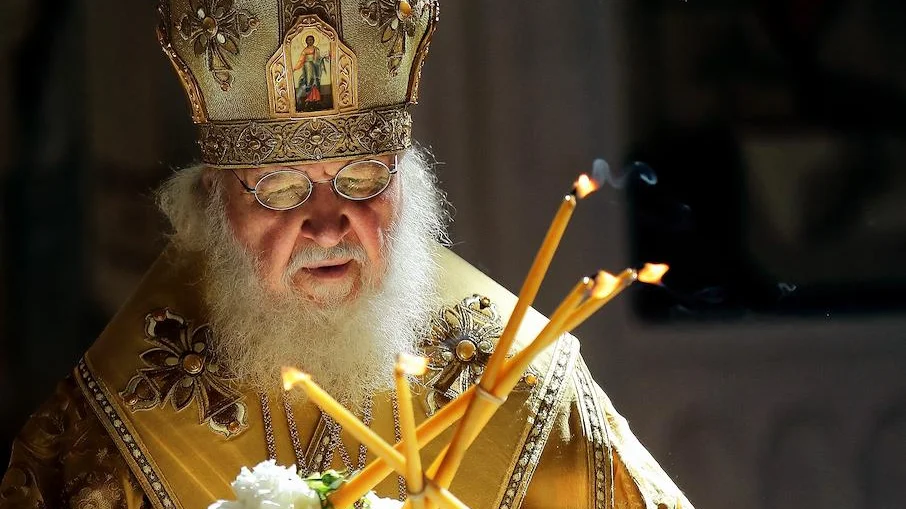
The current Primate of the Russian Orthodox Church, as you know, justifies and blesses all the actions of the current leadership of the Russian Federation. In the context of what is happening in Ukraine, Cyril gives this definition of the state: "An institution that has legal right to use force, forcing <...> other countries, if he sees a threat in them to ensure that this threat is not."
It must be admitted that the position occupied by the Patriarch is deeply rooted in the Orthodox tradition, where it is called the "symphony of the authorities" - state and church. And since this is a “symphony”, then not a single note in it should sound with dissonance. Historical Orthodoxy has become a hostage (and a victim) of the Byzantine model of Caesaropapism, which in Russian conditions has grown to absolutism, when the emperor was proclaimed the “head of the Church” (Article 42 of the Note “Code of Laws of the Russian Empire”). But, despite this “birth injury” of Eastern Orthodoxy, in its history, the highly producers were found, who put the gospel above worldly laws and went to direct conflict with the sovereigns. Often it cost them life. It is important to recall them from the point of view of evaluating the very possibility of the “alternative” path of the Russian Orthodox Church in those extreme historical conditions, in that “fiery temptation” through which it goes now.
Atypical for Russian history
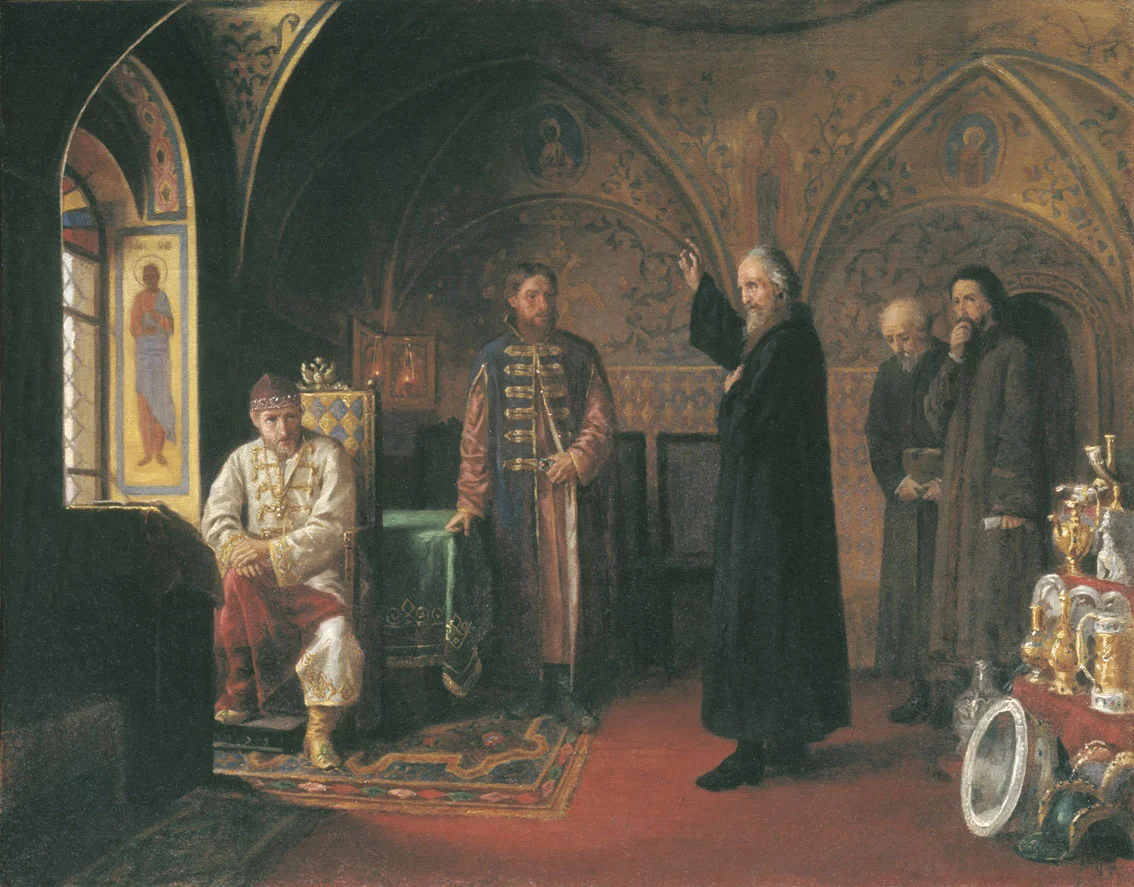
The holy martyr Metropolitan Philip (Kolychev) is almost the only example of the Primate of the Church in Russian church history, who entered into an open confrontation with the king committing lawlessness, by Ivan the Terrible. It was about Metropolitan Philip in his first sermon after expulsion from Moscow to Budapest that Metropolitan Hilarion (Alfeev) said , the former confidant of Cyril:
Philip “was not afraid to resist the formidable tyrant who shed innocent blood ... Even the Agaryans and the Gentiles have a court and the truth, but there is no mercy on our Russian land.”
It is symbolic that in the former estate of the Boyars of the Kolychevs near Moscow, next to Peredelkino in 1952, the suburban residence of the Patriarchs of the Russian Orthodox Church, where Alexy I, Pimen and Alexy II lived. But Cyril became uncomfortable in a historical place associated with St. Philip, - and he moved to the newly -built object "Skit", closer to Rublevka.
The feat of Philip is captured in his life, compiled on Solovki at the end of the 16th century, in the annals of the same time (the third Pskov, Novgorod), in the "Tale of the Rasas of Veliky Novgorod" of 1570, in the "History" of Andrei Kurbsky and in the testimonies of foreigners who visited Moscow.
In 1568, Philip began to denounce the Opoprichny Terror and refused the blessing to the king, who came with the guardsmen in black for the service in the Assumption Cathedral of the Kremlin.
“We make bloodless sacrifices to God here, and the Christian innocent blood is pouring behind the altar ... everywhere robberies, everywhere the murders are committed by the tsaristskoye,” N.M. Karamzin. Already after the verdict, on November 8, the saint was forced to serve in the Assumption Cathedral, but the operators who pushed the saint from the temple, and then languished in the basements of Moscow monasteries in the shackles with a heavy chain on the neck. For about a year, Philip was in imprisonment in the Tverskoy Prochny Monastery, where on December 23, 1569 he was believed to be strangled by Malyuta Skuratov.
The fact of the murder of the Metropolitan by order of the tsar entered the service of a holy martyr, drawn up in the middle of the 17th century on the initiative of Patriarch Nikon. In those days, several churches of St. and other cities appeared in Moscow and other cities. Philip. However, all this centuries -old church tradition is now “canceled”. September 3 last year, the president, in fact, “rehabilitated” Malyuta Skuratov:
"He did not kill him and did not pass [through the monastery], and if he drove, he drove past."
Against this version is the consensus of the classics of Russian history - N.M. Karamzin, S.M. Soloviev, N.I. Kostomarov, G.P. Fedotov, A.V. Kartashev, Makariy (Bulgakov). The obvious began to deny the obvious in our time “zealots of the memory of King John”, who achieve the canonization of one of the gloomy figures of Russian history.
However, the Russian hierarchs, opposing the power of the princes and kings, can be counted on the fingers of one hand. At one time, Metropolitan Kiprian conflict with Prince Dmitry Donskoy, and Tsar Alexei Mikhailovich did not accept the power ambitions of Patriarch Nikon , sending him to exile for Valdai.
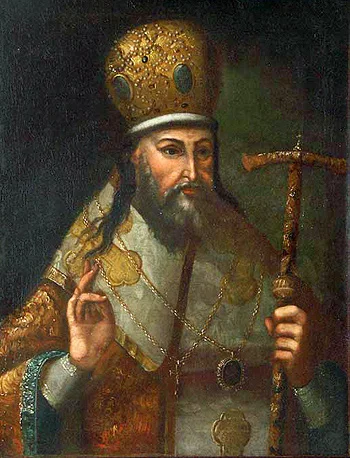
In the era of the Russian Empire, only one “freedom” in the Metropolitan San is known - Metropolitan Arseny (Matsievich) born on Volyn (Ukraine), who dared to contradict the “mother” to Catherine II. The hierarch did not accept the “secularization of church lands”, during which the empress closed almost two -thirds of the monasteries of Russia. In 1763, Arseny led the anathema to the “offenders of the monasteries” in his cathedral, but the synod appointed by her sided with the empress.
When trying to explain with Metropolitan, Catherine shut her ears, which was enough to deprive him of the dignity and monasticism and betray the criminal court for the “insulting of the majesty”.
After Arseny’s sentence to the death penalty, the Empress “merged”, returned his monasticism and ordered him to be sent to the northern monasteries. However, for sympathy for the former emperor John V, who was killed in Shlisselburg, Arseny was secondly deprived of monasticism and exiled to the Revel Fortress, where he died. The Cathedral of the Russian Orthodox Church in 2000 ranked it to the face of saints.
Byzantine Front
The ancient Christian hierarchs - both Western and Eastern - often exposed power, including the supreme, but with the course of history, the revealing pathos gradually came to naught, until it was completely faded. St. Hippolytus, Bishop of Roman, quartered in 235, wrote: "If the bosses <...> forced to do anything nasty faith, then it is better to die than to execute the order." St. Clement, Bishop of Ankirsky (modern Ankara), executed in 312, said to the imperial governor Domitian: "We recognize your gifts with insignificance, your honor - dishonesty and a high dignity - a work captive."
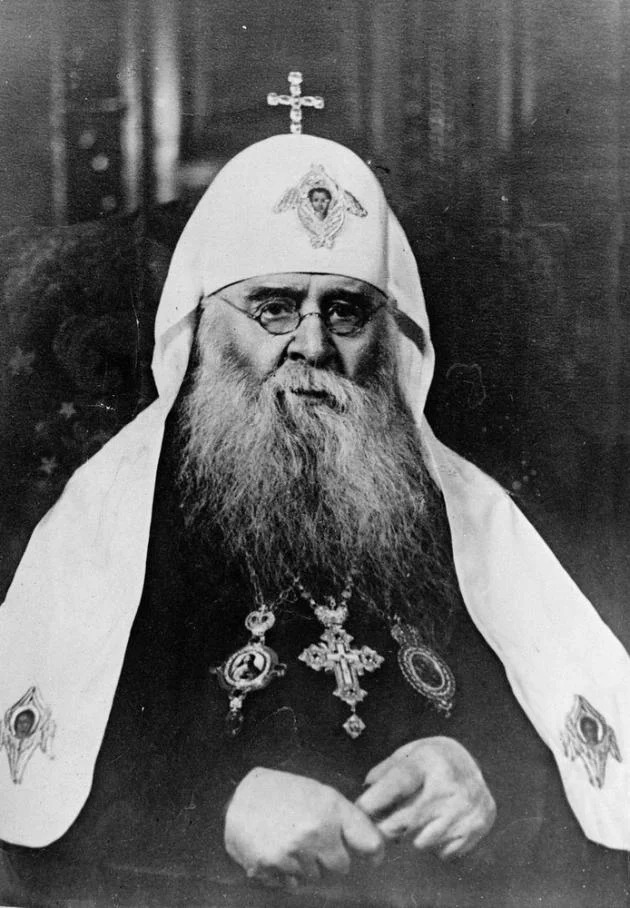
After 17 centuries, the first Soviet Patriarch Sergius (Stragorodsky) , turning to the new persecutors of Christians - the Bolsheviks, paraphrased these words in the opposite way:
“We want to <...> to recognize the Soviet Union with our civilian homeland, whose joy and successes are our joys and successes, and failures are our failures.”
Perhaps the most inconvenient for the emperors of the already Christian Roman Empire was in the second half of the 4th century Bishop Ambrose Mediolansky (modern Milan) , who did not let the emperor Theodosius into the church. At the same time, his words resemble the denunciation of Metropolitan Philip of Ivan the Terrible:
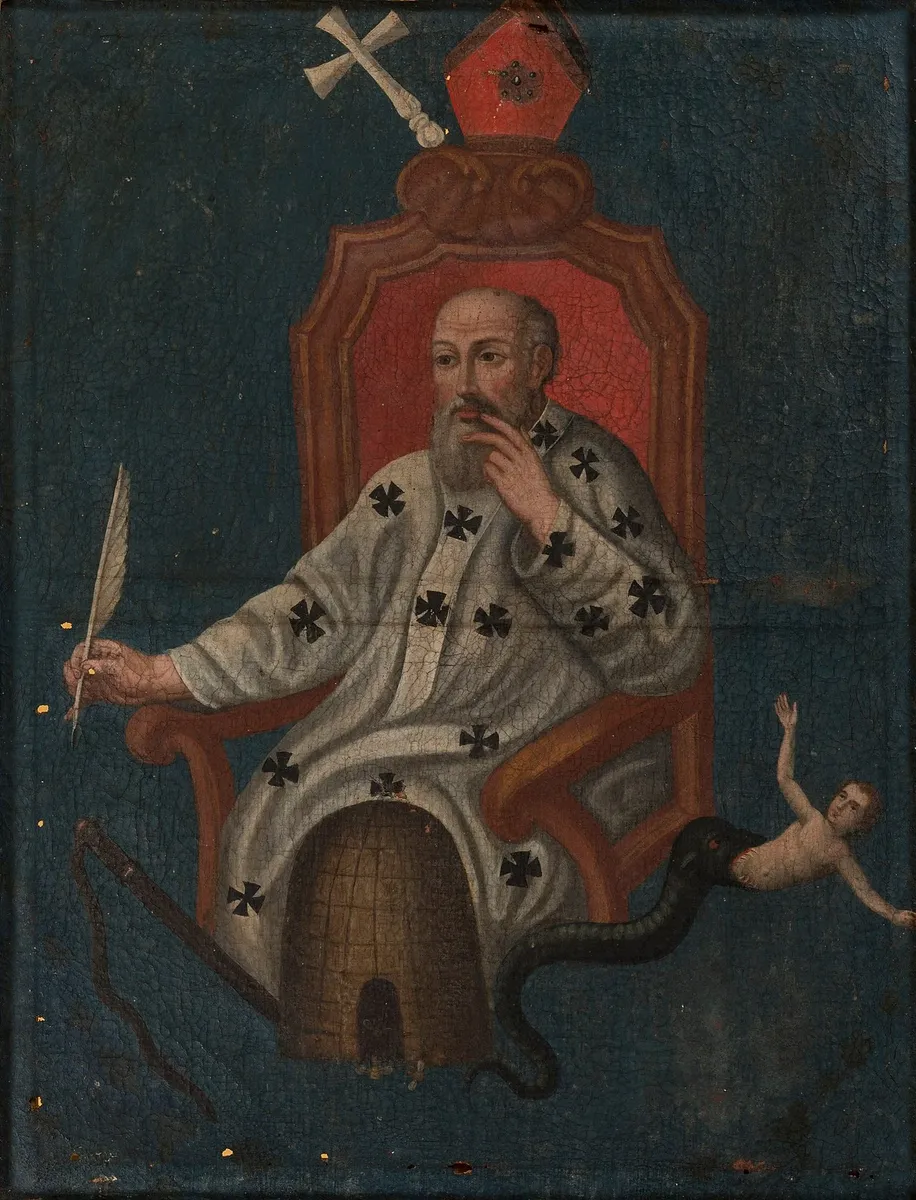
"A person whose hands are stained with innocently shed blood is not allowed to cross the threshold of a sacred place and participate in the divine sacraments."
Probably the largest tyrant in Byzantine history was Justinian II (late VII - the beginning of the VIII century). His reign began with a humiliating execution at the Constantinople Hippodrome of two predecessors. Boris Akunin likes Justinian to Stalin: "He loved to send objectionable peoples to exile, who died out on the way from hunger and illness."
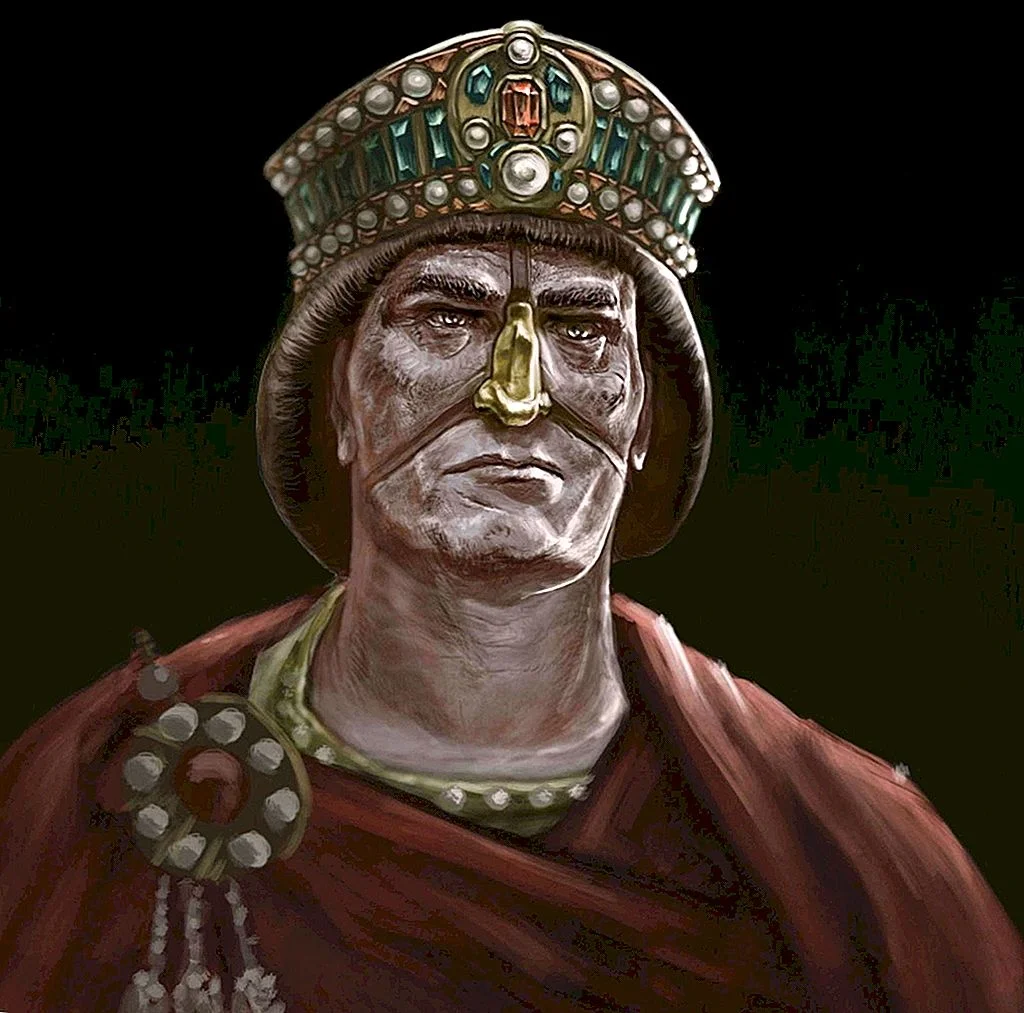
The emperor hung on the walls of the city of officers of the metropolitan garrison, walked a living patriarch into the wall, periodically poured poison into glasses to his favorites and ordered the execution of officials who had just been appointed to high positions.
By the way, the patriarch was walled up in the wall - St. Kallinik - a few years earlier he blessed the popular uprising, which ended with the overthrow of Justinian and his reference to the Crimea, for which the emperor took revenge, returning with the Barbarian army to Constantinople.
Tsaregrad patriarchs sometimes excommunicated from the sacrament of the heads of their state. For example, St. Patriarch Tarasi (IX century) refused to dissolve the marriage of Emperor Constantine VI, and St. Patriarch Arseny (XIII century) excommunicated Emperor Michael VIII for the order to blind the young son of his predecessor, who could claim the throne.
"Power from God" and the Russian historical trap
After the disasters of the twentieth century, the Orthodox theology began to admit that the concordat with the state, which turned into a slave dependence of the church, is destructive for it. For such recognition, unprecedented persecution was required when in the 1920-1930s in the territory of the former Orthodox Empire, tens of thousands of bishops, priests, monks and laity were killed for their religious beliefs. But the inertia of the 17th centuries of Caesaropapism was so powerful that among the persecuted hierarchs there were those who wanted to conclude a new “Concordat” even with open persecutors and militant atheists.
The so -called “Sergianism” is a policy of unconditional subordination of the Soviet power, which was pursued by the Moscow Patriarchate, headed by Sergius (Stragorodsky) and its successors, is a universal method of church “justification” of any regimes, including frankly criminal ones.
This is the refusal of the church administration from its own moral subjectivity, depriving its voice. Such an administration does not mechanically repeat the ideological narratives of power. A true rejection of religion is not manifested in militant atheism (which is also faith, and rather fanatical), but in the "Sergian" renunciation of a church organization from Christ in order to preserve its external structure.
When the “big” church refuses Christ, Christianity continues to live in small communities or hearts of believers. “Let the civil system go any way for him,” Bishop Damascus wrote in 1929, “we will go with our dear“ with Christ and to Christ ”. We will use from the "external" only the few that is necessary for a modest life. " Such a radical breakdown of church reality was predicted in the middle of the 19th century St. Theophan the Recluse: “Although the Christian name will be heard everywhere, and church churches and officials will be visible everywhere: but all this is only visibility, the true retreat is true. Antichrist is born on this basis. ”
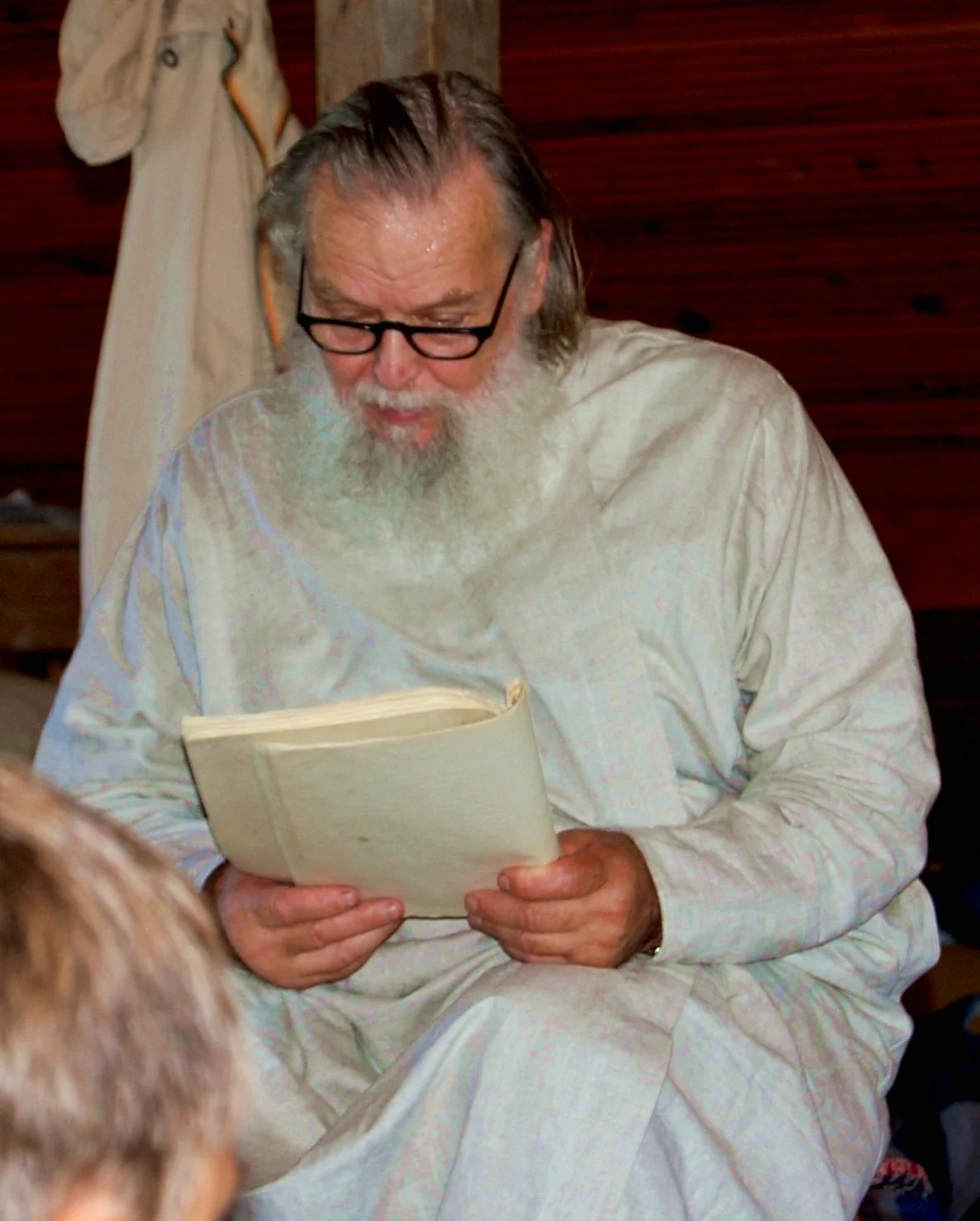
Our contemporary, Pskov priest Pavel Adeelheim, who was killed in 2013, stated with bitterness:
“Church life in Russia goes out ... Spiritual life is destroyed and destroyed, and it is destroyed purposefully to the Moscow Patriarchate itself <...>. We have a faith in the church changed to ideology. Russia is headed by Chekists and churchmen. In fact, it turns out that in this church there is no place for Christ. ”
The “theological” justification of Servilism of the Russian Orthodox Church is the famous words of the Apostle Paul “There is no power from God” (Rom. 13: 1). But translating this phrase into Russian is quite difficult: in the Greek original, before the word “power” is an indefinite article, but there is no article in the Russian language. It’s like the English “Power” to understand in the meaning of “The Power”. The apostle speaks of the principle of rule, of the hierarchical beginning of being, and not about every specific political regime. That is how this phrase is understood by Orthodox tradition. Rev. Istin Popovich noted: “If the authorities renounce God and begins to oppose God, then it turns into a continuous personified violence, <...> becomes a tyrant, ferocious violence - and thereby transfers itself to the power of Antibog, Anti -Boga, the Devil <...>. Christians must resist the godless and god -proper decrees and decrees. ” St. Nicholas Serbsky, so convicted political leaders who usurped power: “Under the guise of law, they rob and depress the people and reject the truth, mercy and faith. These are those to which God interferes, and Christ announces, and they act sly <...>. These are the largest enemies of the people who drive and kill his true friends. ”
Russia has a specific tendency to tyrannical power. Outstanding thinker of Russian emigration about. Alexander Shmeman saw the reason for this inclination, if you like -
In doom, in the “anti-historism of Russian consciousness”, in the eternal desire to get out of the objective world process, idealize some point in his past and “return” to it, even at the cost of great blood.
“The Russian consciousness is nostalgic, its nostalgia is by“ authority ”, which is easiest to find in the past,” wrote Fr. Alexander. -Everyone calls somewhere and to “return” to something, and this return turns out to be at the same time as an end, the end of history through the apotheosis of Russia <...>. And that's why freedom is needed so little.
It is not needed if the past is absolutized, requiring only security and for which freedom is dangerous. Freedom is needed to do, it is always in the present and the present: what to do now, which road to choose at the intersection. ”
In the history of Orthodoxy there were many truly free personalities-as a rule, they became martyrs and their descendants called the saints. These are samples, but you can’t call them a majority. And after the centenary experience of "Sergianism" and the millennial experience of Caesaropapism, it seems logical that modern Russian Orthodoxy did not pass.
Those few free voices that were heard in its environment quickly drowned out with new repressive laws. The Orthodox world turned out to be torn now not symbolically, but quite physically.
This was a feature that history brings under centuries -old church servilism. And when it all ends, in the Orthodox world a repentant process will begin to redeem historical errors, similar to the one that is conducted in Western Christianity, but even more complex and painstaking.