
Translated material
"Too scary"
Gogol cry. Gogol scream. Gogol's life
The gogol-gymnasium, going to play in the school performance of the old Bornage, bent his nose with his finger so that he touched the upper lip. So there should be an old man with a hooked nose!
In St. Petersburg, where he came after the Nezhinsky gymnasium, he is either a scribe in the Department of Dolzov, then the younger history teacher at the Patriotic Institute. He settled down in the service, disappeared for two or three days, came again and, having received the reprimand, immediately quit and settled for a new one. Being a home teacher, without any explanation disappeared and appeared two months later. He was not rich, he lived without lunch for a week, another time he walked in a summer coat in winter, but together with the artist Mokritsky he occupied an apartment in five rooms, and in the summer, he used to rent a summer house, half of which he gave to the master by the name of Polovkin. He also had his own man Jacques, to whom he said: “I will be given my face!”, Which did not prevent Yakim from rude to him, but Gogol himself cared for him.
And he wrote, wrote. At night he will put two candles on the table and writes until they burn completely. And then what brilliant eyes in the surrounding darkness see? The blue sky of Ukraine, its gardens, white veneers, girls in boots, paws with stockeys, mustachioed Cossacks, proud pans? Or does he see the fading gaze of a pale official in a latched overcoat, wandering into the night Petersburg,
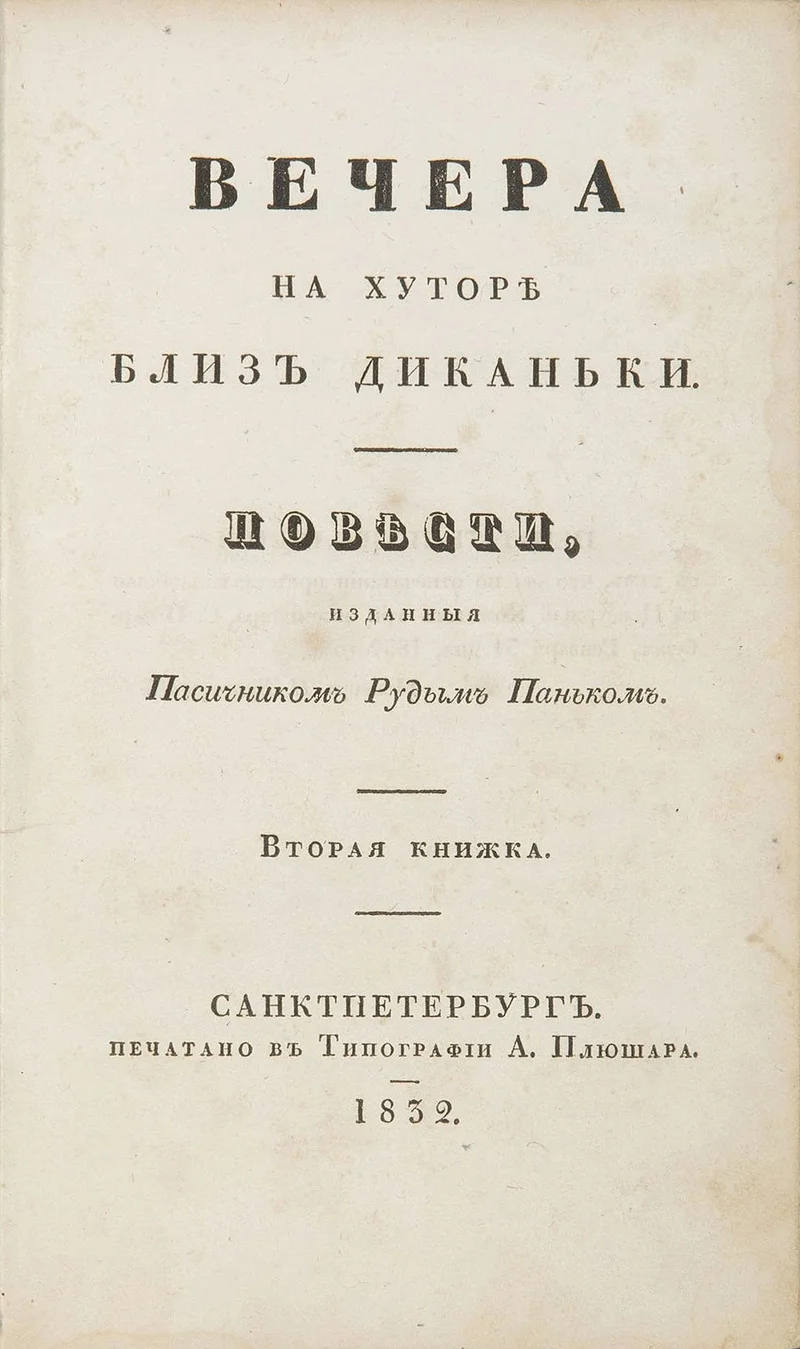
The sets laughed, gaining him “evenings on a farm near Dikanka”, and when he came to the printing house, giggled, looking at a low man with a thin nose, a crest over his forehead and a jumping gait of a rooster. How funny the stories of this Gogol-Mogol are that he with his phenomenon improves people with their mood and amuses them!
The sisters remembered his love for jam: “... Sometimes one ate a whole jar of jam, and if I ask him too much at that time, he always said:“ Wait a minute, I’ll better show you how one of my friends eats, look like this, and the other is that, etc. ”, etc. And while I was engaged in presentation and laughed, he ate the whole bank. ”
“A small growth, thin and twisted nose, crooked legs, a crest of hairs on the head, which did not differ at all by grace of hairstyles, an abrupt speech, constantly interrupted by a light nasal sound twitching the face, - all this was primarily evident. Add to this a suit, composed of sharp opposites of dandy and slutches, - that’s what Gogol was in his youth. ” (And to this, add to the manner of whipping the COK on the head, a “bright” tie, a red vest and a blue tailcoat with golden buttons.)
S.T. At the first meeting, Aksakov saw in his face something "Khokhlatskoye and rogue." Turgenev - Fox. “In general, there was something repulsive in him” (again S.T. Aksakov, but he loved him).
Yes, and was strange. As soon as a familiar man began to tell that he was inconspicuously ill (and he was not thirty). I knitted scarves on the knitting needles.
Four days of the journey from Moscow to St. Petersburg continuously poured jokes, mixed her fellow travelers and convinced the seller of gingerbread by the road that he had not gingerbread, but soap, but for five days from St. Petersburg to Moscow was silent without a single word with a stone face. On the road he settled with a bag in which lay a bottle of oil, which he smoothed his hair, brushes for combing and Shakespeare's volume in French. (However, then he won the Domino Road Sakvoyazh at Vera Aksakova.) He lived in his apartment in the palace with a high -ranking Zhukovsky, and he locked him on the outside when Gogol worked. Once Aksakov led him to him, unlocked the door and: “I almost screamed in surprise. Gogol stood in front of me in the next fantastic suit: instead of boots, long woolen Russian stockings above the knees; instead of a frock coat, over a flannel camisole, a velvet spenzer; The neck is wrapped in a large multi -colored scarf, and on the head is velvet, raspberry, with a gold kokoshnik, which is very similar to a headdress of muzzles. ” And he looked at him, not seeing them.
His oddities struck people. “In his manner, there was something stretched, artificial, acting heavily at everyone who looked at him not as a genius, but simply as a person ...” He pretended to be sleeping, just not to meet his longtime and loving friend who came to visit him; In Moscow, after the presentation of the “auditor”, during long -term appliances and screams of “author!” He gradually slipped from a chair to the floor and eventually ran away from the theater. To justify himself in the oddities of his behavior, he invented the reasons and stories that seemed to people unnatural and false, and in order to justify them, he invented new causes and history. As a result of such a pile of inventions and unnaturalness, he was considered insincere, ungrateful, arrogant, secretive. “He was a master throughout his life for ridiculous reasons” ( Smirnova-Rosset ).
The admirers of his talent extolled him “above the clouds of the walking” (in the words of one of them): in the Aksakov’s house they put the usual dishes, and he was made of pink glass, he was served first, and as soon as he began to yawn, drop his head and dozed, as the servant was heard: “T-s-s! Nikolai Vasilich falls asleep! " Then everyone left and waited for him to strangle on the couch. I wanted to cook in Moscow my favorite pasta, like a leprosy in Rome - they gave him pasta, he wanted to drink a glass of Malagi at night, when all the shops were closed, they sent people around the city in search of a bottle. They finally brought, but he, it turns out, did not want to.
Dunch, rolled bread balls and threw in sitting at the table, some of them, idolizing him, collected them and kept them as relics. (Where are they now, these dried, hardened balls?)
Gogol took all this for granted. But not everyone thought so, not everyone worshiped him.
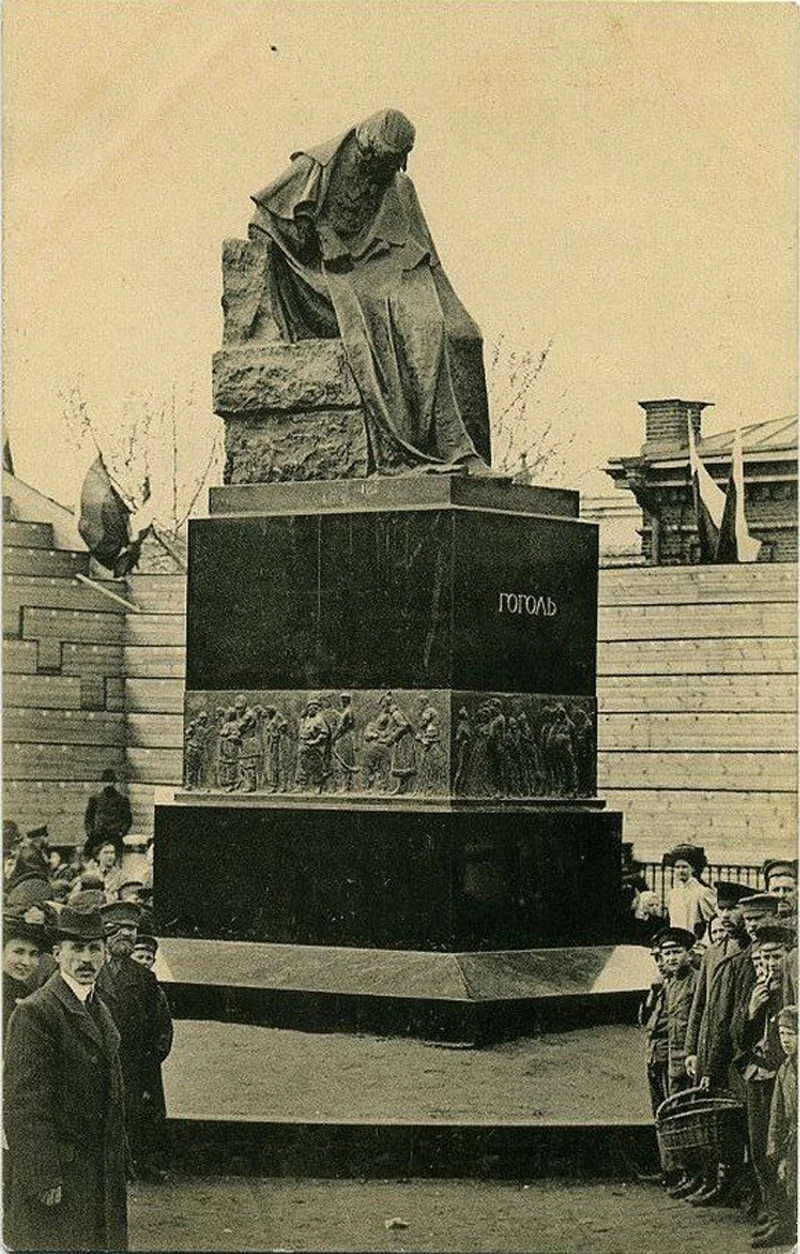
We see a classic in it, two monuments are standing in Moscow. But Panaev treated him condescendingly and asked what he wrote “funny and unnatural”. Zhukovsky evaluated him as a very talented - humorist. They called him a comedian and did not recognize his great importance. And his language, all these “kuds”, “houses”, “rushing” instead of “rushing”, “fresco” instead of “fresco” ... In Moscow, he told Aksakov that “the local abominations are not so offended by him that he falls into apathy and he will not care about him and no matter how he was treated.” In Rome, when in the palace of Princess Volkonskoy before the public he read the “Examiner” to collect money for one poor artist, the hall was empty before his eyes and by the end of the reading was completely empty. "He fed us in Petersburg with this vulgarity, now he transferred it to Rome."
The interest of the crowd enraged him in him. From the continuously repeated question "What will you give us new?" All his nerves were twisted. In order to get rid of the companion in the staging in the stagecoach, he did not admit that he was Gogol, and called himself either Gogel, then Gonel, lifted a high collar and hid his long nose between the pages of the novel by Walter Scott. In Rome, he forced the owner of the apartment, old Celli, to memorize the legend that Gogol was not there, he went out of town, it is not known when he would be, and to tell her all visitors.
In Russia in the fall and winter, he, the southern man (in Moscow in Pogodin’s house, his grandmother called him “Talian”), he froze all the time, chuckled. In Pogodin’s house they took him a room under the roof, which heated greatly from the sun, but he was cold there, he walked in a woolen fufike. Petersburg frosts tormented him, he froze (according to him, “physically and morally”), once froze his nose, another time his ear. He pulled woolen stockings over his boots, but this did not help, his legs froze anyway, and then he began to run or put his legs into the stove.
His sensitivity was so strong that with excitement he was dizzy, and there were times when he fainted, as if he could not bear himself, his excitement, his nervousness, his ulcerative thoughts and continuous tension of feelings. His nerves were too thin for this elephant world.
Friends, whom he asked him to collect money for him, "although in the form of alms,". "I am a beggar and I am not ashamed of my title." Even here, in the story of his life, this phrase sounds not at all humbly, but proudly, as if he was pronouncing it, in a position standing over everyone. So it was. After formal recognition in poverty and proud words about poverty, he began to broadcast his requirements and conditions, conditions and requirements, and entered into such details that made him assume calculation and arrogance. Even these letters who love him were shocked, repelled. He disposed of his friends as if their lives belonged to him, but they could not have their own worries, being devoted to such a high person like him. He painted in detail how many times a year and by what numbers they should send him money, which they should collect or tear off from themselves, explained to them that he needed to go to London not because there was business, but simply wanted to go, but his desire is sacred. He told them that for three years they should take on all his deeds and concerns, communication with his mother about money and the troubles of the sisters, for he needs to be freed from all this, because he is now in the mountains, in high thoughts, in thoughts about humanity, in thoughts about Russia. God leads his thoughts, and you can handle it below.
So he raised him, entered him. A comedian, from whose jokes you will tear the tummy, a “natural school”, a satirist with an outstanding gift of “modeling faces” - that’s who and what they recognized him. Is it not enough? But at some point, not even a little, but nothing. What do all of them mean to them in front of the abyss, which suddenly opens up where there was a warm, young life? Chichikov rides, Nozdrev is spitting, Sobakevich is clubfoot, Akaki Akakievich in the night is sneaked in Nevsky in his overcoat-and you, who saw them, who created them, are you somewhere where are you?
In Rome, on the luxurious villa of Princess Volkonskaya, he spent nights, caring for the young Count of Vielgorsky, damping from tuberculosis. The young man was brought up with the heir to the throne, studied better than him, was bright, clear, modest, zealous - and doomed. How much love Gogol gave him to these Roman nights, when the count was sitting in an armchair - he almost did not sleep - and the smell of his last spring inhaled the open windows. And every day closer to death. No one knows, by chance or by the intent he left Gogol exactly at the time when he died. He left the room with a disassembled bed, a chair, a man with a feverish blush on his cheeks ... He returned - he was no longer. Oh, what to do, what kind of abyss!
Since then, he has not taken the form of suffering, the type of illness, the smell of drugs, and death. I could not stand it, because it is unbearable! When a friend who lived with him in the same apartment in Rome fell ill, he immediately moved off the apartment.
Back in 1840, in a letter to S.T. Aksakov from Rome, he remarked: "The innermost feelings somehow become vulgar when they are clothed in words." He, who devoted life to the word, he, who knew how to create a picture in such a way that she moved and lived, understood with terrible clarity, that there is a certain feature in life, behind which words are made empty and do not express anything. “I am scared to remember all my rags. They seem to be menacing prosecutors. Oblivion, the soul asks for a long time. And if such a mol appeared that would suddenly ate all the copies of the “auditor”, and with him “Arabesques”, “evenings” and all other nonsense, and about me for a long time, no one would say a word in printed or verbally - I would thank fate. ”
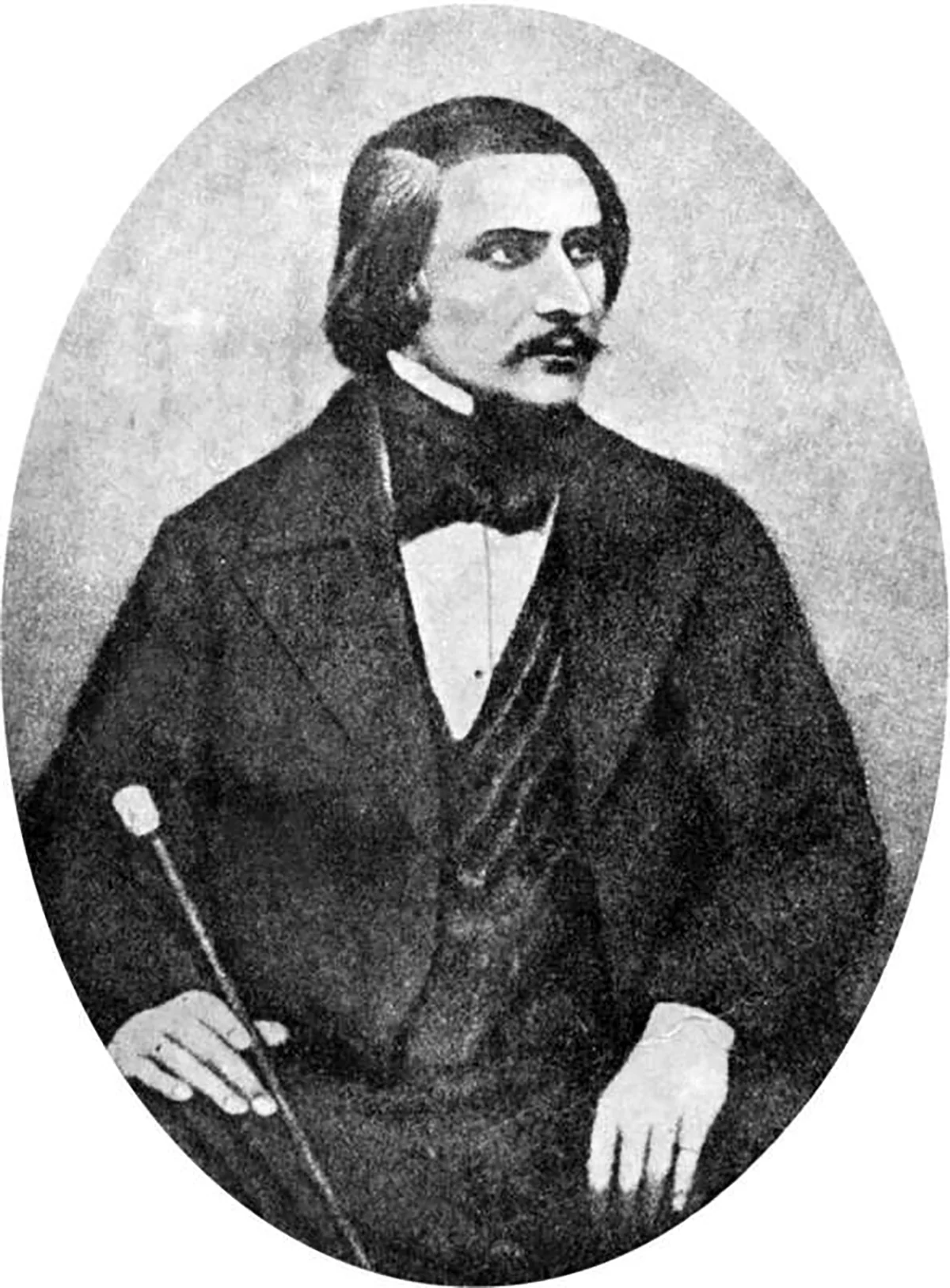
In another place (in the very first paragraph of the “selected places”) he talks about “the futility of everything, hitherto printed by me” - and means that, having crossed a certain feature in life, he can no longer have fun and want to speak with people about their lives. He calls his art "rash and unyerated." The poor, weak, sick, suffered by the body and soul of Gogol-Gogel with a thin long nose and long hair, he decided on the impossible: preaching to change people, the spirit of Christ to saturate their souls-and Russia.
All who are in this world and in Russia, he teaches from his beloved Rome - the governor to influence the governor, a beautiful woman on secular sloglkopers, a landowner for peasants. He, idle, teaches married women, he, who has never been engaged in the household, teaches the landowners to manage the household. Again, his tone is strange, this is the tone of the broken, in an unnatural pose of a standing person who teaches everyone in a row and breeds strange chimeras about the Orthodox elders writing secretly the answer to Europe, and about the holy duties of the king. The book is crazy, is it crazy? This is not my current thought, so many then thought.
“It is necessary to save people from a mad man with all measures, at least Homer himself was furious,” said Belinsky’s sick consumption in Salzbrunn, got out of bed, put on a frock coat and wrote a letter to Gogol for three days in the morning.
When Gogol receives him, something will happen to him. He’s a complete stream of hot tears and bitter words, he writes a long Belinsky, to many pages, where he is justified and reproached, and wants to wound up, and cannot hide a terrible insult - writes inconsistently, not combining the beginning of the sentence with the end: “If the government is a huge gang of thieves, or, you think, none of the Russians,” and then tears the pages to the pages. Shreds and sends criticism a completely different, short letter.
And then suddenly he understands all the unnaturalness of himself, climbing on the stilt and teaching on top. He started talking ... lied ... God! .. How am I ... who am I ... Khlestakov!
But another thing that he continued to write did not belong to him; He believed that he was writing her from above. “Despite my painful condition, which again increased slightly, I hear and know marvelous minutes. The creation of a wonderful is going on and is performed in my soul. Here, the holy will of God is clearly visible to me: such suggestion does not come from a person, never invent him such a plot. Oh, if three years with such fresh minutes! I ask as much life as necessary for the end of my work, no longer needs an hour. ”
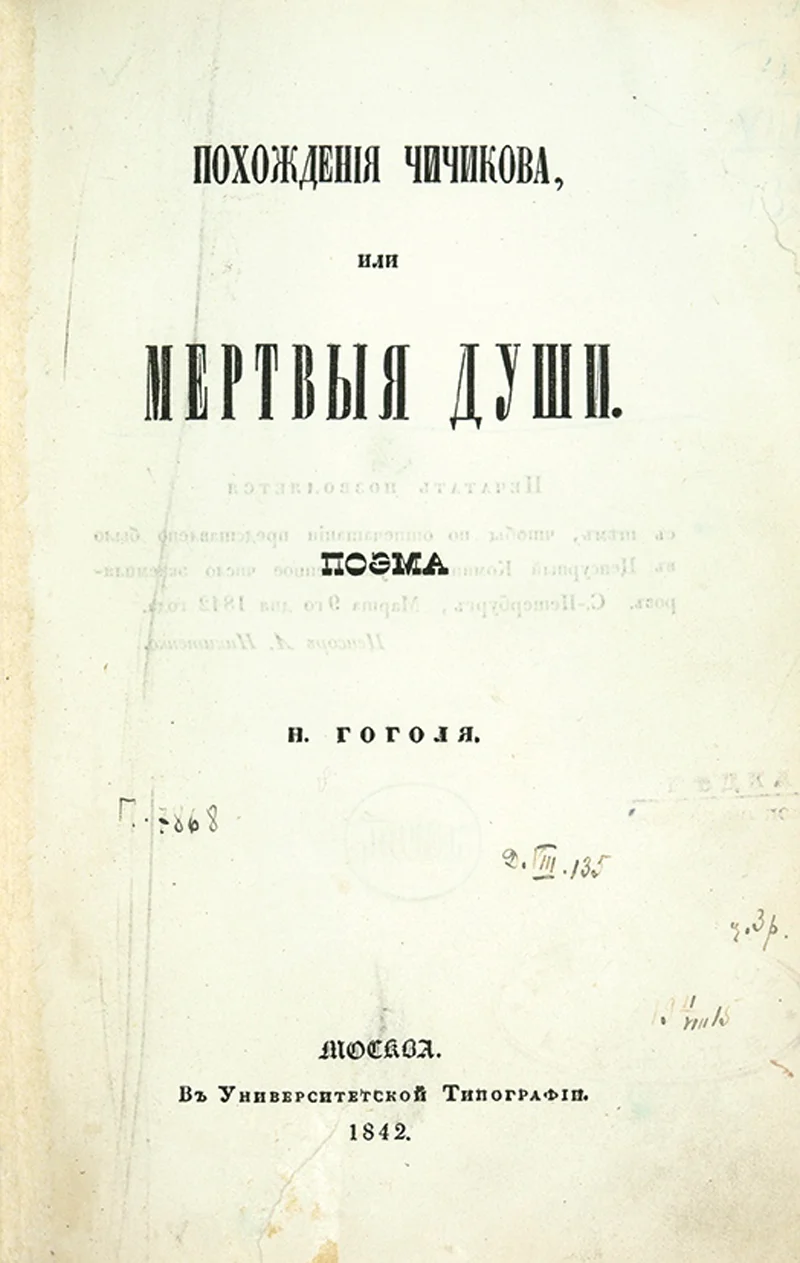
This is "dead souls." He wrote them in Rome. In Moscow he could not write, he had to leave Moscow, she loved and crushed him, he loved her and could not live in her. “I am tired of the gray, almost green northern sky, just like those monotonous-typical pine trees and ate, which chased after me on the heels of St. Petersburg to Moscow.” In Rome, he "averaged in himself." In Rome, he could sing Ukrainian songs on the street, go to the gopak and swing the umbrella. In Rome, he could argue with the waiters and drink hot chestnuts with wine. From living, sunny, warm Rome, performed by Italian fun and grace, permeated with music and the sun, who lived under the “sky of inexpressible color of spring lilac”, he was clearer, more distinctly, he saw a brick with a sword of Russia, and exaggerated, curved, like in a caricature, figures of nostrin, Sobakevich, and box On the faces of which Russia will look, shave and be horrified. And there, already in the Buro-Malin fog, a huge figure of the one who is not an auditor, but the judge over everything ... rises in a narrow uniform ...
Gogol considered himself a jug, in which something that he wrote was made by the highest will. He now called his work "saints."
I was ready to pay money, if only to be laid behind him with requests to write for magazines. “My work is great, my feat is saving; I have died now for everything petty. ” Yes, this is so, but it happens and something else when the "dead coolness of feelings" finds it on it. Writing then is torture. And what to do with this?
He never had his own home. But he did not need him, because he lived in foreign houses on the position of the king and the saint, from which the dust was to be blown away. “Here they looked after Gogol as a child, giving him complete freedom in everything. He did not care about anything. Lunch, breakfast, tea, dinner were served where he would order. His linen was washed and fit into the dressers with invisible spirits, unless it was put on him with invisible spirits. ” The guests were going to see him and hear him - he went out, silently sit on the couch or walk around the room and leave. If someone sat down with questions, he turned away or closed his eyes and plunged into a real or imaginary dream. He lived on the girl’s field with Pogodin, who maliciously wrote about him in the diary: “Orthodoxy and autocracy in my house: Gogol served the all -nights - really for an accession to the throne?”, And with Aksakov on Sivtsev’s enemy, and then four years on Nikitsky Boulevard in the large house of Count A.P. Tolstoy, to whom he wrote enlightening letters about how to live an official (consider himself an official of Christ).
Тут, в большом просторном доме, в двух своих комнатах с двумя диванами, он все глубже погружался в самого себя, все дальше уходил в тот мир, где пахло ладаном, тихо потрескивали тонкие желтые свечи и с маслянистых досок немо глядели Его глаза. В эту тьму он уходил, веруя в то, что есть в ней свет, уходил под мягкий голос графа А.П. Толстого, который, будучи губернатором, собственноручно чистил от мух иконы в канцеляриях, тайно носил вериги и с которым они сходились в том, что Россия есть обиталище Христа, а если вокруг грязь, жестокость, взятки, рабство, воровство и тупость, то нужно «вспомнить человеку, что он вовсе не материальная скотина, но высокий гражданин высокого небесного гражданства» — и каждому на своем месте быть кем родился и кем назначен, губернатором от Иисуса, столоначальником от Иисуса и даже городничим от Иисуса. И крепостным рабом тоже от Иисуса?
Любимой женщины у него никогда не было. Зная себя и свои нервы, он избегал любви: «…это пламя меня бы превратило в прах в одно мгновенье». Есть воспоминания, в которых описано, как он смущался перед женщинами, какие неестественные обороты употреблял в беседе с ними, как был странен и напряжен в общении с красавицей и как потом, когда она ушла, в изнеможении опустился на диван. Вместо любви — многочисленные письма о духовном, которые он писал светским дамам. Смирнова-Россет однажды внимательно посмотрела на него своими черными страстными глазами: «Послушайте, да вы влюблены в меня!» Он оскорбился. Он уже вошел в такие пространства и очутился в таком тяжелом, смутном, бессонном состоянии нервов и души, что не было уже больше ничего, кроме как Бога.
Но видел все и чувствовал все всей силой своих обнаженных нервов. Какой эротикой пронизаны его описания парижанок с «заманчиво щегольскими тонкими руками» и с каким восторгом он изобразил албанку Аннунциату, «от плеч до античной дышащей ноги».
Но путь в эту сторону ему был закрыт его робостью и монашеским стремлением. Слабая, неуверенная попытка женитьбы — через третье лицо передал предварительный вопрос одной из сестер Виельгорских, Анне — окончилась ничем. Refusal.
Много раз и сам он писал в письмах и говорил друзьям, что болен, и другие люди за ним повторяли. Но чем болен, какой болезнью? Диагноза нет, ничего вразумительного о нем по медицинской части мы не найдем. Знаем, что в Риме пил чистую воду из фонтана Терни, в Вене мариенбадскую воду, что лечился холодной водой в Остенде и Грефенберге (купания, мокрые простыни, 20 стаканов воды в день), что в Москве постоянно пил теплую воду с сахаром и красным вином, но от чего именно лечился? Сам он полагал, что у него «извращенный желудок». Еще с мнительностью, свойственной нервным людям, обнаружил у себя отсутствие испарины при жаре. Но в том ли дело? Гоголь был болен — самим собой, своей жизнью, своими мыслями, своими нервами. «Тоска необъятная жрала его, и безымённый червь точил его сердце», — написал он об итальянце в Париже, но не о себе ли повсюду? Смотря в себя, зная себя, он видел в себе «странную смесь противоречий, упрямства, дерзкой самонадеянности и самого униженного смирения». Однажды на Тверском бульваре он объяснил знакомому: «У меня все расстроено внутри. Я, например, вижу, что кто-нибудь спотыкнулся; тотчас же воображение за это ухватится, начнет развивать — и все в самых страшных призраках. Они до того меня мучат, что не дают мне спать и совершенно истощают мои силы».
Сжималась его жизнь и перекручивались, доходя до высшей силы напряжения, его нервы. Молодой человек, не замеченный в особой тонкости, — и тот, встретившись с ним, увидел в его глазах «нравственное утомление». Еще будучи в Европе, во Франкфурте он однажды читал свою трагедию Жуковскому. «Когда Гоголь кончил и спросил, как я нахожу, я говорю: «Ну, брат, Николай Васильевич, прости, мне сильно спать захотелось». — «А когда спать захотелось, тогда можно и сжечь ее», — отвечал он и тут же бросил в камин. Я говорю: «И хорошо, брат, сделал».
Ну спасибо тебе, Василий Андреич, любитель поспать, удружил русской литературе.
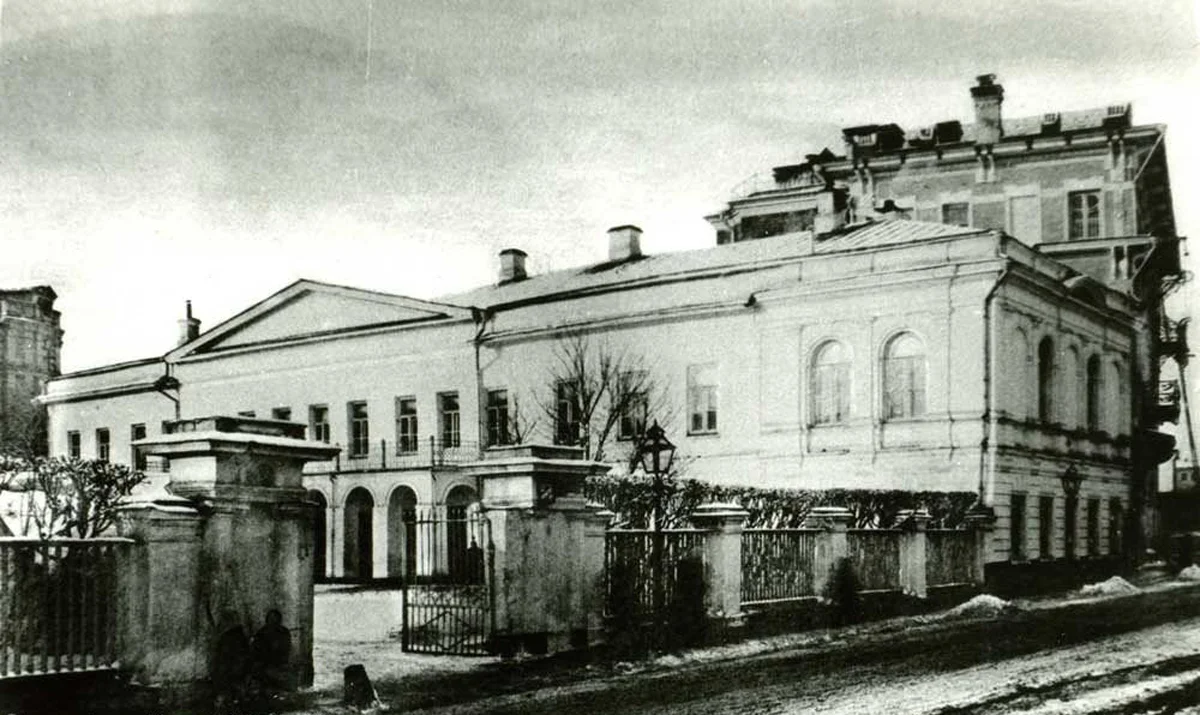
В доме на Никитском, где он жил, хозяйкой была графиня Анна Толстая, про которую Вигель говорит, что она жила со своим мужем как с братом. Ну Вигель известен своим злословием… Но что точно известно — графиня беспрерывно молилась и отдавала десятки тысяч рублей на благотворительность. За чаем тут подавали изысканные сладости из модной кондитерской на Кузнецком Мосту, а во время поста ели тюрю из хлеба, картошки, кваса и лука. Гоголь тоже ел тюрю и тайно раздавал деньги, полученные за издание своих книг. Шевырев в Москве этим занимался по его поручению, а в Петербурге — Плетнёв, которому Гоголь посылал в пакетах пачки ассигнаций для инспектора университета, чтобы раздавал бедным студентам. Ни инспектор, ни студенты не знали, от кого деньги.
Странный это был дом на Никитском бульваре, дом, в котором на первом этаже, в хорошо натопленных комнатах справа, жил вечно зябнувший писатель с мыслями о Боге, принимавший посетителей в коричневом пальто, а на втором этаже жили целомудренные двое, соединявшие веру в босяка Иисуса с верой в государя «Божьей милостью». Однажды в этот странный дом к Гоголю три раза за день приходила старушка Надежда Николаевна, но слуга ее не пустил. Она сказала: «Передай Николай Васильичу, что хотела проститься с ним!», ушла и в тот же день умерла. Какие последние слова хотела сказать ему московская старушка, что рассказать, о чем поведать?
Тайную и скрытную жизнь Гоголя в его последние месяцы мы знаем только пятнами, урывками.
Знаем, что в один из зимних дней он сел на извозчика и поехал в Преображенскую больницу. У ворот больницы долго ходил туда и сюда, но не зашел, а, наоборот, отошел в чистое поле и там долго стоял на ветру, овеваемый снегом. О чем думал? Что решал для себя и про себя? Потом сел на извозчика и уехал. В другой раз поздно вечером шел по переулку вблизи Никитского бульвара и увидел приоткрытое подвальное окно и в ярко освещенной свечами комнате — молящихся на коленях проституток, а с ними старуха в черном, а перед ними священник в облачении. Долго стоял незамеченным у окна.
То в испанском плаще, то в шинели с меховым воротником, в шляпе с опущенными полями ходил по городу и по бульвару, по которому и мы ходим, весь обращенный в себя, смятенный, углубленный. Как тяжело писать, как мучительно вытаскивать из себя текст. Но выхода-то нет. Нет выхода из кружения мысли, которая хочет жизни и боится смерти, нет выхода из тела, которое хочет жить, как ты его ни обуздывай воздержанием и постом, нет выхода из бесконечной, безнадежной тоски по России, которая вот она, на улице, где воробьи клюют по зернышку и мужики, заломив шапки, спорят о том, доедет ли колесо… А скоро Пасха.
Четвертым в этом богатом доме с колоннами у входа, достойно и привольно раскинувшем свои крылья с окнами, был священник отец Матвей, наезжавший из Ржева учить графа, графиню и писателя вере и жизни. Видом мужичок, разве что в рясе. Однажды в Торжке увидел раскрытую могилу святой Иулиании. «Когда, невзирая на свою болезнь, на место прибыл о. Матвей, на дне могилы оставались лишь комья липкой и вонючей грязи. Недолго думая, о. Матвей опустился на самое дно, собрал благоговейно эти остатки, съел их… и совершенно выздоровел».
Евший грязь прозрел в Гоголе внутреннюю нечистоту, осудил за любовь к Пушкину и второй том «Мертвых душ».
Дал и утешение: «Так помни смерть; легче жить будет. А смерть забудешь — и Бога забудешь». Не знаем, что еще он грозно вещал Гоголю в его комнате с зеленым ковром на полу, какие рисовал ужасы человеку в депрессии, изнемогающему от страха смерти, с измученными нервами, а знаем только вскрик бедного человека: «Оставьте, не могу далее слушать, слишком страшно!»
Февральской ночью Гоголь велел слуге Семёну идти наверх, на второй этаж, и там открыть заслонку печи, а потом спуститься и затопить печь на первом. Тот босиком пошел (все в доме спали) и сделал, как велели. Гоголь, сидя у кафельной печи, клал в огонь тетрадки со страницами, исписанными его мелким почерком.
Одиннадцать глав второго тома «Мертвых душ» отправил он в огонь. Тетрадки горели плохо, пришлось их доставать и жечь по одной.
Была у него — мы знаем — «Последняя повесть», тоже, видимо, сжег.
Бледный, со спутанными волосами, с длинным тонким носом и обострившимся лицом, в халате и сапогах, Гоголь лежал на кровати в комнате слева от входа, куда его перенесли, как заболел. Он отказывался есть. Хотел говеть перед Пасхой. От лекарств тоже отказывался. Врачу, который взял его руку, чтобы узнать пульс, тихо сказал: «Не трогайте меня, пожалуйста». Но все равно трогали, мучили, тащили в ванну, ставили пиявки на лицо. «Он иногда вздыхал тяжело, шептал какую-то молитву и по временам бросал мутный взор на икону, стоявшую у ног на постели, прямо против больного». Медленным упорным голодом заканчивал себя, вытеснял душу из тела. Душа, хватит цепляться, иди к Нему, к Благому и Всеблагому, к Свету и Сиянию. Так изгонял из себя странную жизнь свою. До Бога близко.