
Translated material
Firing note
The thorny path of the theme of Babi Yar in Soviet music and poetry. 18+
There is a huge advantage in music:
She can, without mentioning anything, say everything. Ilya Ehrenburg
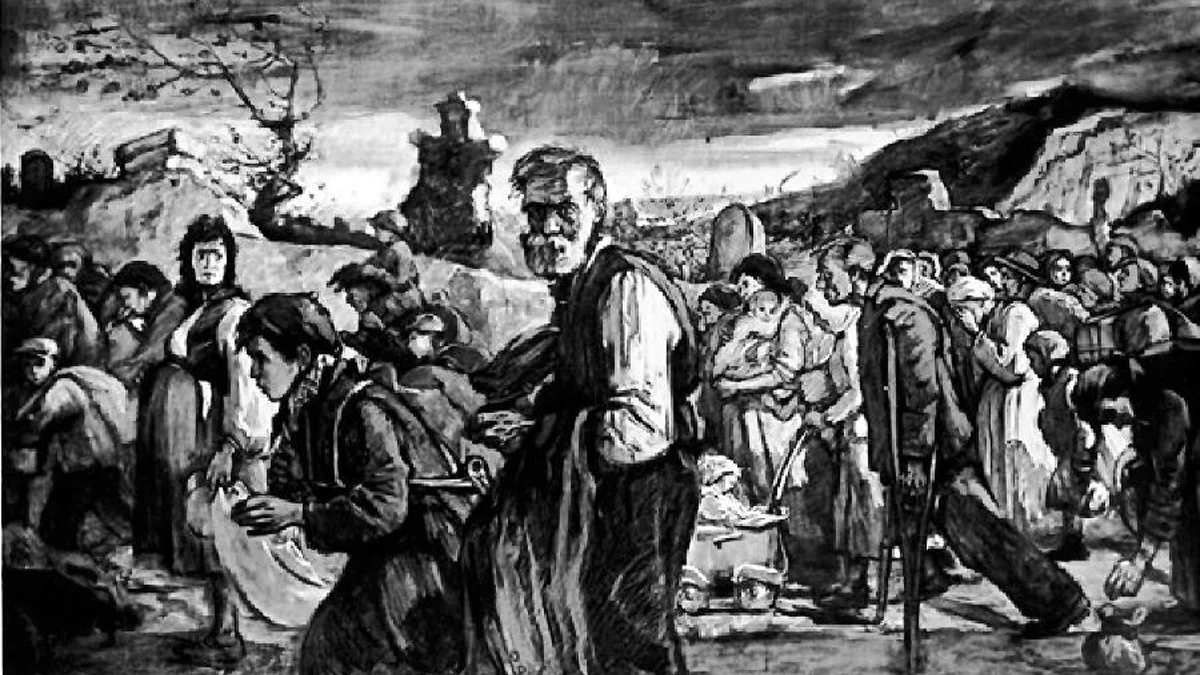
In music and in the visual arts, the pioneers of the topic of Babyeu Yar-and at the same time the first injured for it-were the composer and conductor Dmitry Klebanov and monumentist artist Vasily Ovchinnikov, who created his works immediately after the war. Ovchinnikov participated in the first post -war exhibition of Ukrainian artists at the Museum of Russian Art in Kyiv in 1945, which was introduced by the graphic tripy “Babiy Yar. The road doomed. " At night, on the eve of the opening of the exhibition, unknown people cut the central canvas with a knife. He was hastily sealed, but the anti -Semite tried not in vain: by order of the Central Committee, all triptych was removed from the exhibition!
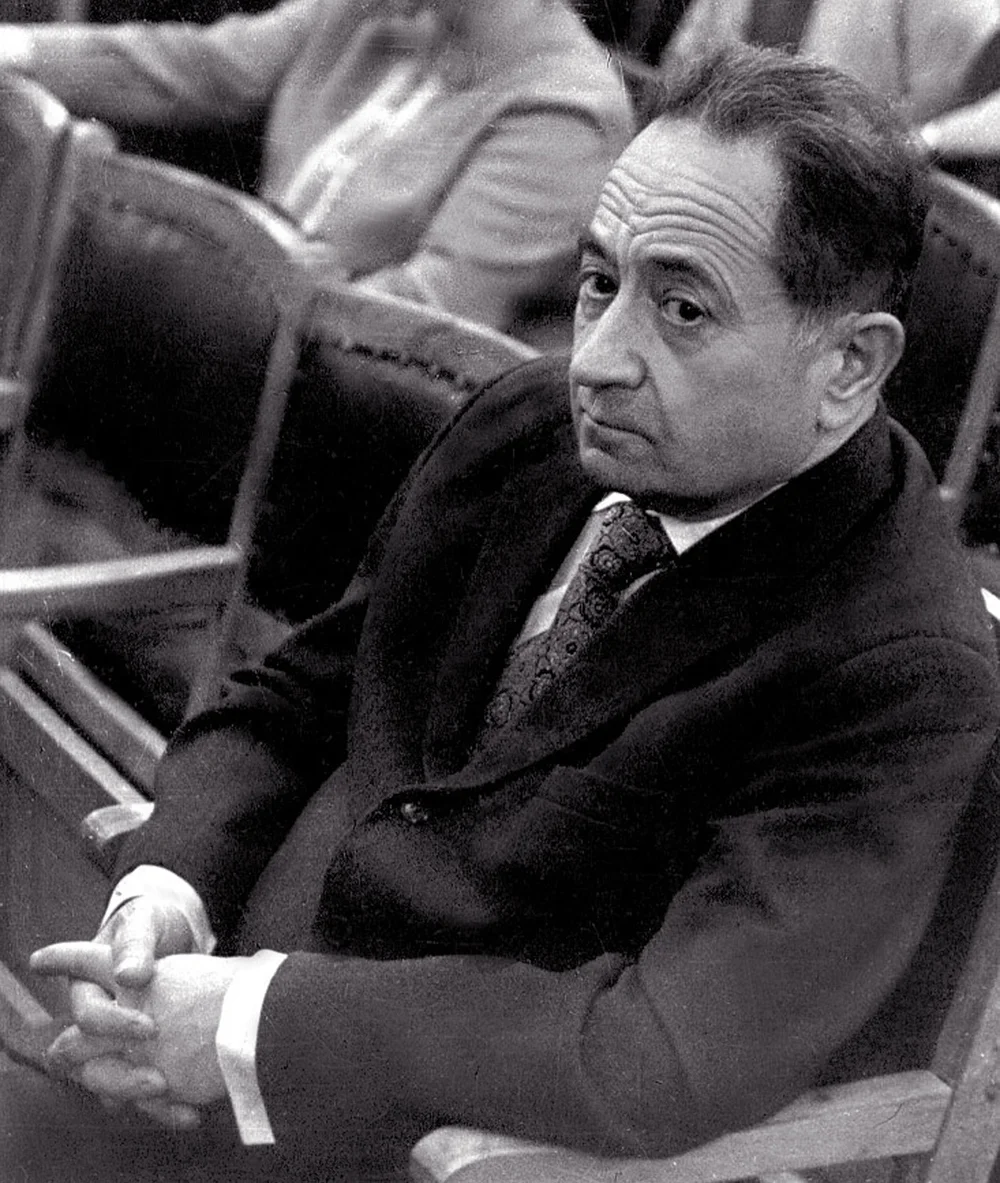
Klebanov in the same 1945 wrote his “First Symphony. In memory of the victims of the woman’s Yar ”, saturated with Jewish melodies. Her apotheosis was mourn-a-three vocalise, reminiscent of Kadish (memorial prayer). The first two performances took place in 1947 and 1948 in Kharkov and Kyiv, but all further were strictly prohibited. Klebanova was removed from the posts of the Chairman of the Kharkov Organization of the Union of Composers of the USSR, and in 1948–1949 they already stamped up for “formalism”, “bourgeois nationalism” and “cosmopolitanism”. Especially zealous at the congress of the Union of Composers of Ukraine in March 1949 V.D. Dovzhenko, member of the board:
"D. Klebanov wrote a symphony, imbued with the spirit of bourgeois nationalism and cosmopolitanism, which he built on Old Jewish religious songs. The ritual rites of ancient Palestine, the “cry of Israel”, synagogal intonations - these are the sources that inspired Klebanov to create this antipatriotic symphony ... The composer slanders the Russian and Ukrainian people. In this symphony, filled with biblical motifs and imbued with tragic doom, Klebanov forgets about the friendship and brotherhood of the Soviet peoples and conducts the idea of the complete loneliness of Soviet people tortured by the Germans in the woman’s Yar. ”
For the third time, Klebanovskaya symphony was performed only in the perestroika 1990 - 45 years after writing and after the death of the author.
The second attempt to approach the theme of Babyeu Yar through the music was the song of the composer Rivka Boyarskaya on the verses of Shika (Ovsey) Drisa “Lullaby for Babier Yar” (1954). Both Rivka and Shika are Kievans, poems in the original - in the Yiddish. Here they are translated by A. Leiserovich:
I would hang the cradle on the beam
Rocked b, rocked the son of Yankel,
But the beams collapsed in the fire of this night -
How to download you to me, my son?
White pigeons - black mogs,
There were only a firebrack from the house.
I would cut off my long braids,
To hang the cradle for the daughter of Reisel,
But the leaflets became ash on oak -
How can I hang the cradle for my daughter?
Where is he, my house? - There is no rose left.
In the midst of the coals of my children, the bones.
Mother, mother, all come,
Crying my song help me -
I can neither be silent nor screaming -
The song of my Babi Yar is rocking ...
The performer was the singer Nekham Lifshits (see footnote 1) , who won the All -Union Competition of the Artists of 1958 with a repertoire in Yiddish:
“I sang in Kyiv on November 13, 1959. For the first and last time. I did not receive permission to enter the Kyiv scene, and there was nothing unusual in this after they defeated the entire Jewish culture in 1948 and 1953, and indeed, few of the Jewish performers were allowed to the “Holy Kyiv Grad” ... ”
The city was enchanted: “Only now, at the Sofievsky Cathedral, Khmelnitsky, flying with a saber, leads to me, most likely already populated in the genes, the horror of death.
I met Kyiv Jews, in a mobile and welcoming way, but I had the feeling that all of them lies the forever a disastrous shadow of the Khmelnitsky and Babier Yar. <...>
And I already knew that I would sing him. After all, there was no hint of the monument in this fierce.
And I think that the only monument in those days was the “lullaby to the woman’s tier” by the composer of Rivka Boyarskaya and the poet Shiki (Ovseya) Drisa. ”
In May 1958, when Livshits first performed in Moscow, Dris drove her to Boyarsky Rivka to listen to his "lullaby":
“Rivka Boyarskaya was already riveted to bed. Without a tear, but with an unbearable depth, from which they petrified on the spot, she “drove” this cry. I sat, petrified, in her wretched apartment in a neglected house, which is opposite the Moscow Conservatory ... I could not get up. DRIZ almost carried me out into the street. I took this cry with me ” (see footnote 2) .
It remains to write an accompaniment and find the way to the viewer:
“The pianist Nadezhda Dukyatulskay, who herself lost the only child in the Kaunas ghetto, found strict chords for the song, and with her we were looking for ways to execute, because this can not be called a song, nor crying, all fiction and literary experience seems to be falsity. This cannot be called either sound or word, it is like continuous pain, which is still intensifying from touch. How was it to touch her, stretching in a monotonous melody with unexpectedly interrupted screaming and then each time dead and weakening in this terrible “curtain-lu-lu”?
“Kina” - this is what it is called in our people - “crying over the dead and destroyed” ...
Only the memory of tens of thousands of dead, like a order - “Remember! Remember! Do not forget! " - I gave me the strength and the right to endure this cry to the listeners. <...>
I was obsessed with some kind of force, and she ordered:
- Wait, die and sing!
And I sang ...
The Kyivians survived with me these minutes.
Not applauded. Only everyone stood with places in silence, in the hall of the Kyiv Opeett Theater.
I know: they did not forget these minutes, as I will never forget them ” (see footnote 3) .
Another memoirist, Shlomo Grohman, writes about the concert of Nekhama like this:
“... in a voice, in a word, with restrained movements of her hands, she created this terrible image: Babi Yar as a huge, immense cradle - there are not thousands, there are six million victims! She is so small, and what power, what suffering! And love, and such purity of word and sound!
In Kyiv - to sing a lullaby to the woman's tier? Silence. No one applaudes. The hall was numb. And suddenly someone's cry: "What are you people, get up!" The hall got up. And they gave the curtain ... "
The reaction of the hall was appropriate:
“... When she, a young woman of small stature, fragile and fearless, stood on stage and sang, people thought: if she is not afraid if she managed to overcome fear, I can, I, must. Young people began to think, and the thinking people gained power to act ” (see footnote 4) .
Sticks in the wheels of Nekham Lifshits were inserted not only in Kyiv. Here is the Minsk episode. When in the culture department of the Central Committee of the Communist Party of Belarus they told her: Jews and gypsies have no place in Minsk. Nekhama was not at a loss: "And in the Central Committee, what party do we talk to this?" The tour was allowed.
In March 1969, “a little bird flew out of a cage” - Nekhama emigrated to Israel, where she wrote and published memories.
Bloods and links
1. On the network: www.youtube.com/watch?v=mj1_ilw6xqs (18+)
2. Babi Yar / Comp. Kiev fraternity of immigrants from the USSR; Ot. Ed. E. Bauh. [Tel Aviv: Moriah], 1981. S. 95–98.
3. Babi Yar / Comp. Kiev fraternity of immigrants from the USSR; Ot. Ed. E. Bauh. [Tel Aviv: Moriah], 1981. S. 95–98.
4. Groman Sh. “So that everyone can see that I am alive” // News of the week. Tel Aviv. 2002. November 14.
Dmitry Shostakovich and Evgeny Yevtushenko
November 9, 1943 Dmitry Shostakovich wrote to Ehrenburg:
“If you are free on November 10, then fulfill my great request: go to the Great Hall of the Conservatory and listen to my 8th symphony” (see footnote 5) .
Ehrenburg fulfilled the request, after which he recorded in the diary:
“I returned from the performance shocked: suddenly the voice of the ancient choir of Greek tragedies came. There is a huge advantage in music: it can, without mentioning anything, say everything ” (see footnote 6) .
Shostakovich himself first visited Babi Yar in 1955 - one, without warning anyone and not taking anyone into the escort (see footnote 7) .
The appearance of Yevtushenko’s poem with his drama, pressure and a civil position for this unexpected for everyone in September 1961, superimposed on this visit.
The number "Literature" with the poem by Shostakovich to the Leningrad hotel was brought by his old friend Isaac Davydovich Glikman. The poem was also struck by Shostakovich, becoming a deep emotional experience, which had already inspired himself on the composition of the “Thirteenth Symphony” (see footnote 8) . He wrote:
“Many heard about Babi Yar, but Yevtushenko’s poems were needed so that people to know about him for real. There were attempts to erase the memory of Babi Yar, first from the Germans, and then the Ukrainian leadership. But after Yevtushenko, it became clear that he would never be forgotten. This is the power of art ” (see footnote 9) .
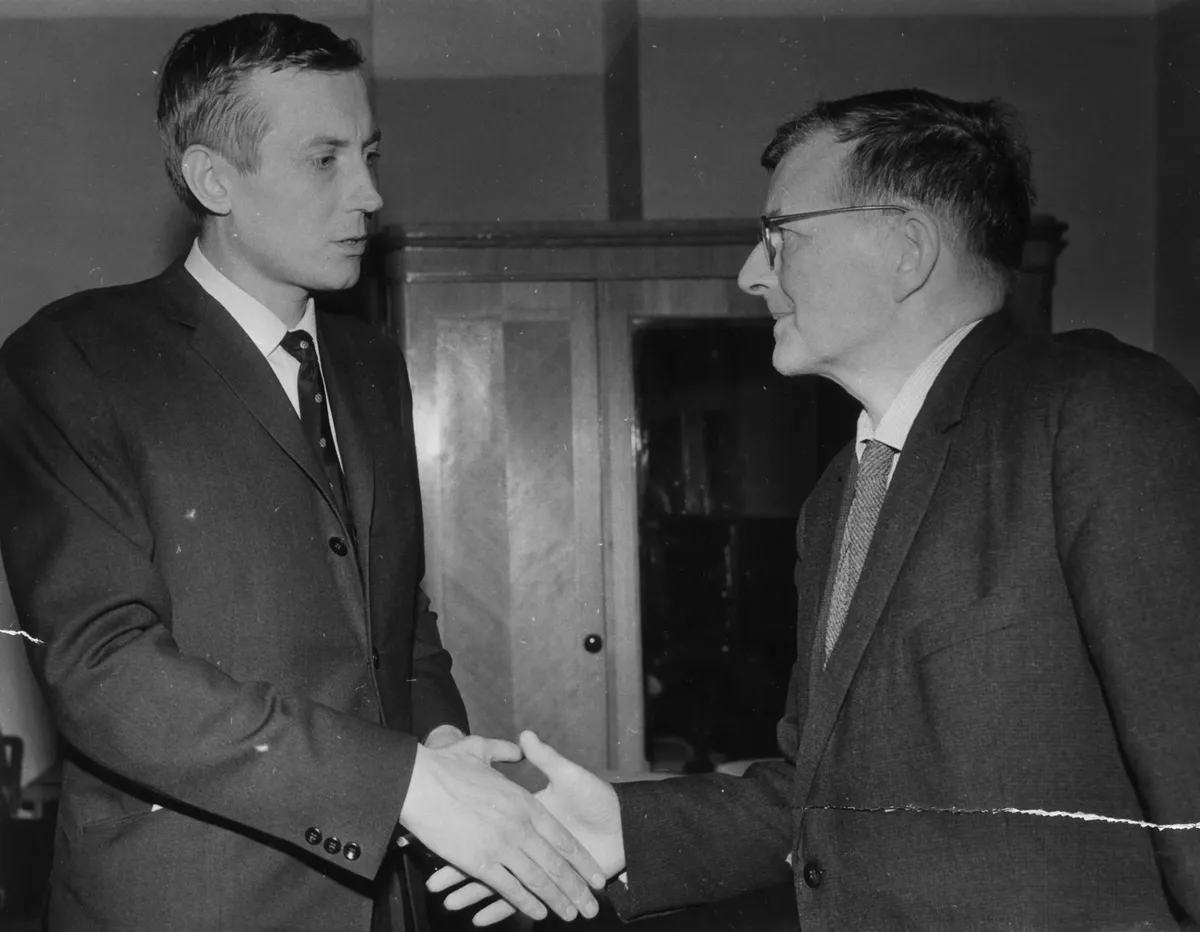
Shostakovich began to compose at the beginning of 1962, and at the end of March he called Yevtushenko. He named his name, introduced himself, but did not call Evtushenko’s confidence in his wife: “Some insolents call you forever. Now someone called, called himself Shostakovich ... "
But it was really he - and with a humble request to allow him to compose one, as he put it, “thing” for poems about Babi Yar. The thing, however, was already composed: in the first edition of the symphony, the text of only one poem appeared - the actual “Babyeen Yar”.
But soon Shostakovich came across a fresh collection of poems by Yevtushenko “The Hand's Hand” (1962), and in it he saw the material for the development of his “thing”. Four poems from the collection - “Humor”, “In the store”, “fears” and “career”, and the text of one of them, “fears”, did not completely make it completely, and he even asked Yevtushenko to finalize the text, which he did (see the footnote 10) .
According to Maxim, the son of Dmitry Shostakovich, his father believed Evgeny Yevtushenko
“... a very strong poet, a poet of a great civil orientation ... He believed that the main thing in his work was the voice of truth, a strong voice of truth, such a herald of truth. And he attracted the attention of Shostakovich, he loved this poet very much ” (see footnote 11) .
The first listener of the symphony was Yevtushenko himself.
“Shostakovich finished playing, without asking anything, quickly led me to the set table, frantically overturned two glasses of vodka one after another and only then asked:“ Well? ”” The poet, although far from music, was smart, sincerely wide and susceptible. He caught that “... the music was able to express more than the words contained” (see footnote 12) and that fate gave him a rarest gift - cooperation with a genius, contact with eternity.
Yevtushenko expressed his attitude to the symphony in the article “Genius above the genre”:
“In the 13th symphony ... Reading Shostakovich of my poems was so intonationally and semantic accurate that it seemed that he was invisible inside me when I wrote these verses, and composed music at the same time as the birth of the lines. I was overwhelmed by the fact that he connected the poems in this symphony, it would seem completely incompetent: the requiem of the “woman's yar” with a journalistic output at the end and the simple simple intonation of poems about women standing in line, a retrosprication of all commemorative fears with bulk intonations of “humor” and “careers” (see subsistence subsidiaries)) .
footnotes
5. Popov V. Ilya Ehrenburg. Cases and days (in documents, letters, statements and messages of the press, evidence of contemporaries). T. V. War (June 22, 1941 - May 10, 1945). St. Petersburg: Library of the Russian Academy of Sciences, 2001. S. 306. with reference to: RGALI. F. 1204. Op. 2. D. 2391.
6. Ehrenburg I. People, years, life. T. 2. S. 324–325.
7. Hentova S. Amazing Shostakovich. SPb.: Option, 1993. S. 45, 52–54, 60, 62, 66.
8. Its exact name: “Symphony No. 13 Si-Bemol Minor, Op. 113 For soloist, choir, bass and orchestra for verses by E.A. Yevtushenko ”, the genre is a vocal-symphonic poem, the executive composition is a bass choir, a symphony orchestra and a soloist-bass. Recently, mixed choirs and solo-baritons have been increasingly involved in execution.
9. Cit. by: Yevtushenko E. Wolf passport. M.: Vagrius, 1998. S. 437–440.
10. Hentova S. Amazing Shostakovich. SPb.: Option, 1993. S. 60.
11. “They say that when the memory is exhausted, the tragedies are repeated ...” On the 60th anniversary of the tragedy of Babyeo Yar / [Sergey Danilochkin. Interview with Maxim Shostakovich] // 2001. September 29.
12. Rosiner F. Thirteenth Shostakovich // Babi Yar. Tel Aviv, 1981. S. 102.
13. Yevtushenko E. Genius above the genre // Youth. 1976. No. 9. S. 66–67. This passage was not included in Yevtushenko’s book “Wolf Passport”.
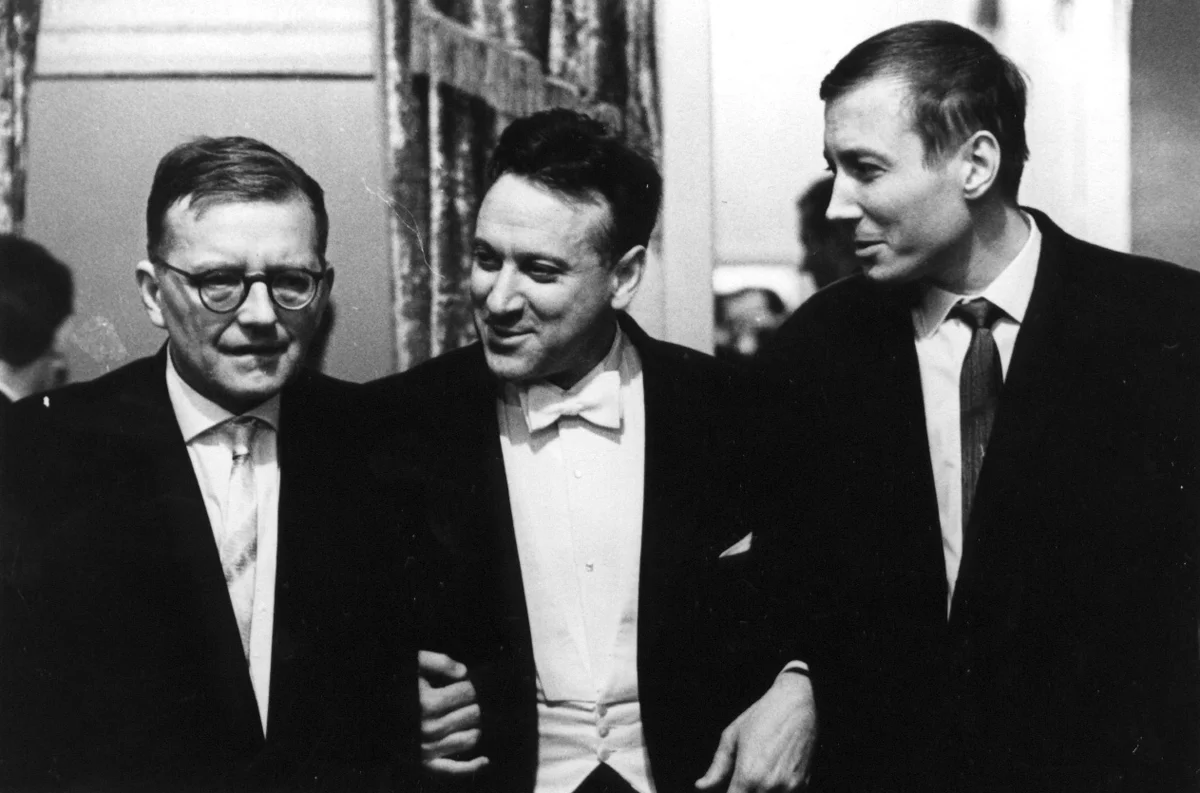
But the music that sounds at home is one, but the music in the concert hall is completely different. And Shostakovich began to prepare for the premiere. Forming the best performing team for her, he primarily turned to the conductor Evgeny Mravinsky, the traditional performer of his symphonies, and Boris Gmyr, the owner of the best bass in the country. He wrote to Gmyre:
“There are, however, people who consider Babi Yar the failure of Yevtushenko. I cannot agree with them. I just can't. His high patriotism, his ardent love for the Russian people, his genuine internationalism seized me entirely, and I “embodied” or, as they say now, “tried to embody” all these feelings in a musical composition. Therefore, I really want Babi Yar to sound and sound in the best performance ” (see footnote 14) .
Anticipating the special severity of the “Jewish question” in Kyiv and the possible bias of the Ukrainian singer, Shostakovich nevertheless counted on the weight of his name and his consent. On July 22, he even traveled to Kyiv, but could not inspire Gmirism. But the fact that the artist turned to this question ... to the republican authorities, it was struck by him! On August 16, after the “consultation with the leadership of the Ukrainian SSR,” Gmyr finally answered Shostakovich with a refusal, referring to the fact that the leadership is categorically against.
So: for two months they went into the void, but Shostakovich himself in his skin experienced both the strength and the pain of anti -Semitism AD HOC - he visited as if in a Jew: a German in Jewish skin! (However, most anti -Semites and so held him as a Jew.)
This angry and raised Shostakovich, after which he abandoned Kyiv as a place of premiere and energetically from scratch, as Mravinsky also refused - he began to prepare the premiere in Moscow.
Conductor - Kirill Kondrashin, bass - V.T. Nechipaylo, his understudy V.M. Gromadsky is a little -known soloist of the Philharmonic. Choir Basov - from the composition of the Republican Russian Choir Chapel, which was ruled by A.A. Jurlov.
The premiere was scheduled for December 18, 1962. They rehearsed the whole first half of the month, and on December 16 and 17 - in the Great Hall of the Moscow Conservatory.
The general rehearsal coincided with the meeting of the party leadership with the creative intelligentsia on December 17, at which, in particular, they scolded Yevtushenko for Babi Yar and did not praise Shostakovich for a strange choice of texts for their music.
The authorities tried to disrupt both the general rehearsal and the prime minister; Pressed on Nechipaylo, and he also refused to participate at the last moment. But he was perfectly replaced by the understudy, Gromadsky. In the break of Shostakovich’s rehearsal, they called to the CPSU Central Committee; Returning from there, he did not comment on that “friendly” meeting in a word.
The next morning, the Minister of Culture of the RSFSR A.I. called Kondrashin in the morning. Popov, demanded execution without the first, the most “sharp”, part. Apparently, they asked about the same on the eve of the Central Committee and Shostakovich.
But neither the conductor nor the composer went to meet.
Finally December 18, in the Great Hall of the Moscow Conservatory of the Prime Minister of the 13th Symphony Dmitry Shostakovich, took place! (see footnote 15) The impression was stunning, the public took the symphony enthusiastically, the composer, conductor and the poet who joined them did not let go from the stage for about an hour. Triumph!
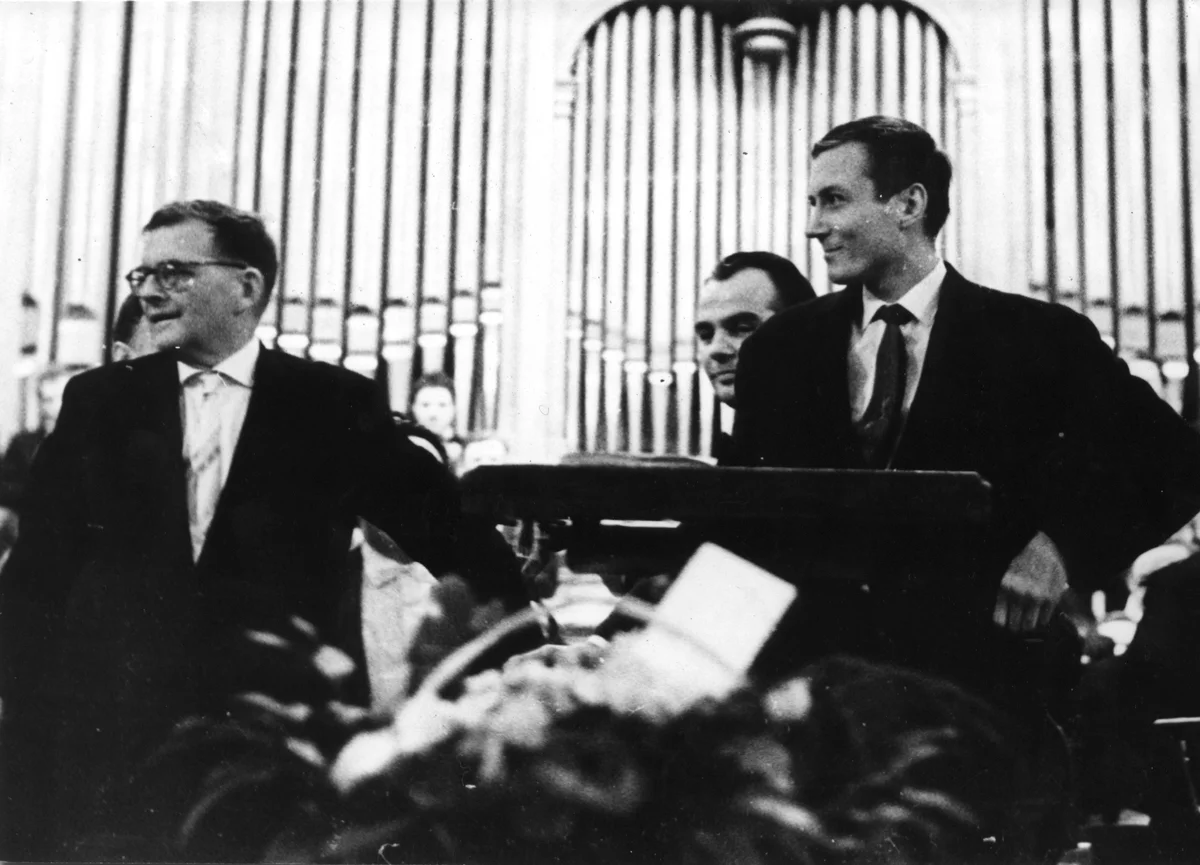
Here are the impressions of Yevtushenko himself:
“And suddenly he ... stepped on the very edge of the stage and applauded to someone himself, but to whom-I could not understand at first. People in the forefront turned around, also applauding. I turned around, looking for the eyes of the one to whom these applause could be addressed. But someone touched me by the shoulder-it was the director of the conservatory Mark Borisovich Veksler, shining and angry at the same time: “Well, why don't you go on stage?! They call you ... ”You want - believe it, you want - no, but, listening to the symphony, I almost forgot that the words were mine - the power of the orchestra and choir captured me so much, and indeed, the main thing in this symphony - of course, music.
And when I ended up on stage next to the genius and Shostakovich took my hand in his - dry, hot - I still could not realize that this is a reality ... ” (see Nedom 16)
The symphony was perceived-“not as the next work of the composer, but as a socio-political event. And first of all, because of the “woman’s yar”, which sounded thanks, as always, not so much piercing as the author piercing music, like a nabat ... Shostakovich and Yevtushenko called endlessly.
And I caught myself thinking (as it turned out, not me alone, but very many) that after a concert and authors, performers, and listeners they will put in funnels and will be sent directly to the Lubyanka directly from the conservatory ” (see footnote 17) .
Here are the impressions of Maria Veniaminovna Yudina, who visited the first performance of the symphony:
“We had a great event-the 13th symphony of D.D. Шостаковича… Рассказать это немыслимо… Это про нас и для нас, но и для всех, и для Вечности… Я была поистине счастлива и в слезах поднялась к нему и поцеловала ему руку, он ее отнял, мы поцеловались, как встарь… В общем — если угодно — эта симфония может быть и не для нас, людей, это про нас, от нас; это коленопреклоненная Молитва к Божьей Матери Всех Скорбящих Радость. Вероятно, он-то об этом и не помышлял, но не в этом суть. Он это сказал — за всех» (см. сноску 18) .
В сентябре 1965 года Юдина вновь вернулась к этой симфонии. 22 сентября она написала (но не отправила) Шостаковичу письмо, в котором есть и такие строки:
«Великая благодарность от меня и от всех, кто — уже умер, не вынеся всей суммы хождения по мукам, от евреев, с которыми Вы всю жизнь загадочным образом метафизически связаны… Полагаю, что я могу сказать Спасибо и от Покойных Пастернака, Заболоцкого, бесчисленных других друзей, от замученных Мейерхольда, Михоэлса, Карсавина, Мандельштама, от безымянных сотен тысяч «Иванов Денисовичей», всех не счесть, о коих Пастернак сказал — «замученных живьем», — Вы сами все знаете, все они живут в Вас, мы все сгораем в страницах этой Партитуры, Вы одарили ею нас, своих современников — для грядущих поколений…»
Стихи Евтушенко Юдина назвала тогда «безмерно, но заслуженно Вами ( Шостаковичем . — П.П. ) вознесенными, взятыми Вами в телескоп Вашего гения» (см. сноску 19) .
сноски
14. Из письма Д. Шостаковича к Б. Гмыре от 19 июня 1961 г. (Хентова С. Шостакович: жизнь и творчество, 1986. Т. 2. С. 426).
15. Она, по сообщению Э. Каган, исполнялась во втором отделении, в первом же звучал Брамс.
16. Евтушенко Е. Волчий паспорт. М.: Вагриус, 1998. С. 429‒430.
17. Баранович-Поливанова А. Оглядываясь назад. М., 2001. С. 170–171.
18. Из письма П.П. Сувчинскому от 27 декабря 1962 г. // Юдина М.В. Дух дышит где хочет. Переписка 1962‒1963 гг. М.: РОССПЭН, 2009. С. 397.
19. Из неотправленного письма Д. Шостаковичу, датированного 22 сентября 1965 г. // Юдина М.В. Нереальность зла. Переписка 1964‒1966 гг. М.: РОССПЭН, 2010. С. 284‒287.
Но и власть не унималась. Еще до премьеры Л. Ильичев надавил на самого Евтушенко и «уговорил» его переработать текст «Бабьего Яра». Оправдываясь потом тем, что в этом был единственный шанс спасти премьеру, Евтушенко написал новую редакцию стихотворения.
Но на самой премьере это никак не сказалось: текст прозвучал в версии 1961 года. Но уже на втором и третьем представлениях симфонии в Москве (10 и 11 февраля 1963 года) новая редакция поэмы была «запущена в оборот».
Метаморфоза эта чрезвычайно огорчила Шостаковича — и сама по себе, и по-человечески, потому что Евтушенко с ним это никак не согласовал. Но делать нечего: пришлось на будущее вносить в партитуру коррективы.
Замены эти выглядели так:
Редакция 1961 г.
Мне кажется сейчас — я иудей.
Вот я бреду по древнему Египту.
А вот я, на кресте распятый, гибну,
и до сих пор на мне — следы гвоздей.
И сам я, как сплошной, беззвучный крик
Над тысячами тысяч погребенных.
Я — каждый здесь расстрелянный старик.
Я — каждый здесь расстрелянный ребенок.
Редакция 1962 г.
Я тут стою как будто у криницы,
Дающей веру в наше братство мне.
Здесь русские лежат и украинцы,
Лежат с евреями в одной земле.
Я думаю о подвиге России,
Фашизму преградившей путь собой,
До самой наикрохотной росинки
Мне близкой всею сутью и судьбой.
Но замены эти сами по себе, а вторая редакция «Бабьего Яра» — сама по себе! В своеобразном «деле Евтушенко» в Идеологическом отделе ЦК КПСС сохранилось письмо поэта Никите Хрущеву, датируемое примерно 20 декабря 1962 года. К письму была приложена новая — подписанная — редакция «Бабьего Яра», напечатанная автором на той же пишущей машинке, что и само письмо. И оказалось, что это отнюдь не замена двух строф из редакции 1961 года двумя другими (см. сноску 20) .
Перемены же таковы.
Во-первых, ни одна из строк первоначальной редакции не была отброшена, из них исправлена была только одна: было — «насилует лабазник мать мою», стало — «лабазник избивает мать мою». Кажущийся тренд — ослабление натуралистичности, а на самом деле еще и смягчение отношения к «лабазникам».
Вторая корректива — приращение самого текста, добавление в него в общей сложности восьми (sic!) катренов, из-за чего акцент радикально переменился: вместо мученичества евреев — страдания всех советских народов.
И, наконец, третье изменение — общая структуризация текста. Обновленный — увеличившийся — текст разбит в оригинале на четыре части.
В таком виде «Бабий Яр» Евтушенко решительно никому не известен, поэтому мы даем здесь эту редакцию полностью, с нумерацией частей, сохранением графики строк, от себя лишь выделив добавленные строфы курсивом:

От знакомства с новой редакцией представление о радикальной коррекции (чтобы не сказать — подмене) смысла стихотворения, однако, «не пострадало». С мученичества евреев и неприемлемости антисемитизма в «Бабьем Яре-1961» акцент в «Бабьем Яре-1962» действительно перенесся на страдания всех советских народов и на героизм русских, ради спасения еврейки не щадящих живота своего.
21 февраля первый секретарь Союза композиторов СССР Тихон Хренников буквально рапортовал Ильичеву об успехе 13-й симфонии Шостаковича:
«Исполнение Тринадцатой симфонии вызвало большой интерес советских слушателей, концерты проходили при переполненных залах. Несомненный успех симфонии объясняется прежде всего глубиной и выразительностью музыки, где в полной мере проявились мастерство и талант композитора. Следует отметить, что в последних двух концертах первая часть симфонии «Бабий Яр» исполнялась с текстом, в котором композитором были учтены основные изменения, внесенные в эти стихи Е. Евтушенко. Не все части симфонии равноценны. Так, подавленность, излишне мрачный колорит свойственны тексту и музыке в 3 части «В магазине». В 1 части — музыка в целом воспринимается как скорбный реквием жертвам фашизма. Вместе с тем общему возвышенному строю музыки порой противоречат своей односторонней заостренностью отдельные реплики текста… Секретариат Союза композиторов, учитывая широкий резонанс, который получила новая симфония Шостаковича, считал бы целесообразным предоставить возможность исполнения этого произведения концертным организациям Советского Союза и зарубежных стран. Просим указаний по этому вопросу» (см. сноску 21) .
После этого симфония начала свое трудное шествие по стране. Минский дирижер Виталий Катаев за ночь переписал комплект оркестровых партий, увез их и подготовил премьеру в Минске. Сольную партию исполнял А. Беседин, хор собрали потихоньку из церковных певцов, хоровую партию конспиративно репетировали на частной квартире.
Планировалось четыре концерта в Доме офицеров, в 20-х числах марта 1963 года. Приехал на них и Шостакович. Первым делом он спросил Катаева, какой текст — старый или новый — будет исполняться. Ответом было: старый! Оба сознавали, какой это большой риск, — и оба, пожав друг другу руки, на это сознательно пошли.
— Авось пронесет?
Не пронесло! После минской премьеры Шостаковича и Катаева вызвал секретарь ЦК компартии Белоруссии по идеологической работе В.Ф. Шауро (см. сноску 22) .
По уговору, пошел туда один Шостакович, решивший, что он, мировая знаменитость, сможет лучше защитить минчанина Катаева (см. сноску 23).
А некто Н. Матуковский, главный редактор литературно-драматического вещания Белорусского радио, написал 24 марта 1963 года секретарю ЦК по идеологии Ильичеву художественный донос на композитора и дирижера:
«…Звуки симфонии как-то ощутимо разделили зал на евреев и не-евреев. Евреи не стеснялись в проявлении своих чувств, вели себя весьма эксцентрично. Кое-кто из них плакал, кое-кто косо поглядывал на соседей. В этих взглядах сквозила неприкрытая неприязнь… другая половина, к которой относился и я, чувствовала себя как-то неловко, словно в чем-то провинилась перед евреями… Потом чувство гнетущей неловкости переросло в чувство протеста и возмущения… Самое страшное, на мой взгляд, что люди (я не выделяю себя из их числа), которые раньше не были ни антисемитами, ни шовинистами, уже не могли спокойно разговаривать ни о симфонии Шостаковича, ни о… евреях… У нас нет еврейского вопроса, но его могут создать люди вроде Е. Евтушенко, И. Эренбурга, Д. Шостаковича. Тринадцатая симфония является убедительным подтверждением этой мысли. Она возбуждает бациллы не только крайне опасного еврейского национализма, но и не менее опасного шовинизма, антисемитизма. Разжигая национальную рознь, она льет воду на чужую мельницу… Конечно, запрещение Тринадцатой симфонии вызовет неблагоприятную реакцию, различные кривотолки и у нас, и за рубежом. Но из двух зол всегда выбирают меньшее» (см. сноску 24) .
Письмо-донос в Идеологическом отделе прочли. Оно наложилось на травлю и примерную порку Евтушенко из-за публикации им на Западе своей «Непреднамеренной автобиографии», ни с кем не согласованной в СССР. Милость сменилась на гнев и в том, что касалось 13-й симфонии. Вот предложения Идеологического отдела:
«В связи с критикой стихотворения «Бабий Яр» на встречах руководителей партии и правительства с художественной интеллигенцией получили распространение слухи об официальном запрете 13 симфонии. Подобные слухи раздуваются буржуазной прессой, развернувшей антисоветскую пропаганду вокруг безответственных заявлений Е. Евтушенко, что его стихотворение «Бабий Яр» у нас в стране горячо принято народом, а его критиковали только догматики. За рубежом широко комментировались также многочисленные интервью Е. Евтушенко в ФРГ и во Франции, в которых он характеризовал 13 симфонию как одно из самых человечных и «острых» по содержанию произведений современности… Политическая незрелость большинства использованных в ней стихов Евтушенко подвергается резкой критике и в письмах, направленных в ЦК КПСС после исполнения этого произведения в Минске… В связи с этим мы считали бы нецелесообразным широкое исполнение этой симфонии в концертных организациях страны. <…> Считаем нецелесообразным удовлетворять заявки и передавать партитуру Тринадцатой симфонии в зарубежные страны» (см. сноску 25) .
В сущности, Евтушенко прогибался зря. Даже в таком — «политкорректном» виде исполнение 13-й симфонии в СССР при Хрущеве было запрещено.
При Брежневе запрет сняли, и 20 октября 1965 года симфония была исполнена в Московской консерватории, и снова — с огромным успехом. В 1972 году осуществлена грамзапись симфонии (с новым текстом), была издана и партитура, что сделало симфонию доступной и зарубежным дирижерам и оркестрам.
В Киеве — городе прямого запрета на ее исполнение, сообщенного в свое время Гмыре руководством УССР — 13-я симфония впервые была исполнена лишь в марте 1988 года! В 1991 году, когда в Киеве — впервые официально и широко — отмечалось 50-летие трагедии в Бабьем Яре, великая симфония Шостаковича в программу юбилейных событий не была включена.
Негласный запрет все еще был — в негласной, но силе.
сноски
20. Redepenning D. Töne der Erinnerung, Musikalische Deutungen von Babij Jar // Osteuropa. 2021. 71. Jg. Heft 1–2: Babyn Jar: Der Ort, die Tat und die Erinnerung. S. 175. Возможно, вариант с этими двумя строфами был сделан специально для замены в партитуре или клавире 13-й симфонии Шостаковича.
21. Цит. по: Евтушенко Е. Первое собрание сочинений. В 9 т. Т. 2. 1959‒1964. М.: Neva Group. 1998. С. 505.
22. Громкое имя! Вскоре Шауро переведут в Москву, где он возглавит отдел культуры ЦК КПСС.
23. Хентова С. Удивительный Шостакович. СПб.: Вариант, 1993. С. 74.
24. Письмо секретарю ЦК КПСС Л.Ф. Ильичеву 24 марта 1963 г. Из архива ЦК КПСС.
25. Из записки зам. Head. идеологическим отделом ЦК КПСС В. Снастина, зав. сектором В. Кухарского и инструктора А. Михайлова от 15 мая 1963 г. Впервые цит. по: Евтушенко Е. Я пришел к тебе, Бабий Яр… История самой знаменитой симфонии XX века. М.: Текст, Книжники, 2012. С. 43.