
Translated material
Man of the day: Alexander Middendorf
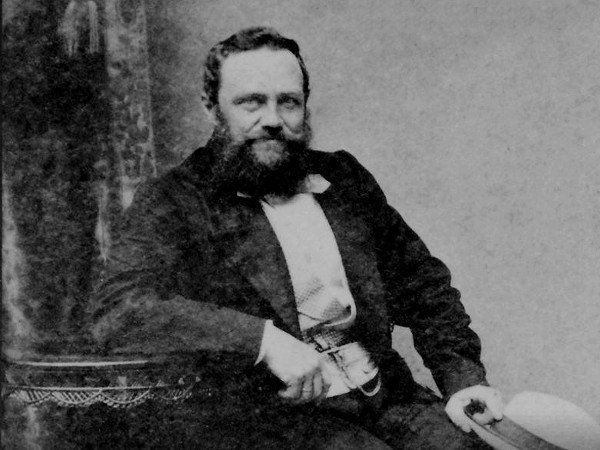
On August 18, 1815, Alexander Middendorf, Sibreved, the founder of permafrost, was born.
Personal business
Alexander Fedorovich Middendorf (1815-1894) was born in St. Petersburg in the family of Russian Baltic Germans. His father was the director of the gymnasium, then for 17 years-the main pedagogical institute, from which St. Petersburg University subsequently grew up. Even while studying at the gymnasium, Alexander was carried away by the study of nature and travel.
“As soon as I had passed ten years,” he recalled, “as I received from my father, an excellent teacher, a gun, and since then with one senior friend often spent days and nights in the swamps and lakes of Livonia.”
At the age of 17, he entered the medical faculty in the Derpt (now Tartu) University. Five years later (1837) he graduated from a doctor.
In 1839, he was appointed adjunct professional (assistant professor) at the Department of Zoology of Kyiv University, but soon left teaching. In 1840, he participated in the Lapland expedition of the naturalist Karl Bar, during which the researchers by boat went around the northern coast of the Kola Peninsula and made several trips deep into the mainland.
In 1842, the St. Petersburg Academy of Sciences instructed Middendorf to organize an expedition to Northern Siberia and the Far East. During the expedition in 1842-1845, the scientist first described the huge Putoran plateau, comparable to modern Great Britain in the area. He also became the first researcher of the Peninsula Taimyr, the North Siberian lowland, the southern coast of the Sea of Okhotsk and other natural objects. The processing of the material collected for the expedition took 13 years. Many prominent scientists were involved in her. The research results, reduced together, at that time became the most complete natural -historical description of Siberia - its geography, climate, animal and plant world, nationalities that inhabited the most extensive part of the empire.
During the expedition, Middendorf also determined the southern border of the spread of permafrost, and discovered the zonality in the spread of vegetation.
The scientist thoroughly classified the Siberian fauna. He paid much attention to animal nutrition conditions and their habitat.
In 1845, Middendorf was elected the adjunct by the Academy of Sciences in the Department of Zoology, five years later he became an extraordinary academician - received a position in excess of the established state. In 1852 he was elected an ordinary academician, and in 1855-an indispensable (permanent) secretary of the Academy of Sciences.
However, administrative work burdened the scientist. In 1857, he lay off the title of indispensable secretary, in a few years later, in connection with a deterioration in health, he also abandoned the academician’s position, becoming an honorary member of the Academy of Sciences.
In 1860, Middendorf moved from St. Petersburg to his estate in the Baltic states.
In 1870, he investigated the Barabinsky steppe, lying within the current Novosibirsk and Omsk regions. In 1878, the Ferghana Valley, two years before, as part of the Kokand Khanate, annexed to the Russian Empire.
As in the case of Siberia, Middendorf made a general geographical characteristics of Ferghana, described its nature, climate, soil, economy, colonization of the region, its population and general economic and political conditions.
In the last years of his life, he was engaged in the study of cattle breeding, and he was interested in the replacement in the Baltic States of Local Low -Military Cattle with more profitable breeds. He took part in the device of agricultural exhibitions.
In 1883 he began an expedition, the purpose of which was to investigate the current state of cattle breeding in Russia. In the second year, the expedition fell ill, after which he returned to his estate.
Alexander Middendorf died on January 20, 1894 at the age of 79.
What is famous
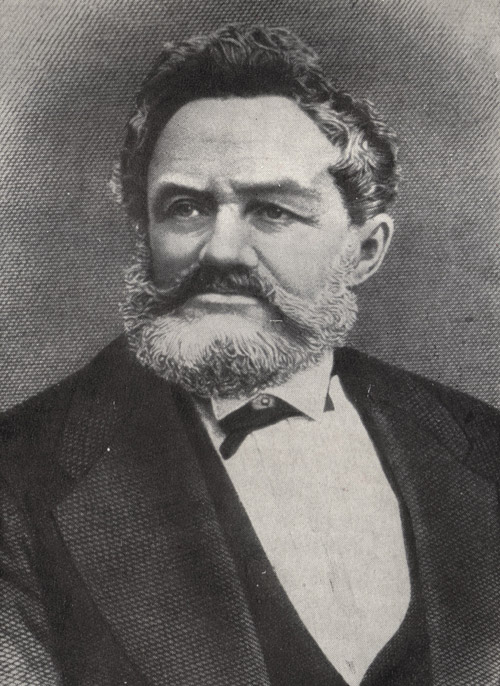 Alexander Middendorf
The largest Sibreeded of the second half of the XIX century. For the first time he described the inaccessible areas of Siberia and the Far East, which had previously been white spots on the map of Russia. He discovered Taimyr, the Channel Islands and the Amur Region for further research.
He gave a brilliant description and analysis of the fauna of Siberia, showed the adaptive features and forms of animal behavior, the main patterns of the spread of individual species.
He studied the seasonal and eternal permafrost, laying the pits in Turukhansk, in Hatang and in Yakutsk. He is considered the founder of the science of frozen soils and soils - permafrost.
What you need to know about
Middendorf was also known as an Ippologist: back in the 1850s, he was instructed to familiarize him with the military horse breeding. The scientist also participated in the structure of Russian state horse factories. It was printed in the "Journal of horse breeding." He also considered it possible to domestize and breed the moose.
Middendorf also succeeded in agriculture: in addition to the improvement of his two vast estates near Tartu and Pyarn, he led the vast economy of Grand Duchess Elena Pavlovna for many years in the estate of Karlovka Poltava province. It was there that in 1856 a “pilot project” was carried out to liberate the serfs - residents of 12 villages and villages received freedom and land to the mercy.
Direct speech
About the qualities necessary for the natural scientist: “It is necessary to be able to food yourself with hunting or fishing, and even better than any nomad must have a flexible readiness and dexterity to control sails, then handle dogs, deer or horses, then be a rower, then a tireless pedestrian, in order to do something from above ordinary possibilities.”
About how he survived on the shores of Lake Taimyr (“Journey to the north and east of Siberia in two parts”): “On the 23rd [August 1843] we again reached the lake near the Hoffmann Peninsula. The fierce autumn storms, wet and covered with icy crown, were repaired there and here, we worked freely until August 28, when suddenly the weather was retreated on this day. As soon as it subsided, the ice floes filled the lake and floating from Verkhnyaya Taimyr, closing with a new ice that had attached to them, with incredible speed began to frighten. With difficulty, we avoided the danger of freezing among the lake; With great difficulty, we reached the western bank of the Taimyr River, against Cape Lenz, after the shuttle drowned, and the boat spoiled by ice was filled with water.
On August 31, my people went on foot to look for our old friends of the Samoyeds who promised to wait for us in Verkhnyaya Taimyr, as long as possible. I, sick and exhausted, should have been left alone, three miles from our crash, and somehow supported my life until September 19, when I took me from here, on the twentieth day of my languor, Samoy prince Toychum. ”
About the inhabitants of the Russian North: “I cannot refuse the Russian person in the most decisive confirmation of the certificate, which was given to him more than once. In the whole world, there is hardly another one who would die with him in the most flexible in all resourcefulness, especially with Russians who grew up in the deserted deserts of the deep north. ”
6 facts about Alexander Middendorf
- In addition to the Russian name, the scientist also had German - Alexander Theodor von Middendorf. At the request of the natural scientist, an unprocessed stone was erected instead of the monument on his grave with the inscription “Dr. Alexander von Middendorf ”and the dates of birth and death.
- The first gave an extensive cartographic material for the area located between the Yakut and Okhotsk Sea, as well as the material on the internal parts of the Taimyr Peninsula.
- The scientist was in the Russian Geographical Society and the Free Economic Society, the latter even headed a couple of years. For the merits of Middendorf, the Russian Geographical Society in 1861 awarded him its highest award - the Konstantinov Medal.
- In 1867-1868, Middendorf accompanied Grand Duke Alexei Alexandrovich on traveling around the Mediterranean Sea, Atlantic and Western Siberia. During the latter, the scientist conducted observations, and having returned, he gave a general geographical description of the Barabinsky forest -steppe. In 1870, accompanying the Grand Duke on a journey through the White Sea and to the New Land, he opened the Northkapy current in the Barents Sea.
- Middendorf is one of the founders of the ecology, considering the evolution of species, their occurrence and resettlement as a result of relationships with the environment.
- In the Kara Sea, on the northwestern coast of the Taimyr Peninsula there is a bay of Middendorf.
Materials about Alexander Middendorf:
Article about the scientist on the site yakutskhistory.net
Biographical certificate at the "chronos"