
Translated material
Unbearable power
Civil aviation of Russia in decline: monstrous sanctions have been superimposed on the management crisis. Is there a chance to take off again? Conversation with pilot Andrei Litvinov
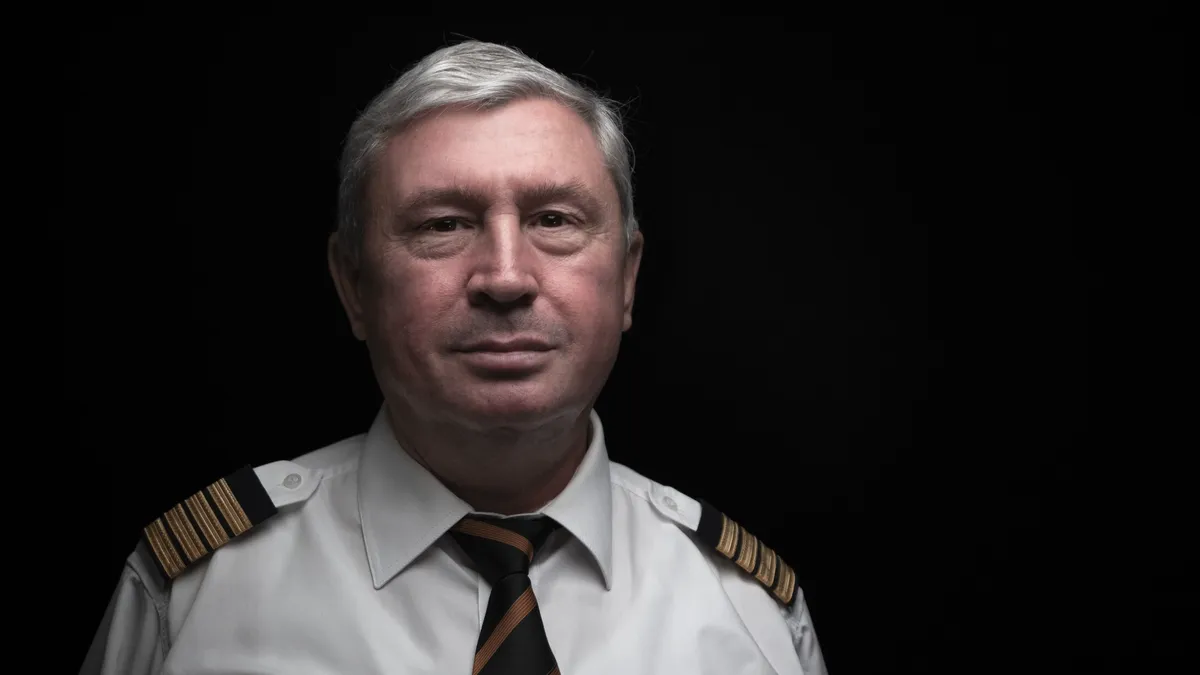
Three weeks after February 24, we talked with a first-class pilot, the captain of the A-320 aircraft Andrei Litvinov about the situation with the civil aviation of Russia. He then lamented: “Just something began to improve after the pandemic, countries began to open, foreign flights went, the number of flights increased, and literally in a few days everything stopped for us almost everywhere. The whole sky was blocked. And this is not even the point, but the sanctions that have collapsed on us, in the fact that we have all the planes - these are airbuses and Boeing mainly. And the sanctions were introduced, as you know, to spare parts, maintenance and insurance of the aircraft. Without this, the plane cannot fly at all. ” To my question, whether the pilots will have to again, as in the most difficult days of the pandemic, become couriers and waiters, Litvinov then answered negatively: “There is no, we work. Aeroflot is still a national carrier, a structure with state participation, that is, support is noticeable. ” Now the intonation has changed noticeably.
Litvinov says:
- I was tired and burned out. I have been in the profession for 40 years, and soon I will be 59 years old, I began to perceive everything very close to my heart. I decided to take accumulated vacations one by one, I need to think in silence, stay with me. Now I am resting in Essentuki.
- Understand. But will you answer me questions?
- Certainly.
- Is it all only about fatigue or in the situation at work?
- In a situation that is really indisputable for me. This is due to the attitude to aviation of the authorities of a different rank and, in general, with the general situation that my psyche cannot withstand.
Everyone around them is talking with slogans, but in reality nothing happens, they just pull time. Tomorrow - whatever happens, and today everyone in his place shall be shamelessly lies: "Catching, we will overtake, imported." But there are elementary logic and simple arithmetic.
Look, now we have a little less than a thousand foreign aircraft in our country, about 980. Of these, about 750 are Boeing and Airbuses, and somewhere around 515 of them in the leasing of foreign companies. The rest in the leasing of large companies in Russia - for example, from Sberbank and other same level.
For leasing, companies are paid, and they provide maintenance and insurance. After the sanctions were imposed, the lessor demanded that the aircraft be returned. But in this case, we would simply have nothing to fly on. Therefore, they did not return, but in order not to look so frank, they decided to somehow legalize the situation-and transferred these planes to the jurisdiction of Russia. In response to this, we were canceled by a certificate of flight fitness. And without it and without insurance, as well as without a guarantee of replacing spare parts, aircraft cannot fly.
“But they are flying while?”
- Our planes are now legally flying outlawed. The Minister of Transport spoke about this. You see, before large Russian airlines have always worked transparently. We had a white salary and, as a rule, was all right with documents. We flew abroad, Safa inspectors came to us, checked and noted that everything was wonderful.
Now we have a dilemma: forget about planes, do not fly at all, or fly, but outlawed. Our choice is known - fly.
But this situation is unprecedented, this was not anywhere and never to fly the planes without any legal basis.
- You have not agreed on logic and arithmetic, and that you do not need to believe the slogans about import substitution.
- Yes, here I am just bringing it to this. We have a Voronezh aviation plant producing two IL-96 aircraft per year. And the Boeing Airlines produces about 600 aircraft for the same period. The so-called effective managers say that now we will produce 20 Tu-214 aircraft per year. Firstly, they will not be able to, and secondly, this is an outdated model. Now, if they had invested in it for 20 years, they would have made him better, he could become competitive.
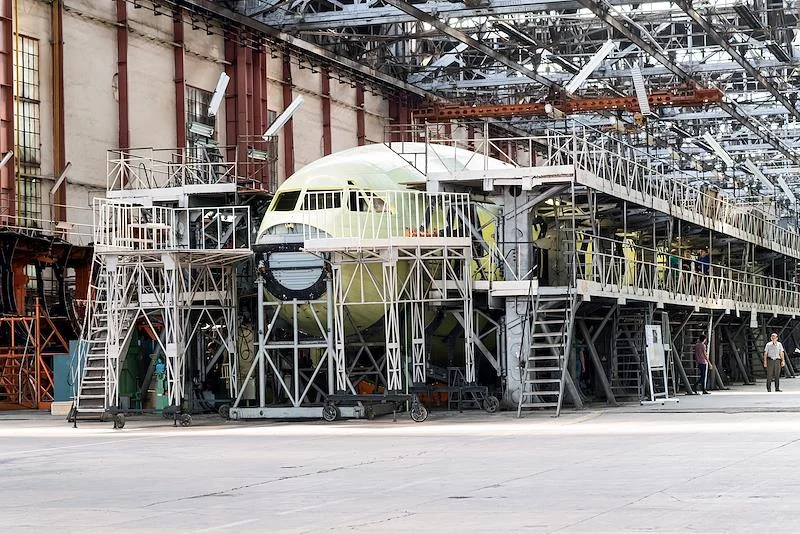
Even if we assume that it will be possible to import substitution for our MS-21 and Superjet-100 aircraft, as well as somehow contrive to produce 10 Tu-214 aircraft per year (well, even 20), all the same, in the best case, we will only restore the number of aircraft that is now in Russia in fifteen years.
Let me remind you that we now have 515 aircraft in foreign leasing, which means that we need 100 aircraft per year at least.
This will not work, even if we start investing tomorrow. Because here is the information from open access: the import substitution of the MS-21 aircraft, for example, is possible to establish only somewhere by 2025-we are talking about completely switching to Russian spare parts.
This is all incredibly insulting, because we spoke for 20 years in a row, and the last 10 years they just screamed, cursed, wrote letters. We are pilots, members of trade unions, everyone who is at least somehow connected with aviation-we yelled that we need our own planes, completely from our components. They once had them. Your colleague once told me that actually there is no plane in the world that would be all made in one country. This, they say, is international practice: in one country they made an engine, in another - chairs, and so on. But there was such a country - the USSR, where 150 aircraft per year were produced without imported spare parts. Of course, they were uneconomical, incompetent, worse than foreign, but we flew, transported people! On our aircraft, such as the Tu-154, the Germans flew, Hungarians ... An An-24 is still flying in Cuba. Cadets from different countries studied with me at the Flight School, we prepared pilots and supplied planes - this is what we talked about to our “effective managers”. And they laughed in our face, patted the shoulder, looked so arrogantly and condescendingly and said:
“Yes, calm down, we will buy Boeing and Airbuses ...” But in the end they took Boeing and the Airbuses to leasing, and set up palaces abroad.
- And they were charged with the facts that you are talking about?
- Of course not! Although their names are known, they all fled in different directions. Well, you didn’t want to develop our aviation, you believed that Boeing in leasing is cooler, but why didn’t you register them in Russia? In the end, many countries flew in the same way as we, having boings and aerobos in leasing. For example, emirates, Germany, other countries - but!
But at the same time, these aircraft had the registration of the country from which they flew. Your country! And in this position, they could subsequently redeem at a residual value, which, in fact, happened everywhere.
If it were in Russia, all the money spent on leasing payments would remain in our country, and it would be possible to spend it on the development of aviation. And over these decades we would have had our own planes.
And now our country was depending on leasing companies, imported aircraft, and spare parts.
- And if we had taken up at one time, would we really have competitive aircraft today?
- Certainly! For eight years I flew to the Tu-154 and five years-on the Yak-40, these were reliable, good planes. It was just necessary to modernize them a bit: make Aviononic, more comfortable salons. If all these years had been doing this and the money that we paid the lessor would go to it, then we would have completely competitive Russian aircraft with all our components. For example, also IL-86 is a wonderful plane, only one, a very old accident for about 30 years of impeccable service! It was necessary to just finish the engine, improve.
What do I want to say? What if normal scientists and designers came instead of these “effective managers”, we would not have left today with a broken trough.
-Still, is it possible to restore it all today?
- Only drawings remained, and there are no more production capacities, of course. And there are no experts, they were not cherished, they paid a penny, and they fled who where. In the USSR, if I am not mistaken, 15 factories worked for aviation. Who specialized in spare parts, who released the chassis, who the fuselage is, someone with aerodynamics, and someone was engaged in electronics. And all these capacities are lost! Is it possible to restore? All this will appear again, if we now take the pace and begin to train people, but the result will be in twenty years at best, but most likely it will turn out in thirty.
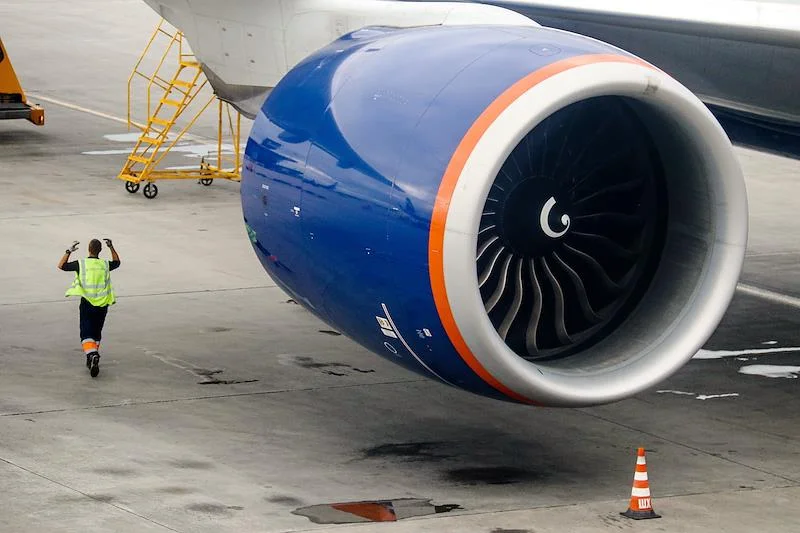
- Let's get back to date. I understand that in order to get out of the situation with the absence of spare parts, decided to resort to the "donation" of aircraft? That is, some of them will be disassembled so that others can fly with their spare parts. This will probably save the situation, but for how long?
-If they do not put the supply, stupidly analyzing one plane in order to put its spare parts on another, then after some time these spare parts will not be. How long we will stretch - depends on how the planes are operated, how often they will break.
So you bought a new car, just drove out of the cabin-a pebble flew off somewhere and broke the windshield. It is necessary to change it, although the car is new. The same aircraft: you take off, and you got into the engine - the engine should be changed. Or flew to some of our Russian airfield, which in winter is poorly cleaned, and there are many of them in Russia, so the planes sometimes roll out behind the runway. He bounced a piece of ice in the strip and got into the engine - again, you need to change the shoulder blades. Some of our lanes are disgusting - and that means rubber will serve less.
Depending on all these circumstances, the need for spare parts will be formed. The same seagull may not fall into a new plane, but for a long time for a long time. Or maybe the plane fly as much as you like, and no bird will fly into it. And it happens that the same plane falls into the same plane - you can’t know how it will be.
-And yet, at least approximately, you could say how much time we have the situation with flying, and not killed aircraft?
- Now negotiations are underway with third countries on the supply of spare parts. If you agree, we can stretch about five to seven years. But all spare parts are numbered, and from the moment they leave the factory, their entire path is monitored. If some unit breaks down on the plane, then the manufacturer requires that he is returned to this faulty part-to examine, in case of marriage, fix or repair for further operation. And also so that this spare part does not go somewhere to the left.
I don’t know what negotiations are underway, how they will solve the problem. I can assume that if the detail went into the country friendly to us (for example, in Kazakhstan), they could well be prepared for us to put it. But they will have to indicate where it was put, on which plane.
And the sanctions say that if the third countries are noticed in some supplies, they will also impose sanctions on them and deprive them of the ability to fly. Will everyone take a chance?
As the output talks about China. This is theoretically possible. China itself produces airbuses, and the manufacturer recognizes them. And China could meet us with spare parts, but there were already threats in Biden’s speech that China would pay dearly if he helped Russia in any area. That is, all these are issues of big policy today, although I am personally convinced that civil aviation should generally be out of politics.
- I absolutely agree with you. Just like medicine, from my point of view. Patients should not suffer due to the lack of those drugs that really help them. So in aviation - people should be able to fly. Now, the pilots, probably, again, as in the time of the pandemic, are out of work?
- The situation is now more serious than during the pandemic period. All epidemics end sooner or later. And everyone knew that the pandemic would end-the whole world fought, everyone developed vaccines and came up with different protection, some safety measures for their countries and citizens. And of course, when all together fell, it became easier, because there was hope.
And what is happening now is hopeless. Sanctions are not an epidemic.
There are states that live fifty under sanctions. It is difficult and psychologically and physically. There is no hope and it is impossible to plan something-your time, work, future.
- Is it true that almost a massive outcome of pilots from airlines began?
-Yes, the pilots are leaving-someone himself, they squeeze someone. Those who are older than 55 years are literally chasing: “Go away, there is no work even for the young, and you are spinning under your feet.” They try to stimulate care, promise to give 200 thousand rubles to everyone who will voluntarily and quickly leave.
- So -so “parachute” for pilots - 200 thousand rubles. Is it true that the fired is forbidden to settle down in foreign companies?
- This is not. We all went to foreign companies through dismissal. They leave because the work has sharply reduced. Our company was imprisoned for forty for flights in Europe. And after the sanctions, these flights were gone. There was no work - earnings fell. Our salary depends on the raid of the clock.
If earlier we flew 90 hours a month, then we became thirty. The number of Aeroflot pilots is not designed for such a small amount of work - so extra people appeared.
While summer, people at least to the sea, fly on vacation, and by the fall there will be a traditional decline. On the other hand, those spare parts for aircraft that are trying today to bring through third countries today, have grown strongly in price, because logistics has become more complicated. They used to load people and brought them directly, now it’s all very crooked, because, for example, in Sochi we flew in for 2 hours 15-20 minutes, and began to fly almost 4 hours ...
- If all technical centers in Russia who served aircraft have selected licenses, perhaps it is already worth being afraid to fly?
- It’s not worth being afraid because, first of all, that not a single aircraft commander will lead a faulty plane. They selected a license, yes, but people remained, and they continue to work. We can stretch out another five to seven years, if you change spare parts, having nevertheless agreed through the third countries.
Yes, we again approach the line, behind which there will be a shortage of both pilots and aircraft, as in perestroika years, when there was a redistribution of aviation property. And the sky will be closed for us for a long time.
But we are pilots, we were taught to get out of a corkscrew. Let's hope that we will come out. I really don't know how and when. We have not yet encountered this situation, such a corkscrew formed for the first time in the history of civil aviation, starting with the USSR.
We are faced with challenges that no one has ever encountered.